
What Deep Watering Really Means For Your Texas Trees Before The Next Heat Blast
Follow us on Google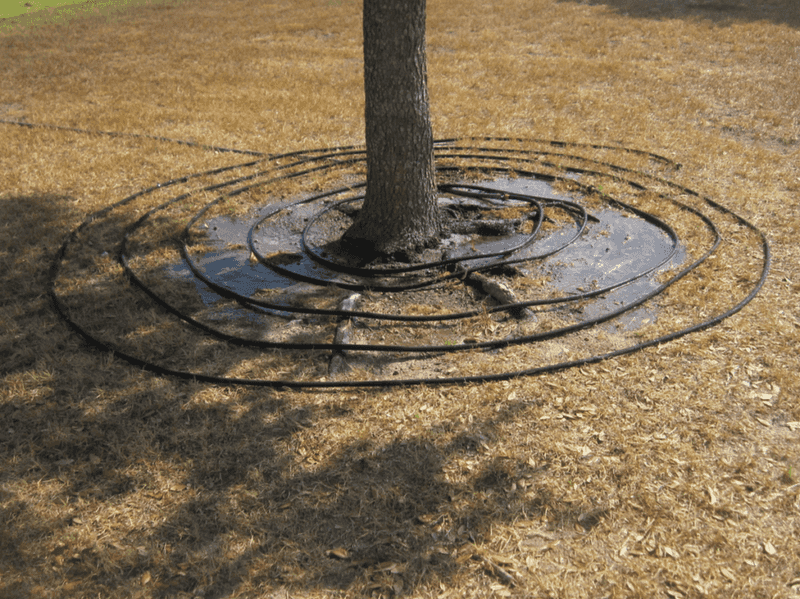
You step outside before breakfast and the ground already feels warm through your shoes, and the forecast is calling for another week of triple-digit heat.
Your trees are out there working hard, and the question is whether the water you’ve been giving them is actually reaching the roots that need it most.
Getting this right now is not just about surviving one hot spell, it protects your trees for years to come.
Here is what deep watering actually means, and how to do it before the next heat blast arrives.
Deep Watering Starts Beyond the Trunk
Plenty of Texas homeowners aim the hose right at the base of the trunk and figure the job is done.
It feels logical, like watering a potted plant from the top.
But for an established tree growing in the ground, that approach can leave the majority of the root system completely dry.
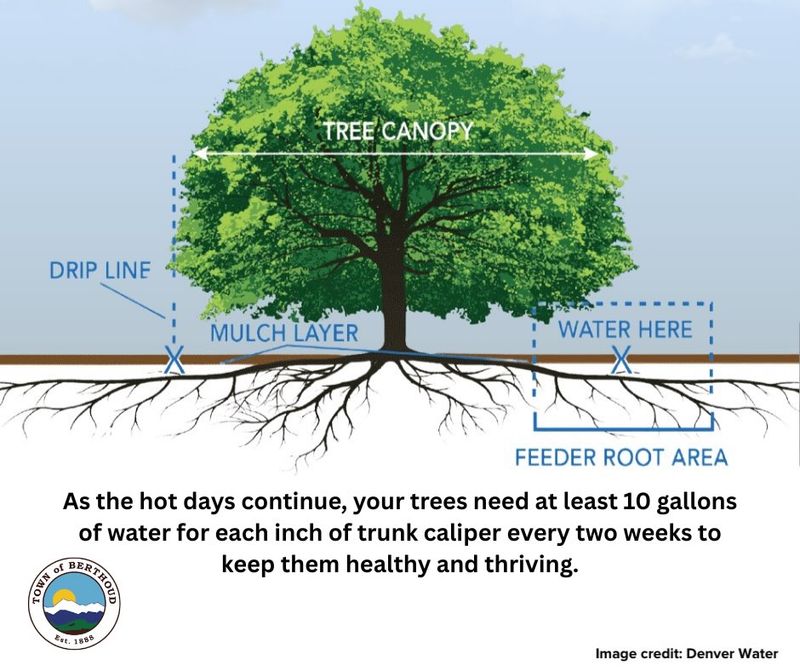
The roots that actually pull in water and nutrients are not crowded around the trunk.
Many of the most active absorbing roots are located beneath the outer edge of the canopy and beyond it.
Arborists call that outer edge the dripline, which is simply the circle on the ground directly below where the branches end.
Think of it as the tree’s shadow at noon, roughly.
For a mature live oak (Quercus virginiana) spreading 40 feet across, that dripline can be 20 feet or more from the trunk in every direction.
Texas AgriLife Extension guidance on tree and shrub irrigation during drought recommends applying water just inside and slightly beyond that dripline, not against the bark.
Watering only at the trunk can actually encourage roots to cluster in a small wet zone near the base rather than spreading outward into a broader, more resilient root system.
The practical shift here is simple but significant.
Move your water source away from the trunk and out toward the canopy’s edge.
Begin near the dripline and work slightly outward from there, covering a broad ring of soil.
Research on transitioning trees to lower-water landscapes confirms that tree roots commonly extend well outside the visible canopy, so a generous ring matters more than a tight circle near the base.
Once you make this shift, you are no longer watering the tree.
You are watering the soil volume the tree’s roots actually use, and that is the whole point.
The Target Is Moist Root-Zone Soil
So what does “deep” actually mean when people say deep watering?
Here is where it gets tricky, because the phrase gets thrown around without much explanation.
For many established landscape trees in Texas, a useful starting target is to moisten the soil to a depth of roughly 12 to 18 inches.
Texas A&M AgriLife Extension drought watering guidance recommends saturating soil about 8 to 10 inches during drought events, while other extension sources suggest 18 to 20 inches as a goal for encouraging a broader root zone.
The range exists because trees are not all the same, and neither is the soil under them.
A young pecan planted two years ago in compacted suburban clay has a very different root profile than a 30-year-old cedar elm growing in sandy East Texas loam.
Species, tree age, soil texture, drainage, and even how deep the original planting hole went all affect where roots actually live.
Most landscape tree roots, including the fine absorbing ones, are concentrated in the upper 1 to 2 feet of soil where oxygen is available.
Deep watering helps roots occupy a wider, adequately moist zone within that upper profile.
It does not reliably push every tree’s roots several feet straight down.
Consistent, appropriate watering can support tree establishment and help reduce drought stress.
USDA Forest Service research on tree mortality from drought and insects notes that drought stress can contribute to canopy thinning, reduced growth, and greater vulnerability to some insects and pathogens.
But watering alone cannot correct poor planting, compacted soil, drainage problems, or a species that simply does not suit the site.
Treat 12 to 18 inches as a practical starting point to measure against, then adjust based on what you find when you actually check the soil.
A Slow Soak Beats a Fast Flood
Knowing where to water and how deep to reach is only half of it.
The other half is how fast you apply the water, and fast is almost always the wrong answer.
When you run a full-pressure hose in one spot, the water hits faster than the soil can absorb it.
You get puddles, runoff down the sidewalk, and a thin wet patch on the surface while the root zone stays dry a few inches down.
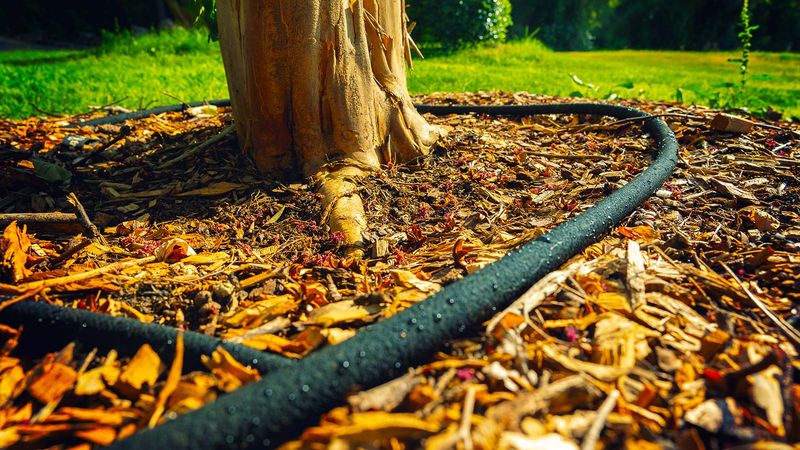
AgriLife Extension’s drought irrigation guide recommends moving a slowly running hose around the dripline, pausing in each spot as the soil becomes saturated before moving on.
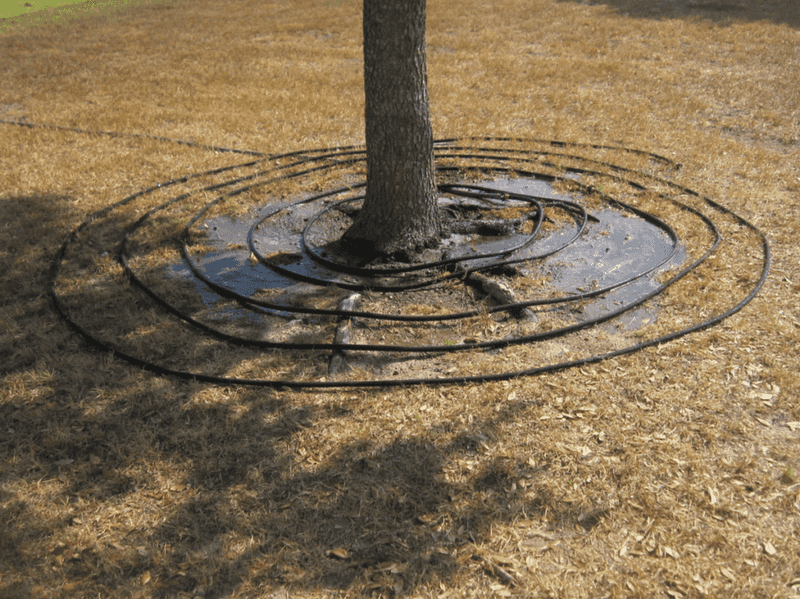
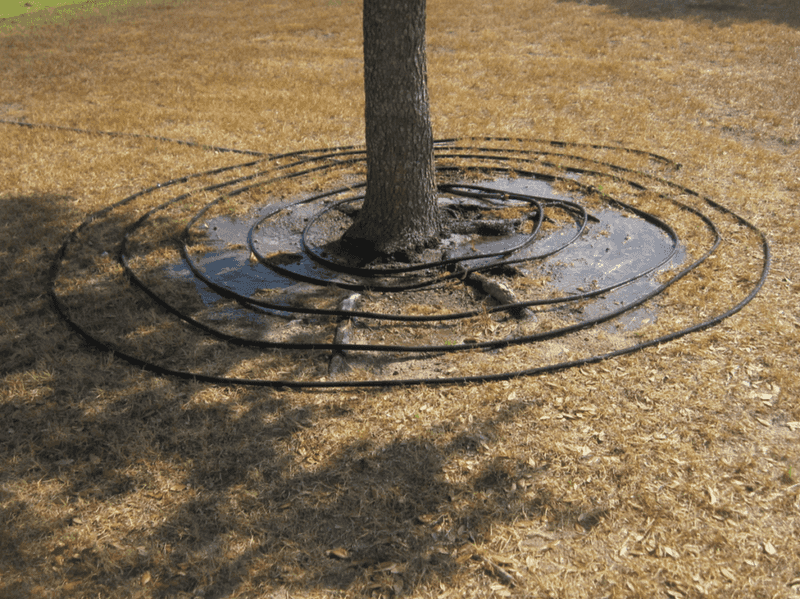
A soaker hose looped in a broad ring, or a properly designed drip system, does the same job with less attention required.
The goal is to let water infiltrate at the pace the soil allows, which changes depending on what you are working with.
Heavy clay soil in North and Central Texas can actually shed water when it is very dry or when application is too fast.
The fix is cycle-and-soak watering: run the water for a short period, stop and let it soak in, then run again.
Texas Water Development Board landscape watering guidance recommends checking for runoff and pausing until the soil can absorb more water before continuing.
Slow, monitored application helps avoid both runoff and prolonged saturation.
Waterlogged soil is not a goal, it limits the oxygen that roots need just as much as drought does.
The aim is moist soil, not mud that never dries.
Stop when the soil reaches your target depth and the surface is no longer pulling water in quickly.
A timer helps, but your eyes and a soil probe are the real tools here.
Your Soil Probe Sets the Timing
Guessing whether the soil is moist enough is how trees end up either underwatered or sitting in soggy ground.
There is a better way, and it costs nothing if you already own a screwdriver.
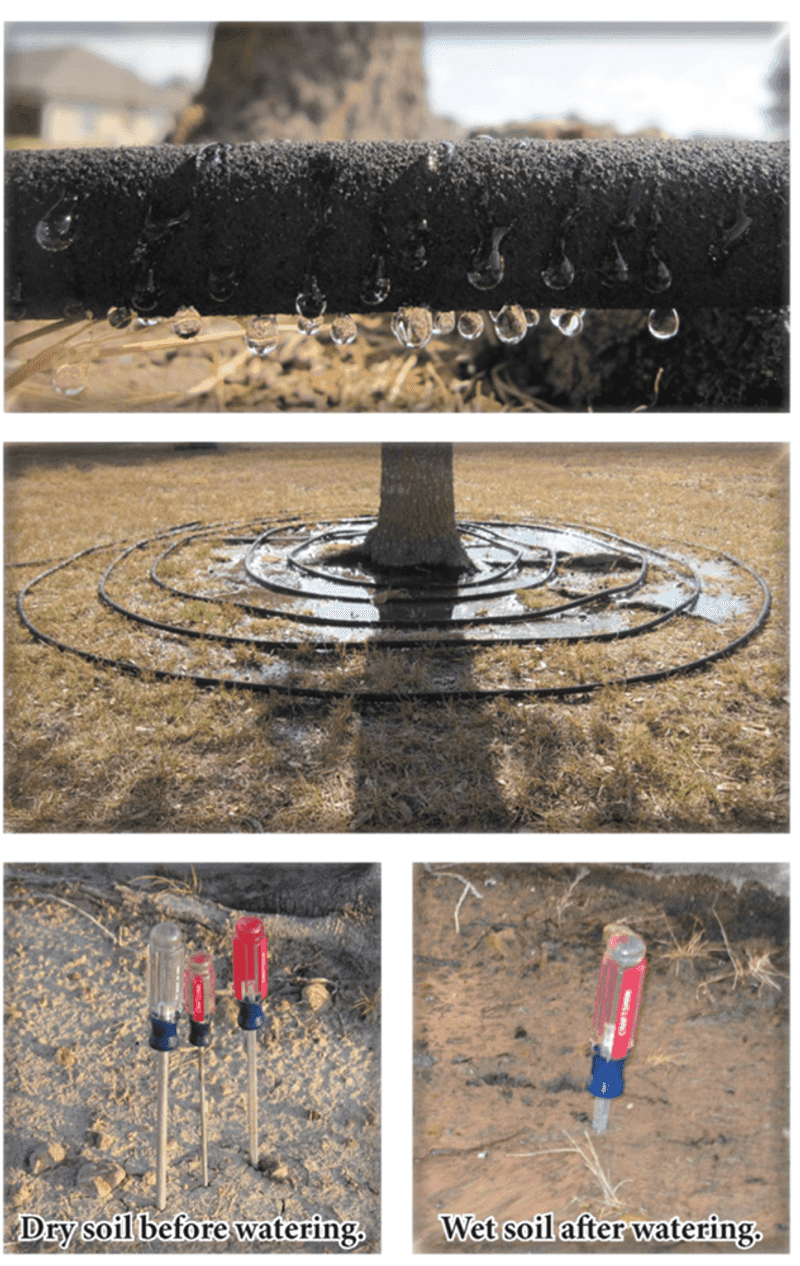
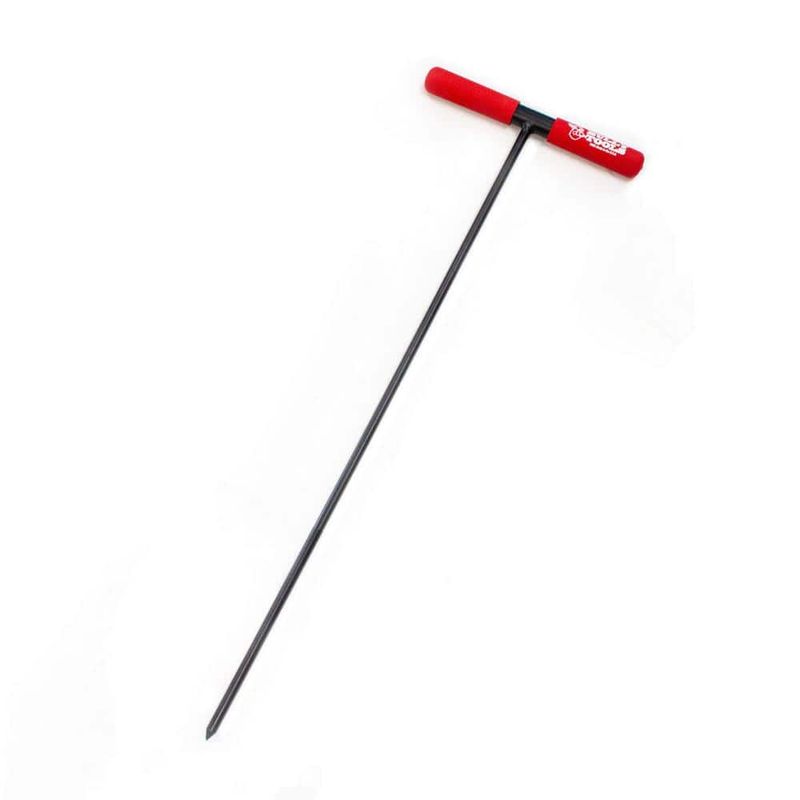
Push an 18-inch metal rod, a long screwdriver, or a purpose-built soil probe into the ground after you water.
In moist soil, it slides in with noticeably less resistance.
In dry, compacted ground, it stops short or requires real force.
That difference in feel tells you more than any watering schedule printed on a calendar.
Check several spots around the root zone, not just one.
A buried rock, a compacted patch from foot traffic, or a dry pocket beneath a dense root mat can give you a misleading reading if you only probe once.
University of Georgia Cooperative Extension guidance on shade and street tree care emphasizes checking multiple locations to get an accurate picture of soil moisture across the root zone.
For newly planted trees, the check is slightly different.
Texas SmartScape recommends checking soil moisture when it has dried to about 4 to 6 inches deep, using that as the trigger to water again rather than following a fixed day of the week.
A newly planted tree has a much smaller root ball than an established tree, and it can dry out faster than the surrounding soil suggests.
The probe also tells you when to stop.
If the soil feels wet and heavy several inches down and water is pooling on the surface, that tree does not need more water today.
Let it dry modestly before the next application.
Roots need air as much as moisture, and a probe check takes about two minutes.
Established Trees Need Longer Pauses
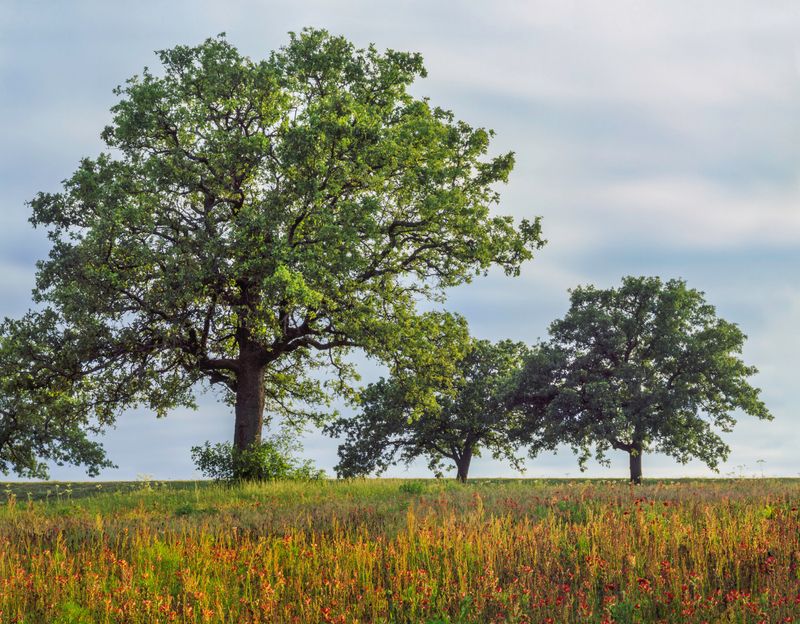
One of the most common mistakes with established trees is treating them like a vegetable garden and watering on a short, frequent schedule.
Mature trees with broad root systems generally do better with a slower, deeper soak followed by a real rest period.
A reasonable starting point during a dry spell for many established Texas trees is a thorough watering event every 2 to 4 weeks.
Texas A&M AgriLife Extension drought guidance suggests large trees may need watering roughly twice monthly during prolonged drought, though that is a guideline, not a statewide rule.
Rainfall, heat, wind, tree condition, and your soil all change the math.
Soil texture is probably the biggest variable.
Sandy soils, common in parts of East Texas, drain quickly and dry out faster, so you may need to water more often or check soil moisture more frequently between events.
Heavy clay, which covers much of North and Central Texas, absorbs water slowly and holds it longer, but it can also shed water or stay waterlogged if you apply too much too fast.
Texas Water Development Board landscape guidance recommends adjusting irrigation schedules to match soil type and drainage rather than following one fixed calendar.
Prolonged saturation is genuinely harmful to roots.
Soil that stays wet for days on end limits the oxygen roots need to function, and root decline can follow.
The goal is moist soil that dries modestly between waterings, not soil that swings from soaked to bone-dry and back again.
After any meaningful rainfall, check your soil before watering again.
A half-inch rain does not always penetrate as far as it seems, but a good soaking storm might push your next watering out by a week or more.
Let the probe, not the calendar, make that call.
Newly Planted Trees Follow Another Clock
A tree you planted last fall or this past spring is in a completely different situation than the 20-year-old oak shading your back porch.
Treating them the same way is one of the fastest routes to losing a new tree during a Texas summer.
A newly planted tree has a limited root ball that may extend only a foot or two beyond the trunk.
It has not yet sent roots out into the surrounding soil, so it depends entirely on the moisture in that small zone.
Heat, wind, and low humidity can dry out that root ball faster than you expect, even when the surrounding soil feels fine to the touch.
Texas A&M AgriLife Extension’s Tree Answers guide outlines an establishment watering progression: roughly 1 pint to 1 quart of water applied daily during the first week, 1 to 2 quarts every other day during the second week, 2 to 3 quarts every third day during the third week, and then weekly watering if the tree still needs it.
The guide presents these as starting guidelines, not rigid prescriptions.
Soil moisture controls each decision, and triple-digit heat or dry winds mean you check more often, not less.
Texas SmartScape notes that newly planted trees in North Central Texas may need monitoring and supplemental watering for at least 18 months before they are considered established.
That timeline is a regional reference point, not a guarantee that applies identically across every Texas climate and soil type.
Water the root ball directly during establishment, not in a wide ring the way you would for a mature tree.
As the tree grows and roots spread outward over the first year or two, gradually widen where you apply water to encourage that outward expansion.
Patience here pays off for years.
Mulch and Separate Irrigation Protect the Gain
You can do everything right with your watering technique and still lose ground if the soil dries out twice as fast as it needs to.
A broad mulch ring is one of the most practical ways to hold onto the moisture you worked to put there.
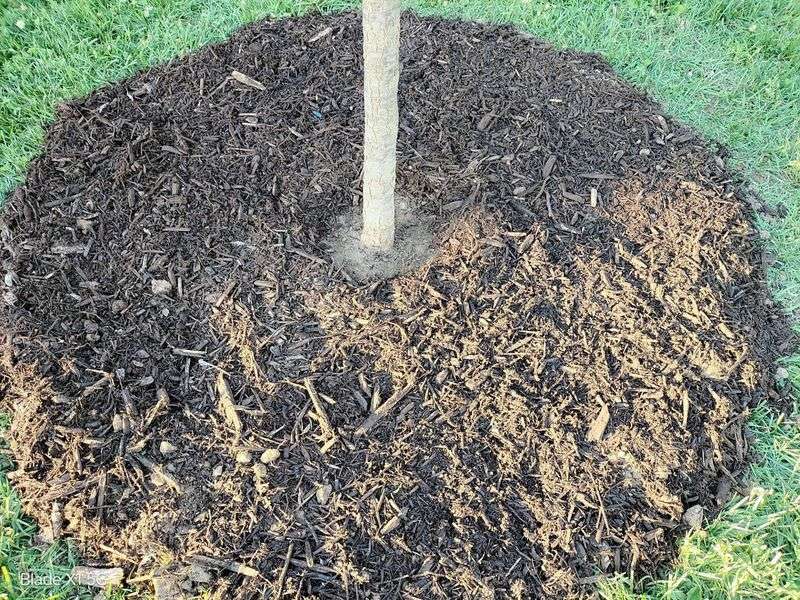
A layer of wood chips or shredded bark about 2 to 4 inches deep across a wide ring under the canopy can reduce evaporation from the soil surface, moderate soil temperature during intense heat, limit weed competition, and reduce the risk of mower or trimmer damage to the trunk and surface roots.
Texas A&M AgriLife Extension and Texas SmartScape both recommend keeping that mulch several inches away from the trunk itself.
Piling mulch against the bark, what some people call a mulch volcano, traps moisture against the wood and can contribute to decay over time.
A broad ring is far more useful than a small decorative circle.
If your mulch only covers a 2-foot radius, it is doing a fraction of what it could.
Extend it out toward the dripline when you can.
The other piece is separating how you water your trees from how you water your lawn.
Turf grass typically gets frequent, shallow watering, sometimes every few days during hot weather.
A mature tree needs a slow, broad soak that reaches 12 to 18 inches deep, applied far less often.
Texas Water Development Board guidance recommends irrigating trees, shrubs, and turf on separate schedules that match each plant’s actual needs.
If your sprinkler system runs the same zone for grass and a large oak, the tree is almost certainly getting the wrong amount of water at the wrong frequency.
Mulch and separate irrigation do not replace deep watering.
They make each watering event go further.
Local Rules and Tree Limits Still Matter
Before you set up a watering schedule, the first thing to check is whether your city, utility, or groundwater district has restrictions in place.
During drought conditions, local rules override general gardening guidance, and the penalties for watering on the wrong day or at the wrong time are real.
Texas Water Development Board drought FAQs confirm that drought contingency plans and watering restrictions are managed locally by water suppliers, not at the state level, so what applies in San Antonio may differ from what applies in Lubbock or Beaumont.
Once you know your local rules, the practical sequence is straightforward.
Check the soil with a probe before you water.
Apply water slowly across the root zone beginning near the dripline.
Watch for runoff and pause if the surface pools.
Check again after watering to confirm you reached your target depth.
Then wait, monitor rainfall, and reassess before the next application rather than running on a fixed timer.
Consistent, appropriate watering genuinely helps trees establish roots and reduces drought stress during difficult stretches.
USDA Forest Service research on urban tree mortality underscores that tree survival depends on a combination of factors, including species selection, planting conditions, soil drainage, and ongoing care.
Watering cannot fix poor planting depth, compacted soil that blocks drainage, a disease like oak wilt, an active pest infestation, or a species planted in the wrong climate zone.
What deep watering can do is give a well-sited, healthy tree its best chance to push through the heat, hold onto its canopy, and come back stronger next season.
That is one reliable layer of tree care, and right now, before the next blast of summer heat arrives, it is exactly the right layer to get right.