
These Invasive Plants Are Actually Illegal To Have Growing In Your Florida Yard
Follow us on Google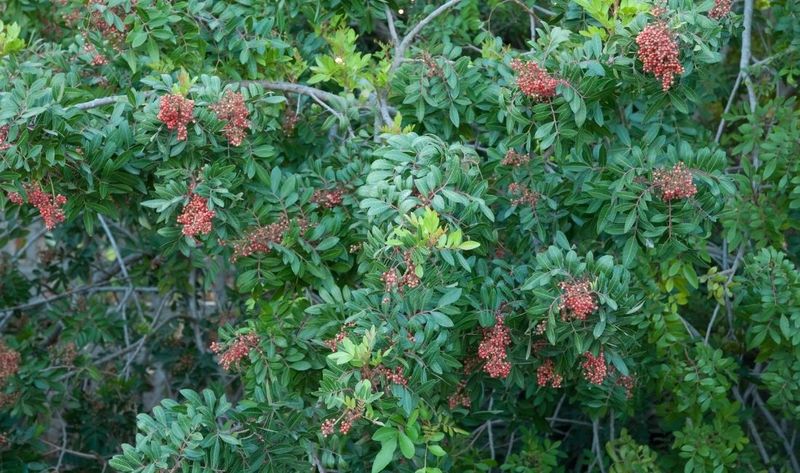
You step onto the patio after breakfast and the humid air already sits heavy on your shoulders.
A pretty vine has crept a little closer to your fence overnight, and it looks harmless enough.
But some of these fast-growing beauties are genuinely against the law to keep in Florida.
Let us walk through the plants the state has banned, why they matter, and exactly what to do if one shows up in your yard.
1. Brazilian Pepper Tree: A Red-Berried Menace
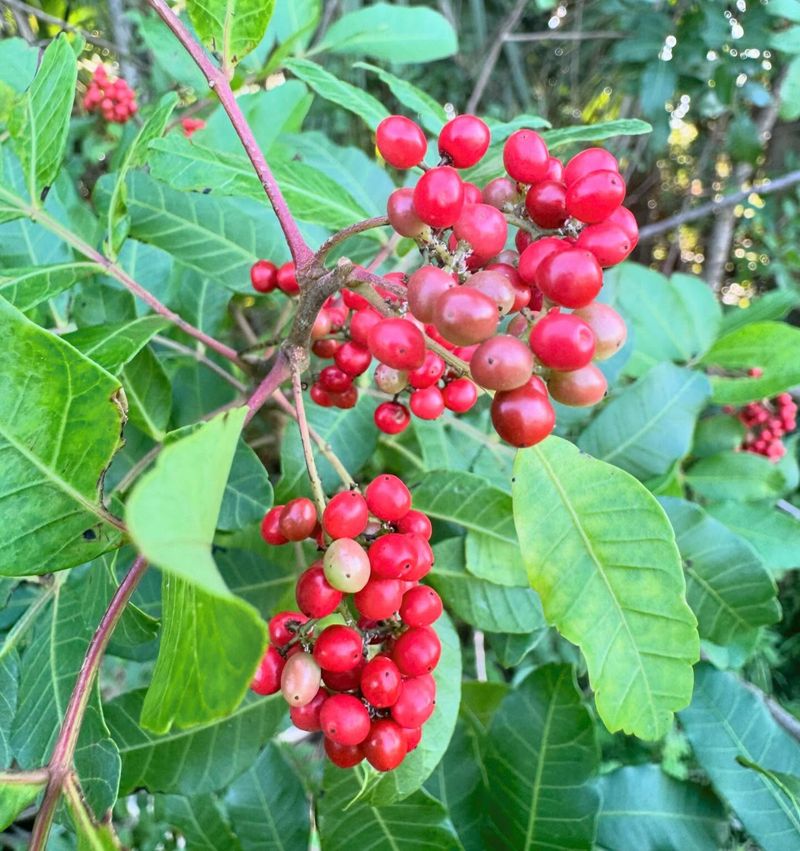
Picture a bushy little tree loaded with bright red berries that make your yard pop around the holidays.
Many Central Florida gardeners once welcomed Brazilian peppertree, Schinus terebinthifolius, for that very look.
Brought from South America in the mid-1800s, it seemed like a charming ornamental.
But this plant had a hidden agenda.
It formed impenetrable thickets, smothering native plants along fence lines and coastlines from the Gulf Coast to the Keys.
Its sap can irritate skin much like poison ivy, and its pollen troubles some folks who breathe it in.
Here is where it gets tricky.
Brazilian peppertree sits on Florida’s Noxious Weed List, so it is genuinely illegal to plant, grow, or move without a permit.
Cut it down without treating the stump and a fresh army of sprouts appears within weeks.
To truly beat it, cut the tree at its base, then paint a systemic herbicide onto the fresh stump within about 5 minutes so the chemical reaches the roots.
For big trees, a cut-stump treatment works well.
You are protecting your backyard and the fragile habitats next door.
2. Melaleuca Trees Form Living Walls That Harm Everglades
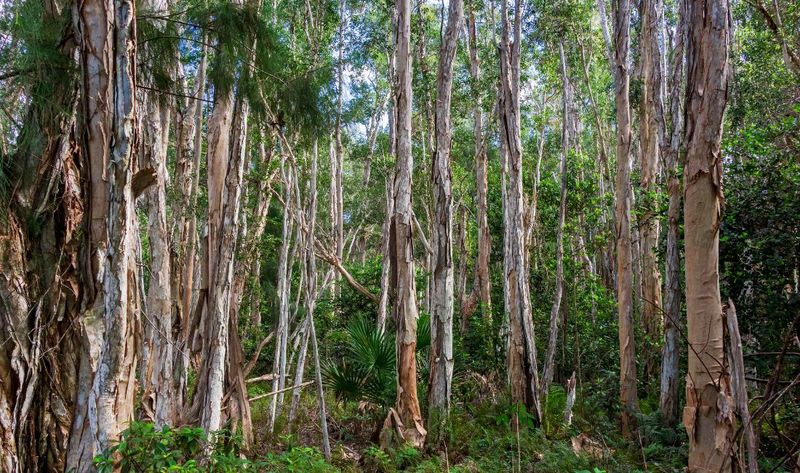
Notice a tree with papery bark that peels like old wallpaper and puffs of fluffy white flowers.
That is melaleuca, Melaleuca quinquenervia, the tree many longtime Floridians call the punk tree.
It arrived from Australia in the early 1900s, praised for drying up swamps and providing timber.
But melaleuca had a different plan.
It became a biological bulldozer, turning open South Florida wetlands into crowded, uniform forests.
It loves wet ground and shrugs off fire, resprouting quickly after burns.
The real damage is how it rewires whole ecosystems.
In the Everglades it builds dense stands, raises soil levels, and changes the natural fire patterns that sawgrass marshes need to survive.
Its tiny seeds ride the wind and water, so a single tree can seed a wide invasion.
Melaleuca is squarely on the Florida Noxious Weed List.
Removal often needs herbicide painted on cut stumps or basal bark, since it regrows from its roots.
Clearing it from your property is a direct way to help save the open marshes that give Florida its soul.
3. Australian Pine Is No Friend To Florida’s Coasts
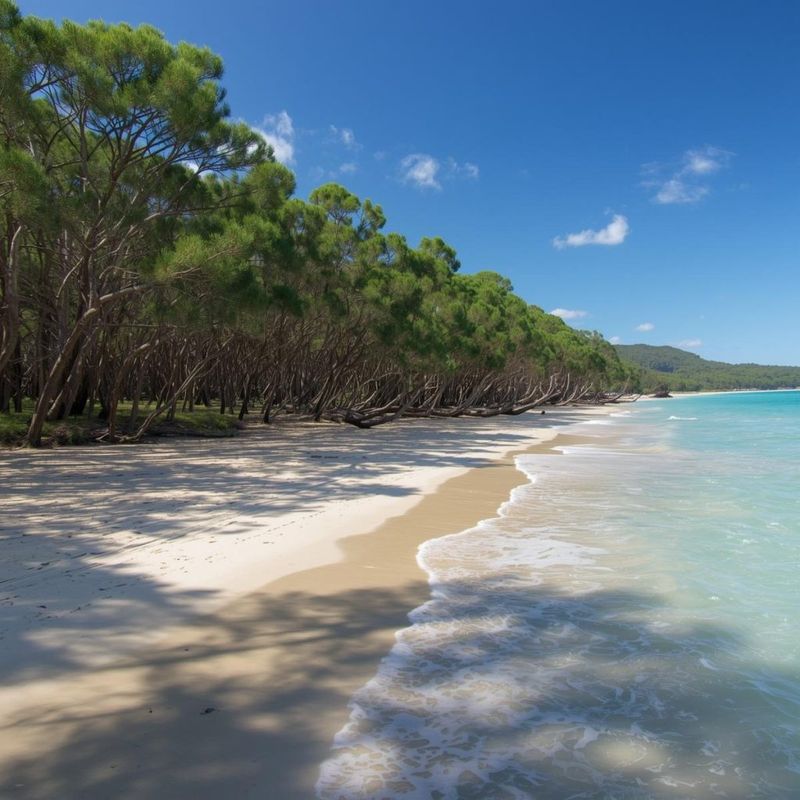
Picture a tall, graceful tree with feathery, needle-like branchlets swaying in the coastal breeze.
Australian pine, Casuarina equisetifolia, is not a true pine at all.
It came from Australia and Southeast Asia in the late 1800s, sold as fast shade and a way to hold sandy soils along the Panhandle and both coasts.
Families loved it for quick shade near salty, windy spots.
But its rapid growth and shallow roots hide a real problem.
Australian pine spews seeds that ride wind and water, colonizing dunes fast.
Its dense canopy shades out everything below, and its fallen needles release chemicals that stop other plants from growing.
During tropical storms, these brittle trees topple easily, tossing dangerous debris across yards.
Worse, they mess with sea turtle nesting by changing sand temperature and shape.
That is why Australian pine sits on the Florida Noxious Weed List.
Grind or chemically treat the cut stump to stop resprouting.
Replace it with a live oak, Quercus virginiana, or a sabal palm, Sabal palmetto, for tougher shade and real wildlife value.
4. Air Potato Vines Climb And Suffocate Native Trees
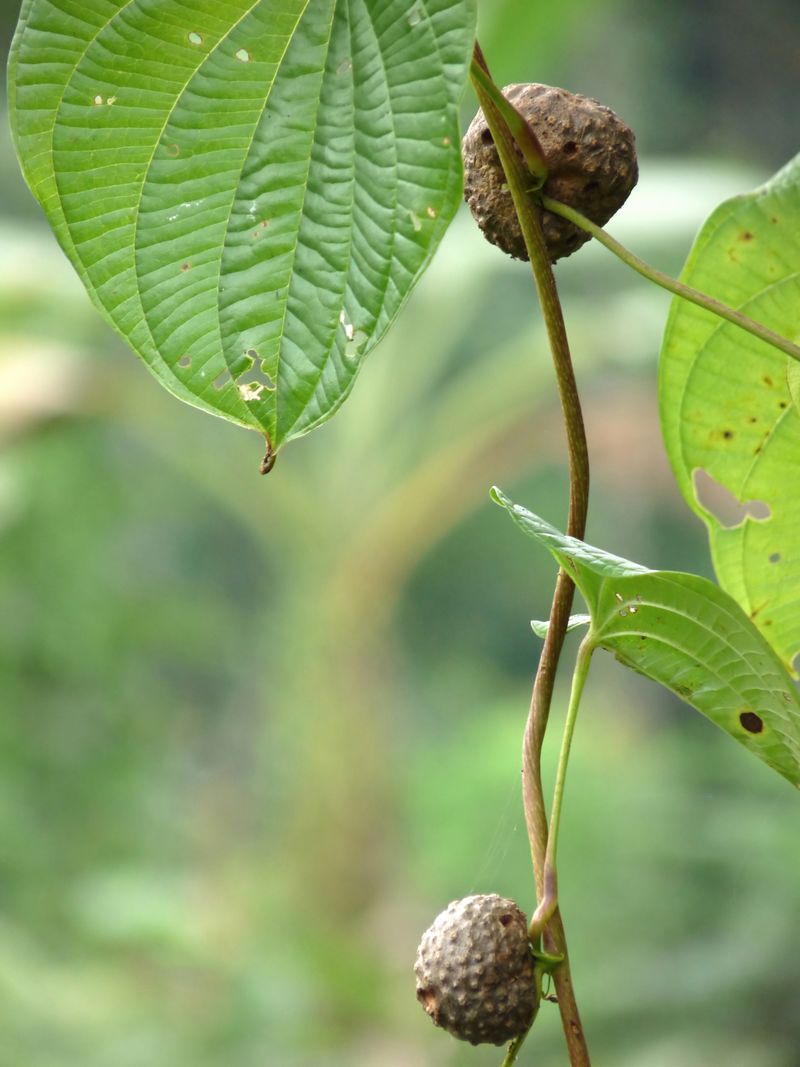
Spot a fast vine with heart-shaped leaves and odd little potato-like knobs dangling down, and you have found air potato, Dioscorea bulbifera.
It looks intriguing, but it is one of Florida’s most aggressive invaders.
Introduced in 1905 from Asia and Africa, it grows wild through the long humid summers of Central and South Florida.
Its trick is speed.
Air potato can climb up to 8 inches a day at peak season, forming a living curtain that blocks all sunlight from the plants below.
The falling bulbils sprout new vines, sometimes hundreds from one plant, and they can lie dormant in the soil for years.
Air potato is a regulated Florida Noxious Weed.
There is a helpful ally, a tiny leaf-eating beetle called the air potato leaf beetle, Lilioceris cheni, that can slow the spread.
For small yard patches, hand-pull the vines and collect every bulbil, even those hiding in the soil.
Toss them in the trash, never the compost, so they cannot regrow.
Steady effort here keeps your backyard trees from being quietly strangled.
5. Coral Ardisia Forms Dense Shades Of Trouble
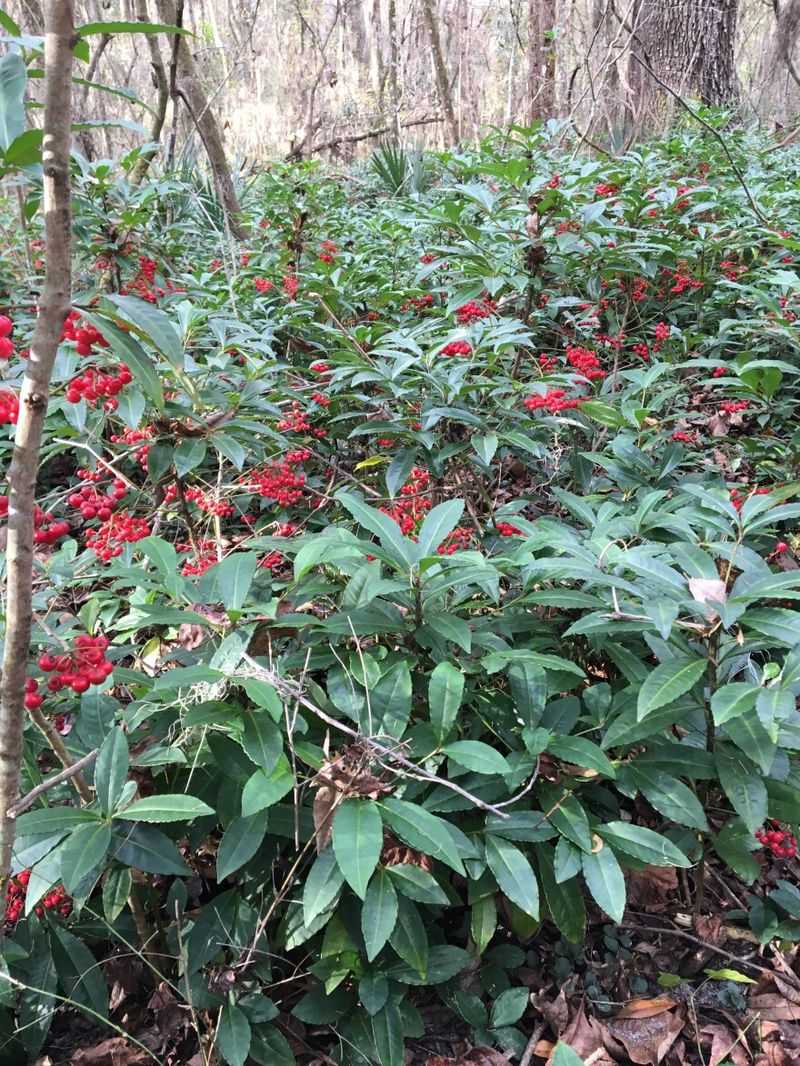
A shrub with glossy dark green leaves and bright red berries that hang on through winter looks like a gift for a shady corner.
Coral ardisia, Ardisia crenata, charmed many gardeners across North and Central Florida for exactly that reason.
It came from Asia, hardy and happy in our acidic sandy soils.
Beneath that shine sits a sneaky problem.
Birds gobble the red berries and scatter the seeds far and wide.
Once settled, coral ardisia builds thick stands in shaded woods, choking out native seedlings that cannot compete for light or water.
The result is a dull carpet of one plant where a diverse understory should be.
Coral ardisia is listed on the Florida Noxious Weed List, so it does not belong in your landscape.
Pull smaller plants by hand, roots and all, when the soil is damp after a downpour.
For larger patches, a careful herbicide treatment on the leaves works.
Clear the mature plants and stay after the seedlings, and you give native ground plants a fighting chance in your shade.
6. Chinese Tallow Trees: Fast Growing, Faster Invading
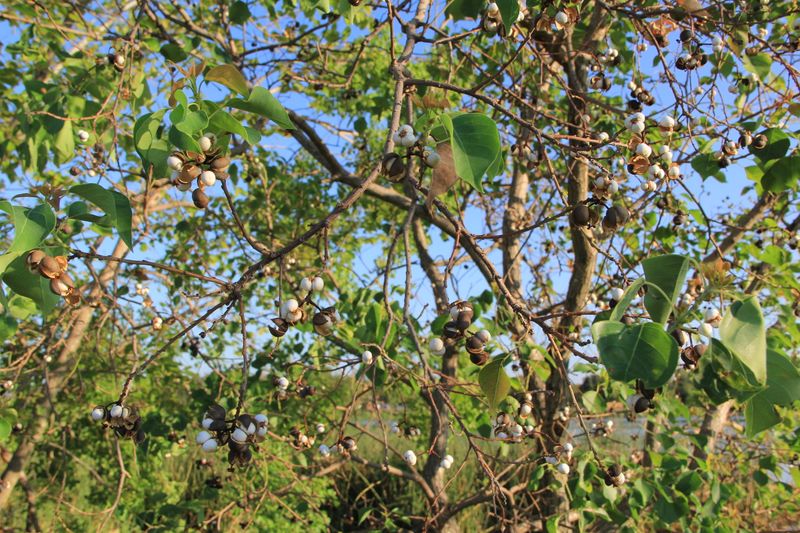
Walk through natural areas in North or Central Florida and you might spot a medium tree with heart-shaped leaves that blaze in fall.
Folks call it the popcorn tree because its waxy white seeds look like popped kernels.
Chinese tallow, Triadica sebifera, arrived in the late 1700s for its looks and seed oil.
It grows like it is in a hurry.
Some seasons it adds several feet of height, then pumps out heaps of seeds that birds carry everywhere.
It races into open fields and wetlands, elbowing out native cypress and oaks.
Before long you get dense, single-species stands that flatten local biodiversity.
Chinese tallow is officially a Florida Noxious Weed.
Young trees pull up by hand fairly easily.
Larger ones need cutting down followed by a herbicide treatment on the stump, since they resprout with real vigor.
Knock this one out and you keep your patch of Florida from turning into a boring monoculture, leaving room for the native trees that actually belong here.
7. Old World Climbing Fern: A Fire Hazard In The Canopy
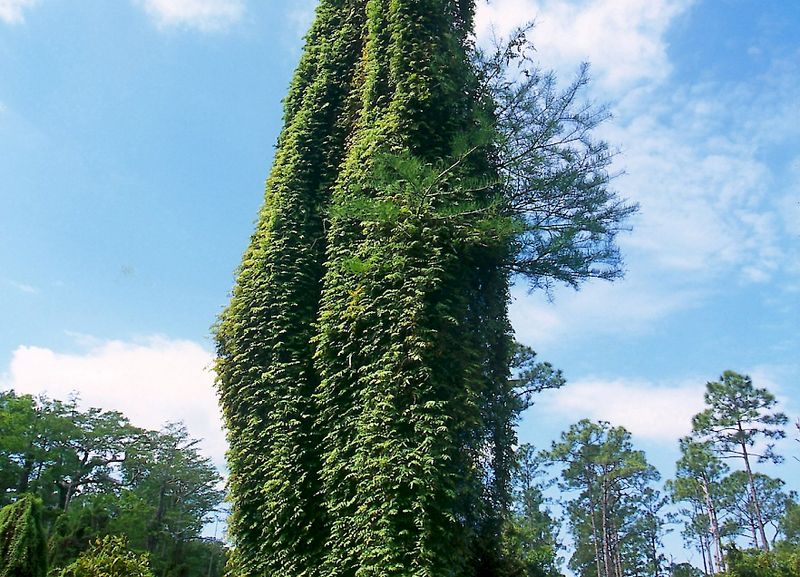
A fern does not usually scare anyone.
But imagine one that refuses to stay in a pot and instead climbs straight up trees, forming thick tangled blankets.
Old World climbing fern, Lygodium microphyllum, is a genuine threat to South and Central Florida’s wild places.
It slipped out of cultivation in the mid-1900s.
Its main stem can stretch hundreds of feet, draping over mature trees and smothering them by blocking the light.
That is bad enough, but the real danger is fire.
The fern builds what experts call fire ladders.
In Florida’s fire-adapted forests, where prescribed burns keep things healthy, the fern acts like a wick.
It carries ground fire straight up into the canopy, killing trees that would normally survive a surface burn.
Old World climbing fern sits on both the Federal and Florida Noxious Weed Lists.
Small patches can be hand-pulled if you remove every underground rhizome.
Bigger infestations usually need trained professionals with targeted herbicide.
Clearing it breaks a dangerous cycle and lets Florida’s forests handle the fires they genuinely need.
8. Hydrilla Invades Our Waters
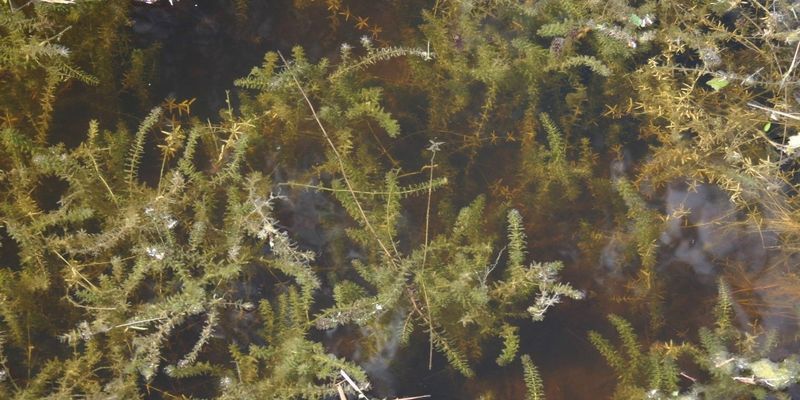
Even without a pond, this one matters to every Florida homeowner.
Hydrilla, Hydrilla verticillata, is a lush green underwater plant from Asia and Florida’s most widespread invasive aquatic species.
It escaped the aquarium trade in the 1950s and now hides in freshwater from the Panhandle to the Keys.
Our warm water is its playground.
Hydrilla grows from tiny fragments and can add up to an inch a day, weaving dense mats that blanket lakes, ponds, and slow rivers.
Those mats block sunlight from native plants, then rob the water of oxygen as they rot, which can trigger fish kills and jam up flood control gates.
It also wrecks boating and fishing.
Hydrilla appears on both the Federal and Florida Noxious Weed Lists, so possessing or moving it is illegal.
Most homeowners cannot clear it from a big lake, but for a small pond, try mechanical removal or call your local UF/IFAS Extension office for approved aquatic herbicide advice.
The simplest, most powerful move you can make is never dumping aquarium contents into a waterway.
9. Water Hyacinth And Water Lettuce: Floating Threats
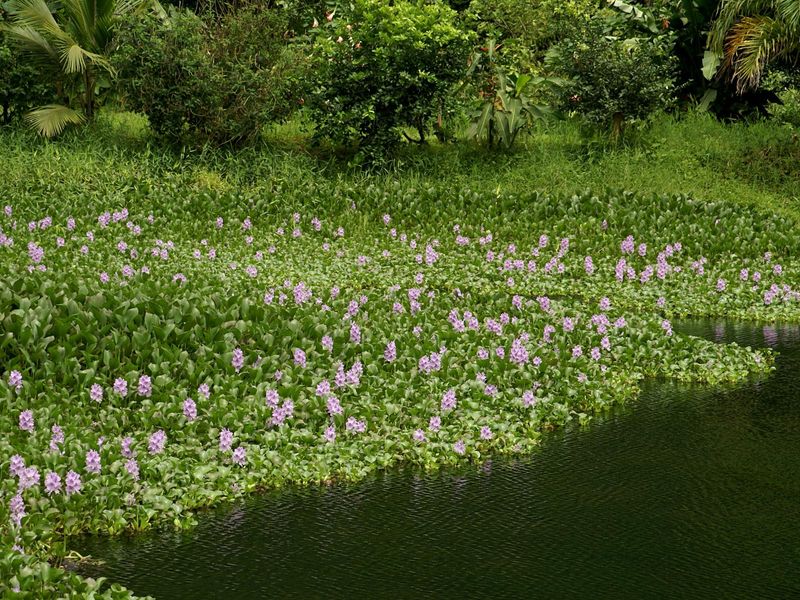
They float so peacefully on canals that they look like decoration.
Water hyacinth, Eichhornia crassipes, wears delicate lavender flowers, while water lettuce, Pistia stratiotes, looks like an open head of lettuce.
Both drift through canals and ditches across Central and South Florida, and both are banned.
Water hyacinth came from South America in the late 1800s.
Water lettuce has a debated origin but earns its invasive label here all the same.
Their crime is explosive growth.
A single water hyacinth can throw off thousands of seeds and double its population in just 6 to 18 days.
The thick floating mats choke off sunlight and oxygen, harming fish, and water lettuce mats make perfect mosquito nurseries.
Both are prohibited aquatic plants in Florida, so you cannot keep or move them without a permit.
For a small water feature, scoop them out carefully by hand.
For larger water bodies, report them to your local FWC office or UF/IFAS Extension.
Keeping these floaters out protects open waterways and cuts down on the mosquitoes buzzing your porch evenings.