
That Low Purple Weed Spreading Through Your Pennsylvania Yard Is Actually A Native Wildflower Worth Keeping
Follow us on Google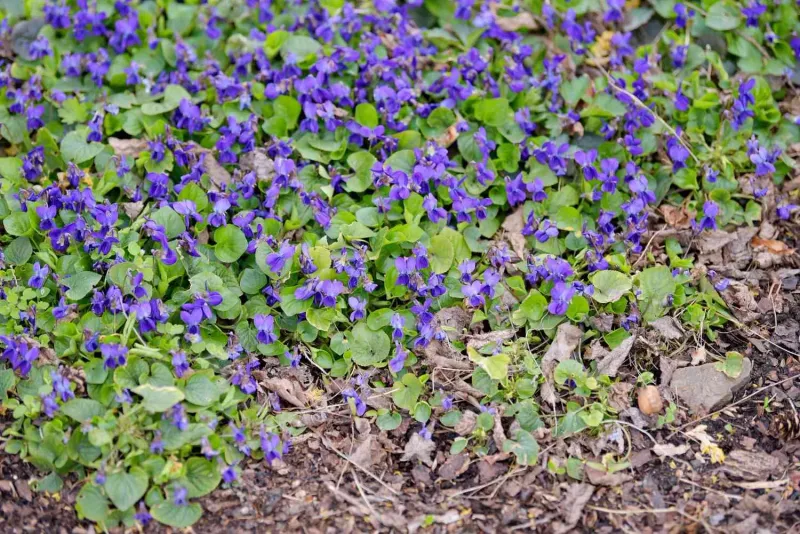
You step outside on an April morning and notice a low carpet of purple flowers spreading through the shadier edges of your yard, and your first instinct is probably to pull them out.
Before you do, it is worth a closer look, because that plant may be common blue violet, Viola sororia, a native Pennsylvania perennial that quietly earns its place in the right spot.
It is not automatically a keeper in every corner of your lawn, but it is genuinely worth understanding before you decide.
First, Confirm What Is Growing
Color alone cannot close the case.
A low purple flower spreading through your lawn is a reasonable clue, but several plants can match that description, and the wrong call can mean preserving something you genuinely do not want.
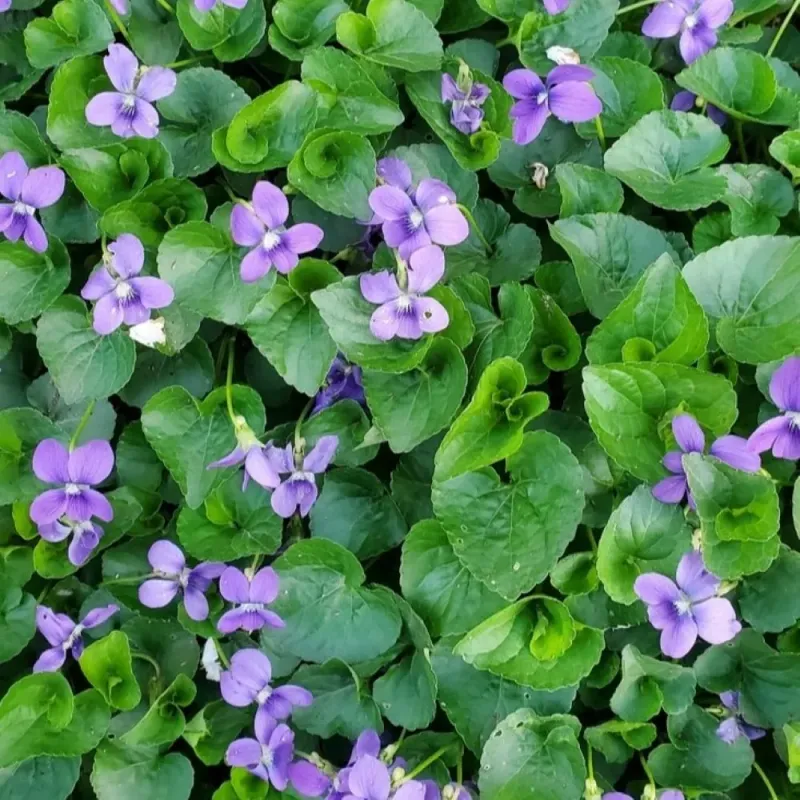
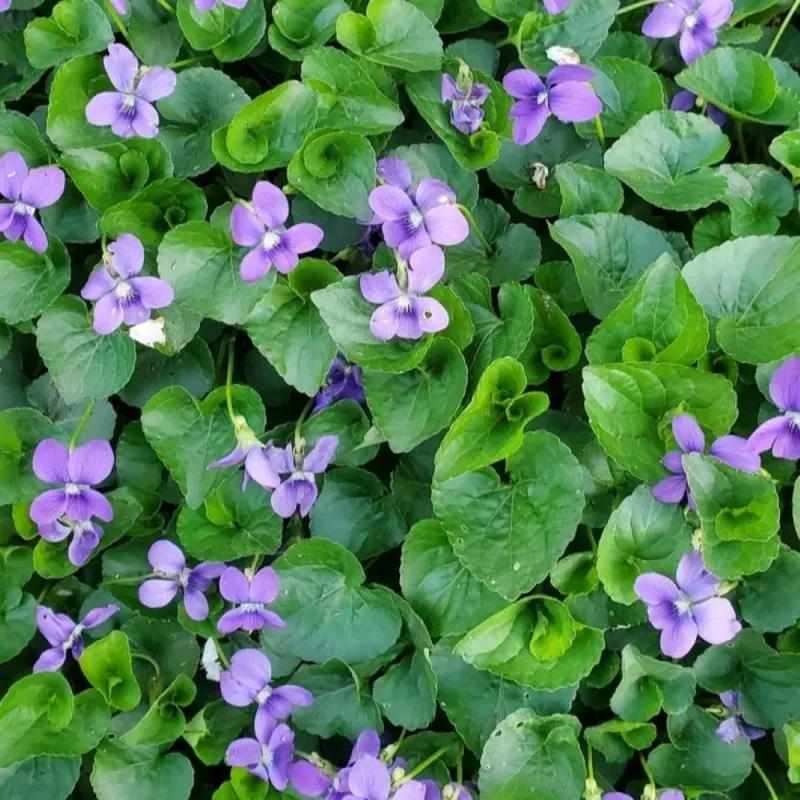
Common blue violet, Viola sororia, forms a low basal clump with all leaves rising directly from the crown rather than along an upright leafy stem.
Those leaves are heart-shaped, slightly glossy on top, and toothed around the edge, reaching up to about 3.5 inches long according to Penn State Extension’s wild violet profile.
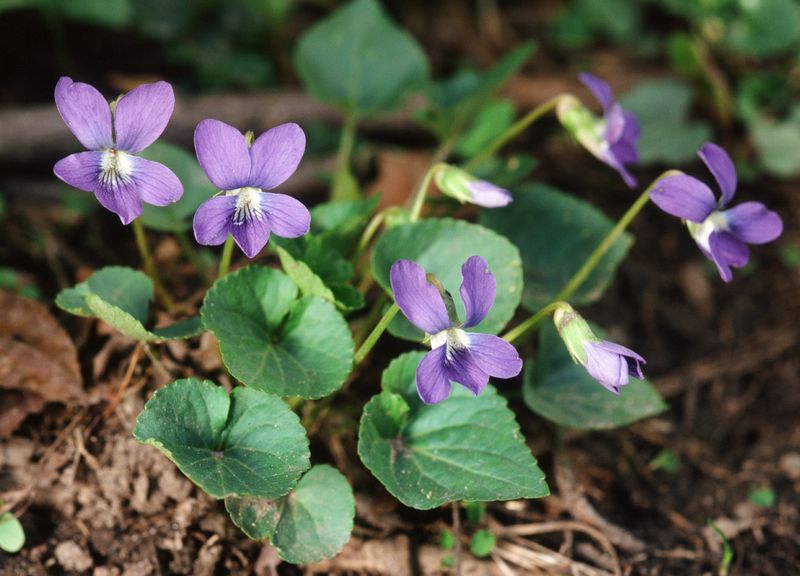
The flower stalks stand up to roughly 6 inches tall and carry one bloom each, with five irregular petals in blue-violet or purple, each flower spanning approximately 1/2 to 3/4 inch across.
Look closely at the two side petals and you will often find small white hairs at their base, a useful confirming detail.
Bloom time runs generally from early April through June, so spring is your best window to catch the flowers and check all the features at once.
The Flora of Pennsylvania entry for Viola sororia describes it as the state’s most common violet, present in moist woods, forest edges, fields, and disturbed areas including lawns.
Here is where it gets tricky.
Not every low purple spring plant is a violet, and not every violet is Viola sororia.
If the flowers are yellow, the leaves are glossy and kidney-shaped with mostly smooth margins, or the stems sprawl and root where they touch soil, you may be looking at lesser celandine, an invasive nonnative plant that Penn State Extension specifically warns can be confused with violet foliage.
Lesser celandine has eight or more narrow petals and is on Pennsylvania’s Noxious Weed List.
Do not preserve an unidentified spring mat on appearance alone.
A Native Violet Still Needs Boundaries
Confirmed as Viola sororia, the plant has a genuine claim to belong here.
Flora of Pennsylvania lists it as secure statewide, present throughout the commonwealth in moist woods, forest edges, and disturbed ground.
The Kew Plants of the World Online database confirms Pennsylvania within the species’ native range across eastern North America.
That is a real distinction worth recognizing.
But the common name wild violet covers a lot of ground.
Multiple Viola species grow in Pennsylvania lawns and landscapes, and not all of them are Viola sororia.
European sweet violet, Viola odorata, is a different plant entirely, native to Europe and sometimes sold as a garden ornamental.
It can naturalize and spread, and its presence does not carry the same native-ecosystem value.
Other native violet species also occur in the state, which is one more reason to confirm the specific combination of features before deciding what you have.
Native status matters, and Penn State Extension describes native violets as low-maintenance groundcovers that support wildlife and can fill difficult landscape areas where turf performs poorly.
That is a real endorsement, and it holds up under scrutiny.
What it does not mean is that every Viola sororia colony in every corner of your yard deserves to stay.
A plant can be native, documented, and ecologically useful while still being the wrong fit for a formal bed or a dense lawn you have spent years maintaining.
Native status makes a violet worth considering, not automatically worth keeping everywhere it decides to show up.
Its Wildlife Benefits Have a Clear Scope
A confirmed violet patch does real work in the yard, just not the sweeping kind that fills a garden with butterflies overnight.
The most documented benefit is its role as a host plant for fritillary butterfly caterpillars.
Pollinator Partnership’s host plant guide identifies Viola sororia as a host for the meadow fritillary, Boloria bellona, and notes violets as host plants for several fritillary species including the great spangled fritillary.
The caterpillars feed on violet leaves, making the plant a necessary part of those species’ life cycle rather than just a visiting stop.
Penn State Extension also reports that the spring flowers provide nectar resources used by sweat bees and mason bees, and that violets offer food or habitat connections with songbirds, wild turkeys, grouse, bobwhites, mourning doves, mice, and other small mammals.
Those are genuine benefits, and they are worth factoring into a decision about a shaded patch where turf is already struggling.
Keep the scope honest, though.
Violets are one habitat layer, not a complete pollinator garden.
A yard that wants to support a broader range of native insects still needs a succession of plants blooming at different times through the season.
Pollinator Partnership’s host plant guide identifies milkweeds as the host plants for monarch caterpillars, not violets.
Leaving a violet patch will not bring monarchs, and promising otherwise sets up a disappointment.
What a confirmed violet patch can do is support specific fritillary species and provide early-season floral resources while the rest of your native plants are still waking up, and that is actually enough to make it worth keeping in the right spot.
Rhizomes Make the Patch Persistent
Many Pennsylvania homeowners mow over the violet patch in May and expect the problem to resolve itself.
It does not.
The plant keeps returning, and the biology explains exactly why.
Viola sororia spreads through two systems working at the same time.
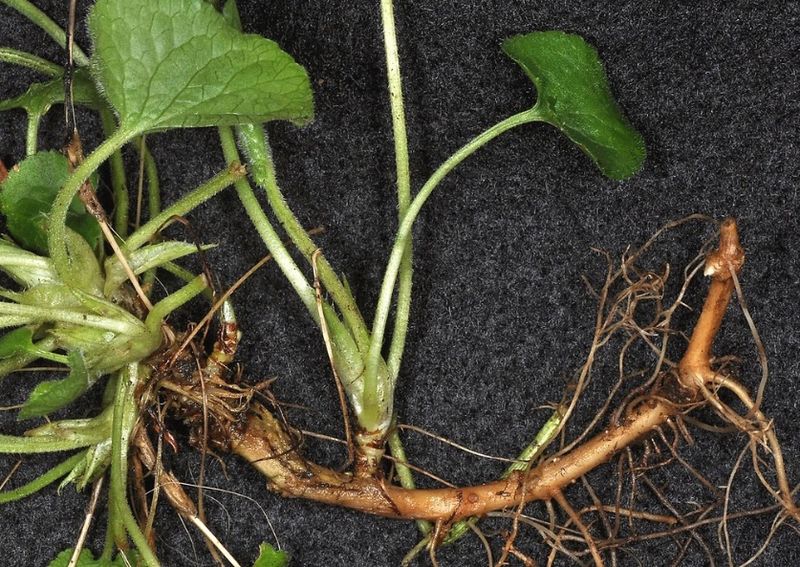
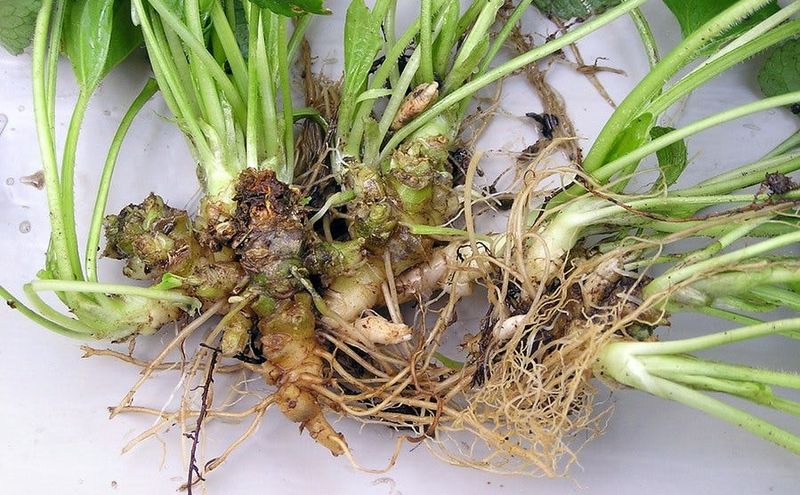
Short, branching underground stems called rhizomes allow established colonies to expand sideways and regenerate from fragments left in the soil after incomplete removal.
Penn State Extension notes that violets also produce special non-opening flowers later in the season, separate from the showy spring blooms, that self-pollinate and eject seeds without ever opening.
Ants then help move those seeds because the seed coatings contain fatty material that ants find attractive, carrying seeds to new spots across the yard before you notice.
Mowing can limit the plant’s height, but it does not reach the crown or the rhizomes below the soil surface.
Penn State’s turfgrass weed profile makes clear that hand removal is not effective when underground rhizomes remain.
University of Minnesota Extension’s wild violet page similarly explains that established colonies are persistent and difficult to eliminate once rooted in.
That same persistence is exactly what makes violets useful as a groundcover in a difficult shaded spot where you want something low and self-sustaining.
The plant is not misbehaving, it is doing what it does.
The question is whether you have placed it somewhere that welcomes that behavior or somewhere it will quietly crowd out what you actually wanted to grow there.
Keep It in Places That Welcome Spread
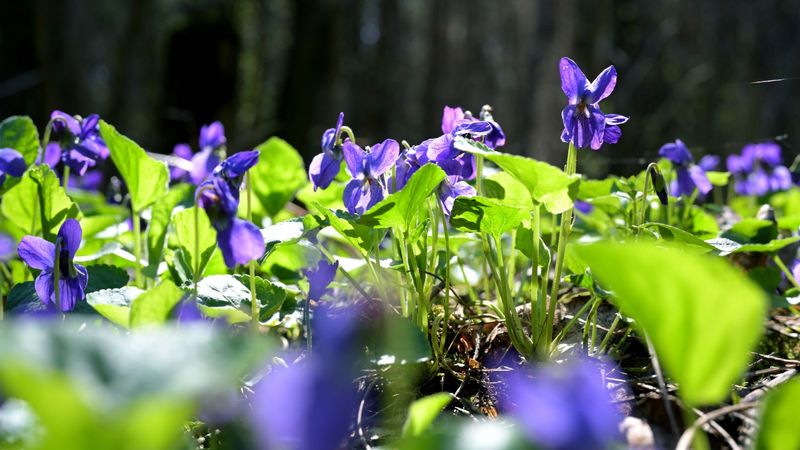
The most practical approach to a confirmed violet colony is selective tolerance, keeping it where its habits work in your favor and removing it where they do not.
Penn State Extension describes native violets as useful groundcovers for difficult landscape situations, and that framing is the right starting point.
Established patches beneath large shade trees, along woodland edges, under shrubs, or in thin areas where turf has always struggled are genuinely good candidates for a kept violet colony.
The plant tolerates full sun to part shade and can grow in clay soil, though it performs best in moist, humus-rich, moisture-retentive ground.
Missouri Botanical Garden’s Viola sororia profile notes that established plants can handle some drought, but that is different from a newly planted groundcover, which needs consistent watering until its root system is settled.
Pennsylvania conditions vary enough that no single care schedule applies statewide.
A shaded yard in the northern tier or on the Allegheny Plateau may stay moist well into summer, while a southeastern Pennsylvania yard with heavy clay and hot July afternoons dries out between downpours.
Observe what your specific site does before deciding a violet colony will thrive there without attention.
Penn State’s native groundcovers guide recommends spring or fall planting for native groundcovers generally, when heat stress is lower and establishment is easier.
Monitor the edges of any colony you decide to keep, especially near delicate perennials or formal beds.
Iowa State Extension notes that violets can be beneficial in naturalized areas but potentially troublesome in uniform lawns or planted beds.
A violet patch does not come with an off switch, so place it somewhere the spread is genuinely welcome before you walk away.
Remove an Established Colony Carefully
Sometimes the right answer is removal, and the plant’s biology makes that harder than it looks.
A few scattered plants along a bed edge are a different problem than a colony that has been spreading for 3 or 4 seasons through a lawn you want to keep dense.
For a small patch caught early, dig deeply enough to pull the crown and as much of the branching rhizome system as possible.
Penn State Extension warns that hand removal is not effective when rhizomes remain in the soil, so a quick surface pull will not solve the problem.
Work methodically, loosen the soil around the clump first, and accept that you may need to revisit the same spot more than once over the growing season.
For a widespread lawn infestation, dense turf is your best long-term defense.
Penn State recommends maintaining grass species well-suited to your site conditions, with regular mowing, appropriate fertilization, and good cultural practices that allow turf to outcompete the violet.
These steps can slow spread, but they are not a guarantee of suppression once a colony is firmly established.
University of Minnesota Extension similarly describes established colonies as persistently difficult to eliminate through cultural methods alone.
Penn State identifies triclopyr-containing herbicide products as among the more effective chemical options for wild violet in turf.
Repeated treatments over one growing season or across multiple years may be necessary because the leaves have a waxy surface that resists absorption, and the rhizomes allow the plant to recover between applications.
Preemergence herbicides do not provide useful control against an established colony.
Any herbicide decision requires reading the current product label in full before purchase or application.
The EPA states that pesticide labels are legally enforceable documents, and Pennsylvania health guidance confirms that using a pesticide contrary to its label is a federal-law violation.
Match the product to your specific turfgrass species, confirm it is approved for your application site, and use targeted treatment rather than blanket lawn spraying.
One application is unlikely to be the end of it.
Make the Decision Patch by Patch
The purple patch spreading through your yard is not automatically a treasure and not automatically a problem.
It depends on what it actually is, where it is growing, and how much spread you can live with in that particular spot.
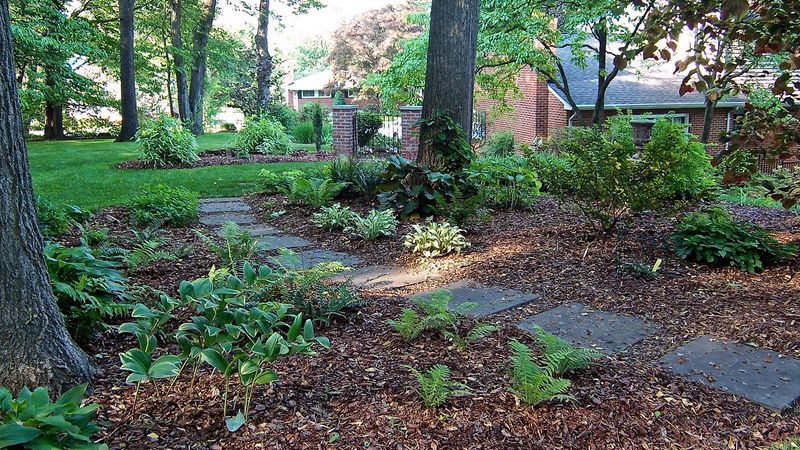
A confirmed common blue violet in a shaded area beneath a tree, along a woodland edge, or in a thin corner where turf has always lost is a genuinely reasonable groundcover choice.
Penn State Extension backs that assessment for difficult landscape situations where a low native plant fits the site.
Keeping it there is a deliberate habitat and groundcover decision, not just neglect dressed up as ecology.
Removing it from a formal bed or a dense lawn you maintain carefully is also a responsible choice.
The plant being native does not obligate you to host it everywhere it appears.
University of Minnesota Extension and Penn State’s lesser celandine warning both reinforce the same practical rule: confirm what you have before you decide to keep or remove it, because the wrong identification in either direction costs you time and effort.
Do not eat violets from a lawn that has been treated with herbicides, exposed to road runoff, or visited regularly by pets.
Uncertain identification makes any harvest unsafe, and violet foliage can resemble lesser celandine closely enough to cause a serious mistake.
If you want a broader wildlife habitat, Penn State’s native groundcovers guidance points toward a succession of native plants that bloom at different times through the season, which supports a wider range of wildlife than any single species can.
Keep the right patch, monitor its edges, and remove the wrong plant.
That is the whole decision, and it turns out you already have everything you need to make it.