
That Black Rat Snake In Your Pennsylvania Garden Is Actually Working For You
Follow us on Google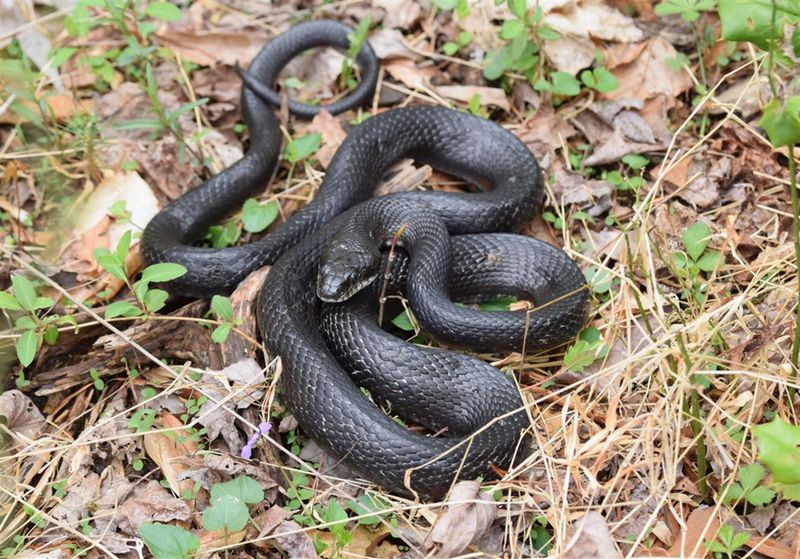
You step into the backyard on a warm June morning, coffee in hand, and something long and dark slides under the edge of your raised bed.
Your heart jumps before your brain catches up.
That snake gliding through your Pennsylvania garden might actually be doing you a quiet favor, because if it turns out to be a central ratsnake, commonly called a black rat snake, the mice chewing your seedlings just got a new neighbor they will not enjoy.
If That Black Snake Is a Central Ratsnake
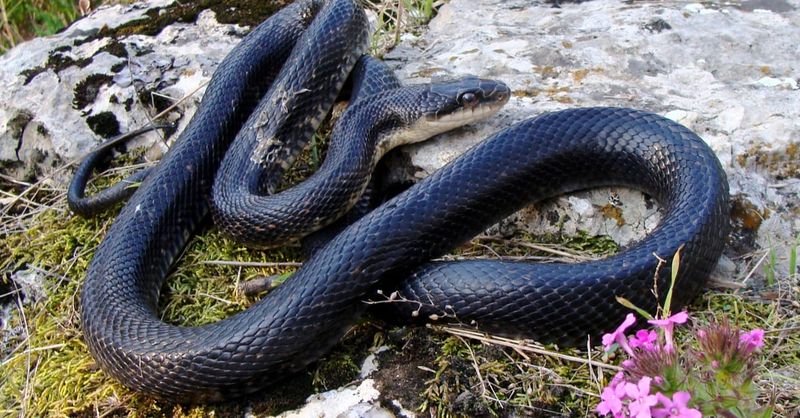
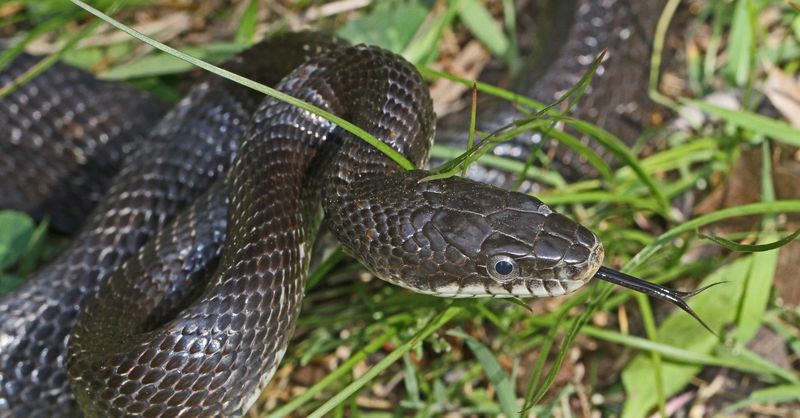
Pennsylvania’s central ratsnake carries a familiar common name you have probably heard: black rat snake.
The Pennsylvania Fish and Boat Commission uses “central ratsnake” as the current species designation, so you may see both names depending on whether the source is recent or older.
What matters most right now is that color alone does not confirm which snake you are looking at.
According to the Pennsylvania Fish and Boat Commission’s snake species profiles, the central ratsnake is the state’s largest snake, with adults recorded from 42 to 100 inches long.
Adults are often shiny black on top, with a white, yellow, or mottled underside.
Young snakes look different, keeping dark blotches on a lighter background, which means juveniles get misidentified constantly.
A correctly identified central ratsnake is nonvenomous and kills prey by constriction.
But here is where people get into trouble: Pennsylvania also has northern black racers, which are black, nonvenomous, and can reach 3 to 5 feet.
Black racers are not constrictors, and they can bite repeatedly if cornered or handled.
Two snakes, both black, both common, and both easy to confuse at a glance from across the garden.
The practical takeaway is this: do not try to identify any snake from color alone, and do not get close enough to check head shape, pupil shape, or underside scale patterns.
That kind of inspection puts you at risk, and it is unnecessary.
Give the animal space, and let a qualified wildlife professional handle any situation that requires more than watching and waiting.
Why It Turned Up Beside the Garden
Snakes do not wander randomly.
A central ratsnake appearing near your shed, raised beds, or porch showed up because your yard is offering something useful, and most Pennsylvania yards offer at least three things: prey, shelter, and warm spots to regulate body temperature.
Woodpiles, rock walls, brush piles, and dense low vegetation near buildings are all places where mice and voles set up house.
A ratsnake following that food supply will use the same structures as travel corridors and resting spots.
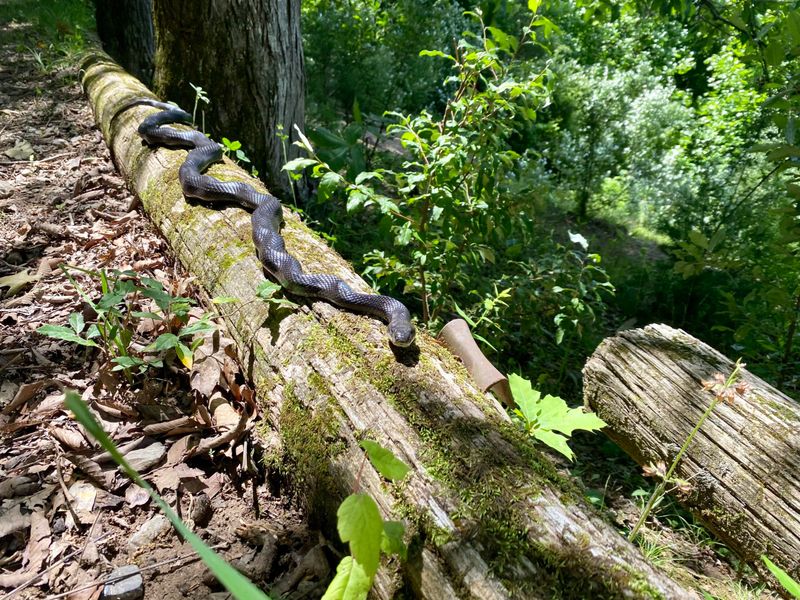
Penn State Extension’s snake management guidance notes that ratsnakes are capable climbers and may move through trees, shrubs, barn rafters, and outbuildings while searching for prey.
The snake beside your garden bed may have come down from a nearby oak, not up from the ground.
Warm surfaces matter too.
Stone walls, concrete paths, dark mulch, and south-facing slopes hold heat after sunrise.
A large dark snake on a sunny morning in May is almost certainly thermoregulating, not threatening anyone.
The right response to this is targeted, not sweeping.
Penn State’s neighborly landscaping guidance draws a useful line: reduce dense clutter and accumulated debris immediately around buildings, paths, play areas, and garden entrances, where close encounters are most likely.
That is different from stripping every log, rock pile, and native shrub from the back half of your property.
Deliberate habitat farther from the house supports birds, beneficial insects, and other wildlife that a well-run Pennsylvania yard genuinely benefits from keeping around.
Rodents Are Only Part of Its Menu
Calling a central ratsnake a rodent-control specialist is a little like calling a hawk a sparrow specialist.
Accurate in part, incomplete overall.
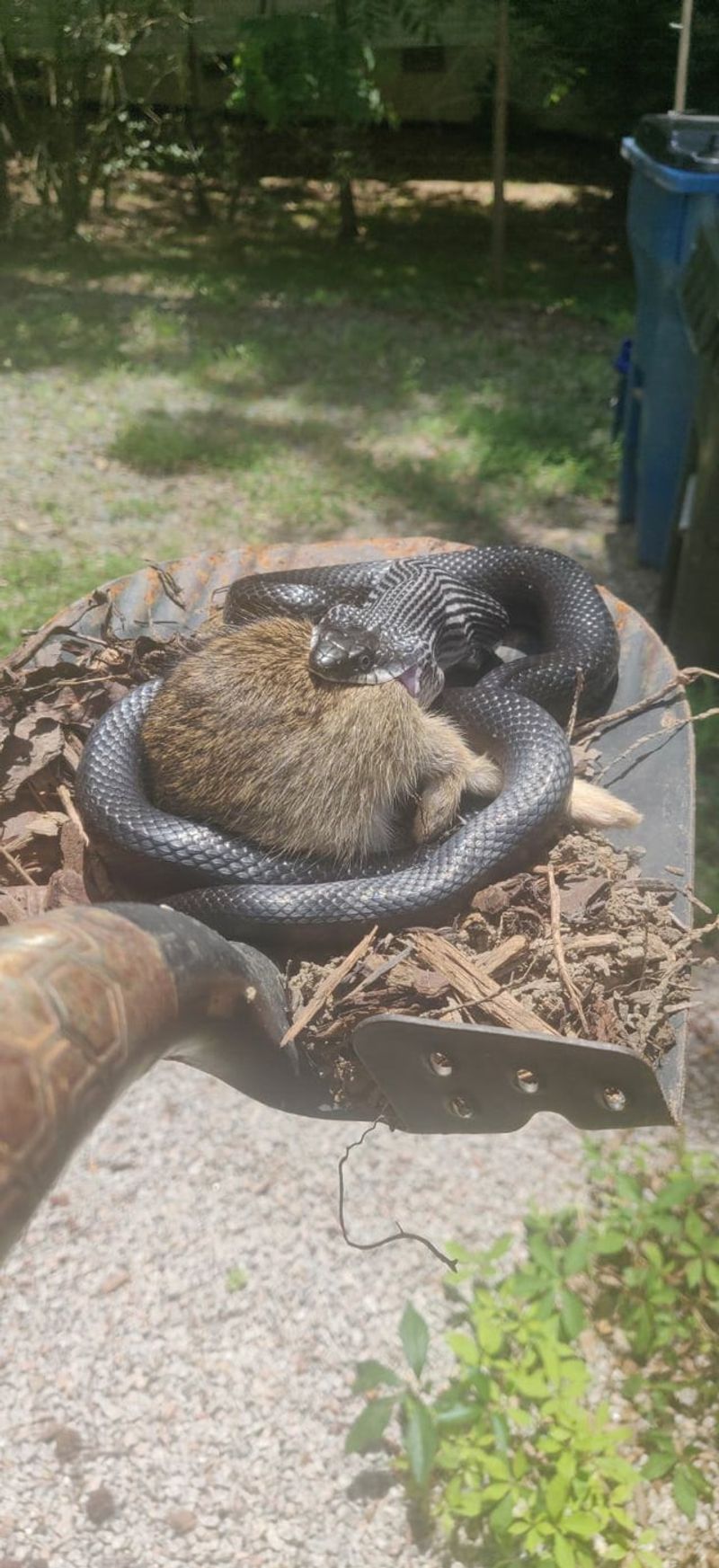
Pennsylvania sources confirm that ratsnakes feed on rodents and other small animals, including mice and squirrels, and Penn State Extension’s snake resource specifically notes that black rat snakes may climb trees and shrubs in search of bird nests and eggs.
So the same animal that might reduce the mouse pressure under your shed is also capable of raiding a nest box or taking a young bird from a low branch.
That is not a character flaw.
It is how a generalist predator operates, and it is worth knowing so you do not oversell the snake’s role or undersell its complexity.
What the snake genuinely contributes is opportunistic predation.
Mice and voles are abundant, easy to catch, and calorie-rich, so rodents make up a meaningful part of what ratsnakes eat around farms, gardens, and outbuildings across the central valleys and piedmont of Pennsylvania.
Penn State’s natural landscaping guidance frames native wildlife, including predatory snakes, as one component of a yard that manages itself better over time.
The honest framing is this: a correctly identified central ratsnake near your garden may reduce some rodent activity in that area.
It will not clear every mouse from the property, it does not control insects, and its presence does not prove that your chewed seedlings are already being avenged.
Useful predation and reliable pest control are two different things, and only one of them you can count on.
What It Can and Cannot Control
Seeing a ratsnake near your beds does not prove it caused any measurable drop in damage.
The snake may have arrived last week.
The chewed roots may be the work of voles that have been active since March.
Correlation between a snake sighting and fewer rodents is tempting, but the connection is not something you can bank on.
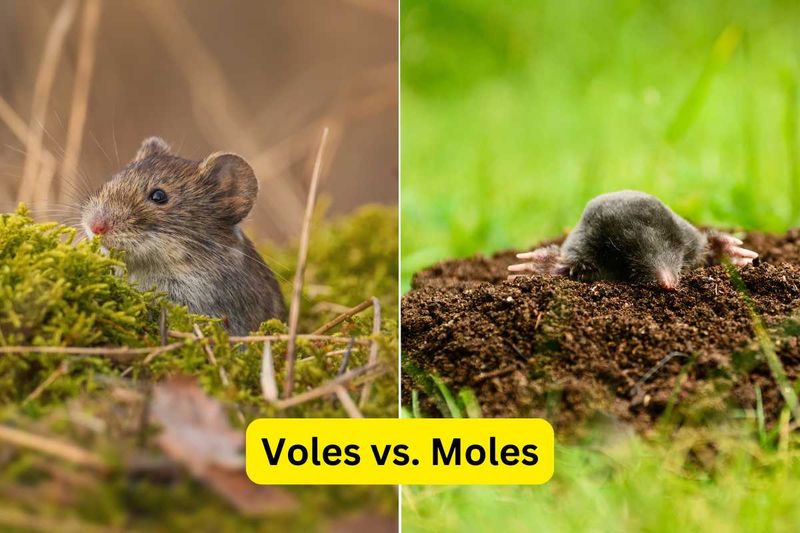
Voles are the animals most likely responsible for gnawed roots, eaten bulbs, stripped tree bark at ground level, and destroyed tubers in Pennsylvania gardens.
Pennsylvania Game Commission wildlife notes on mice and voles describe meadow voles feeding on grasses, sedges, seeds, roots, and inner bark, with real damage to ornamentals and young trees.
House mice can also affect seeds and stored materials in sheds and garages.
Moles are a separate story.
Penn State Extension’s mole guidance is clear: moles are not rodents, and they generally do not eat garden plants.
Their tunnels can open travel routes for mice and voles, which is why gardeners sometimes blame moles for plant damage that voles actually caused.
A ratsnake does not control moles and is not trying to.
Position the snake as one part of a broader system, not the whole answer.
Penn State’s snake resource supports this framing: snakes are valuable neighbors in the yard, and rodent management still depends on sanitation, habitat changes, exclusion, and targeted trapping.
The ratsnake may help at the margins, and that is genuinely worth something, but the dependable work happens through the steps you take directly.
Give Any Outdoor Snake Room to Leave
Freeze, take a step back, and give the animal a clear path away from you.
That is the whole first move, and it works for almost every outdoor snake encounter in Pennsylvania.
Most snakes that appear near garden beds, patios, play areas, or porch steps are moving through and will leave on their own if they do not feel cornered or threatened.
CDC guidance on venomous snakes advises staying away from snakes, keeping pets and children away, and walking around them slowly rather than approaching.
Do not pick the snake up.
Do not try to corner it against a wall or pin it with a tool.
Do not strike it with a shovel.
Each of those actions increases the chance of a bite and makes identification harder, not easier.
Pennsylvania has three native venomous snakes: the northern copperhead, the timber rattlesnake, and the eastern massasauga.
Their ranges and habitats differ across the state, with copperheads more widely distributed, timber rattlesnakes tied to mountainous terrain, and the massasauga found only in a few western Pennsylvania locations where it is listed as endangered.
A dark snake in your yard could be any of several species, and visual shortcuts such as head shape or color cannot safely tell you which one you have.
If you want a record of what you saw, photograph the animal from a safe distance, at least 6 feet back, without approaching or crouching down for a better angle.
When a snake cannot leave safely on its own, contact a qualified local wildlife professional rather than attempting to handle or relocate it yourself.
Pennsylvania reptile regulations matter here.
Fish and Boat Commission reptile and amphibian regulations govern taking and possessing native reptiles, with permits, possession limits, and other restrictions that apply in specific situations.
The Fish and Boat Commission amphibian and reptile FAQ can help you understand what applies to your situation, and a qualified wildlife professional can advise on anything that requires more than giving the snake space.
Seal the Places It Finds Indoors
A snake inside a basement, garage, or crawl space changes the situation.
The right response is exclusion, not a confrontation with the animal.
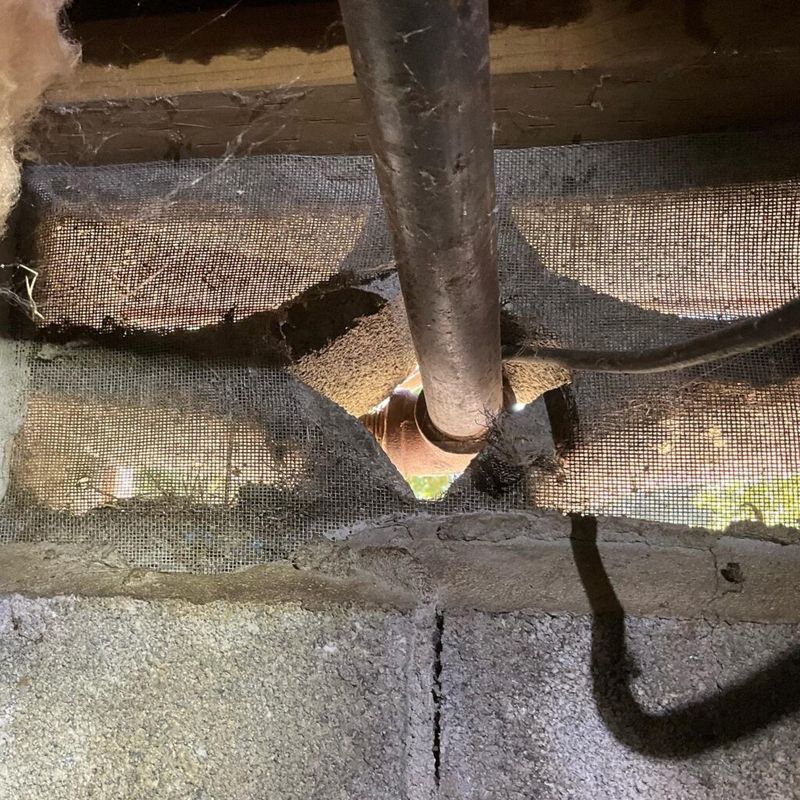
Finding a ratsnake inside a building usually means the building has gaps that also let in mice, and fixing those gaps solves both problems at once.
Penn State Extension’s wildlife damage control guidance recommends sealing foundation cracks, screening openings around pipes and wires, repairing torn window screens, and closing basement windows that do not have intact screens.
Hardware cloth over utility openings and weatherstripping on door gaps are practical starting points that cost far less than a repeated problem.
A quarter-inch gap at a foundation sill or a torn screen on a basement vent is genuinely enough for a young snake or a mouse to pass through.
Older Pennsylvania homes, especially those built before 1960, often have multiple access points that were never designed to exclude wildlife.
A systematic walk around the foundation in early spring, before the ground warms and animals start moving, is the best time to find and close those gaps.
If the snake cannot find its way out on its own, leave a clear exit path open and give the animal time before calling for help.
Do not attempt to trap, handle, or relocate it yourself.
Contact a qualified local wildlife professional or your county’s wildlife resources office if the animal is in a living space or cannot safely exit.
The CDC’s snake safety guidance applies indoors too: never handle a snake you have not positively identified as nonvenomous, and never assume a motionless snake is safe to approach.
Reduce the Rodent Habitat Around Your Plants
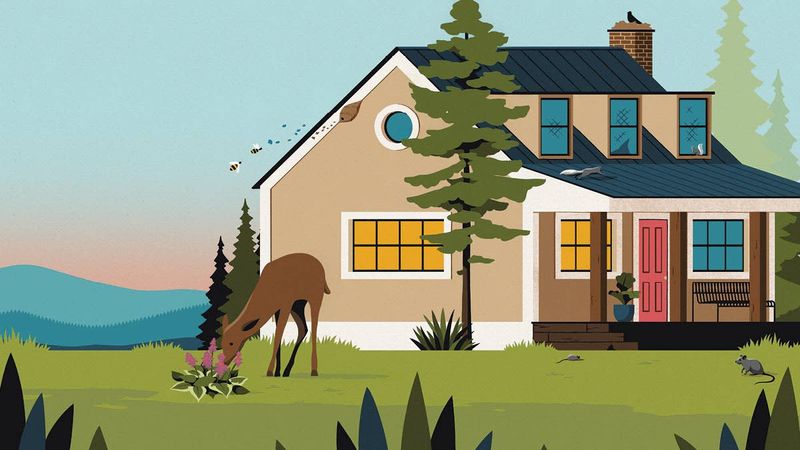
The most reliable way to reduce rodent pressure near your garden is to make the area less hospitable to rodents, and most of that work takes an afternoon and a few basic materials.
A ratsnake may contribute at the margins, but these steps are the ones you can actually count on.
Start with debris.
Accumulated brush piles, stacked lumber on the ground, and dense weedy growth within 10 feet of your house or garden beds give mice and voles exactly what they need: cover and nesting sites.
Remove that accumulated clutter close to buildings, paths, play areas, and garden entrances.
Stack firewood at least 12 inches above the ground on a rack, and keep it away from the house wall.
Penn State Extension’s snake management page ties this advice directly to reducing both rodent habitat and snake encounters near structures.
For vole damage to trees and ornamentals, hardware cloth is the practical fix.
Penn State Extension’s vole guidance recommends quarter-inch hardware cloth guards around vulnerable trees and shrubs, installed 18 to 24 inches high and buried 4 to 6 inches below the soil surface, with the cylinder large enough to allow several years of trunk growth.
Clear mulch and vegetation at least 2 feet from the base of trees to eliminate the vole cover that makes bark damage so easy for them.
House mice near buildings respond to a different set of actions.
Penn State Extension’s integrated pest management guidance for mice starts with removing what attracts them: seal food in hard containers, clean up spills promptly, fix dripping water sources, maintain the yard, seal entry holes with steel wool and caulk, and use snap traps where activity is confirmed.
Penn State’s wildlife damage control resource reinforces that exclusion paired with trapping outperforms any single-method approach.
These steps work whether or not a ratsnake ever visits your yard.
Choose Reliable Help Over Snake Myths
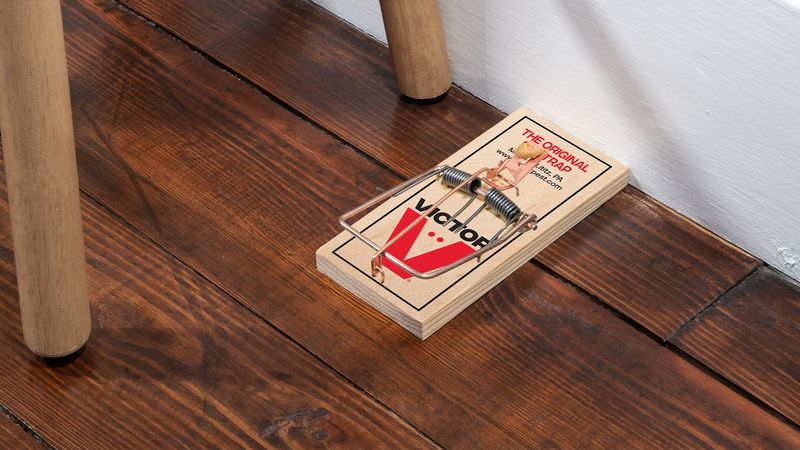
A correctly identified Pennsylvania central ratsnake may reduce some rodent pressure around your garden and outbuildings.
That is a real ecological benefit, and it is worth appreciating.
But it cannot replace exclusion, sanitation, vole guards, or snap traps, and counting on it to do so will leave you frustrated come fall when the mice move back in.
Mothballs, sulfur powder, ultrasonic devices, and commercial snake repellents are not reliable solutions.
Penn State Extension’s snake guidance notes that Snake-A-Way test results have not been conclusive, and the broader research on commercial repellents does not support consistent results.
Save the money and spend it on hardware cloth and a good snap trap.
If you are considering rodenticide, the risk to other wildlife is real and documented.
The EPA’s rodenticide safety review specifically includes reptiles among the non-target animals that can be harmed when they eat poisoned rodents.
A ratsnake that catches a mouse that ate bait can be exposed to the same toxicant.
Penn State’s mouse IPM guidance prioritizes exclusion and snap traps before reaching for poison, and if bait is used, it must follow label directions exactly and be placed in a secured, tamper-resistant bait station appropriate for the location.
Give the snake space, protect your plants and buildings with the steps that actually work, and let a possible predator stay one quiet part of a yard that takes care of itself a little better than it used to.
That is a reasonable outcome, and in most Pennsylvania gardens, it is genuinely enough.