
Florida’s Pollinator Garden Shift For 2026 And The Natives Driving It This Season
Follow us on Google
You step onto the patio after breakfast and the air already feels heavy, promising another long Florida summer day.
A butterfly drifts past your hibiscus, but something about the yard feels different this season.
Your neighbors are quietly trading thirsty exotics for plants that genuinely belong here, and their backyards are humming with bees and butterflies while yours fights the water bill.
This is the shift driving Florida gardens toward 2026, and the eight natives below are leading it right now.
1. Native Plants Are The Undeniable Future
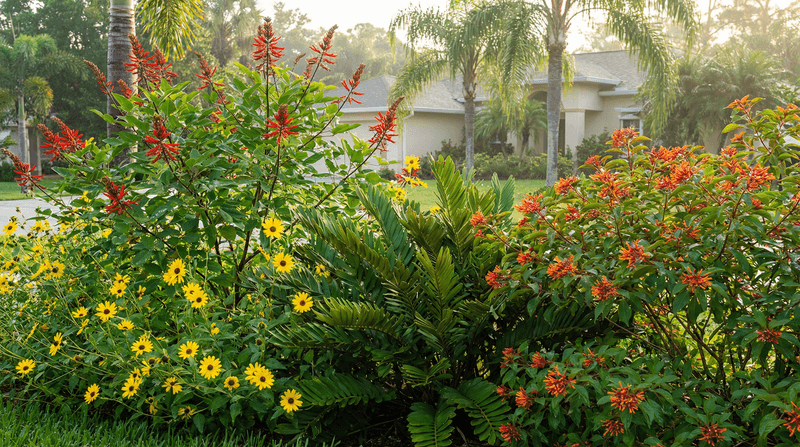
Many Florida gardeners are sensing a real change in how we treat our landscapes.
For years, exotic plants pulled us into endless watering and constant bug battles, but a strong return to what belongs here is genuinely underway.
Native species have spent thousands of years adapting to Florida’s sandy soil, intense sun, and those sudden afternoon downpours.
So once established, they practically care for themselves, asking for far less water than the average lawn or imported shrub.
The turn here is not only about saving money, though the water bill relief is real.
It is about building a healthier backyard where local pollinators actually thrive.
When you plant natives, you roll out a welcome mat for bees, monarchs, and zebra longwings, stitching tiny habitat highways through your neighborhood.
UF/IFAS Extension has long pushed Florida-Friendly Landscaping for exactly this reason, and the science backs it up.
Your yard stops being a chore and starts working with nature instead of against it.
2. Firebush Brings Fiery Hues And Constant Nectar
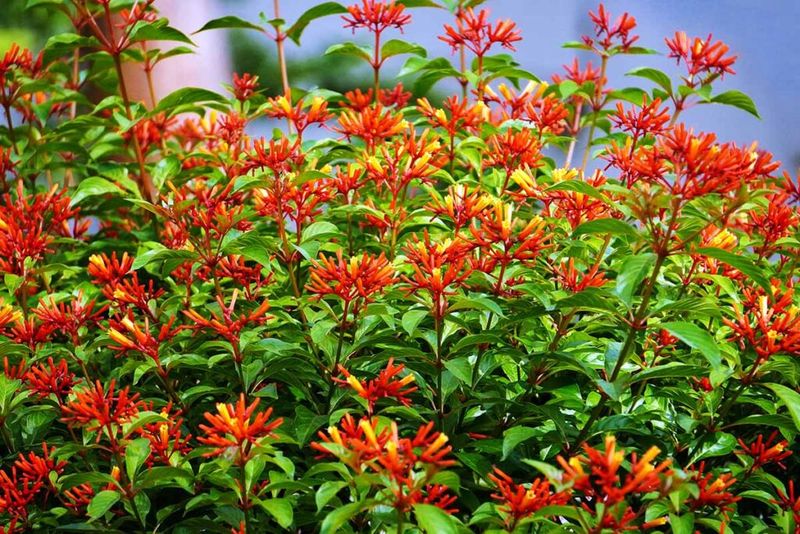
Few plants bring as much life to a Florida yard as native firebush, or Hamelia patens.
Its clusters of orange-red tubular flowers act like a standing invitation, blooming from late spring into cooler weather and often year-round in South Florida.
You will catch ruby-throated hummingbirds darting between the blooms, wings a blur, plus zebra longwing and gulf fritillary butterflies stopping through.
But here is where it gets tricky.
Not all firebush plants are the same.
Many garden centers sell cultivars that are not true Florida natives.
The native genotype bounces back better after a Central Florida cold snap and carries noticeably higher nectar volume, making it genuinely more valuable to pollinators.
Plant it in full sun for the heaviest bloom, though it tolerates partial shade.
This shrub can reach 6 to 12 feet tall and about as wide, so it works as a living screen or a standout specimen.
Ask specifically for the native, and the hummingbirds will thank you.
3. American Beautyberry Offers Fall Bounty
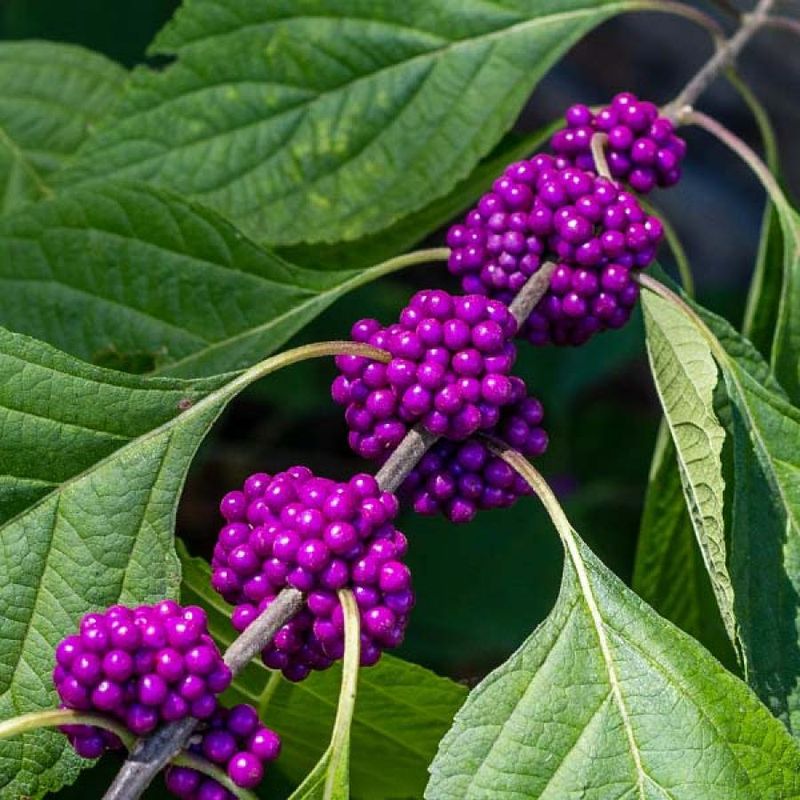
As summer’s green starts to mellow, a flash of brilliant purple in a neighbor’s yard usually means American beautyberry, Callicarpa americana.
This woody shrub grows wild across Florida’s pinelands and hammocks.
In late spring and early summer, it puts out small pale pink flowers that quietly feed bees and butterflies.
But the real show arrives in autumn, when the branches load up with dense clusters of metallic purple berries.
Those berries are more than pretty.
They feed bluebirds, cardinals, mockingbirds, and catbirds fueling up for migration.
And the leaves carry natural compounds that can help repel mosquitoes.
A gentle rub releases them, which makes porch evenings a little more bearable.
Beautyberry adapts to plenty of soil types, though it does best in well-drained ground rich in organic matter.
Give it full sun for the fullest fruit set, and expect a mounding shrub around 5 to 8 feet tall.
It is one native that genuinely earns its keep in every season.
4. Muhly Grass Waves A Pink Welcome
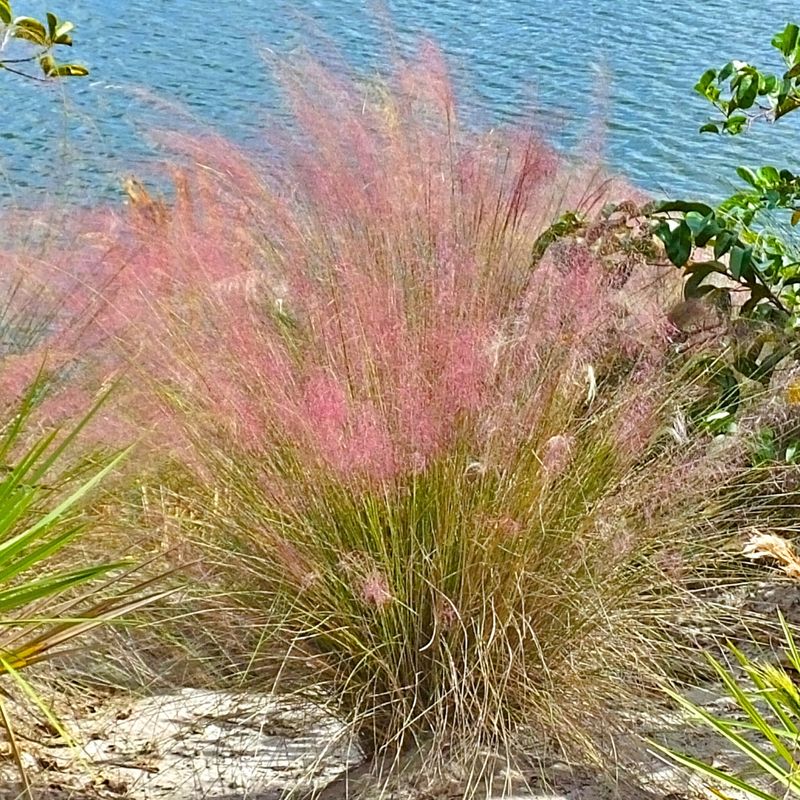
Drive along Florida’s Gulf Coast in late fall and you will spot soft, airy clouds of pink shimmering in the breeze.
That is muhly grass, Muhlenbergia capillaris, a native ornamental that is as tough as it is beautiful.
Beyond the pink haze, this grass pulls real weight in the landscape.
Its dense clumps shelter quail and small wildlife, and the fall plumes support a surprising crowd of insects even though the grass is mostly wind-pollinated.
For coastal homeowners, its salt tolerance and drought resistance make it ideal.
It settles happily into sandy soil, helps stabilize the ground, and reduces erosion during heavy summer rains.
Space clumps about 2 to 3 feet apart so each one can open into its full pink cloud.
Once established, muhly grass asks for almost nothing.
It thrives across USDA zones covering nearly the whole state, proving a low-fuss landscape can still stop traffic.
5. Coontie Welcomes A Rescued Butterfly
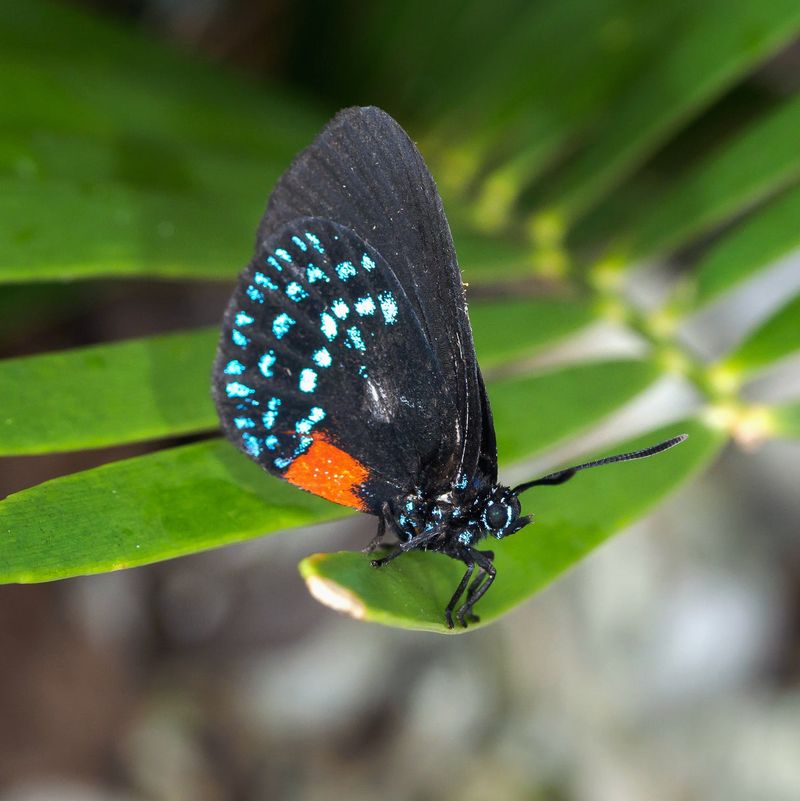
Sometimes a single plant carries a real recovery story, and for Florida that story stars the coontie, Zamia integrifolia, and the stunning Atala butterfly.
Coontie is North America’s only native cycad, looking a bit like a sturdy, low-growing fern.
The tension goes back generations.
Early settlers overharvested coontie for its starchy root, and the Atala, which lays eggs on no other plant, nearly vanished from Florida entirely.
The turn has been remarkable.
Because gardeners like you started planting coontie again, the Atala rebounded and even pushed its range northward beyond its old South Florida strongholds.
The caterpillars feed on the coontie’s naturally toxic leaves, absorbing chemicals that make them unpalatable to predators, a built-in warning wrapped in iridescent blue-green.
Coontie grows slowly, roughly 1 to 3 feet tall, and handles sun or partial shade in that shallow limestone soil common down south.
Plant one and you are holding a piece of living Florida history.
6. Saw Palmetto Anchors The Landscape
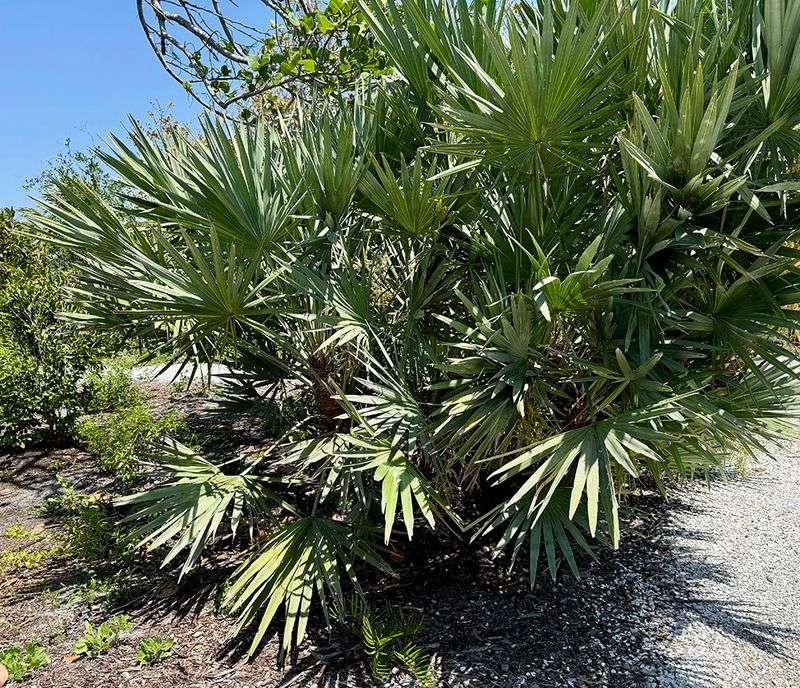
To someone new to Florida, saw palmetto, Serenoa repens, might look like just another tough shrub.
Locals know better.
It is a true workhorse anchoring ecosystems from pine flatwoods to coastal dunes.
Arguably the most-used plant by Florida wildlife, it supports more than 300 species of birds, mammals, reptiles, and insects.
Its fan-shaped fronds give crucial cover, and its spring flowers pour out nectar for honeybees.
Come late summer, its small black berries become a staple for the Florida black bear and white-tailed deer.
It also hosts specific butterflies like the monk skipper and palmetto skipper.
Saw palmetto shrugs off salt spray on both coasts and endures long dry spells once its deep roots take hold.
It grows slowly, reaching 3 to 6 feet tall and wide, sometimes higher, forming dense thickets.
Give it full sun to partial shade and plenty of room, and it will genuinely outlast most everything else in the yard.
7. Blanket Flower Adds Cheerful Color
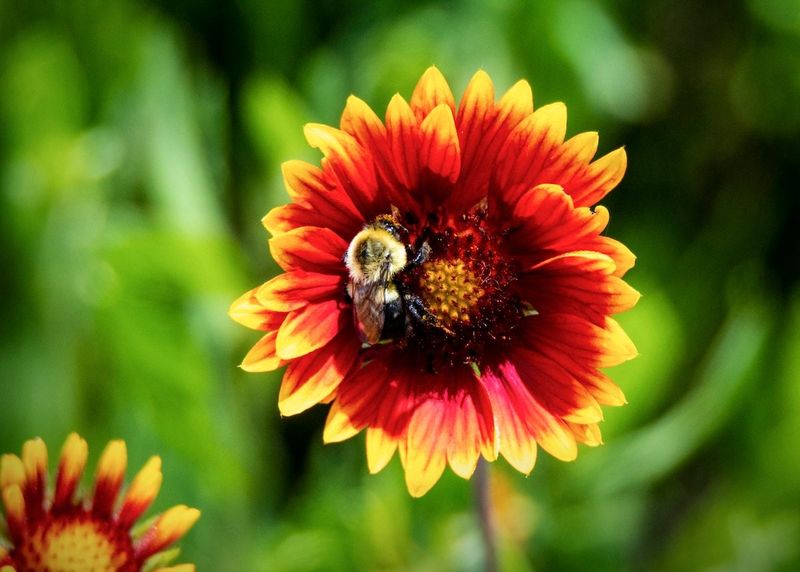
Want a burst of color that doubles as a pollinator magnet?
Blanket flower, Gaillardia pulchella, is a cheerful pick for nearly any Florida garden.
Its daisy-like blooms in bold reds, oranges, and yellows flower spring through fall in North Florida and closer to year-round farther south.
Bees and butterflies love it because those flat petals make easy landing pads.
Nectar and pollen sit right out in the open, no fuss.
Here is a little secret experienced gardeners have learned.
While Gaillardia pulchella performs beautifully as a Florida-Friendly plant, some studies trace its origins more to the southwestern states than our shores.
If you want a strictly native pick, look for lanceleaf blanket flower, Gaillardia aestivalis, which is truly native to North and Central Florida.
Either way, these plants want full sun and well-drained sandy or loamy soil.
They turn drought-tolerant once established and rarely face serious pest trouble.
Space them about 12 inches apart and let them fill in.
8. Passionflower Is A Butterfly Haven
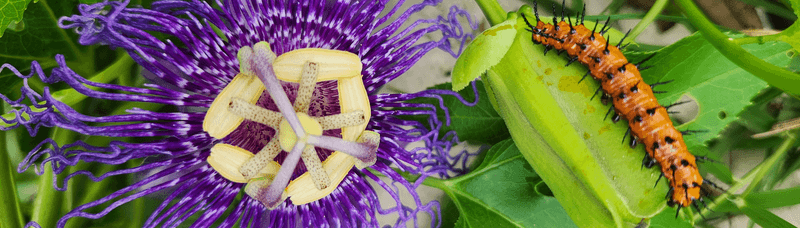
Picture a delicate bloom with swirling petals and a crown of purple filaments.
That is passionflower, Passiflora, and for Florida’s gulf fritillary and zebra longwing butterflies it is paradise.
These native vines matter because they are host plants, the only place these butterflies will lay eggs and the only food their caterpillars will eat.
Without passionflower, those iconic Florida butterflies cannot finish their life cycles.
Full stop.
Native picks like purple passionflower, Passiflora incarnata, yellow passionflower, Passiflora lutea, and corkystem passionflower, Passiflora suberosa, are widely available and built for our climate.
Plant one and you are directly propping up the next generation of winged jewels.
You will watch females dab tiny yellow eggs onto the leaves, then spot the orange gulf fritillary caterpillars munching away weeks later.
Give the vine a fence or trellis in full sun to part shade, water it in for the first few weeks, and it will turn a plain corner into a bustling nursery.