
The Shade Tree South Floridians Plant Now To Run Their Yards 20 Degrees Cooler
Follow us on Google
Step onto a Florida patio in July and the concrete is already scorching your feet before 9 a.m.
Many South Florida homeowners are turning to one native tree that, once mature, can throw enough shade to make the ground beneath it feel dramatically cooler on the hottest afternoons.
That tree is the southern live oak, and planting one now is really an investment in future comfort, not an instant fix.
Here is what you need to know before you dig the hole.
Southern Live Oak Is the Strongest Choice
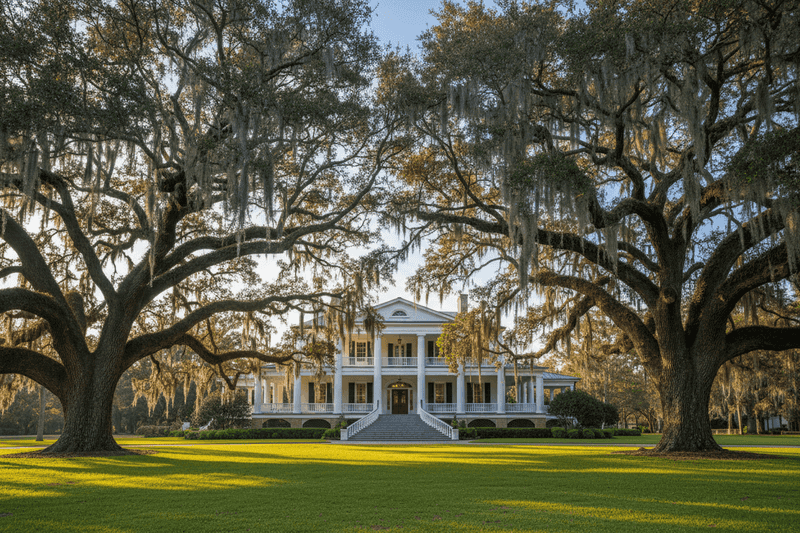
Few trees earn as much respect from Florida homeowners and horticulturists alike as the southern live oak, Quercus virginiana.
UF/IFAS recommended native landscape plant guidance identifies it as an ideal Florida shade tree when the site can genuinely accommodate its full mature size.
That qualifier matters more than almost anything else in this article.
A mature southern live oak typically reaches 60 to 80 feet tall with a canopy that can spread 80 to 100 feet across.
Picture a canopy wider than most suburban lots are long.
One well-placed tree can cover a large section of lawn, a patio, a driveway, and still reach toward the neighbor’s fence.
The tradeoff is real and worth stating plainly up front.
You are not buying instant shade.
You are making a decades-long commitment to a living structure that will eventually reshape your yard’s entire feel.
UF/IFAS live oak guidance is clear that the tree needs room, patience, and a site chosen for the full-size tree, not the nursery container sitting in your truck bed.
No other Florida landscape tree combines that canopy scale with the wind-resistance profile and native adaptability that live oak brings.
Laurel oak and water oak are also oaks, but they do not share the same storm-performance record.
For this particular story, southern live oak is the right tree, and the species name is worth remembering when you walk into the nursery.
What the Cooling Claim Really Measures
Here is where the 20-degree story gets tricky.
The canopy of a live oak cools your yard in two ways: it blocks direct solar radiation from reaching the ground, grass, pavement, and furniture below, and its leaves release water through evapotranspiration, which moves some heat into the process of evaporating that moisture.
Both effects are real.
But what they actually cool is not always what people assume.
The distinction matters.
Surface temperature, radiant heat, thermal comfort, and ambient air temperature are four different things.
A shaded concrete slab may genuinely be 15 to 25 degrees Fahrenheit cooler than the same slab baking in direct sun.
Research comparing shaded and unshaded surfaces found reductions of up to 19 degrees Celsius on some materials, though grass showed smaller average cooling than asphalt and other hard surfaces, and results varied considerably by location and surface type.
That comparison is a surface-temperature finding, not a promise that the air above your Florida lawn will read 20 degrees lower on a thermometer.
EPA guidance on trees and urban heat notes that urban forests average roughly 3 degrees Fahrenheit cooler than nearby non-green urban areas in ambient air temperature terms.
What you actually feel under a live oak canopy is a comfort effect, not a measured air-temperature drop.
Your body receives less direct sunlight and less infrared radiation bouncing off hot surrounding surfaces.
Tropical climate microclimate research confirms that shade dramatically improves thermal comfort even when air temperature changes only modestly.
Florida’s humidity stays in the air regardless of the canopy above you, so the relief is real and meaningful, but it is not air-conditioning.
Mature Shade Takes Time
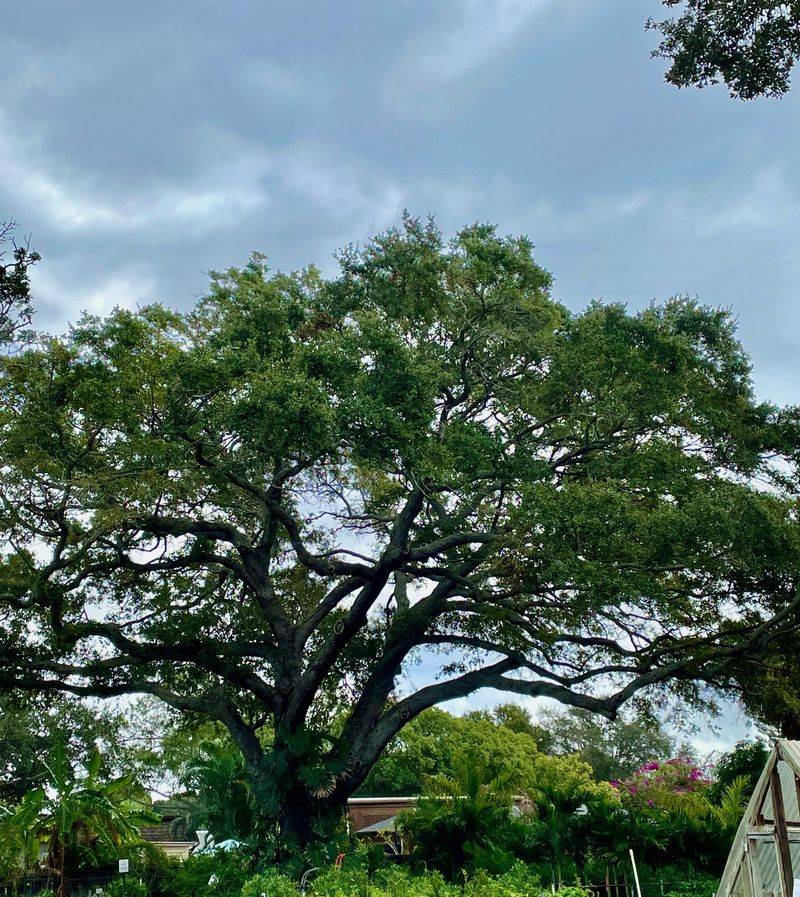
A 2-inch-caliper live oak from the nursery is maybe 8 to 10 feet tall with a canopy you could jump over.
The 80- to 100-foot spread that makes this tree legendary belongs to a tree that has been growing for decades.
UF/IFAS southern live oak species data describes the tree’s growth rate as moderate, which means meaningful shade arrives on a timeline measured in years, not months.
Establishment alone takes longer than most people expect.
UF/IFAS landscape irrigation guidance estimates roughly 3 to 4 months per inch of trunk caliper for a tree to establish in Florida conditions.
A 2-inch tree, measured about 6 inches above the ground, may need approximately 6 to 8 months before its roots have spread enough to support the tree without supplemental watering.
That is just establishment, not canopy growth.
This summer, you need shade now and a live oak later.
A shade sail costs about $40 to $80 and can go up in an afternoon.
A pergola, a large patio umbrella, or an existing tree nearby can carry the load while the live oak spends its first few years quietly building the root system that will eventually hold up that massive canopy.
Planting the live oak now is genuinely the right move.
Just be honest with yourself about what it will look like this July versus what it will look like when your kids are grown.
Choose the Site for the Full-Size Tree
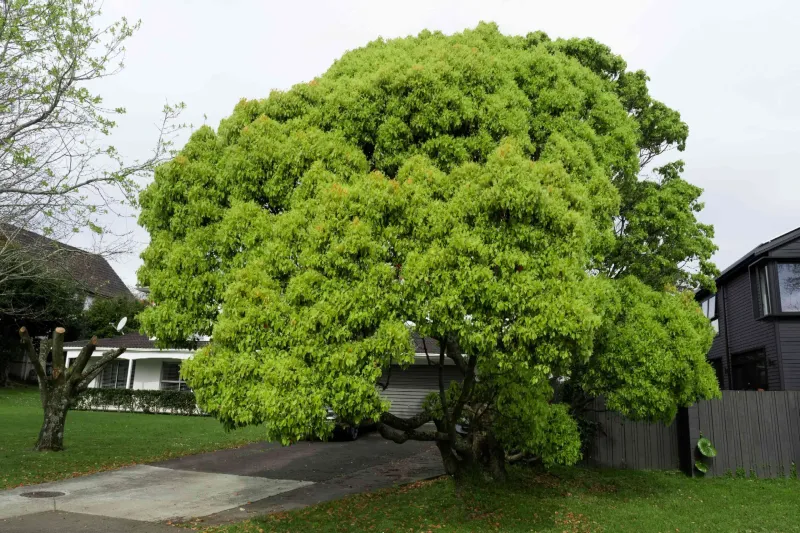
Most planting mistakes with live oak happen before the shovel hits the ground.
The nursery tree looks manageable.
The spot between the driveway and the house looks open enough.
Then 15 years pass, and roots are lifting the driveway, branches are over the roof, and a certified arborist is delivering news nobody wants to hear.
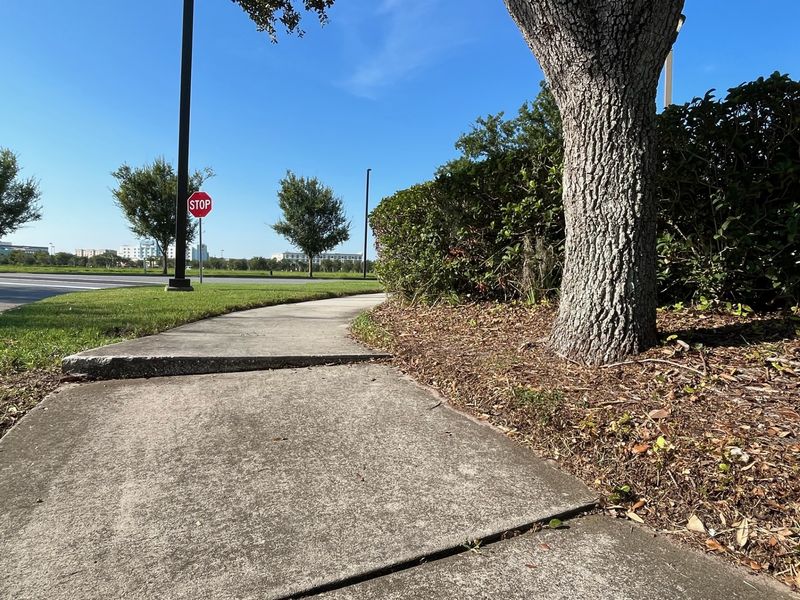
UF/IFAS live oak guidance warns specifically that roots can lift and crack curbs, sidewalks, and driveways, and that roots need unobstructed soil to anchor the tree safely during storms.
Miami-Dade UF/IFAS hurricane-resistant tree guidance advises placing large trees like live oaks at least 20 to 30 feet from homes, power lines, and other structures.
That is practical guidance, not a universal legal rule, so check your local codes, utility easements, and any setback requirements in your municipality before you plant.
The checklist for site selection is longer than most people realize.
Think about mature branch reach, not just trunk position.
Check for underground utilities, septic systems, and drain fields.
Consider whether shallow limestone, a high water table, or compacted soil from past construction might limit root growth.
Think about drainage after heavy rain, since live oak does not thrive in chronically wet conditions.
UF/IFAS hurricane-tree resources reinforce that roots need room to spread and anchor properly.
Also think about which direction you actually want the shade to fall.
A tree planted on the west side of a patio will shade afternoon sun.
A tree planted to the south may block winter light you actually want.
Pick the site for the mature tree’s job, not for the convenience of where the nursery pot fits today.
Plant and Water It for Strong Roots
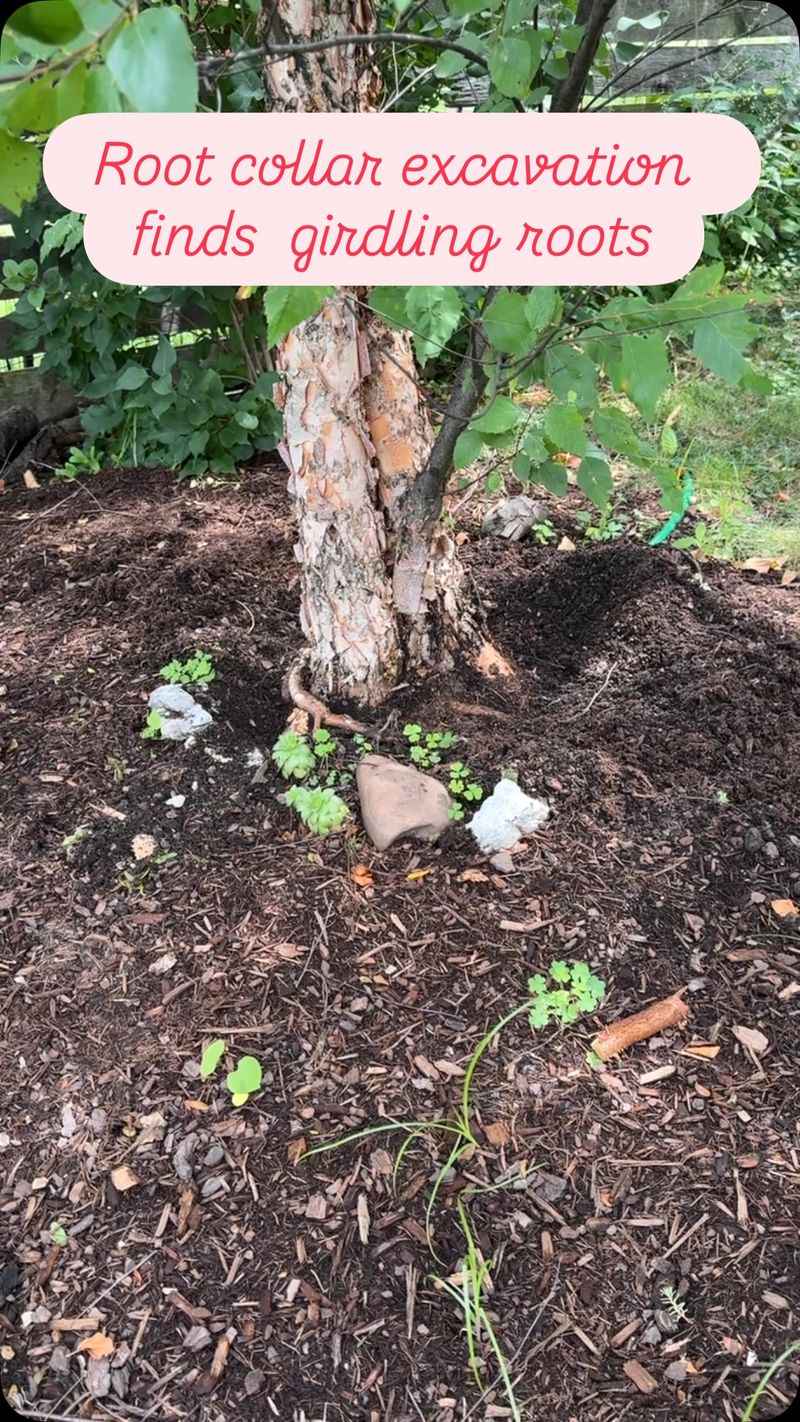
Getting the tree in the ground correctly is worth more than any fertilizer or supplement you could add later.
Start by digging the hole two to three times as wide as the root ball and no deeper than the root ball itself.
The root flare, that visible widening at the base of the trunk where it meets the root system, should sit above the surrounding soil grade, not buried beneath it.
UF/IFAS planting guidance recommends setting the top of the root ball slightly above surrounding grade, especially in Florida’s often poorly drained soils.
Watering during establishment follows a simple calculation.
UF/IFAS irrigation guidance recommends about 2 to 3 gallons of water per inch of trunk diameter at each irrigation event.
A 2-inch tree needs roughly 4 to 6 gallons per watering.
Watering every other day is a reasonable starting point, but adjust for rainfall, your soil’s drainage, the season, and any local water restrictions.
Overwatering is a genuine risk, particularly in low-lying yards or poorly drained soil, and an established live oak should not be kept constantly wet.
Mulch is the quiet workhorse of tree establishment.
UF/IFAS mulch guidance recommends about 3 inches of mulch spread broadly over the root zone.
Keep it roughly 12 inches away from the trunk.
Piling mulch against the bark, what gardeners call a mulch volcano, traps moisture against the wood, encourages decay, and can shelter rodents.
UF/IFAS tree-establishment resources also note that providing at least 3 feet of usable soil depth gives roots the room they need to develop properly.
Flat, wide, and clear is the goal, not deep and piled.
Shape Young Branches Before Storm Season
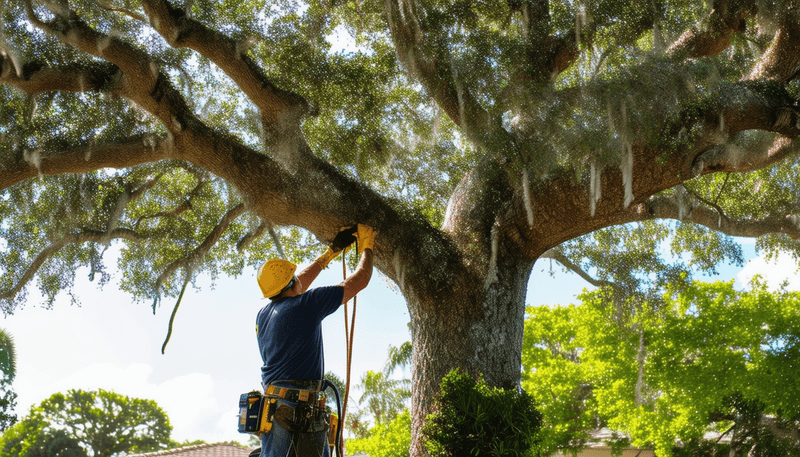
Wind resistance is not the same as storm-proofing, and a live oak’s reputation can lull people into skipping the maintenance that actually keeps it standing.
UF/IFAS hurricane-tree guidance rates live oak highly for wind resistance compared with many other Florida landscape trees, but that rating assumes sound structure, healthy roots, and proper maintenance over the tree’s life.
UF/IFAS wind and hurricane research is consistent on one point: trees fail for many reasons beyond species.
Saturated soil during a storm reduces root grip.
Competing trunks with narrow, tight attachment angles can split under load.
Decay inside a limb is invisible from the sidewalk.
Construction that cut roots years ago may only show up as a problem when a Category 2 storm pushes through.
The best time to address structure is when the tree is young and the work is cheap.
UF/IFAS tree storm-prep guidance recommends reducing competing trunks, removing branches with narrow attachment angles, and developing one dominant central leader while the tree is still small enough to work on safely from the ground or a short ladder.
Topping a live oak is not a solution and actually creates weaker, faster-growing sprouts that are more vulnerable in a storm, not less.
Correcting a structural defect in a 10-foot tree takes a few cuts and costs almost nothing.
Correcting the same defect in a 40-foot tree requires a certified arborist, a bucket truck, and a bill that will make you wish you had caught it earlier.
Start the pruning conversation in year one, not year ten.
Match the Tree to Florida Conditions
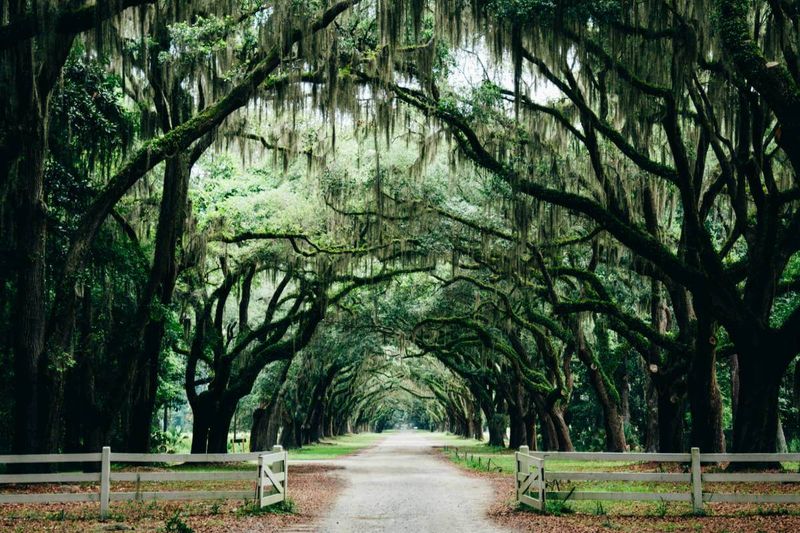
Florida is not one climate, and a live oak that thrives in a well-drained sandy yard in Gainesville may face very different conditions in a South Florida lot built over shallow limestone.
Established live oaks are genuinely tough.
They tolerate acidic sand, sandy loam, clay, salt spray along both coasts, and drought once the root system is fully developed.
That adaptability is part of what makes the species so widely recommended across the state.
But certain site conditions can weaken any large tree, regardless of species.
Poor drainage is one of the biggest risks in Florida, where heavy summer rains can saturate soil for days.
Shallow soil over limestone, common in parts of South Florida and the Florida Keys, limits how deep and wide roots can travel, which affects both the tree’s long-term stability and its ability to find water during dry spells.
Compacted soil from past construction, damaged roots from nearby digging, and limited root volume in tight urban lots can all quietly undermine a tree that looks healthy above ground.
UF/IFAS hurricane and wind research confirms that root space and soil conditions are major factors in whether a large tree stays standing during a storm.
Miami-Dade UF/IFAS guidance recommends that homeowners in South Florida pay particular attention to soil depth and root volume before planting large trees.
A tree rated wind-resistant by species can still fail when its roots have nowhere to go.
Matching the tree to the actual conditions in your yard, not the ideal conditions on a plant tag, is the decision that separates a future landmark tree from a future liability.
Plant for Comfort, Not a Magic Number
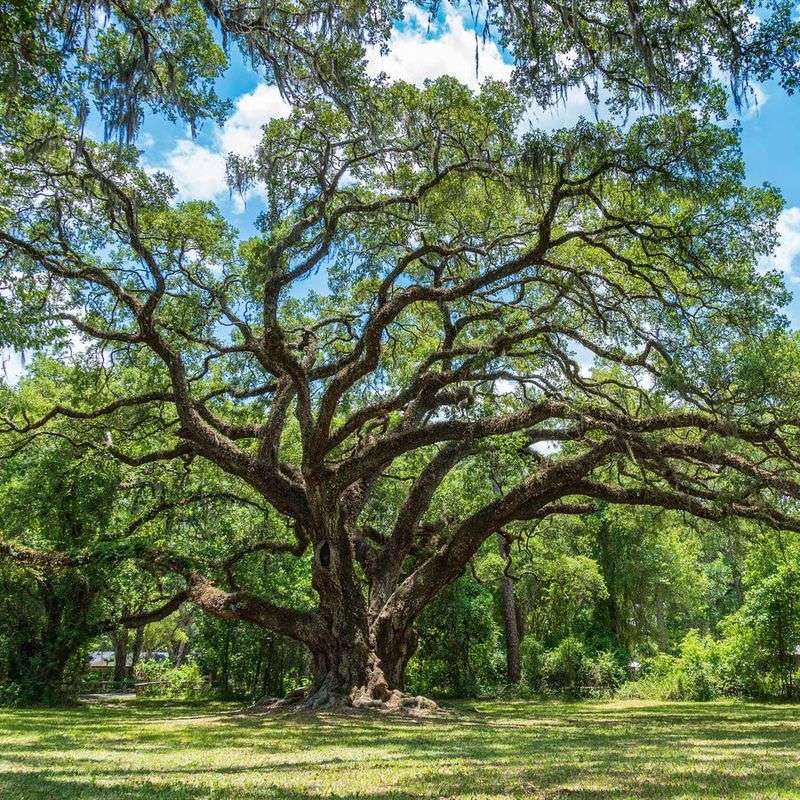
A properly sited, mature southern live oak can do something genuinely impressive for a Florida yard.
It can shade a large section of lawn, cool exposed surfaces like pavement, furniture, and soil, and reduce the direct solar heat that people actually feel on a hot afternoon.
EPA tree and vegetation research supports the cooling benefits of tree canopy for surfaces and thermal comfort, even when ambient air temperature changes are more modest.
What a live oak cannot do is guarantee a 20-degree drop in your whole yard’s air temperature or pull Florida’s humidity out of the air.
The shade is real.
The comfort is real.
The air-conditioning comparison is not.
UF/IFAS live oak guidance frames the tree as a long-term landscape investment, and that framing is exactly right.
You are planting future shade, not buying an immediate appliance.
While the oak grows, preserve every healthy existing tree on your property.
A mature sabal palm, an established Simpson’s stopper, or even a large firebush can provide meaningful shade and wildlife habitat while the live oak is building its canopy.
Temporary shade sails and umbrellas are not a compromise, they are a practical bridge.
The decision test before you plant is simple.
Can the mature roots and canopy fit safely in the space you have, well away from the house, power lines, and pavement?
If yes, plant it.
If you are unsure about a large existing tree near your home, UF/IFAS storm-prep guidance recommends consulting an ISA-certified arborist before hurricane season.
The best shade tree is one that stands for generations, and that outcome starts with an honest look at the site today.