
What A Possum In Your Texas Yard Actually Does For Ticks And Pests
Follow us on Google
Most Texas homeowners have seen one at some point, shuffling across the porch late at night with that slow, unbothered walk.
The Virginia opossum has picked up a reputation as a natural tick killer, and that story has spread fast on social media and neighborhood Facebook groups.
Before you start hoping the opossum under your deck is quietly eliminating thousands of ticks, the actual science tells a more complicated story.
Here is what a yard opossum genuinely does, what it does not do, and how to protect your family and pets from ticks the right way.
Meet The Texas Yard Opossum
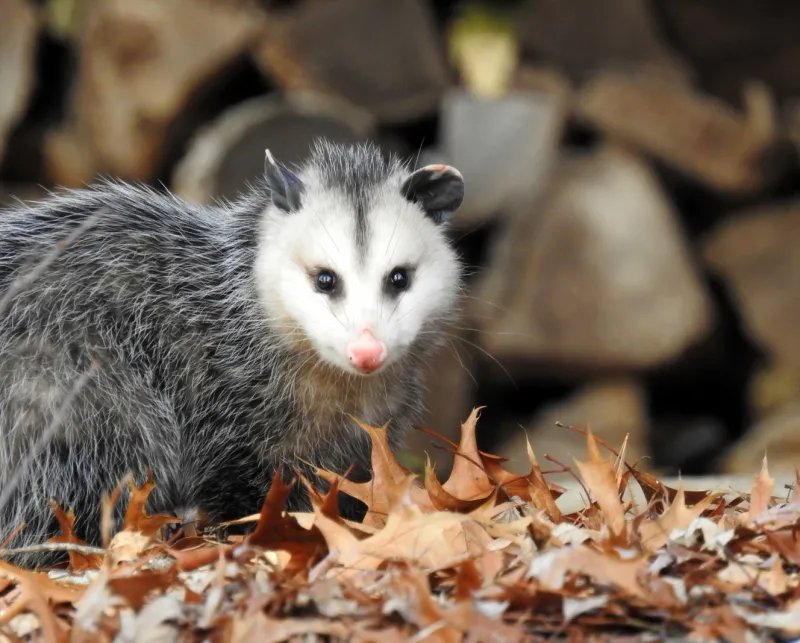
Shuffle through the backyard at midnight and you might catch a pair of eyes reflecting your flashlight beam from near the compost pile.
That slow, low-slung animal with the pointed snout and bare, rat-like tail is almost certainly a Virginia opossum, Didelphis virginiana, and it is as native to Texas as the live oak or the armadillo.
Texas Parks and Wildlife confirms that the Virginia opossum is found across most of the state, with the notable exception of the driest parts of the Trans-Pecos and the Llano Estacado, where the terrain and lack of water make it a tough place to scratch out a living.
The animal is nocturnal, meaning it spends daylight hours tucked away in a woodpile, under a porch, inside an abandoned burrow, or anywhere else that offers cover.
It is also solitary, so if you see one near your trash cans, you are almost certainly looking at a lone traveler rather than a colony.
It does not dig its own den the way an armadillo does.
Instead, it moves from one ready-made shelter to the next, following whatever food is available that night.
Its diet is genuinely broad.
Insects, rodents, young rabbits, frogs, fruits, berries, vegetables, and carrion all make the menu.
That range makes it a generalist opportunist, not a targeted pest-control specialist.
The opossum wandering your yard is doing what it always does: working the night shift for whatever meal is easiest to find.
Understanding that distinction matters, because the internet has given this animal a job description it cannot reliably fill.
What An Opossum May Eat In Your Yard
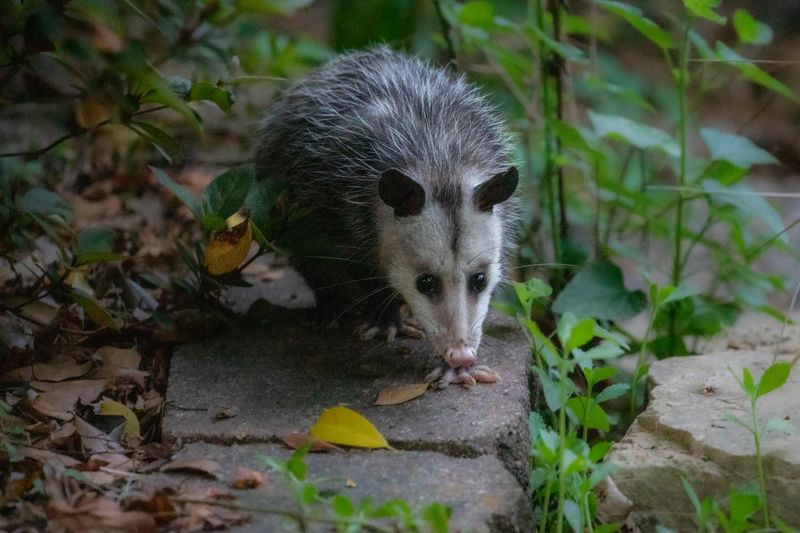
A Texas yard is basically an all-night diner for an opossum, and the menu is longer than most people expect.
Texas Parks and Wildlife documents a diet that includes rodents, young rabbits, birds, insects, frogs, fruits, berries, vegetables, and carrion.
In practical terms, that means an opossum moving through your yard may eat a mouse that was heading for your garage, a palmetto bug stumbling across the patio, or the peach that dropped from the tree three days ago and nobody picked up.
That is a real, modest contribution to yard health.
An opossum can remove some nuisance animals and organic waste simply by doing what comes naturally.
But the word to hold onto is “may.” This animal is opportunistic, so it eats whatever is most available and easiest to access.
It is not running a systematic patrol of your property, and Texas A&M AgriLife Extension notes that the same appetite that might clear a few pests will also reach your garden tomatoes, fallen pecans, the birdseed under the feeder, your cat’s food bowl, and an unsecured trash lid.
So the honest picture is a tradeoff.
The opossum may occasionally clean up something you did not want around, and that is worth acknowledging.
But it also may create new problems if food sources are left accessible.
Calling it a natural pest-control service oversells what is actually a hungry, adaptable animal doing whatever the night offers.
Its ecological role is real, just narrower and less predictable than the stories circulating on neighborhood apps would suggest.
Why The Tick Story Became So Popular
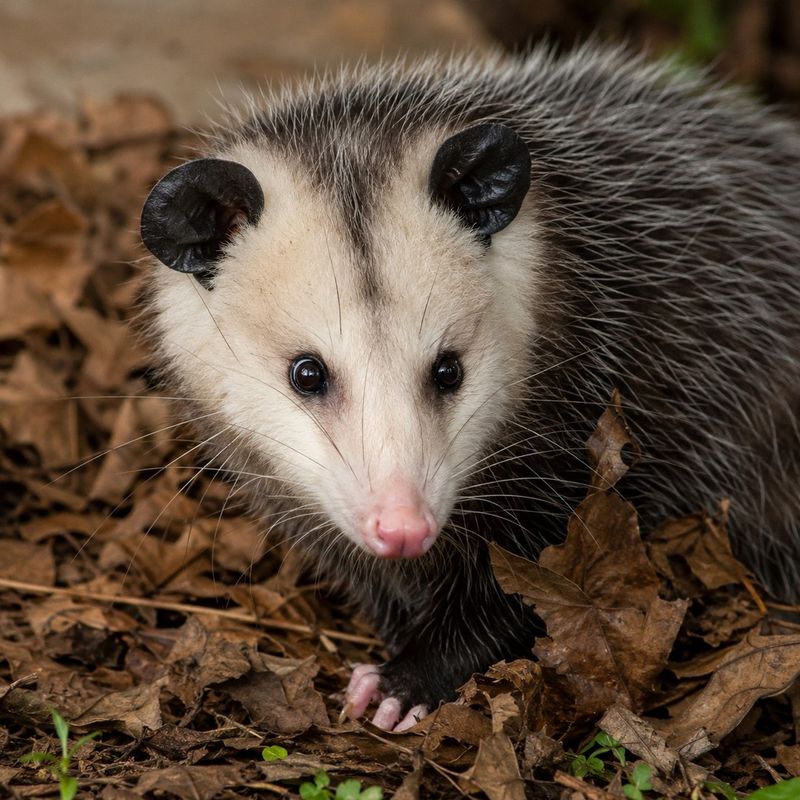
The “opossums eat thousands of ticks” story has a real source, and that source deserves an honest look.
A 2009 study by Keesing and colleagues placed larval blacklegged ticks directly onto captive, field-caught opossums and then counted how many ticks went missing.
The researchers inferred that the missing ticks had been groomed off and consumed.
From that count, they estimated that opossums killed about 96.5 percent of the larvae placed on them.
That number is striking, and it spread quickly through wildlife blogs, Facebook posts, and backyard-nature articles.
The problem is what the study did not show.
The ticks were placed directly on the animals in a captive setting, not encountered naturally in a yard or woodland.
The experiment used larval blacklegged ticks specifically, not the brown dog tick that Texas A&M identifies as especially common in Texas urban areas, and not the lone star tick that bites people and pets across East Texas, the Hill Country, and the Gulf Coast.
The study also did not track whether opossums actively sought out ticks, whether they would encounter them at similar rates in the wild, or whether any of this translated into fewer ticks in a residential yard.
Researchers worked with a small number of captive animals in a controlled environment.
That is a legitimate starting point for science, but it is not a recommendation for how to manage your lawn in Katy or Kerrville.
The leap from a laboratory inference to “put an opossum in your yard to prevent Lyme disease” is much longer than the original study ever intended to cover.
Opossums Are Not A Reliable Tick-Control Plan
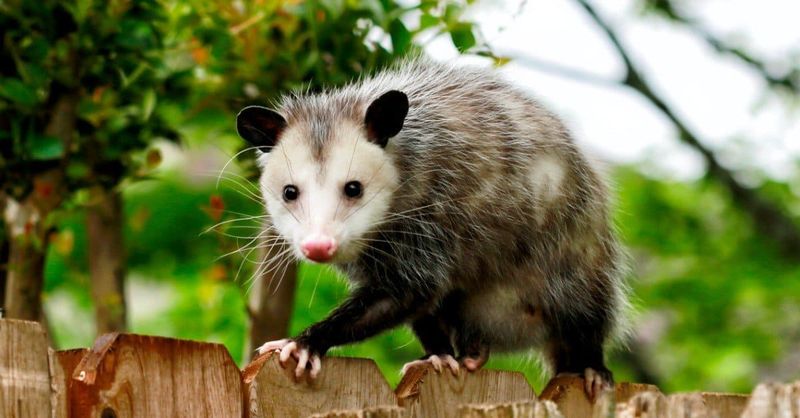
Here is where the tick story gets complicated in a way that actually matters for your yard.
A 2021 peer-reviewed follow-up study took a harder look at what wild opossums actually eat.
Researchers examined the stomach contents of 32 wild opossums and reviewed 23 separate diet studies.
The result was straightforward: no ticks and no tick parts turned up in any of the stomachs, and none of the 23 diet analyses reported ticks as a food source.
That finding does not prove that a wild opossum can never swallow a tick.
But it does mean that ticks are not a preferred or even incidental food item that shows up reliably in the diet of free-ranging animals.
The claims about thousands of ticks per week, or about opossums consuming 95 percent of every tick they encounter, were always extrapolations from the earlier captive study.
The 2021 data gives those extrapolations very little support when you look at what wild animals actually have in their stomachs.
The original 2009 experiment involved ticks placed directly on animals in captivity.
In a real Texas yard, an opossum is not going to stand still while ticks climb aboard, groom them all off, and repeat the process across your entire lawn.
The opossum passing through your yard may eat other pests along the way, and that is a legitimate ecological contribution.
But attracting or protecting one as a measurable tick-reduction strategy is not supported by the evidence available.
You would be counting on behavior that wild opossums do not appear to perform consistently enough to matter.
The Flea Evidence Calls For Boundaries
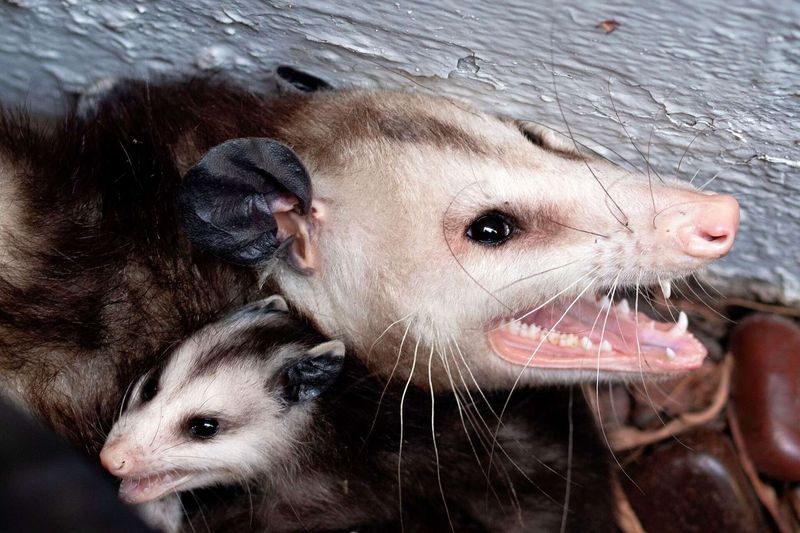
An opossum moving through your yard is not just a tick question.
Fleas are part of the picture too, and the data here points in a direction most social media posts skip entirely.
A study on flea-borne pathogen surveillance in the pineywoods of East Texas found that Virginia opossums hosted 99 percent of the fleas collected from sampled mammals in that study area.
That is a striking concentration, and it matters for how you think about wildlife near your porch, pet bowls, and animal bedding.
That finding does not mean every opossum in Texas is carrying dangerous fleas, and spotting one near your back fence does not mean your household is at risk.
The study reflects a specific region and a specific set of sampled mammals.
What it does show is that an opossum is not functioning as a flea eliminator.
It can be a significant flea host, and that changes the calculus around inviting or tolerating one close to spaces where your pets and family spend time.
The flea issue connects to a real public health concern in Texas.
The Texas Department of State Health Services notes that flea-borne typhus is caused by Rickettsia typhi, and that infected fleas associated with rats, opossums, cats, dogs, and other small mammals can transmit it.
A DSHS murine typhus information sheet reports that Texas records the highest number of flea-borne typhus cases in the United States annually, with many concentrated in South Texas and the Rio Grande Valley.
An opossum passing through your yard is not a reason to panic, but it is a reason to keep pet food indoors, block access to crawl spaces, and make sure your animals are on veterinarian-approved flea prevention.
Remove Attractants Instead Of Recruiting Wildlife
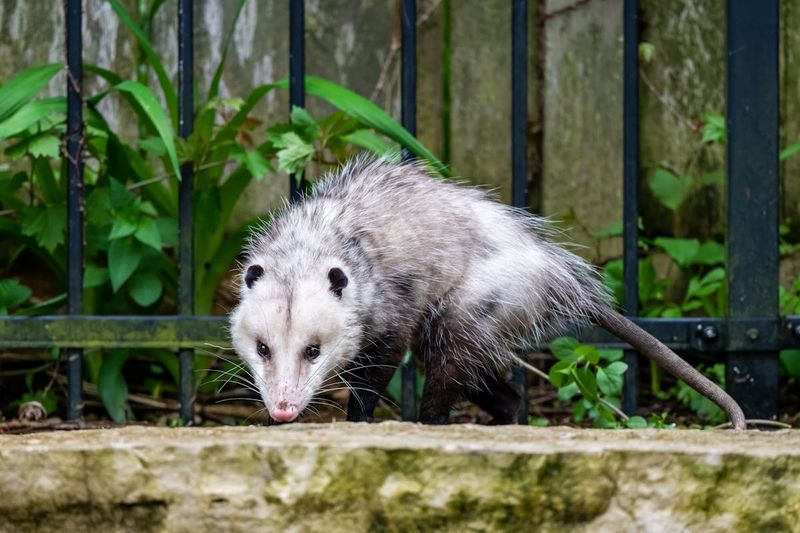
If an opossum keeps showing up on your porch or near your garage, the most effective thing you can do is remove whatever is drawing it there.
Texas Parks and Wildlife advises against feeding wild opossums because supplemental feeding attracts rodents, can spread disease, creates human-wildlife conflict, and causes animals to lose their natural wariness of people.
That wariness is actually good for both of you.
The practical checklist is straightforward.
Bring pet food and water bowls inside before dark every night.
Secure trash can lids with a bungee cord or a locking lid.
Clean up fallen fruit from peach, fig, or pecan trees within a day or two, especially during summer and fall when fruit drops heavily across Central Texas and the Hill Country.
Move birdseed feeders to a location where spillage is minimal, and sweep beneath them regularly.
Store any outdoor pet food in a sealed, hard-sided container that a determined opossum cannot pull apart.
Texas A&M AgriLife Extension and a University of Georgia Extension guide on resolving nuisance wildlife conflicts both point to exclusion and food-source removal as more reliable than relocation, because another animal will simply move into the same food-rich territory once the first one is gone.
A few things to avoid entirely: do not put out cat food, dog food, meat scraps, or fruit to “recruit” an opossum as a pest-control helper.
Do not use mothballs, which the National Wildlife Federation identifies as toxic and ineffective as a wildlife deterrent.
Do not leave medicated food outdoors for opossums.
A 2025 Galveston study on oral flea preventives in captured opossums was a small experimental trial that explicitly called for more research on safety, feasibility, and real-world effects before any such approach could be considered practical.
If an opossum has taken up residence under your house or shed, contact a licensed wildlife control professional and check current Texas regulations before attempting any trapping or relocation on your own.
Manage The Yard For Realistic Tick Reduction

Tick numbers in a yard go up or down based on the yard itself, not on whether an opossum passes through.
CDC guidance on preventing tick bites recommends mowing the lawn frequently, removing leaf litter, clearing tall grass and brush within 3 feet of the house, and trimming vegetation back to let more sunlight reach the soil.
Ticks thrive in cool, shaded, humid spots, so a well-managed yard is genuinely less hospitable to them than a neglected one.
One practical step that works well along the wooded edges common in East Texas, the Hill Country, and suburban areas near greenbelts is a 3-foot-wide strip of wood chips or gravel placed between the lawn and any wooded or brushy border.
Ticks tend not to cross dry, open barriers, so this simple boundary can reduce the number moving from wildlife habitat into the area where your family and pets actually spend time.
Texas A&M AgriLife Extension tick guidance adds a few yard-specific steps worth building into a regular routine.
Inspect pet resting areas, dog runs, and shaded spots under decks or porches, because ticks concentrate where warm-blooded hosts spend time.
If you are considering a yard pesticide, AgriLife’s tick control recommendations are clear: treat only the specific areas where ticks are actually present or where pets spend the most time, not the entire yard as a precaution.
Allow treated areas to dry fully before children or pets return, and follow the product label strictly, especially around vegetable gardens, pollinator plantings, ponds, and areas where wildlife feeds.
Broadcast spraying a yard as a first move is not the right call.
Local conditions vary considerably across Texas, from the humid, tick-dense pineywoods of East Texas to the drier Hill Country and the Gulf Coast, so the level of intervention that makes sense depends on what is actually happening in your specific yard.
Start with habitat management, see what that accomplishes, and add targeted treatment only if the problem persists in defined areas.
Add Pet Checks And Prompt Tick Removal
Yard management handles the environment, but your pets and family need a separate layer of protection on top of that.
CDC guidance on preventing ticks on pets recommends checking outdoor dogs and cats for ticks every single day, paying close attention to the area around the ears, between the toes, under the collar, and along the belly.
A tick that has not attached yet can be brushed or picked off before it becomes a problem.
Talk to your veterinarian about a species-appropriate prevention product.
This is genuinely important, because the CDC specifically warns that cats are highly sensitive to several chemicals used safely in dog products.
Do not apply a dog tick preventive to a cat without explicit veterinary approval.
There are good options for both species, and a vet visit is the right place to sort out which one fits your animal’s age, weight, and health history.
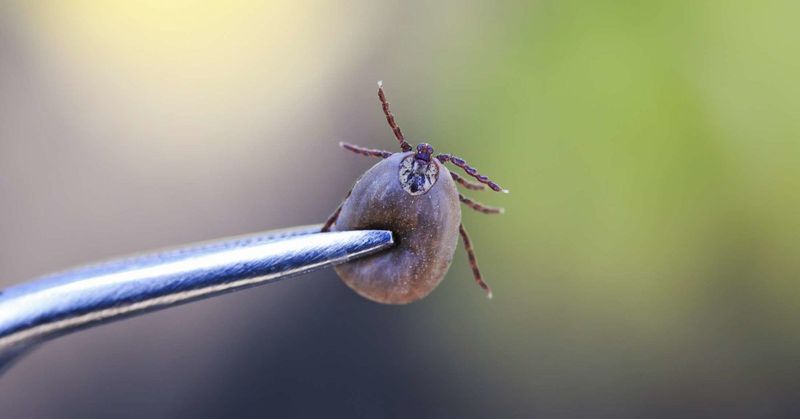
If you find a tick that has already attached, remove it promptly.
Use fine-tipped tweezers, grasp the tick as close to the skin surface as possible, and pull upward with steady, even pressure.
Do not twist or jerk.
CDC tick-removal guidance and the MMWR tick-borne disease prevention recommendations both explicitly warn against using gasoline, kerosene, petroleum jelly, nail polish, or a lit match.
Those methods do not work and can make the situation worse.
Prompt removal matters because the longer an infected tick feeds, the higher the transmission risk becomes for certain pathogens.
Daily checks and quick removal are one layer of protection, not a complete solution on their own.
Combine them with habitat management and veterinarian-approved pet prevention for a practical, realistic approach to tick risk in a Texas yard.
The opossum wandering through at midnight deserves some credit as a scrappy native scavenger, but the real work of keeping your yard and family safer falls to you, your mower, and your tweezers.