
Every Bird Is Done Nesting But That Yellow Goldfinch On Your Thistle Just Became A Parent
Follow us on Google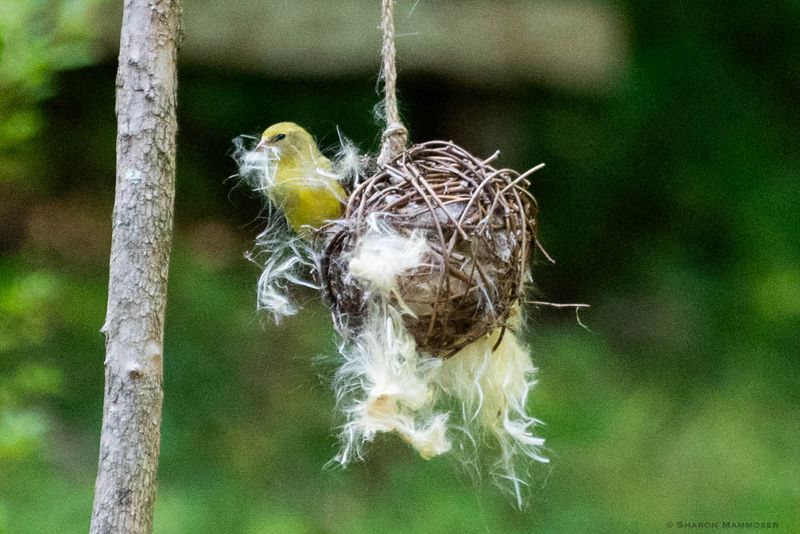
Most backyard birds wrap up nesting by early summer, so spotting a bright yellow bird still working a thistle patch in late July or August can stop you mid-sip of your morning coffee.
That little bird may well be an American Goldfinch, and in many northern and eastern parts of the country, goldfinches are genuinely late-season nesters.
Understanding why they wait, and what your yard can offer them, takes less effort than you might expect.
That Yellow Bird May Be An American Goldfinch
Spotting a flash of yellow on a thistle stem in late summer is genuinely exciting, but the first move is to slow down before drawing conclusions.
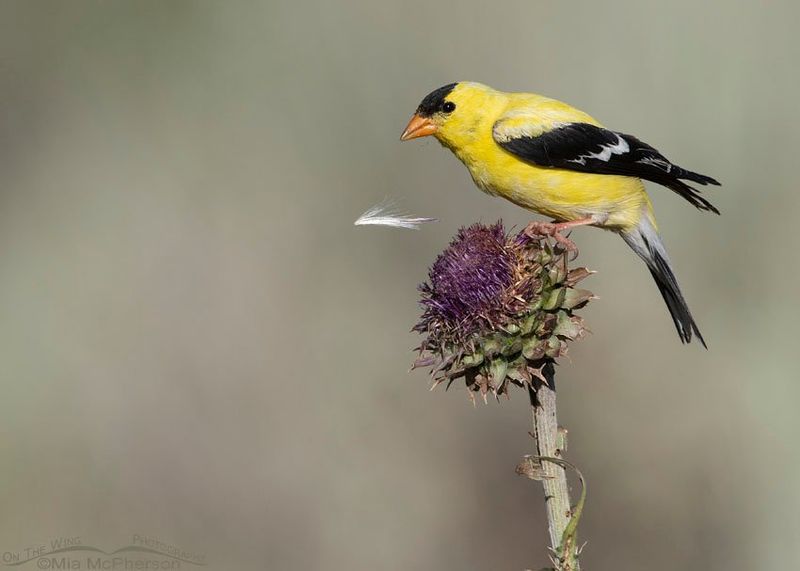
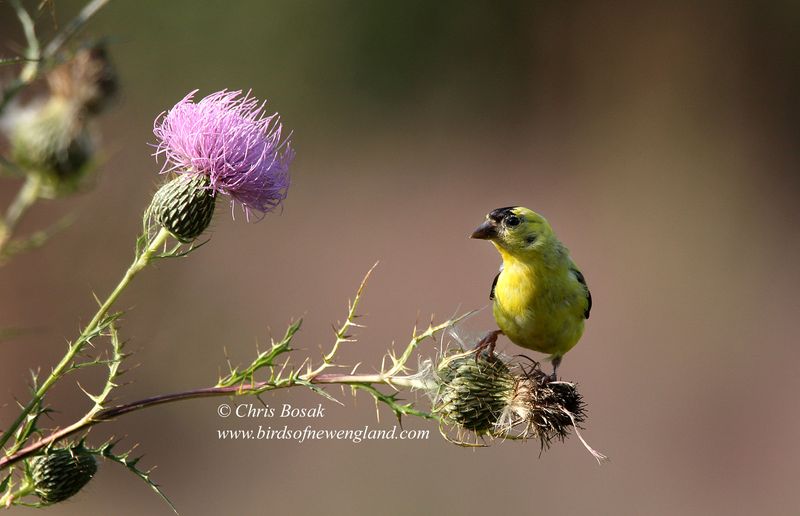
The bird you are watching is most likely an American Goldfinch, Spinus tristis, one of the most recognizable backyard birds across much of the United States.
But what you see depends heavily on the individual bird in front of you.
Adult males in summer wear that unmistakable lemon-yellow plumage with black wings and a crisp black cap.
Females and younger birds are a softer olive-yellow or yellow-green, which can make them look like an entirely different species at a glance.
Audubon’s American Goldfinch field guide notes this seasonal and sex-based color variation clearly, so a duller bird on your thistle is not automatically a different species.
If you live west of the Rockies, the bird could also be a Lesser Goldfinch, a close relative with its own range and habits.
Yellow coloration alone does not settle the question of species, sex, age, or breeding status.
A bird perched on a thistle may be feeding, resting, defending a favorite foraging spot, or gathering plant material.
None of those behaviors confirm parenthood on their own.
The most cautious clue that a nest may be nearby is watching the same bird make repeated trips carrying food or nesting material toward one specific area, returning again and again.
Cornell Lab guidance on birds nesting near homes recommends treating even consistent behavior as a clue rather than proof.
This article will explain why many goldfinches can still be nesting when other familiar songbirds have long since finished, without claiming that every other species is done or that your yard visitor is definitely a new parent.
Why Do Many American Goldfinches Nest In Midsummer?
Most familiar backyard songbirds, robins, house sparrows, cardinals, are already feeding fledglings or finishing their second clutch by the time goldfinches are just getting started.
That gap is not an accident, and it tells you something useful about what goldfinches actually need.
Cornell Lab’s American Goldfinch life history pages describe mid-summer as the typical nesting window, and Audubon reports that July and August contain the bulk of nesting activity across many parts of the country.
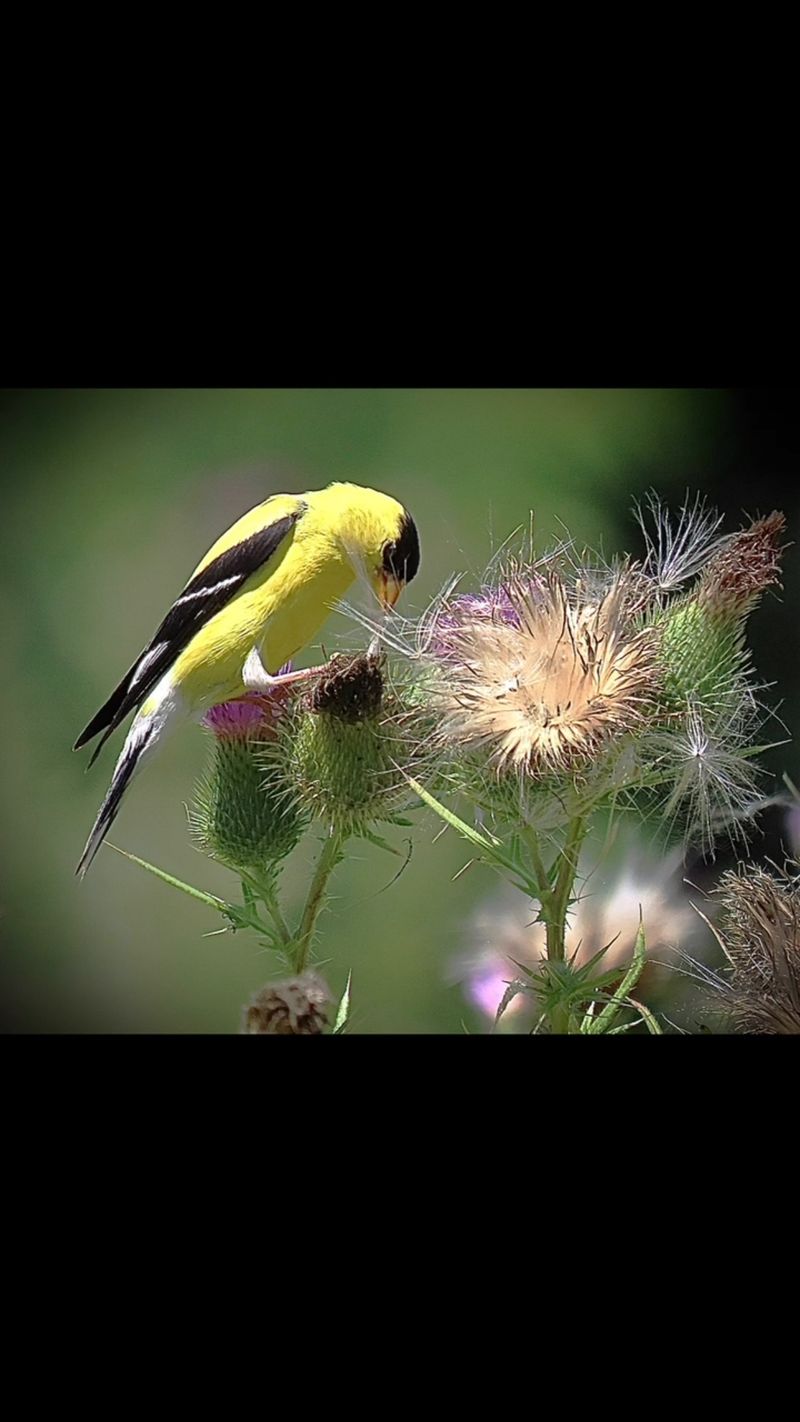
The timing appears to line up with the seasonal moment when thistles and other composite plants are producing mature seeds in abundance.
Goldfinch young receive regurgitated food made mostly from seeds, with some insects mixed in, so a reliable seed supply during the nestling period seems to offer a real advantage.
Framing that relationship as a likely resource connection is more accurate than calling it a single proven cause.
A 1970 University of Iowa study on goldfinch breeding strategy found considerable evidence that thistle blooming may cue the onset of nesting, but it was based on 30 nestings and represents influential early work rather than a settled rule.
Regional timing also varies more than a single calendar suggests.
A study of goldfinches in Guelph, Ontario found nesting began in early July, peaked in the second half of that month, and did not begin after August.
The Iowa study placed the breeding season from roughly early July through late September.
A USDA Forest Service account of a California population reported breeding as early as April, with a peak from mid-May through mid-July.
If you live in the Pacific states, your goldfinches may be well past nesting by the time your neighbor in Minnesota is just noticing eggs.
Thistle Offers Food And Documented Nest Down
Walk up to a mature thistle in late July and pull apart one of those silvery seedheads.
That silky, white fluff attached to each seed is called pappus, and for a nesting goldfinch, it is more than just packaging around a meal.
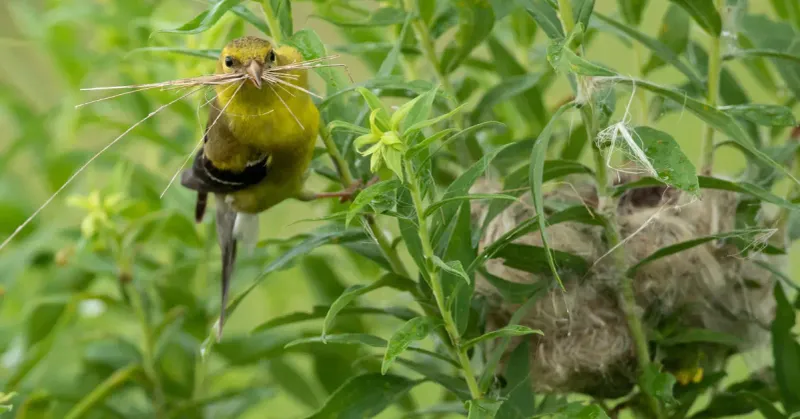
The female goldfinch builds the nest entirely on her own, weaving a compact open cup from plant fibers, spider silk, and plant down.
Cornell Lab describes the finished nest as lined with plant down, and notes that goldfinches may use the fluffy pappus from the seedheads of plants they commonly feed on.
Audubon specifically identifies thistle down as a major nest-lining material.
The University of Wisconsin Arboretum reports leaving native field thistle, Cirsium discolor, in larger garden beds because goldfinches use both its seed and its down during summer nesting.
So a thistle plant offers the bird two separate resources at once.
Dandelions are a different story, and the distinction matters.
The Illinois Department of Natural Resources lists dandelion among preferred goldfinch seed sources, alongside sunflower, thistle, birch, and sweet gum.
Goldfinches do eat dandelion seeds, and leaving some seedheads standing can provide a useful food boost.
But the authoritative sources reviewed here do not establish dandelion fluff as a standard or necessary nest-lining material the way they do for thistle down.
Treating dandelion as equivalent to thistle overstates what the evidence actually shows.
The safe summary is this: dandelion seedheads feed the birds, thistle down lines the nest, and both plants can earn a small, managed place in your late-summer yard for different reasons.
Leave A Defined Patch, Not Every Thistle
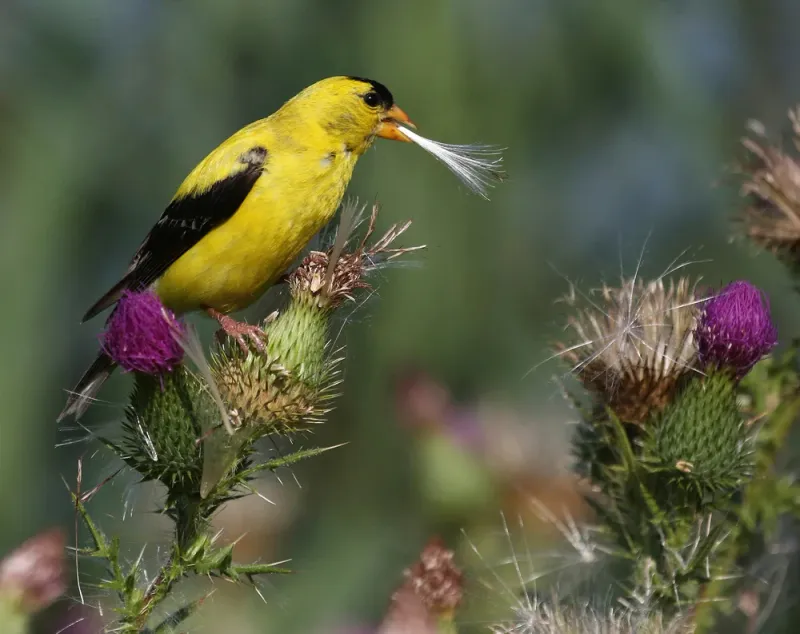
Knowing that goldfinches use thistle seeds and down is useful information.
Letting it convince you to leave every thistle in your yard standing is where things can go wrong fast.
NC State Extension’s guide to managing backyards for birds recommends leaving part of a yard or garden unmowed so that fruit- and seed-producing plants remain available through late summer, fall, and winter.
The key word there is “part.” A defined patch near a shrub or small tree, where birds can feed and find cover within a few feet of each other, does more practical good than an unmowed half-acre.
Before you allow any thistle to go to seed, identify the plant.
Native thistles such as field thistle, Cirsium discolor, or tall thistle, Cirsium altissimum, can support birds and native insects in regions where they naturally grow.
The University of Wisconsin Arboretum distinguishes native thistles from introduced problem species and recommends careful plant identification before making any management decision.
Canada thistle, Cirsium arvense, is a different plant entirely.
It is an introduced, rhizomatous species that spreads aggressively through both roots and seeds, and the University of Minnesota Extension lists Canada thistle as a noxious weed and advises against planting or propagating it.
Check your state or county weed regulations before allowing any thistle to seed freely.
Dandelion seedheads can stay where practical as a food source, as the Illinois DNR confirms dandelion among preferred goldfinch foods, but dandelions do not provide the same documented nest-material benefit as thistle down.
Keep paths, play areas, driveways, and dry fire-prone vegetation maintained as you normally would.
The goal is one useful patch, not a yard-wide conversion.
Give The Nest A Shrub, Not A Birdhouse
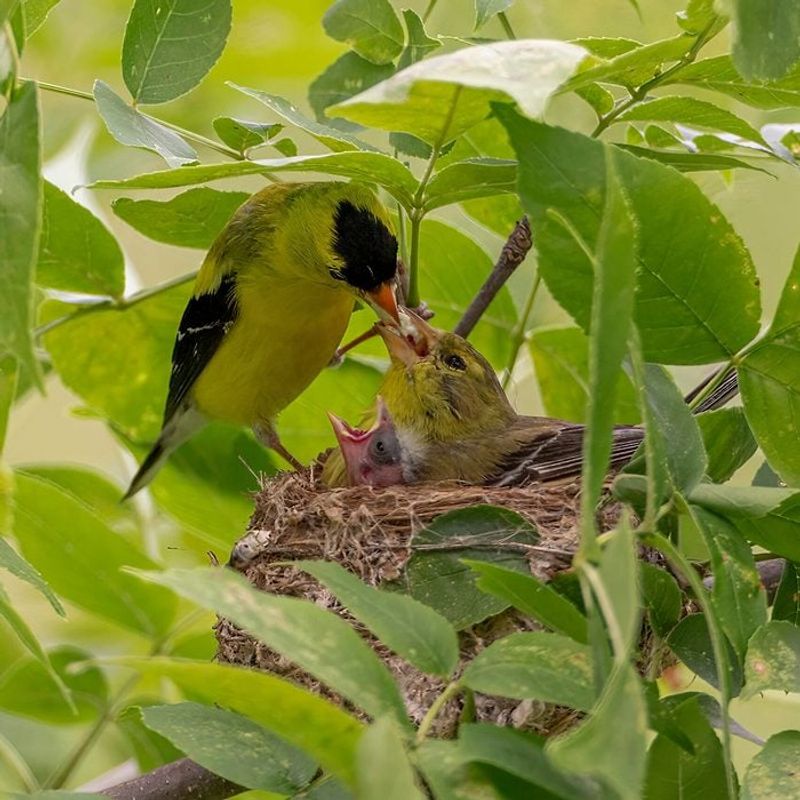
A lot of well-meaning homeowners reach for a birdhouse the moment they suspect nesting activity nearby.
For goldfinches, that instinct will not pay off.
American Goldfinches build open-cup nests in the forks of shrubs and small trees, not in enclosed cavities, so adding a nest box is not a reliable way to help them.
Audubon places most goldfinch nests below 30 feet, often in deciduous shrubs or small trees with good branch structure.
Cornell Lab describes the nest as a compact cup of plant fibers, spider silk, and plant down, built by the female over roughly 6 days.
Incubation runs about 12 to 14 days, and nestlings stay in the nest for approximately 11 to 17 days before fledging.
Those numbers give you a rough sense of the timeline, but individual nests vary.
What you can do is protect the structure that goldfinches already prefer.
Dense shrubs, native small trees, natural leaf litter, and dry twigs give birds the raw material and cover they need.
NC State Extension warns that pruning or clearing near a suspected nest can damage it or expose it to predators and weather.
Their guidance recommends avoiding pruning trees and shrubs during the nesting season, noting early March through late July as the relevant window for North Carolina.
That range is a local reference point, not a nationwide rule, so check with your regional Extension office for timing that fits your state.
Cornell’s NestWatch guidance confirms that goldfinches generally do not use birdhouses.
Skip the nest box and focus instead on keeping the shrubs and trees you already have undisturbed through the late-summer nesting window.
Do Not Turn Nest Help Into A Hazard
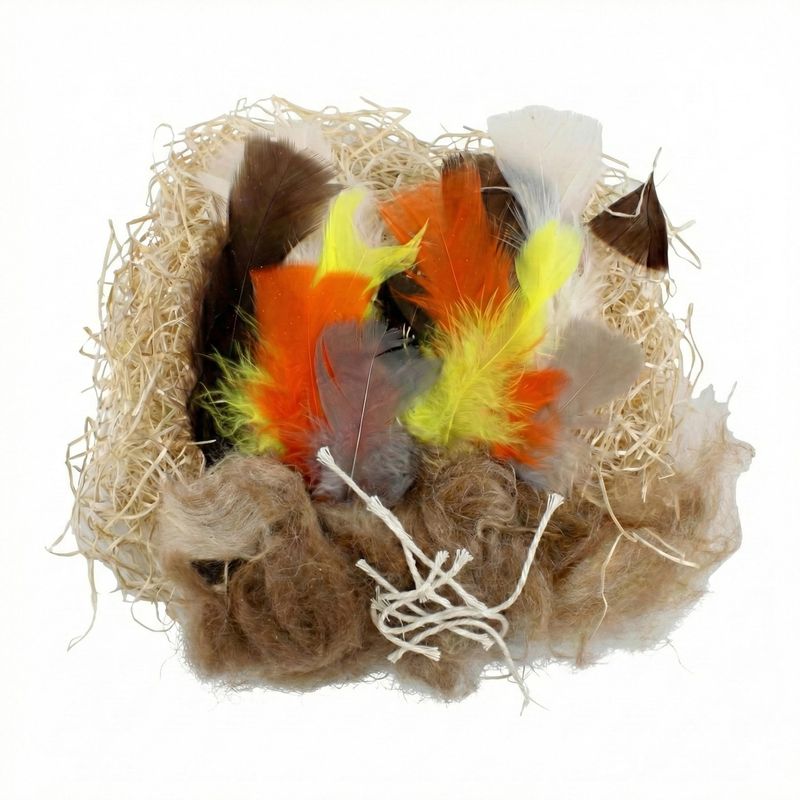
The urge to help a nesting bird is understandable, and it leads many people to set out a basket of fluffy materials in the yard.
Some of those materials can hurt the very birds you are trying to support.
Cornell Lab’s guidance on nest materials and Audubon’s advice on safe nesting materials both warn against offering dryer lint, yarn, string, plastic strips, human hair, and long synthetic fibers.
Dryer lint breaks down and loses its shape when wet, leaving a soggy mat in the cup.
Yarn, string, and human hair can wrap around a nestling’s leg or wing as the chick grows, cutting off circulation.
Synthetic fibers do not break down the way natural plant material does.
Pet hair carries its own specific risk.
If your dog or cat has been treated with a flea or tick product, residues can remain in the shed fur.
Do not put treated pet hair out as nest material.
The legal side matters too.
Moving, collecting, inspecting, or disturbing an occupied nest can put you in legal jeopardy, even with the best intentions.
The most useful thing you can do is stay back.
Cornell advises watching from a distance, keeping cats indoors or controlled, limiting foot traffic near the nest, and postponing nearby yard projects until the young have fledged.
Noninterference is not passive, it is the single most effective protection you can offer a nesting bird.
A Feeder Cannot Replace Habitat
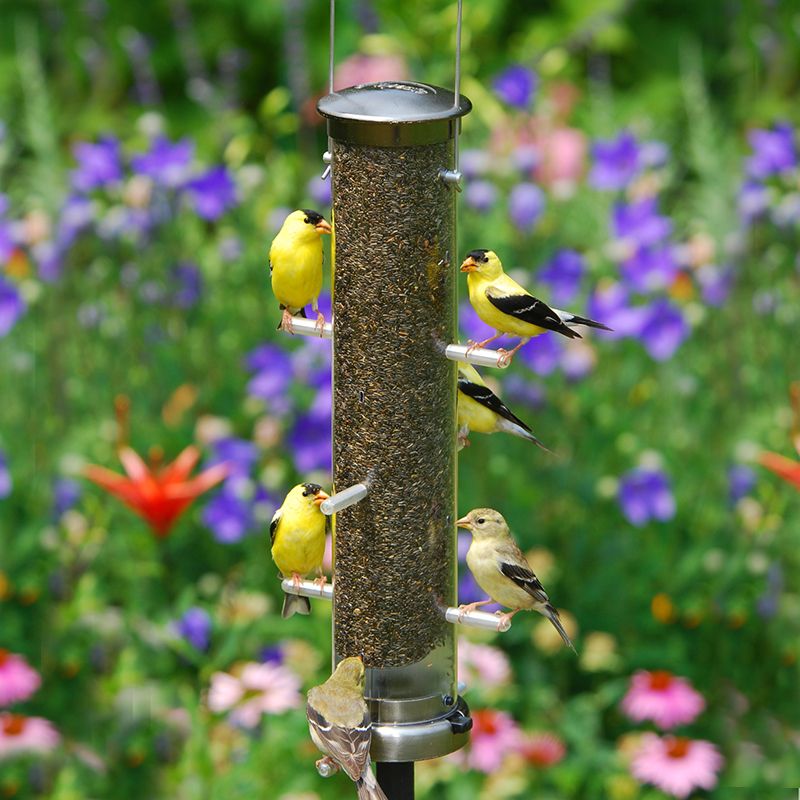
Nyjer seed, the tiny black seed sold in tubes and sock feeders at every garden center, is often labeled “thistle” on the packaging.
That name creates a reasonable but mistaken assumption: that buying a bag of Nyjer is equivalent to leaving yard thistles standing for goldfinches.
Cornell Lab’s seed guide clarifies that commercial Nyjer comes from Guizotia abyssinica, an African plant in the daisy family, not from the thistle species growing in your yard or the surrounding countryside.
A Nyjer feeder is a convenient food supplement, and goldfinches do visit them reliably.
But the feeder provides no thistle down for nest lining, no shrub cover for nest placement, and no natural seed structure for foraging practice.
Cornell’s feeder selection guidance recommends keeping tube feeders clean and positioned where birds can reach them safely, away from windows and accessible to cats.
A clean feeder, kept fresh so seed does not mold, is a reasonable addition to a yard that already offers habitat.
What a feeder cannot do is substitute for mature seedheads, plant down, protective shrubs, or low disturbance near a nest.
Cornell’s goldfinch life history notes that supplemental feeding is not necessary for a nearby nest to succeed.
If you have to choose between buying a bag of Nyjer and leaving a small unmowed patch of native seed-producing plants near a dense shrub, the patch will do more lasting work for the birds.
A feeder is a nice extra, not the foundation.
Make One Useful Late-Summer Change
You do not need to overhaul your yard to give late-nesting goldfinches a better shot.
One patch, managed thoughtfully, does real work.
Start by identifying any thistle before you decide to leave it.
If it is a native species appropriate to your region, consider letting one manageable clump go to seed near a shrub or small tree.
If you cannot identify it confidently, or if your county lists it as a regulated weed, remove it and focus on other native seed-producing plants instead.
Canada thistle, Cirsium arvense, should not be allowed to spread, regardless of how attractive it looks to foraging birds.
Leave some dandelion seedheads standing where practical, especially near that shrub patch.
They provide food even if they do not supply nest-lining material the way thistle down does.
Protect the shrubs and small trees nearby by skipping any pruning until you are confident no nest is active.
Cornell recommends keeping distance, controlling cats, and reducing foot traffic near any suspected nest site until the young have fledged.
NC State Extension frames selective habitat retention as one layer of support, not a guarantee that goldfinches will nest.
That framing is exactly right.
A yellow bird on your thistle may or may not be a parent, and your patch may or may not host a nest this season.
But a yard with mature seedheads, a dense shrub, and a quiet corner is genuinely more useful to a late-season goldfinch than a tidy, mowed-to-the-edge lot.
Small choices add up, and the birds will notice before you do.