
The One Native Texas Plant That Supports a Surprising Number of Bee Species In Your Yard
Follow us on Google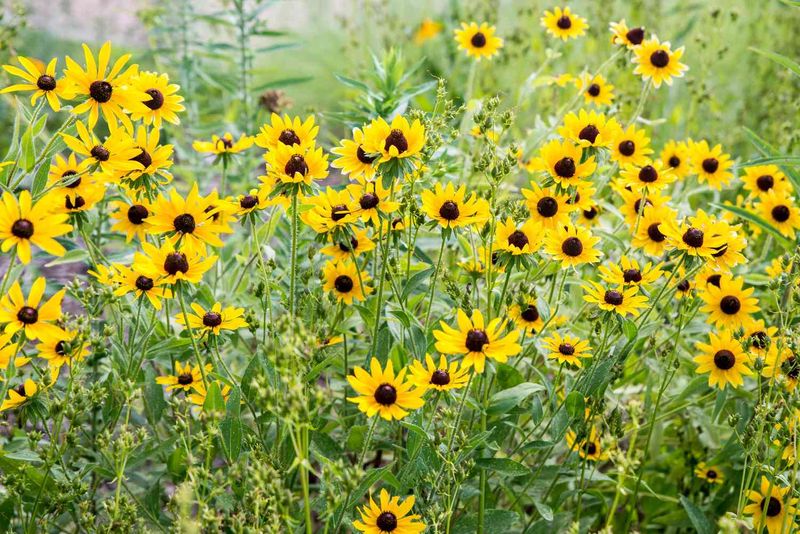
Walk outside on a July morning in Central Texas and there it is, a bright yellow flower with a dark center standing at the edge of the yard like it’s been waiting.
That’s black-eyed Susan, Rudbeckia hirta, a Texas-native wildflower that bees genuinely seem to find before most gardeners even think to plant it.
Regional data links the Rudbeckia genus to a notable number of pollen-specialist bee species, and the plant shows up across multiple Texas ecosystems without much fuss.
Knowing what that data actually says, and how to grow a patch that works for your corner of the state, makes the difference between a pretty flower and a real contribution to your yard’s bee life.
Meet Texas’s Black-Eyed Susan
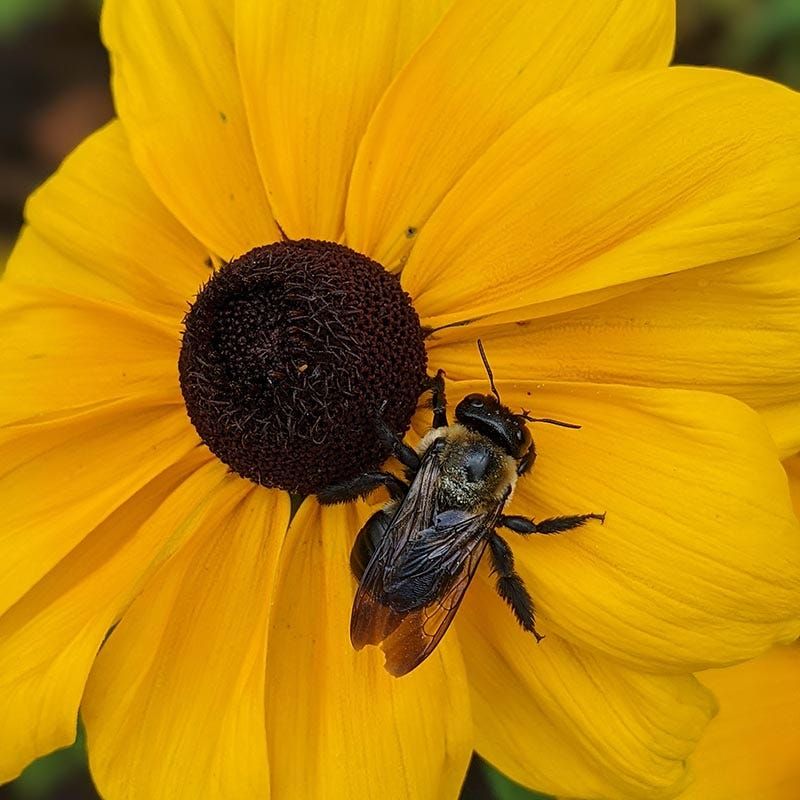
Rudbeckia hirta has been growing wild across Texas long before anyone called it a pollinator plant.
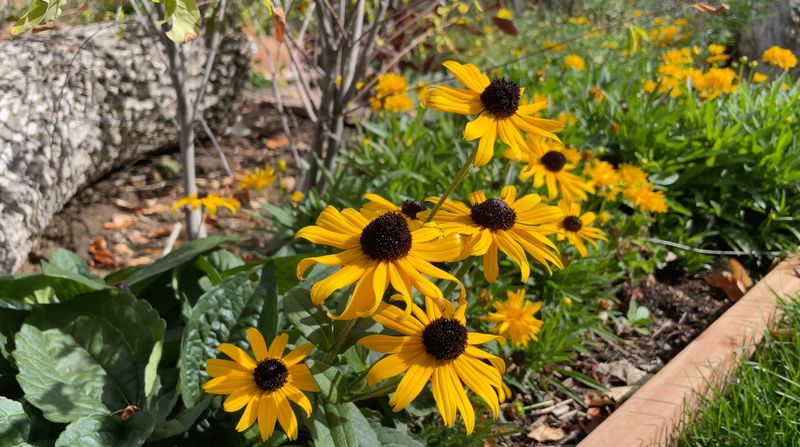
Its flowers are wide open, flat, and easy for bees to land on: a ring of yellow ray petals around a raised dark center disk that holds both pollen and nectar in plain sight.
That open architecture matters more than most people realize, and you’ll see why in a moment.
Texas A&M AgriLife, the University of Texas at Austin, and Texas Parks and Wildlife all document black-eyed Susan in Texas native-plant and wildflower guidance.
Texas A&M AgriLife’s native plant list places it among recommended species for home landscapes, while the University of Texas wildflower database identifies it as a documented Texas wildflower.
Texas Parks and Wildlife’s pollinator guidance includes it in regional recommendations as well.
Here is where the article’s headline needs an honest correction right away.
The available evidence supports black-eyed Susan as a useful bee plant associated with a meaningful number of bee species in regional data, not as a verified source of food for more than 17 bee species in one Texas yard.
That distinction is not a small one, and the next section explains exactly what the number actually measures.
What you can say with confidence is that this plant belongs in Texas, bees use it, and it is genuinely easier to establish than most native wildflowers.
What the 17-Bee Figure Actually Means
The number 17 comes from a specific place: a National Wildlife Federation keystone-plant dataset for the Northern Forests ecoregion.
That NWF ecoregional table associates the Rudbeckia genus, not Rudbeckia hirta alone, with at least 17 pollen-specialist bee species.
Pollen specialists are bees that depend on a particular plant genus for pollen, which is a narrower and more significant relationship than a bee simply landing on a flower.
That distinction matters when you’re deciding what to plant.
The same NWF dataset reports very different numbers in other regions.
The Eastern Temperate Forests table lists 29 associated specialist bee species for the genus.
The Great Plains table shows 32.
The Temperate Sierras list 14, and the Tropical Wet Forests table shows only 6.
Those shifting numbers tell you something useful: bee associations with Rudbeckia change depending on where you are, which means no single figure can predict what will visit your yard in Lubbock or Beaumont or Laredo.
A 2024 peer-reviewed study in the southeastern United States adds another layer.
That study found greater average bee richness on blanketflower, butterfly weed, and blue vervain than on Rudbeckia hirta in its test system.
That research did not take place in Texas, so it cannot be used to rank plants statewide, but it does argue clearly against calling black-eyed Susan the single best bee plant in every yard.
What the data actually supports is this: the Rudbeckia genus provides floral resources that pollen-specialist bees use, the association is real and documented, and Texas Parks and Wildlife confirms that native bees need native plants with pollen and nectar resources.
Black-eyed Susan fits that role in Texas.
It just cannot guarantee a specific visitor count in your specific yard.
Why Simple Blooms Help Bees
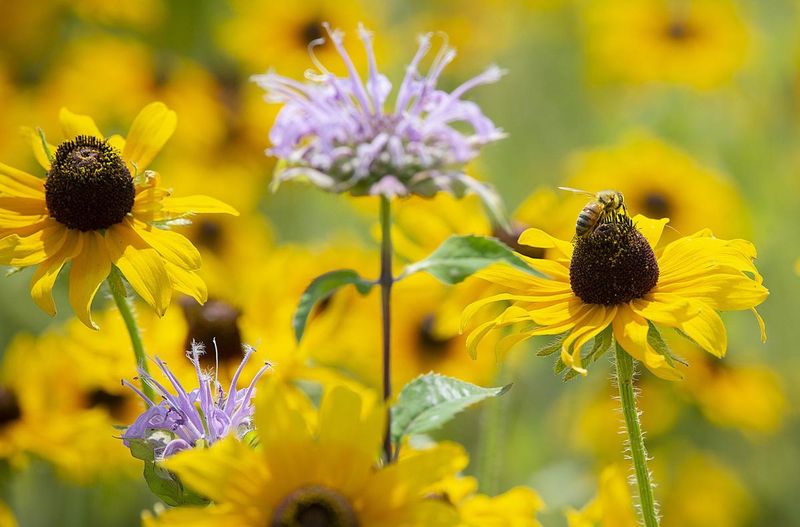
Walk up close to a blooming black-eyed Susan and you’ll often find bees already there.
The USDA plant guide for Rudbeckia hirta documents pollen and nectar use by carpenter bees, leafcutter bees, green metallic bees, and a coneflower miner bee.
Those are not random visitors.
They are bees that actively collect from the plant’s open disk, which puts pollen within easy reach of all types of foragers.
That open structure is the key.
Highly bred ornamental cultivars sometimes have extra layers of petals that cover or crowd the central disk, which can make pollen harder for bees to access.
When pollinator support is the goal, the University of Illinois Extension pollinator garden guidance points toward straight species and simple open-flowered forms rather than heavily doubled or ruffled cultivars.
You do not need the fanciest variety, you need the most accessible one.
Bloom timing in Central Texas generally runs from June through August, according to Texas A&M AgriLife’s Central Texas bee-friendly plant list.
But that window is regional guidance, not a statewide promise.
In East Texas, where rainfall is heavier and summers are humid, timing can shift.
In West Texas or the Panhandle, heat and drought can shorten or alter the bloom period.
Planting date, rainfall patterns, and whether your plant behaves as an annual or a short-lived perennial in your specific yard will all affect when and how long it flowers.
Plan for June through August as a reasonable expectation in Central Texas, and adjust based on what your local nursery and your own observations tell you.
Give A Patch The Right Conditions
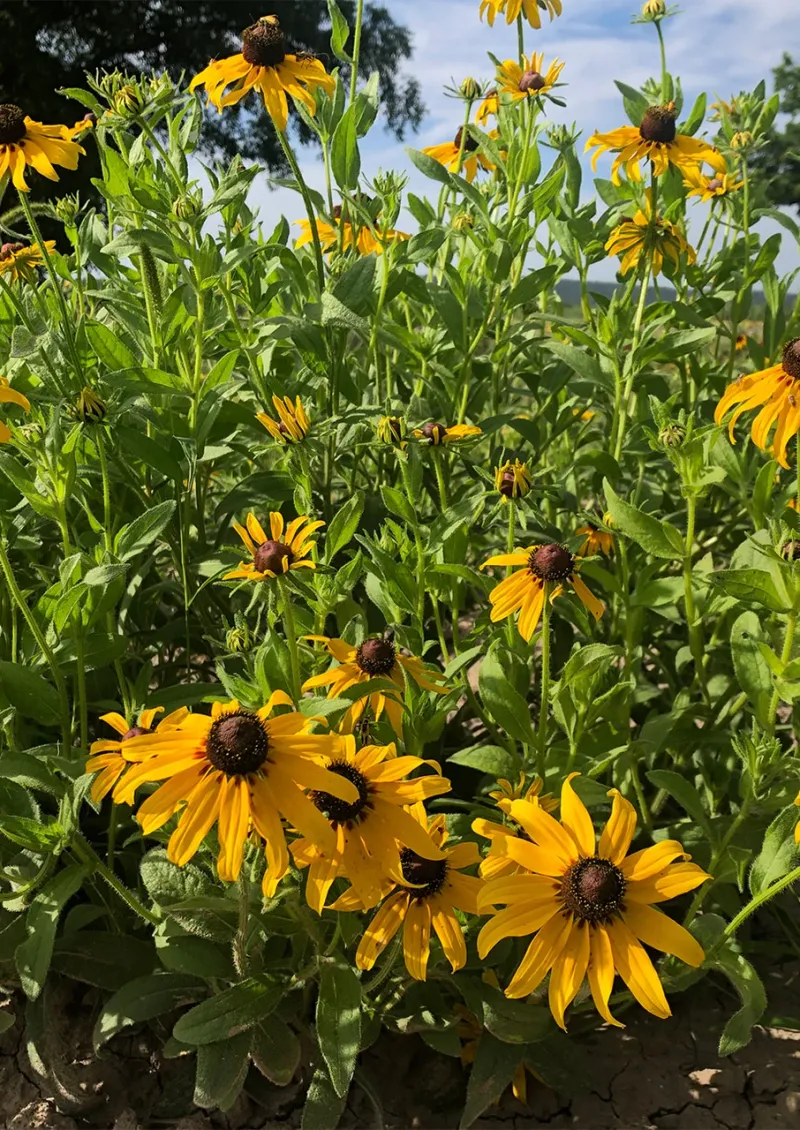
Black-eyed Susan does not ask for much, but it does have preferences.
Full sun is the first one.
These plants want at least 6 hours of direct sunlight daily, and they tend to get leggy and bloom less in shade.
Well-drained soil is the second.
Standing water after rain is one of the faster ways to lose a planting, so avoid low spots that hold moisture.
Mature plants reach roughly 1 to 3 feet tall depending on conditions, and a Texas Parks and Wildlife planting guide recommends spacing of 1 to 2 feet to allow good air movement between plants.
That spacing also helps reduce foliar disease, which can be an issue in humid parts of the state like the Gulf Coast or East Texas.
University of Illinois Extension describes the plant as easy to grow and short-lived, with reseeding as part of its normal garden behavior.
Texas is not one gardening climate.
The Hill Country has shallow alkaline soil that drains fast.
North and Central Texas often have heavy blackland clay.
East Texas leans toward acidic sandy conditions.
Growing conditions vary enough across the state that one set of planting instructions cannot cover every situation.
The Texas A&M AgriLife Earth-Kind Plant Selector is a practical tool for finding regionally adapted guidance specific to your area.
Plant a small patch rather than a single specimen.
More flowers provide a more consistent resource for visiting bees, and a patch is also more likely to reseed successfully.
More plants do not guarantee a fixed number of bee species or a specific level of bee activity, but they do give bees more reason to stay and return.
The USDA plant guide notes that Rudbeckia hirta reproduces by seed, with seedlings forming rosettes before later flowering, so a patch has the potential to sustain itself over time with the right conditions.
Let Some Seed Heads Stay
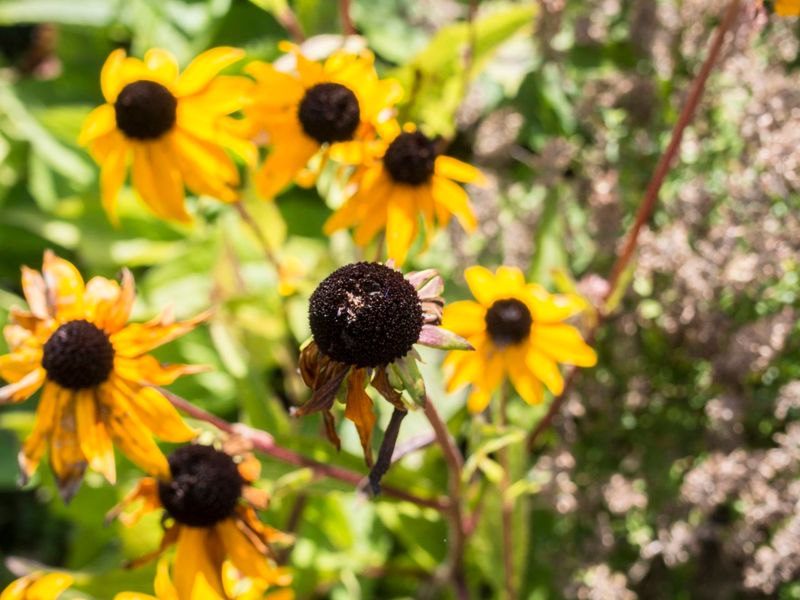
Most Texas gardeners are trained to deadhead spent flowers to keep a bed looking tidy.
With black-eyed Susan, that habit works against you if you want the plant to come back next year.
The USDA plant guide for Rudbeckia hirta describes seed reproduction as part of the plant’s normal life cycle, with seedlings forming basal rosettes before producing flowers in a later season.
Cutting every flower head before it dries interrupts that process.
Texas A&M AgriLife lists black-eyed Susan as an annual in its native Texas plant guide, meaning the individual plant may not return on its own after one season.
Whether it behaves as an annual, a biennial, or a short-lived perennial depends on your specific soil, climate, and growing conditions.
Reseeding is how a patch maintains itself over time, and University of Illinois Extension pollinator garden guidance describes reseeding as a normal and expected part of growing black-eyed Susan.
Leave some mature seed heads in place until they dry fully, then let seed fall naturally or collect it for later sowing in another part of the yard.
New plantings need consistent water during establishment, especially during the kind of hot, dry stretches that arrive across Texas from late spring through early fall.
The plant can tolerate some dryness once it’s settled in, but tolerating dryness is not the same as being drought-proof.
Do not skip watering during the first growing season and expect the plant to survive a stretch of triple-digit heat with no rain.
The USDA recommends a sowing window from mid-September through April for field establishment.
That schedule applies to large-scale plantings and is not a universal home-garden calendar for every Texas region.
Check with your local nursery or county extension office for planting timing that fits your specific climate and rainfall patterns.
Build Bee Habitat Around The Flowers
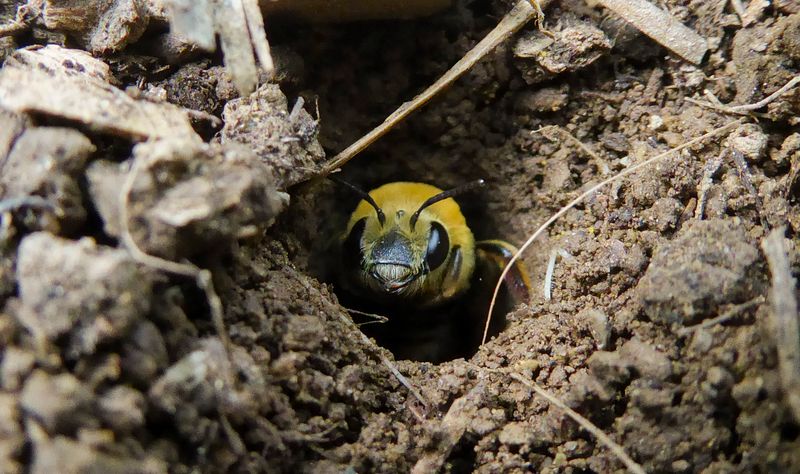
Black-eyed Susan can fill a real gap in summer forage, but a single plant species cannot supply everything a bee needs to survive.
Texas Parks and Wildlife identifies two fundamental bee requirements: food and nesting habitat.
A yard that offers one without the other leaves half the equation unsolved.
Food means a succession of blooms from early spring through late fall.
Different bee species are active at different times of year, and some native bees are adults for only a few weeks.
Texas Parks and Wildlife recommends a diverse mix of native herbaceous and woody plants timed to cover as much of the active bee season as possible.
In Central Texas that might mean bluebonnets in spring, black-eyed Susan through summer, and Gregg’s mistflower or autumn sage carrying the season into fall.
The mix will look different in the Hill Country, along the Gulf Coast, or in South Texas, which is why regional plant lists matter more than one statewide recommendation.
Nesting habitat is where many gardeners lose ground without realizing it.
Most native Texas bees nest in the ground, and they need bare or sparsely vegetated, well-drained soil to do it.
Others use dead wood, hollow plant stems, brush piles, rodent burrows, or grass thatch.
Texas Parks and Wildlife warns that tilling soil can destroy ground nests, which means a well-intentioned fall bed cleanup can wipe out the very bees you planted for.
Leave a small, undisturbed patch of open, well-drained ground near your planting when you can.
Do not heavily mulch the entire bed if ground-nesting bees are using it.
A brush pile at the edge of the yard, a bundle of hollow stems, or a piece of untreated dead wood costs nothing and gives cavity-nesting bees somewhere to go.
Black-eyed Susan feeds them, but the yard around it shelters them.
Protect The Patch From Pesticides
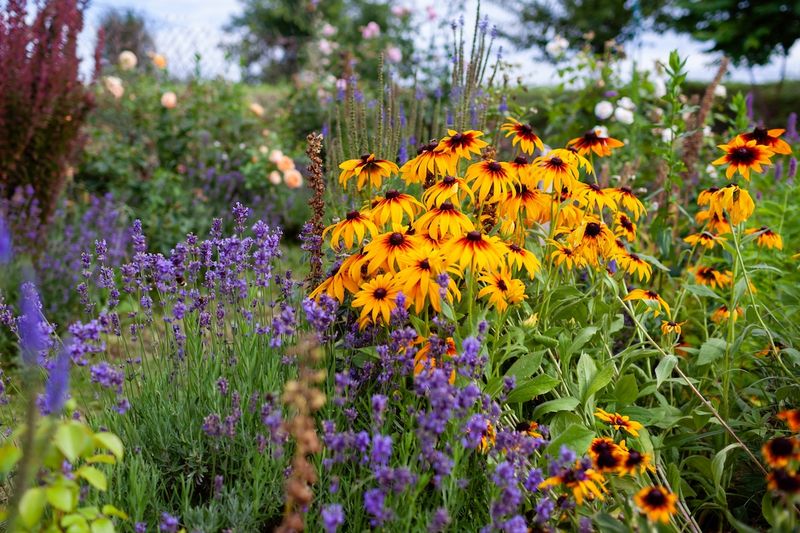
A yard full of blooming black-eyed Susan can undo itself quickly if routine pesticide habits go unchanged.
Spraying insecticides on or near open flowers is one of the most direct ways to harm the bees you are trying to support.
Texas Parks and Wildlife advises avoiding pesticides in areas managed for native pollinators, because native bees may be exposed at lower doses than managed honeybees and cannot be moved or covered the way a commercial hive can be.
If a pest problem genuinely requires treatment and there is no practical alternative, read the product label carefully before doing anything else.
The label is a legal document, and it often includes specific instructions about blooming plants, time-of-day restrictions, buffer distances, and drift reduction.
EPA pollinator protection guidance identifies bloom-time, application rate, timing, and buffer restrictions as key protections that labels may require.
Texas A&M AgriLife pest management guidance similarly points to label compliance as the foundation of any responsible application near pollinators.
Treating in early morning or evening, when bee activity is lower, can reduce exposure risk if treatment near the garden area is unavoidable.
Never treat open blooms or plants where pollinators are actively foraging, and keep spray off neighboring flowers as well.
Drift travels farther than most people expect on a breezy Texas afternoon.
The practical plan for this plant is straightforward: grow a patch of open-flowered, straight-species black-eyed Susan in full sun with good drainage, water it consistently during establishment, leave some seed heads to dry and fall, protect a small patch of undisturbed ground nearby for nesting bees, and add regionally suited native blooms before and after the summer window.
The bees in your corner of Texas were already looking for exactly this kind of yard, and they will find it faster than you think.