
The Underused Native Texas Trees Some Neighborhoods Are Quietly Adding To Their Front Yards
Follow us on Google
You step outside before breakfast and the patio already feels warm, promising another scorcher of a Texas summer day.
Across the street, a neighbor’s front yard holds a tree you have never really noticed, and it looks completely at ease while everything else looks thirsty.
Turns out you are not the only one spotting these quiet landscape heroes popping up in neighborhoods all over the state.
Here are nine tough, underused natives that thrive here without begging for water or fussing over the heat.
1. Mexican Plum Brings Spring Cheer Early And Often
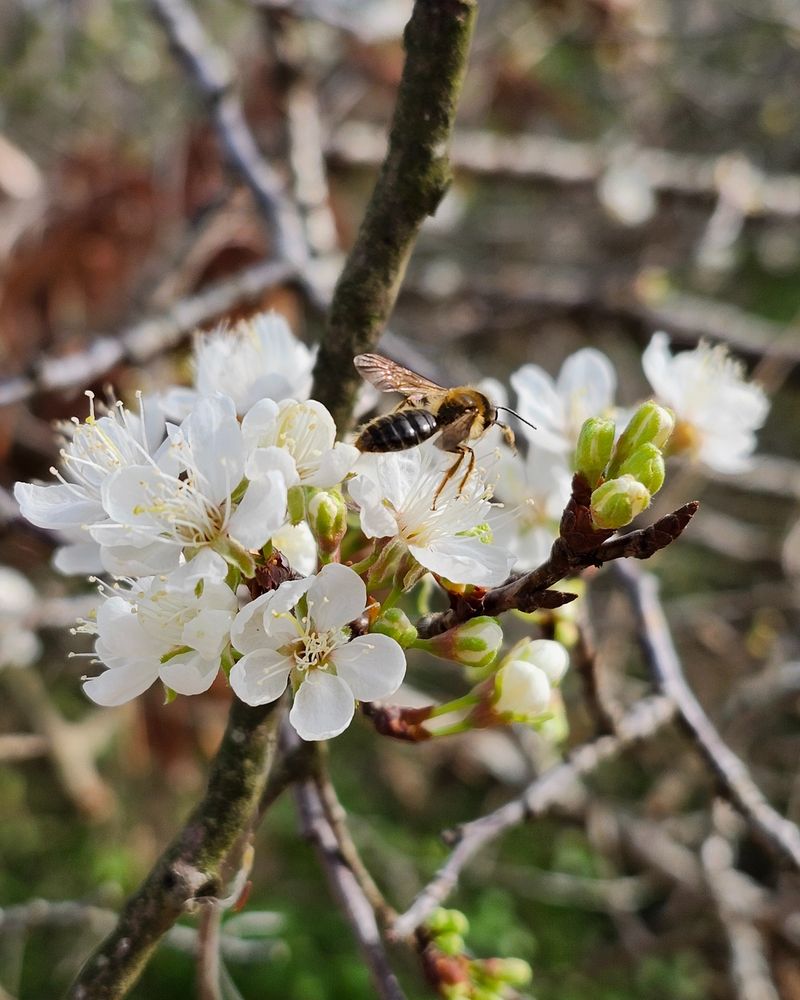
Picture a crisp late-February morning where your whole yard suddenly wears a cloud of fragrant white flowers.
That is the trick of the Mexican plum (Prunus mexicana), a small native that blooms before its leaves even wake up.
For years it got passed over for flashier trees that scorched by July.
But the Mexican plum shrugs at our sun and blooms as early as late February in Central Texas, drawing bees by the dozen.
It tops out around 20 to 30 feet tall with a canopy near 25 feet, so it fits tight front-yard spots.
The bark matures into a satiny blue-gray with dark horizontal stripes, giving you something to look at even in winter.
It handles full sun to dappled shade and takes well-drained sandy or clay loam soils without complaint.
Drought tolerant once established, it will still reward a deep soaking with more of its small dark-purple fruit that ripens in late summer.
Birds and small mammals hit those plums fast, so beat them to it if you want jam.
A genuine multitasker, this one gives you flowers, fruit, and a wildlife buffet in one tidy package.
2. Texas Persimmon Offers Distinctive Bark And Drought Resilience
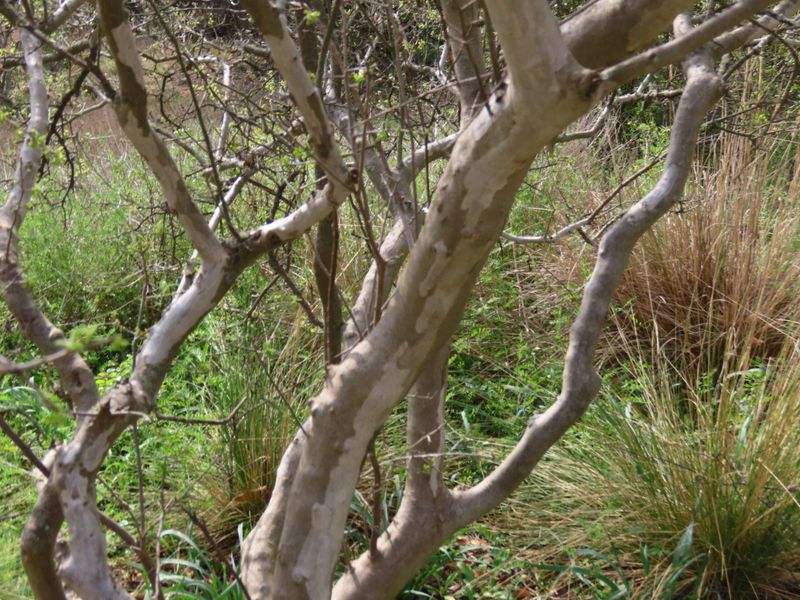
Some trees earn their spot on looks alone, and the Texas persimmon (Diospyros texana) does it with bark.
Smooth and pale gray, it flakes off in rectangular pieces to show pinkish layers underneath, and in winter that sculptural trunk stops people mid-walk.
It usually grows with several twisted trunks, reaching 10 to 15 feet tall, though a happy one can climb toward 40 feet.
That compact size makes it perfect for small city lots or as a front-yard accent.
Found naturally across central, west, and south Texas in dry rocky ground, it is genuinely tough.
Drought-tolerant, disease-resistant, and fine in full sun or part shade, it asks for almost nothing once rooted in.
Here is where it gets tricky.
Texas persimmon is dioecious, meaning male and female flowers grow on separate trees.
For the sweet black fruit that ripens from late July into September, you need a female tree with a male nearby.
Birds, opossums, and raccoons love those fruits, which some folks say taste like prunes.
But the black juice stains, so do not plant a female right over your driveway.
Plant it for the bark, keep it for the wildlife.
3. Lacey Oak Stands Strong Against Oak Wilt And Heat
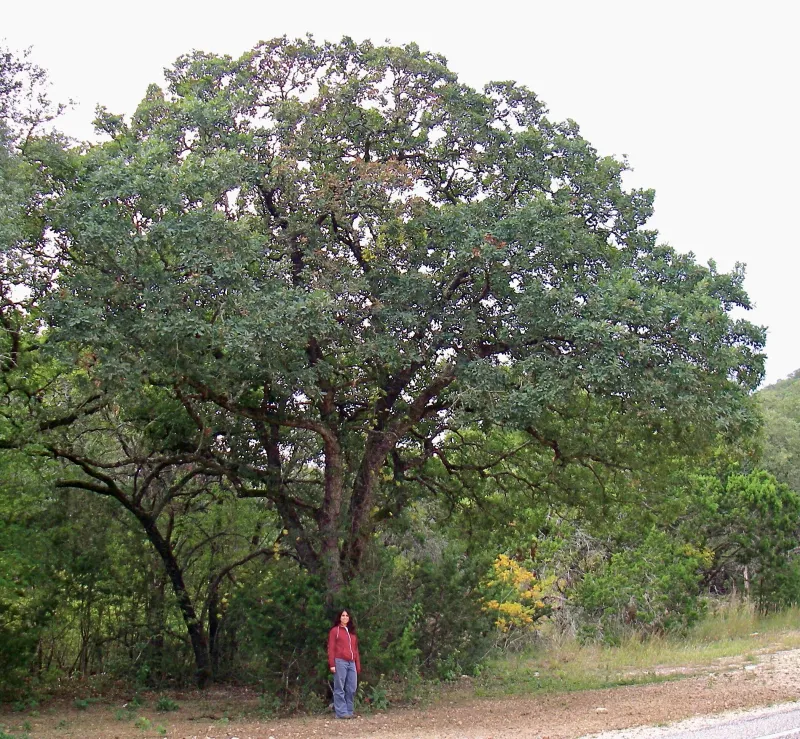
Say the words oak wilt to a Texas gardener and watch the wince.
That disease has hollowed out whole streets of live oaks and red oaks in Central Texas.
So here is a quiet hero.
The Lacey oak (Quercus laceyi), sometimes called blue oak for its grayish-green leaves, actively resists oak wilt and it is catching on fast across the Hill Country.
It grows slowly, often a foot or less per year, which means less pruning and more built-in toughness.
Expect a mature size near 30 feet tall and 30 feet wide, with some reaching 45 feet.
The leaves put on a show, emerging peach or salmon-orange in spring and fall before settling into that summer blue-green.
Native to the Edwards Plateau, it thrives in the shallow alkaline, rocky, well-drained soils that defeat so many other trees.
Once established it laughs off triple-digit heat and long dry stretches.
Texas A&M AgriLife Extension steers homeowners toward diverse oak choices exactly to slow oak wilt spread, and the Lacey oak fits that plan.
If you live in the western two-thirds of the state and want shade with peace of mind, this one actually delivers.
4. Desert Willow Brings Colorful Blooms To Dry Spaces
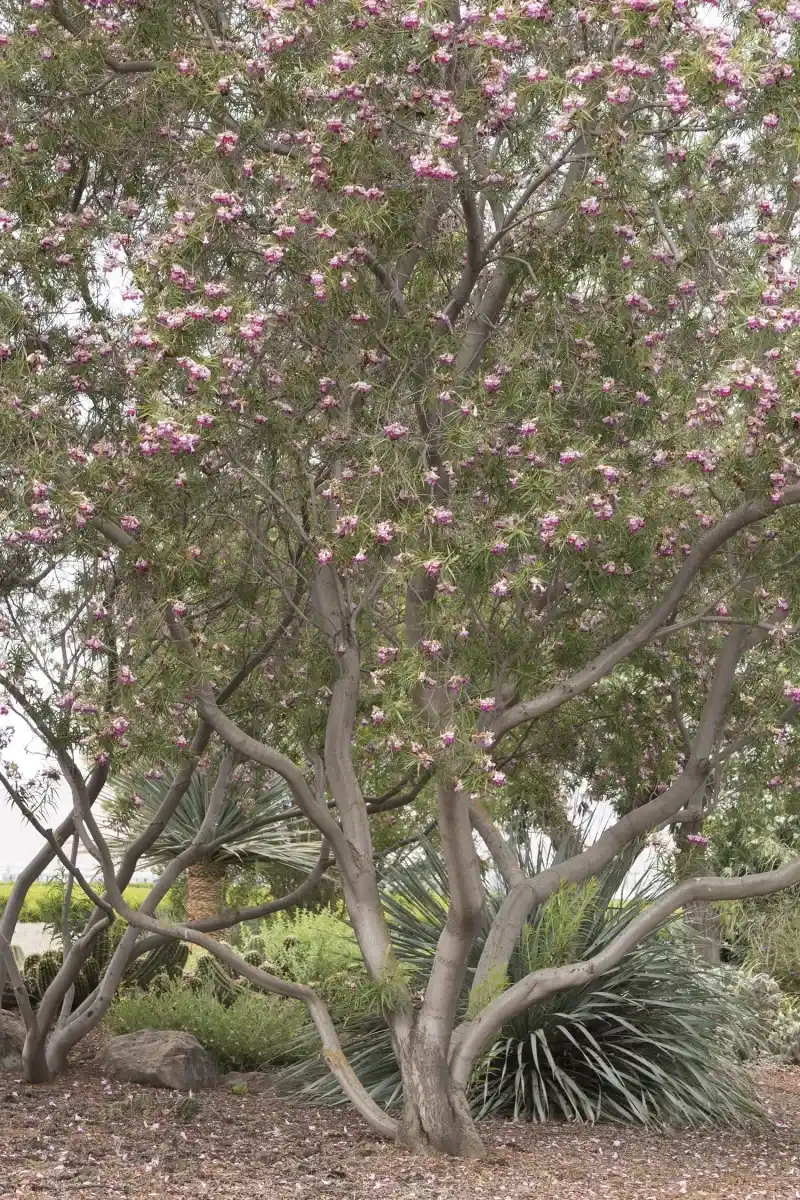
Out in West Texas and the Edwards Plateau, a flowering tree is proving beauty does not need babysitting.
The Desert willow (Chilopsis linearis) shrugs off triple-digit heat and puts on trumpet-shaped flowers from late spring clear through fall.
The long narrow leaves look like a true willow, but the two are not related at all.
That is just the tree wearing a clever disguise.
Blooms range from soft pink and violet to deep maroon, usually with a yellow throat, and they pull in hummingbirds, bees, and butterflies.
Most Desert willows reach 15 to 20 feet tall, sometimes 30, often with several graceful trunks.
It craves full sun and handles blazing exposed spots where other trees fry.
It takes many soil types but demands sharp drainage, since soggy roots invite rot.
Want more flowers?
Prune it during winter dormancy and clip off spent blooms and seed pods through the season.
This is not a magic solution for a swampy yard, but on dry ground it genuinely lights the place up.
5. Chinquapin Oak Offers Durable Shade And Wildlife Support
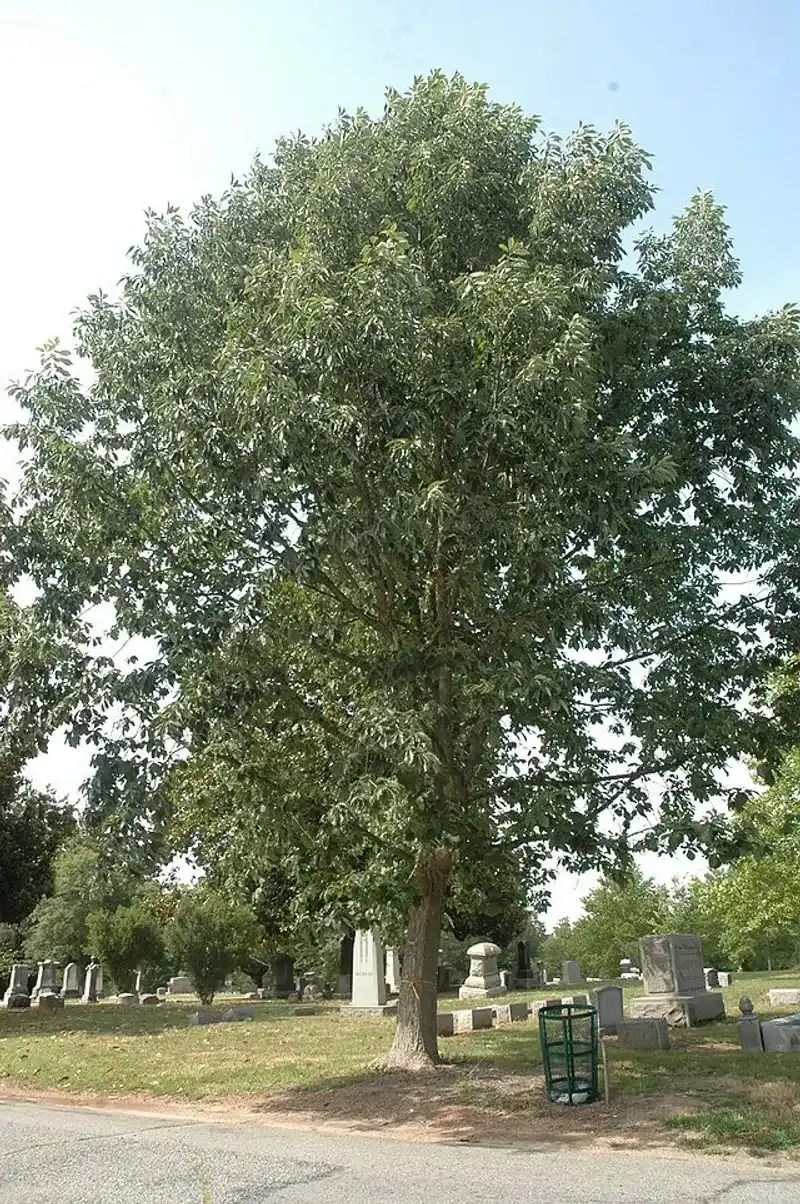
When you want big, lasting shade but you are tired of seeing the same three trees on every block, the Chinquapin oak (Quercus muehlenbergii) is a workhorse hiding in plain sight.
It routinely lives past 100 years, so you are planting for grandkids.
It thrives in the alkaline, limestone-rich soils common across North Texas and the Hill Country, the kind of ground that starves fussier trees.
It likes good drainage but adapts to a surprising range of conditions.
Young trees grow slowly while they build roots, then shift to a moderate pace and spread a broad rounded canopy.
Mature size runs 40 to 70 feet tall with a spread of 40 to 60 feet, so give it room.
The chestnut-like leaves turn soft yellow to golden bronze in fall for a quiet seasonal payoff.
And like the Lacey oak, it resists oak wilt, which matters where that disease circles.
Its acorns feed birds, deer, and small mammals, turning your yard into a working ecosystem.
Plant one and you are not just buying shade, you are cooling the house and feeding the neighborhood wildlife for decades.
6. Anacua Brings Subtropical Charm To Warmer Regions
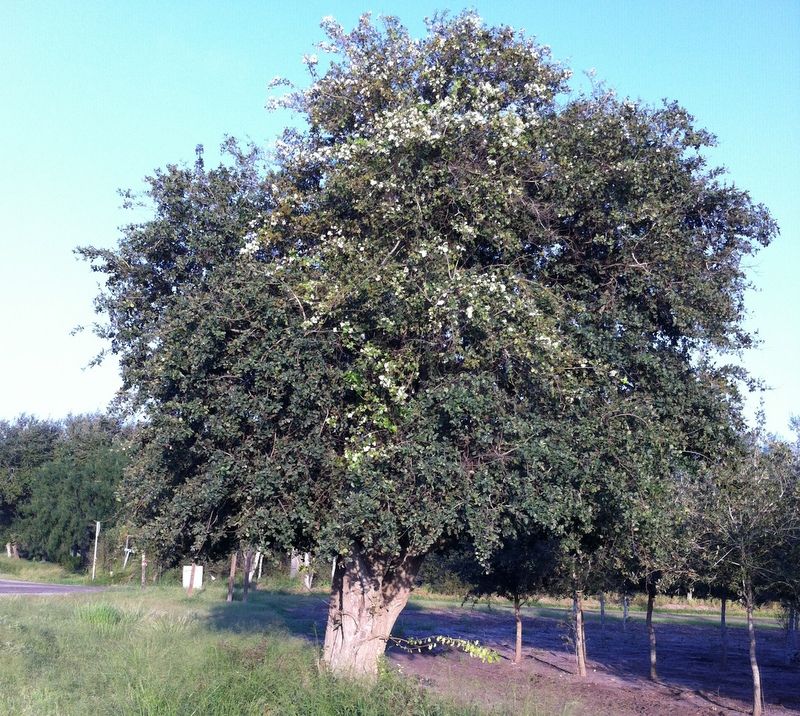
Down in the warmer half of Texas, from Central Texas south to the Gulf Coast and the Rio Grande Valley, a semi-evergreen gem is quietly moving into front yards.
The Anacua (Ehretia anacua) earns the nickname Sandpaper-Tree for leaves rough enough to scratch a match.
It carries a dense rounded crown of dark green foliage and grows 20 to 50 feet tall, with a trunk that can thicken to 2 feet across.
That gives it real presence without hogging the whole yard.
Here is the surprise.
It blooms from late fall into early spring, sending out fragrant white flower clusters when most trees are asleep, and the bees find them fast.
Small round berries follow, ripening yellowish to reddish-orange by mid-summer.
Birds devour them, though they drop mess near sidewalks, so place it thoughtfully.
Anacua tolerates many soils, including alkaline ground, and turns highly drought tolerant once established.
North of San Antonio a hard freeze can strip its leaves, but it usually bounces back quickly.
Call it the unsung hero of the South Texas landscape.
It hands you cooling shade, off-season blooms, and a wildlife draw with a distinct subtropical feel.
7. Eastern Redbud Lights Up East Texas Fence Lines
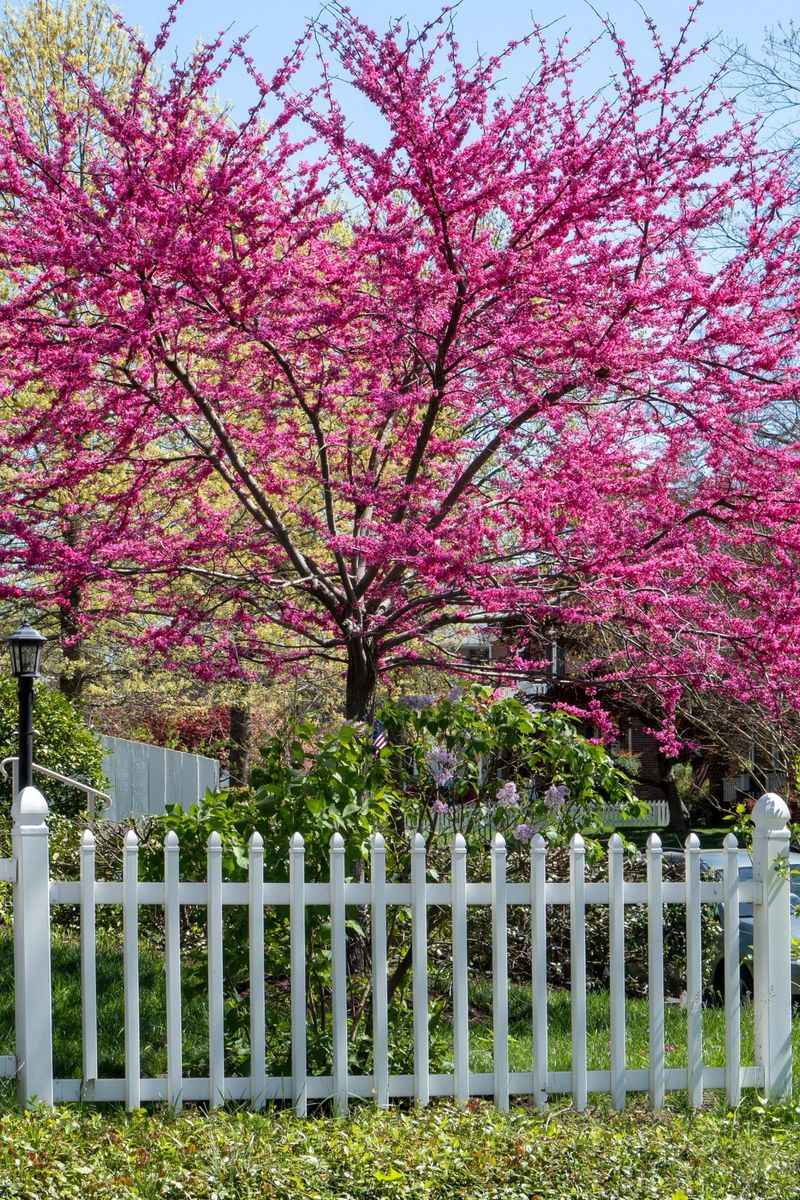
Drive through an East Texas neighborhood in March and one small tree seems to catch fire in pink.
That is the Texas redbud (Cercis canadensis var. texensis), and once you spot it you cannot unsee it.
Long before its leaves show, the bare branches load up with rose-purple blossoms that cling right to the wood, a habit gardeners call cauliflory.
Pollinators wake hungry, and those early flowers feed them at just the right moment.
It stays modest at 15 to 20 feet tall, perfect tucked near a fence line or beside a porch.
In East Texas it settles happily into the acidic sandy soils that many trees dislike.
The Texas variety carries thicker, glossier heart-shaped leaves than the standard redbud, which helps it handle heat and dry spells better.
Give it part shade to full sun and well-drained ground.
Once established it needs little more than a deep watering during long dry stretches.
Plant it where you sit in spring, because the show only lasts a couple weeks, and you will not want to miss it.
8. Cedar Elm Handles Heavy Clay Without Complaint
Blackland clay breaks a lot of trees.
It swells when wet, cracks when dry, and drowns roots that cannot cope.
So the tree that actually thrives in it deserves a nod.
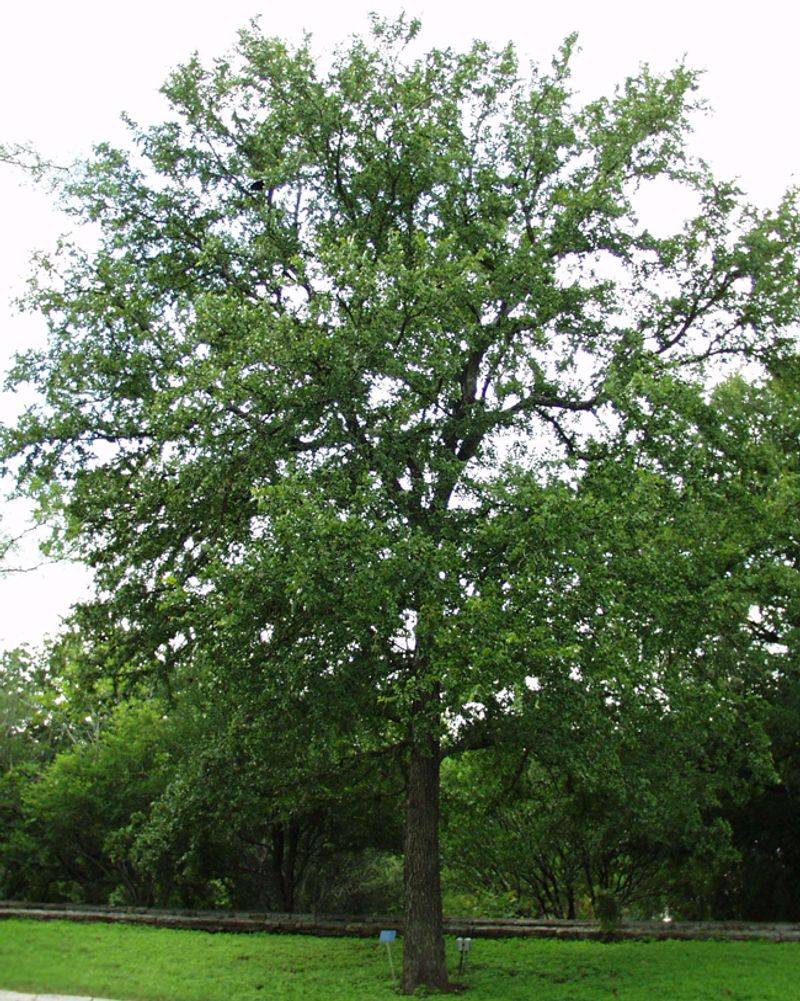
The cedar elm (Ulmus crassifolia) is native across North and Central Texas and it takes that heavy clay in stride.
It is one of the most common shade trees you have probably walked past a thousand times without naming.
Growing 50 to 70 feet tall with an arching, graceful canopy, it delivers serious shade for the water bill you dread in July.
The small, rough leaves turn a soft yellow in fall, a quiet finish rather than a fireworks show.
It blooms in late summer, unusual for an elm, and drops seed that birds appreciate.
Tough as it is, it handles high winds and long dry stretches far better than many imported shade trees.
Give it a deep soaking every couple weeks during its first two summers, roughly to a depth of 8 to 10 inches.
After that it mostly fends for itself, which is exactly what a Texas yard needs.
9. Escarpment Live Oak Keeps Its Cool Green All Winter
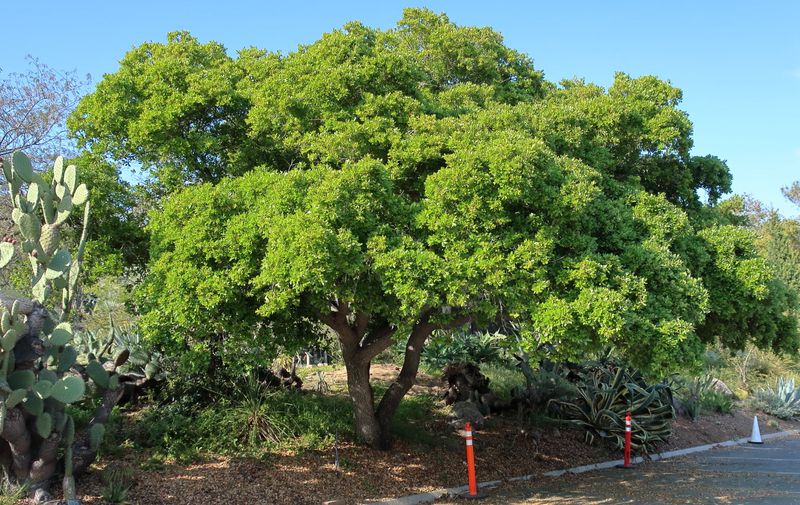
Everybody knows the live oak, but few know there is a Hill Country native version built for shallow, rocky ground.
The escarpment live oak (Quercus fusiformis) holds its dark green leaves nearly year round, so your yard never looks bare.
It sprawls wide and low, often broader than it is tall, throwing dense shade that can drop the ground temperature under it by several degrees on a triple-digit afternoon.
That shade is the whole point in Central and West Texas.
Adapted to shallow alkaline caliche soils, it handles drought like few trees can once it is settled in.
It grows slowly toward 40 feet or more, taking its time to build a frame that laughs at high winds.
Here is the honest catch.
Live oaks are vulnerable to oak wilt, and the disease spreads through connected roots and fresh wounds.
Texas A&M AgriLife Extension advises pruning only during the coldest and hottest months, roughly July and August or December through February, and painting every cut right away.
Follow that rule and this steady, evergreen giant will cool your porch for generations while asking for very little in return.