
Native Texas Perennials That Outshine Black-Eyed Susans In Every Border
Follow us on Google
You step outside before breakfast and the patio already feels warm, promising another scorcher.
That familiar Texas heat is wonderful for swimming, but it can be tough on your garden, especially when those cheerful Black-Eyed Susans start to look a little tired.
You just want a border bursting with color that can stand up to our long, hot summers, without turning into a crispy mess or a spider mite buffet.
Good news, neighbor: there are native Texas perennials that actually thrive, offering stunning blooms and much less fuss, all while outshining those Black-Eyed Susans in every single way.
1. Your Yard Deserves Tougher Blooms
Plenty of Texas gardeners adore Black-Eyed Susans (Rudbeckia hirta) for their bright, sunny faces.
But after a few seasons, or even one brutal summer, you might notice them flagging in the border.
Spider mites, those tiny eight-legged antagonists, absolutely thrive in hot, dry conditions.
They leave leaves stippled, yellowed, and bronzed, often showing up first on the undersides where they spin fine, protective webs.
Once daytime highs push past 95 degrees, they multiply fast.
Here is where it gets tricky.
Black-Eyed Susans are cheerful, but they were simply not built for the relentless challenges of a North or Central Texas border.
They want steadier moisture than our long dry stretches deliver, and they fade right when you want them showing off.
Native plants, though, have spent centuries perfecting their defense against the very conditions that break introduced varieties.
Texas A&M AgriLife Extension has long pointed gardeners toward natives for exactly this reason, less water, fewer pests, more staying power.
So the fix is not more spraying or more babying.
The fix is choosing plants that already know how to live here.
The next eight are the quiet heroes ready to take over, and your water bill will thank you.
2. Gregg’s Mistflower Brings On The Blue
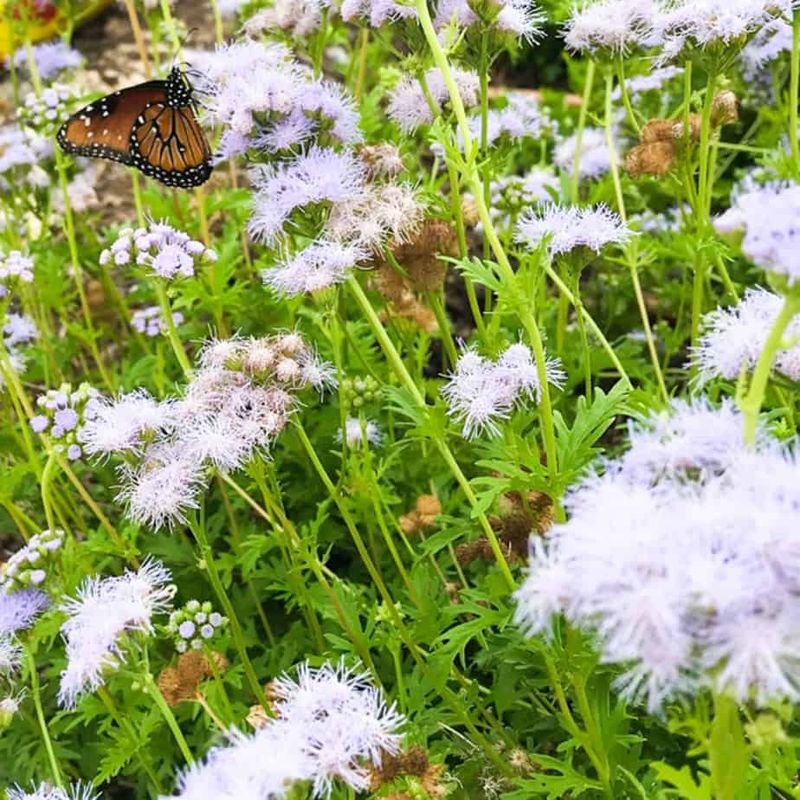
Picture a cloud of powder-blue flowers, swirling with butterflies even as autumn arrives.
That is Gregg’s Mistflower (Conoclinium greggii), a genuine Texas superstar.
Most plants shrink from the summer sun.
Gregg’s Mistflower actually prefers hot, dry spots, which makes it a champion for those sunny corners where Black-Eyed Susans wilt by July.
It grows across Central Texas, the Edwards Plateau, and the Trans-Pecos, cheerfully handling our punishing heat.
It forms a spreading ground cover about 12 to 24 inches tall, with flowers reaching up to 18 inches and spreading 1.5 to 3 feet wide.
Blooms run from late spring straight through fall, peaking in late summer and autumn when other plants are giving up.
Here is the part that will make you smile.
It is a magnet for pollinators, feeding bees and Queen butterflies, and serving as a critical fueling stop for Monarchs migrating through the Hill Country and South Texas each fall.
Plant it in full sun to part shade in well-drained loam, gravel, or calcareous soil.
It is root hardy down to 0 degrees Fahrenheit.
It spreads by rhizomes, so divide it every two years or trim it in early spring to keep it tidy.
It genuinely suffers no serious pests or diseases.
3. Winecup Cascades With Joyful Color
Want a burst of rich, jewel-toned color spilling over a border or rock garden?
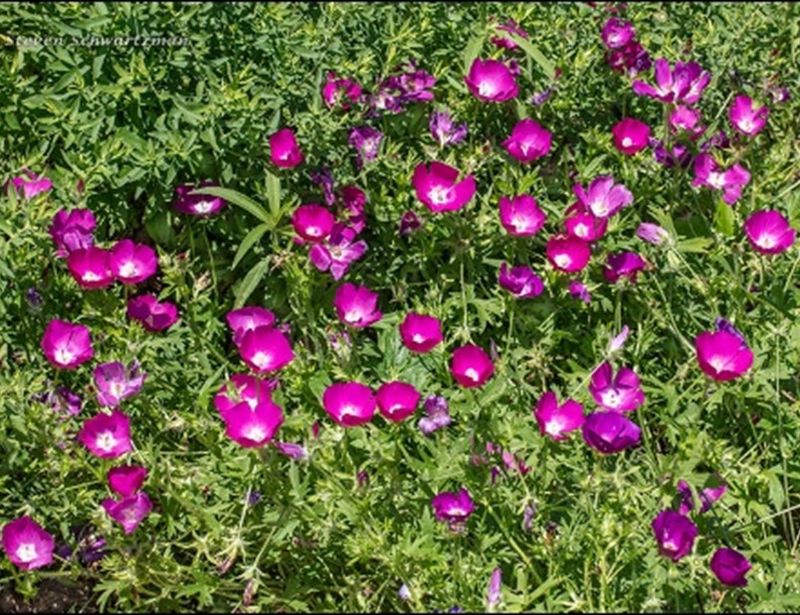
Look past the Black-Eyed Susan and meet Winecup (Callirhoe involucrata).
This native groundcover unfurls vivid magenta, cup-shaped flowers starting in March or April and keeps going through fall.
The blooms are about 2.5 inches wide, opening each morning and closing at night like little clockwork goblets.
The plant sprawls into a mat 6 to 9 inches tall and up to 3 feet wide.
Winecup is wonderfully forgiving about soil, as long as it drains well.
It even loves shallow, gravelly ground and tucks itself into the cracks between landscape pavers, something a fussier plant would never tolerate.
Its secret weapon against our dry spells is a long taproot, which makes it remarkably drought-tolerant once established.
That taproot is the quiet hero here, reaching for water while everything else pants.
To keep the blooms coming, deadhead spent flowers.
In late winter, before new growth emerges, cut the whole plant back to its base.
Just avoid soggy soil, which can bring on crown rot.
It draws native bees and butterflies, and it asks almost nothing from you in return.
4. Turk’s Cap Hums With Life
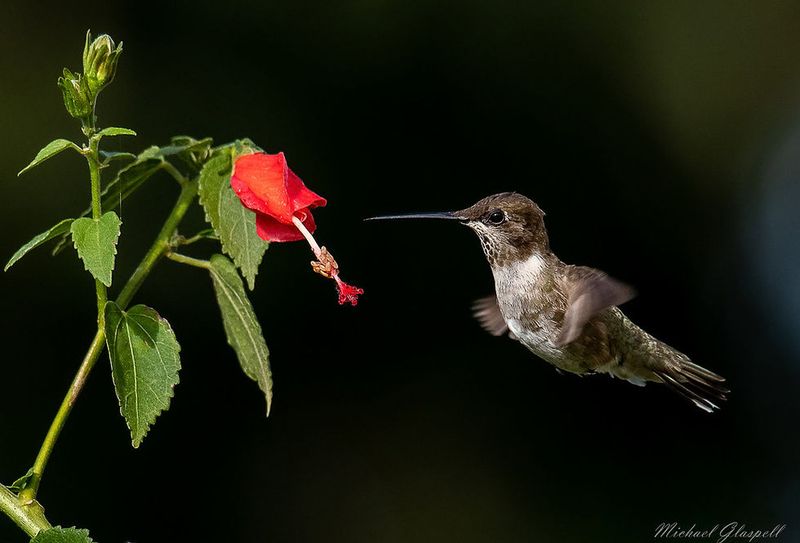
A hummingbird zips in, hovers, and refuses to leave.
That is the everyday scene around Turk’s Cap (Malvaviscus arboreus), a plant with serious staying power and a bloom that looks like a little red turban.
The flowers, about 2 inches long, never fully open, which gives them their whimsical look and makes them irresistible to hummingbirds.
They appear from May to November, or even year-round in the warmest corners of South Texas.
What sets it apart is sheer versatility.
It handles everything from full sun to deep shade, though it looks best and avoids mildew in partial sun.
In ideal shady spots it can reach 5 to 6 feet tall, while sunnier locations keep it closer to 2 to 3 feet and bushier.
It grows in sandy, loamy, clay, or limestone soils, preferring them moist but well-drained.
Once established, it is very heat and drought tolerant, which eases the strain on your water bill during those long August dry stretches.
It forms colonies, but managing them is easy, just pull unwanted new growth.
Prune it back to your desired size for a compact shape.
Deer tend to leave it alone, and it keeps the show going when neighboring plants are struggling.
5. Autumn Sage Spices Up The Border
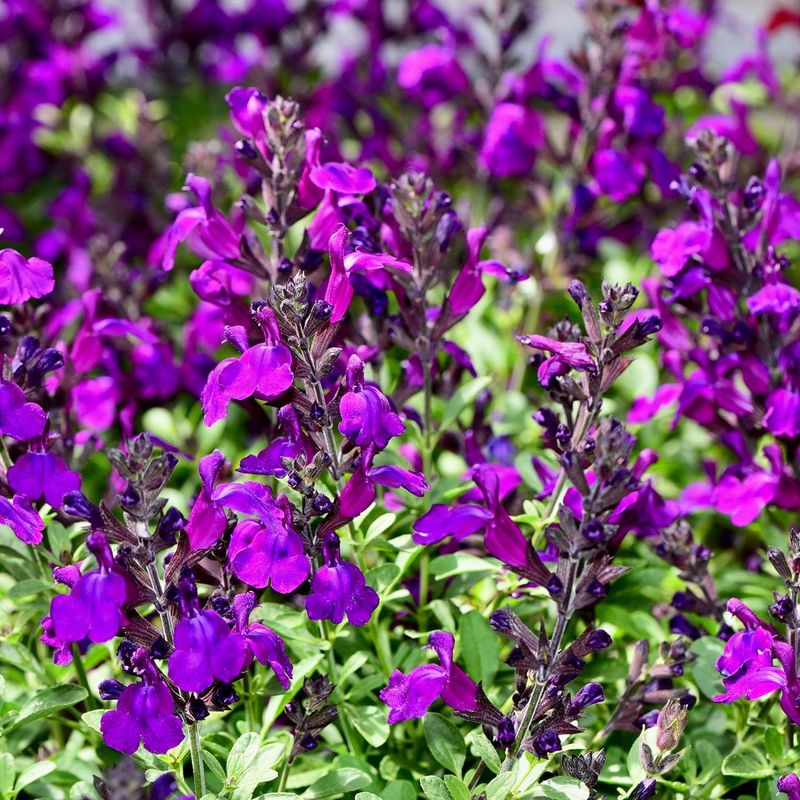
Crave continuous color with almost no fuss?
Autumn Sage (Salvia greggii) truly shines in Texas gardens.
This semi-woody perennial is native to the rocky slopes of Central, West, and South Texas, so it was practically born for our conditions.
It forms a soft, mounding shrub about 2 to 3 feet tall and wide, with aromatic foliage that gives off a pleasant, minty scent when you brush against it.
The tubular flowers, roughly 1 inch long, come in red, pink, coral, purple, orange, or white, and they bloom hard from spring all the way to the first hard frost.
Hummingbirds are constant visitors, and deer generally pass it by.
Here is the catch.
It demands well-drained soil and performs best in sandy or rocky ground.
It cannot tolerate heavy, shrink-swell blackland clay unless you have amended it well, so give it a raised or gravelly spot in those regions.
Its drought tolerance and heat resilience are hard to beat, though a little afternoon shade is a blessing in the most scorching summers.
To keep it compact and blooming, prune it back by one-third to one-half in early spring.
Once established, skip the fertilizer, it genuinely prefers to be left alone.
6. Flame Acanthus Sets Borders Aglow
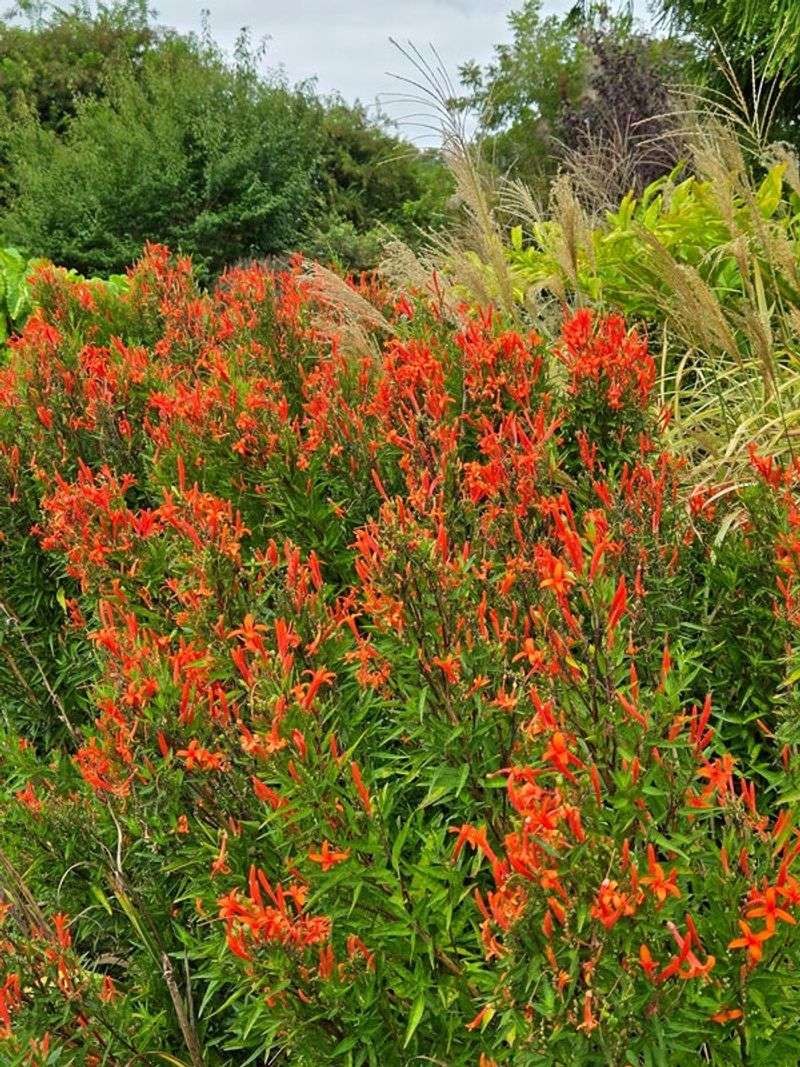
For a fiery display that laughs at the Texas sun, look no further than Flame Acanthus (Anisacanthus quadrifidus var. wrightii).
This deciduous shrub, native to West and South-Central Texas, bursts with bright red-orange, tubular flowers from summer right through fall, exactly when many other plants are wilting.
Those 1 to 1.5-inch blooms are hummingbird magnets, their slender shapes built for tiny, buzzing visitors.
The plant reaches about 3 to 5 feet tall and wide, with attractive light, flaky bark that adds a little winter interest once the leaves drop.
Toughness is its whole personality.
It thrives in full sun, tolerates light shade, and adapts to everything from rocky calcareous slopes to heavy urban clay, as long as drainage is decent.
Its high drought resistance makes it ideal for xeriscapes and hot spots with reflected heat off walls or pavement.
Even if the top growth dies back in colder North Texas winters, the roots are resilient and it re-emerges in spring.
Overwatering is its enemy, leading to leggy stems and fewer blooms.
Give it a hard prune in late winter or early spring for robust new growth and a spectacular show.
Deer leave it be, too.
7. Texas Lantana Laughs At The Heat
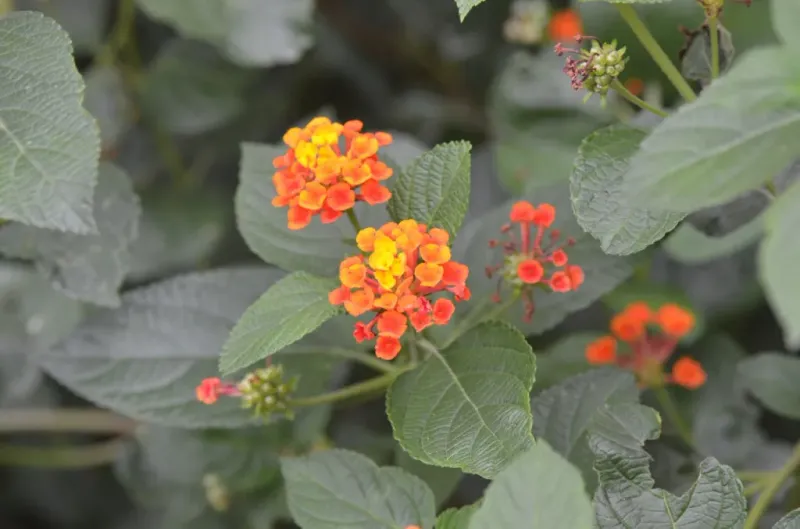
When you need a plant that thrives on neglect and pours out color, Texas Lantana (Lantana urticoides) is your answer.
This low-spreading, multi-branched deciduous shrub is a true Texas native, common across the Hill Country and beyond.
Its flower clusters open yellow, then mature through orange to a vibrant red, giving that famous calico effect that keeps the eye moving.
Blooms run from early summer to mid-fall.
It practically insists on full sun, needing at least six hours of direct light daily for the best show.
It can take a little afternoon shade, but flowering may suffer for it.
What makes it outshine so many others is its willingness to grow in poor and even salty soils, all while shrugging off drought.
Birds and butterflies flock to it, bringing the yard to life.
A neighborly heads-up, its leaves can smell strong and cause itchiness for some folks, so wear gloves when you handle it.
It is also one of the last plants to wake up in spring, so do not assume it is dead and dig it out too soon.
Cut back the stiff, gray branches in winter for shape, or let it do its wild, wonderful thing.
Deer usually choose tastier snacks elsewhere.
8. Zexmenia Offers Golden Persistence
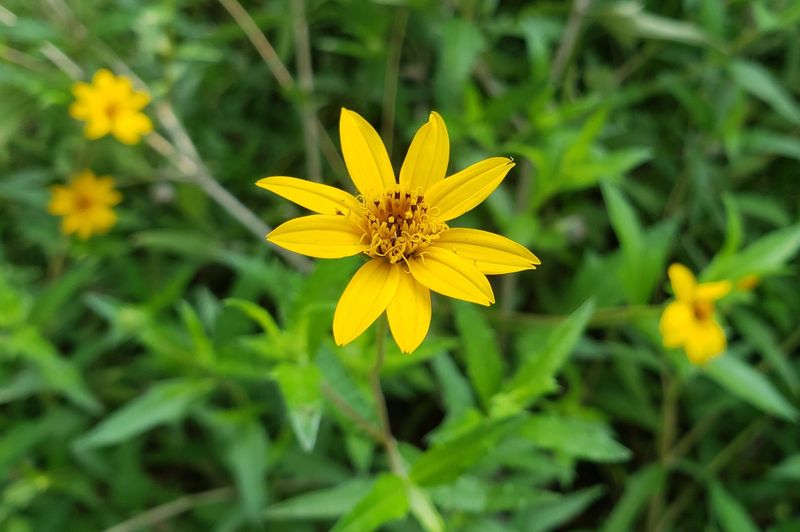
Dependable is not a flashy word, but Zexmenia (Wedelia acapulcensis var. hispida, also called Wedelia texana) earns it with season-long golden blooms.
This small, woody-based shrub is native to Central and West Texas, including the Edwards Plateau, and it has evolved to conquer hot, dry ground with ease.
Rough-hairy, gray-green foliage gives it a nice texture, setting off cheerful daisy-like yellow to orange flowers that cover the plant from early spring through late fall.
It is a testament to Texas toughness, thriving in full sun and a wide range of well-drained soils, including sand, clay, loam, caliche, and limestone.
It boasts high heat tolerance and needs minimal irrigation once established.
Too much water or shade, though, makes it leggy and cuts the blooming.
Butterflies love it, especially the Bordered Patch, and it is a long-lived, non-aggressive grower that stays where you put it.
For the best look and a steady flush of flowers, shear it back by about one-half at the end of winter, then by one-third in late July or August.
Space plants roughly 12 to 18 inches apart to give them room to fill in.
Deer generally ignore it, which makes it a wise pick for Hill Country yards.
9. Pink Skullcap For Delicate Charm
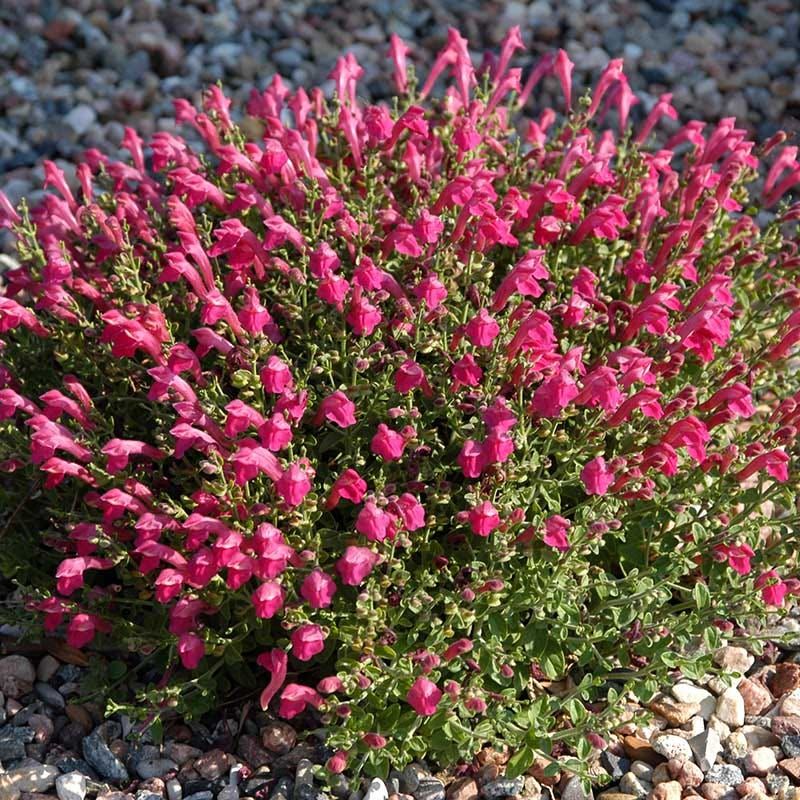
Delicate looks, iron constitution.
Pink Skullcap (Scutellaria suffrutescens) brings charm to the front of a border without the fragility you would expect.
While it originates in Mexico, it has settled into Texas so completely that many gardeners embrace it as one of our own.
It forms a compact, dense mound of velvety green leaves, usually 6 to 9 inches tall and 12 to 18 inches wide, sometimes stretching to 3 feet.
The showstopper is a nonstop display of tiny, tubular, snapdragon-like pink to rose flowers that bloom from around May all the way into October.
It genuinely loves the Texas heat, performing best in full sun though tolerating some afternoon shade in the hottest regions.
It insists on dry to medium, very well-drained soil, and it does fine in shallow, rocky ground.
Soggy soil is its nemesis and can bring crown rot.
This waterwise wonder handles moderate drought once established, and it draws bees, butterflies, and hummingbirds while shrugging off rabbits and deer.
Remove spent flowers for a tidy look and more rebloom.
In USDA Zone 7 and warmer, which covers much of Texas, it stays evergreen to semi-evergreen, giving your border texture even in the quiet months.
Choose a handful of these natives and you are not just planting beauty, you are planting a border that belongs here, ready for whatever our sky throws at it.