
This Pennsylvania Tick Passes Disease Faster Than The Rest, And Here Is What To Do The Second You Find One
Follow us on Google
Most people who find a tick attached to their skin figure they have a day or two before anything serious can happen.
That assumption is worth reconsidering, especially if the tick is a blacklegged tick and you live in Pennsylvania.
One virus this tick can carry moves faster than the bug most of us grew up worrying about, and the right response is simpler than you might think.
The Blacklegged Tick Has A Different Powassan Clock
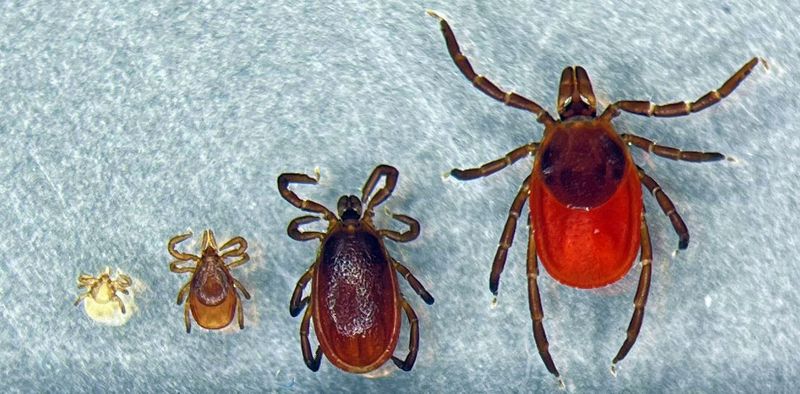
Pennsylvania’s blacklegged tick, also called the deer tick (Ixodes scapularis), is the tick at the center of this story.
It is not universally more dangerous than every other tick crawling through the state’s woodlands and backyards, but it does carry a specific combination of pathogens that no other local tick matches.
Pennsylvania DEP tick guidance confirms that the blacklegged tick can transmit Lyme disease, anaplasmosis, babesiosis, hard tick relapsing fever, and Powassan virus, each of which behaves differently once inside a human body.
Powassan virus is the one that changes the clock.
Unlike the Lyme bacterium, which generally requires prolonged feeding before it migrates from tick gut to human tissue, Powassan can move much faster in experimental settings.
CDC Powassan transmission information notes that the virus can be transmitted quickly, though the exact timing in people is not fully established.
That distinction matters, and this article will come back to it.
Powassan disease is rare, even in counties where blacklegged ticks are common.
The virus is not carried by every tick, infection rates vary by location and tick population, and the presence of blacklegged ticks in your yard does not create a guaranteed Powassan risk.
The CDC’s tick distribution data shows the blacklegged tick is widely established across the eastern United States, including Pennsylvania, but local infection prevalence differs by region.
What all of this means for you in the moment is straightforward.
If you find an attached tick, remove it immediately.
Do not wait for a doctor’s appointment, a positive identification, or a laboratory result.
Speed matters, and the steps that follow will show you exactly what to do.
Why Fifteen Minutes Does Not Set A Human Deadline
Here is where it gets tricky.
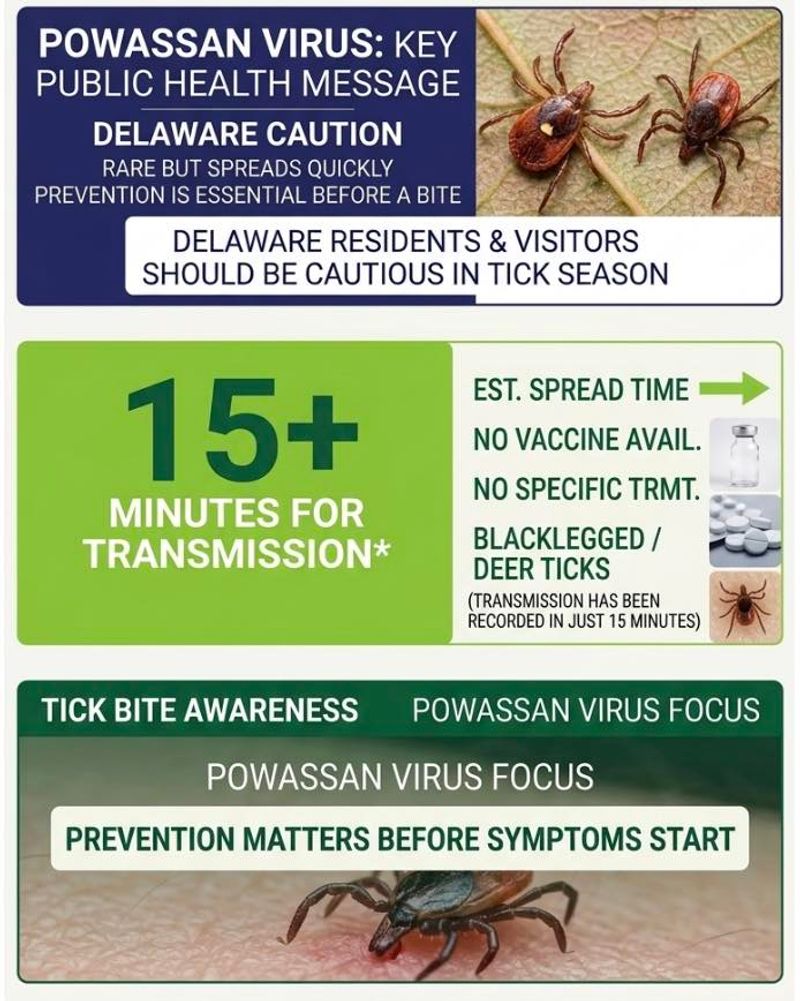
A laboratory study published in the journal Emerging Infectious Diseases, now indexed on PubMed, tested how quickly infected blacklegged tick nymphs could pass Powassan virus to mice.
That 2004 study found that transmission occurred after as little as 15 minutes of attachment.
The finding is real and worth taking seriously.
But it involved infected nymphs feeding on mice under controlled laboratory conditions, not people sitting on a porch in the Poconos.
The gap between a mouse experiment and a human deadline is significant.
A peer-reviewed review of Powassan virus states plainly that the precise attachment time required to cause human Powassan disease remains unknown.
Human cases associated with attachment periods shorter than 3 hours have been documented, which suggests the virus can follow unusually brief contact, but individual case reports cannot define a universal minimum for everyone.
A 2024 Emerging Infectious Diseases case report reinforces that point, describing Powassan infection after a brief attachment without establishing a fixed threshold.
The honest answer is that no one can tell you exactly how many minutes you have, which is precisely why you should not spend any of them calculating.
Lyme disease works differently.
CDC Lyme disease guidance explains that the Lyme bacterium generally requires longer feeding before transmission becomes likely, and IDSA Lyme disease guidelines use an attachment period of at least 36 hours as one criterion for considering preventive antibiotics.
Pennsylvania health guidance similarly references a 36-to-48-hour range for Lyme transmission risk.
That window applies to Lyme.
It does not apply to Powassan, and it does not mean you are safe to wait with any attached tick.
Remove The Tick With Fine-Tipped Tweezers
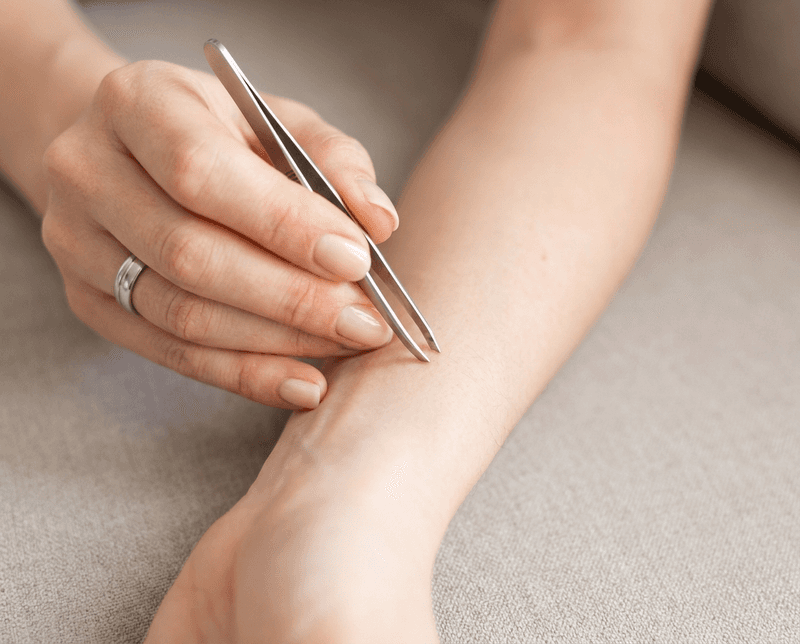
Grab a pair of clean, fine-tipped tweezers.
That is the only tool you need, and it is almost certainly already in your bathroom.
Point-tipped tweezers sold for splinters work well.
Broad, flat ones do not give you the control you need.
Position the tweezers as close to the skin surface as you can get, gripping the tick’s head and mouthparts rather than its body.
Then pull upward with slow, steady pressure.
CDC tick removal guidance is explicit: do not twist or jerk the tick, because that can cause the mouthparts to break off and stay in the skin.
If a small piece does break off, remove it with the tweezers if you can reach it, and let the skin heal normally.
Once the tick is out, clean the bite site with soap and water, rubbing alcohol, or hand sanitizer.
Wash your hands the same way.
Pennsylvania DEP guidance recommends the same straightforward cleanup, no special products required.
Now for what not to do, because a lot of well-meaning advice circulates online and at family cookouts.
Do not hold a lit match near the tick.
Do not coat it with petroleum jelly, nail polish, or any chemical meant to make it back out on its own.
Those methods delay the removal that needs to happen right now, and they can cause the tick to release saliva or gut contents into the bite wound, which is exactly the opposite of what you want.
The tweezers-and-steady-pull method is the one that actually works, and it takes about 10 seconds once you are set up.
Save Basic Details And Check For More Ticks
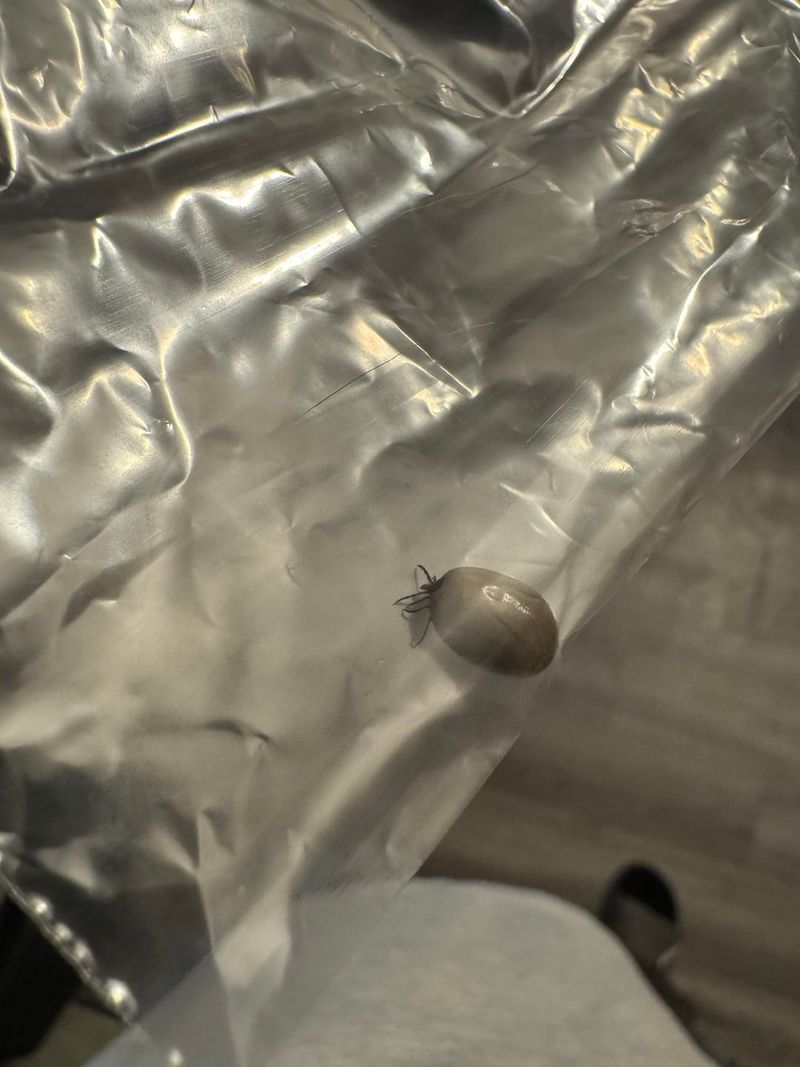
After the tick is out, do not just flick it away.
Put it in a sealed plastic bag, press a strip of tape firmly around it, drop it in rubbing alcohol, or flush it down the toilet.
Any of those options works.
What matters is that you can describe it later if a clinician asks.
Write down the date you removed it and where you were when you likely picked it up.
That information, combined with how engorged the tick appeared, can help a doctor assess your exposure.
CDC after-a-bite guidance notes that species identification and engorgement level, together with your exposure history, may inform a clinical conversation.
But identification alone cannot tell you how long the tick was attached, and commercial tick infection testing should not be used to guide your treatment decisions.
A positive result from a mail-in lab does not prove you are infected, and a negative result can create false reassurance.
Now check the rest of your body, because one tick often means others are nearby.
Pay close attention to the scalp, hairline, behind both ears, under the arms, around the waist, in the groin, around the belly button, and behind the knees.
Check children the same way, and run your hands through any pet that was outside with you.
For clothing, Pennsylvania health prevention guidance and Penn State Extension tick guidance for outdoor workers recommend putting dry clothes in a dryer on high heat for at least 10 minutes.
Damp clothing needs more time in the dryer before it is reliable.
Cold water washing and medium-heat drying are not considered dependable for killing ticks, so skip those shortcuts and go straight to high heat.
Monitor Symptoms And Ask About Lyme Prevention
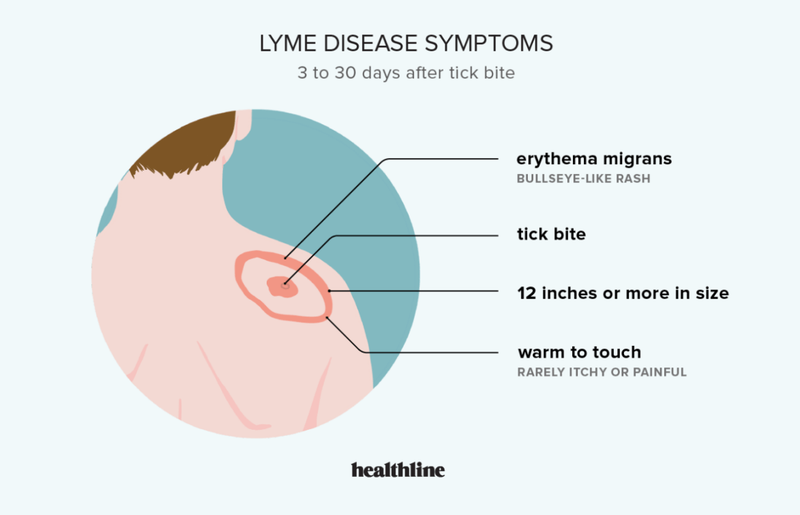
A tick bite does not mean you are infected.
Repeat that to yourself if your mind starts racing.
Most attached ticks in Pennsylvania are not carrying every pathogen they could theoretically transmit, and a small red spot at the bite site often reflects nothing more than skin irritation from the tick’s saliva.
Pennsylvania tick bite information notes that lone star tick saliva in particular can cause local reactions that mimic a rash without indicating disease.
That said, the weeks after a bite are worth paying attention to.
Watch for fever, headache, unusual weakness, muscle aches, joint pain, swollen lymph nodes, or a spreading rash.
CDC after-a-bite monitoring guidance recommends watching for these signs and contacting a healthcare provider if they appear.
Powassan symptoms can begin anywhere from about 1 week to 1 month after infection.
CDC Powassan symptom guidance lists fever, headache, vomiting, weakness, confusion, loss of coordination, difficulty speaking, and seizures as possible signs of illness.
If you or anyone in your household develops severe neurologic symptoms after a tick bite, go to urgent care or an emergency room.
Do not wait for a scheduled appointment.
Preventive doxycycline is not automatically appropriate after every Pennsylvania tick bite.
IDSA Lyme disease guidelines describe it as an option only when four specific conditions are met: the tick is identified as an Ixodes species, the exposure occurred in a highly endemic area, the tick was attached for at least 36 hours, and the medication can be started within 72 hours of removal.
CDC Lyme treatment guidance aligns with that framework.
A healthcare professional must make that call, especially for children, pregnant individuals, or anyone with medication sensitivities.
And that preventive antibiotic guidance applies to Lyme disease specifically, not to Powassan virus, babesiosis, anaplasmosis, or the full range of infections a blacklegged tick may carry.
Different Pennsylvania Ticks Carry Different Risks
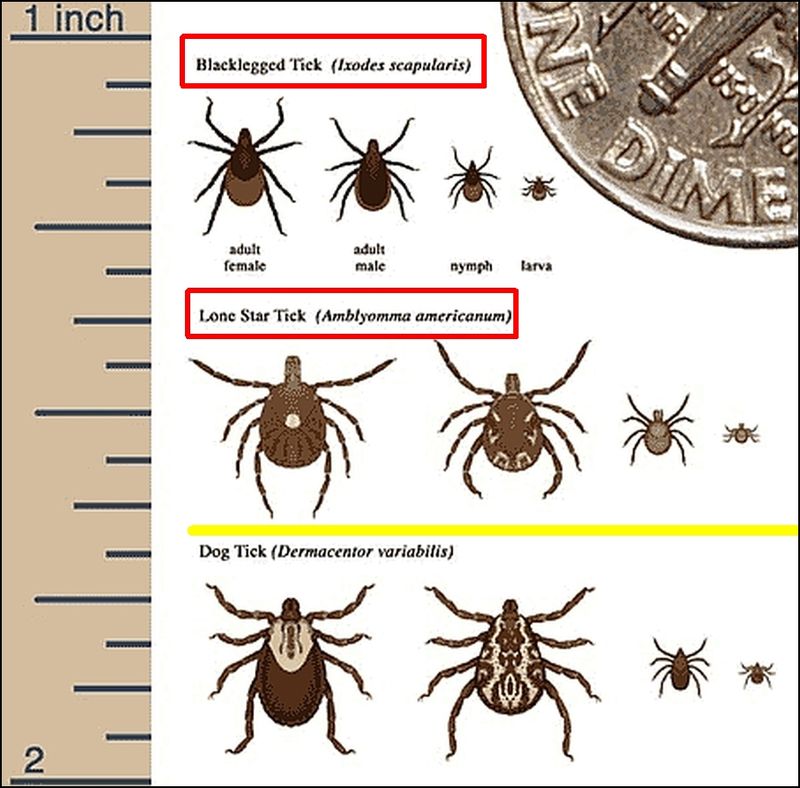
Not every tick you pull off your arm in Pennsylvania is a blacklegged tick, and treating them all the same way misses something worth knowing.
American dog ticks (Dermacentor variabilis) are common across the state and can transmit Rocky Mountain spotted fever along with other spotted fever group infections.
Lone star ticks (Amblyomma americanum) can transmit ehrlichiosis and are associated with alpha-gal syndrome, a red meat allergy triggered by tick saliva, though the CDC notes that other tick species have not been fully ruled out as possible triggers.
The rapid-clock warning in this article applies specifically to Powassan virus transmission by infected blacklegged ticks.
CDC tick distribution data and Pennsylvania DEP tick information both confirm that different species carry different pathogens with different transmission timing concerns.
No single ranking of Pennsylvania ticks as universally most dangerous holds up across every disease and every situation.
Here is the practical catch: a partly fed or engorged tick can be genuinely difficult to identify accurately, even for experienced people.
The blacklegged tick nymph is about the size of a poppy seed.
An engorged adult female of any species looks different from its unfed form.
CDC Lyme disease information notes that the blacklegged tick is the Lyme vector, but that context does not help much when you are squinting at something smaller than a pencil eraser on your child’s neck.
Uncertainty about species should never delay removal.
Get it out first, then try to identify it.
The removal method is identical regardless of species.
Layer Simple Yard And Outdoor Precautions

Repellent is your first practical layer, and it genuinely works when you use it correctly.
EPA-registered options include DEET, picaridin, IR3535, oil of lemon eucalyptus, para-menthane-3,8-diol, and 2-undecanone.
IDSA Lyme disease guidelines recommend these repellents specifically, applied according to the product label.
Read the label for your children, because concentration and application instructions differ by age group.
Permethrin is a different product with a different job.
It goes on clothing, boots, and gear, not on bare skin.
Penn State Extension guidance on repellent safety explains that permethrin-treated clothing must be applied outdoors, allowed to dry fully before wearing, and handled according to the product label.
Pre-treated clothing is also available commercially and holds up through multiple washes.
Either way, permethrin on fabric combined with a skin-safe repellent gives you more protection than either one alone.
After any outdoor time in Pennsylvania, check your skin before you walk back inside.
Spend at least a few minutes on the scalp, behind the ears, under the arms, and around the waistband.
Pennsylvania health prevention guidance and Pennsylvania DEP tick resources both emphasize post-activity checks as a consistent habit, not a one-time precaution.
Shower within 2 hours of coming indoors if you can, because a shower helps you find crawling ticks before they attach.
None of this guarantees a tick-free yard or a bite-free season, especially in the Laurel Highlands or northern tier counties where blacklegged tick populations are well established.
What it does is lower your risk in ways that are actually within your control.
You do not need a perfect identification or a laboratory result to take the right first step, because that step is always the same: remove the tick promptly, and the rest follows from there.