
Native North Carolina Perennials That Bloom Longer And Handle Heat Better Than Black-Eyed Susans
Follow us on Google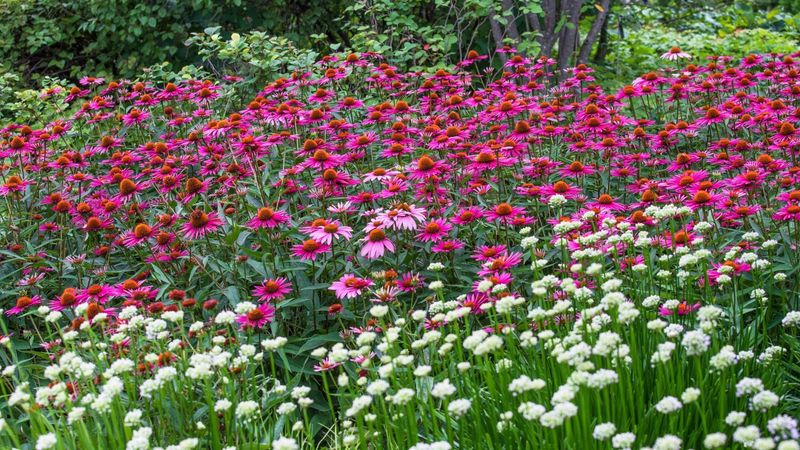
You drag your patio chair into the shade, and by mid-morning your shirt is already sticking to your back. It is August in North Carolina, and your once-proud Black-Eyed Susans look fried, petals browning at the edges.
You counted on them to carry the garden through the worst of summer, but our muggy afternoons had other plans. Good news is coming.
There are native perennials that shrug off the heat and keep blooming when Black-Eyed Susans quit, and your pollinators will love you for it.
1. Garden Phlox Stands Tall When Summers Get Long
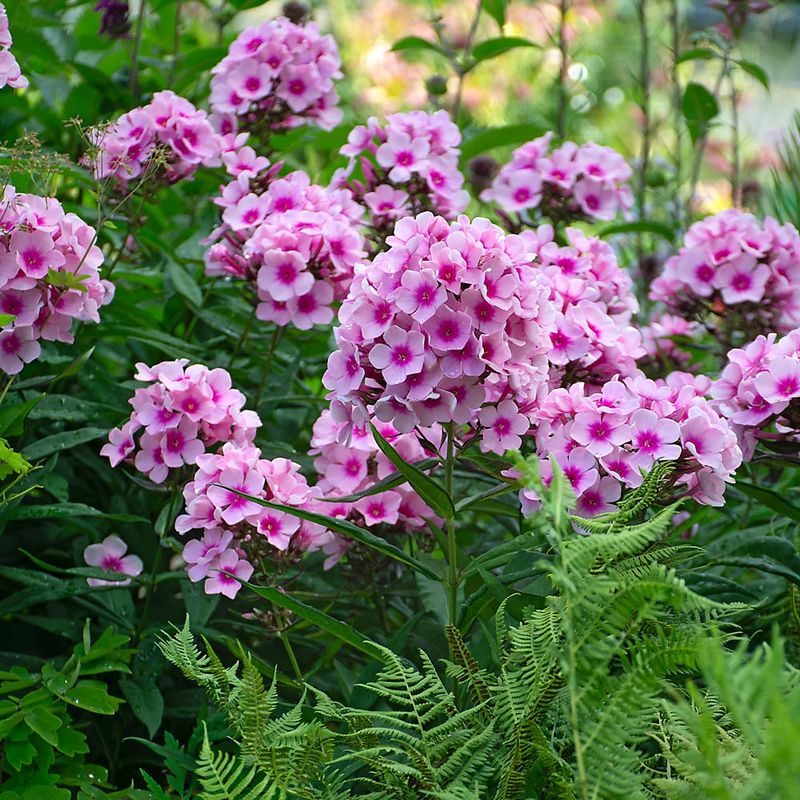
A gardener steps outside in late July, admiring the first flush of summer bloom, only to watch garden phlox (Phlox paniculata) begin to falter. The trouble is usually powdery mildew, a sneaky white fungus that seems to show up overnight and dims the whole display.
Here is the turn. Mildew loves crowded plants and wet leaves, so give phlox breathing room.
Plant it where it gets at least six hours of morning sun, with a little afternoon shade in the hottest Piedmont spots so the leaves dry fast. Space plants 18 to 24 inches apart for airflow.
Reach for mildew-resistant cultivars like the crisp white ‘David’, lavender-pink ‘Jeana’, or rosy-red ‘Robert Poore’. Once settled, they want about one inch of water per week during dry spells, aimed at the base, not over the foliage.
Do that and Phlox paniculata will bloom steadily from July through September, throwing off a sweet fragrance that pulls butterflies and hummingbirds onto your porch. It is not a magic bullet, but placement plus the right variety genuinely turns a mildew magnet into a late-summer workhorse.
Your evenings on the patio get sweeter for it.
2. Purple Coneflower Offers Relentless Blooms In Summer Heat
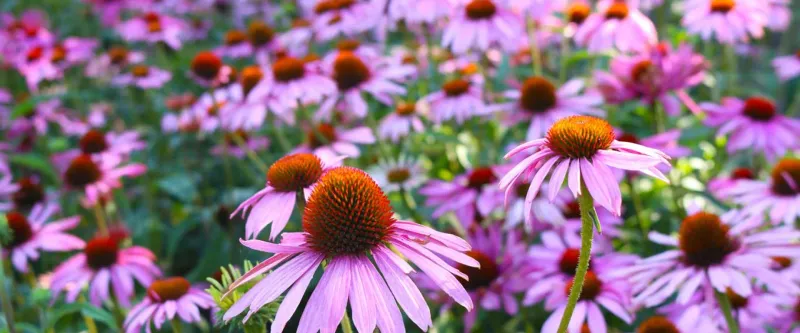
Plenty of North Carolina gardeners write off coneflowers (Echinacea purpurea) as a pretty face that fades once real heat arrives. That sells this native short.
The reason it holds up is simple. Purple coneflower is genuinely heat and drought tough once its roots settle in, which usually takes one full growing season.
It handles the blazing sun and the dry stretches that follow our pop-up thunderstorms, from Sandhills sand to heavy Piedmont clay, as long as drainage is decent.
Give it a spot with full sun, six to eight hours a day. Space plants 1 to 3 feet apart depending on the cultivar so they can bulk into fat clumps.
Deadhead spent flowers to push more blooms, but leave a few seed heads standing into fall because goldfinches will strip them all winter.
Native bees, butterflies, and hummingbirds treat it like a diner. So you get a yard that hums with activity from early summer deep into October, and you barely lift a finger.
According to NC State Extension, coneflower is one of the more reliable natives for our region. That is the kind of quiet dependability a fried Black-Eyed Susan never delivered.
3. Lanceleaf Coreopsis Delivers Golden Color For Months
Word gets around that a true native cannot give you dazzling, long-lasting yellow. If your Black-Eyed Susans usually fizzle by mid-August, you might believe only fancy exotics can keep that golden glow going.
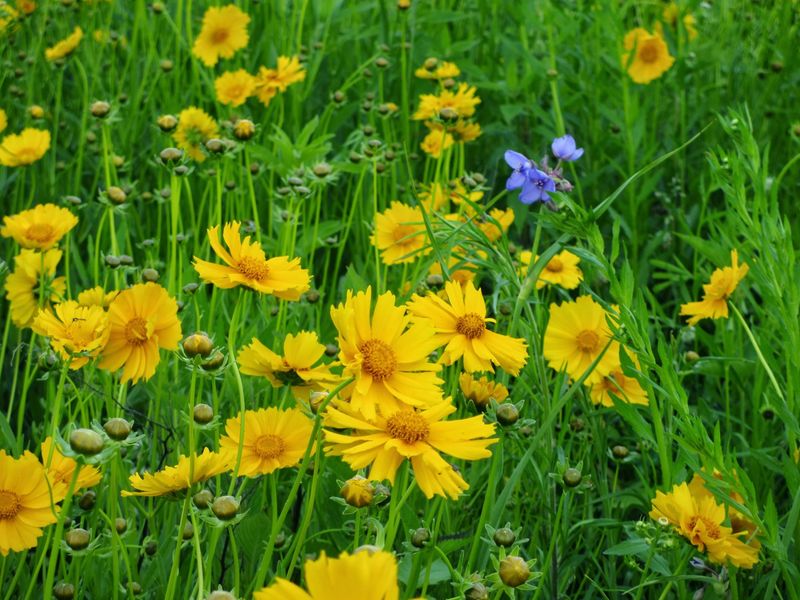
Lanceleaf coreopsis (Coreopsis lanceolata) proves that wrong. It comes from prairies and open slopes, so it is built for tough ground, whether that is sandy Coastal Plain soil or rocky Piedmont clay.
Heat, drought, and humidity barely register once it is established.
Plant it in a spot with at least six hours of direct sun. And here is the part people get backward.
It genuinely does not want rich soil, because too much fertility makes it leggy and floppy. Space plants 12 to 18 inches apart to let them knit into tidy clumps.
Deadhead the spent blooms and you keep the flush coming from late spring through mid-summer, often stretching into fall. Deer tend to walk right past it, and pests mostly ignore it too.
The daisy-like flowers pull in native bees, butterflies, and finches, so your border stays busy for weeks. It is easygoing color that asks almost nothing back, which is exactly what a scorched July garden needs.
4. Blazing Star Brings Vertical Drama And Pollinator Power
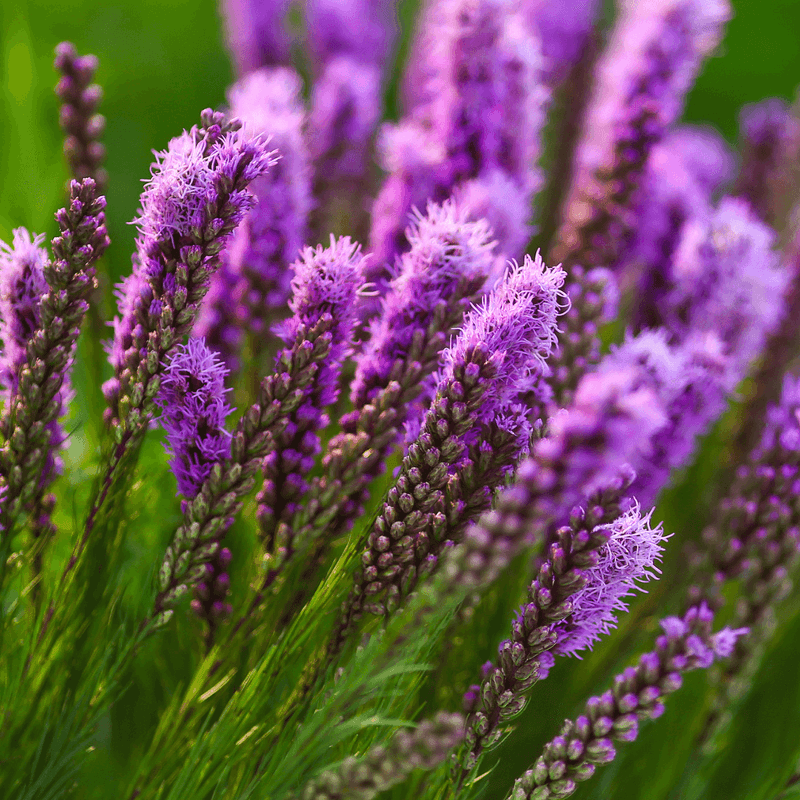
Spiky purple-pink flowers look too delicate to survive a Carolina heat wave, so folks assume blazing star (Liatris spicata) belongs somewhere cooler. Watch those tall stalks a while and you will change your mind fast.
The secret is where it comes from. Liatris grows wild in moist meadows across the eastern United States, including our coastal and Piedmont regions, so muggy warm-season weather is home turf.
It shrugs off heat and takes clay or sandy loam, as long as water does not pool around its roots.
Set it in full sun to partial shade, aiming for at least six hours of direct light for the best show. Space plants 12 to 15 inches apart to give the spikes room, which can climb 3 to 6 feet tall.
It is moderately drought-tolerant once established, though it prefers steady moisture.
Here is the fun quirk. Most flower spikes open from the bottom up, but blazing star opens top down, which stretches out the display.
Butterflies, bees, and hummingbirds swarm those dense purple columns.
You get a dramatic vertical accent and a genuine pollinator magnet in one plant. Come fall, the monarchs passing through North Carolina will thank you.
5. Sneezeweed Delivers Late Season Golden Sunshine
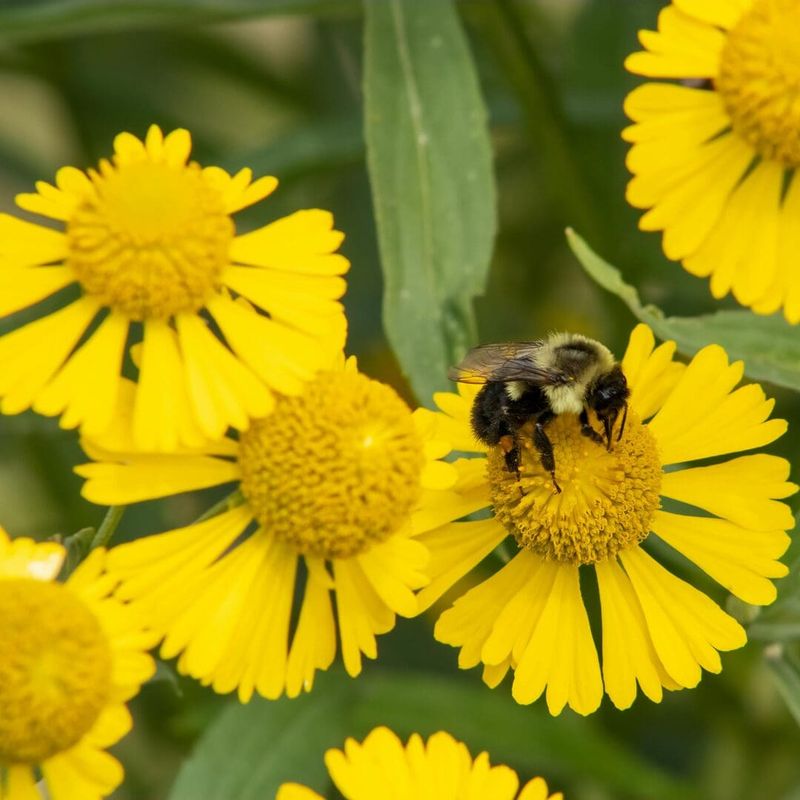
By late summer the heat still lingers and half the garden looks worn out. You figure the only way to get fresh yellow is to run out and buy annuals.
Native sneezeweed (Helenium autumnale) is just clearing its throat at that point. It lights up with golden-yellow flowers that outlast most summer favorites, delivering weeks of color right when the yard needs it most.
And no, it does not make you sneeze, the old name came from dried leaves once used for snuff.
It naturally grows along streams and in wet meadows, so it likes consistent moisture, but it handles dry spells and high humidity once established. Big win for many Piedmont gardeners, it tolerates heavy clay without sulking.
Plant it in full sun to partial shade with at least six hours of sun. Space these upright clumps 2 to 3 feet apart.
Cut the plants back by about a third in early summer for bushier growth and more flowers, which arrive from late summer through fall.
The 2-inch blooms are a magnet for butterflies and bees, and deer tend to leave them be. You keep the pollinator party going strong into September and October.
6. Stokes’ Aster Offers Unique Blue Beauty Into Autumn
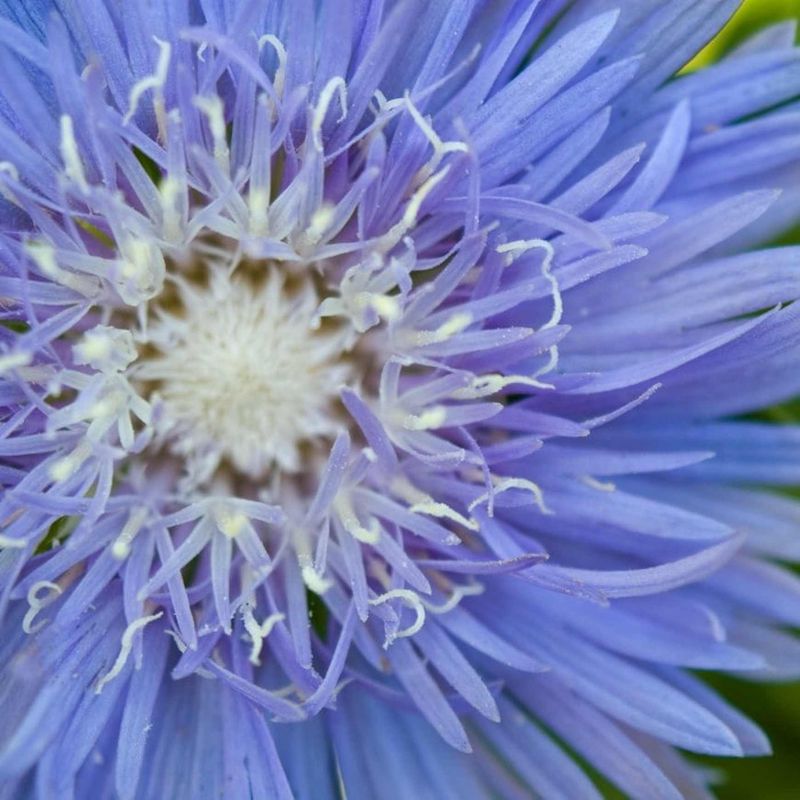
Down on the sandy Coastal Plain, gardeners hunt for a real blue flower that can take the sun and still look good in fall. Most blue perennials fade or fuss in our heat.
Stokes’ aster (Stokesia laevis) breaks that pattern. Its cornflower-like blooms in violet-blue, light blue, or white genuinely thrive through summer and keep going into early autumn.
The plant is native along the coastal plain from North Carolina south to Florida, so high heat and humidity are exactly what it evolved to handle. It appreciates steady moisture but turns drought-tolerant once established.
Its real enemy is wet feet in winter, so well-drained soil matters most.
Give it full sun for the fullest flowering, though it takes light shade. Space plants 12 to 18 inches apart around their semi-evergreen basal rosettes for good air circulation.
Deadhead the spent flowers to stretch the bloom from early summer into fall.
Look for varieties from the NC State University breeding program, like the TOTALLY STOKED series, bred to hold up in southern heat and humidity. Bees and butterflies flock to it, and deer usually pass it by.
Few natives hand you this shade of blue, which makes your late-summer bed a genuine standout.
7. Joe Pye Weed Towers Over The August Slump
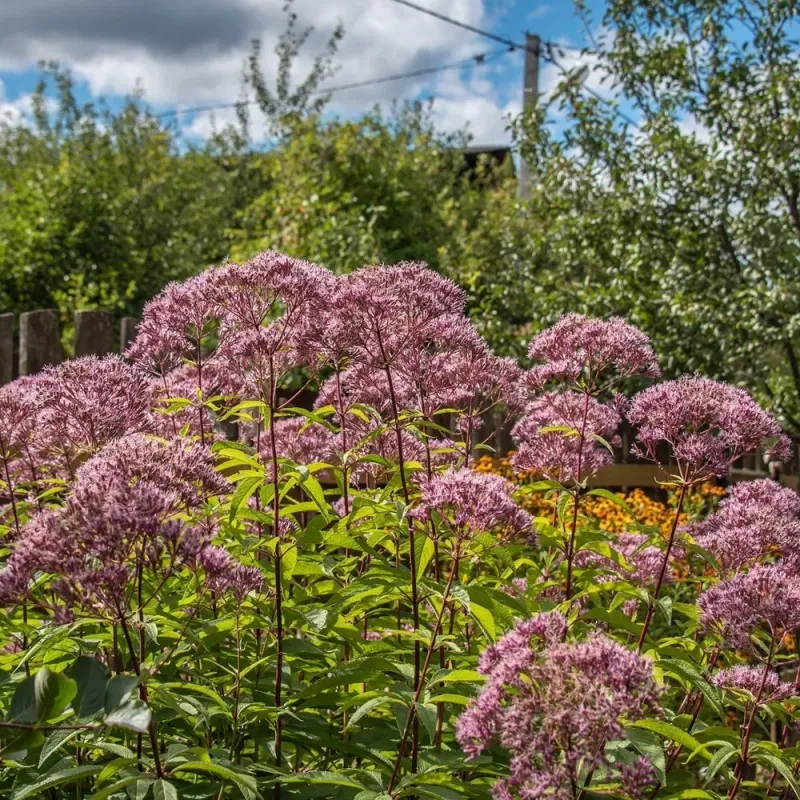
Something big moves in the back of the border on a still August evening, taller than you, crowned in soft mauve, and absolutely buzzing. That is Joe Pye weed (Eutrochium purpureum), and it earns every inch of the room it takes.
People pass it by because it looks weedy in spring. Then it rockets up to 5 to 7 feet by late summer and turns into the busiest butterfly buffet in the yard.
Its cloudlike pink-purple flower heads open when many plants are limping to the finish line.
It loves the moist, low spots that stump other perennials, which makes it a natural fit for a rain garden or a soggy corner in Piedmont clay. Plant it in full sun to part shade with at least six hours of light, and space clumps 3 to 4 feet apart because it wants elbow room.
Water it through dry stretches, roughly an inch a week, until it establishes. If you want a shorter, bushier plant, pinch it back by a third in late spring.
Come fall, those flower heads become a fueling station for monarchs heading south through North Carolina. You get drama, height, and a yard that feels genuinely alive.
8. Goldenrod Feeds Fall Pollinators Without The Guilt
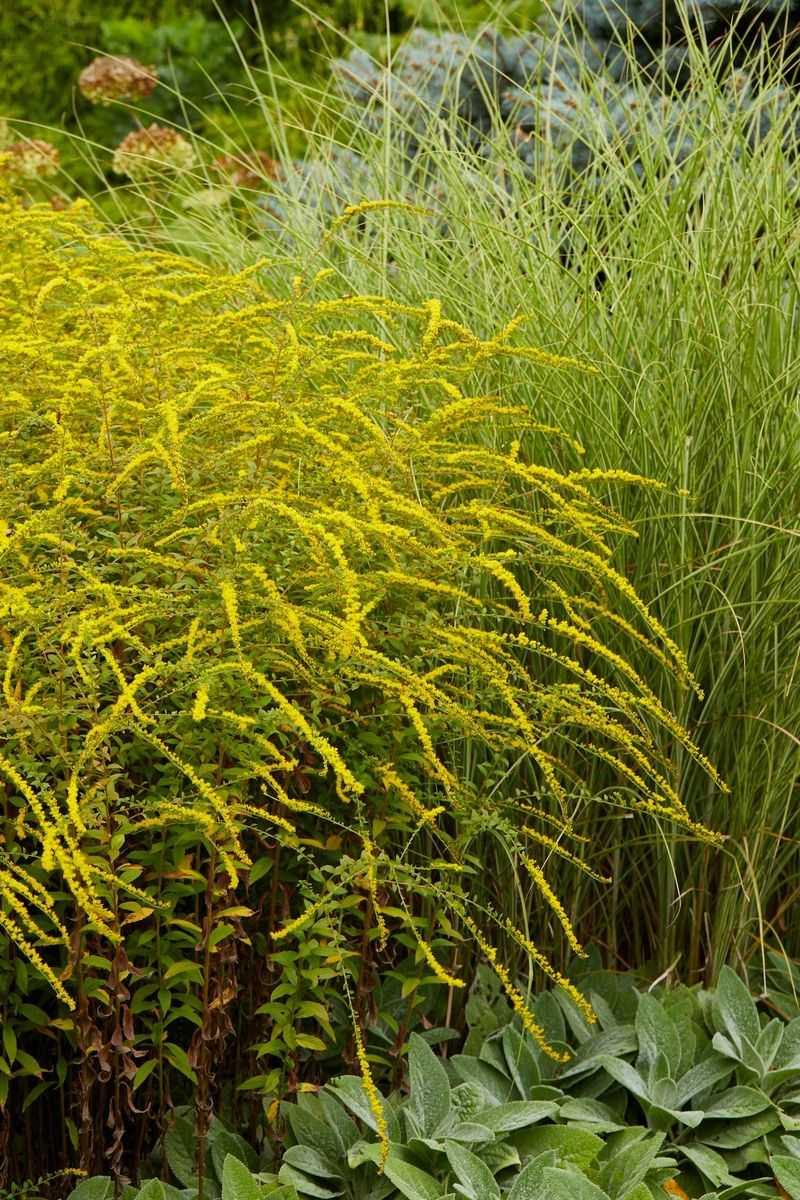
Goldenrod gets blamed for fall allergies every single year, and it is innocent. The real culprit is ragweed blooming at the same time, while goldenrod (Solidago rugosa) has heavy, sticky pollen that bees carry, not the wind.
Clear that up and this native becomes one of the best things you can plant. When Black-Eyed Susans are long gone, goldenrod erupts in arching golden plumes that glow across September and October, lighting up meadows from the mountains to the Sandhills.
It is genuinely tough. It handles heat, drought, poor soil, and clay without complaint.
Some species spread aggressively, so choose a well-behaved clumping type like ‘Fireworks’, which stays put and fountains out in a tidy shape.
Plant it in full sun with at least six hours of light, and space plants about 2 to 3 feet apart. Once established it needs little water, making it kind to your late-summer water bill.
Here is the payoff that matters. Native bees, butterflies, and migrating monarchs lean hard on goldenrod for late-season nectar when little else is blooming.
According to NC State Extension, it is a keystone plant for fall pollinators. Your yard becomes a lifeline, and it looks like poured sunshine.
9. Butterfly Milkweed Blooms Bright And Backs The Monarchs
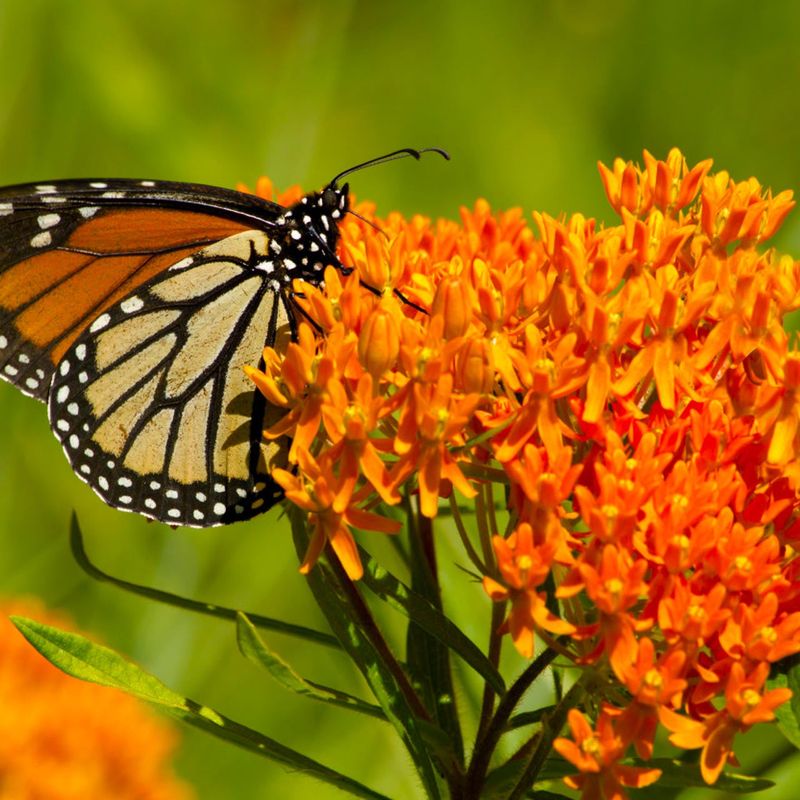
Blazing orange in the middle of a July scorcher, and it does not even flinch. Butterfly milkweed (Asclepias tuberosa) may be the toughest bright bloom on this whole list.
Gardeners often kill it with kindness. It stores water in a deep taproot, so it wants dry, lean, well-drained soil, which suits sandy Coastal Plain ground and even gritty spots better than a pampered bed.
Rich soil and heavy watering rot it out.
Give it full sun, six hours or more, and space plants 12 to 18 inches apart. Water it only while it establishes, then step back and let the taproot do the work.
It resents being moved, so pick the spot and leave it there.
The reason this one earns a place beyond its looks is the monarchs. Milkweed is the only plant their caterpillars can eat, so planting Asclepias tuberosa may help support the monarch generations that pass through North Carolina each fall.
Watch for the fuzzy striped caterpillars, and know a little chewed foliage is the whole point. You get weeks of fiery orange, a swarm of butterflies, and the quiet pride of running a working monarch nursery in your own yard.
That beats a browned-out Black-Eyed Susan every time.