
What North Carolina Crape Myrtles Need Right Now For Nonstop Blooms Into Fall
Follow us on Google
Your crape myrtle put on a show in July, and now you’re watching it slow down just as the August heat settles in across North Carolina. The good news is that a few targeted steps can encourage late-summer or early-fall color on the right plants.
No single product or trick guarantees a second flush, but checking what your tree actually needs right now puts you in the best position to see more blooms before the season ends.
August Care Starts With Diagnosis, Not Fertilizer
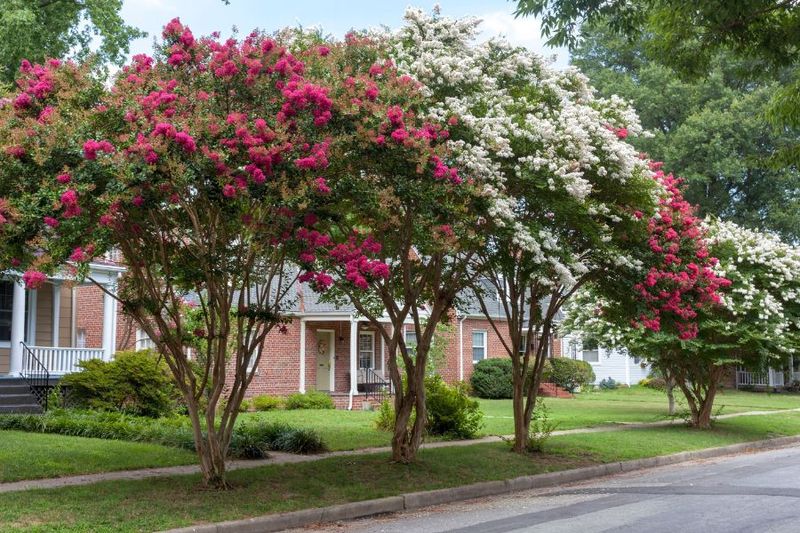
Reaching for a bag of fertilizer is the most common August instinct, and for established crape myrtles it is usually the wrong move. A healthy tree that got adequate nutrition in spring does not automatically need another feeding to push more flowers.
UGA Cooperative Extension’s crape myrtle culture guide describes the standard fertilizer application as a spring practice for established plants, not a routine mid-summer repeat.
Excess nitrogen is the specific problem. When an established crape myrtle gets a heavy nitrogen dose in August, the plant tends to push lush, fast-growing shoots instead of flower buds.
That soft new growth is also more vulnerable to late-season cold snaps, which North Carolina gardeners in the Piedmont and mountains know can arrive earlier than expected.
Fertilizer applied during drought or heat stress carries an additional risk. NC State Extension notes that encouraging water-demanding new growth when the root zone is already dry can injure roots and worsen the plant’s condition rather than help it.
The safe sequence is to solve the actual limiting problem first: check whether the soil is dry, confirm the plant is getting enough sun, and remove spent flower clusters if you want to try for another flush. Consider fertilizer only after a soil test or visible deficiency gives you a real reason to act.
Newly planted small crape myrtles in one-gallon containers follow a different schedule entirely, with modest monthly feeding during the growing season. That young-plant approach does not apply to an established tree or large shrub already rooted into your landscape.
Check the Root Zone Before You Water
August in North Carolina can be relentless. Afternoon temperatures push into the 90s, rain skips whole weeks at a stretch, and the soil surface bakes hard enough to crack.
That stress shows up in your crape myrtle as fewer new buds and drooping foliage, and the fix is almost always about water, not fertilizer.
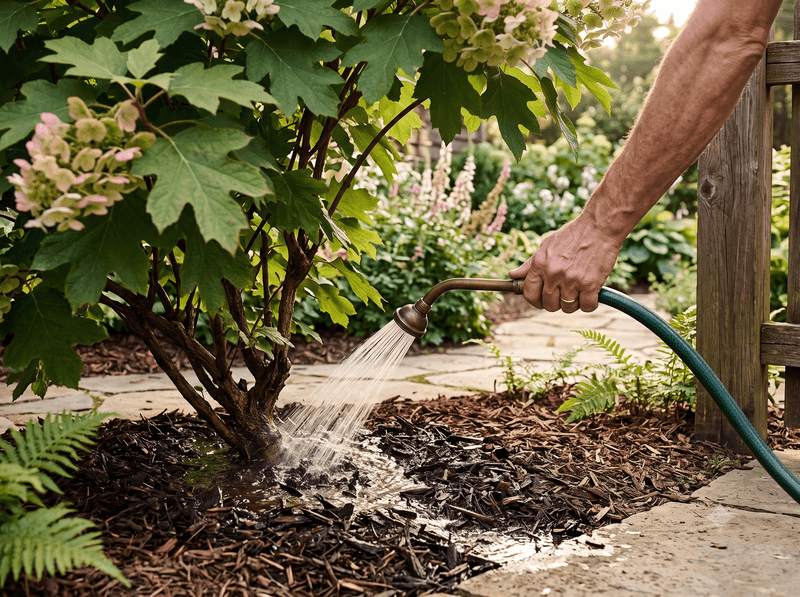
Before you drag a hose out, push your finger or a screwdriver about 3 inches into the soil near the root zone. If the soil feels dry at that depth, the tree needs water.
If it still feels cool and slightly moist, hold off. NC State Extension’s woody ornamentals handbook recommends wetting soil roughly 1 to 3 feet deep for established trees and shrubs, then allowing the surface to dry somewhat before watering again.
That deep-and-infrequent approach beats a little sprinkle every morning.
Soil type shapes your schedule. Sandy Coastal Plain soils drain quickly, so you may need to water more often to keep the root zone from drying out completely.
Clay soils, common across the Piedmont, absorb water slowly. Water those spots at a low, slow rate to avoid runoff sheeting across the surface without soaking in.
Aim the water at the root zone, not the foliage. Routinely wetting leaves, especially late in the afternoon, creates conditions that invite powdery mildew and sooty mold.
A soaker hose or a slow trickle from a garden hose laid at the base works well.
A 2-to-4-inch layer of mulch around the tree does quiet, steady work in August. It slows moisture evaporation from the soil, moderates root-zone temperatures, and reduces how often you need to water.
Keep the mulch pulled back about 6 inches from the trunk or stems. Piling it against the bark traps moisture and invites rot and pest problems.
Check Sunlight Before Adding Anything

Poor flowering on a crape myrtle is easy to blame on thin soil or a missed feeding, but the real culprit is sometimes right above your head. Crape myrtles (Lagerstroemia indica and its many named hybrids) are sun-lovers, and the NC State Extension Plant Toolbox lists full sun as at least 6 hours of direct sunlight daily.
Drop below that and flowering drops with it.
Summer canopies change fast. A large oak or pecan that cast light, filtered shade in June may be throwing dense afternoon shadow by August.
Walk around your crape myrtle at different times of day and watch how the light actually falls on it. Also check for competing roots from nearby trees.
A mature tree’s root system can quietly steal moisture and nutrients from the soil your crape myrtle depends on.
If the plant is sitting in too much shade, adding fertilizer will not solve the problem. Correcting a light limitation matters more in that situation than adding any product, though moving an established tree mid-summer is not a realistic option.
What you can do right now is note whether shade is the main issue, then plan for the longer term: selective pruning of surrounding trees by a qualified arborist, or choosing a sunnier planting spot for your next crape myrtle.
Poor flowering rarely comes down to just one thing. Light, moisture, soil health, cultivar timing, and pruning history all interact.
Ruling out a sunlight problem before you add anything to the soil keeps you from treating the wrong condition.
Deadhead Early Bloomers for a Possible New Flush
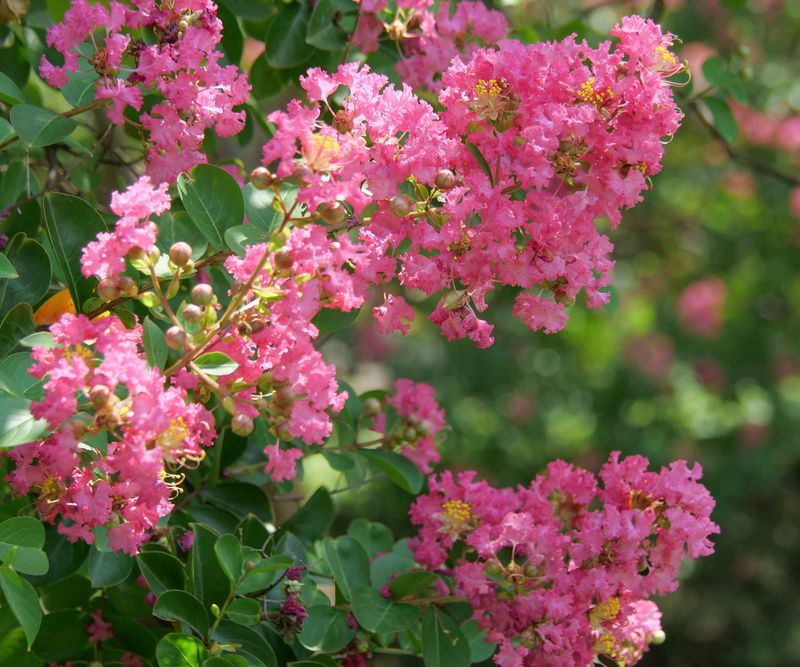
Of all the August tactics available to a North Carolina homeowner, removing spent flower clusters is the most defensible one. It costs nothing but a few minutes, it carries no risk of plant injury, and on the right cultivar it genuinely can encourage another round of color before the season ends.
The technique is simple. After the flower color fades and the cluster turns brown, cut it off just above a leaf junction or lateral bud.
Focus on removing the old flower head cleanly. This is not the moment to reshape the tree or shorten branches for height.
UGA Extension’s guide on avoiding crape myrtle pruning mistakes confirms that removing spent clusters may stimulate new growth and a follow-on flower flush on some cultivars.
Timing of the first bloom matters a lot here. Early bloomers that flowered before mid-July have the best chance of producing a meaningful second display if deadheaded promptly and kept well-watered through August.
A tree that is just opening its first flowers in late August is unlikely to cycle through another full flush before cooler temperatures arrive. Pushing it to try will not produce the result you’re hoping for.
Leaving seedheads on the plant is also a perfectly reasonable choice. The small round clusters that form after flowering can be attractive through fall and into winter, and removing them is not required for plant health.
Deadheading is an optional rebloom and appearance strategy, not a survival step. If you like the look of the seedheads or simply do not have time to deadhead, the tree will be fine either way.
Skip Topping and Aggressive Fall Pruning
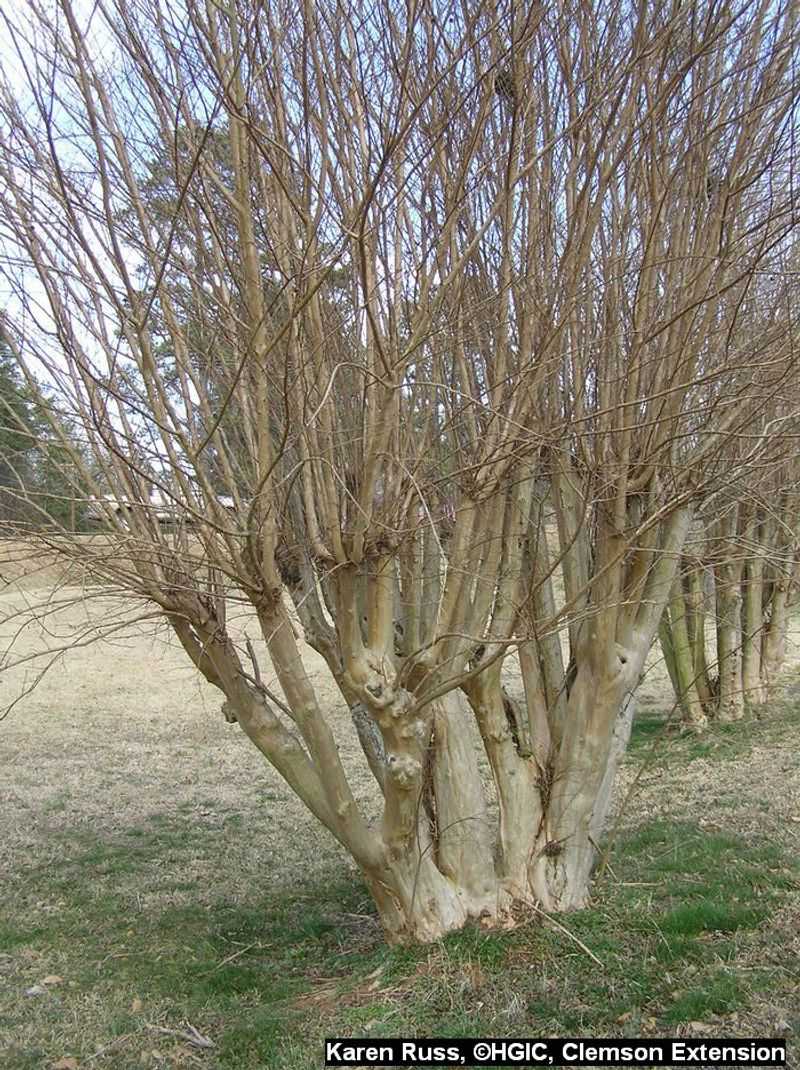
Deadheading a faded flower cluster is a light, targeted cut. Topping a crape myrtle or launching a major reshaping project in August is something else entirely, and the two should never be confused.
Crape myrtles flower on current-season growth, which can make aggressive pruning feel logical, but the timing and scale of the cut determine whether you help or harm the tree.
NC State Extension’s Before the Cut guidance explicitly advises against topping crape myrtles. Severe cutbacks produce weakly attached, fast-growing shoots that form at the stubs.
Those shoots have poor structural connections, create a crowded, multi-headed silhouette that many gardeners dislike, and are more vulnerable to storm damage and cold injury.
Early-fall pruning carries a specific risk in North Carolina. UGA’s crape myrtle culture publication warns that late-season pruning can force tender new growth that has no time to harden before the first frost.
In the Piedmont and mountain regions, that first frost can arrive by October, and soft new shoots will take the hit. Delayed dormancy is the follow-on problem: a plant that is still pushing growth when temperatures drop is less prepared for winter than one that has had time to wind down naturally.
The practical boundary is easy to remember. Remove spent flower clusters if you want to try for rebloom and prefer the look of a tidy tree.
Preserve the tree’s natural branching structure. UGA Extension also notes that pruning is not required for crape myrtle flowering at all.
It serves structural, size, and clearance purposes, not bloom production.
Let Soil Testing Decide Whether Fertilizer Belongs

After you have checked moisture, confirmed sunlight, and decided whether to deadhead, fertilizer might still belong in your August plan. But the decision should come from evidence, not habit.
UGA Cooperative Extension ties fertilizer recommendations for established crape myrtles to soil type, plant age, current growth, rainfall, and visible deficiency signs, not to a calendar date.
North Carolina homeowners have a practical tool for this. The NCDA&CS soil laboratory tests your soil and reports available nutrient levels and pH, giving you an actual reason to add something or confirmation that your soil is already in good shape.
The NCDA&CS soil testing program offers homeowner recommendations for properties of 1 acre or less. Check the current schedule directly with the lab, since fees and deadlines can change.
Drought-stressed ornamentals need water before they need fertilizer. NC State Extension’s woody ornamentals handbook points out that fertilizer encourages water-demanding new growth and can injure the roots of plants already under drought stress.
Solve the moisture problem first, then revisit the fertilizer question once the plant is stable.
Skip the high-phosphorus bloom boosters marketed as a shortcut to more flowers. NC State’s soils and plant nutrients guidance emphasizes that fertilizer grade should follow soil-test results and actual plant needs, not a product label’s promise.
There is no reliable extension-backed evidence that a generic bloom booster applied in August produces more crape myrtle flowers.
One more distinction worth keeping clear: UGA’s monthly feeding schedule for newly planted one-gallon crape myrtles is a young-plant protocol. It does not apply to an established tree that has been in your yard for several years.
Applying a young-plant rate to a mature specimen is overfertilizing, and the consequences are exactly the ones described in the first section of this article.
Your Cultivar Sets the Likely Fall Finish
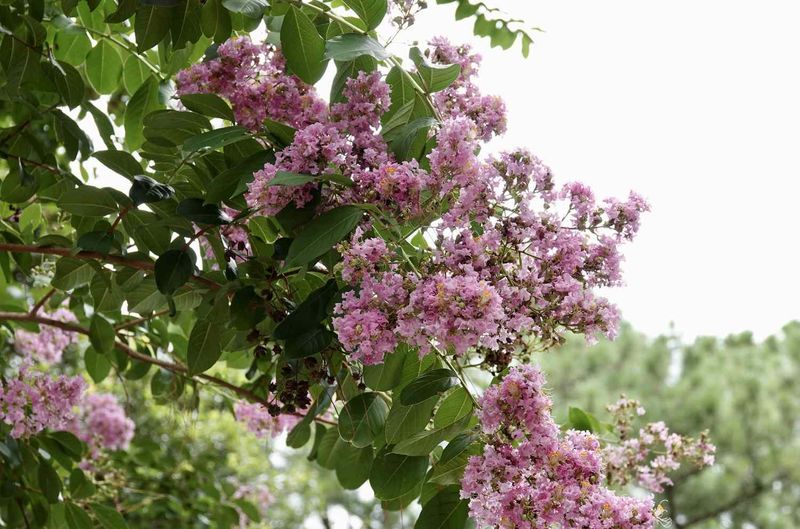
August care can improve your odds, but your cultivar is the biggest factor in how much color you see as summer winds down. NC State’s Plant Toolbox describes common crape myrtle flowering from July through September, while named cultivars and hybrids vary considerably, with some listed as blooming into fall.
That range is real, and it explains why two crape myrtles on the same Piedmont street can look completely different in September.
Timing of the first bloom is the clearest guide to what August care can realistically accomplish. An early bloomer that peaked in June or early July and has already been deadheaded may produce a second, lighter flush before temperatures drop.
A tree just opening its first flowers in late August is not a reliable candidate for another major display. UGA Extension notes that forcing a second bloom is sometimes difficult on cultivars that bloom after mid-July, and no amount of August attention changes that biological clock.
North Carolina’s geography adds another layer. A crape myrtle growing in the Sandhills or along the Coastal Plain has a longer warm season than one in the mountains near Asheville, where October frosts can arrive before a second flush has time to fully develop.
The species grows across hardiness zones 6a through 8b in North Carolina, so regional conditions genuinely matter.
The complete August action plan fits on one hand: check actual soil dryness before watering, water slowly and deeply during dry spells, confirm at least 6 hours of direct sun, deadhead selectively on early-blooming cultivars, avoid heavy feeding and hard pruning, and let your cultivar set the pace. The crape myrtle that gets those basics right tends to take care of the rest on its own.