
A Thunderstorm Feeds Your Lawn Free Nitrogen That No Sprinkler You Own Can Ever Match
Follow us on Google
Walk outside the morning after a summer thunderstorm and your lawn looks different.
The grass is greener, almost like someone swapped your yard for a neighbor’s overnight.
That color shift is real, but the reason behind it is more interesting and more complicated than most people think.
Thunderstorms do deliver a small amount of natural nitrogen, but water is usually the bigger player, and understanding which is which can save you money and keep your lawn healthier all season.
Water Usually Explains the Green-Up
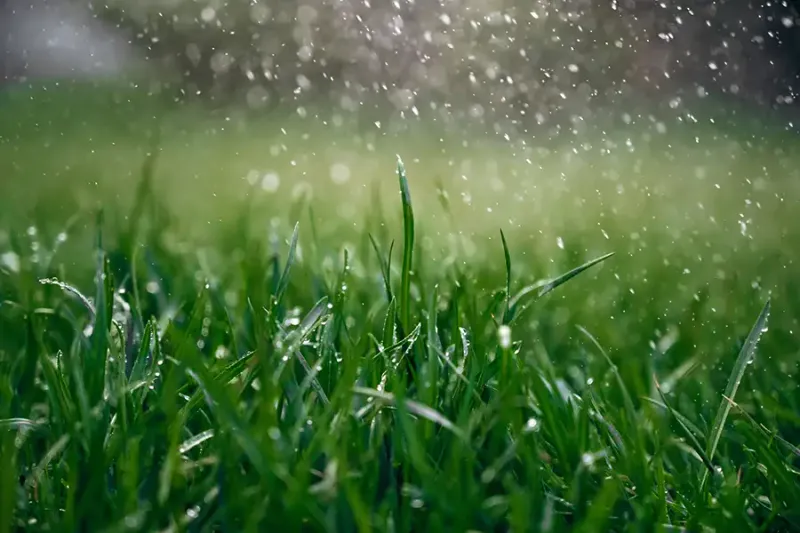
Picture a hot July afternoon when your lawn has gone from bright green to that dull, blue-gray color that means the grass is stressed and conserving water.
Then a thunderstorm rolls through overnight, and by morning the whole yard looks like it got a fresh coat of paint.
Most of that color recovery happened because of rain, not lightning, and University of Illinois Extension identifies soil moisture replenishment as a central reason grass greens up after rain.
Cool-season grasses like Kentucky bluegrass (Poa pratensis) are especially good at this trick.
They can slip into a kind of shallow dormancy when drought stress hits, folding their color down to protect themselves, then bounce back quickly once soil moisture returns.
University of Minnesota Extension notes that drought-stressed Kentucky bluegrass can green up noticeably when rain replenishes soil moisture, even if no nitrogen was added at all.
A storm can also bring cooler air, reduced heat stress on leaf tissue, and a jolt of renewed microbial activity in the soil.
All of those things can affect how the grass looks and how quickly it responds.
Lightning can genuinely add some nitrogen to rain, and that nitrogen is real, but it is a smaller piece of the recovery story than the water itself.
The visible green-up you see on a Tuesday morning is mostly your lawn saying thank you for the drink.
Lightning Creates Nitrogen Compounds
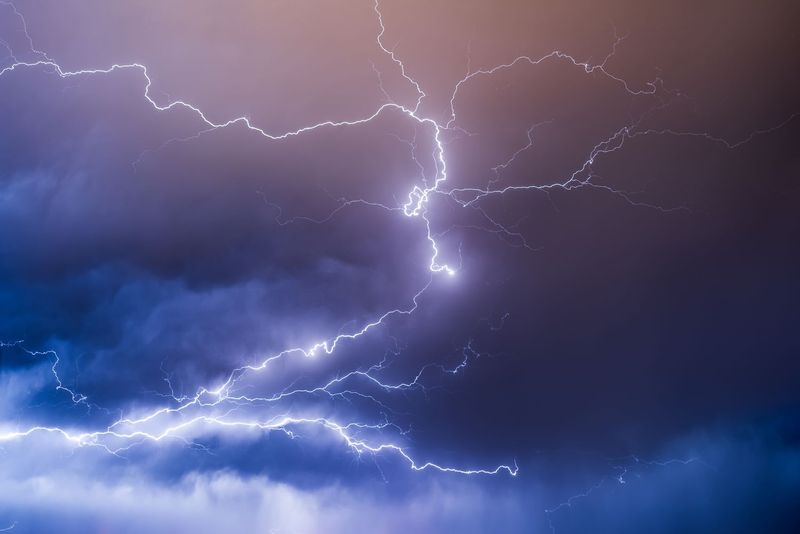
The air around you is about 78 percent nitrogen gas, but grass cannot pull it directly from the atmosphere.
The nitrogen has to be converted into a form the plant can actually use, and that is where lightning comes in.
A single bolt generates temperatures around 50,000 degrees Fahrenheit, hot enough to force atmospheric nitrogen and oxygen to react and form nitrogen oxides.
Research published in Geophysical Research Letters confirms that lightning is a meaningful contributor to the global production of nitrogen oxides in the atmosphere.
Those nitrogen oxides do not stay in the sky.
They react further with water vapor and other atmospheric chemicals to form nitric acid and related nitrate compounds.
Rain then carries those compounds down to the ground, a process called wet deposition.
Dry deposition can also move nitrogen compounds from air to soil without any rain at all, though wet deposition during a storm is the more familiar route.
USGS research on nitrogen in the hydrologic system describes this pathway in detail.
Lightning is not the only thing putting nitrogen into the air, though.
NOAA atmospheric chemistry data identifies fossil-fuel combustion, vehicle exhaust, agricultural ammonia, dust, and other human and natural processes as additional sources of atmospheric nitrogen compounds.
A storm collects all of those materials as it moves, not just what lightning made.
So the nitrogen in any given rainstorm is a mix of sources, and separating the lightning contribution from everything else is genuinely difficult at the backyard level.
Put Storm Nitrogen in Context
Knowing that storms deposit some nitrogen is useful.
Knowing how much puts it in the right place in your lawn-care thinking.
University of Illinois Extension cites estimates ranging from roughly 1 to 50 pounds of lightning-related nitrogen per acre per year, depending on lightning density in the region.
That is a wide range, and it covers an entire year of storms, not a single event rolling through your neighborhood on a Wednesday night.
A study from a high-lightning area in Florida measured annual nitrate-nitrogen deposition of approximately 3.8 kilograms per hectare, which works out to about 3.4 pounds per acre per year.
That Florida research found that lightning strikes significantly increased the nitrate content of rainwater, confirming the lightning connection.
But that figure still describes a full year of regional deposition in a place with frequent lightning, not a single storm over a single yard.
For comparison, consider what a managed fertilizer program looks like.
Penn State Extension and Minnesota Extension both describe programs that may apply around 2 pounds of nitrogen per 1,000 square feet over a growing season, which scales to roughly 87 pounds per acre.
That is a much larger and more controlled nitrogen dose than annual atmospheric deposition typically provides.
Storm nitrogen is a genuine bonus, and over a whole season it adds up to something, but it does not replace a fertility program when your turf actually needs one.
The variables that affect how much any single storm delivers, including storm path, lightning density, rainfall amount, season, and regional air chemistry, are simply outside your control.
Atmospheric science research notes substantial uncertainty even at regional and global scales.
Rain Chemistry Does Not Equal Lawn Fertilizer
Loud thunder does not mean your lawn just received a nitrogen delivery.
Thunder is a sound wave from rapidly expanding air around a lightning channel, and its volume tells you nothing reliable about how much lightning the storm produced, how much nitrogen formed, or how much ended up in the rain.
The two things are simply not connected in a useful way for lawn management.
Rain can carry nitrate, ammonium, organic nitrogen, and other atmospheric materials whether or not any lightning occurred at all.
USGS monitoring data on atmospheric wet deposition and EPA deposition tracking both document nitrogen arriving in rainfall from combustion, transportation, and agricultural sources that have nothing to do with the storm overhead.
A quiet, lightning-free rain shower can carry nitrogen that traveled hundreds of miles from a power plant or feedlot.
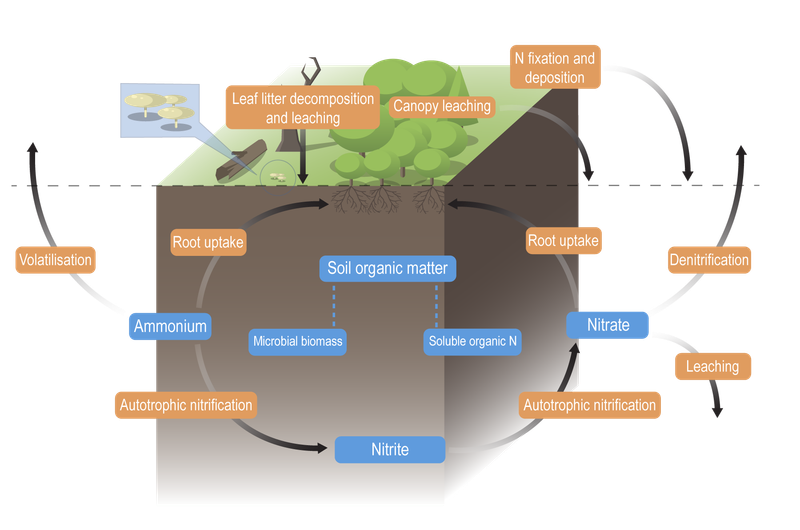
Even when nitrogen does reach your yard in rainwater, reaching the yard is not the same as feeding the grass.
Atmospheric deposition research makes clear that what happens after deposition depends on soil drainage, turf type, slope, runoff, leaching depth, microbial activity, and root-zone conditions.
Some deposited nitrogen moves past the roots before the grass can use it, some gets taken up by soil microbes, and some runs off with the next heavy rain.
Penn State Extension explains that heavy rainfall can push soluble nitrate through the soil profile or carry it off the lawn entirely.
The gap between nitrogen arriving and nitrogen feeding the plant is real, and it varies with every storm and every yard.
A Sprinkler Can Reproduce the Visible Recovery
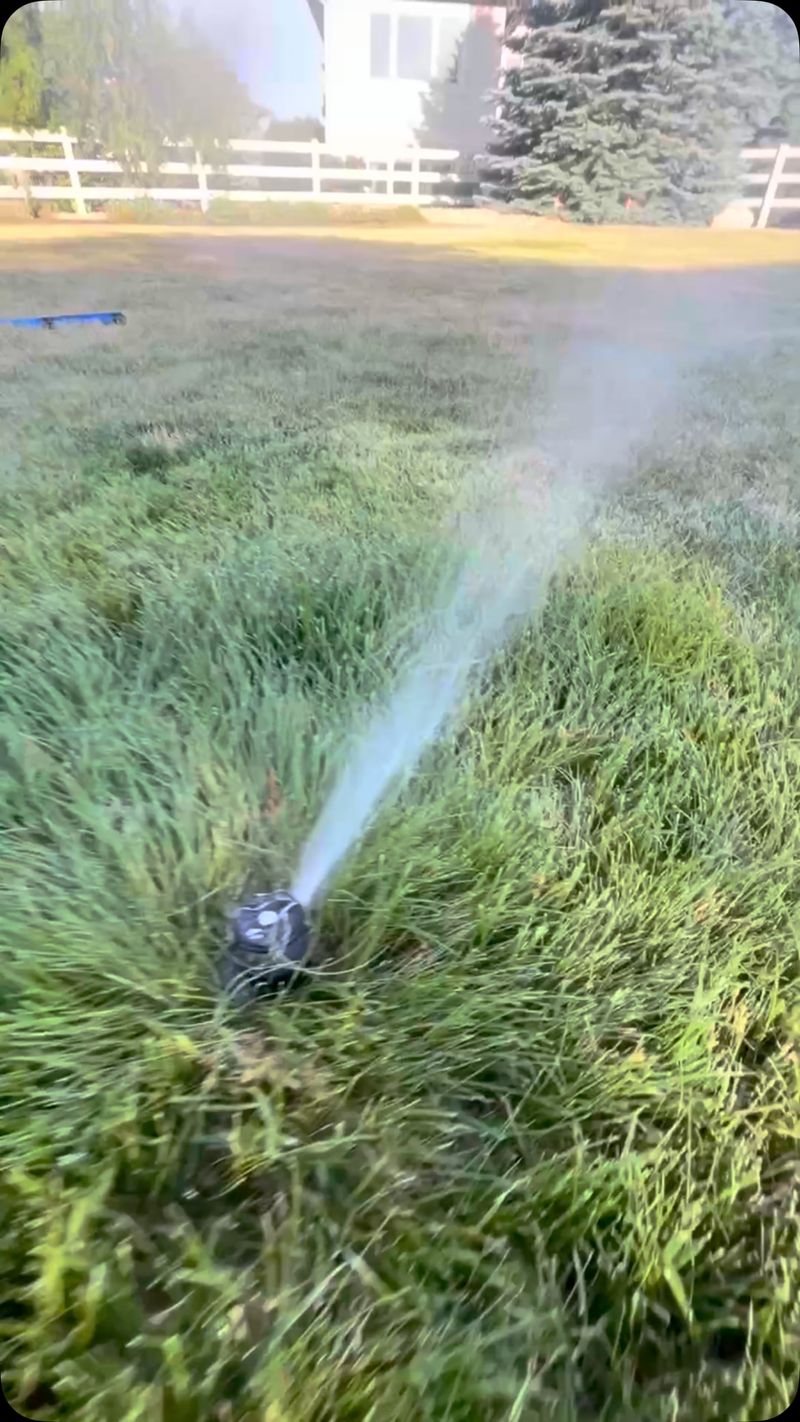
Your sprinkler does not make nitrogen.
Run it for 30 minutes on a dry August evening and you will not trigger any lightning chemistry in the sky above your yard.
But if your lawn looked dull and stressed before you turned it on, it may look noticeably greener the next morning, because moisture was the main thing missing.
Minnesota Extension is clear that drought-stressed turf can recover its color when water is restored, regardless of the source.
That is the comparison that matters most for everyday lawn care.
The dramatic post-storm green-up that many Midwest gardeners notice after a summer thunderstorm is mostly a moisture story.
Illinois Extension confirms that rain, soil moisture, and reduced heat stress are among the primary reasons grass responds so quickly to a storm.
A sprinkler can deliver that same moisture response on a schedule you control, which is genuinely useful when the next storm is two weeks away.
Where a sprinkler falls short is the nitrogen side.
Irrigation water does not carry meaningful nitrogen unless you mix in a fertilizer product, a practice called fertigation.
If your lawn’s color problem is a nitrogen shortage rather than drought stress, water alone will not fix it.
Minnesota Extension’s fertilizing guidance describes typical nitrogen programs for established lawns that range from about 0.5 to 4 pounds of nitrogen per 1,000 square feet per year depending on grass type, soil, and management.
That measured, controllable supply is what a sprinkler plus fertilizer can provide, and it is more reliable than waiting for the right storm to pass over your zip code.
Diagnose Before Adding Fertilizer
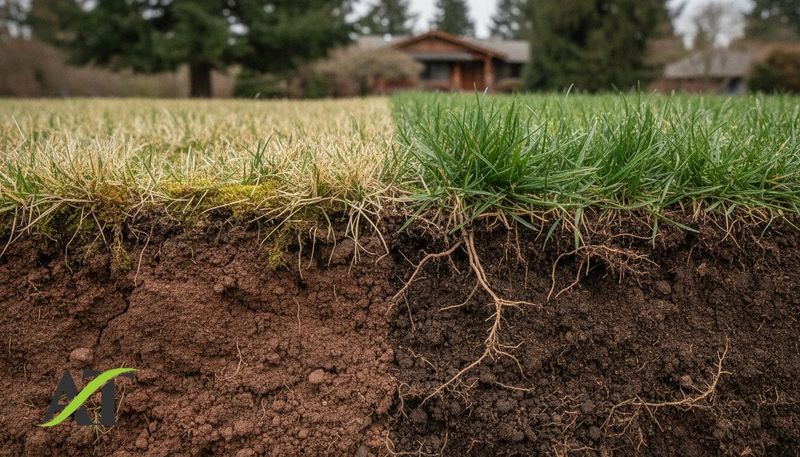
After a thunderstorm clears and the yard looks green again, the temptation is to feed it while it seems ready to grow.
Resist that impulse for a few days.
Green color alone does not confirm a nitrogen shortage, and Illinois Extension notes that the response may be coming from restored moisture, cooler temperatures, or renewed microbial activity rather than a sudden nutrient need.
Watch the lawn for a week and see how it behaves once the soil dries a little.
If the turf stays pale or thin even after moisture returns, that is a more meaningful signal.
Start by identifying your grass type, because warm-season grasses like bermudagrass (Cynodon dactylon) and cool-season grasses like tall fescue (Festuca arundinacea) have different fertilizer timing windows and nitrogen needs.
A soil test, available through your local Cooperative Extension office for a modest fee, tells you what the soil already holds and removes the guesswork.
Penn State’s turfgrass fertilization guide recommends soil testing as a foundation for any fertility program.
When you do apply fertilizer, keep applications small and timed to active growth.
A widely cited general ceiling is no more than 1 pound of actual nitrogen per 1,000 square feet in a single application, and Minnesota Extension’s lawn fertilizing page reflects that guidance.
Minnesota Extension also advises against fertilizing dormant turf and against applying when more than 0.75 inches of rain is expected in a single event, because nutrients can leach or run off before the roots absorb them.
Those are Minnesota-specific thresholds, not a national rule, but the underlying logic applies broadly: fertilize during active growth, not before a downpour.
Minnesota’s shoreland lawn guidance adds that local ordinances in some areas set stricter limits, so check what applies where you live before buying a bag.
Protect Soil, Water, and Yourself
Saturated soil after a heavy storm looks inviting if you want to mow or get the spreader out, but it is actually at its most fragile.
Wet soil compacts far more easily than dry soil, and Minnesota Extension’s soil compaction research explains that compaction reduces pore space, slows drainage, cuts off root-zone air, and makes it harder for water and nutrients to move through the profile.
Wait until the lawn drains and you can walk across it without leaving footprints before mowing or running any heavy equipment.
Fertilizer left on pavement after a storm does not stay there.
Penn State Extension is direct about this: nutrients washed from driveways, sidewalks, and gutters travel through stormwater into streams and waterways, contributing to algae blooms and water quality problems.
Sweep any spilled fertilizer back onto the lawn, and EPA nutrient pollution guidance also recommends returning grass clippings to the lawn rather than bagging them, since clippings recycle nitrogen already in the plant and can meaningfully reduce how much supplemental fertilizer you need over a season.
Minnesota Extension estimates that clippings can return roughly 1 pound of nitrogen per 1,000 square feet per year to the turf.
The most non-negotiable part of storm season is also the simplest.
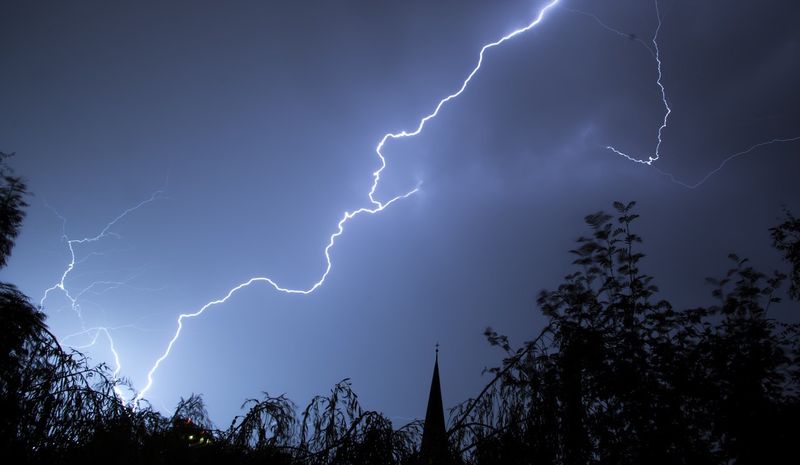
If you can hear thunder, you are close enough to be struck by lightning, and National Weather Service lightning safety guidance is unambiguous: move to a substantial enclosed building or a hard-topped vehicle and stay there.
Wait at least 30 minutes after the last thunder before going back outside.
CDC lightning safety information confirms there is no safe place outdoors during a thunderstorm.
No lawn inspection, no fertilizer application, and no mowing run is worth the risk.
Storm nitrogen is a small, welcome bonus in a good lawn-care plan, but the plan itself happens on dry, calm days when you can actually see what your grass needs.