
More Gray Foxes Patrolling Your North Carolina Property Means Fewer Rats All Season
Follow us on Google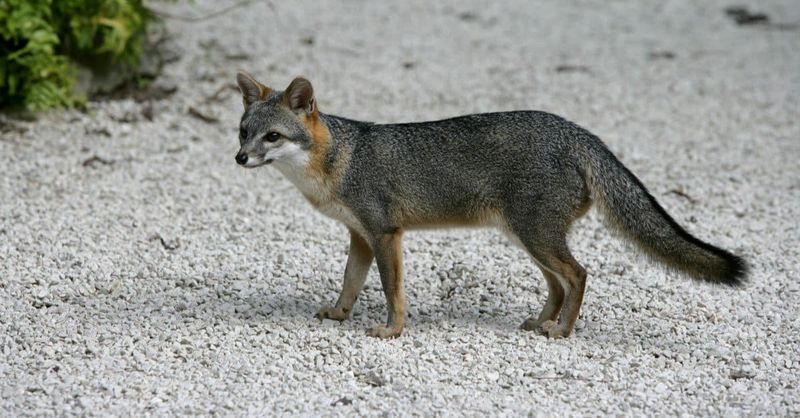
Spotting a gray fox trotting along your fence line on a quiet North Carolina evening can feel like a good omen, especially if rats have been raiding your bird feeder or scratching around under the shed. The idea that a fox will clean up your rodent problem sounds almost too convenient, and the truth is a little more complicated than that.
A visiting gray fox may eat some rodents and add real predator pressure to your yard, but it is one piece of a bigger puzzle, not a season-long guarantee.
A Gray Fox May Eat Some Of Your Rodents
Catch a glimpse of a gray fox cutting across your backyard and you are looking at the only fox species native to North Carolina. NC Wildlife confirms that gray foxes are common across the entire state, from the barrier islands on the coast all the way up through the Blue Ridge, with especially dense populations in the Piedmont and northern Coastal Plain.
They turn up in wooded edges, brushy fields, farmland, and the kind of mixed habitat that backs up against a lot of residential neighborhoods.
Mice, rats, and rabbits are listed among their primary foods, which is the grain of truth behind the headline. A fox hunting along your property line or through a brushy corner of your yard may genuinely take some rodents out of the picture.
That is worth knowing, and it is worth welcoming.
But the NC Wildlife gray fox profile also makes clear that this animal eats insects, birds, persimmons, grapes, corn, peanuts, and whatever else happens to be available. Its diet shifts with the season and with what is easy to catch.
So a fox passing through your yard on a warm Piedmont evening might be hunting rats, or it might be after crickets and fallen muscadines. You cannot count on it to focus on Norway rats just because Norway rats are present.
Treat a visiting gray fox as a possible ecological benefit, a real one, but pair it with the sanitation, exclusion, and monitoring steps in the sections below. Predator pressure is one layer of rat management, not a substitute for the others.
Your Yard May Be Part Of A Larger Fox Home Range
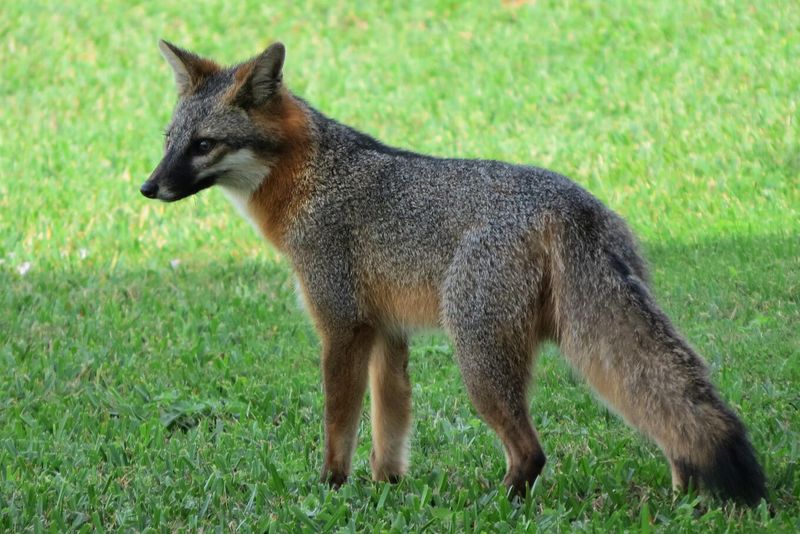
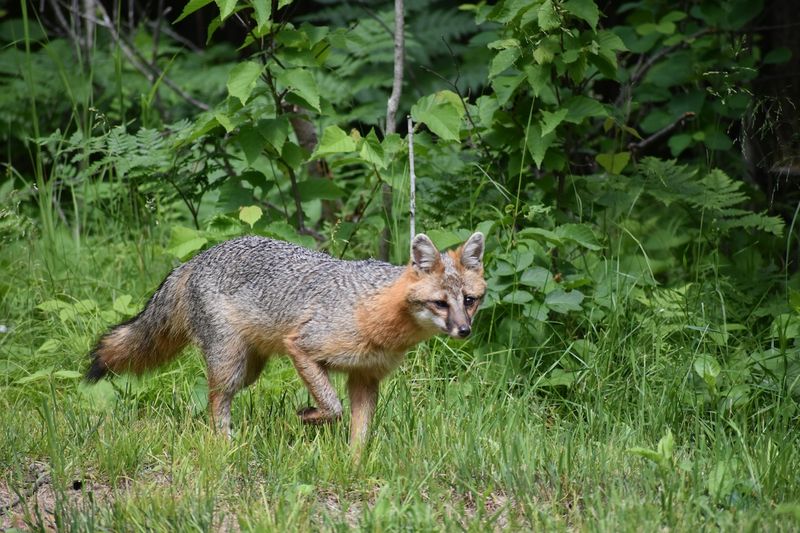
A fox on your trail camera three nights running feels like proof that it has claimed your yard. Here is where it gets tricky: gray fox home ranges can be enormous, and your property is almost certainly just a small stop along a much longer route.
U.S. Forest Service species review data shows gray fox home ranges varying widely by habitat, season, and individual animal, spanning from roughly 74 acres to more than 6,000 acres in some documented cases, with ranges that can overlap among neighboring animals.
A typical residential lot in Raleigh or Wilmington covers less than a quarter of an acre. Even a compact fox range covers hundreds of times that.
What camera footage, fresh tracks, or repeated sightings actually tell you is that a fox uses the area, not that it has taken ownership of your rat problem. The animal may be traveling a regular circuit that swings through your yard every few nights, hunting along a wooded edge you share with several neighbors, or denning somewhere nearby and ranging outward each evening.
Ranges also shift with the season. A fox may visit more often in late winter when other food is scarce, then drift toward berry patches and insect-rich fields once summer arrives.
So a stretch of frequent sightings does not mean the fox has moved in permanently, and a quiet month does not mean it has abandoned the area. Read the evidence as a sign that your yard is part of a functioning local habitat, which is genuinely good news, without expecting nightly patrols on your behalf.
The Same Food Can Attract Foxes And Rats
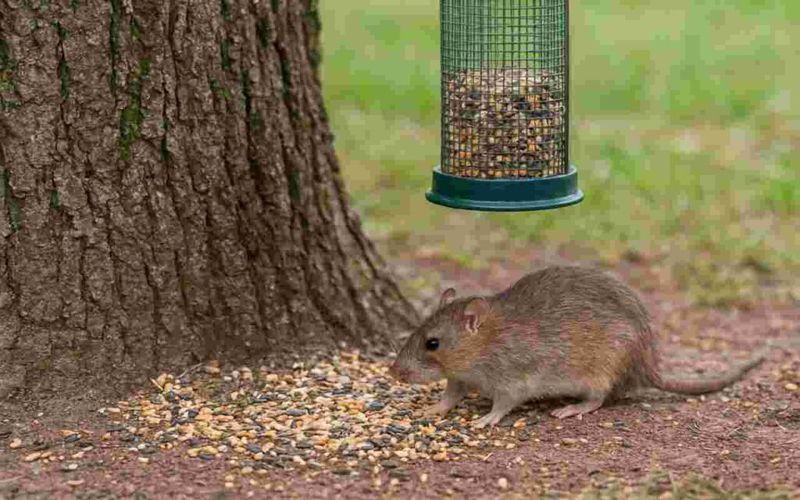
Seeing a fox near a spot where you have also noticed rat activity can feel reassuring, like nature is already handling the situation. But those two animals are often drawn to the same yard for the same reasons, and the fox’s presence does not mean the rat problem is on its way out.
Spilled birdseed under a feeder, outdoor pet food left in a bowl overnight, poultry feed stored in open bags near a coop, unsecured garbage cans, fallen fruit from a fig or pear tree, active compost piles, and dense brush piles all create the conditions rats need to thrive. A fox hunting along your property line may be there precisely because rodents are already well established and easy to find.
The NC Wildlife gray fox profile notes that gray fox diets shift with local and seasonal food availability, meaning fruit, insects, and birds can pull a fox’s attention away from rodents entirely depending on what is ripe or abundant.
More fox sightings can actually reflect more food attractants, not more effective rat control. A yard loaded with birdseed, compost, and fallen muscadines is an easy hunting ground, and it is also a rat buffet.
The fox and the rat are both benefiting from the same conditions you have created.
NC State Extension’s wildlife guidance is straightforward on this point: remove the attractants that sustain rats. Do not leave food outside to try to retain a fox.
Feeding or baiting a fox habituates it to humans, attracts other wildlife including raccoons and opossums, and increases the risk of conflict and disease. The right move is to tighten up your yard so rats have less reason to stay, and let the fox hunt on its own terms.
Start With Food And Shelter Control

Rats do not move in because your yard is inviting in a general sense. They move in because your yard solves two specific problems for them: food and shelter.
Take those away and the population pressure drops, regardless of what is hunting nearby.
NC State Extension recommends storing birdseed, chicken feed, rabbit pellets, and similar foods in metal containers with tight-fitting lids, because rats can chew through plastic bins in short order. Feed pets indoors whenever possible, and if you feed outside, pick up any uneaten food before dark.
Clean spilled seed under feeders at least twice a week during the warmer months, when rat activity in the Piedmont and Coastal Plain tends to stay high even through November.
Secure garbage cans with bungee cords or locking lids, manage fallen fruit by raking it up every few days, and keep compost in a sealed bin rather than an open pile. Woodpiles, stacked lumber, and dense ground cover within a few feet of your house give rats exactly the nesting material and hiding spots they need.
Extension guidance specifically calls for storing materials at least 12 to 18 inches off the floor and away from walls to eliminate the sheltered runways rats prefer.
None of this is glamorous work, but it is the most direct lever you have. A fox hunting your yard may take a rat here and there, and that is genuinely useful.
Sanitation is what actually changes the conditions that keep producing more rats to replace the ones the fox catches. Think of it as removing the welcome mat before you worry about anything else.
Seal The Openings Rats Actually Use
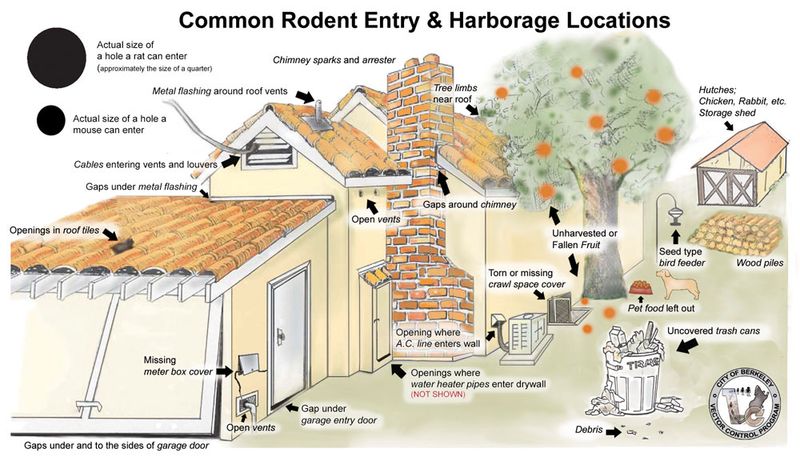
A gray fox hunting your backyard has no effect on a rat that has already found its way into your attic, crawl space, garage wall, or chicken coop. Outdoor predator pressure and structural rat control are two completely separate problems, and confusing them is one of the most common mistakes homeowners make.
NC State Extension’s guide to structure-invading rats sets the thresholds clearly: openings of one-quarter inch or larger can admit juvenile rats, and openings of one-half inch or larger can admit adults. That is smaller than a dime.
Walk the full perimeter of your house and outbuildings with a flashlight and look at every foundation crack, gap around a pipe or conduit, soffit seam, roof edge, vent screen, utility entry point, and the bottom corners of doors and garage doors.
Chicken coops need the same scrutiny. Check where the hardware cloth meets the frame, where doors hang, and whether there are gaps at the roofline.
Rats are patient and methodical, and a gap that looks too small is often exactly the right size.
Fresh evidence of activity inside a structure changes the urgency level. NC State Extension reports that rats may produce 30 to 50 droppings per day, so a handful of fresh droppings means an active infestation, not a one-time visitor.
Gnaw marks on wood or wiring, greasy rub marks along walls, scratching sounds in the ceiling at night, and burrows running along the base of a foundation wall all point to a problem that needs direct action: sealing entry points, setting traps, and calling a licensed pest management professional if the infestation is established. No amount of fox activity outside addresses rats that are already living inside your walls.
Let The Fox Pass Through Safely
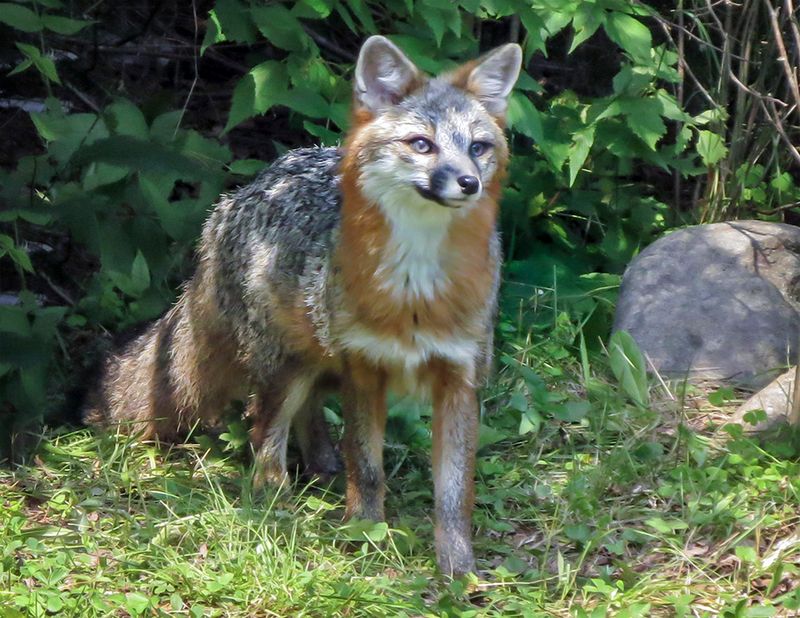
Wanting a fox around for its rodent-hunting potential is reasonable. Assuming it is harmless in every corner of your yard is a different matter, and a few practical boundaries keep the arrangement working for everyone.
Poultry is the clearest vulnerability. NC Wildlife notes that gray foxes do prey on poultry, so a fox passing through your yard is not a free pass to relax coop security.
Hardware cloth, not chicken wire, should cover all openings. Lock birds inside a secure coop from dusk to dawn, and make sure there are no gaps the fox could work over time.
Supervised free-ranging during daylight hours is generally lower risk, but it is still a judgment call.
Small pets deserve the same care. Keep cats indoors at night and supervise small dogs outside, especially near wooded edges at dusk and dawn when fox activity tends to peak.
If a fox is denning under your deck, porch, shed, or crawl space, NC Wildlife recommends nonlethal deterrence such as a bright spotlight aimed at the entrance, a talk radio station playing nearby, or a motion-activated sprinkler. These approaches encourage the fox to move on without harming it.
The critical warning: never seal the entrance while young may be inside. A mother fox with a litter will not simply abandon the den, and blocking the entrance traps the animals or forces a desperate response.
Wait until the family has moved on before closing the opening permanently with hardware cloth or a one-way exclusion device.
Keep your distance from the fox itself. Do not approach, corner, or attempt to handle it under any circumstances.
Know When A Fox Encounter Needs Help
Foxes are among the mammals in which rabies is commonly found in North Carolina, and that is worth knowing clearly and calmly. NC Wildlife’s rabies guidance is direct: a fox seen during the day is not automatically sick.
Gray foxes may forage during daylight when food is easy to find, when a mother is feeding pups, or when other conditions shift their schedule. Daytime activity alone is not a reason to panic or call animal control.
The behaviors that actually warrant concern are different in character. A fox that is stumbling, circling, showing partial paralysis, drooling excessively, acting aggressively without provocation, or approaching people and pets without hesitation is displaying signs that justify keeping your distance and making a call.
Contact your local animal control office or the NC Wildlife helpline and let professionals assess the situation.
Do not attempt to handle, chase, corner, or relocate the animal yourself. Beyond the obvious safety risk, NC Wildlife makes clear that relocating foxes and other possible rabies-vector species is illegal in North Carolina.
Moving an infected animal spreads disease to new areas, and the relocated animal rarely survives.
If a person or pet has been bitten, scratched, or had direct contact with a fox’s saliva, treat it as an urgent situation. Wash the wound thoroughly with soap and water for at least 10 minutes, then contact a doctor or the local health department right away.
For a pet exposure, call your veterinarian. Prompt action after any real exposure is what matters most, not the time of day you spotted the fox in the first place.
Never Turn Rodenticide Into Fox Food

Rat poison and a visiting fox are a dangerous combination, and the logic of using one to feed the other is exactly backward. EPA’s pesticide safety review warns that nontarget wildlife and pets can be harmed two ways: by eating the bait directly, or by eating a rodent that has already consumed it.
Secondary poisoning is a real and documented risk, and a fox that eats several poisoned rats over a few nights can accumulate a lethal dose.
Loose bait scattered under a shed, bait blocks left in open spaces, or any product placed where a fox, dog, cat, or hawk can reach it creates that risk. Consumer rodenticide labels require the use of secured, tamper-resistant bait stations that limit access to the target species.
Read the label completely before use, follow every instruction, and place stations only in the locations and quantities the label specifies.
If your rat problem has reached the point where you are weighing rodenticide, NC State Extension advises pairing chemical control with sanitation and exclusion, because killing rats without removing the conditions that sustain them produces only short-term relief. A licensed pest management professional can assess the infestation, recommend the right products and placements, and help you avoid the secondary-poisoning risks that come with improper use.
The fox is not part of your rodenticide plan. It is a wild animal moving through your yard, and keeping it safe from your control measures is both the ethical and the practical choice.
Use The Fox As One Layer, Not The Whole Plan

Pull all of this together and the order of operations is not complicated. Remove food attractants first: metal containers for feed, pets eating indoors, spilled seed cleaned up regularly, garbage secured, fallen fruit raked before nightfall.
Then reduce shelter: stack lumber off the ground, clear dense brush within a few feet of the house, and eliminate the runway cover rats rely on along walls and fences.
Inspect every structure for entry points and seal them before rats establish themselves inside. NC State Extension’s wildlife guidance is consistent on this point: killing rodents without fixing the underlying conditions produces only temporary results.
Monitor for fresh evidence, because active droppings, new gnaw marks, or scratching sounds inside a structure call for traps, professional assessment, or both, not a wait-and-see approach built around wildlife.
Protect poultry and small pets with the secure housing and supervised outdoor time described earlier. If the fox is denning nearby, use nonlethal deterrence rather than exclusion while young may be present.
A visiting gray fox is a genuine asset in this picture. NC Wildlife confirms that small mammals including rats are among the gray fox’s primary foods, so some predator pressure on outdoor rodents is real.
What it cannot do is promise fewer rats throughout a full season, prevent rats from entering your structures, or replace the sanitation and exclusion work that actually changes outcomes. A well-managed yard that removes rat attractants and closes structural gaps is also, not coincidentally, the kind of yard a healthy fox is most useful in.
You end up with a safer property and a wild neighbor worth keeping around.