
How To Grow Plumeria In Pots So They Bloom All Through A Texas Summer
Follow us on Google
Step onto a Texas patio on a July morning and catch a wave of sweet, tropical fragrance drifting from a single potted plant, and you will understand why so many gardeners here are obsessed with plumeria.
This flowering tropical, also called frangipani, can push out repeated clusters of blooms through much of a favorable summer when the growing conditions are right.
Getting those conditions right in a state that throws triple-digit heat, sudden hailstorms, and surprise late freezes at your plants takes a clear plan, not just good intentions.
A Mature Plant Gives You the Best Start
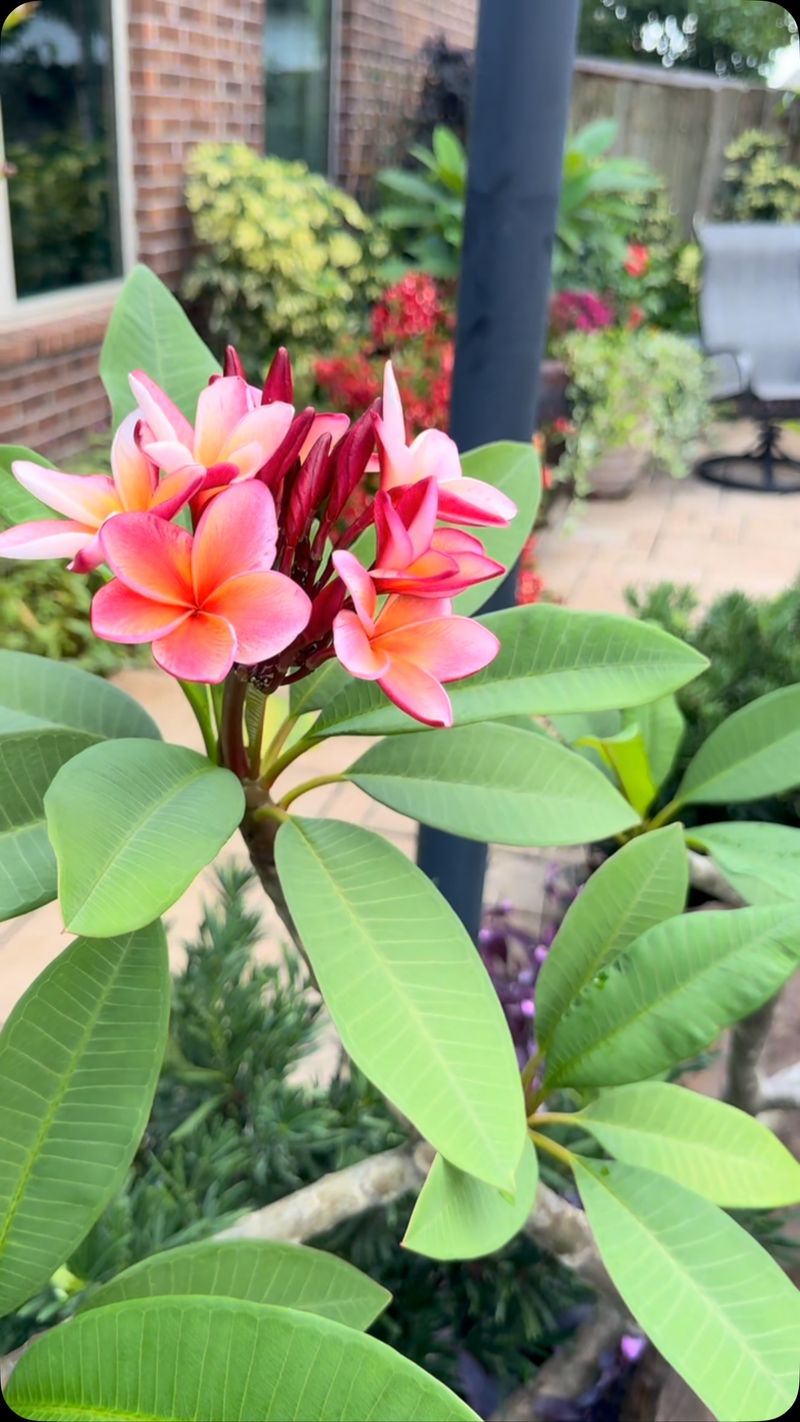
Picture a neighbor’s porch in late June, a plumeria loaded with creamy flower clusters, that unmistakable frangipani scent hanging in the still air.
That payoff belongs to the plant itself as much as it belongs to the gardener, because the species has a built-in requirement: flowers form only at the tips of mature, healthy branches.
Start with the wrong plant and the care routine cannot fix it.
Plumeria, known botanically as Plumeria rubra in one of its most common forms, produces blooms in clusters at branch tips in colors ranging from white and yellow to deep pink, orange, and red.
University of Wisconsin Extension guidance on plumeria notes that cuttings typically take 1 to 3 years to bloom, and plants grown from seed may need 3 or more years.
A newly rooted cutting sitting in a four-inch pot is not going to reward you with fragrant clusters by August, no matter how carefully you water it.
If first-summer flowers matter to you, buy a mature, already-flowering specimen from a reputable nursery or a trusted local grower.
Look for a plant with several well-developed branches, visible branch tips in good condition, and no signs of soft or rotted tissue at the base.
Cultivar choice matters too, because Henderson County Master Gardener plumeria guidance points out that varieties differ in flower color, growth rate, cold tolerance, and bloom timing.
Repeated summer flowering is a realistic and genuinely satisfying goal, but no cultivar and no care routine guarantees nonstop blooms.
Plant age, winter injury, root health, and the particular Texas summer you happen to be living through all affect what you actually get.
A Breathable Pot Protects the Roots
Roots that cannot breathe cannot feed flowers.
That sentence sounds simple, but it explains why so many potted plumeria stall out in Texas summers despite regular watering and full sun.
The pot itself, and what fills it, determines whether moisture helps or quietly kills the plant from the ground up.
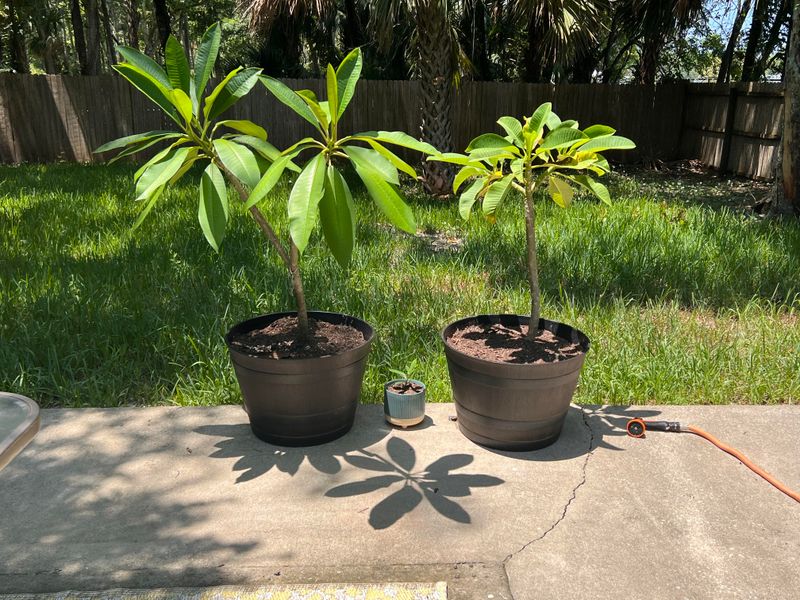
Choose a container with several open drainage holes, not just one small opening at the center.
Plumeria Society of America guidance on soil mix and containers offers a practical sizing rule: roughly 1 gallon of pot volume for every 12 inches of plant branch or trunk length.
Treat that as a flexible starting point rather than a fixed law.
A pot that is too large holds excess mix that stays wet for days after watering, and a pot that is too small dries out in hours during a 100-degree stretch and can tip over in a breeze.
Fill the container with a coarse commercial cactus or succulent mix, or amend a regular potting mix with perlite or pumice to open up the structure.
University of Wisconsin Extension and Bexar County Master Gardeners both emphasize an open, fast-draining mix over any tricks at the bottom of the pot.
Skip the gravel layer.
Placing gravel at the bottom of a pot does not improve drainage; it actually raises the point at which water pools inside the mix, which is the opposite of what you want.
Healthy, oxygenated roots are the foundation of every flower cluster that forms above them.
Get the pot and the mix right before you worry about anything else.
Full Sun Builds the Flower Clusters
Shade is the quiet reason many Texas plumeria look healthy but never bloom.
The plant can hold its leaves and even push some new growth in a partly shaded spot, but bud formation depends on real, direct sun.
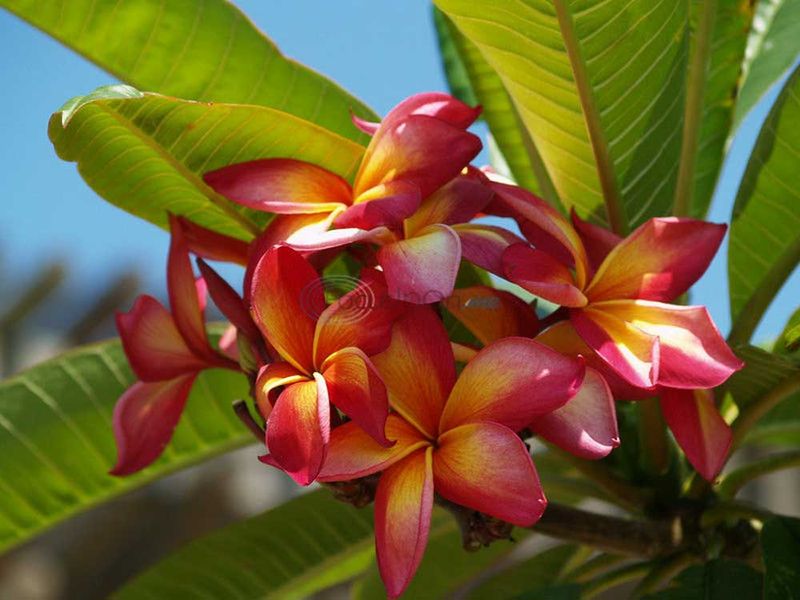
Texas A&M AgriLife Extension in Bexar County is direct about this: full sunlight is critical for bud formation, and a plant kept in shade produces few buds.
Aim for approximately 6 to 8 hours of direct or mostly direct sun each day.
A south- or west-facing patio in San Antonio, Austin, or Dallas can deliver that easily from April through September.
The complication is that Texas July and August sun combined with reflected heat off concrete or a light-colored wall can push leaf temperatures high enough to cause scorch, especially on a plant that has been living under a nursery shade cloth.
Ellis County Master Gardeners note that moving a plumeria suddenly from a shaded nursery bench into eight hours of unfiltered afternoon exposure can shock the foliage.
Acclimate a new plant gradually over several days, starting with morning sun and moving it into longer exposure as the leaves adjust.
During an extreme heat event, when temperatures climb above 105 degrees Fahrenheit, temporary afternoon shade from a patio umbrella or a moved container can prevent scorch without permanently stealing the light the plant needs.
The goal is maximum usable light, not maximum punishment.
Morning sun plus several hours of afternoon exposure almost always outperforms a fully shaded porch, even in Central Texas heat.
Water Deeply, Then Let Air Return
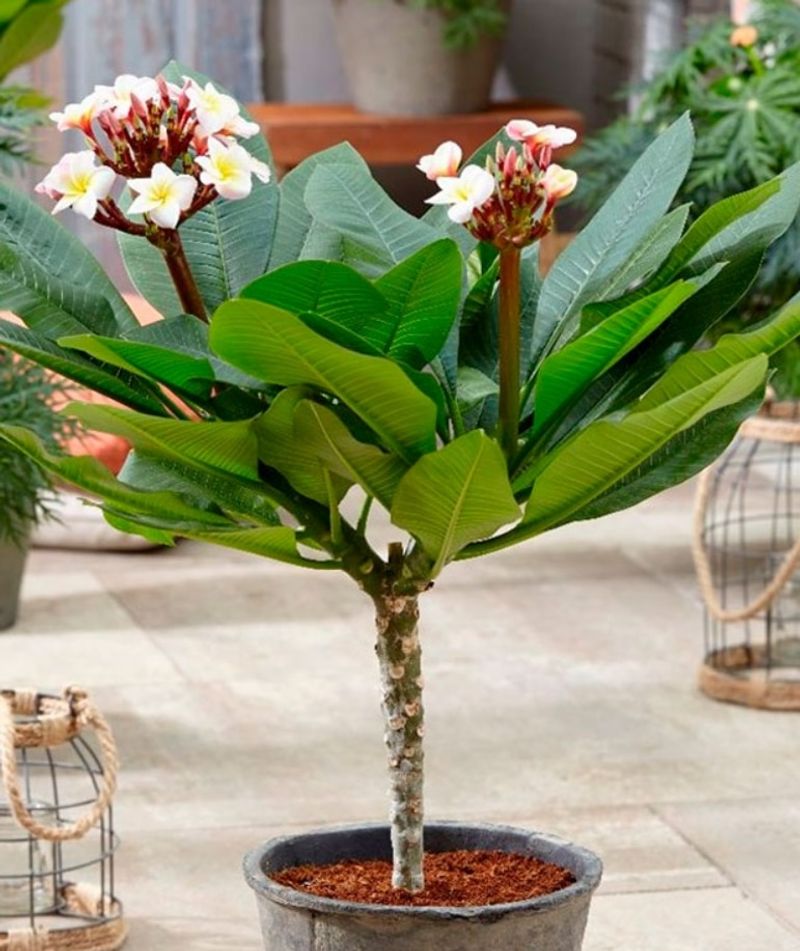
A fixed watering schedule is the wrong tool for a Texas summer.
The weather changes too fast.
A plumeria in full sun on a south-facing Austin patio during a 100-degree dry stretch may need water every two or three days.
That same pot sitting through four days of Gulf Coast rain may need nothing at all for a week.
The correct approach is to water thoroughly, meaning enough to wet the entire root zone and see water flowing freely from the drainage holes, and then wait.
Check the top few inches of the mix before watering again.
If the mix still feels moist, give it more time.
Texas A&M AgriLife Extension specifically warns that excess water, like excess fertilizer, can produce leggy growth and fewer flower clusters rather than more blooms.
Saturated mix pushes oxygen out of the spaces around the roots.
Roots that cannot access oxygen weaken, and weakened roots cannot support the energy demand of producing flower clusters.
Prolonged saturation can lead to root loss or rot, which shows up above ground as soft, discolored stem tissue or sudden wilting that does not recover after watering.
University of Wisconsin Extension guidance reinforces that plumeria prefer their mix to dry partially between waterings.
A dry container during active summer growth is also a problem.
Stressed roots cannot sustain flowers any better than rotted ones can.
Read the mix, read the weather, and water accordingly rather than following a calendar.
Feed Growth Without Chasing Leaves
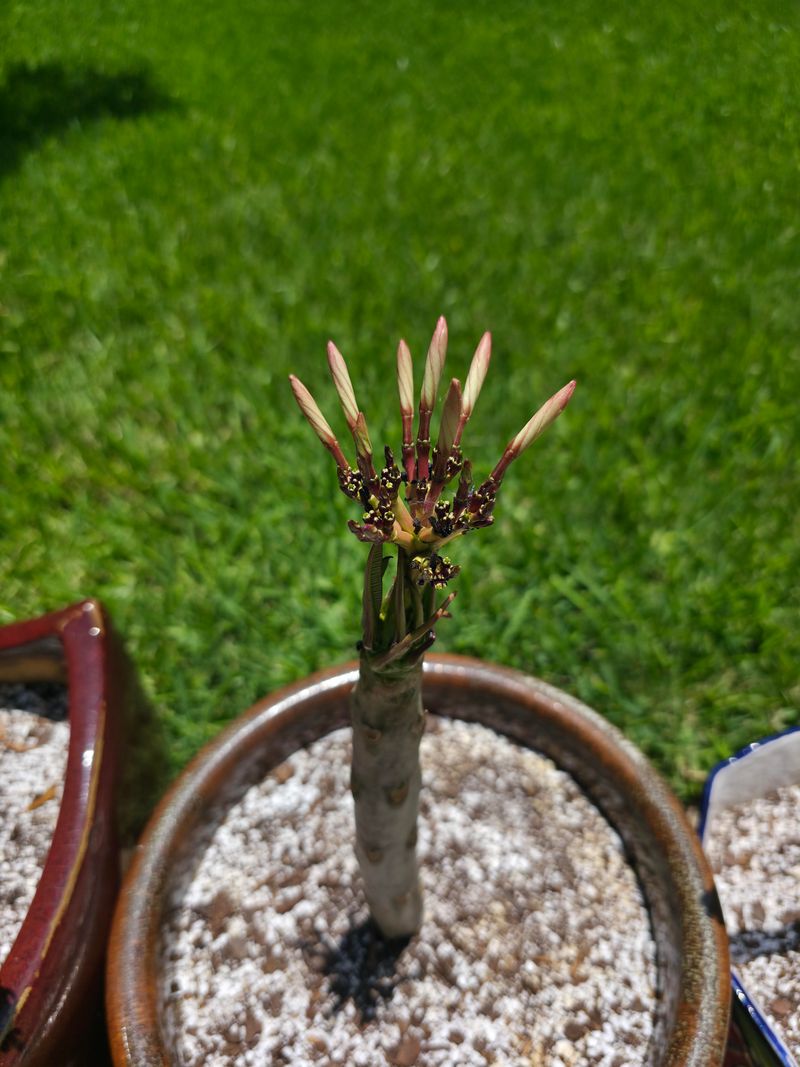
Fertilizer is not a bloom switch you can flip on demand.
Many Central Texas gardeners discover this after dumping a high-nitrogen lawn fertilizer on a plumeria and watching the plant push out long, soft, leafy stems with no flowers in sight.
Nitrogen feeds foliage, and too much of it tells the plant to grow leaves instead of blooms.
University of California Agriculture and Natural Resources guidance on plumeria and University of Wisconsin Extension both note that extension sources commonly recommend a fertilizer with relatively more phosphorus during the flowering season.
Phosphorus supports root development and flower production.
But the product label must control the rate and frequency, because formulations differ significantly from brand to brand.
Feed only while the plant is actively growing and showing new leaves or developing buds.
Spring through late summer covers the typical active window in most Texas regions.
Stop feeding as temperatures drop and growth slows in fall.
A dormant, leafless plumeria has no use for fertilizer, and applying it to a resting plant is wasted at best and potentially harmful to roots at worst.
Fertilizer also cannot compensate for the things that actually block flowering: shade, cold damage, immature wood, or compromised roots.
Texas A&M AgriLife makes this plain.
Feed a plant that already has the right light, roots, and moisture, and fertilizer genuinely helps.
Feed a plant in shade with saturated roots, and you are just spending money on leaves.
Protect the Tips That Carry Flowers
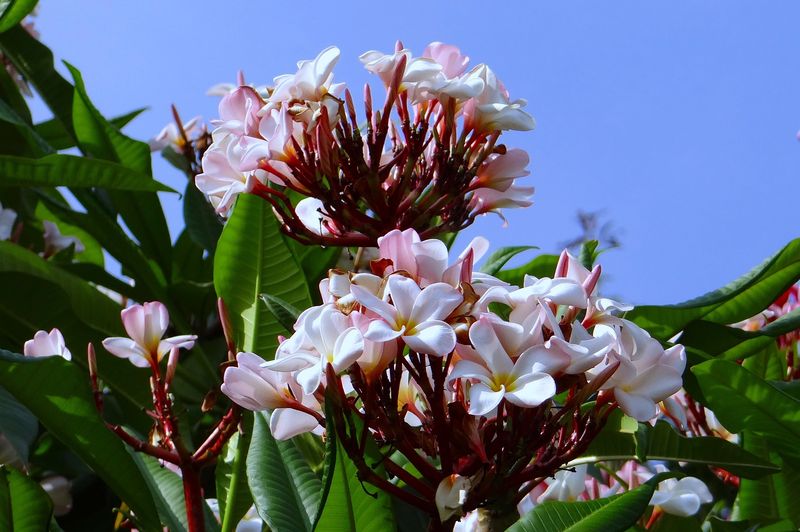
Every flower cluster on a plumeria grows from a branch tip, which gardeners sometimes call a terminal growing point or old wood.
Remove those tips and you remove the next round of blooms.
That single fact should govern every pruning decision you make.
Routine pruning on a healthy plumeria is minimal.
University of Wisconsin Extension and University of Hawaii CTAHR plumeria guidance both recommend removing only dead, diseased, damaged, or structurally awkward branches.
If a branch is healthy and carrying good tip growth, leave it alone.
Heavy pruning to shape the plant or reduce its size can sacrifice an entire bloom cycle, because the new growth that replaces cut tips needs time, often a full season, to mature enough to flower again.
When pruning is necessary, late winter or early spring before new leaves emerge is generally the preferred window, though the right timing can shift depending on cultivar and where in Texas you garden.
A San Antonio gardener may see new growth push earlier than someone in the Hill Country or North Texas.
Handle cut branches carefully.
Plumeria produces a milky white sap that can irritate skin and eyes.
UC Agriculture and Natural Resources advises wearing protective clothing when working with plumeria sap, and recommends supervision around children and pets.
Wash hands thoroughly after any pruning work, and keep cut branches away from faces and eyes while you work.
Texas Weather Sets the Outer Limit
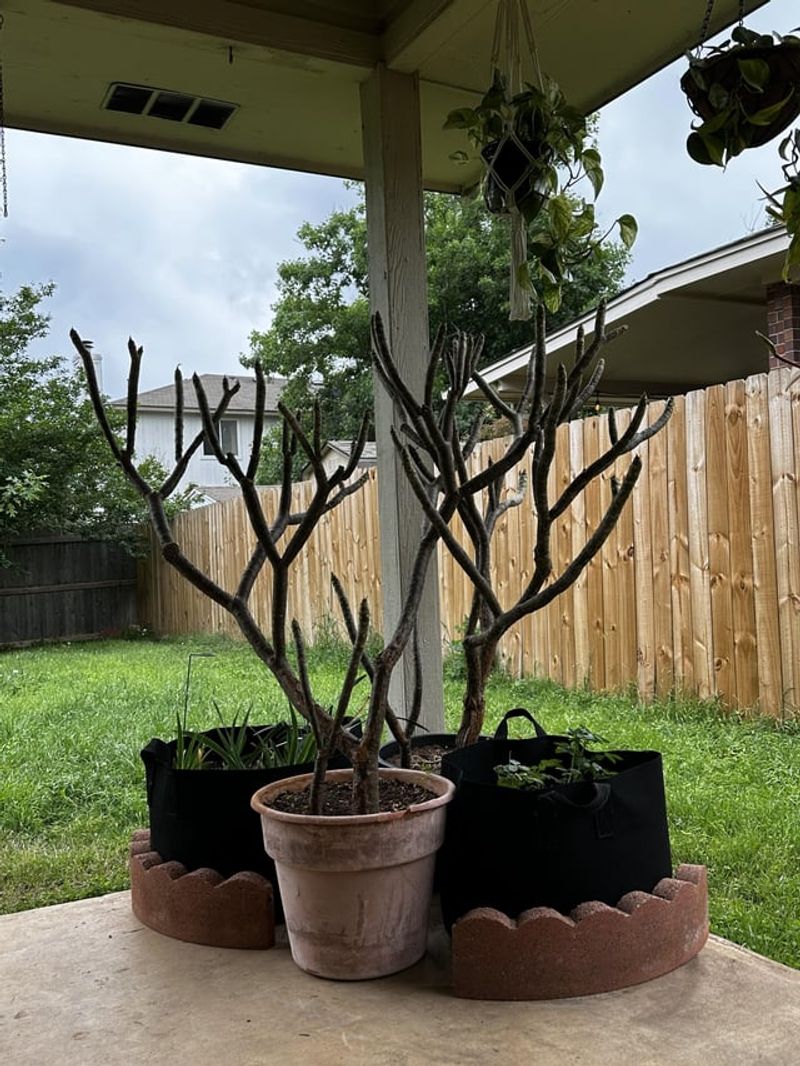
Texas is not one climate, and treating it like one is how gardeners in Amarillo or Kerrville end up with a dead plumeria by December.
A plant on the Gulf Coast near Corpus Christi or in the Lower Rio Grande Valley may stay outdoors comfortably well into late fall.
That same plant, if left outside in Lubbock or the Hill Country when a November cold front rolls through, can sustain serious damage in a single night.
Henderson County Master Gardener Inside Dirt guidance explains that Central and East Texas gardeners commonly grow plumeria in containers specifically because the plant cannot survive freezing winter temperatures in the ground.
The container is the tool that makes plumeria possible across most of the state.
Use it.
Cold protection thresholds vary slightly across sources.
Bexar County Master Gardeners and Texas A&M AgriLife Bexar County both reference damage risk below approximately 40 to 45 degrees Fahrenheit.
The safe rule is to move a container plumeria to a protected, nonfreezing location before any forecast approaching 40 degrees, particularly if the plant is young, recently repotted, or has had a stressful summer.
Summer weather brings its own risks.
University of Hawaii CTAHR plumeria guidance and Penn State Extension both note that potted plumeria can become top-heavy.
Move or secure containers before any forecast severe thunderstorm, hail event, or tropical system.
A large plumeria in a heavy pot sitting on an open patio can tip over in high winds, and a fallen pot can crack, injure someone, or damage the plant’s branches in ways that set back flowering for months.
Leaf drop and dormancy as nights cool in fall are normal.
A leafless, dormant plant needs little or no water until spring growth resumes.
Watering a dormant plumeria heavily through winter raises rot risk without providing any benefit to the resting plant.
Spider Mites Can Steal the Show
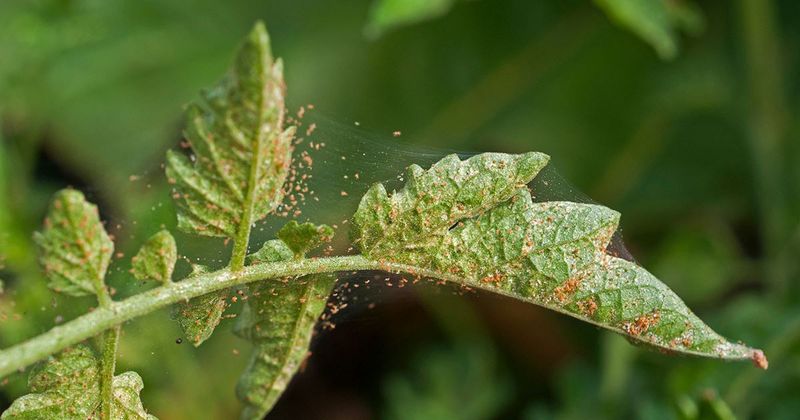
Spider mites have a trick.
They do their worst damage on the underside of leaves where you cannot easily see them, and by the time the top surface of the foliage looks stippled, yellowed, or distorted, the population has already been building for a while.
On a plumeria pushing toward bloom, a serious mite infestation can damage developing flower clusters and cause early leaf drop, which sets the plant back significantly.
UC IPM guidance on sixspotted spider mite on plumeria describes how severe infestations can deform leaves, damage clusters, and eliminate bloom production.
Hot, dry Texas summers create exactly the conditions mites prefer, so check leaf undersides regularly with a hand lens when foliage looks off.
Look for tiny moving specks, fine webbing, or stippled discoloration.
University of Wisconsin Extension and UF/IFAS Extension also identify whiteflies, mealybugs, aphids, and plumeria rust as documented problems.
Plumeria is not a pest-free plant, and assuming otherwise leads to late catches and harder recoveries.
When mites are confirmed, keep the plant properly watered, because a stressed plant is more vulnerable.
Horticultural oil or insecticidal soap can be part of a response, but never apply either product during extreme heat or direct sun.
UC IPM recommends ensuring the plant is well watered and protected from excessive heat and direct sunlight before and after treatment.
Follow the product label fully, and check Texas pesticide rules before applying anything.
Pesticide treatment is one tool in a broader approach, not an automatic fix.
The Bloom Recipe Rewards Consistency
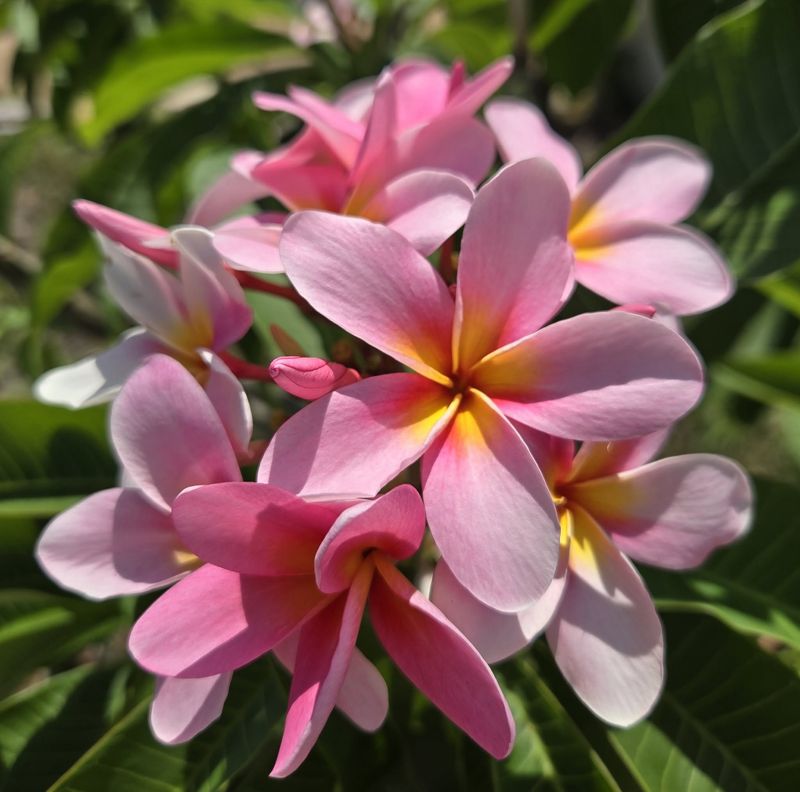
Pull the whole recipe together and it looks like this: a mature plant with developed branch tips, a container with open drainage holes packed with a coarse fast-draining mix, approximately 6 to 8 hours of direct sun with gradual acclimation, thorough watering followed by partial drying between sessions, active-season feeding with a relatively higher-phosphorus fertilizer at label rates, and pruning limited to damaged or diseased wood only.
Add regular pest checks and timely protection before cold fronts, severe storms, or tropical systems, and you have given a Texas plumeria its best realistic chance at repeated summer blooms.
Texas A&M AgriLife Extension and Henderson County Master Gardeners both frame successful plumeria growing around consistent fundamentals rather than any single trick.
UC ANR plumeria guidance adds that the plant rewards attentive care over time, with flowering often improving as the plant matures and roots settle into a well-managed container.
A pause in flowering is not automatically a failure.
Heat stress, a stretch of cloudy weather, a pest setback, or the normal rhythms of the plant can all create a gap between bloom cycles.
Read what the plant is showing you, adjust one variable at a time, and keep the fundamentals steady.
A plumeria that blooms reliably through a Texas summer is genuinely earned, and that makes the fragrance on the patio feel like something you actually built.