
The Easiest Fruit Tree Florida Gardeners Keep Overlooking In The Nursery
Follow us on Google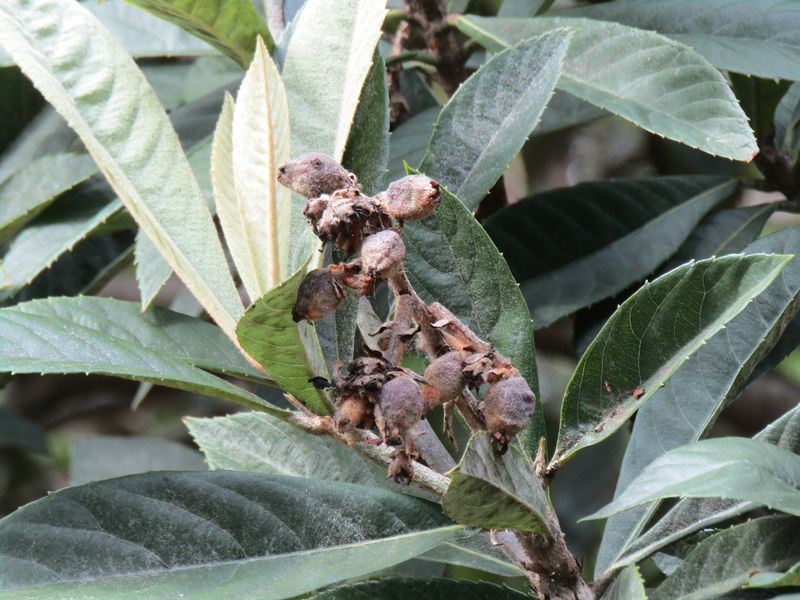
Walk past the loquat at the nursery one more time and you might regret it come February, when your neighbor is pulling sweet yellow fruit off a tree you barely noticed.
The loquat, also called Japanese plum, is one of the better-adapted, relatively low-input fruit trees for north-central Florida, yet most gardeners walk right past it on the way to citrus or avocado.
It flowers in fall or winter while most trees are resting, and it ripens fruit in late winter through spring, filling a gap when almost nothing else in the yard is producing.
If you have a sunny spot with decent drainage, this tree deserves a much closer look.
The Loquat Is Florida’s Overlooked Fruit Tree
Most Florida gardeners walk past the loquat at the nursery without a second glance.
The tag might say “Japanese plum,” which sounds like something that belongs in a cooler climate, but loquat is its own species entirely: Eriobotrya japonica, an evergreen subtropical tree with no close relation to the European or Japanese plums you find in the grocery store.
What makes it worth stopping for is the timing.
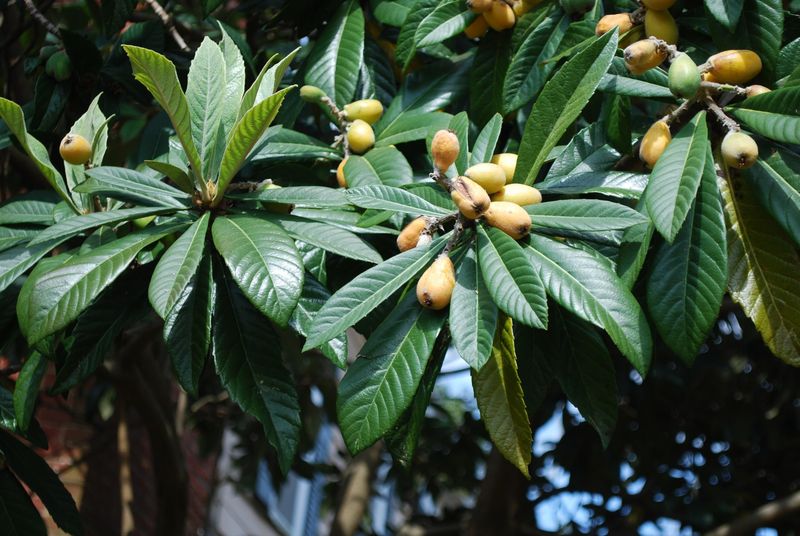
Loquat flowers from fall into winter, when most fruit trees in Florida are doing nothing useful, and it ripens clusters of yellow-to-orange fruit from late winter through spring, typically February through May in Florida.
UF/IFAS Extension Duval County lists it as one of the better alternatives for Northeast Florida gardeners looking for productive fruit trees beyond citrus.
The fruit is sweet and juicy, and the tree itself is handsome enough to earn its place in the yard as an ornamental.
Large, deep-green leaves give it a tropical look year-round.
UF/IFAS guidance on edible ornamental landscaping for north-central Florida identifies loquat as one of the better-adapted fruit trees for the region, one that requires relatively few inputs compared with many other choices.
That “relatively low-maintenance” label does not mean zero care.
The tree needs well-drained soil, enough water during establishment, occasional pruning, and some freeze awareness.
But for a Florida homeowner who wants edible fruit without a complicated routine, loquat is genuinely worth the nursery stop you have been skipping.
Why This Tree Can Stay Relatively Low-Input
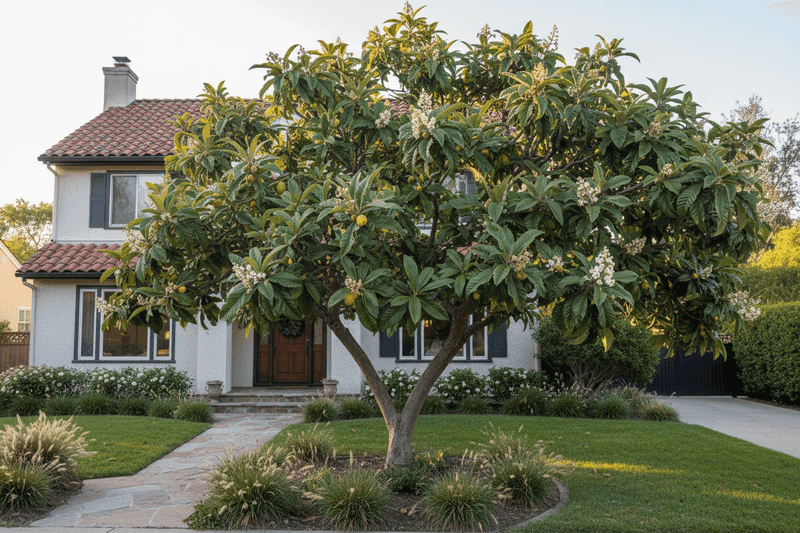
Part of what makes loquat manageable is that it does two jobs at once.
The evergreen canopy looks good all year, so you are not staring at bare branches for half the season, and the same tree that earns its spot as a yard ornamental also hands you fruit in late winter when the yard otherwise has nothing to offer.
After a loquat gets established, it develops a reasonable tolerance for periodic dry spells.
UF/IFAS Gardening Solutions notes that loquats growing in full sun tolerate drought after establishment, which matters in a state where summer rainstorms can vanish for weeks at a stretch in fall and winter.
That reduced irrigation demand after establishment is a real advantage, though it does not mean you can ignore the tree entirely once it matures.
Young trees need regular watering until the root system is settled in, and even older trees benefit from water during fruit development and prolonged dry periods.
Skipping water at the wrong time can shrink the harvest noticeably.
Florida-Friendly edible-landscape irrigation guidance recommends deep watering that moistens the root zone to roughly 24 inches rather than quick, shallow passes.
One tree can set fruit on its own because loquats are self-compatible, so you do not need a second tree to get a harvest.
A second cultivar nearby can improve fruit size and overall production, according to the UF/IFAS loquat production guide, but it is an optional upgrade, not a requirement.
For a backyard with limited room, one well-placed tree is enough to get started.
Buy The Tree That Gets There Sooner
Here is where the nursery decision actually matters.
Pick up a seedling grown from a random loquat pit and you may wait 6 to 8 years before it produces a single piece of fruit, and when it finally does, the fruit may look and taste nothing like the parent tree.
Seedlings do not come true from seed, so flavor and quality are a gamble.
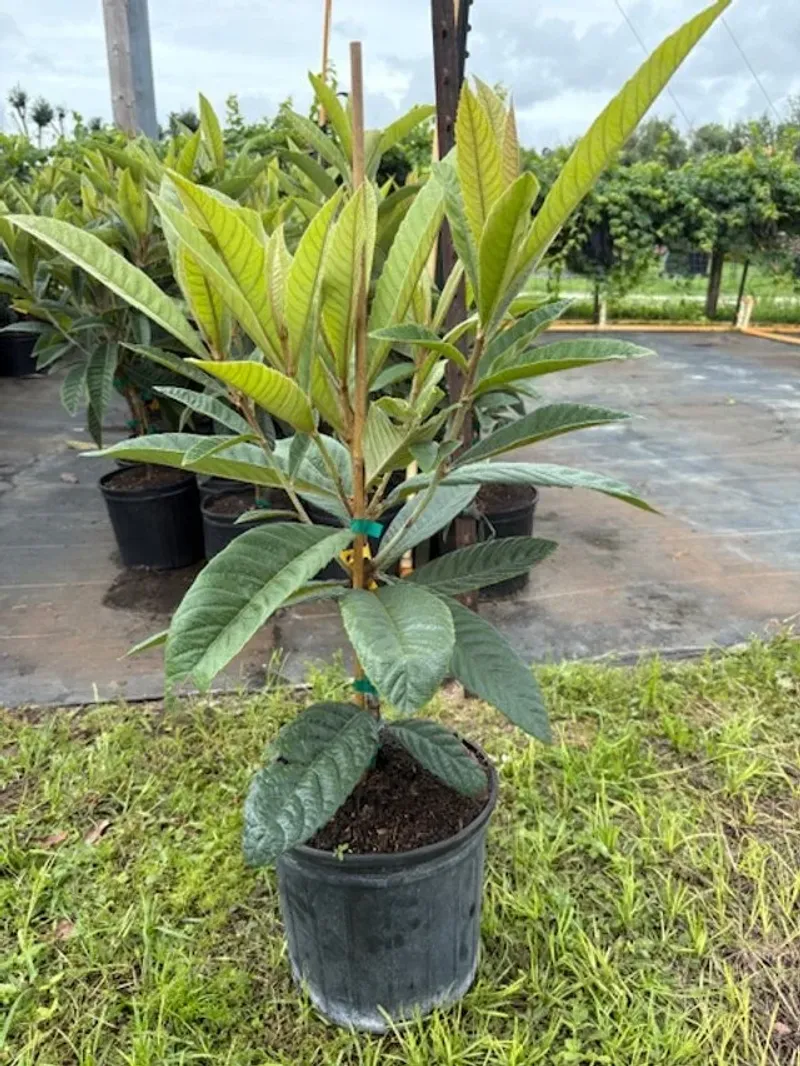
A named grafted or vegetatively propagated cultivar changes that math considerably.
The UF/IFAS loquat production guide reports that grafted trees may begin bearing fruit just 1 to 2 years after planting, and they reproduce the parent cultivar’s fruit reliably.
If you want predictable results without a long wait, look for a named grafted tree at the nursery and ask specifically whether it was grafted or grown from seed.
Size planning matters just as much as the cultivar choice.
An unpruned loquat can reach about 25 feet tall, so UF/IFAS Gardening Solutions recommends placing the tree 25 to 30 feet or more from structures, power lines, and other trees if you plan to let it grow freely.
That is a meaningful chunk of a typical Florida backyard.
The good news is that selective pruning can keep a mature loquat to a manageable 6 to 12 feet, which makes harvesting much easier and keeps the tree well clear of the roofline.
UF/IFAS Extension Charlotte County highlights loquat as a productive subtropical choice worth planning space for, and the size-control option makes it realistic even for modest yards.
Decide before you plant whether you are letting it grow tall or keeping it trimmed, because that choice drives where you put it.
Good Drainage Does The Heavy Lifting
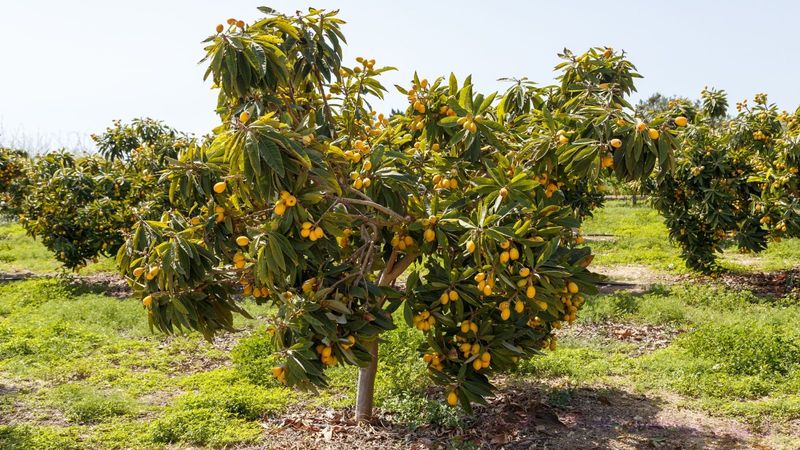
Soil drainage is the single biggest factor between a loquat that thrives and one that slowly declines.
Pick the wrong spot and no amount of good care rescues it.
Pick the right spot and the tree essentially takes care of a large part of the work for you.
Full sun gives the strongest growth and the best fruit production.
Established trees can handle some partial shade, but a shadier location tends to reduce both the size and the quantity of the harvest.
In most Florida yards, the sunniest spot away from large overhanging trees is the right starting point.
Wet soil is a genuine problem.
The UF/IFAS loquat production guide is direct about this: loquats do not tolerate flooded soil.
If your yard has a high water table or sits in a spot that collects water after rain, the recommendation is to build a planting mound 2 to 3 feet high before the tree goes in.
That mound keeps the roots above the saturation zone and can make an otherwise marginal site workable.
For a container-grown nursery tree, dig the planting hole 3 to 4 times wider and about 3 times as deep as the container.
Set the top of the root ball level with, or slightly above, the surrounding soil grade.
In Florida’s sandy soil, avoid placing a separate layer of fertilizer, compost, or topsoil at the bottom of the hole.
If you want to use amendments, mix them with the native soil at no more than a 50-50 ratio so the roots do not hit a hard boundary as they spread.
In parts of Central and South Florida, shallow limestone bedrock adds another layer of difficulty.
Rocky sites may require significant excavation or a raised planting bed.
The UF/IFAS plant assessment for Eriobotrya japonica and the UF/IFAS loquat species profile both reflect that performance varies by region, and low wet areas in the south are poor locations regardless of the state’s overall warmth.
Small Care Choices Protect The Harvest
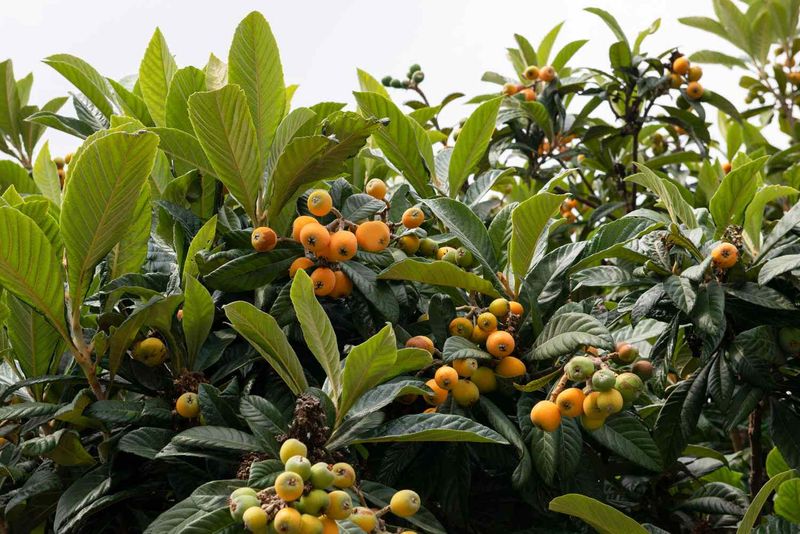
Getting a loquat into good shape is mostly about a handful of small habits done at the right time, not a complicated monthly routine.
The tree rewards consistency more than intensity.
Watering during the first year or two is non-negotiable.
New trees need regular moisture until the root system spreads into the surrounding soil.
Once the tree is established, the UF/IFAS loquat production guide recommends watering trees 4 or more years old during fruit development and prolonged dry spells, because water stress at the wrong moment can visibly reduce the harvest.
Deep watering that reaches roughly 24 inches into the root zone, as outlined in UF/IFAS guidance on efficient irrigation for edible landscapes, does more good than repeated shallow passes that barely wet the surface.
Pruning is not optional, but it does not have to be complicated.
During the first 1 to 2 years, tip young shoots that exceed 2 to 3 feet in length to encourage branching and a fuller structure.
As the tree matures, selective pruning can hold it to 6 to 12 feet, which makes harvesting easier and keeps the canopy manageable.
Remove damaged or diseased wood whenever you spot it, regardless of season.
Keep a grass-free ring around the trunk extending at least 2 to 5 feet out.
Mowers and string trimmers that nick the bark repeatedly are a quiet way to stress or kill a young tree.
Apply mulch 2 to 6 inches deep in that ring, but keep it 8 to 12 inches away from the trunk itself to avoid rot.
Fertilizer is a more nuanced topic than the “plant it and forget it” reputation suggests.
UF/IFAS Extension Marion County notes that established loquats may need little fertilizer, while the UF/IFAS loquat species profile and the production guide both recommend fertilizer applications for young trees and for older trees showing nutrient deficiency.
Heavy routine feeding and excess nitrogen are problems to avoid because too much nitrogen can increase fire blight susceptibility.
Feed based on what the tree actually shows you, not on a fixed calendar.
A Freeze Can Spare The Tree And Steal Fruit
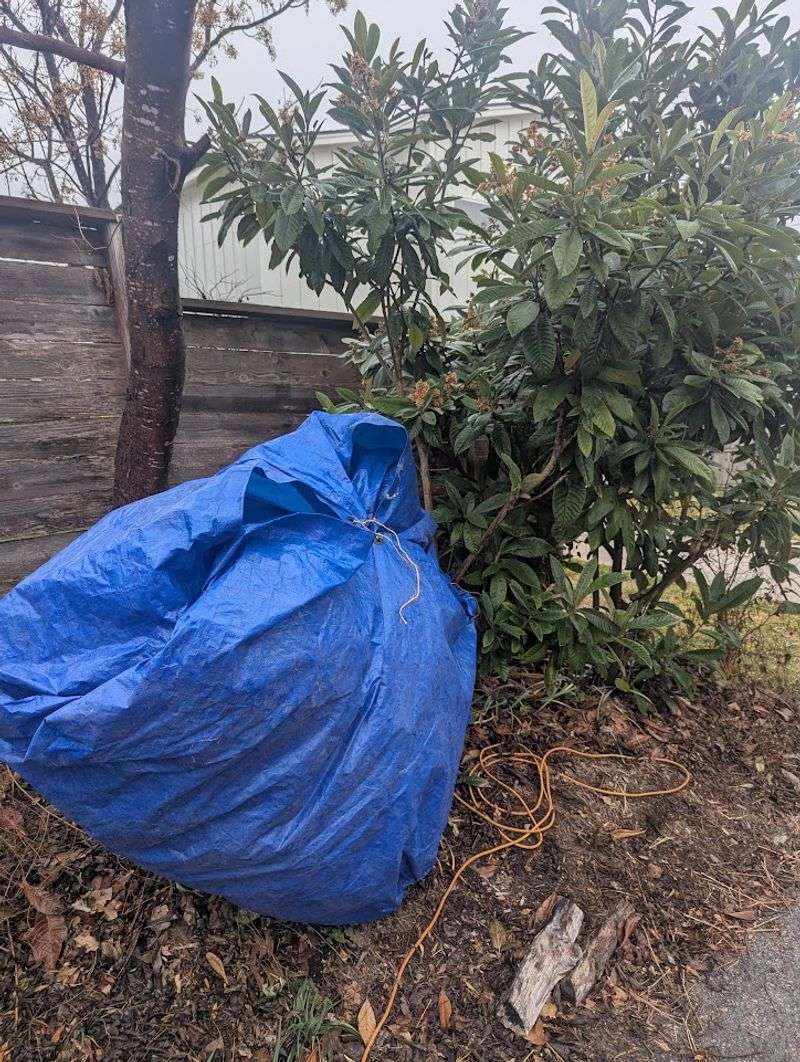
Cold weather is where loquat’s reliability gets complicated, and this is the part most new growers do not think through until after a frost takes their first crop.
The tree itself is tougher than it looks.
Mature loquat wood may survive temperatures as low as 8 to 10 degrees Fahrenheit, which covers most of what North Florida and north-central Florida can throw at it in a bad winter.
The fruit and flowers are a different story.
Temperatures below about 27 degrees Fahrenheit can kill loquat blossoms and developing fruit outright, even when the tree itself comes through the freeze without a scratch.
A North Florida gardener can watch the tree survive a hard January freeze in perfectly good shape and still lose the entire spring harvest.
Survival and a crop are two separate outcomes.
The UF/IFAS loquat production guide recommends placing the tree in the warmest part of the yard, and UF/IFAS Gardening Solutions echoes that guidance.
Avoid low-lying areas where cold air drains and pools on still winter nights, a common setup in many Florida yards that sit near drainage swales or retention ponds.
The south-facing side of a house or fence, where radiated warmth lingers longest, is often the best choice.
The harvest window, when the cold does not interfere, runs roughly February through May in Florida.
Fruit is ready to pick when it has developed nearly full color, yellow to orange depending on the cultivar.
Because loquats are self-compatible, one tree can produce a full harvest without a second tree nearby, though adding a different cultivar can improve fruit size and overall production when space allows.
Florida’s Regions Change The Risk
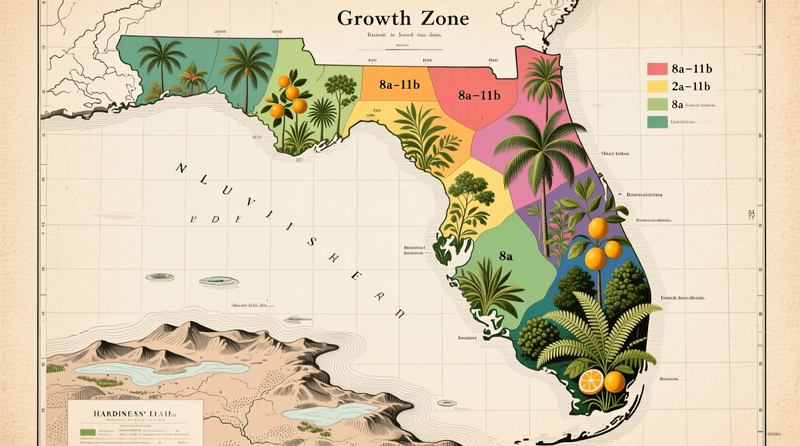
Florida is not one climate, and loquat does not perform identically across the state.
Treating it as a universal choice leads to frustration, so knowing where it fits best saves a lot of time and money.
North-central Florida and much of North Florida are the strongest fits.
The climate is warm enough for reliable growth, cold enough that the tree’s winter flowering cycle makes sense, and the regional UF/IFAS assessment lists loquat as “Not a problem species” in North Florida.
That designation matters for gardeners near natural areas who want to make a responsible choice.
Central and South Florida are more complicated.
The UF/IFAS Assessment for Eriobotrya japonica carries a “Caution” designation for Central and South Florida because the species can escape cultivation and spread into natural areas.
That does not mean you cannot grow it, but the responsible approach is to plant it in a maintained residential landscape, remove fallen fruit before it can spread seed, and check with local extension guidance if your yard sits near natural land or conservation areas.
South Florida adds drainage and soil challenges on top of the escape caution.
Shallow limestone bedrock in parts of Miami-Dade and the Keys can make in-ground planting difficult, and low, wet sites are poor locations regardless of winter warmth.
Salt exposure along the Atlantic and Gulf coasts may also stress the tree, particularly in open coastal yards.
The UF/IFAS loquat species profile reflects that performance varies considerably by site.
Storm risk deserves a measured take.
UF/IFAS hurricane recovery guidance for tropical fruit trees, supported by related UF/IFAS storm preparation guidance, notes that most loquats can recover from hurricane damage and resume production within 1 to 2 years.
That is encouraging, but it does not make the tree windproof.
Keep it well away from the house, pool enclosure, and power lines, and maintain a sound structure through regular pruning so storm damage is less severe to begin with.
What Actually Helps The Fruit
Getting a loquat to grow is one thing.
Getting it to hand you a decent basket of fruit is where a few extra steps pay off in a way that genuinely surprises first-time growers.
Fruit thinning is one of the simplest improvements you can make.
The UF/IFAS loquat production guide recommends leaving approximately 4 to 10 fruits per terminal, meaning the tip of each fruiting branch.
Thinning the clusters may increase individual fruit size by 25% to 100%, which is a meaningful difference when you are eating them fresh off the tree.
Pests are real, and the Caribbean fruit fly is the one that catches Central and South Florida growers off guard most often.
UF/IFAS guidance on Caribbean fruit fly documents it as a documented pest of loquat.
Other visitors include caterpillars, scales, aphids, beetles, weevils, and nematodes, so “pest-free” is not an accurate description of what to expect.
The key habit is identifying what you are actually dealing with before reaching for any treatment, because the right response depends entirely on the pest.
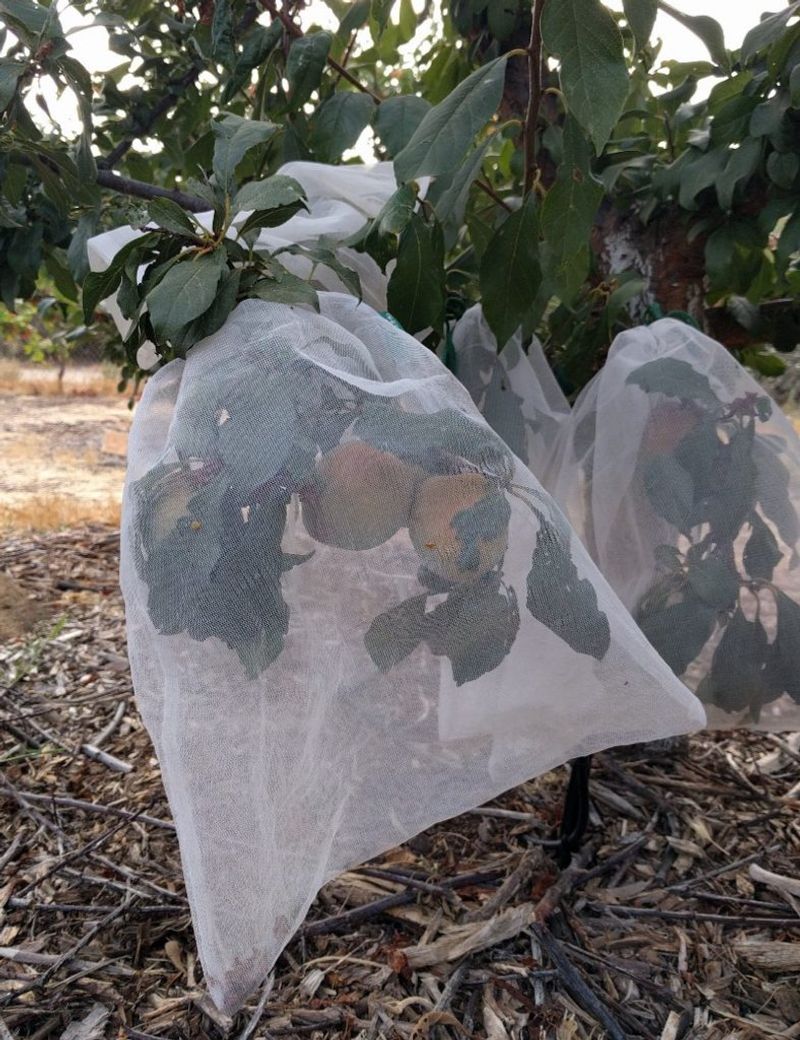
Paper-bagging individual fruit clusters after thinning is one of the most practical steps available to a backyard grower.
Slipping a small paper bag over each cluster and securing it at the stem reduces Caribbean fruit fly damage, bird damage, and surface scarring without chemicals.
Remove fallen fruit from the ground promptly, because rotting fruit draws pests and, in Central and South Florida, contributes to the spread concern flagged in the regional assessment.
A well-placed grafted loquat, in a sunny spot with good drainage and a little seasonal attention, can deliver edible fruit and handsome foliage with a care routine that actually fits into a normal Florida life.
It is not a magic solution, but for the right yard, it is the tree that quietly earns its keep while the flashier choices demand more than you bargained for.