
The Texas Yards Quail Keep Coming Back To Share A Few Simple Features
Follow us on Google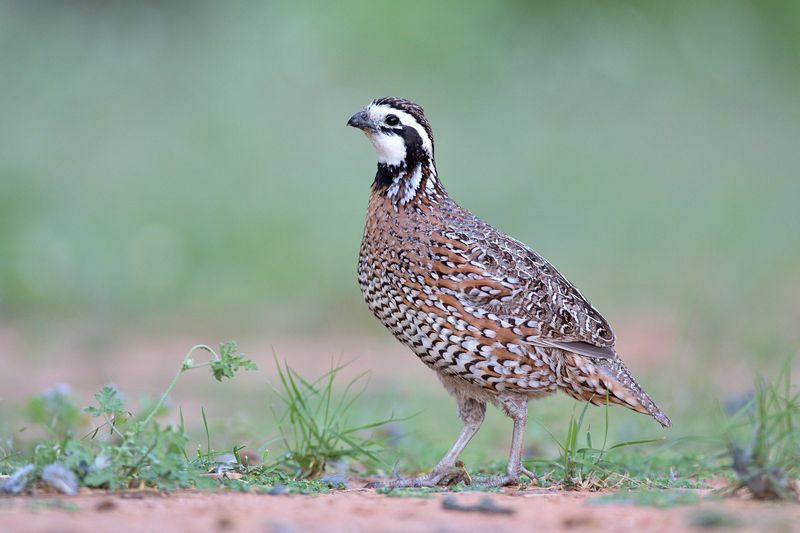
Step outside on a cool Texas morning and you might catch a glimpse of quail moving single-file through the brush at the edge of your yard.
Plenty of homeowners across the state want more of those moments, and a few simple yard choices can make your property more usable to quail that already live nearby.
The key word is nearby, because no combination of plants or feeders will pull birds in from miles away or guarantee repeat visits.
What you can do is make your corner of Texas genuinely worth stopping in, if the birds already have a route that passes close.
A Quail-Friendly Yard Starts With A Qualification
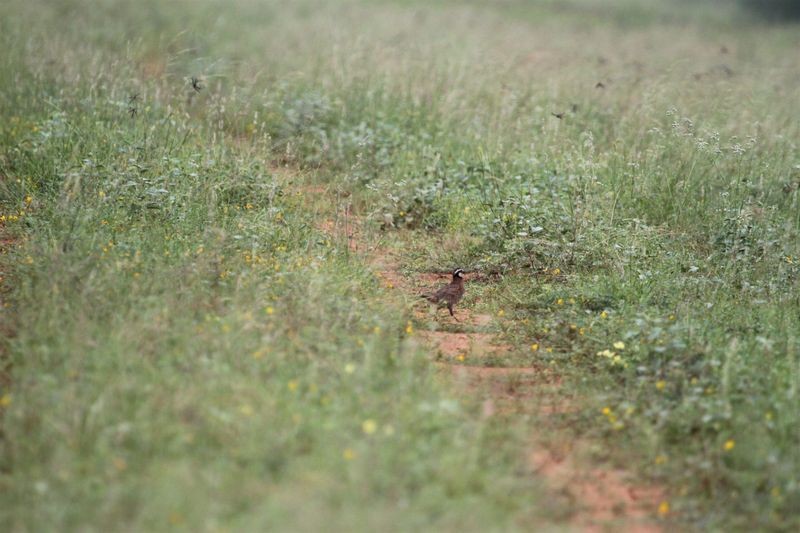
Somewhere between sunrise and that second cup of coffee, a lot of Texas homeowners have spotted quail picking through the yard and immediately wondered how to make them stay.
That instinct is generous, but the honest answer is more complicated than any single plant or feeder can deliver.
Yard improvements may make your property more usable to quail that already move through your area, but they do not create a reliable pipeline of birds where none exist nearby.
Texas Parks and Wildlife Department quail guidance describes the habitat quail need as a close, working mixture of nesting cover, feeding areas, screening cover, loafing spots, roost sites, and escape routes.
All of those functions need to sit near each other, because quail are ground birds that rarely travel far from protective cover.
A yard that offers only one or two of those functions is a rest stop at best.
Connectivity matters just as much as what you plant.
A yard that backs up to a brushy creek corridor, a weedy vacant lot, native pasture, or a rural edge has a real chance of being included in a covey’s daily range.
A yard sitting inside a dense subdivision with no nearby natural cover is a much harder case, no matter how thoughtfully it is planted.
Research on northern bobwhite populations across Texas, Oklahoma, and Louisiana shows that increasing impervious surface and urbanization are linked to major declines in bobwhite abundance.
One well-planted yard cannot reverse that trend on its own.
What it can do is contribute one useful patch to a larger mosaic, and that is genuinely worth doing.
Build Several Small Routes Through Cover
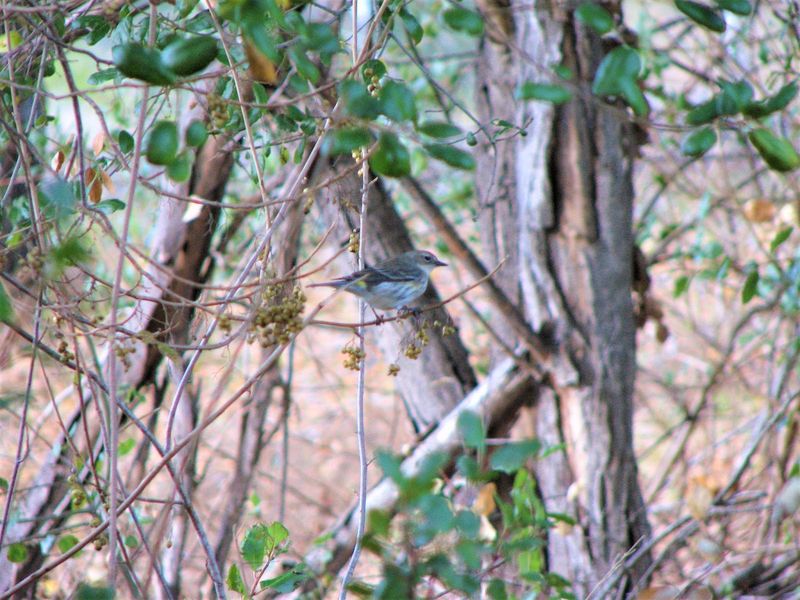
A single ornamental bed surrounded by open lawn is like a rest area with no on-ramp.
Quail need to move between food, water, nesting areas, and escape cover without crossing long stretches of exposed ground.
A hawk overhead or a neighborhood cat can make an open lawn feel like a danger zone, and quail know it.
The fix is not one large planting but several smaller ones linked by low vegetation.
Think of it as a series of stepping stones rather than one island.
Each pocket of cover can serve a slightly different purpose: a dense native shrub provides screening and overhead protection, a low tangle of branches at ground level offers escape cover, and a looser patch of native grass gives birds a place to loaf and stay hidden at midday.
South Texas bobwhite management guidance describes food and cover as needing to be closely intermixed, with quail generally staying within roughly 50 to 100 feet of protective cover during daily movement.
That range gives you a practical feel for how close your cover pockets should be to each other and to any food or water you provide.
A small, stable pile of untreated branches placed away from structures, play areas, and fire hazards can serve as a modest escape-cover option at the residential scale.
Keep it low and tight rather than building a large debris heap.
Panhandle bobwhite guidance notes that arrangement and connectivity matter as much as any single feature.
One more thing worth knowing: denser cover does not automatically help every Texas quail species.
Scaled quail research from AgriLife Extension shows that these birds prefer open uplands and scattered shrubs, and they may actually avoid vegetation that is too thick.
Match your cover density to the species likely in your area.
Let Native Grass Provide Ground-Level Shelter
Most Texas lawns are mowed tight enough to play bocce on, which looks tidy but leaves almost nothing for a ground-nesting bird.
Northern bobwhites build their nests on the ground, tucking them beneath grasses and other low vegetation.
A yard shaved to two inches gives them nowhere to hide and nowhere to raise young.
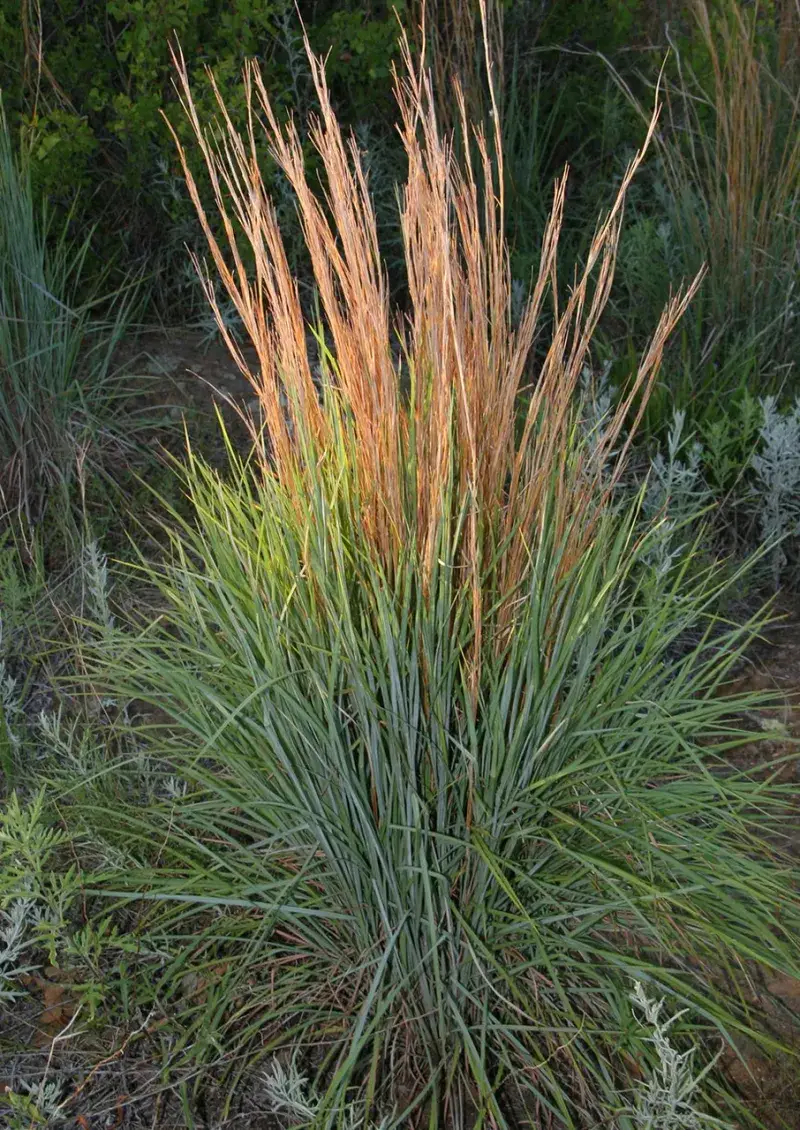
Texas A&M AgriLife Extension’s northern bobwhite guidance identifies bluestems, threeawns, balsamscales, and lovegrasses as examples of native grasses that support nesting.
Those are not a universal seed mix for every corner of the state.
What works in the blackland clay of North Texas may not be the right choice for the sandy soils of East Texas or the shallow caliche of the Hill Country, so check with your county extension office before buying seed.
Nesting cover is commonly described as vegetation around 12 to 18 inches tall in the cited guidance, but that range reflects general habitat observations rather than a guaranteed backyard standard.
The practical takeaway is to let a section of your yard grow through the main nesting season instead of mowing everything on a fixed schedule.
TPWD wildlife management guidance notes that delaying shredding or mowing native grass areas until after July 15 can reduce accidental harm to ground-nesting birds.
That timing is broad land-management advice, not a guarantee that every nest will survive, and local rainfall and nesting conditions can shift the picture.
But holding the mower back through early summer on even one connected patch is a low-cost way to leave the door open.
Grow A Food Web Instead Of Buying One Quail Plant
Walk into a farm supply store and you will find bags labeled “quail mix” stacked near the register.
Pouring one into a feeder or scattering it across bare soil is not a bad gesture, but it is a thin substitute for the layered food system quail actually depend on through the year.
Seeds from forbs, woody plants, and hard-seeded grasses make up a large part of their diet, and they also eat green vegetation, fruits, berries, and a meaningful amount of insects.
That insect piece is where a lot of well-meaning yards fall short.
Young quail depend heavily on insects during their first several weeks of life, and a yard treated with broad-spectrum insecticides can quietly remove that food source right when chicks need it most.
South Texas bobwhite management guidance supports integrated pest management and targeted spot treatments over broadcast spraying, specifically because forbs, seeds, and insects all support quail populations.
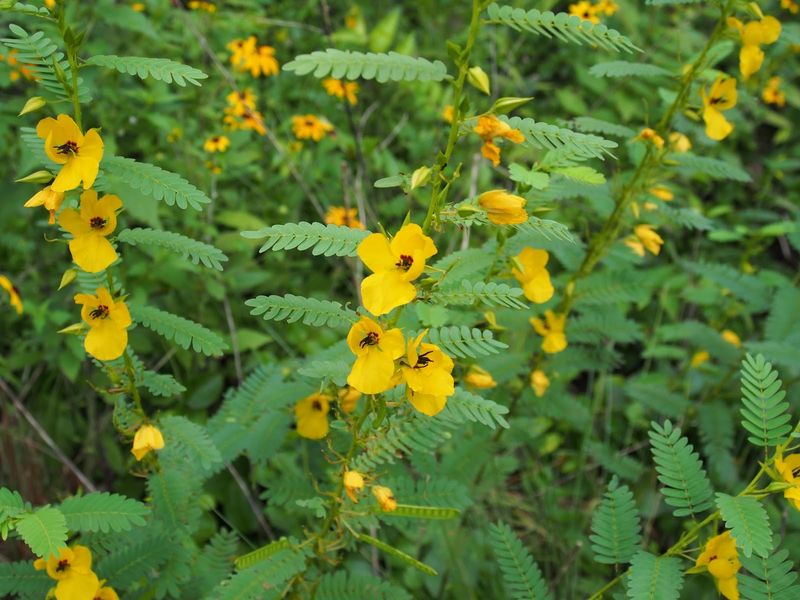
The plant list that gets passed around online tends to name ragweed, croton (Croton spp.), sunflower (Helianthus annuus), partridge pea (Chamaecrista fasciculata), bundleflower (Desmanthus illinoensis), hackberry (Celtis laevigata), sumac (Rhus spp.), mesquite (Prosopis glandulosa), prickly pear (Opuntia spp.), and wild plum (Prunus mexicana).
Those are regionally variable examples drawn from AgriLife’s northern bobwhite resources, not a statewide formula you can plant anywhere and expect results.
Some of the most useful food plants are the ones people pull out without a second thought.
Ragweed and croton are dismissed as weeds across much of Texas, but they produce seeds that quail eat readily.
Before you spray or pull, consider whether a plant is actually doing harm or just looks untidy.
TPWD’s wildlife management handbook recommends native plant diversity as a foundation, and your county extension office can help you match species to your soil and ecoregion.
Leave Open Ground Between The Plants
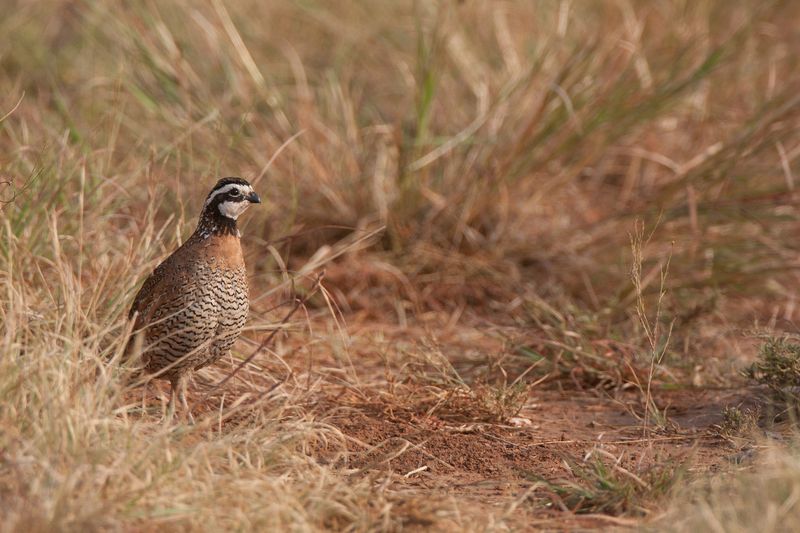
Most backyard habitat advice pushes toward planting more, but quail actually need some bare ground worked into the picture.
Young chicks have to move through vegetation to find insects, and adults need open soil to scratch for seeds.
A yard packed wall-to-wall with dense planting can be harder for quail to use than one that mixes cover with intentional gaps.
Habitat-scale management guides describe roughly 30 to 60 percent bare or lightly covered soil as part of good quail range, according to Texas A&M AgriLife guidance on integrating deer, quail, and turkey habitat.
That percentage applies to pasture and ranch-scale management, not to an ornamental bed or a quarter-acre lot.
Copying it literally into a small yard would leave almost nothing planted.
The residential translation is more modest: leave a few open paths, lightly mulched strips, or narrow gaps between your cover pockets.
These corridors let birds move from one patch to the next without feeling exposed for too long.
Panhandle bobwhite habitat guidance reinforces that the arrangement of features matters as much as the features themselves, since quail need to connect food, water, nesting, and escape areas in their daily routine.
A lightly raked patch of soil near a native forb bed, or a gap between two shrub clusters, costs nothing and may actually improve how usable the space feels to a bird moving through on foot.
Think of open ground not as a gap in your design but as a functional part of it.
Offer Water Only When It Adds Value
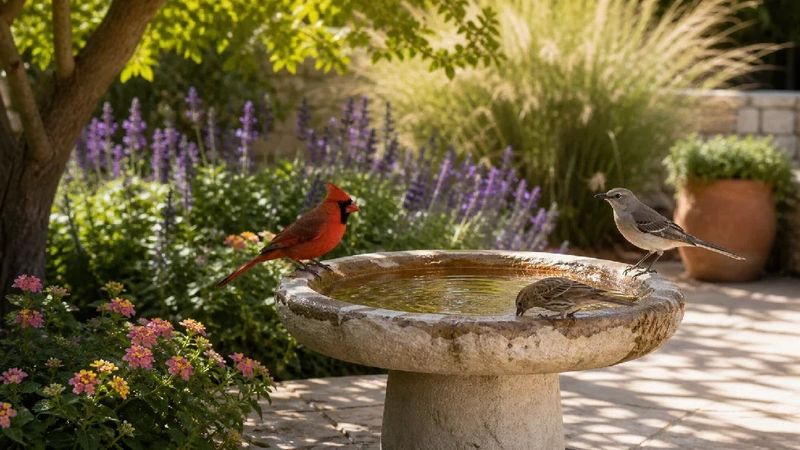
Water is the feature that gets the most attention in backyard wildlife advice, and it is also the one most likely to be oversold.
Quail are genuinely capable of meeting most of their moisture needs through dew, succulent plants, insects, and the food they eat.
A birdbath is not automatically a quail magnet, and in some parts of Texas it is close to unnecessary.
South Texas bobwhite management guidance notes that surface water is less critical in that region because birds obtain much of their moisture from food sources.
The calculus shifts in drier parts of the state.
Panhandle bobwhite guidance explains that free water can become especially valuable during drought and for immature birds that have not yet learned to range widely.
If you decide to offer water, a shallow dish or ground-level birdbath works better than a deep pedestal style that quail cannot easily reach.
Refresh it at least every week, and more often during triple-digit summer heat.
CDC guidance for bird hobbyists recommends using disposable gloves when cleaning birdbaths and feeders, washing hands thoroughly afterward, and avoiding direct contact with sick or dead birds.
Standing water that sits too long becomes a mosquito breeding site and a disease risk.
USGS guidance on birdbaths and West Nile virus advises emptying and scrubbing birdbaths at least weekly to reduce that risk.
A dirty birdbath can do more harm than no birdbath at all, so only maintain one if you can keep up with it consistently through the long Texas summer.
Match The Design To Your Texas Region
Texas is roughly the size of France, and the quail living in the Piney Woods of East Texas are not the same birds scratching through the Chihuahuan Desert scrub near El Paso.
Treating the state as one habitat is one of the most common mistakes in backyard wildlife advice, and it leads homeowners to plant the wrong things, build the wrong structure, and wonder why nothing shows up.
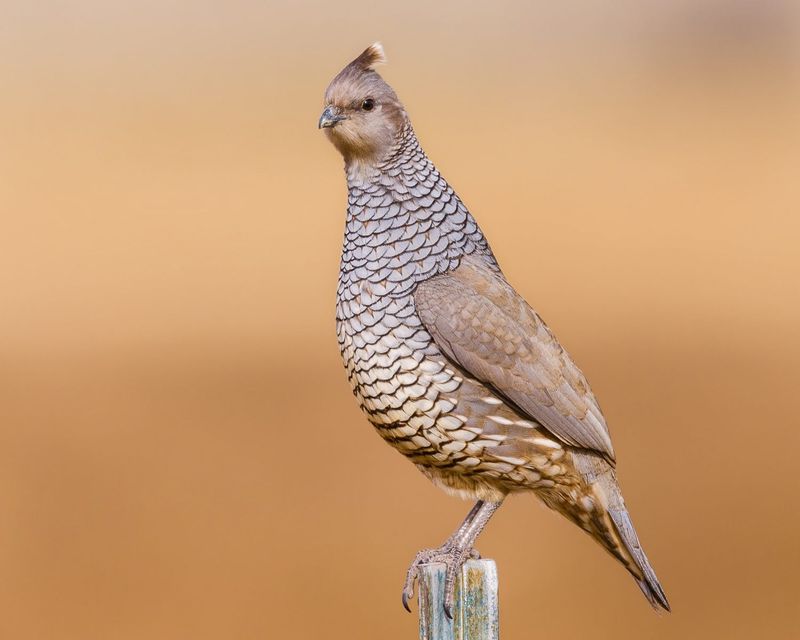
Texas Parks and Wildlife Department identifies four resident quail species: northern bobwhite, scaled quail, Gambel’s quail, and Montezuma quail.
Northern bobwhites are the most widely distributed, associated with grassland, brushland, woodland edges, and forb-rich ground cover.
Scaled quail live in the open uplands of West Texas and the Panhandle, favoring scattered shrubs, low grass, and plenty of bare ground.
Montezuma quail have more specialized needs tied to mountain oak-juniper woodland in far West Texas.
Gambel’s quail occupy a narrow strip near the New Mexico border.
What that means practically is that a yard in the Hill Country near Kerrville needs different plants and a different cover density than a yard in the Post Oak Savanna near Huntsville.
AgriLife’s scaled quail research makes clear that these birds can be pushed away by cover that is too dense, while bobwhites in wetter eastern regions need more overhead screening.
Getting the density wrong for your region can actually make a yard less usable.
A few things do not belong in any Texas quail yard regardless of region.
TPWD’s Pineywoods bobwhite management guidance is direct about feeders: they are supplements, not substitutes for habitat, and they can spread disease, concentrate predators, and fail to move the needle on quail numbers when cover is inadequate.
Nonnative grass monocultures, broadcast herbicide spraying, and oversized debris piles carry similar problems.
TPWD’s wildlife management handbook consistently favors spot treatments and native plant diversity over shortcuts that simplify the landscape.
One Yard Helps Only As Part Of A Larger Landscape
Pull all the threads together and the plan is actually pretty simple.
Retain or add a native grass-and-forb patch suited to your ecoregion.
Place modest cover pockets nearby and connect them with low vegetation or open movement gaps.
Protect the insects by avoiding broadcast spraying.
Offer clean water only if you can maintain it and local drought conditions make it worth the effort.
Even with all of that in place, a lot of forces outside your fence line still shape whether quail visit or stay.
Predators, outdoor cats, fast roads, fire ants, late-spring mowing, drought, and surrounding development can prevent visits or make nesting impossible regardless of what you plant.
Research on urbanization and northern bobwhite abundance across Texas, Oklahoma, and Louisiana is clear that landscape-scale habitat loss and fragmentation cannot be offset by local improvements alone.
TPWD’s statewide quail guidance frames the challenge honestly: Texas quail populations face pressure from habitat conversion, poor grazing management, drought, and nest predation across millions of acres.
Your yard is one small piece of that picture.
AgriLife’s bobwhite resources describe a bird that responds to landscape-scale management over time, not to a single season of backyard changes.
The most useful first step is also the most forgiving one.
Pick one connected area, let it grow through nesting season, and see what moves through before you redesign the whole yard.
A yard that contributes one genuine habitat patch to a larger connected landscape is doing something real, even if the quail never stay for breakfast.