
Bamboo Grows A Usable Privacy Screen In One Season, But Only If You Trap Its Roots First
Follow us on Google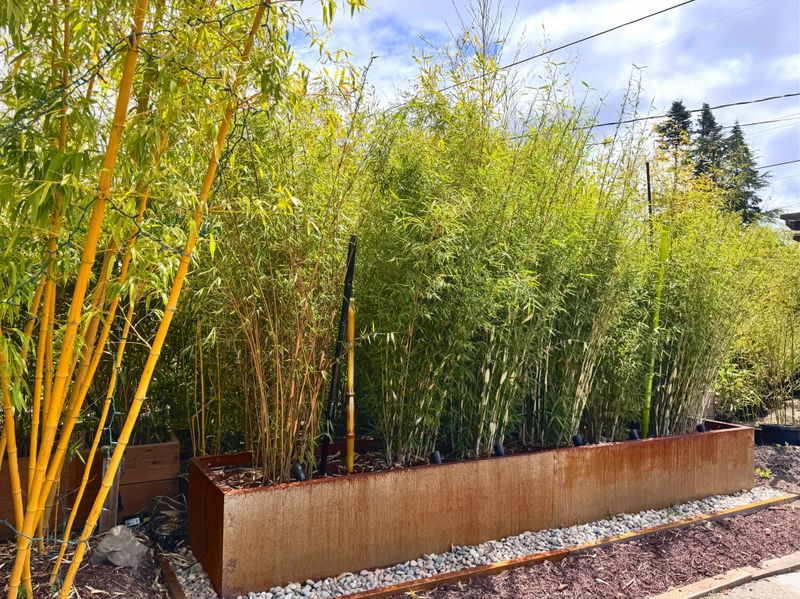
Your neighbor’s yard is wide open, the afternoon sun bakes your patio, and you want a green wall by summer.
Bamboo keeps coming up as the answer, and for good reason: a well-established plant can shoot up 10 to 30 feet in a single spring.
But that same underground energy that builds your screen so fast can also send shoots into your neighbor’s flower beds, under your fence, and across the property line before you realize what happened.
The fix exists, it’s not complicated, and it starts before you ever put a plant in the ground.
An Established Plant Can Screen Quickly
Running bamboo earns its reputation for speed, but that speed belongs mainly to plants that already have a strong root and rhizome system in place.
Illinois Extension guidance on managing bamboo notes that running-bamboo culms typically reach 10 to 30 feet during the year they emerge, and University of Maryland Extension reports that mature running bamboo can push culms 30 feet or taller within its spring growth window.
Those numbers describe an established colony, not a cutting you divided last weekend.
A small rhizome division tells a different story.
UGA Extension’s guide to growing bamboo in Georgia explains that first-season culm size depends heavily on stored food in the rhizome and root system, and a freshly divided section may average only about 2 feet of new growth that first year.
Mississippi State Extension similarly cautions that bamboo can lack full vigor for a year or more after transplanting, with early culms coming in noticeably shorter than expected.
What actually drives a fast screen is a combination of plant maturity, stored carbohydrate reserves, a climate that suits the species, consistent establishment water, and enough planting room for the colony to spread within its containment.
Pull any one of those factors out of the equation and the timeline stretches.
Buy the largest, most established nursery plant your budget allows, confirm it suits your climate, and plan containment before the plant goes in the ground, because containment installed after the fact is far harder to get right.
Rhizomes Spread While Culms Rise
Bamboo is a grass, not a tree, and understanding two simple structures changes everything about how you manage it.
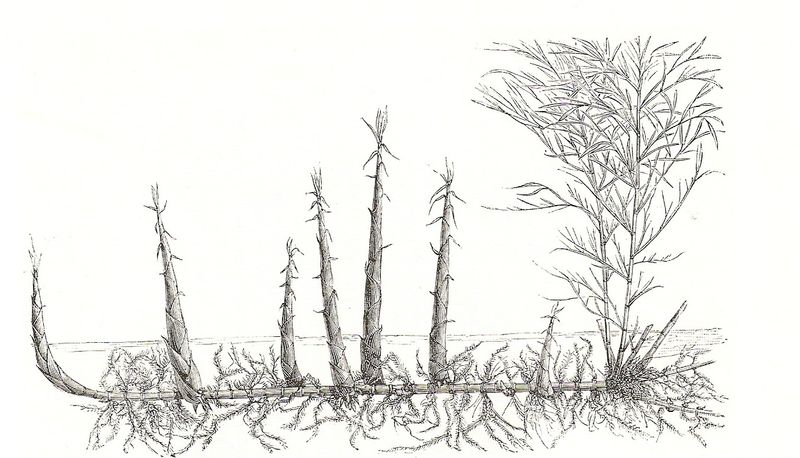
The upright stems you see above ground are called culms.
The underground horizontal stems that move through the soil in every direction are called rhizomes, and rhizomes are the real engine of bamboo’s spread.
Rhizomes are not roots in the ordinary sense.
They are horizontal stems that produce both roots and new culms as they travel.
University of Maryland Extension’s bamboo containment resource and University of Connecticut’s bamboo fact sheet both describe running-bamboo rhizomes traveling more than 100 feet from the parent plant.
They move beneath fences, across property lines, and through garden beds with no visible warning above the soil until a new shoot pops up far from where you expected it.
Each new culm that emerges from a rhizome node reaches its full diameter the moment it breaks the surface.
Alabama Cooperative Extension’s overview of bamboo growth confirms that a culm completes most of its height during its first season, after which older culms branch out and fill in with leaves rather than growing taller the way a tree trunk does.
That is why rapid screening is tied to plant maturity and stored reserves, not to rhizome activity alone.
The rhizomes enable new culm production and colony expansion, but the height those culms reach depends on how much energy the plant has already built up.
Choose A Bamboo Type Your Yard Can Handle
The most important decision you make about bamboo happens before you choose a species: running or clumping.
Running types, which include the genera Phyllostachys, Pleioblastus, and Pseudosasa, produce long-traveling rhizomes that can colonize a wide area fast.
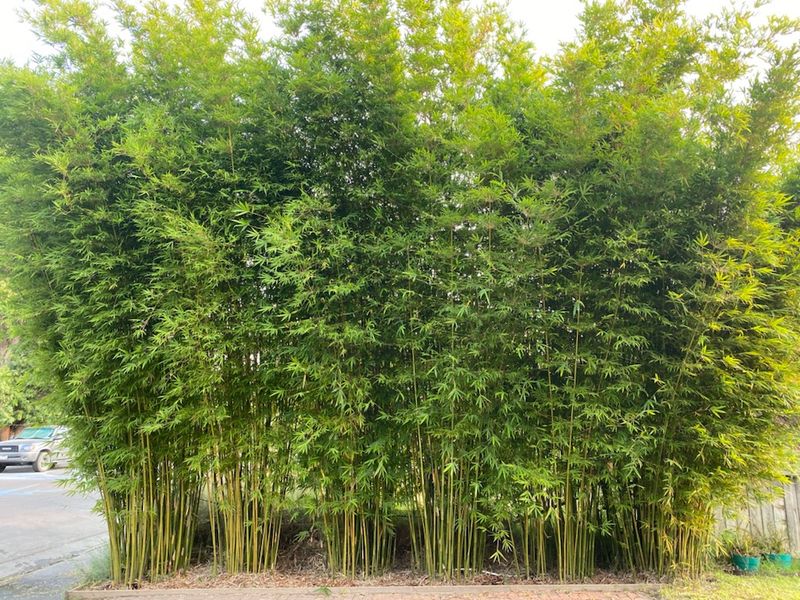
Clumping types grow outward slowly from a compact center and present a lower spreading risk, but they still become large plants that need real space.
For colder parts of the country, Fargesia rufa ‘Green Panda’ is one example worth knowing.
North Carolina State Extension’s plant profile for Green Panda hardy bamboo lists it as an evergreen clumping screen plant that reaches 6 to 10 feet and is suited to USDA Zones 5a through 8b.
Zone rating addresses average winter cold, not summer heat, wind, afternoon sun, or soil drainage, so treat it as one data point rather than a complete growing guarantee.
Warmer regions have different options.
North Carolina Extension’s profile for Bambusa multiplex, a clumping bamboo, notes it can reach roughly 25 feet tall but cautions that it is suited to locations where temperatures do not fall below about 15 degrees Fahrenheit.
University of Florida IFAS Extension’s clumping bamboo page reinforces that even clumping types become large and need appropriate siting.
Neither of those is a nationwide recommendation.
Before you buy anything, check your state department of agriculture, your county extension office, and local ordinances.
Some states regulate specific bamboo species, and golden bamboo (Phyllostachys aurea) is listed as invasive or problematic by multiple government and university sources.
A quick call to your local extension office will tell you which genera are safe to plant where you live and which ones to avoid entirely.
Install A Heavy-Duty Rhizome Barrier First
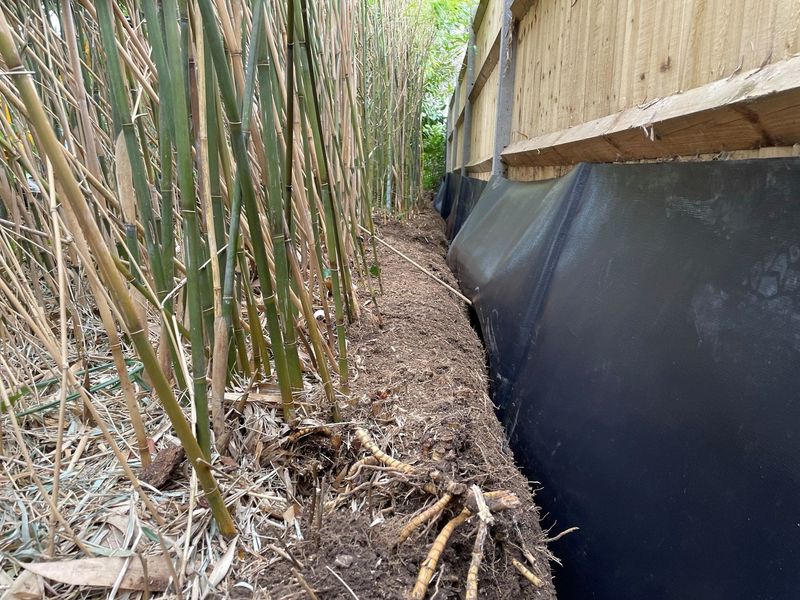
Containment is not the last step before you plant bamboo.
It is the first.
Mark the entire footprint of the mature colony, not just the spot where the root ball sits today, and dig a trench around that full perimeter before the bamboo goes in the ground.
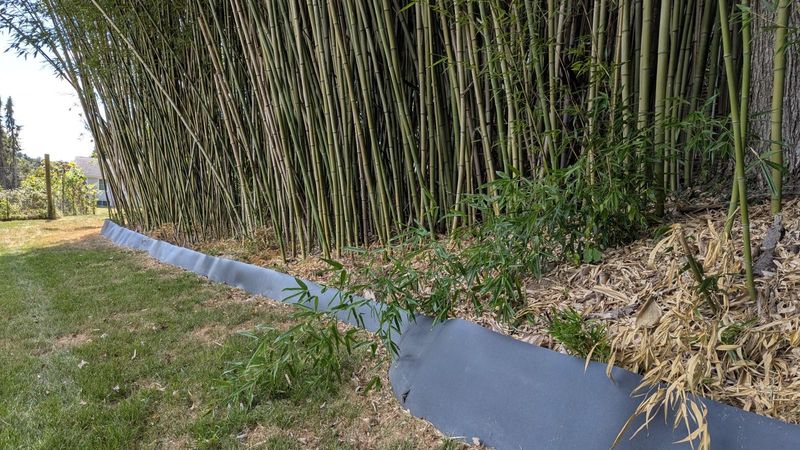
University of Maryland Extension’s containment guidance recommends a continuous barrier of polypropylene or high-density polyethylene (HDPE) about 30 to 36 inches wide, buried vertically around the entire planting area, with approximately 6 to 8 inches left above the soil surface.
Thickness matters as much as width: the guidance specifies at least 60 mil, with 80 mil potentially worth the upgrade for mature or especially vigorous colonies.
Thin plastic sheeting or landscape fabric will not hold.
The exposed edge above the soil does a specific job.
Rhizomes that reach the barrier travel upward along it instead of punching through, which puts them where you can see and remove them.
That only works if the edge stays visible.
Illinois Extension’s bamboo management podcast recommends keeping roughly 6 inches to 1 foot of clear space on either side of the barrier so that mulch, leaf litter, and soil do not bury the rim and create an escape route over the top.
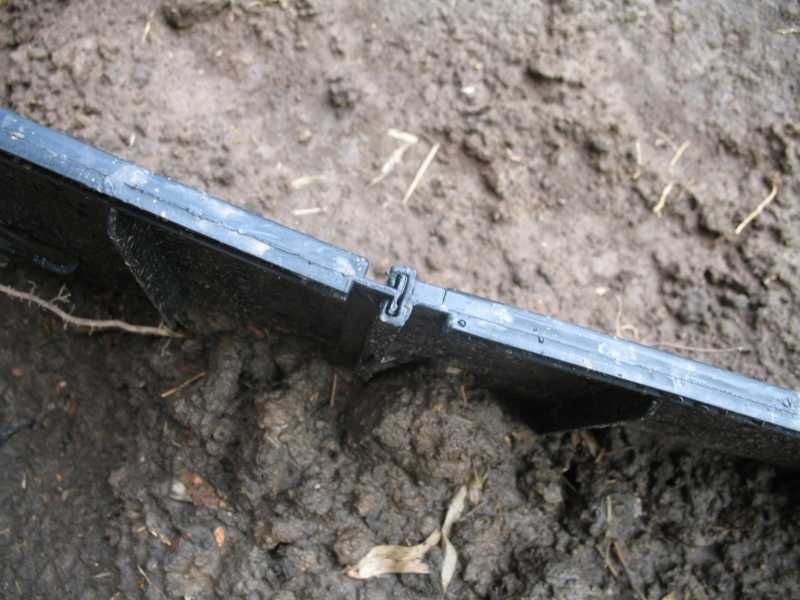
Seams are the most common failure point.
Overlap barrier sections by at least 12 inches, secure them with the manufacturer’s recommended hardware or seam tape, and check them during each inspection.
A gap of even a few inches is enough for a determined rhizome to slip through.
North Carolina Cooperative Extension’s bamboo control guide notes that rhizomes can also exploit shallow installation, so the barrier should reach its full depth continuously, with no low spots where the trench was harder to dig.
Think of the barrier as a permanent structure you will inspect for the life of the planting, not a one-time installation you can forget.
Match Plant Size, Spacing, And Establishment Care
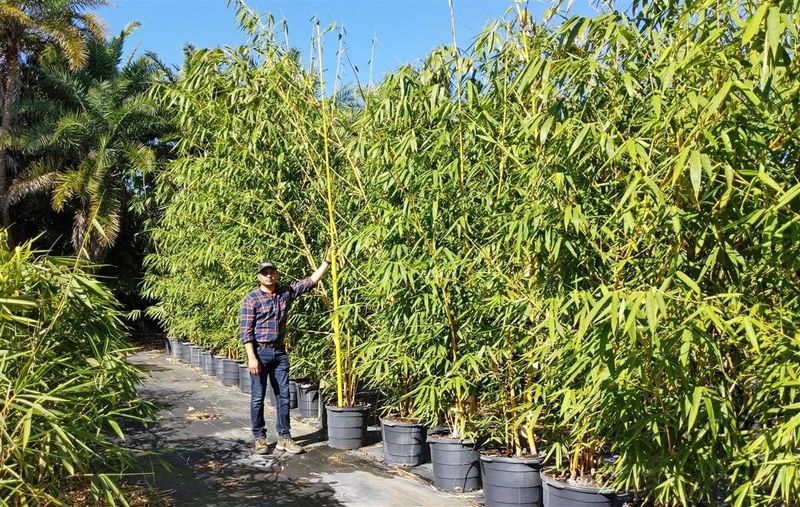
Plant size at purchase is probably the single biggest variable between a screen you enjoy this summer and one you wait two years to appreciate.
A large, established nursery plant arrives with a developed rhizome network and stored carbohydrate reserves, so it can push strong culms in its first growing season.
A freshly divided rhizome section spends that same season rebuilding what it lost, and the culms it produces may be modest.
UGA Extension’s bamboo growing guide notes that a rhizome division may average only about 2 feet of new culm growth in its first season, with taller shoots coming in the second season as the plant rebuilds.
If your privacy need is urgent, spend more on a larger plant rather than dividing a small one and hoping for the best.
Spacing shapes how quickly the screen fills in.
An Ohio State University Extension response on planting bamboo gives 3 to 5 feet as a practical spacing range for forming a dense screen.
Closer spacing creates a faster visual barrier, but it also raises your plant cost, increases competition for water and nutrients, and means more thinning work later as the colony matures.
New bamboo needs consistent water even if mature plants in your region handle some drought.
UGA Extension recommends watering one to two times weekly during the first 3 to 6 months, targeting roughly 1 inch of water every 7 to 10 days depending on your soil type and summer heat.
A 2- to 3-inch layer of mulch helps hold soil moisture and moderates temperature, but keep the mulch well below the top edge of the rhizome barrier so it does not create an escape route over the rim.
UGA Extension’s hedge planting advice cautions against planting directly on the property line because mature plants can grow into a neighbor’s space.
Leave enough width for the full mature colony, the barrier, and a clear inspection strip on at least the outward-facing side.
A screen that works beautifully on your side but sends rhizomes under the fence is a problem, not a solution.
Inspect The Barrier And Remove Escapes
Spring is the season when bamboo shows its intentions.
New shoots push up fast, sometimes several inches in a single day, and that is exactly when you need to walk the perimeter of your barrier and look for anything breaking the surface on the wrong side.
North Carolina Cooperative Extension’s bamboo control guide recommends inspecting your barrier once or twice a year, with the spring shooting period as the most critical window.
Cut any escaped shoot back to the soil immediately, before it hardens and before the rhizome behind it puts more energy into that direction.
Prompt removal is much easier than dealing with an established escape a season later.
Soil and leaf litter are the barrier’s quiet enemies.
When debris accumulates against the exposed rim, it creates a ramp that rhizomes can grow over without ever touching the barrier material.
University of Maryland Extension’s bamboo removal resource and Illinois Extension’s management guidance both emphasize keeping that inspection strip clear and the barrier edge visible at all times.
Rake the strip clean each spring before shooting begins.
Containers are not a reliable long-term substitute for a proper in-ground barrier with vigorous running bamboo.
University of Maryland Extension notes that rhizomes can escape through drainage holes and eventually crack or deform the container walls.
A pot may slow things down temporarily, but it is not a permanent solution for an aggressive running type.
Clemson Cooperative Extension’s bamboo control fact sheet describes bamboo removal as genuinely difficult work that relies on physical digging, repeated monitoring, and persistence rather than a quick chemical fix.
If you do consider herbicide for an out-of-control planting, follow the product label precisely, protect nearby desirable plants and any water features, and check your local regulations before applying anything.
Check Climate, Appearance, And Local Rules
Bamboo can hold its green presence through winter in many parts of the United States, but the word “evergreen” needs a qualifier.
University of Maryland Extension notes that some bamboo types shed older leaves in spring while others shed in autumn, timing varies by genus, and in colder or exposed sites foliage may thin significantly or show winter damage.
A screen that looks dense in July may look sparse in February depending on what you planted and where you live.
USDA hardiness zones tell you about average winter cold, nothing more.
They do not account for summer heat, humidity, afternoon wind exposure, rainfall patterns, soil drainage, or the particular microclimate along your fence line.
Fargesia types that thrive in a shaded Pacific Northwest yard may struggle in full afternoon sun in the mid-Atlantic.
Bambusa types that work beautifully in coastal Florida will fail after a hard freeze in Tennessee.
University of Florida IFAS Extension’s clumping bamboo page reinforces that site conditions, not just zone numbers, determine success.
Local rules are not optional reading.
Some states and counties regulate specific bamboo genera, and the list of regulated species changes as invasive-plant assessments are updated.
University of Maryland Extension’s privacy screen planting guide is a useful reminder that alternatives exist when bamboo is not the right fit.
Check your state department of agriculture website, call your county extension office, and review local ordinances before you buy.
If your yard cannot provide adequate width for the mature colony, a clear inspection strip along the barrier, and a commitment to annual monitoring, a locally suitable clumping bamboo or a different screen plant altogether may serve you better.
The best privacy screen is one you can actually manage for the long haul, and that is a goal well within reach when you plan before you plant.