
A Strong Native Texas Vine You Plant Once For A Fence That Can Cover Itself Year After Year
Follow us on Google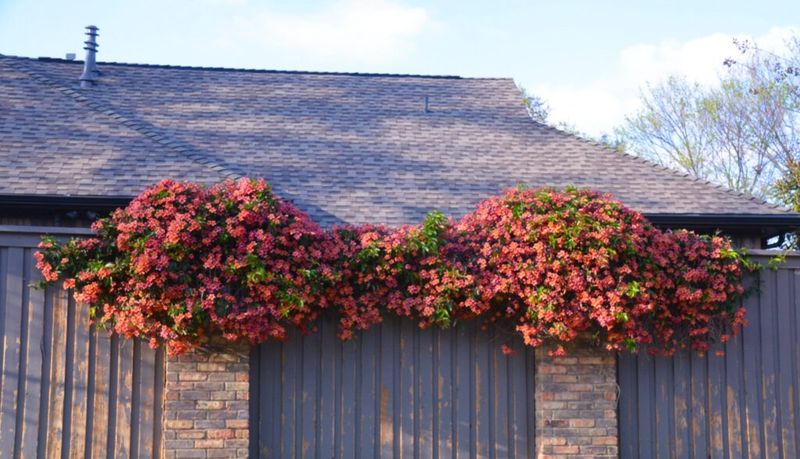
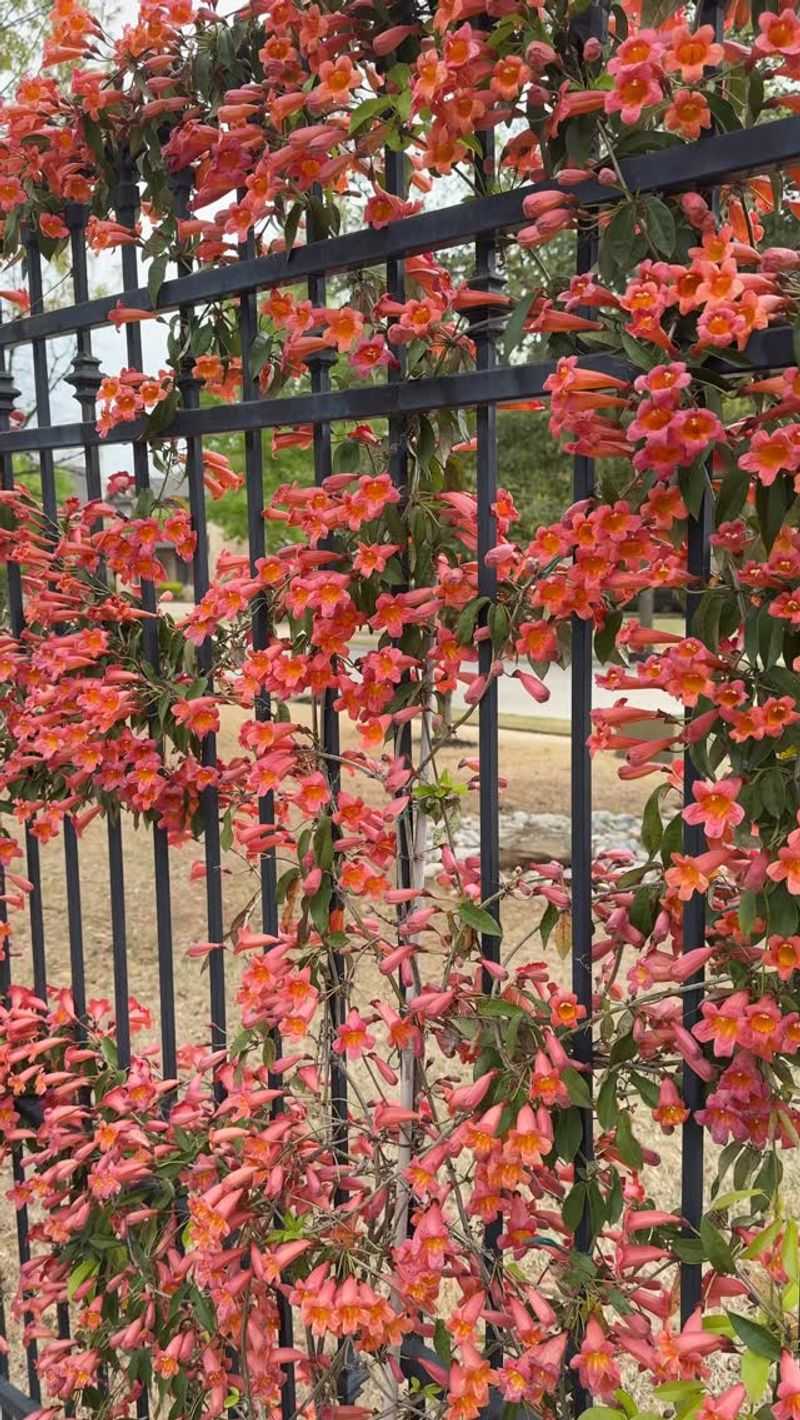
Somewhere between February and May, a crossvine in full bloom stops people in their tracks.
The tubular flowers come in orange, red, and yellow, hummingbirds find them before most gardeners even notice they’ve opened, and the vine that produced them has been quietly growing back from the same roots it put down years ago.
If you have a bare fence in Texas and you want a native perennial that can eventually cover it without replanting every spring, crossvine, Bignonia capreolata, deserves a serious look.
Crossvine Makes the Promise More Realistic
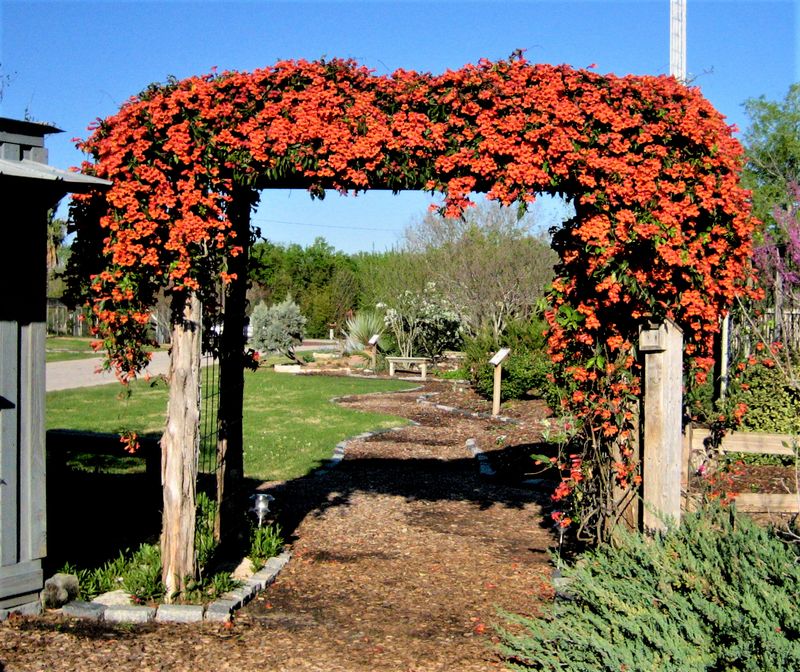
Most gardeners hear “plant it once and watch it cover the fence” and picture something that practically installs itself.
Crossvine, Bignonia capreolata, is genuinely closer to that idea than almost anything else in the Texas native plant world, but it earns that reputation over time, not overnight.
USDA NRCS documentation on crossvine describes it as a native perennial woody vine that can reach roughly 30 to 70 feet in favorable conditions, climbs by branched tendrils with adhesive pads, and is specifically recommended for fences, walls, arbors, and trellises.
That is a real fence-covering vine, not a wishful one.
The flowers bloom mainly from March through May in shades of orange, red, and yellow, and they pull in hummingbirds and butterflies without any extra effort on your part.
One well-chosen planting can return for years and eventually build the kind of coverage that makes a bare fence disappear.
But “plant once” does not mean “plant and forget.” The vine needs establishment watering, early training, and occasional pruning to stay orderly and productive.
The title’s claim that crossvine is the only native Texas option is not accurate.
The Native Plant Society of Texas profile on crossvine confirms it as a strong native choice for the right site, but coral honeysuckle, Carolina jessamine, passionflower, and trumpet creeper are all documented alternatives depending on your region and conditions.
The better promise is this: crossvine is a strong native perennial that can provide substantial, recurring coverage when you site it well and give it the care it needs to get started.
Perennial Does Not Mean Green Every Winter

Here is where a lot of gardeners get a surprise.
Crossvine is described as semi-evergreen, and that word does real work.
USDA NRCS specifically identifies crossvine as semi-evergreen and notes that harsh winters can cause foliage loss even when the roots survive and resprout the following spring.
In a mild Central Texas winter, the vine may hold most of its leaves.
After a genuine hard freeze, you might look at a fence full of bare stems in January and wonder if the plant survived at all.
The roots almost always do survive in documented growing regions, and new growth returns as temperatures climb.
But that gap between a stripped February fence and a leafed-out April one is real, and young plants feel it more than established ones.
A vine in its first or second year does not yet have the density to screen much of anything through winter, and that is completely normal.
Give it time to build mass before you judge its coverage.
NC State Extension’s crossvine profile notes that in colder areas the vine may die back to the ground while the roots survive and resprout.
The flowers and the returning foliage are genuine seasonal rewards, and the hummingbirds that arrive for the March and April bloom are one of the better payoffs a Texas fence can offer.
Just go in knowing that “perennial” means it comes back faithfully, not that it stays perfectly green through every cold snap the Panhandle or North Texas can throw at it.
Check the Texas Site Before You Plant
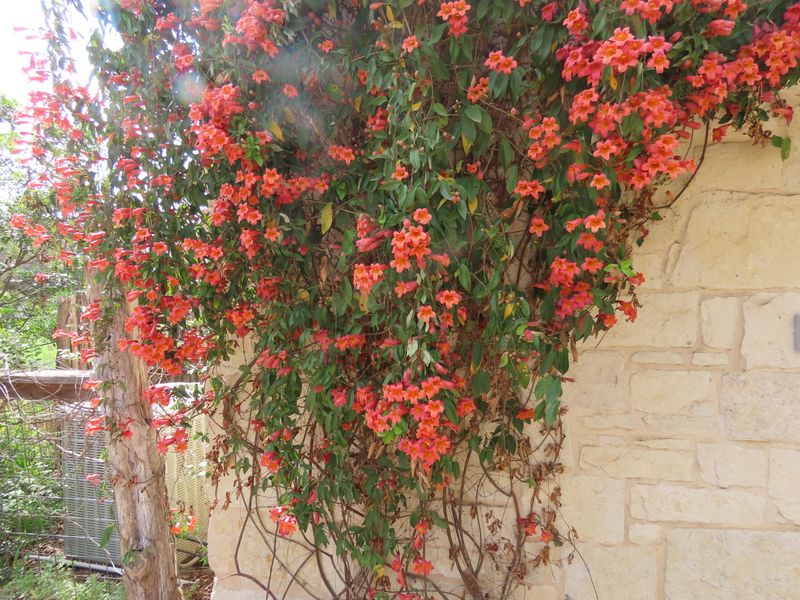
Before you buy a crossvine at the nursery, the most important question is whether your property sits inside its documented home territory.
The Native Plant Society of Texas lists crossvine’s documented Texas distribution mainly across the East Central Texas Plains, Edwards Plateau, Western Gulf Coastal Plain, Northern Post Oak Savanna, Balcones Canyonlands, Flatwoods, and Southern Tertiary Uplands.
That covers a broad swath of the state, from East Texas pine country to the Hill Country limestone country west of Austin.
Gardeners outside those documented areas face a different calculation.
If you are in the Panhandle, far West Texas, or the Lower Rio Grande Valley, treat crossvine as site-dependent rather than a sure thing, and check with your county extension office or a local native plant nursery before committing.
Planting a vine outside its natural range does not guarantee failure, but it does mean you are working without the safety net of regional adaptation.
Sunlight is the other major site factor.
Crossvine tolerates both full sun and part shade, and more sun generally means more flowers.
In a hot South-facing exposure in San Antonio or Houston, part shade can actually help the plant stay comfortable through the worst of July and August.
Texas A&M AgriLife Extension’s Earth-Kind plant guidance reminds gardeners that even native plants can struggle when placed outside the conditions that shaped them.
Good drainage matters too.
Crossvine handles clay, limestone, loam, and sandy soil reasonably well once established, but a permanently waterlogged spot will work against it from the first week.
Match the site to the plant, not the other way around.
Build the Support Before the Vine Takes Off
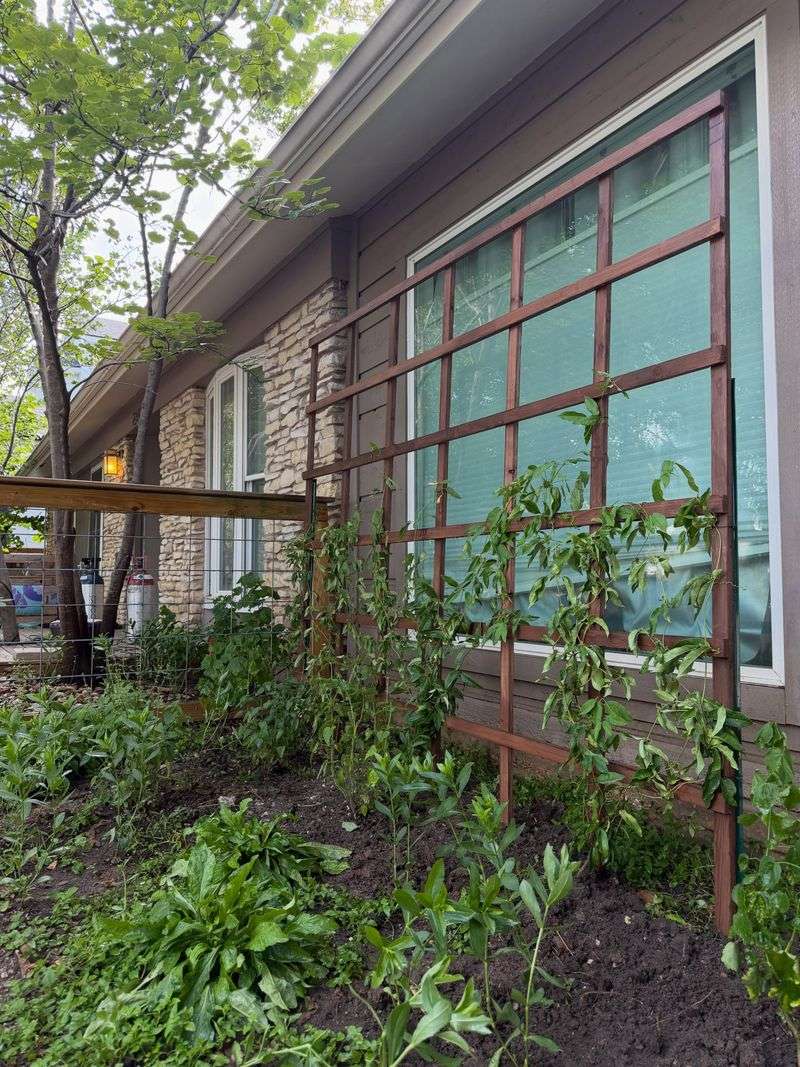
Crossvine climbs with branched tendrils that end in small adhesive pads, and those pads are genuinely impressive once the vine gets going.
They can grip masonry, metal, and rough wood surfaces without any help from you.
But “can grip” is not the same as “will organize itself into an even fence screen,” and that distinction matters a lot during the first few years.
The Native Plant Society of Texas describes crossvine as an aggressive climber that benefits from a sturdy support structure.
The City of Austin’s plant guidance flags it as vigorous enough to cause structural concerns on wood surfaces over time.
That does not mean you cannot use it on a wood fence, but it does mean a freestanding trellis, a wire grid mounted a few inches in front of the fence boards, or a sacrificial lattice panel gives you much better control than letting adhesive pads bond directly to aging wood you may need to repair or replace someday.
Texas A&M AgriLife Extension recommends using guides or wire to direct vines along walls and fences for exactly this reason.
And UGA Cooperative Extension notes that crossvine requires training early after transplanting to become the quick fence cover people picture.
During the first two or three growing seasons, guide new stems across bare sections, tuck wandering growth back toward the fence line, and use soft plant ties to hold stems where you want them.
The vine will eventually fill in those gaps on its own, but early guidance is what turns a vigorous climber into an orderly screen instead of a tangled mass on one corner of the fence.
Establish the Roots Without Overwatering
The first season in the ground is the most critical stretch for a crossvine, and the biggest mistake most Texas gardeners make is either watering too little during a summer dry spell or watering so often that the roots never have a reason to reach outward.
Neither extreme builds the root system that will carry the vine through a July heat dome or a February freeze.
Texas A&M AgriLife Extension’s watering guidance recommends deep, infrequent irrigation rather than a rigid calendar, because shallow frequent watering encourages weak rooting and excess water can kill plants just as effectively as drought.
Water the new planting thoroughly at the time of installation, then check the soil a few inches down before watering again.
Continue supplemental irrigation until the plant is demonstrably rooted and producing stable new growth, then gradually reduce frequency as the roots spread.
A 2- to 3-inch layer of mulch around the root zone slows moisture loss, moderates soil temperature, and reduces weed competition during that critical first summer.
Keep it a few inches away from the stem so moisture does not sit against the crown.
UGA Extension’s landscape education resources confirm that mulch pulled back from the stem prevents the rot and pest problems that trunk contact invites.
Soil type changes the approach.
In North and Central Texas blackland clay, avoid creating a permanently wet planting pocket by digging a hole that acts like a bowl.
In Hill Country caliche or shallow limestone, crossvine’s documented tolerance for alkaline soils helps, but extremely shallow caliche may need a raised planting area only where soil depth genuinely limits rooting, not as a routine step everywhere.
In sandy East Texas soil, drainage is usually not the problem, but moisture retention is, so that mulch layer does extra work.
Match your approach to what is actually under your feet.
Manage the Growth That Makes It Useful
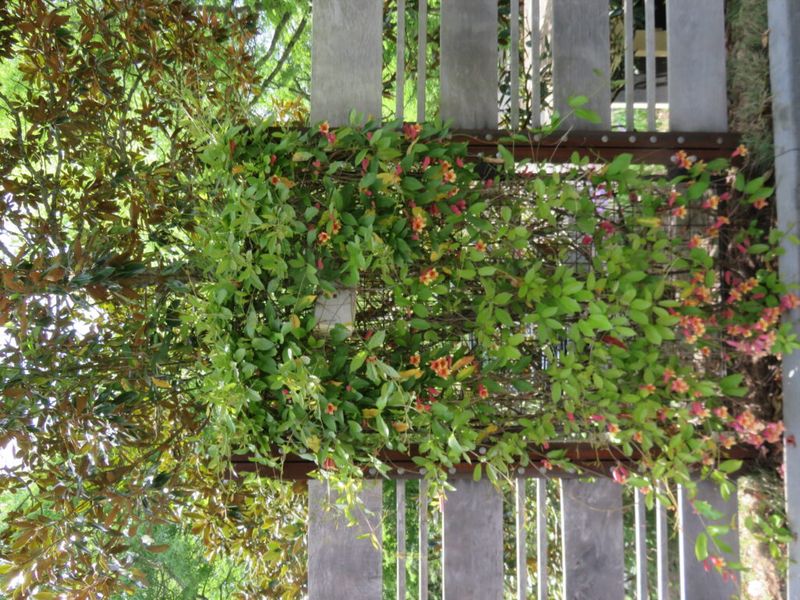
Crossvine’s vigor is genuinely its best feature and its most demanding one at the same time.
A vine that can reach 30 to 70 feet does not stay tidy without occasional attention, and Texas A&M AgriLife Extension warns that vines left unpruned can become unattractive, harbor wasps and rodents, suffer dieback, and lose landscape effectiveness.
That is not a scare tactic, it is what actually happens to a big semi-woody vine when it gets ignored for a few years.
The dormant-season pruning window runs broadly from February through May, but the right timing within that window depends on where you live in Texas.
In North Texas or areas with late hard freezes, wait until your local last freeze date has reliably passed before you cut.
Pruning too early and then getting hit with a hard freeze on new growth is a real risk.
NC State Extension notes that crossvine blooms on new wood, which means severe pruning immediately before the March-through-May bloom period can reduce the flower show you were counting on.
A light cleanup in late February is different from cutting the vine back hard in April when buds are already forming.
When you do prune, remove dead, diseased, damaged, crossing, or unwanted stems first, then shorten overgrown sections by roughly one-third if needed.
USDA NRCS notes that crossvine can spread quickly by root suckers, and NC State Extension adds that seed spread is also possible in some circumstances.
Check beyond the fence line every season and remove suckers when they appear rather than letting them establish.
Fire safety is a separate concern worth taking seriously.
NC State Extension assigns crossvine a high flammability rating and advises against planting it within the defensible space nearest a home.
If you live in a wildfire-prone area, consult your local fire authority or extension office about appropriate placement before you plant a dense vine screen close to the house.
Texas A&M’s Earth-Kind program also cautions that native status does not guarantee low water use or zero care when a plant is pushed beyond its natural conditions.
Choose Crossvine—or Choose a Better Fit
Crossvine earns its place at the top of the list for fence coverage in much of Texas because of the combination it offers: perennial woody roots that return reliably, a climbing method that works on multiple surfaces, substantial eventual reach, and flowers that feed wildlife without any extra work.
When its documented regional range, support needs, water requirements, and semi-evergreen behavior all line up with your property, it is a genuinely satisfying plant to grow.
But not every Texas fence belongs to crossvine.
The Native Plant Society of Texas documents several native vines suited for fence coverage, and the right match depends on your site.
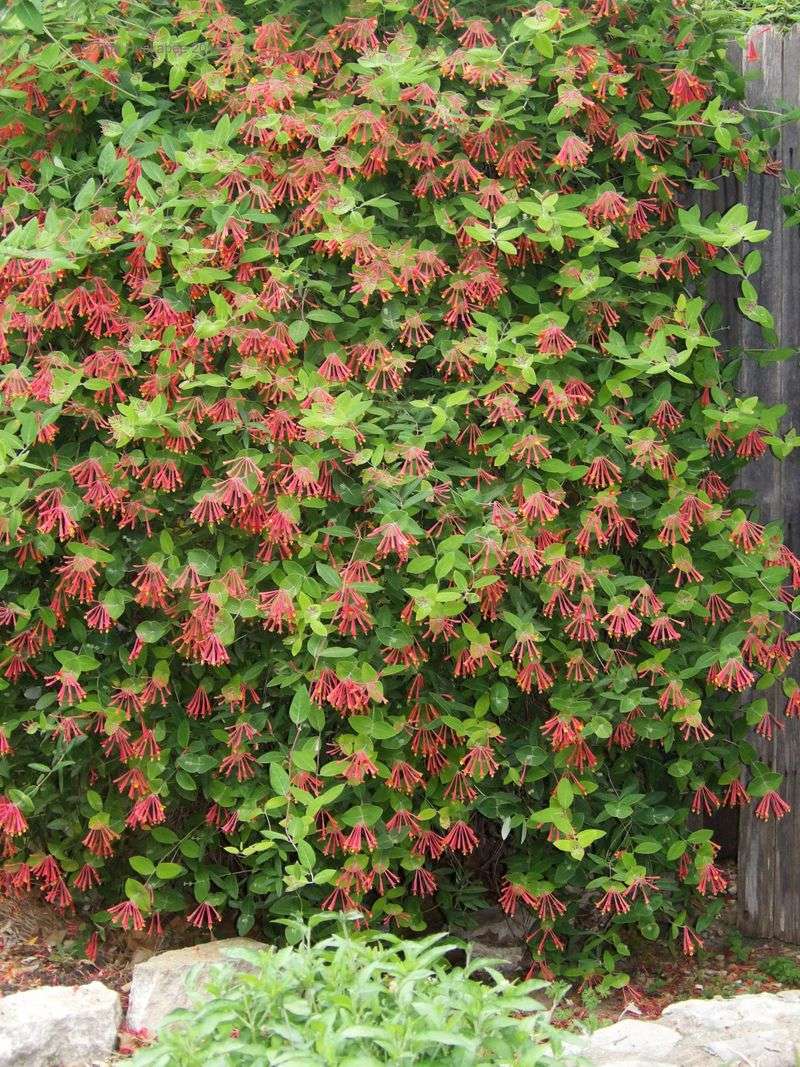
Coral honeysuckle, Lonicera sempervirens, is a lighter, more refined option that twines rather than gripping with adhesive pads, making it gentler on wood structures.
Carolina jessamine, Gelsemium sempervirens, handles part shade well and blooms in late winter, which can extend your color season.
Purple passionflower, Passiflora incarnata, is a host plant for Gulf fritillary butterflies and works well in East and Central Texas.
Trumpet creeper, Campsis radicans, is even more aggressive than crossvine and suits large structures where vigor is a feature rather than a problem.
Native grapes fill fence lines in East Texas and along creek drainages across a wide range of the state.
The accurate promise is not “plant once and let the fence care for itself.” It is this: plant once, establish the roots with real attention during the first season, guide the vine across the support structure during the first few years, and then do the occasional pruning and sucker monitoring that keeps a vigorous native plant working for you instead of past you.
Do that, and a crossvine on the right Texas fence can genuinely be a plant you put in the ground once and enjoy for decades.
That is actually worth more than the headline promised.