
8 Things A Texas Roadrunner Snaps Up In Your Yard Before You Finish Coffee
Follow us on Google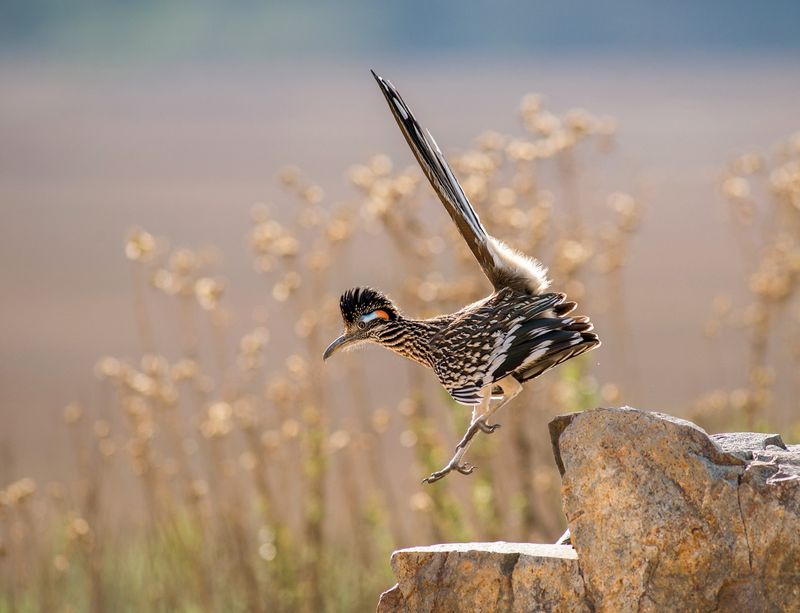
You step outside before breakfast and the patio already feels warm, the air thick with the promise of another Central Texas scorcher.
You are pouring your first cup when a flash of movement catches your eye by the lantana, and it is that lanky, unmistakable bird, the Greater Roadrunner, stalking with purpose.
These feathered speedsters, Geococcyx californianus, are incredibly efficient hunters right here in our Texas landscapes.
They roam from the brush of the Hill Country to the mesquites of West Texas, always looking for a meal, and they get most of their water straight from their prey.
So if you have wondered what those long-legged birds do besides zip across your driveway, here is a peek into their busy morning.
Here are eight things a Texas roadrunner is genuinely taking care of, often before your coffee cools.
1. Scorpions Are Suddenly Someone Else’s Problem
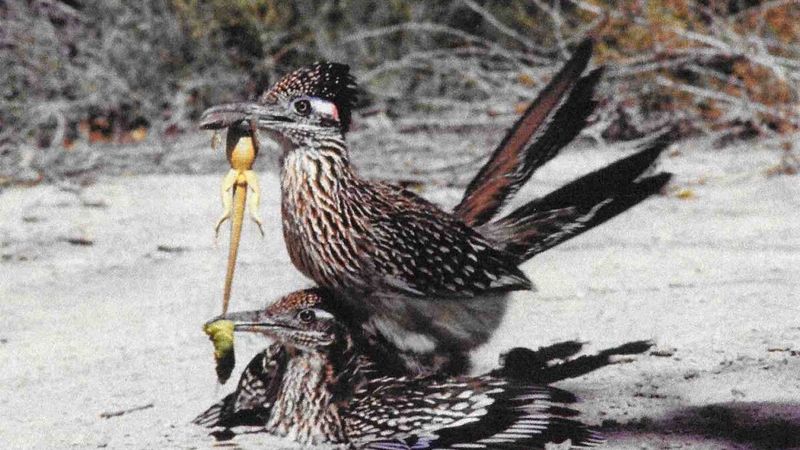
It is a genuine shock to watch a roadrunner tackle a scorpion.
You know the little dread that washes over you when you spot one near your foundation, or under a potted plant, out in the arid plains of West Texas or along the humid Gulf Coast.
But to a roadrunner, that scorpion is just breakfast with extra protein.
They seem completely unfazed by the venom.
A roadrunner spots the scorpion, darts in, and grabs it with that stout beak.
The bird then bashes the scorpion against a hard surface, like a rock or the concrete edge of your patio, until it is subdued and ready to swallow.
It is a dramatic, effective bit of pest control.
They will not clear every scorpion off your property, and this is not a magic solution.
But a roadrunner on patrol can actually reduce the number of these creepy crawlies around your slab.
That gives you a little peace of mind the next time you step out barefoot.
2. Venomous Snakes Meet Their Match
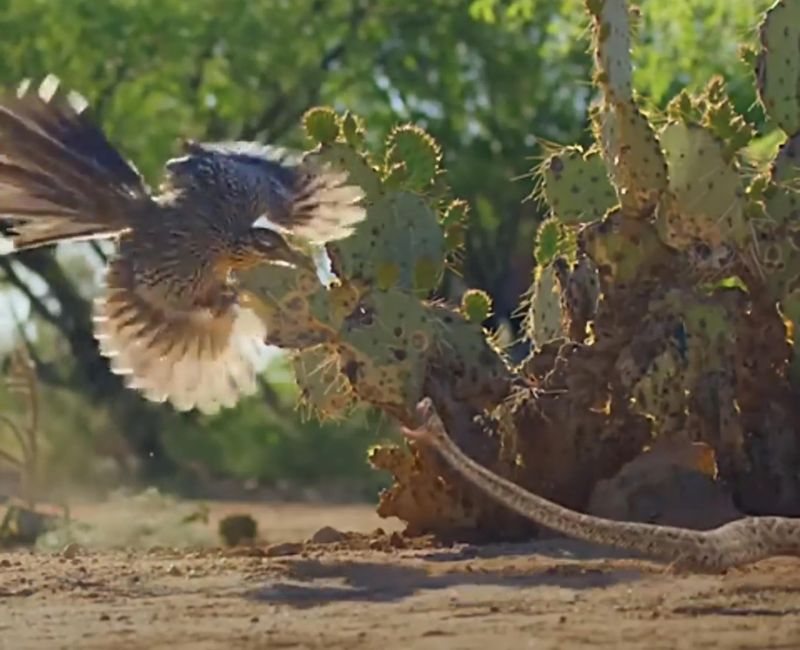
Perhaps the most legendary tale about the Greater Roadrunner involves its daring battles with snakes, even venomous ones.
Tension rises when you hear that rustle in the tall grass near your fence line in South Texas, wondering if it is a harmless garter snake or a young copperhead.
Roadrunners are built for this challenge, with impressive speed and quick reflexes.
They do not have raptor talons, so they lean on their strong beaks and footwork.
A roadrunner will circle a snake, distract it, then swiftly peck at its head, repeating the blows until the snake is stunned.
For longer snakes, the bird might bash it against the ground or a rock to break its bones, making it easier to swallow whole.
Sometimes two roadrunners even team up, one distracting while the other strikes.
One roadrunner was observed eating a baby copperhead right here in Texas.
So that rustle in the grass often means your resident bird is busy keeping the yard a little safer for the porch evening ahead.
3. Grasshoppers Get Snapped Up By The Dozen
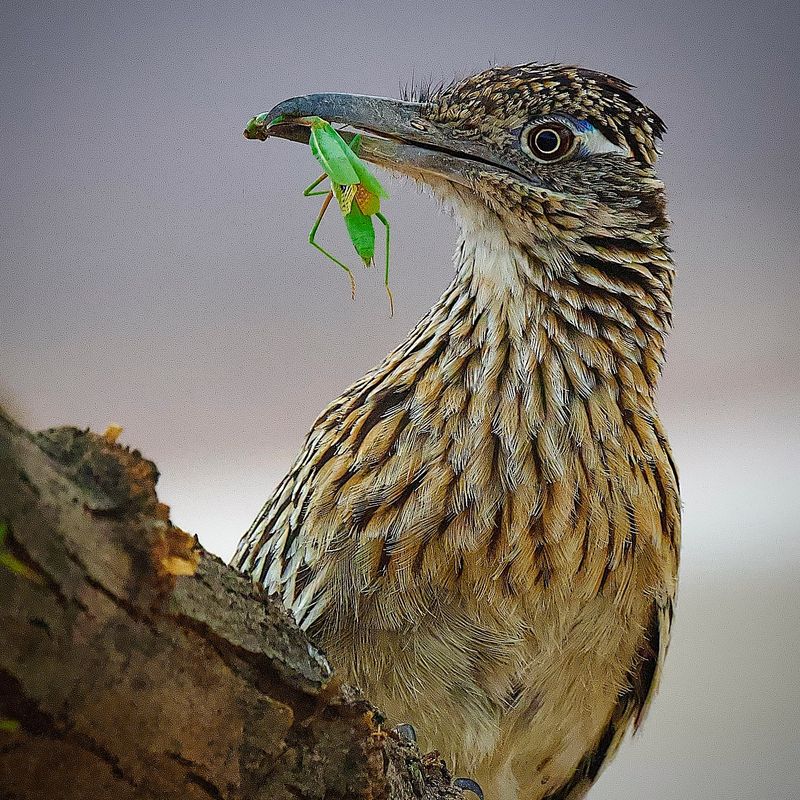
You might not think much about a few grasshoppers munching your prize zinnias in East Texas, but a real infestation can decimate a garden fast.
You have seen them, those big clumsy jumpers, sometimes in numbers that seem to take over.
They strip leaves down to stems in a flash, and their chewing is genuinely frustrating for any gardener.
For a roadrunner, though, grasshoppers are a staple, an easy and abundant meal.
One South Texas study running from 1997 to 2002 found invertebrates, largely grasshoppers and beetles, made up 95.9 percent of a roadrunner’s diet.
They hunt these insects on the ground, often running up to 15 miles per hour to run them down.
A historic Texas record even noted a single free-ranging roadrunner eating 336 grasshoppers in one day.
If roadrunners patrol your beds, they are actively working to keep those plant-devouring populations in check.
Your zinnias get to keep their leaves, and you get to keep your patience.
4. Lizards Become Fast Food Favorites
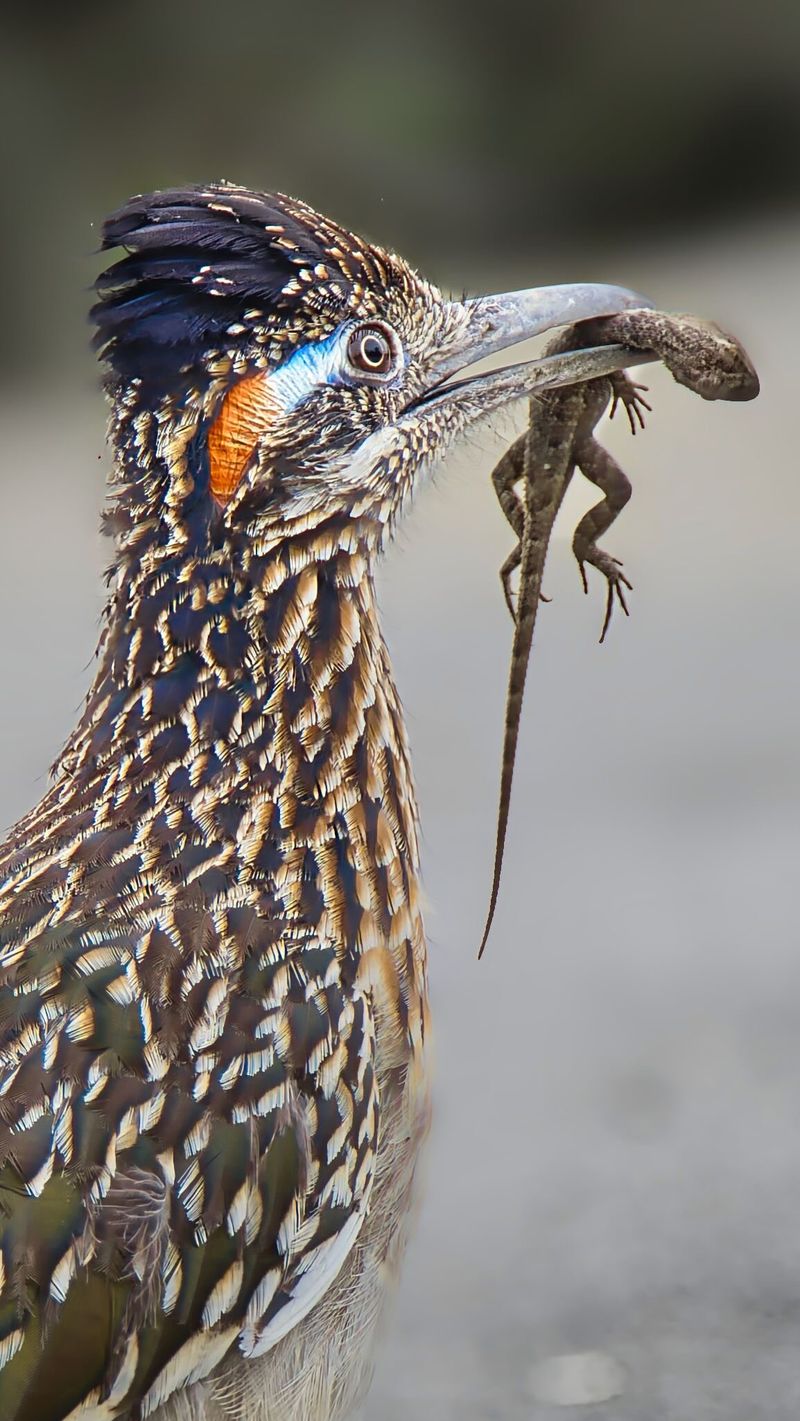
It is easy to overlook lizards as pests, and many Texas homeowners enjoy watching the colorful little guys dart around.
But sometimes they get too comfortable, startling you when one zips across your porch in the Hill Country.
And if a prized potted plant has ever toppled during their antics, you know the minor irritation they cause.
Roadrunners, though, see lizards as prime targets, from the common Texas spiny lizard, Sceloporus olivaceus, to backyard skinks.
Lizards are a major part of the roadrunner diet, especially through the warm, dry months.
The bird’s lightning bursts of speed, sometimes topping 20 miles per hour, are perfectly suited to catching these quick reptiles.
Like with snakes, they often bash larger lizards against a hard surface to ready them for swallowing.
So the next time you see a roadrunner streak across the lawn, it may be snatching up a speedy lizard and keeping the balance in your backyard steady.
5. Pesky Rodents Find No Safe Haven
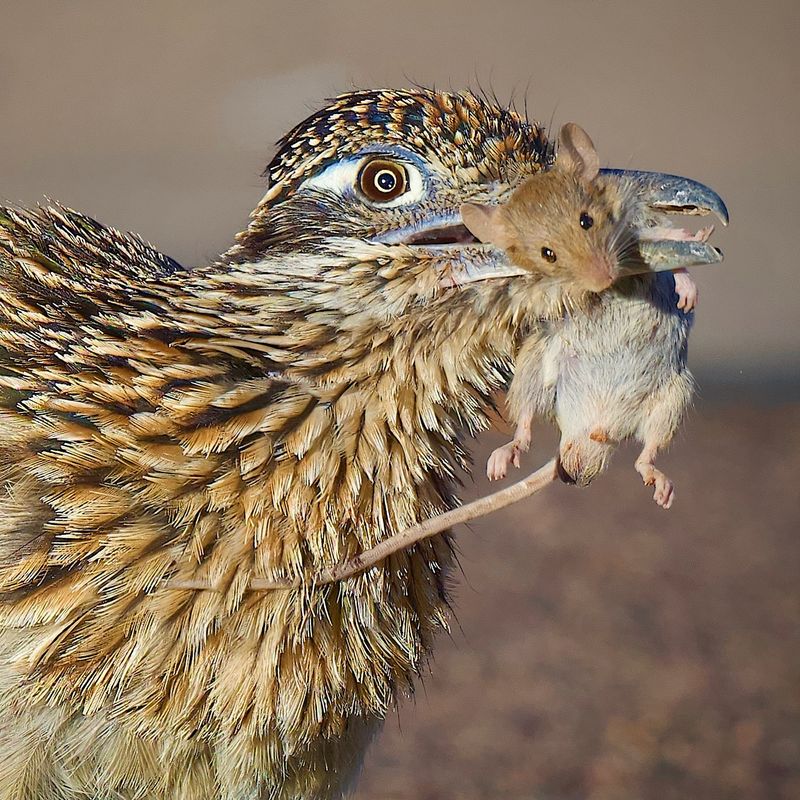
The scurry of a mouse, or the sight of a rat near your outdoor storage, can send a shiver through any homeowner.
That is doubly true in the suburbs of North Texas or out across the Panhandle, where rodents slip into garages fast.
Rodents carry diseases and gnaw on property, which makes them genuinely unwelcome guests.
You worry about them reaching the garage, or worse, working their way indoors.
Here is where your resident roadrunner steps in as a natural deterrent.
Roadrunners are expert hunters of small mammals, including mice, young ground squirrels, and even juvenile rabbits, using their signature speed to run them down.
Once caught, they batter the prey against a rock or the ground, much like they do with reptiles, to subdue it and break bones for easier swallowing.
You might not see it happen.
But their presence is actually making your outdoor spaces far less hospitable to those unwanted furry visitors, and that is a quiet win.
6. Tarantulas And Spiders Meet A Fierce Foe
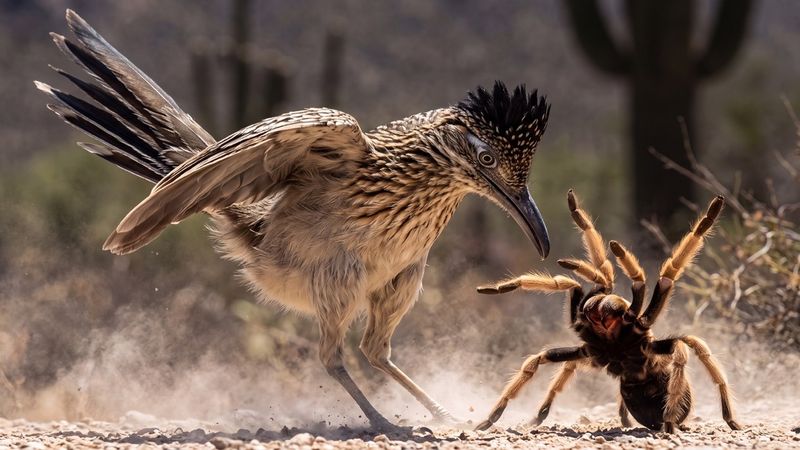
A large, hairy tarantula lumbering across the patio in West Texas can stop your morning coffee cold.
So can a black widow spinning quietly in a shaded corner.
These spiders, whether harmlessly intimidating or genuinely dangerous, are not something most Texans want lurking close by.
Roadrunners, with their remarkably tough digestive systems, are one of the few predators that actively hunt and eat tarantulas, black widows, and other large arachnids without any ill effect.
They are even the only known predator of the tarantula hawk wasp, a creature with one of the most painful stings in the insect world.
Their approach is swift and decisive.
The bird darts in, grabs the spider, and softens it up with a few quick bashes before swallowing it whole.
Their ability to down such venomous prey shows off both their toughness and their odd usefulness in your yard.
It means fewer eight-legged surprises, and less worry for you.
7. Multilegged Centipedes Are On The Menu
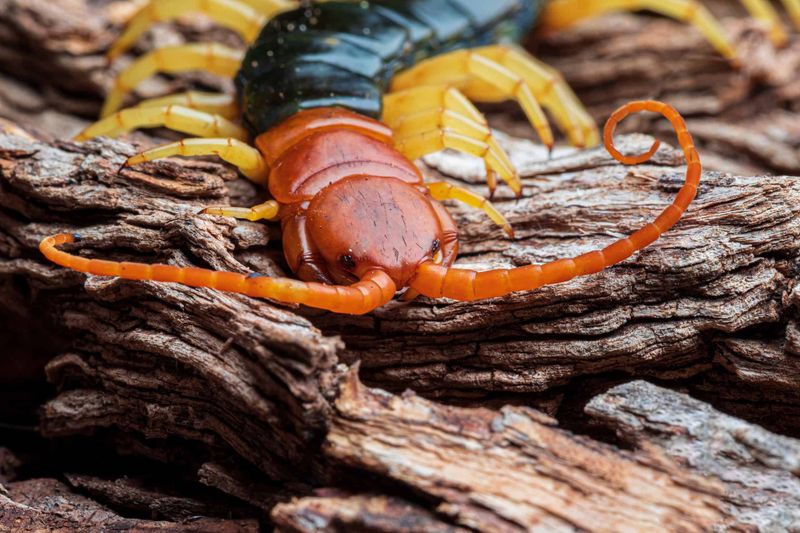
Another creature that makes many Texans jump is the centipede, especially the larger reddish species found across parts of the state.
You might spot one scurrying from under a rock or a woodpile, all those legs moving at once.
It is not a pest you want indoors, and the bite can be quite painful.
Roadrunners, however, treat these many-segmented invertebrates as a perfectly acceptable meal.
Centipedes are explicitly listed as part of their diverse diet.
One striking observation from a 1913 Texas study noted a single roadrunner eating 14 centipedes in a day.
The bird’s habit of battering prey against a hard surface works especially well against the centipede’s tough exoskeleton.
So when a roadrunner patrols your garden beds or rockeries, it is actually making a dent in those centipede numbers.
Your outdoor spaces get a little more comfortable, and your rock garden feels a bit less like an ambush.
8. Unexpected Avian Snacks And Eggs
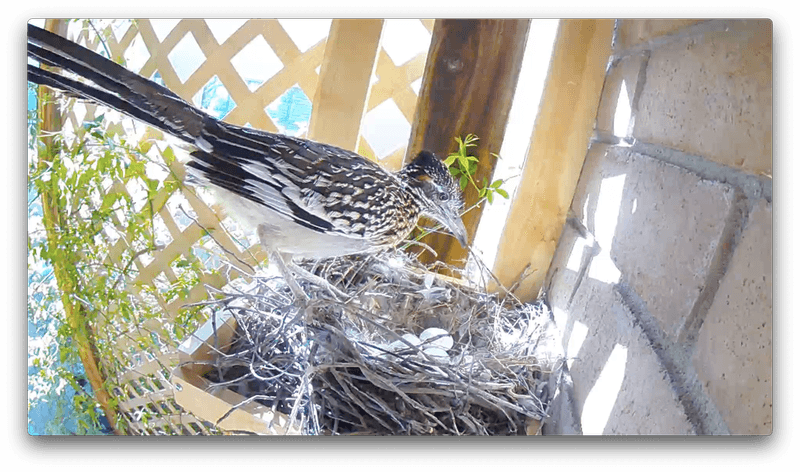
Now here is where it gets tricky.
Roadrunners are also opportunistic predators of other birds and their eggs.
You might feel a pang if you have a busy feeder in your North Texas yard, or a ground-nesting quail raising a family in a brushy corner.
It is a natural part of the food web, even if it is unsettling to witness.
Roadrunners are not primarily bird hunters, but they will seize an easy meal when the chance appears.
That can mean taking eggs from ground nests, or snatching a small sparrow or hummingbird with a quick leap into the air.
A South Texas study, though, found quail remains in only 1 of 120 roadrunner stomachs, so they do not specifically target quail.
Their wide-ranging appetite simply means an unguarded egg or a stray nestling will not go untouched.
It is a reminder that your Texas backyard is a genuine web of give and take, and the roadrunner plays many roles in its daily hunt.
Watching one work, you feel a little more connected to the wild edge of your own yard.