
Your Cucumbers Come Off Fat At One End And Pinched At The Other, And The Heat Is Not To Blame
Follow us on Google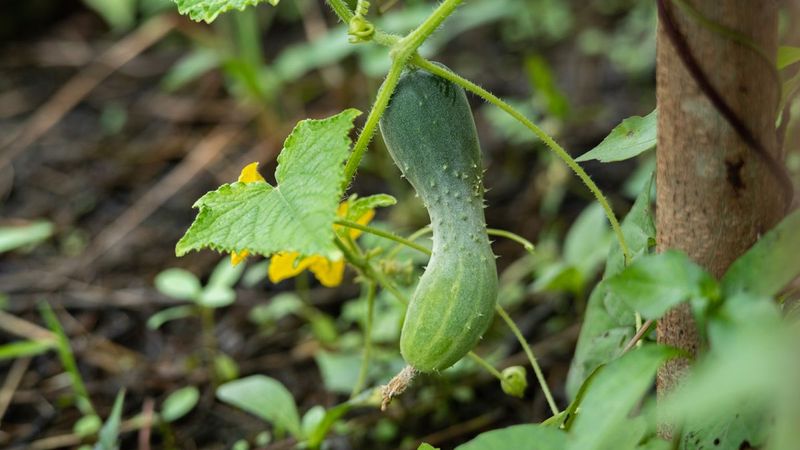
You pull a cucumber off the vine and something looks off. One end is plump and promising, but the other tapers down to a pinched, almost shriveled tip.
Most gardeners blame the heat wave that rolled through last week, but the real explanation is usually happening earlier, inside a flower that opened and closed before you even had your coffee. Knowing what actually causes that uneven shape puts you back in charge before the next batch of fruit sets.
Uneven Pollination Often Explains The Pinched End
Cucumbers (Cucumis sativus) grow separate male and female flowers on the same plant, and those two flower types have very different jobs. The male flower produces pollen.
The female flower, which you can spot by the small swelling at its base that looks like a tiny cucumber, waits for that pollen to arrive. Bees and other insects carry the sticky pollen from male to female, and the quality of that transfer shapes every fruit that follows.
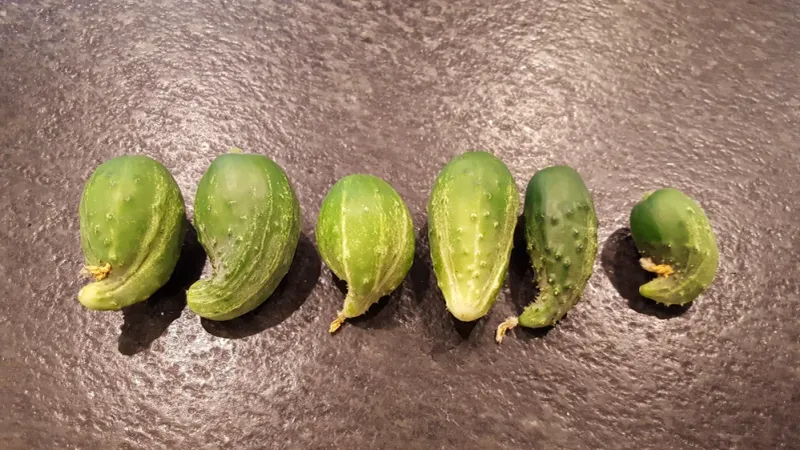
When pollen reaches only part of the female flower’s stigma, the seeds that develop are unevenly distributed inside the fruit. The end with more seeds plumps up normally, while the end with fewer or no seeds stays narrow and pinched.
Penn State Extension’s cucumber pollination guidance identifies this incomplete pollen transfer as a recognized cause of deformed fruit, and the University of Minnesota’s cucumber fruit diagnosis tool lists poor pollination among the leading reasons a cucumber develops an abnormal shape.
Cutting open a mature cucumber and finding few seeds or poorly developed seeds can support that suspicion, though fruit shape alone cannot prove it. A lopsided cucumber could also reflect water stress, cool or rainy weather during flowering, or other problems covered later in this article.
Think of uneven pollination as the most likely starting point for your investigation, not the guaranteed final answer.
Heat Can Contribute Instead Of Clearing The Diagnosis
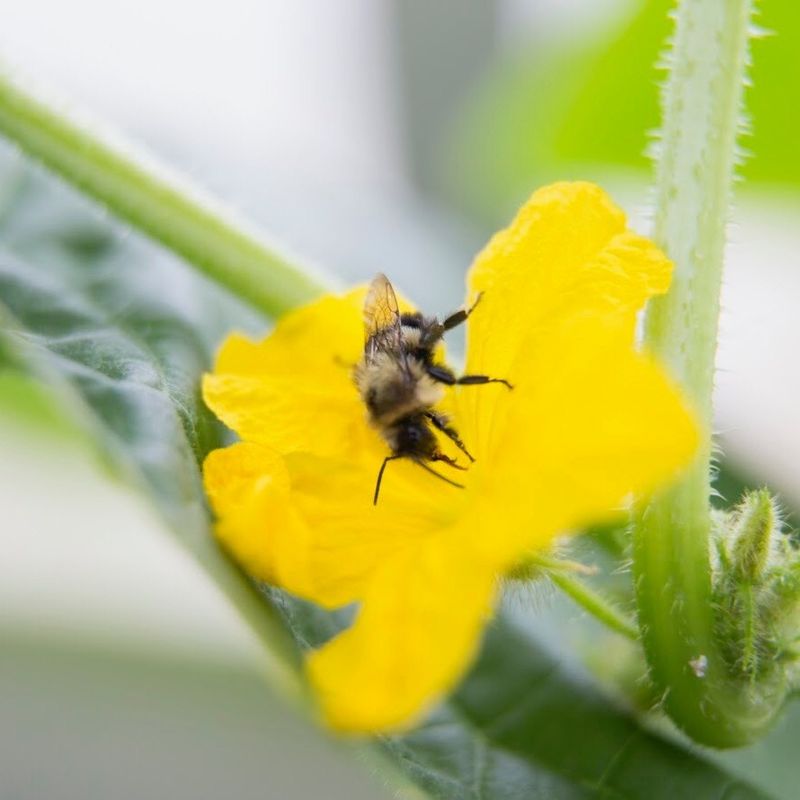
Blaming the heat entirely feels logical when temperatures have been brutal, but heat works against cucumber fruit in more than one way, and neither way is simple. Around 90 degrees Fahrenheit, many bees slow their activity or shift their foraging hours, meaning fewer insects visit your flowers during the short window when those flowers are open.
University of Minnesota Extension’s heat stress guidance notes that sustained high temperatures can cause flower and small-fruit abortion in vegetable crops, which means heat can both reduce pollinator visits and directly damage developing fruit before you ever notice a shape problem.
That said, heat is a contributing factor, not a complete explanation on its own. A cucumber that develops unevenly along its length still points toward a pollination issue as the most likely cause.
Heat may be the reason pollination went wrong, or it may be working alongside other stressors, but exonerating it entirely would be a mistake.
Cold, cloudy, or rainy weather during flowering can cause the same result from the opposite direction. UMN’s vining vegetable growing guide identifies cool, rainy, and cloudy conditions as causes of poor fruit set.
So before you settle on any single culprit, think back to what the weather was like during the few days your flowers were actually open, because that narrow window is where the trouble usually starts.
Inspect The Morning Flowers Before You Treat
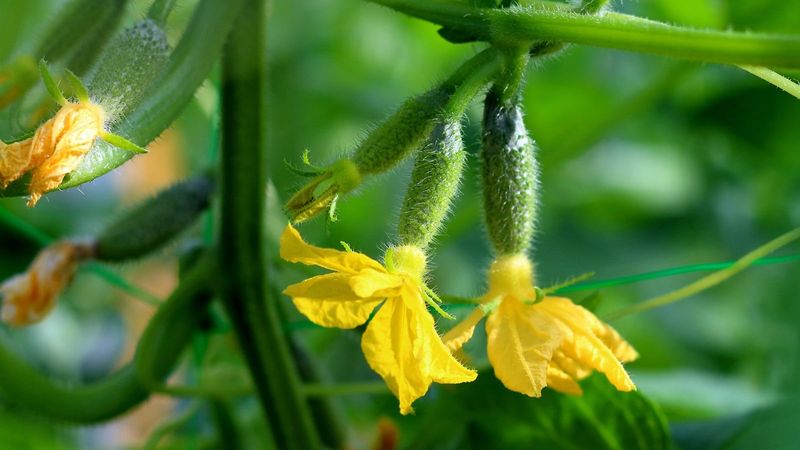
Morning is when cucumber flowers do their work, and it goes fast. Most cucumber flowers are open for only a few hours after sunrise before they close and will not reopen.
If you want to understand what is happening on your vine, you need to be out there early, ideally before 9 or 10 in the morning, watching rather than guessing.
Start by finding both flower types. Male flowers appear first and grow on a plain stem with no swelling underneath.
Female flowers have that small, rounded ovary at the base that looks like a miniature cucumber waiting to grow. Check whether bees or other insects are actually visiting the open flowers.
University of Georgia Extension’s cucumber production guide and UMN’s growing guide both emphasize that insect visits during this short opening period are essential for standard varieties.
Look at several developing fruits rather than drawing conclusions from one misshapen cucumber. If most young fruit looks normal and only a few are pinched, the problem may have been brief, tied to one stretch of bad weather or low bee activity.
If most fruit on the vine is coming off oddly, the issue is more consistent and worth addressing systematically. Also note whether any flowers are wilting and dropping without setting fruit at all, because that pattern points toward a pollination or stress problem that is happening repeatedly, not just once.
Hand-Pollinate Only The Varieties That Need It
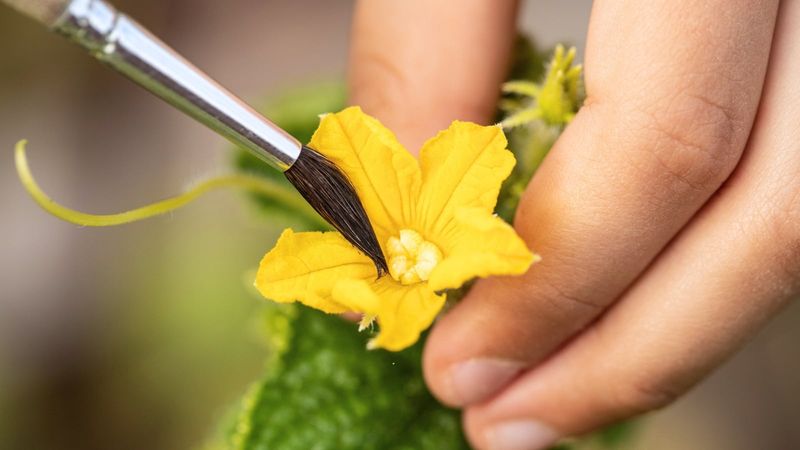
Before you reach for a paintbrush or start picking male flowers, check your seed packet. That step is not optional, because the variety you planted changes everything about whether hand pollination will help or hurt.
Parthenocarpic cucumbers, often sold for greenhouse or high-tunnel growing, are bred to set fruit without any pollination at all. If bees pollinate those varieties, the fruit can become seeded, bitter, and misshapen.
Attracting more pollinators to a parthenocarpic planting in a protected structure can actually make the shape problem worse, not better. Gynoecious cucumbers are different: they produce mostly or only female flowers, but many of them still need pollen from a pollenizer variety to set fruit properly.
Penn State Extension’s high-tunnel cucumber guide explains these distinctions clearly and recommends matching your management approach to the specific variety type.
For standard varieties that do require pollination, hand pollination is a practical rescue step when few bees are visiting, when weather has disrupted flowering, or when vines grow behind row cover or inside a screened structure. Select a freshly opened male flower, gently remove its petals so the pollen-covered center is exposed, and press or brush that center against the stigma in the middle of a freshly opened female flower.
Penn State’s cucumber pollination resource and their integrated cucurbit pollination guide both describe this method as a targeted diagnostic and rescue tool, not a routine task for every flower on the vine.
Test a few fresh blossoms and then watch new fruit that sets afterward. Do not judge the result from a cucumber that was already developing badly when you started, because that fruit records an earlier problem and will not change course now.
Steady Moisture Prevents A Similar Problem
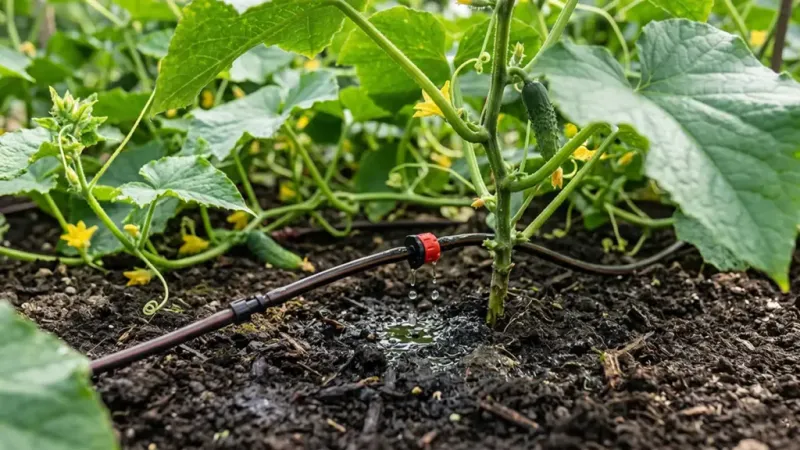
Water stress can produce fruit that looks almost identical to poorly pollinated fruit, and many gardeners never separate the two problems. Utah State University Extension’s cucumber guide specifically links drought stress to pointed ends and misshapen cucumbers, which means a plant that ran dry during fruit development may have nothing wrong with its pollination at all.
Rather than watering on a fixed day-of-the-week schedule, check the soil about 2 inches below the surface. If it feels dry at that depth, the plant needs water.
General guidance for many home gardens runs around 1 inch of water per week, but Utah State’s vegetable watering recommendations and UMN’s cucumber growing guide both note that plant size, soil type, temperature, and how heavily the vine is fruiting can push that range to 1 to 2 inches. Sandy soil loses moisture faster and may need smaller, more frequent applications rather than one deep soak.
Mulch laid around the base of the plant slows evaporation and buffers the soil against rapid drying between waterings. Drip irrigation or a soaker hose delivers water at soil level, which also reduces the time foliage stays wet and lowers disease pressure.
Even if you correct your watering routine today, do not expect an already misshapen cucumber to plump up and straighten. Moisture correction protects the next fruit set, and that is where you will see the improvement.
Check Variety Genetics And Physical Obstructions
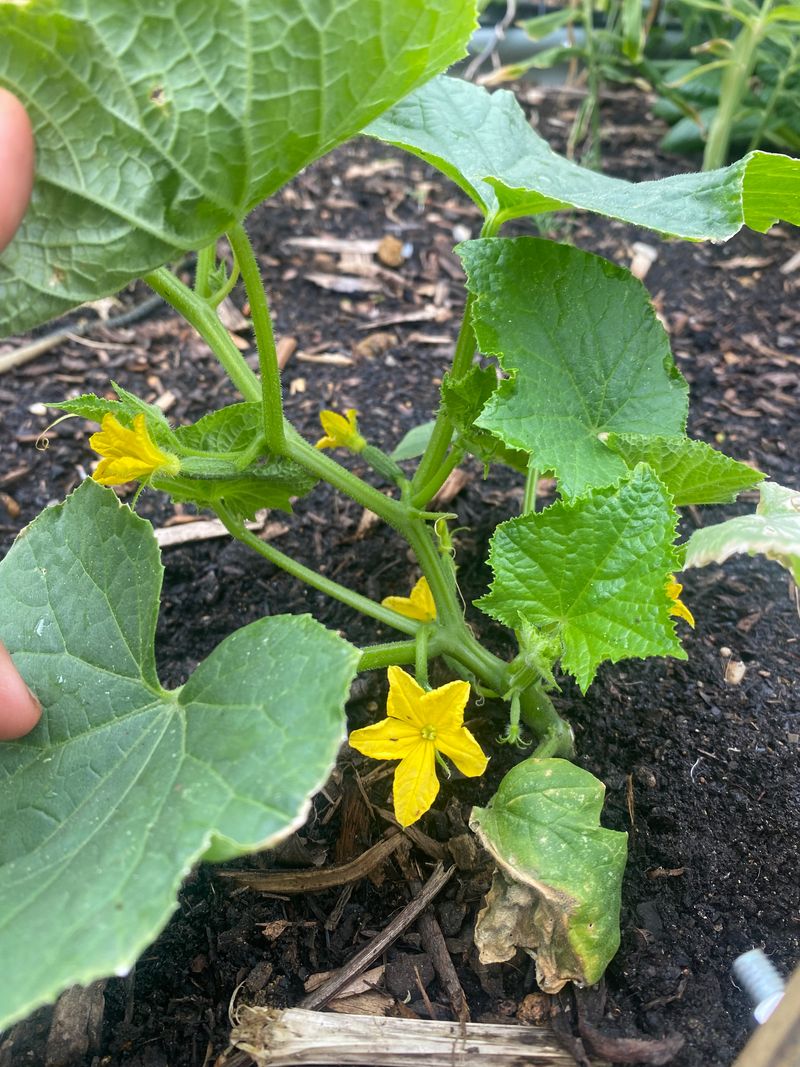
The seed packet sitting in your garden drawer may hold the answer you have been looking for. Standard cucumbers need bees to move pollen from male to female flowers.
Gynoecious varieties produce mostly or only female flowers and may still need a pollenizer plant or a packet of standard seeds mixed in. Parthenocarpic varieties set seedless fruit without any pollination, and they are commonly sold for protected growing in high tunnels or greenhouses.
Penn State Extension’s high-tunnel cucumber guide explains that planting parthenocarpic varieties outdoors where bees have free access can result in seeded, bitter, or misshapen fruit, the opposite of what those varieties are designed to produce. University of Minnesota’s pollination requirements guide reinforces that variety type changes the entire management picture, so confirming what you planted is not a small detail.
Once you have ruled out a genetics mismatch, walk the vine and look for physical obstructions. A cucumber pressing against the ground, a leaf, a stem, or a piece of trellis hardware can develop a curve, flat spot, or pinch at the contact point.
Penn State’s fall high-tunnel guide lists mechanical contact as a recognized cause of abnormal fruit shape in protected production, and the same logic applies in a backyard garden or raised bed. Lift fruit off the ground, redirect stems that crowd developing cucumbers, and add trellis clips or ties to keep fruit hanging freely so it has room to grow straight.
Do Not Wait For Badly Misshapen Fruit To Become Normal
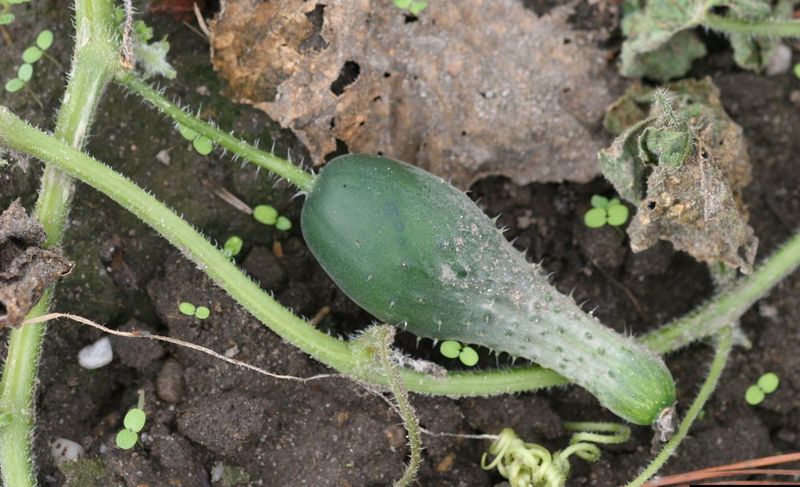
Severely misshapen fruit usually will not straighten as it continues to grow, and leaving it on the vine costs the plant energy it could spend on the next flower. Utah State University Extension recommends removing badly deformed cucumbers rather than waiting to see whether they improve, and that is practical advice for any growing system.
Several conditions can contribute to abnormal fruit beyond incomplete pollination. Cool, cloudy, or rainy weather during flowering can reduce bee activity and successful pollen transfer.
The approximately 65 degree threshold sometimes cited in production literature comes from high-tunnel guidance rather than a universal home-garden rule, but the general principle holds: cool conditions during flowering, especially when combined with overcast skies or rain, can reduce pollination and contribute to misshapen fruit. Physical obstruction against the ground or trellis hardware can create a pinch or curve at the contact point.
Nutrient problems can also play a role, but adding fertilizer without a soil test or a credible diagnosis is risky. Penn State’s cucumber production guide and their high-tunnel resource both note that cucumbers are sensitive to excess fertilizer applications, including excess boron, which can injure the plant rather than help it.
Do not diagnose a virus from fruit shape alone. Cucurbit viruses can cause small, deformed, or discolored fruit, but they typically show up alongside mosaic or mottled leaves, distorted new growth, and stunting.
UMN’s cucurbit virus resource and the UMN cucumber fruit diagnosis tool both recommend seeking a diagnostic service when those additional signs appear on the plant, rather than treating the fruit shape as the only clue.
Protect Pollinators And Watch The Next Fruit Set
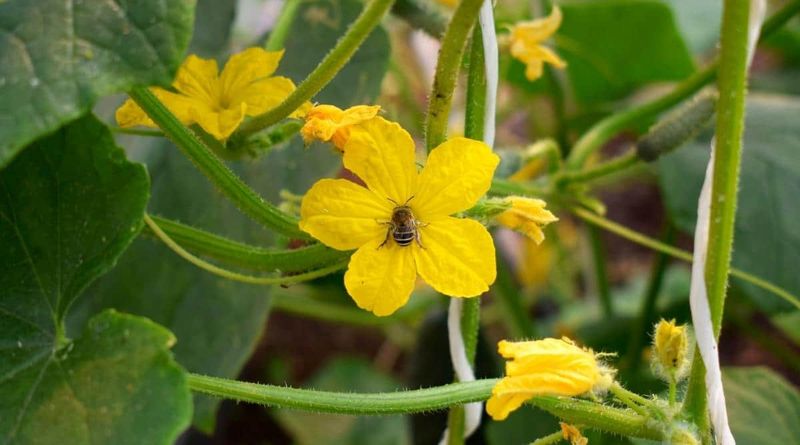
No single action guarantees a perfect cucumber harvest, but a handful of modest steps taken together before the next flowering cycle give you the best realistic chance. Start with the pollinators already working your yard, because they are genuinely the most reliable resource you have.
Avoid spraying insecticides directly on open cucumber flowers, and if treatment is necessary for another pest problem, follow the product label and time the application for evening or night when bee activity has dropped and flowers are closed. Penn State Extension’s cucumber pollination guide and University of Georgia Extension’s cucumber guide both emphasize protecting existing pollinators over introducing new ones.
For most home gardens, buying or renting a managed hive is unnecessary and adds cost and complexity. Penn State’s wild bee research for cucurbits suggests observing local pollinator activity first before investing in any intervention.
UMN’s vining vegetable guide supports maintaining even soil moisture and confirming your variety type as foundational steps that support fruit quality across the whole season. Remove severely misshapen cucumbers from the vine, hand-pollinate a few fresh female flowers only if your variety requires it and bees are scarce, and keep the soil consistently moist without letting it swing from soaking wet to bone dry between waterings.
The cucumbers already on your vine carry a record of what happened during an earlier window you cannot reopen. The ones forming right now are the ones you can actually influence, and that is where your attention belongs.