
People Call Ravens Creepy, But They Plan For Tomorrow And Remember Your Face For Years
Follow us on Google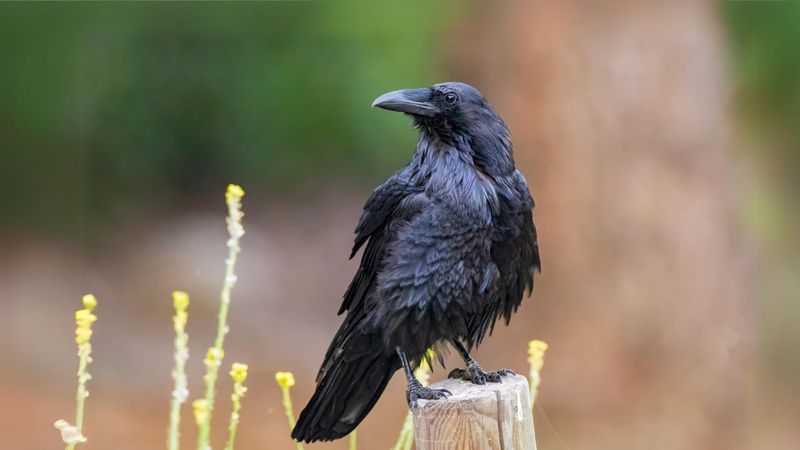
A large black bird lands on your fence post, tilts its head, and watches you carry groceries inside. Most people shudder and move on, but researchers who study these birds have found something worth a second look.
Common ravens can make flexible choices for tasks they will face hours later, and they can hold onto learned associations with threatening situations for years. Understanding what is actually happening in that bird’s head, and what draws it to your yard in the first place, makes the difference between a fascinating encounter and an ongoing problem.
That Large Black Bird May Be a Raven
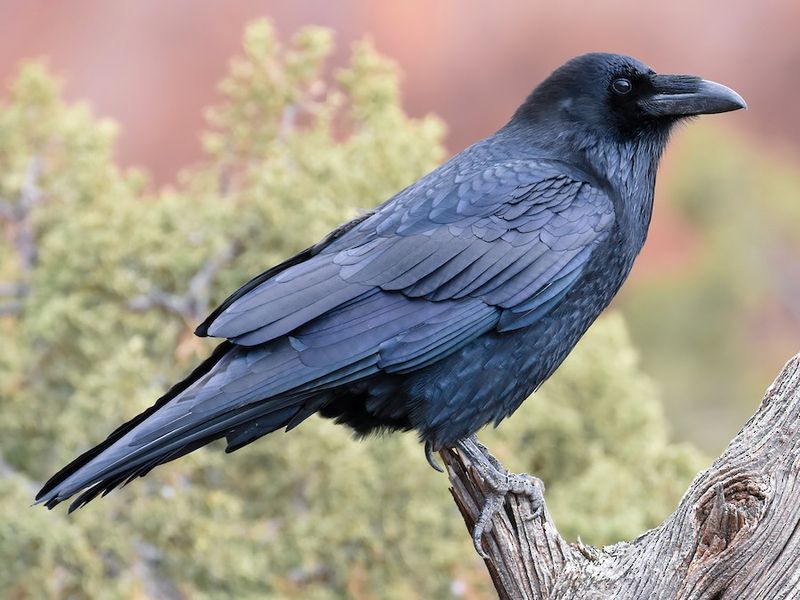
Before reading anything into that bird’s behavior, it helps to know whether you are actually looking at a common raven. Ravens are big, noticeably bigger than most backyard birds, and Cornell Lab’s Common Raven identification guide puts them at 22 to 27 inches long with a wingspan close to 46 inches and a weight that can reach nearly 4 pounds.
That is closer to a Red-tailed Hawk than to a typical crow.
Four field marks separate a common raven from its smaller relatives. The bill is thick and curved, almost like a tool built for prying.
The tail fans out into a clear wedge shape in flight, while a crow’s tail is more rounded or squared off. The throat carries loose, shaggy feathers that ruffle in the wind, giving the bird a scraggly, almost bearded look.
And the wings beat with a slower, deeper stroke than a crow’s quick flapping.
Range matters here, too. Common ravens are strongly associated with western and northern North America, from Alaska and Canada down through the Rocky Mountains, the Great Basin, the Pacific Coast, and into the desert Southwest.
They also appear in parts of the Appalachians, but a homeowner in suburban Ohio, Georgia, or the mid-Atlantic is far more likely to be watching an American Crow, a Fish Crow, or possibly a Common Grackle than a true raven. Cornell’s raven life history notes that ravens favor open country, forests, mountains, deserts, coastlines, and rural settlements rather than dense eastern suburbs.
Getting the identification right first means the rest of this article actually applies to what you saw.
Ravens Prepare for Later Opportunities
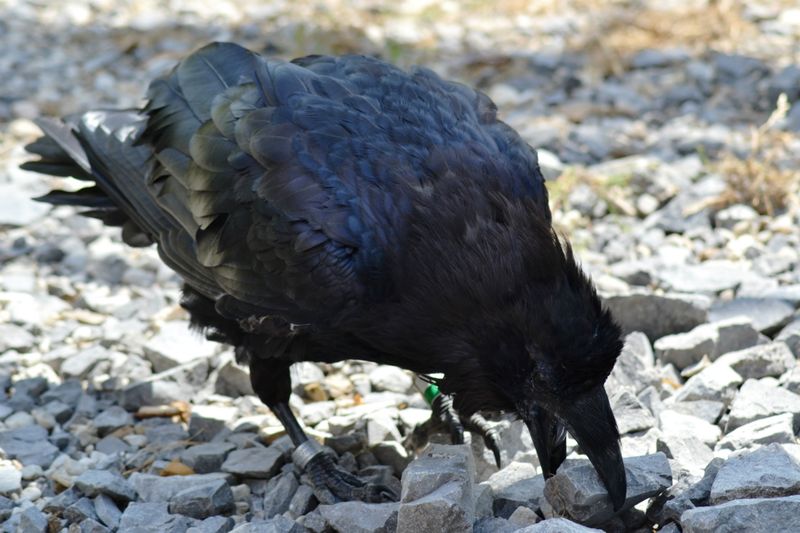
Watch a raven find more food than it can eat in one sitting, and you will see something deliberate happen. The bird picks up a chunk, walks behind a log or a rock, and tucks it away where other ravens cannot see the transaction.
Cornell Lab’s piece on food caching describes how ravens actively position themselves so competitors cannot watch the hiding spot. That kind of spatial awareness already suggests something more than simple reflex.
A 2017 controlled experiment pushed the question further. Researchers gave ravens access to tools and barter tokens they would need for a specific task, but only after a delay.
The birds selected the right object and set it aside, sometimes giving up an immediate food reward to hold onto a tool they would need later. That Science study reported delays of up to 17 hours between choosing the object and using it, and the ravens performed as well as great apes on comparable tasks.
What that means in plain terms is that ravens can make a flexible choice now for a payoff that is still hours away. That is a real and impressive finding.
What it does not mean is that ravens sit down and mentally map out the next week the way a person might plan a grocery run. Animal cognition researchers are careful to distinguish observed future-oriented choices from proof of conscious, calendar-like planning.
The raven preparing for a later opportunity is genuinely remarkable, and it is also a more specific and limited ability than the popular image of a scheming bird with a grudge list.
Ravens Remember Cues Linked to Danger
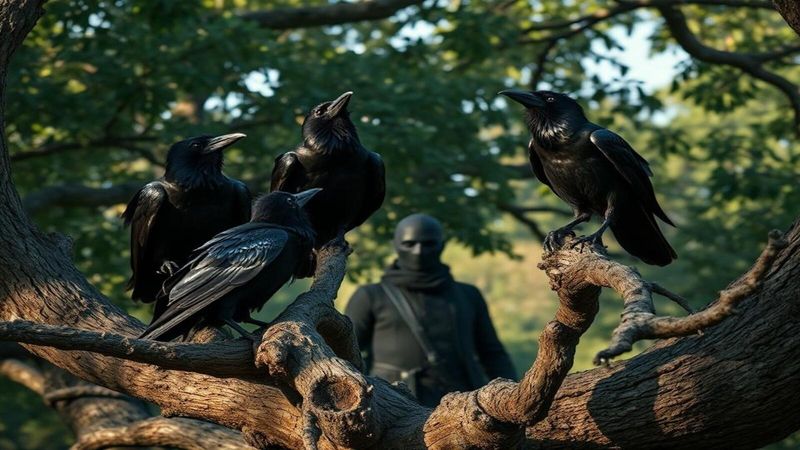
One study on raven memory stands out from the rest, and it is worth understanding what it actually showed before drawing conclusions about your own backyard visitor. Researchers worked with captive ravens, introducing them to two masks: one associated with a threatening event involving a dead raven, and one that carried no such association.
Four training exposures were enough for the birds to learn the difference.
The striking part came later. When researchers brought the masks back without any reinforcing event, the ravens continued to scold more intensely at the dangerous mask.
That Frontiers in Psychology study tracked this response for four years, making it one of the longer memory measurements in corvid research. The association held, though individual birds varied in how strongly and consistently they responded, and social context affected how much alarm calling actually happened in a group setting.
There are a few things the study did not establish. The masks were the cue, not a bare human face, and the researchers noted that other signals from the presenter, including carried objects, could have contributed alongside the visual cue.
The study design cannot fully separate the mask from everything else the bird experienced during training. So the accurate takeaway is that ravens can form a durable learned association with a human-linked visual cue after a threatening event, and that association can persist for years without being reinforced.
That is not the same as claiming that every raven memorizes every homeowner’s face from a porch distance and carries that record forward indefinitely.
The Long-Term Face Evidence Comes From Crows
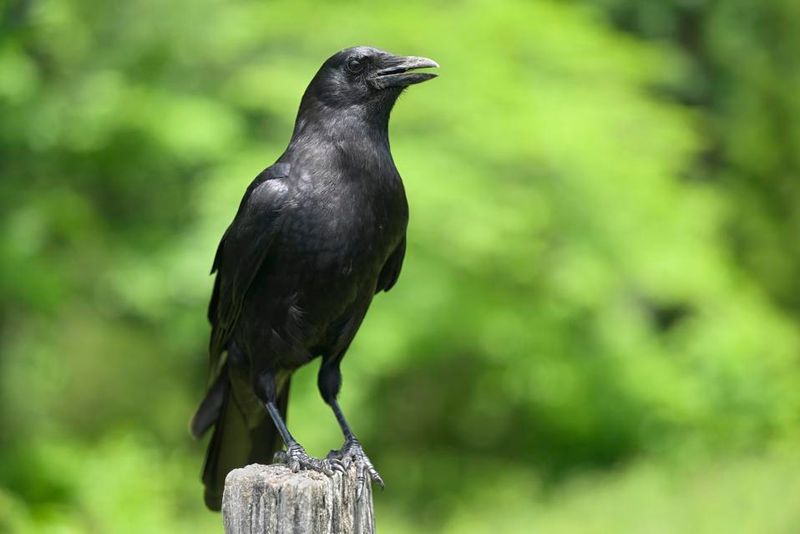
The headline image of a corvid recognizing a threatening human face for years and passing that information to others actually comes from research on American crows, not ravens. Wild crows in Seattle encountered researchers wearing a specific mask during a capture and banding event.
Months later, those same crows scolded the threatening mask and ignored a neutral one. That Animal Behaviour study by Marzluff and colleagues tracked the response for at least 2.7 years after a single capture event, and found that crows who had not even been present during the original capture learned the dangerous face from flock-mates who had.
A separate brain-imaging study extended that picture. Research published in PNAS used PET imaging to show that crows process familiar threatening and caring human faces through different neural pathways, suggesting the recognition is not just a surface behavioral habit but something with deeper biological underpinnings.
Both findings involve meaningful encounters, a capture event, physical handling, a clear threat, not a person walking past a bird bath. Crows did not memorize every friendly face in the neighborhood.
They remembered the face connected to something that mattered. That distinction keeps the science honest and still leaves room for genuine wonder.
American crows are common across much of the United States, including eastern suburbs where ravens rarely appear, so many readers asking whether a black bird remembers them are almost certainly dealing with a crow. The crow research is the stronger and more directly relevant finding for those homeowners, and it is impressive enough on its own terms without borrowing from raven studies.
A Smart Visitor Is Not a Garden Employee
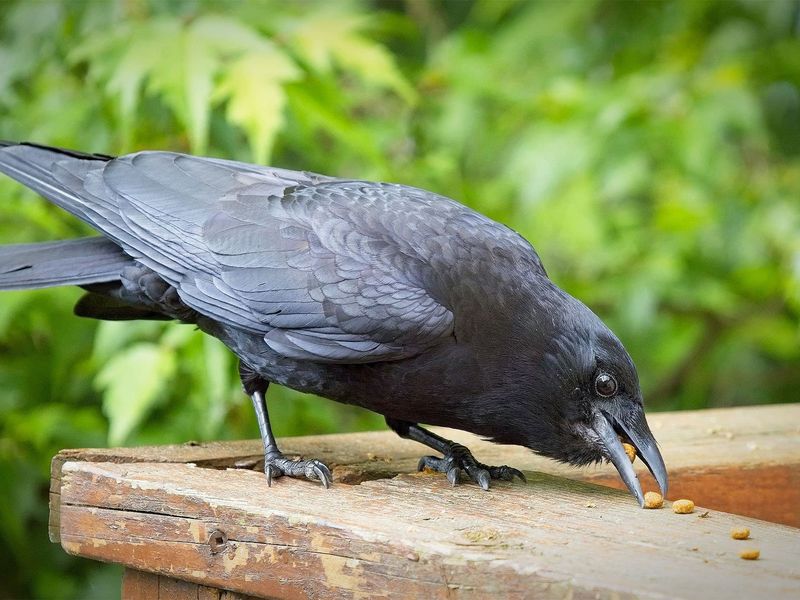
A raven’s intelligence does not translate into a tidy job description. These birds eat what is available, and the list is long.
Cornell’s raven life history documents a diet that includes carrion, insects such as grasshoppers and beetles, fish, grains, berries, small mammals, eggs, nestlings, pet food, garbage, and unattended human food left out for cookouts or picnics. That range makes ravens opportunistic generalists, not specialists in any single problem your yard might have.
Yes, a raven visiting your property might pick off a few grasshoppers or clean up a dead mouse near the fence line. But the same bird might also raid a robin’s nest in your shrubs, take eggs from a ground-nesting bird in your meadow area, or make a persistent run at your compost pile.
Utah State University Extension notes that ravens create real conflicts around food sources, particularly in areas where their numbers have grown alongside expanding human settlements and roadside carrion from vehicle traffic.
Judging a raven visit by what you actually observe around your property is more useful than assigning it a fixed role. A single bird passing through a large yard during migration is a different situation from a small group that has learned your garbage schedule.
Ravens near garden beds, compost bins, poultry areas, or outdoor pet-food dishes are responding to specific attractants, not performing a service. Watching what the bird is actually doing, where it lands, what it investigates, and how long it stays, gives you better information than any general label of helpful or harmful.
Remove the Foods That Keep Ravens Coming

Ravens are not mystery visitors. When a yard starts seeing regular raven activity, there is almost always a reliable food source pulling them back.
Garbage is the most common culprit. A lidded can that a raven can tip, a bag left at the curb the night before pickup, or a compost bin with no cover can become a dependable daily stop on a raven’s route through the neighborhood.
The most effective first step is removing what is drawing the bird, not trying to scare it off while the reward stays in place. Cornell Lab’s raven overview specifically cautions against deliberately attracting ravens with large amounts of seed, grain, or pet food, warning that doing so can also pull in rodents and other pest animals and may encourage nest raiding.
Bring pet food bowls indoors after feeding. Sweep up spilled birdseed from under feeders.
Pick up fallen fruit from trees before it accumulates. Store poultry feed indoors at night.
Picnic scraps and cookout leftovers left on a patio table are an easy target for a bird that watches and waits. Utah State University Extension guidance on reducing raven subsidies emphasizes that consistent resource removal is the most reliable way to make a yard less attractive without harming wildlife or altering the broader habitat.
A raven that finds nothing worth returning for will shift its route. The goal is not to punish the bird or destroy its habitat, just to close the specific door that your yard left open.
Protect Poultry and Keep the Conflict Legal
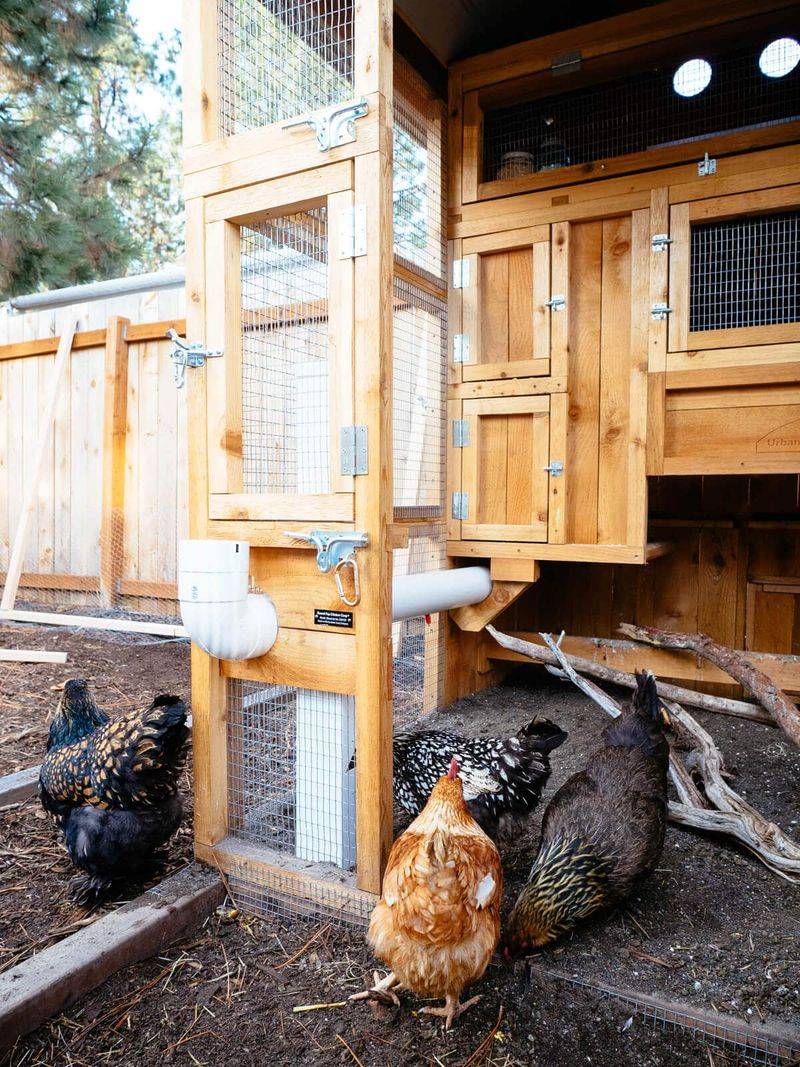
Homeowners with chickens, ducks, or other domestic birds face a more specific challenge. Ravens are large enough and bold enough to investigate open runs, unattended feeders, and spilled grain.
The priority is separating wild birds from domestic ones before a conflict starts, not after.
Enclosed housing with a covered run is the most reliable barrier. Feeders and waterers placed inside the coop or under a covered overhang that wild birds cannot reach keep ravens from making daily stops at the feed dish.
Cleaning up grain spills promptly removes the easy reward. University of Minnesota Extension’s guidance on avian influenza and backyard flock biosecurity recommends storing feed indoors at night and minimizing contact between wild birds and domestic poultry to reduce disease exposure.
These steps protect your flock from more than just ravens.
On the legal side, common ravens are protected under the Migratory Bird Treaty Act, which means intentional killing, trapping, or capture without proper authorization is a federal offense. The U.S.
Fish and Wildlife Service’s raven conflict management document notes that ravens are not a game species and that there is currently no general depredation order covering them. Any lethal or capture-based response requires applicable federal, state, tribal, or local authorization.
Poison, improvised traps, and shooting are off the table for a backyard homeowner acting alone.
Keep children and pets away from ravens near food, nesting areas, or young birds. Utah State University Extension’s wildlife encounter safety guidance recommends maintaining distance from wild birds and not encouraging close contact, regardless of how calm the bird appears.
A wild raven is not a pet, and its intelligence does not make physical contact safe or appropriate.
Let the Wild Visitor Stay Wild
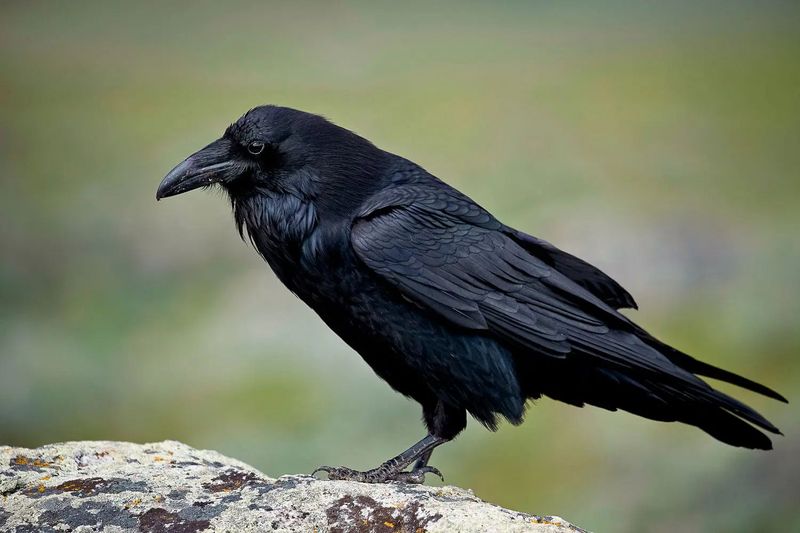
When a raven is simply passing through, the best response is to watch from a distance and think through what drew it there before changing anything about the yard. Food, water, a familiar perch along a regular flight path, or a sheltered spot near nesting season can all explain a visit without requiring any dramatic intervention.
Identifying the specific attractant takes a few minutes of observation and saves a lot of unnecessary effort.
Trimming vegetation or removing trees should not be the first move. Wildlife encounter guidance from Utah State Extension points toward targeted resource removal over broad habitat changes, which can affect every animal using the yard, not just the one you noticed.
Start with the food sources described earlier, then reassess.
A raven that returns repeatedly is almost certainly responding to something reliable in the environment, not forming a bond with you personally. Cornell’s raven life history describes ravens as wide-ranging birds that cover large territories and respond to food availability, seasonal changes, and social opportunities.
Cornell’s overview reinforces that hand-feeding or deliberate attraction creates habituation problems over time, even when the interaction feels harmless in the moment.
Ravens can prepare for later opportunities and hold onto associations with threatening situations for years. Homeowners can set clear boundaries that protect people, pets, poultry, and the bird itself, mostly by removing what makes the yard worth returning to.
The most useful thing a curious observer can do is watch carefully, act on specific evidence, and leave the wild part of the visitor intact.