
8 Reasons Borage Earns A Spot In Your North Carolina Front Yard, Not Just The Veg Bed
Follow us on Google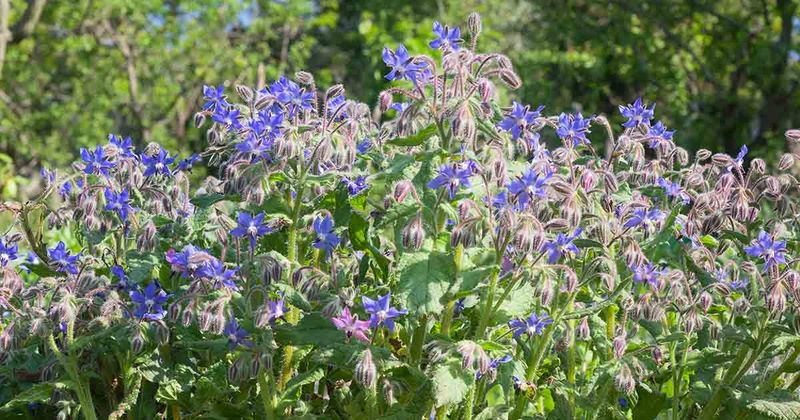
Most people tuck borage behind the tomatoes and forget it exists, but this sprawling Mediterranean herb has been quietly earning a second look from gardeners across the Piedmont, Coastal Plain, and mountains. Its electric-blue, star-shaped flowers show up all summer, bees genuinely love it, and it handles everything from red clay to sandy Coastal Plain soil without much fuss.
If you have ever walked past a front-yard bed and thought it needed one more layer of life, borage might be the plant you keep passing at the nursery without knowing why it belongs out front.
Borage Belongs Beyond the Vegetable Bed
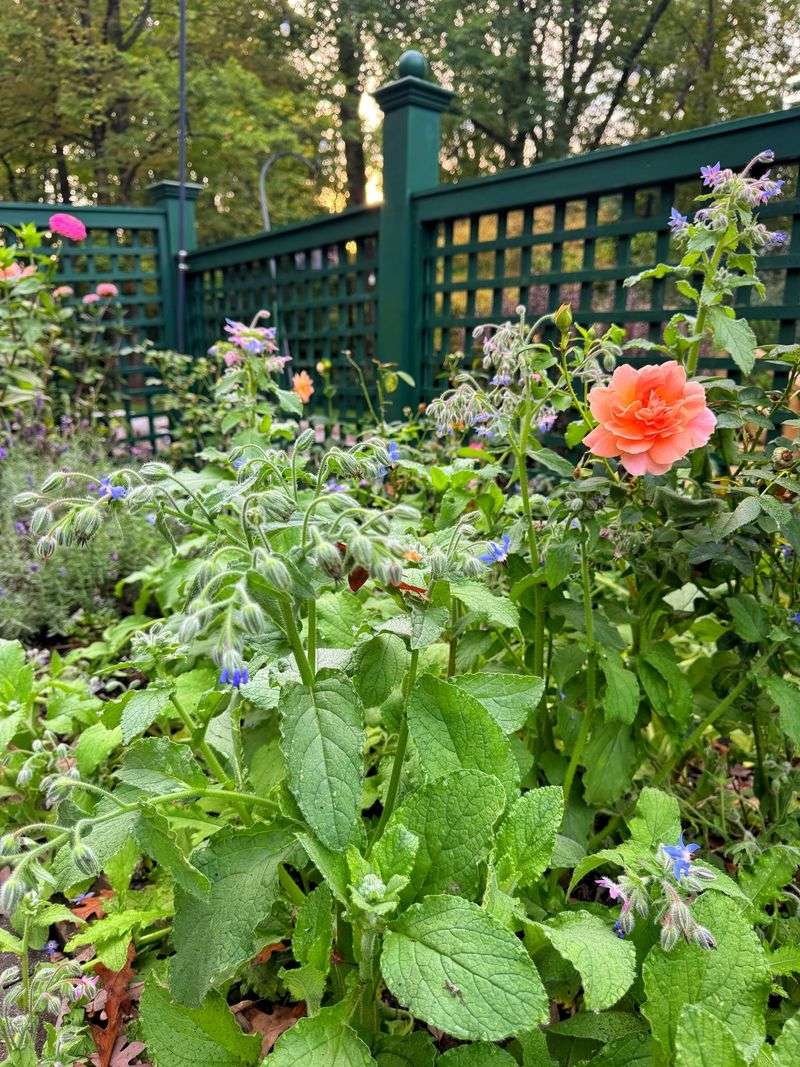
Borago officinalis is a Mediterranean annual that most North Carolina gardeners stow behind the fence with the squash. It grows 19 to 38 inches tall and spreads 12 to 16 inches wide, according to NC State Extension’s plant profile for borage, which puts it solidly in the range of a mid-border accent rather than a background filler.
That size fits a mailbox bed, a porch-side container, or a cottage-style border without swallowing the whole design.
The plant’s texture is coarse and hairy, its stems branching out in a loose, informal way that feels relaxed rather than manicured. That character suits yards where a plant is expected to look alive and a little wild, not clipped into submission.
It fits less comfortably in a tightly symmetrical formal design where every edge needs to behave.
Here is where many gardeners get tripped up: the leaves and flowers look edible, and technically some culinary traditions do use them, but edible-looking does not mean safe for everyday use. The article returns to that point later with specifics worth reading before you reach for a leaf.
The eight reasons ahead build a practical case for moving borage from the vegetable patch to the front yard. Not every yard will suit it, and not every gardener will love it, but for an informal, pollinator-friendly bed that handles North Carolina’s variable soils, borage makes a genuinely compelling argument for itself.
A Blue Bridge Between Garden Styles
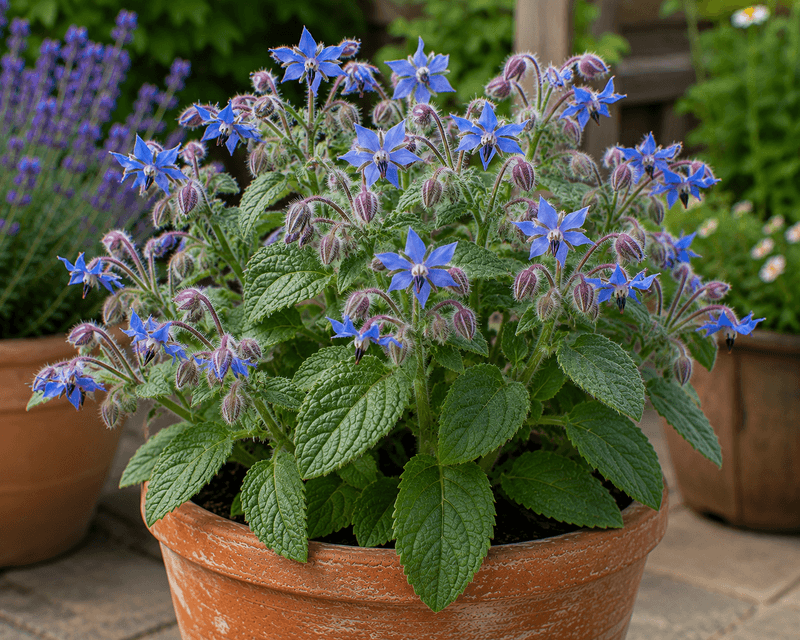
Few annual herbs stop people mid-step the way borage does when it opens its first cluster of flowers. The blooms are a true, saturated blue, small and star-shaped, nodding downward on curved stems in a way that plant people sometimes compare to a tiny chandelier.
Against the coarse, gray-green foliage, that color reads from across a yard, which makes borage genuinely useful as a visual anchor in a mixed bed.
That ornamental value is the bridge. A gardener who already grows borage among the tomatoes can move it to the front border and find that it holds its own next to purple coneflower, golden black-eyed Susans, or the soft mounds of a native bee balm.
NC State’s plant profile lists borage as suitable for edible landscapes, borders, and wildlife plantings, which confirms that the vegetable bed is not its only home.
Placement matters more than people expect. Because borage spreads broadly and develops a somewhat untidy form by midsummer, it reads as intentional in a relaxed cottage border or a pollinator patch near the mailbox.
Tuck it beside a porch railing or at the edge of a gravel path and it looks like a deliberate choice. Squeeze it into a formal symmetrical bed and it will almost certainly look like it escaped from somewhere else.
Containers work too, as long as the pot is large enough to support a plant approaching 2 to 3 feet tall. A small pot will stress the roots and cut the bloom time short.
Bees Actually Visit the Flowers
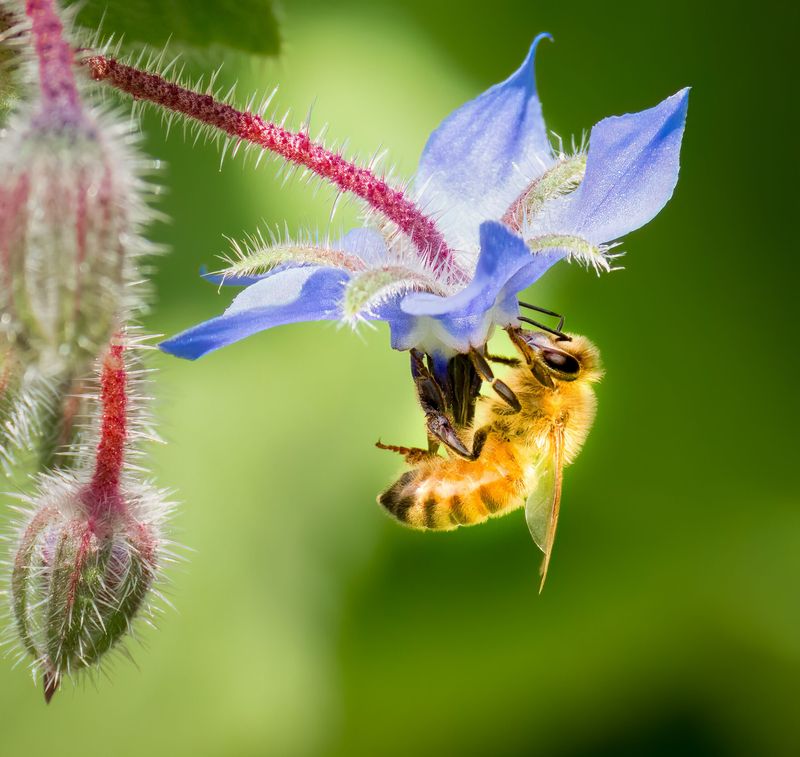
Walk past a borage plant on a warm July morning in the Piedmont and you will likely hear it before you finish reading the label. The flowers attract honeybees, halictid bees, and bumblebees, and published research on urban pollinator visitation to borage documents that attraction in quantified detail.
That is not gardening folklore, it is observed and recorded behavior.
A separate study on temperature, water stress, and borage pollination found that heat and drought can change how much nectar and pollen the flowers offer, which means visitation rates may shift during a particularly brutal August in the Sandhills or a dry stretch along the Coastal Plain. Borage is genuinely bee-friendly, but it is not a guaranteed pollinator magnet in every summer condition.
Borage works best as one layer in a broader planting. Penn State’s pollinator habitat guidance makes clear that a strong pollinator garden needs diverse bloom times, varied flower forms, nesting habitat, shelter, and reduced pesticide exposure.
One plant, even a well-visited one, does not replace that system.
Now for the part that surprises most people: borage does not repel mosquitoes. Penn State Extension explains that living aromatic plants do not release enough essential oil to push mosquitoes away.
And Penn State’s herb-growing guide notes that Japanese beetles may actually like borage, so pest-control hopes should stay off the table entirely.
Its Soil Tolerance Fits More Than One Yard
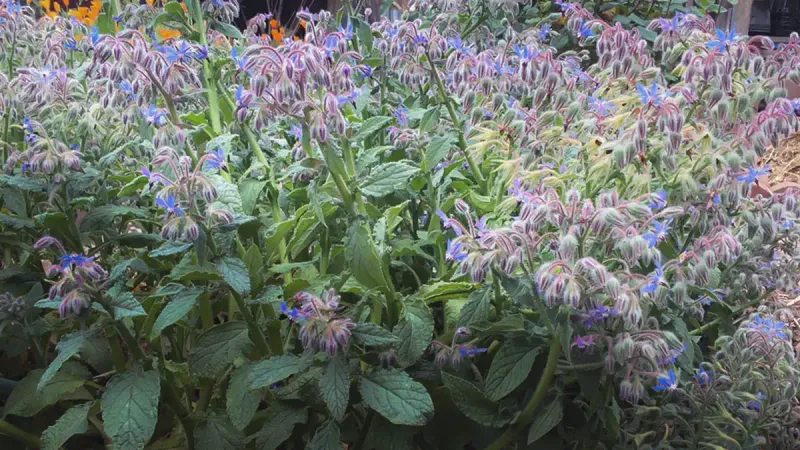
North Carolina gardeners deal with a remarkable range of soils within a single county, let alone across the whole state. Piedmont red clay drains slowly and compacts under foot traffic.
Sandy Coastal Plain beds shed water so fast that summer annuals wilt by noon. The Sandhills sit somewhere between, and mountain coves can surprise you with rich, dark loam tucked between rocky ridges.
Borage handles all three major textures. NC State Extension lists borage as tolerant of clay, loam, and sand, which makes it one of the more adaptable annuals available to gardeners who are tired of amending every bed before planting.
Good drainage still matters, so a spot that holds standing water after a summer thunderstorm is not going to work, but most reasonably managed front-yard beds will suit it.
Sun is the other piece of the site decision. Full sun, meaning roughly 6 hours of direct light each day, gives borage its best chance at sturdy stems and consistent flowering through the long North Carolina summer.
The plant tolerates partial shade, but flowering may slow and stems may lean toward light in shadier spots.
Choose a location where an informal, spreading plant has room to reach its full width without crowding the sidewalk or blocking a neighbor’s view of the street. A sunny, well-drained spot near a mailbox, at the edge of a porch bed, or along a fence line tends to give borage the conditions it needs without putting it somewhere it will become a nuisance.
Direct Sowing Makes Establishment Simpler
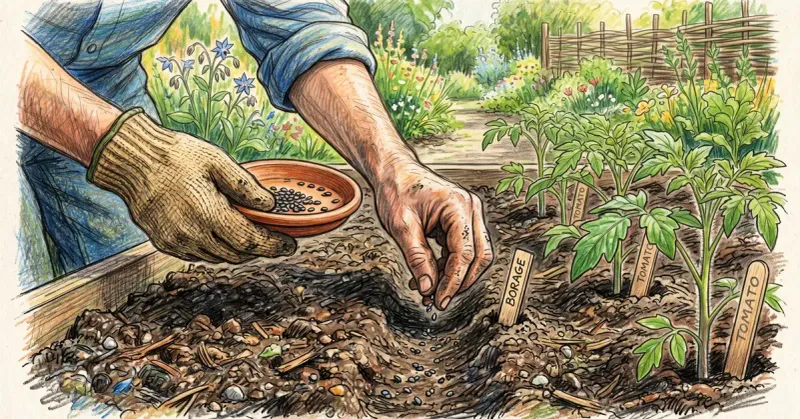
Borage does not move well. NC State groups it with herbs that do not transplant reliably, so starting seeds indoors and then moving seedlings to the front bed tends to set the plant back rather than give it a head start.
Direct sowing into the bed where the plant will grow is the cleaner approach, and it is genuinely simpler once you accept that the seed does the work.
The NC State Extension Gardener Handbook and the NC State Piedmont container gardening calendar point to April and May as the practical sowing window for the Piedmont, with spring-to-fall harvest potential. Mountain gardeners should push that window later based on their last frost date, since elevations above 3,000 feet in the western counties can see frost well into May.
Spacing is worth getting right from the start. The University of Georgia’s herbs guide for southern gardens recommends roughly 18 inches between plants as a starting point.
Given that NC State lists a mature width of 12 to 16 inches, 18 inches gives each plant enough room to fill out without competing hard for light and air.
Containers can work, but the pot needs to be large enough to support a plant approaching 2 to 3 feet tall without tipping. A 12-inch pot is generally too small.
Water young plants consistently until roots establish, then borage becomes considerably more self-reliant through the rest of the growing season.
A Midsummer Cut Can Refresh the Plant
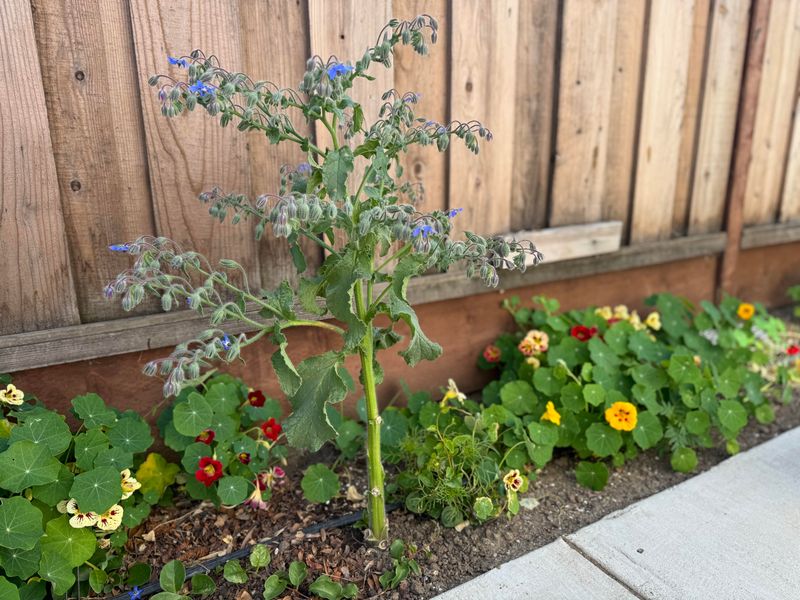
By late July, many Piedmont borage plants look like they have had a rough season. The stems get long and floppy, the lower leaves yellow out, and the whole plant takes on that mid-season sprawl that makes gardeners wonder whether it is done for the year.
It usually is not.
NC State recommends cutting borage back by half in midsummer to encourage fresh growth that can carry the plant into fall. That is a straightforward cut, not a complicated pruning task.
Take the stems down to roughly half their height, leave the plant in place, and water it if the weather has been dry.
What comes back is usually tidier and more compact than the original flush. Whether that new growth produces a strong fall bloom depends on the weather, the specific site, and how the summer treated the plant.
A hot, dry August in the Sandhills may limit the rebound more than a milder season in the mountains. The cut can help, but it does not guarantee a second act in every yard or every year.
Removing spent plants entirely is a reasonable choice if you want a cleaner bed or fewer seedlings turning up in the lawn next spring. Leave some seed heads only if you genuinely want borage to return on its own.
That choice connects directly to the next section, which covers what self-seeding actually looks like in practice.
Self-Seeding Rewards a Deliberate Approach
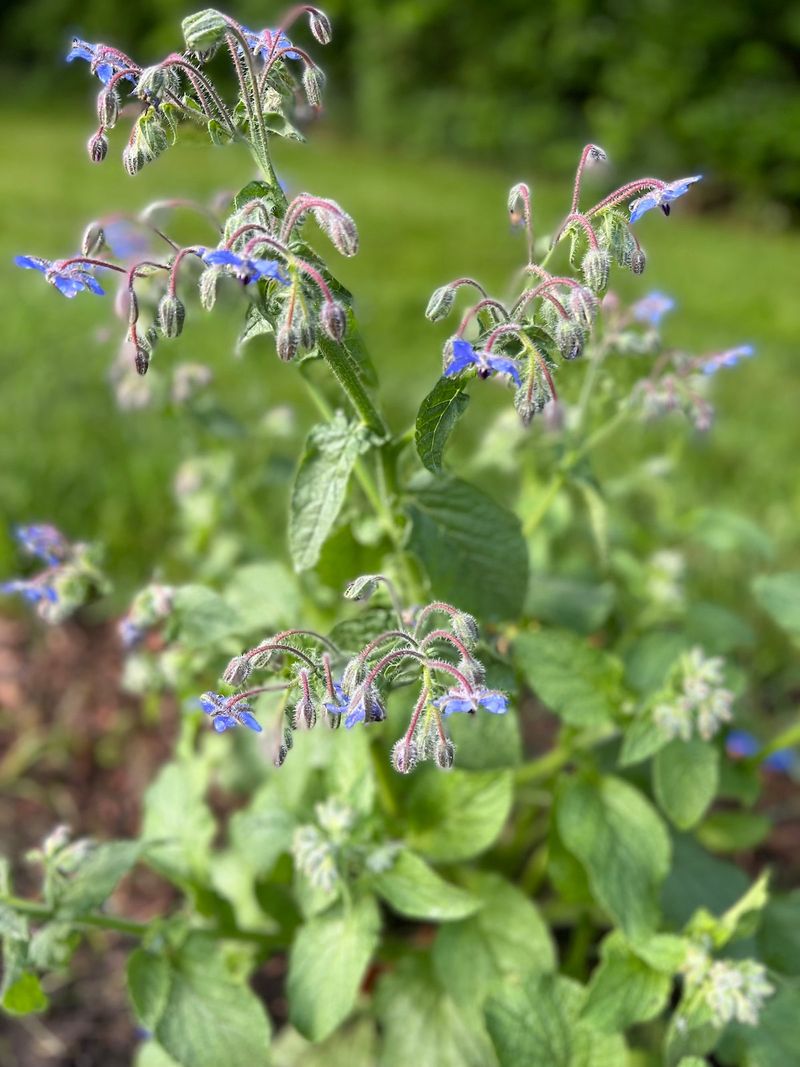
Borage is an annual, full stop. It germinates, grows, flowers, sets seed, and dies in a single season.
But when seed matures and drops before you clean up the bed, seedlings may appear the following spring with no effort on your part. That feels like a perennial trick, and it is genuinely useful, but it is not the same as a plant coming back from its roots.
NC State’s borage profile acknowledges this self-seeding tendency, and the RHS borage growing guide notes the same behavior in garden settings. Whether seedlings appear in your specific bed depends on soil disturbance, mulch depth, winter temperatures, and plain luck.
It is variable enough that you should not count on it as a replanting strategy, only welcome it as a bonus when it happens.
Managing where borage goes is the practical skill here. Let a few seed heads dry on the plant in spots where future plants would be welcome.
Then watch the edges of the bed, the nearby lawn, and any cracks in the walkway the following spring, and pull unwanted seedlings while they are still small and easy to remove.
The ecological context matters too. The Invasive Plant Atlas of the United States classifies borage as exotic and notes it can appear in disturbed places like roadsides and ditches.
The North Carolina Vascular Plants Database reflects its non-native status in the state. That does not make every borage planting a problem, but it does mean managing its spread thoughtfully rather than letting it run unchecked into adjacent natural areas.
Its Limits Make the Placement Smarter
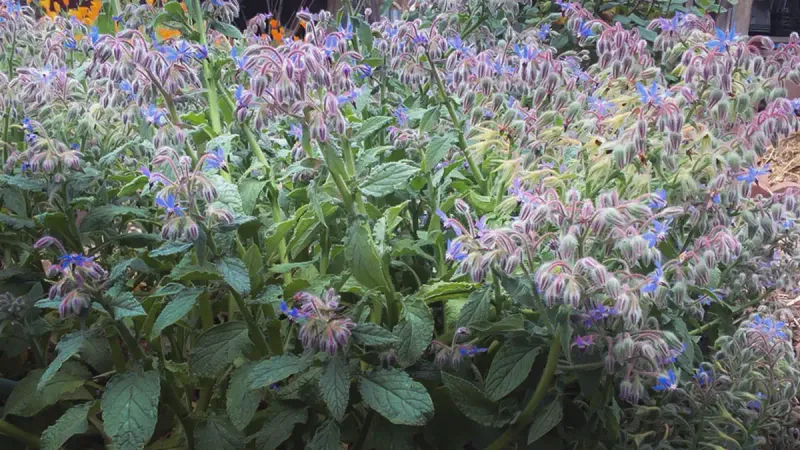
Borage foliage is coarse, hairy, and a little prickly to the touch. That texture is part of its character, but it also means the plant does not belong directly beside a narrow walkway where kids, pets, or guests will brush against it constantly.
Place it where it has room to spread without becoming an obstacle, and the texture becomes a non-issue.
The edible-looking flowers and leaves deserve a clear-eyed note. Some culinary traditions do use borage as a garnish, but NC State warns that borage contains pyrrolizidine alkaloids, compounds that can damage the liver and lungs with repeated exposure.
A 2025 food-safety study on pyrrolizidine alkaloids in borage found that levels vary by plant part and growth stage, with flowers showing higher concentrations than leaves in the tested material. That is reason enough to skip the everyday salad bowl.
Borage-leaf tea carries an additional caution. UK government plant-toxin guidance advises against borage-leaf herbal infusions because they can contain very high pyrrolizidine-alkaloid levels.
This is not a fringe concern, it is official food-safety advice from a government body.
The strongest front-yard version of borage is one annual accent within a bed that leans on regionally appropriate native plants for its foundation. NC State’s native plants handbook and NC State’s landscaping for wildlife guide identify many species suited to the mountains, Piedmont, and Coastal Plain.
Match your companions to your region and site conditions, not just a common name on a national list. Borage fills a gap in a thoughtful planting; it does not fill the whole bed on its own, and knowing that is exactly what makes it worth growing.