
Your Cucumber Vines Keep Flowering But Never Set A Single Cucumber, And The Blooms Are Telling You Why
Follow us on Google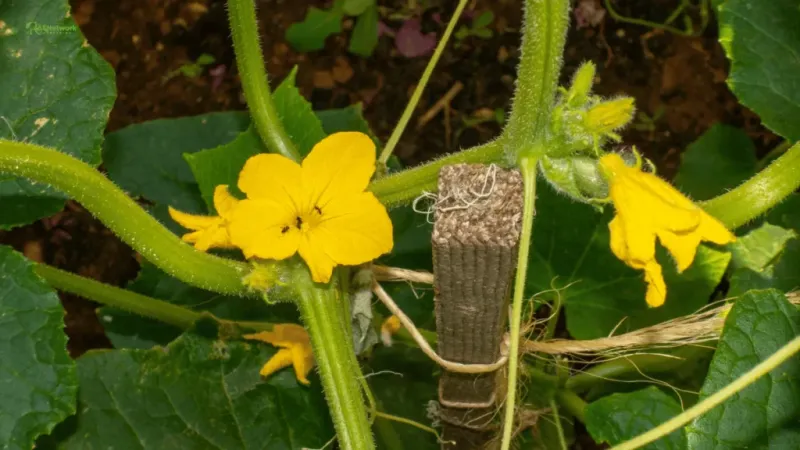
Standing in the garden on a July morning, staring at a vine loaded with yellow flowers but not a single cucumber in sight, is genuinely frustrating.
The good news is those flowers are already giving you useful clues, even if they cannot hand you a complete answer on their own.
Learning to read male and female blooms takes about two minutes, and it narrows the diagnosis fast so you can stop guessing and start fixing the right thing.
Flowers Narrow The Diagnosis
Cucumber flowers are more useful than most gardeners realize, but they are a starting point for diagnosis, not a final verdict.
A vine covered in blooms but empty of fruit could be dealing with immature growth, poor pollination, heat, cold, drought, flooding, pest pressure, disease, or variety biology.
The flowers can quickly show you which category of problem you are most likely facing, and that narrows what you do next.
Most cucumbers, known botanically as Cucumis sativus, grow both male and female flowers on the same plant.
Botanists call this arrangement monoecious, which simply means one house, one plant, both flower sexes.
University of Minnesota Extension guidance on cucurbit flower and fruit set explains that only a successfully pollinated female flower can develop into a cucumber, so the ratio and condition of your flowers matter a great deal.
Here is the practical promise: if your vine shows only male flowers, the most common explanation is that the plant is still young and the female flowers have not appeared yet.
If female flowers are present but shriveling without growing, inadequate pollination or stress is a leading suspect.
If tiny cucumbers start forming and then yellow, soften, or drop, the list of possible causes gets longer and includes incomplete pollination, heat, moisture problems, disease, and pests.
So before you add fertilizer, drag out the hose, or order a second plant, spend two mornings looking at the base of each flower.
Oklahoma State University Extension vegetable FAQ guidance confirms that distinguishing male from female flowers is the most useful same-day step a home gardener can take.
The blooms will not tell you everything, but they will tell you enough to stop treating the wrong problem.
Find The Tiny Cucumber Behind The Bloom
The visual test is easier than most gardening guides make it sound.
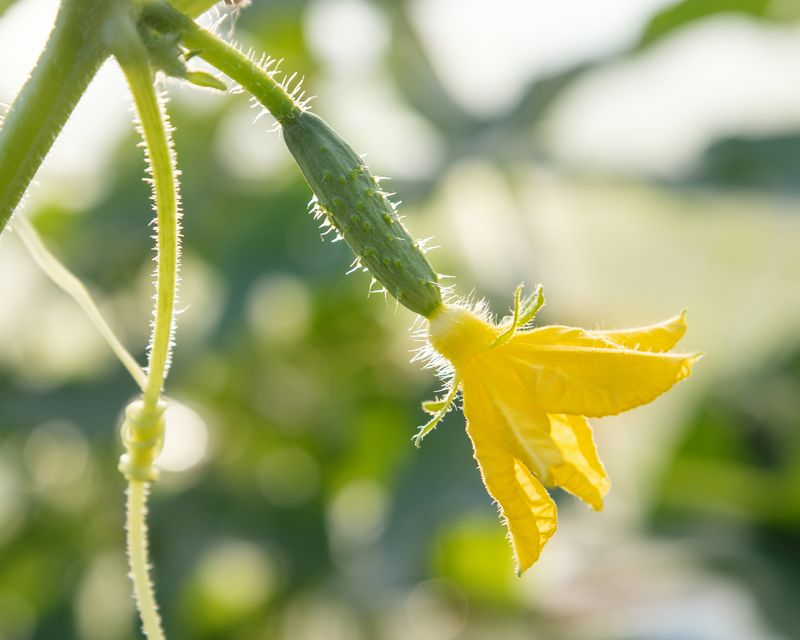
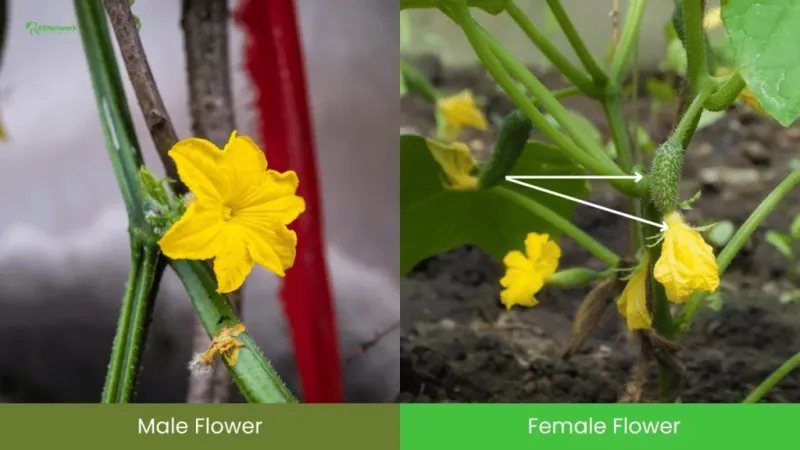
Look at the base of the flower, the spot where the blossom meets the stem.
A male flower sits on a plain, narrow, relatively long stem with nothing swollen at the base.
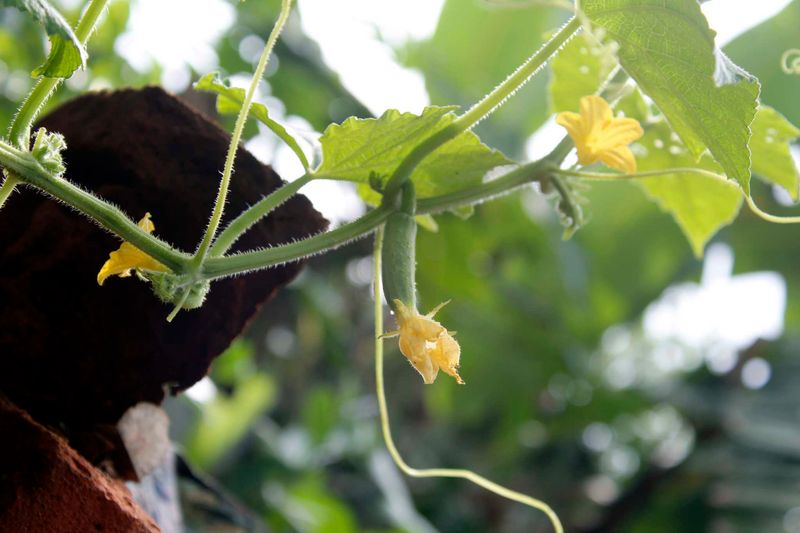
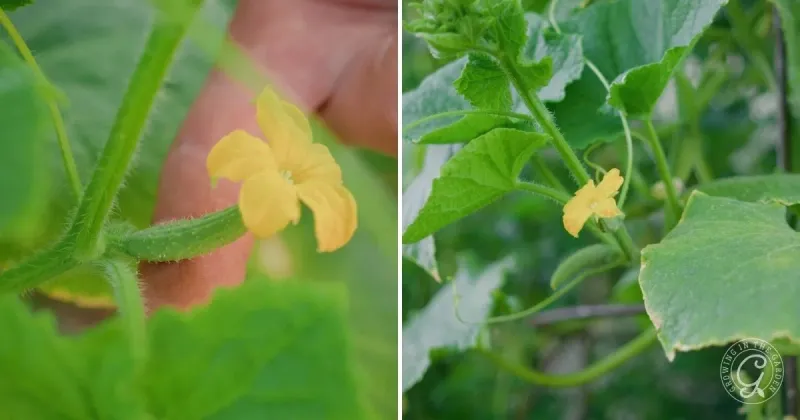
A female flower has a small, rounded swelling directly behind the petals that looks exactly like a miniature cucumber, because that is what it will become if pollination succeeds.
Flower size and color are not reliable guides here.
Both sexes are yellow and roughly similar in petal size.
The only detail that matters is that base.
Oklahoma State Extension vegetable guidance confirms that this swollen ovary is the key distinguishing feature on standard cucumber varieties.
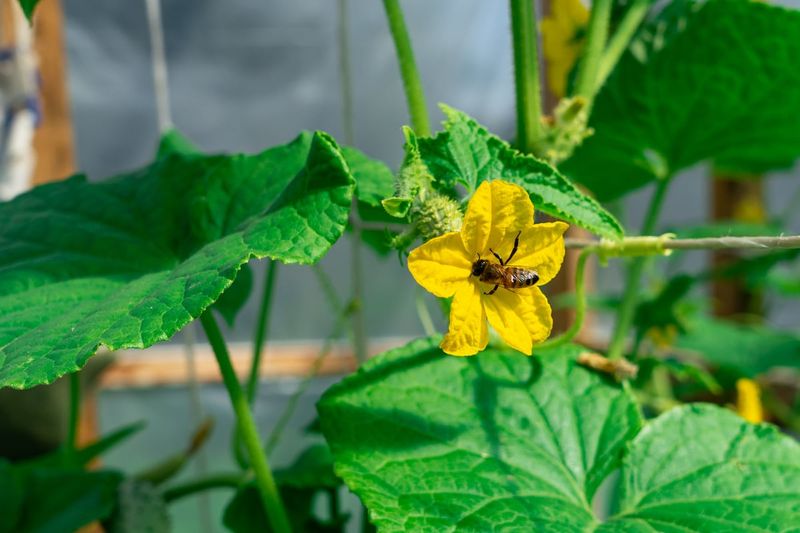
For varieties that require pollination, a bee or other insect must carry pollen from a male flower to the sticky center of a female flower.
When that transfer happens successfully, the tiny ovary behind the female bloom begins to swell and lengthen into a full cucumber.
Without adequate pollen transfer, the ovary yellows, softens, and drops within a few days, leaving gardeners baffled.
Not every cucumber variety follows this rule, and that exception matters.
Oklahoma State University Extension cucumber production guidance notes that parthenocarpic varieties can develop fruit without pollination at all, and University of Minnesota Extension pollination requirements identifies parthenocarpic cucumbers as varieties commonly used in greenhouses and high tunnels precisely because they do not need insect visits.
If you are growing a parthenocarpic type, the flower-sex test still helps you understand your plant, but low bee activity is not your problem.
Judge the base, not the bloom.
That single habit will save you from misreading your vine every time.
Male Flowers First Often Mean The Vine Needs Time
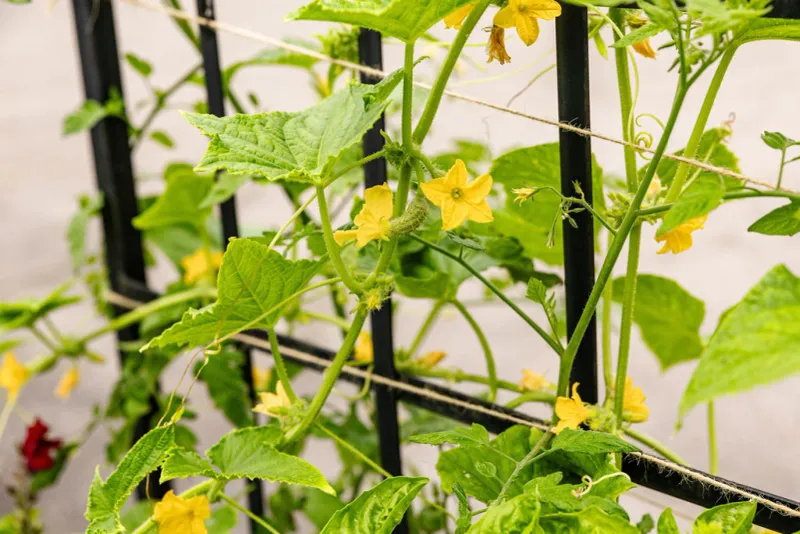
A vine that pushes out flower after flower with nothing to show for it can feel like a failure, but the most common explanation is simply timing.
University of Minnesota Extension guidance on growing cucumbers explains that male flowers typically appear first, sometimes a week or more before female flowers show up, and that is completely normal plant behavior rather than a sign something has gone wrong.
As the vine matures and its root system establishes, the proportion of female flowers generally increases.
Watching new growth at the tips of the vine over a week or two often reveals the first female buds appearing.
The right response to male-only flowering on a young plant is usually observation, not intervention.
That said, stress can keep a vine stuck in a male-heavy pattern or cause developing female buds to abort before they open.
Heat above roughly 90 degrees Fahrenheit during the day, drought, waterlogged soil, and crowded roots are all capable of skewing flower production.
Oklahoma State University Extension guidance on fruiting vegetable problems points out that excess nitrogen is another common culprit, pushing the vine to produce abundant leafy growth while delaying or reducing flowering.
Resist the urge to add fertilizer because the plant looks leafy and vigorous but unproductive.
More nitrogen in that situation tends to make the problem worse, not better.
Check your watering consistency, look for signs of heat stress such as wilting during the coolest part of the morning, and give the vine a realistic amount of time before concluding something is seriously wrong.
Many gardeners across the Midwest and Southeast notice this pattern every summer on perfectly healthy plants.
The vine is not broken, it is just warming up.
Female Flowers Point Toward Pollination Or Stress
Once you spot female flowers on the vine, the diagnostic question shifts.
The question is no longer whether the plant can produce female blooms.
Now you want to know why those blooms are not becoming cucumbers.
Cucumber flowers are receptive for a short window, typically during the morning hours, and they depend on bees and other insects to carry pollen from male flowers to the sticky center of the female bloom.
University of Minnesota Extension cucurbit growing guidance notes that poor pollination can result in no fruit, undersized fruit, or misshapen fruit, which means the symptom pattern varies depending on how much pollen actually reached the stigma.
A female flower that shrivels and drops within a day or two without any swelling at the base is a strong signal that pollination did not happen.
That points first toward low insect activity during the flower’s brief open period, though cold rain that keeps bees grounded, heat that wilts flowers before insects arrive, or wind that scatters pollen before it lands can all produce the same result.
The picture changes when a tiny cucumber actually begins to form but then turns yellow, softens, becomes misshapen, or drops off while still small.
University of Minnesota Extension cucumber fruit problem diagnosis identifies incomplete pollination as one possible cause of deformed or aborting small fruit, alongside moisture stress, heat, disease, and pest injury.
A partially pollinated cucumber often develops unevenly, swelling at one end while staying narrow at the other.
Both patterns, the flower that drops and the tiny fruit that aborts, deserve attention, but they do not always share the same fix.
Watching which pattern repeats across several flowers over two or three mornings gives you a more reliable read than a single observation on a single day.
Use Two Mornings To Check What Is Happening
The flower test only works if you catch the vine at the right time.
Plan to check your cucumbers between roughly 7 a.m. and 11 a.m. on two or three consecutive mornings.
That window reflects when cucumber flowers are typically open and receptive and when bees are most likely to be foraging, though cooler weather, cloud cover, or regional differences can shift the timing.
Treat it as a practical observation range rather than a hard rule.
Oklahoma State University Extension cucumber production guidance documents this morning pollination window as the period when insect activity and flower receptivity align.
Walking the vine at noon or in the afternoon often means the flowers have already closed and the bees have moved on.
During each visit, note three things.
First, are the open flowers male, female, or both?
Second, do you see bees, bumblebees, or other insects visiting the blooms?
Third, are any of the tiny fruit from previous days growing larger, or are they yellowing and softening?
After two or three mornings, sort what you found into one of three patterns.
Male flowers only means the vine is likely still maturing, with stress as a secondary possibility worth checking.
Female flowers that shrivel and drop without any swelling point toward a pollination gap, though weather stress can produce the same result.
Tiny fruit that begin forming and then abort or deform suggest either incomplete pollination or a broader stress problem involving heat, water, disease, or pests.
University of Minnesota Extension cucurbit guidance reinforces that none of these patterns is conclusive proof of one single cause.
They narrow the list, which is exactly what you need before choosing a response.
Hand-Pollinate Only When The Variety And Flowers Call For It
Hand pollination is worth trying when three conditions line up: your variety requires pollination to set fruit, female flowers are open and present, and insect activity during your morning checks has been consistently low.
When all three are true, the technique is simple and takes about five minutes per flower.
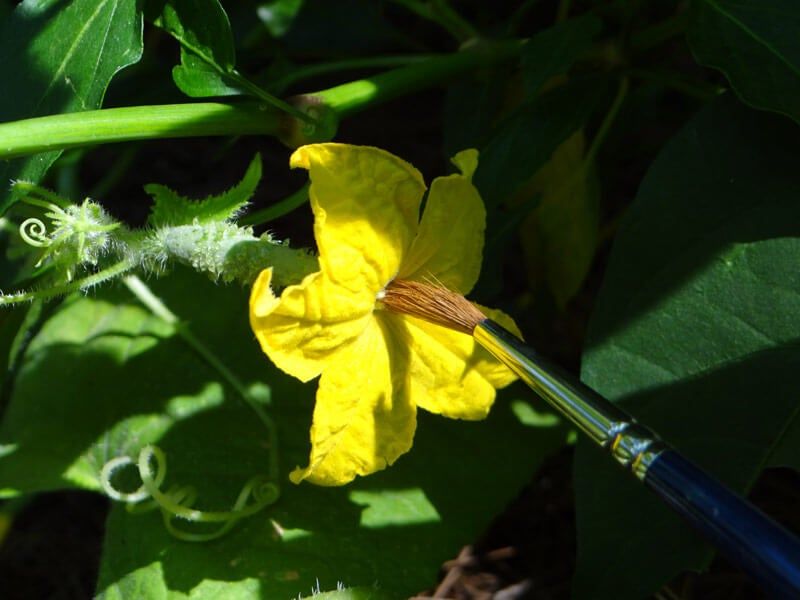
Pick a freshly opened male flower in the morning, the same window when the flowers are naturally receptive.
Remove the petals carefully so you can see the central stalk covered in yellow pollen, which is called the anther.
Gently press or brush that anther against the sticky center knob of an open female flower, which is called the stigma.
Oregon State University Extension seed-saving guidance describes this transfer method for cucurbits and notes that a small clean artist’s brush or a cotton swab can also carry pollen if you prefer not to use the whole flower.
Be realistic about what the technique can and cannot do.
Colorado State University Extension hand-pollination guidance is clear that hand pollination may help when female flowers exist and pollinator visits are inadequate, but it cannot fix male-only flowering, severe heat that renders pollen sterile, water stress, disease, pest damage, or variety genetics that work against fruit set.
Think of it as one useful tool, not a guaranteed solution.
One more practical note for anyone saving cucumber seeds: avoid moving pollen between different cucumber varieties if seed purity matters to you.
Cucumber varieties can cross with one another, and while that crossing does not change the taste or shape of the cucumbers you harvest this season, it will affect what grows from saved seed next year.
If you are not saving seed, cross-pollination between varieties is not a concern for your current harvest.
Check Weather, Variety, Water, And Pollinator Safety
After two mornings of flower checks, you have a pattern.
Now match that pattern to the broader conditions around the vine before reaching for a product or making a purchase.
Temperature is one of the first things to check.
University of Minnesota Extension heat stress guidance reports that daytime temperatures above roughly 90 degrees Fahrenheit and nighttime temperatures above roughly 70 degrees Fahrenheit can increase male flower production, reduce bee foraging activity, and contribute to flower drop and small-fruit abortion.
On the cooler end, temperatures below about 50 to 55 degrees Fahrenheit can slow or stop bee activity, and sustained wind above about 20 mph can interfere with pollination even when flowers are open.
These are useful warning ranges that vary by cultivar and local conditions, not guaranteed failure points for every garden.
Variety biology is the second check.
Oklahoma State University Extension cucumber production guidance explains that standard monoecious varieties produce both flower sexes on one plant, gynoecious varieties produce mostly female flowers and may need a monoecious pollenizer variety planted nearby, and parthenocarpic varieties can set fruit without any pollination at all.
Read the seed packet or look up the variety name before buying a second plant or spending mornings hand-pollinating every bloom.
A parthenocarpic variety will not benefit from extra bee visits, and a gynoecious variety without the right pollenizer companion will not benefit from hand pollination alone.
Water comes next.
Colorado State University Extension guidance on cucumbers and related crops gives roughly 1 to 1.5 inches of water per week as a starting point in warm weather, adjusted for rainfall, soil type, wind, and drainage.
Consistent soil moisture matters more than a fixed schedule, and drip or soaker irrigation keeps moisture steady while reducing wet-foliage disease risk better than overhead sprinklers do.
On fertilizer, resist adding more if the vine is already leafy.
Oklahoma State Extension fruiting vegetable guidance is direct: excess nitrogen encourages lush leafy growth while delaying flowering and fruit set.
Use a soil test or follow the label rather than guessing.
Finally, protect the pollinators that do the daily work your hand pollination cannot fully replace.
Avoid spraying any pesticide on open cucumber flowers.
Follow every product label restriction, including pollinator protection language.
When treatment is genuinely necessary, target it carefully and time it to avoid peak morning foraging hours.
The vine, the bees, and your harvest all depend on that small courtesy.