
The Native Florida Trees To Plant Instead Of Water Oaks That Stand Through Hurricane Season
Follow us on Google
You step onto the patio after breakfast and the air already feels heavy, thick with the kind of humidity that promises an afternoon downpour.
You know the drill, living here in Florida.
June brings longer days, but it also brings the looming shadow of hurricane season, and you keep eyeing that old water oak out back, wondering if this is the year it gives up.
Many Central Florida gardeners know the sight.
A sprawling water oak that looks generous in July becomes a giant sail in September, catching every gust until something snaps.
Here is the good news.
Florida grows a whole lineup of native trees, perfected by nature, that offer real storm protection instead of a hope and a prayer.
We are going to walk through the true heroes, the ones that stay standing while others hit the ground.
1. Water Oaks Are A Recipe For Disaster
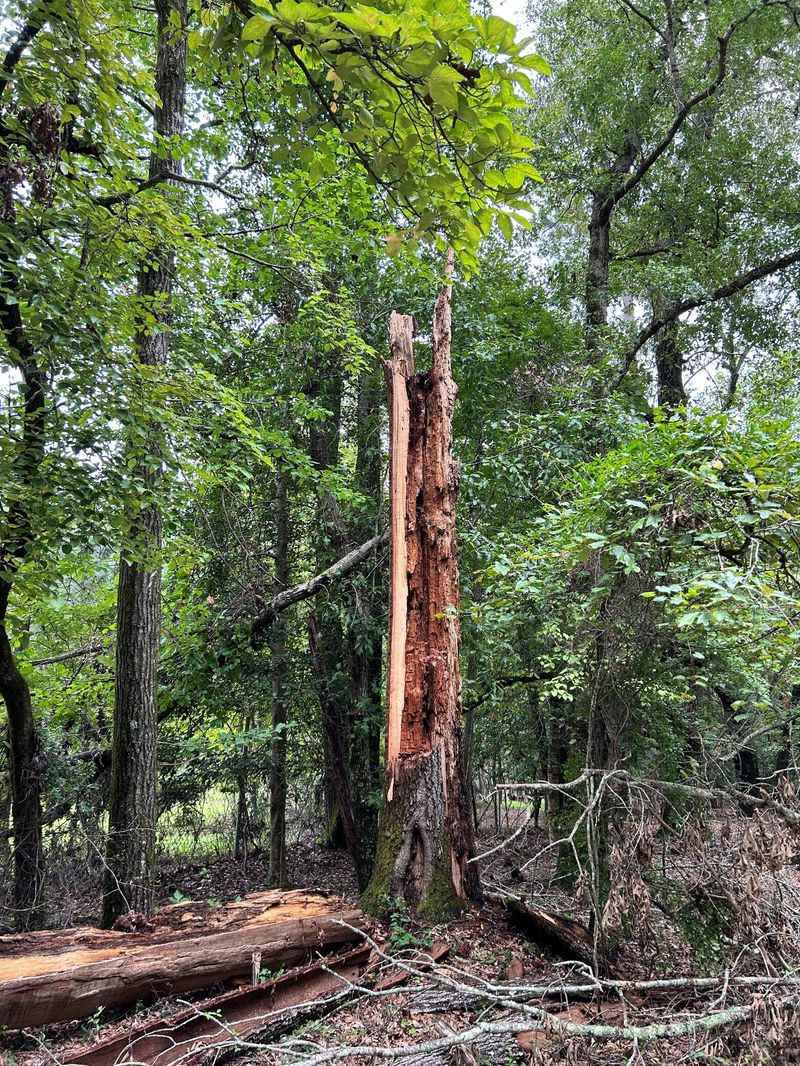
You might love that big water oak (Quercus nigra) in your yard, the one that shot up fast and threw down welcome shade.
But here is where it gets tricky.
Those rapid growth spurts, often 2 to 3 feet each year, create softer, more porous wood that snaps under pressure.
The real trouble hides beneath the bark, literally.
Water oaks are notorious for internal decay that often starts around age 30 and stays invisible from the outside.
A tree that looks perfectly healthy at 50 years old can be rotting at its core, a silent antagonist waiting for one strong storm.
When Hurricane Ian carved through Southwest Florida, many homeowners learned this the hard way.
UF/IFAS rates mature water oaks a dismal 2 out of 5 for wind resistance, and their shallow roots struggle to grip saturated soil.
The stakes are genuinely real.
A 70-foot water oak with a hidden hollow, standing within 80 feet of your house, becomes a loaded weapon during the June 1 to November 30 storm window.
That is a lot to gamble on shade.
2. Live Oak Stands The Test Of Time
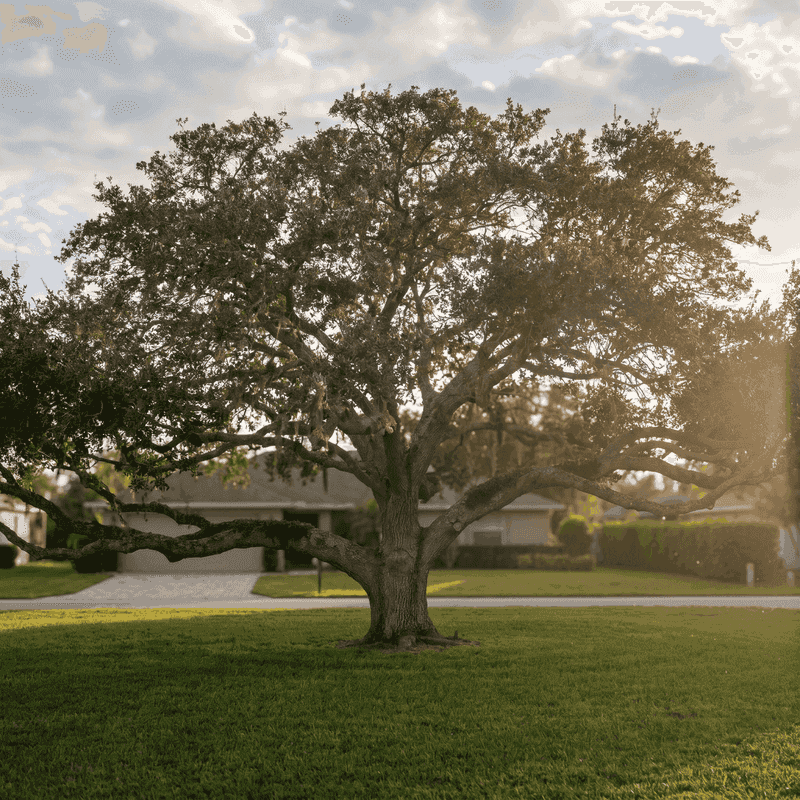
Picture a tree that has watched generations of storms roll through, bending and swaying but refusing to break.
That is the live oak (Quercus virginiana), the undisputed champion of hurricane resistance across Florida.
After Hurricane Andrew in 1992, UF/IFAS research found live oaks had the lowest failure rate of any large canopy tree.
That resilience is no accident.
It is thousands of years of adaptation to our brutal summers and wild winds.
Their wood is dense, strong, and flexible, so branches ride the gusts instead of fighting them.
Deep, spreading roots anchor them firmly in the sandy soils common from the Atlantic Coast to the Gulf.
A wide crown, reaching 40 feet across at maturity, spreads wind pressure instead of concentrating it the way a tall, narrow oak does.
The secret beyond genetics is care.
Structural pruning that keeps the crown open lets wind pass through and cuts the sail effect.
Plant one at least 15 feet from your home, giving those roots room to dig in deep.
Do that, and you get shade your grandkids will sit under.
3. Sabal Palms Are Florida’s Iconic Survivors
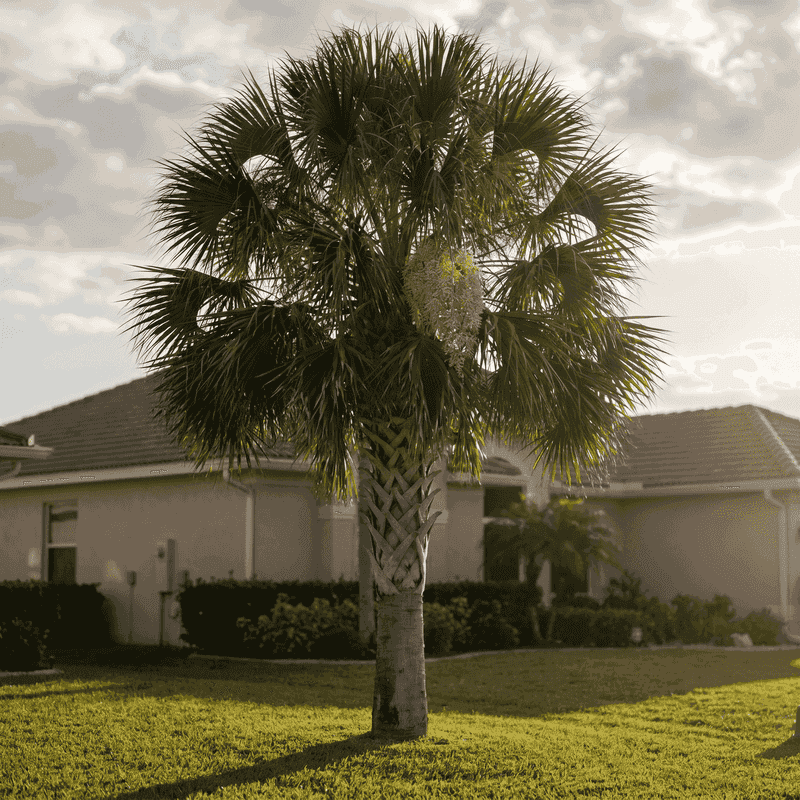
They stand everywhere, from the Keys to the Panhandle, swaying through the stiffest breeze.
The sabal palm (Sabal palmetto) is Florida’s state tree, and it is a living testament to storm survival, built Florida tough.
What makes them such incredible survivors comes down to biology.
Their flexible trunks are packed fibers that bend 40 to 50 degrees in high wind without snapping.
When the gusts truly howl, the crown simply sheds fronds, shedding drag the way a sailor drops canvas.
Their roots dive deep into the nutrient-poor sand found throughout Central and South Florida.
After every major hurricane from Charley to Irma to Ian, sabal palms rank at the top of wind-resistance surveys while other species lie flat on the ground.
They shrug off drought once established and handle salt spray, which makes them a natural fit for coastal properties.
For real wind protection around your home, plant a cluster of 3 to 5 palms at varying heights so their dense heads work as a natural windbreak.
Some live nearly 100 years, quietly guarding your porch evenings for a lifetime.
4. Gumbo Limbo Bends So It Will Not Break
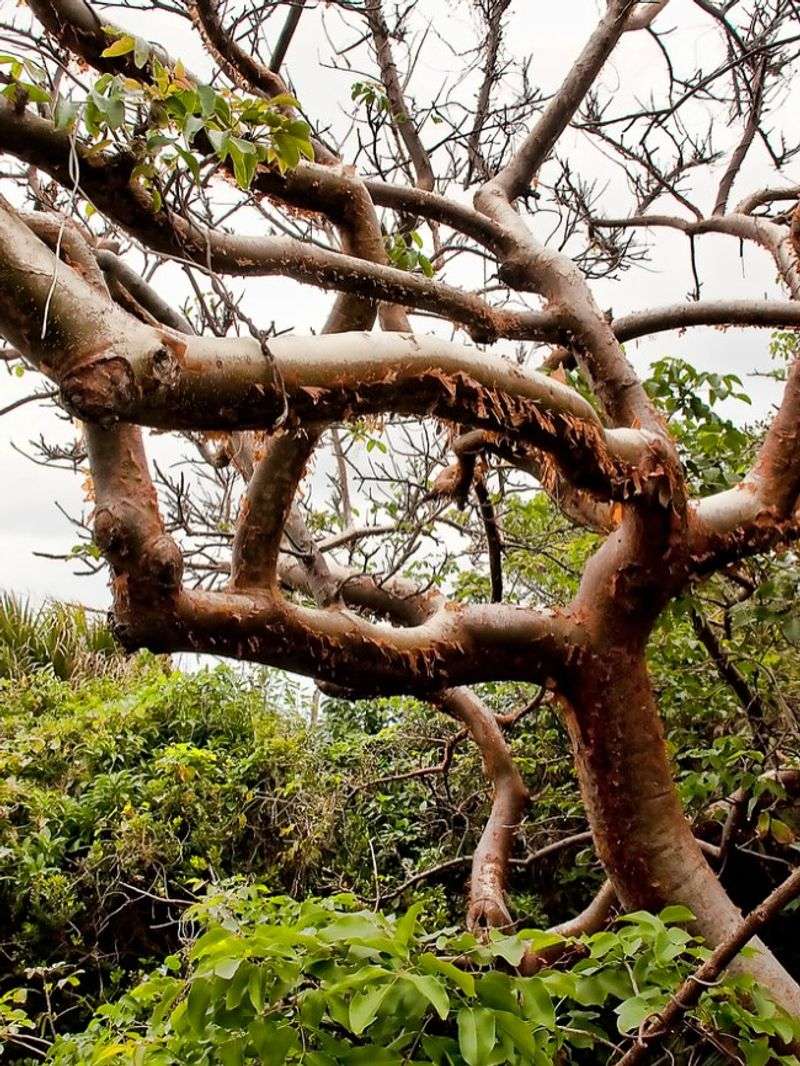
There is a tree in South Florida with bark so distinctive it earned the nickname tourist tree, for the peeling reddish skin that looks like a sunburn.
Meet the gumbo limbo (Bursera simaruba), one of the most hurricane-resistant trees you can plant in the state.
It looks a little wild with its twisting limbs, but do not let that fool you.
The secret is its remarkably flexible wood.
Where a water oak snaps like a dry pencil, the gumbo limbo bends dramatically and rarely breaks.
Native Floridians have planted them for generations as storm defense.
Beyond flexibility, a deep root system anchors it firmly in the sandy soils across South Florida and the Keys.
It grows fast, reaching 25 to 40 feet, and it recovers quickly even when some limbs tear loose.
It is also highly salt-tolerant, so canal-front and beachside lots suit it well where other trees give up.
Choosing a gumbo limbo means choosing an ally that knows how to roll with the punches and stand back up.
5. Saw Palmetto Anchors The Understory
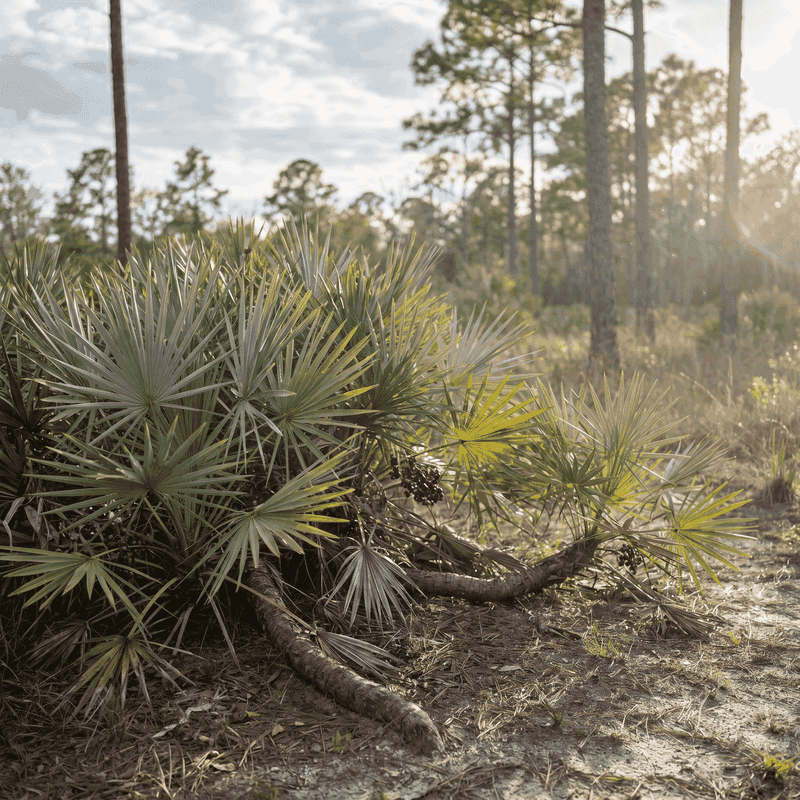
Sometimes the best defense keeps a low profile, and no plant proves it better than the saw palmetto (Serenoa repens).
This native palm creeps across pine flatwoods and coastal scrub throughout Florida, and at the residential scale it is essentially storm-proof.
The surprise for many homeowners is just how tough this short palm really is.
Growing 3 to 6 feet tall, it presents almost no surface for the wind to grab.
Its interlocking fronds and creeping underground trunks lock the soil in place, resisting erosion even through a major hurricane.
After nearly every Florida storm, saw palmetto stands look essentially unchanged, quiet and unbothered.
These slow growers are zero-maintenance once established, drought-tolerant, and comfortable in the sand of both the Gulf and Atlantic coasts.
They pull double duty as habitat too.
Their small black fruits feed Florida black bears, gopher tortoises, and dozens of birds.
Planted as a groundcover or mixed border, saw palmetto adds an unbreakable bottom layer to your hurricane-ready yard.
6. Southern Magnolia Offers Strong Beauty
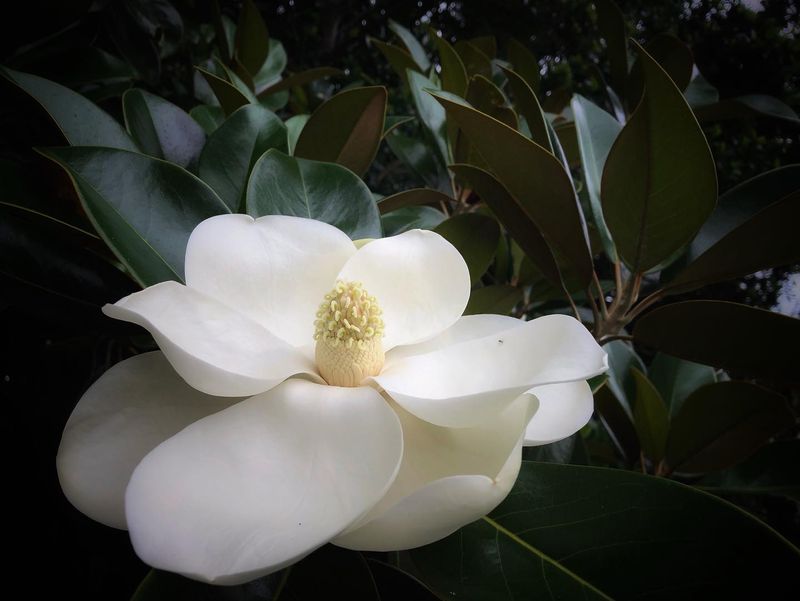
Looking for a stately evergreen that pairs beauty with backbone?
The southern magnolia (Magnolia grandiflora) delivers glossy leaves and big fragrant white blooms, and it is a quiet powerhouse against strong wind.
You might think those delicate flowers hint at a fragile tree.
That is simply not the case.
The magnolia builds a deep, robust root system that anchors it far better than a shallow-rooted water oak ever could.
Dense, strong wood and a naturally compact crown add to the package, letting it hold firm while neighboring trees drop limbs.
Because it grows slowly, it develops a sturdy structure over the years, and that patience is exactly what buys hurricane survival.
Many Central and South Florida landscapes feature magnolias that have weathered storm after storm and kept their shape.
It is not quite as bendy as a sabal palm, but its sheer structural integrity makes it a reliable backyard hero.
You get the porch-worthy blooms and the peace of mind in one tree.
7. Muhly Grass Adds Resilient Charm
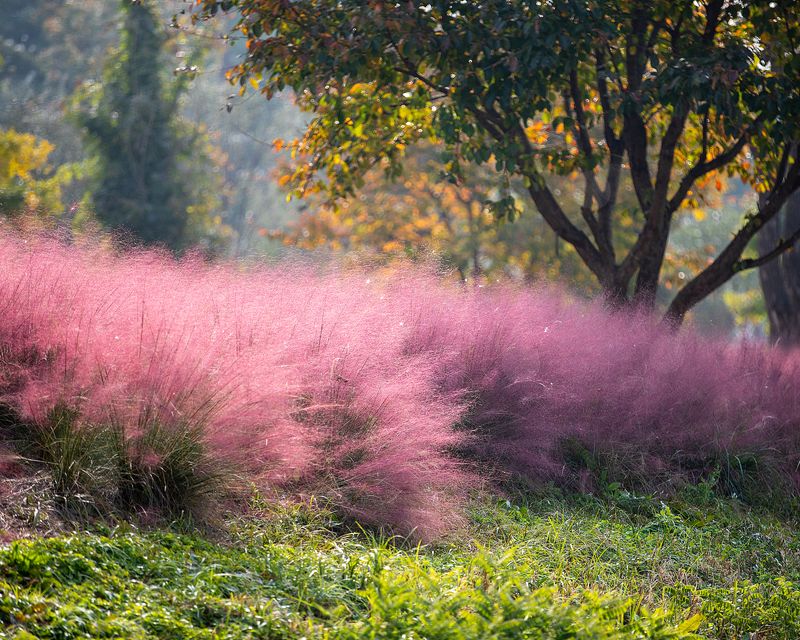
Not every hurricane hero is a towering tree.
Sometimes the smallest plants make the biggest difference when the cleanup begins.
Enter muhly grass (Muhlenbergia capillaris), a tough native ornamental that has shrugged off storms as fierce as Ian.
It offers an airy, almost weightless beauty, throwing up clouds of pink to purple blooms every fall.
Yet under that softness sits real grit.
It thrives in full sun and handles sandy or rocky soil, tolerating both brief flooding and long dry spells once established.
That toughness makes it perfect for rain gardens and erosion-prone spots that puddle after a downpour.
Growing in clumps 2 to 3 feet tall with flower stalks reaching 5 feet, it asks for almost nothing in return.
Good salt tolerance stretches its range from the Panhandle down to the Keys.
Plant it in mass beds about 4 feet apart, and the wind simply combs through its plumes in sweeping drifts of color rather than shredding them.
Proof that stunning and storm-ready can genuinely live in the same plant.
8. Right Planting Locks Roots In Deep
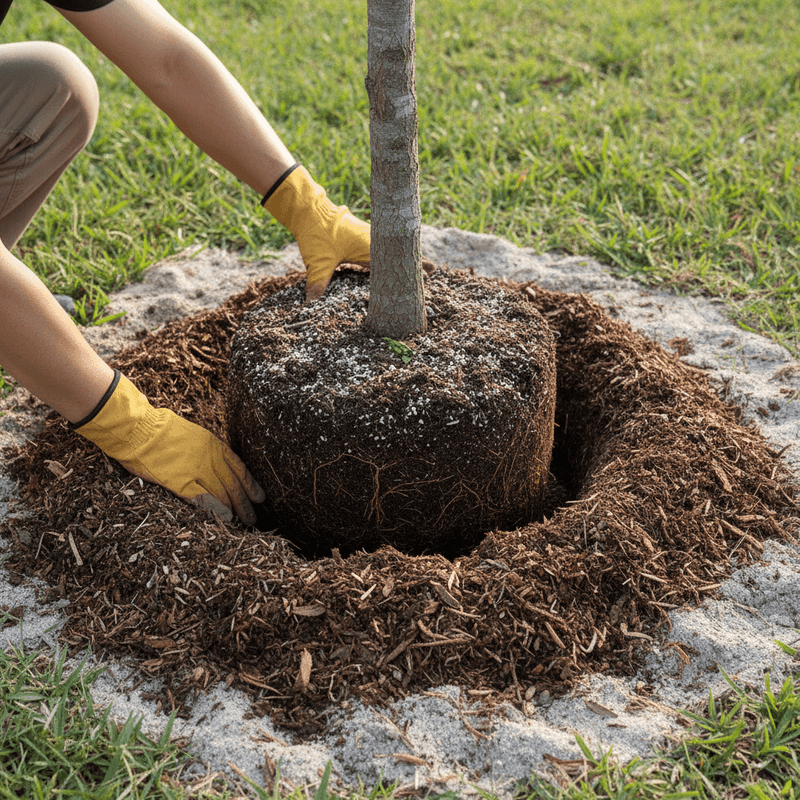
Picking the right native tree is only the opening move.
How you get it into the ground decides whether those roots ever hold when the warnings scroll across your phone.
Start at the nursery.
Choose a tree with straight roots, a single dominant trunk, and well-spaced branches, not a tangled circling mess.
Plant it so the root flare stays visible just above the soil line, then water it deeply right away.
Treat it like a newborn for its first six months, giving consistent deep water, especially through Florida’s winter dry spells.
Ring the base with 4 to 6 inches of organic mulch, but keep it several inches off the trunk so decay does not set in.
Soil matters too.
In the shallow limestone pockets common across South Florida and the Keys, build a raised bed 12 to 18 inches high, blending topsoil, perlite, and coconut coir to give roots room.
For the sandy soil that covers most of the state, work in composted manure and pine bark fines for better moisture holding.
Get the foundation right, and the tree does the rest.
9. What Else Actually Helps Trees Stand Tall
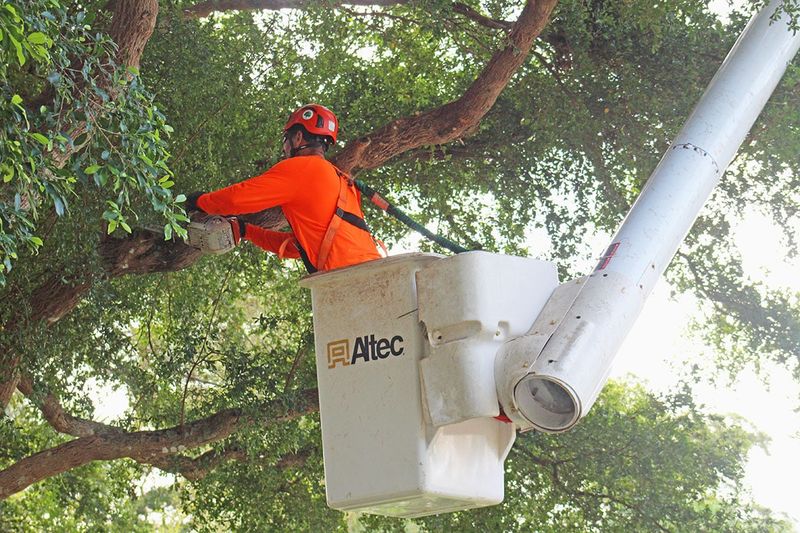
The biggest secret for a storm-ready tree is proper pruning, and this is where many homeowners quietly sabotage themselves.
Never top or hatrack a tree by cutting main branches back to stubs.
That harmful shortcut sprouts weak, poorly attached growth that snaps first in a storm.
Instead, hire a certified arborist for any tree over 15 feet tall.
They will remove dead or weak branches, shorten overlong limbs, and thin the interior to loosen a dense canopy.
For broad-crowned trees like live oaks, reducing the wind sail by about 15 to 25 percent lets gusts pass through instead of shoving against a solid wall of leaves.
Palms follow a simpler rule.
Remove only the completely brown, dead fronds.
Skip the so-called hurricane cut that strips away green fronds, because that weakens the palm and peels the protective layers off its growing bud.
None of this is a magic solution on its own, it is one layer of a broader plan that starts with choosing the right native tree and planting it well.
Do the work steadily over the years, and you turn a good tree into a storm-season stalwart.
That is the quiet kind of ready that lets you sleep through the wind.