
Native Florida Privacy Plants That Do Bamboo’s Job Without The Yard-Wide Takeover
Follow us on Google
You step onto the patio after breakfast and the air already feels heavy, promising another long Florida summer day.
The neighbor’s bamboo has crept a little closer to your fence again, a green invasion that seems to grow overnight.
You want a solid screen to keep your backyard yours, but not a plant that demands constant fighting or threatens to swallow your whole yard.
Florida has a lineup of native heroes ready to stand guard, giving you height and density without the bamboo headache.
And you do not need an endless war with runaway roots to get there.
1. Reclaim Your Peace With Wax Myrtle, The Rapid Responder
Many Central Florida gardeners know the struggle.
You need a privacy screen, and you needed it yesterday.
You eye those fast growing exotics, but deep down you worry about what they will do to your pipes.
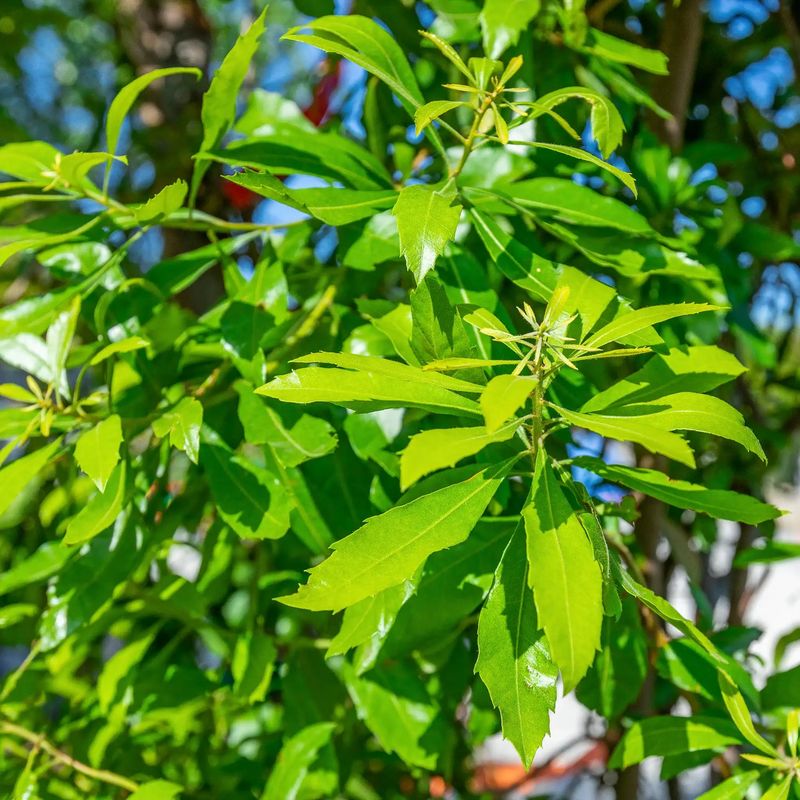
That is where wax myrtle, Morella cerifera, genuinely shines.
It shoots up several feet per year, turning a sparse line into a dense wall surprisingly fast.
This evergreen shrub reaches 10 to 20 feet tall and spreads just as wide, sometimes pushing 25 feet.
A few small plants can become a lush screen in a couple of years.
For a tight hedge, space them 3 to 5 feet apart.
Wax myrtle adapts from full sun to partial shade and handles both wet and dry soils once established.
That flexibility works from the Panhandle down to South Florida.
It is also moderately salt tolerant, so coastal properties get a break too.
The kicker, you get a fast fix that does not turn into a lifelong chore.
2. Firebush, The Hummingbird Haven That Hides
You might think a privacy plant has to be plain, just a green wall with nothing to say.
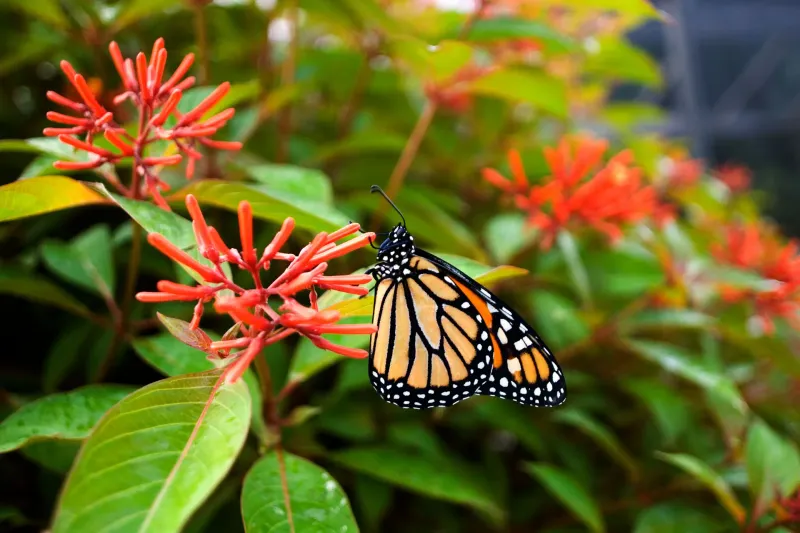
Firebush, Hamelia patens, argues otherwise.
The tension here is wanting both privacy and beauty and feeling like you must pick one.
Firebush hands you both, a dense screen plus a year round show of color that pulls in some of Florida’s most charming visitors.
Native to Florida and points south, it grows fast, easily hitting 6 to 12 feet tall and 5 to 8 feet wide.
In warmer South Florida it can push 15 feet.
The orange-red tubular flowers bloom almost nonstop, drawing hummingbirds and butterflies like the zebra longwing and Gulf fritillary.
For a tight screen, space plants 3 to 4 feet apart.
It thrives in full sun to partial shade and prefers well drained soil, tolerating moderate drought once settled in.
Firebush is cold hardy in USDA Zones 9 to 11, though a hard freeze in North Florida can knock it to the ground.
It usually regrows from the roots in spring.
Prune it now and then to keep it full instead of leggy.
3. Simpson’s Stopper, A Classic With Hidden Fragrance
There is a quiet dignity to Simpson’s stopper, Myrcianthes fragrans, a native many Florida gardeners walk right past.
They assume it is just another green backdrop.
Here is where it gets tricky.
It is a slow to moderate grower, which sounds like a drawback when you want privacy in a hurry.
The turn is realizing that slower, denser growth builds an exceptionally strong barrier that asks for almost nothing once it matures.
Simpson’s stopper usually reaches 10 to 20 feet tall with a spread of 3 to 15 feet, though rare South Florida specimens tower over 50 feet.
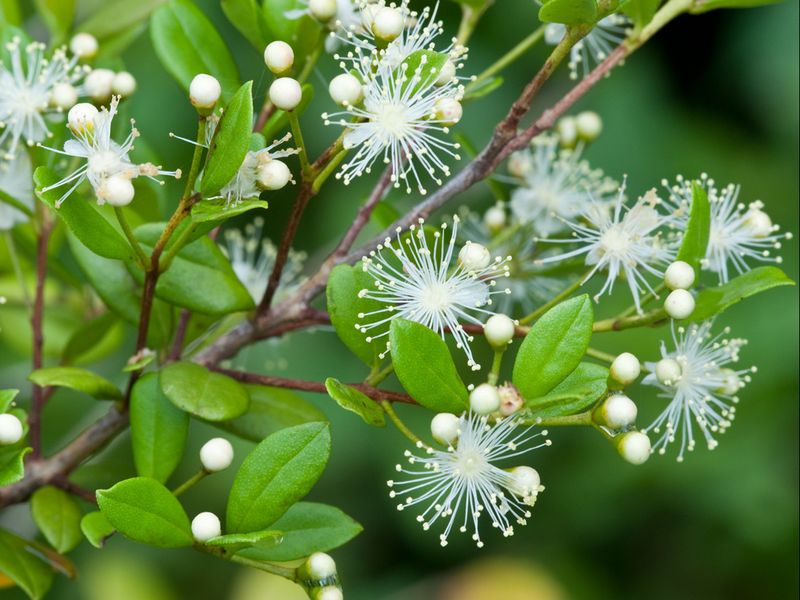
Its small glossy leaves release a spicy, citrusy scent when crushed.
Delicate white flowers feed butterflies, and the red-orange berries that follow keep birds coming back.
For a solid hedge, plant them 3 to 5 feet apart.
It is drought tolerant once established and shrugs off moderate salt wind, so many coastal areas suit it, though it does not enjoy saltwater flooding.
Cold hardy in Zones 9 to 11, it is a reliable pick for much of the state, including parts of North Florida.
Patience genuinely pays off with this one.
4. Cocoplum, The Coastal Guardian
Salt spray and sandy soil defeat a lot of pretty plants along Florida’s coasts.
If you live near the Gulf or the Atlantic, you already know the frustration.
That is the real tension, wanting a robust screen in a harsh spot.
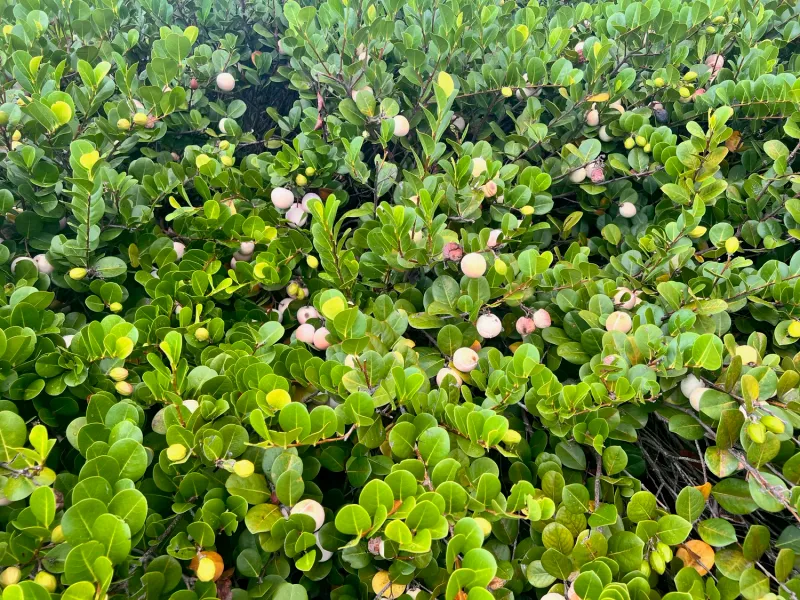
Cocoplum, Chrysobalanus icaco, answers it.
Many South Florida landscapers call it the strongest native privacy hedge around, and it is practically immune to salt.
Cocoplum is a tough shrub or small tree, growing anywhere from 6 to 35 feet, and you can prune it to whatever height you like.
Its round leathery leaves build a lush tropical wall that doubles as a windbreak.
It loves full sun and turns remarkably drought hardy and wind tolerant once established, shrugging off conditions that flatten weaker plants.
For a thick screen, set plants 1.5 to 3 feet apart.
You will meet two main types.
Red Tip pushes out reddish new growth, while Horizontalis spreads lower and wider.
For a coastal property that takes a beating, cocoplum is a genuine workhorse, holding your privacy line through the worst of it.
5. Buttonwood, Silver Foliage And A Sturdy Screen
Coastal privacy does not have to mean choosing toughness over looks.
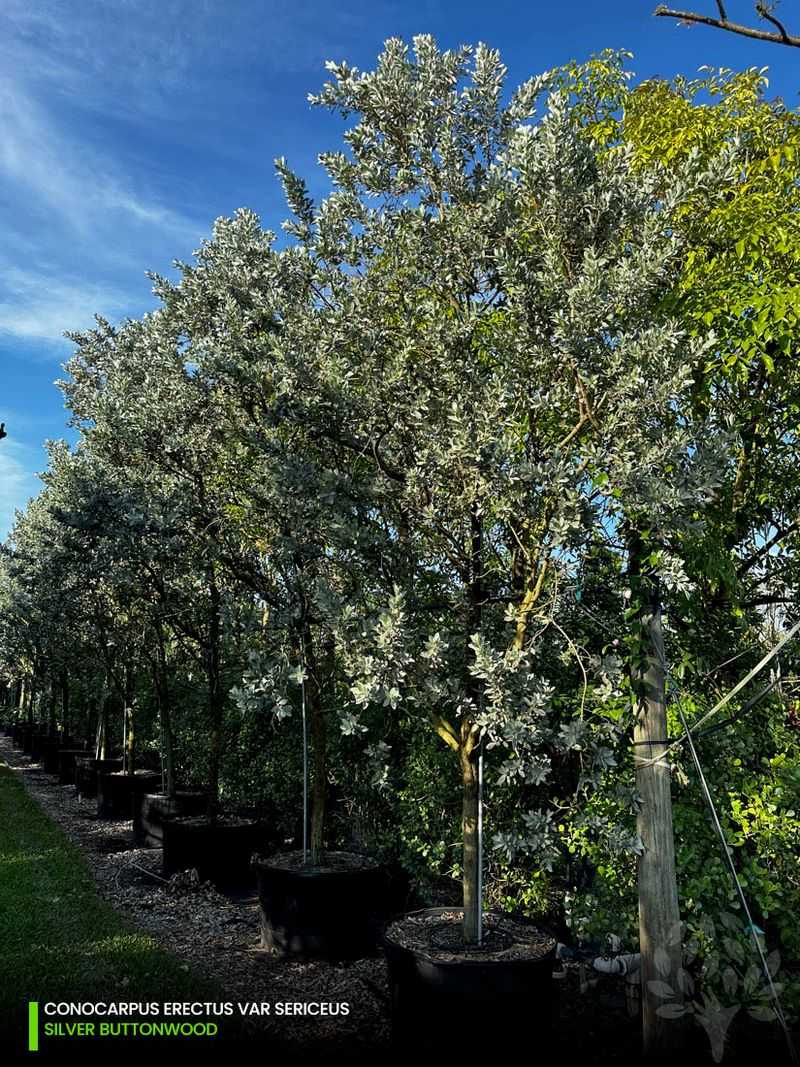
Buttonwood, Conocarpus erectus, proves it, especially the silver leafed form that catches the light like brushed metal.
The blunt claim, it is built for salty air and blazing sun, particularly in Central and South Florida.
That is instant relief if you have watched other plants scorch and quit.
Buttonwood grows as a multi stemmed shrub or small tree, typically 6 to 15 feet, though the silver variety can reach 25 feet.
It carries a high tolerance for both salt spray and salty soil, so beachfront yards suit it well.
Very drought tolerant once established, it needs little water to stay handsome.
The dense foliage, silvery green or dark green, gives you a rugged, textured wall.
It wants full sun, making it ideal for those exposed spots where softer plants sulk.
Space plants 4 to 6 feet apart for a solid hedge, or give them more room as specimens.
Buttonwood can stand up to tropical storms while asking very little of you, which is exactly the deal you want before hurricane season.
6. Sabal Palm, The State Tree’s Quiet Strength
Privacy usually looks like a dense leafy wall in your mind.
But sometimes you just want a clear boundary with a touch of old Florida elegance.
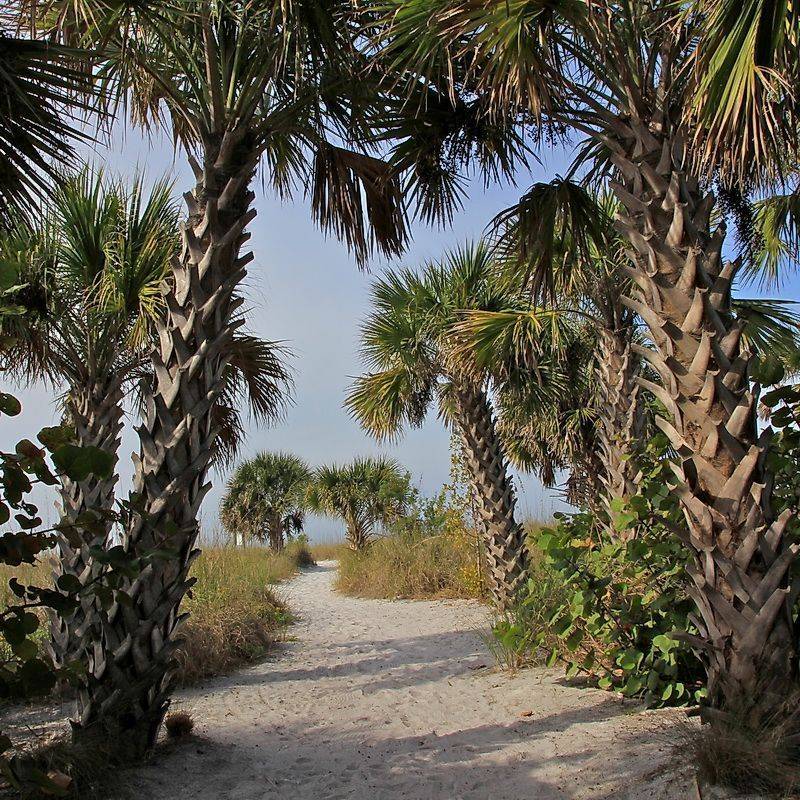
The sabal palm, Sabal palmetto, our state tree, delivers a different kind of separation.
The surprise is that a grouping of them breaks up sightlines and creates a real sense of enclosure without feeling boxed in.
Sabal palms grow slowly but can eventually reach 40 feet, with some pushing much higher.
Their fan shaped fronds form a full rounded canopy that screens from above.
They are cold hardy to about 15 degrees Fahrenheit, roughly USDA Zone 8b, so they cover most of Florida including parts of the Panhandle.
They tolerate drought, flooding, and some salt spray, though they dislike salt in the root zone.
They need full sun to truly thrive.
For a screening effect, plant a small grove of three to five palms, spacing them 6 to 8 feet apart, to build natural layers.
The trick is patience, since their growth is steady rather than a sprint.
What you get in return is a boundary that feels rooted and unmistakably Florida.
7. Live Oak, Enduring Shade And Natural Walls
Picture a privacy solution that also throws decades of cooling shade and shelters a whole cast of wildlife.
Most people do not reach for a giant tree when they think screening.
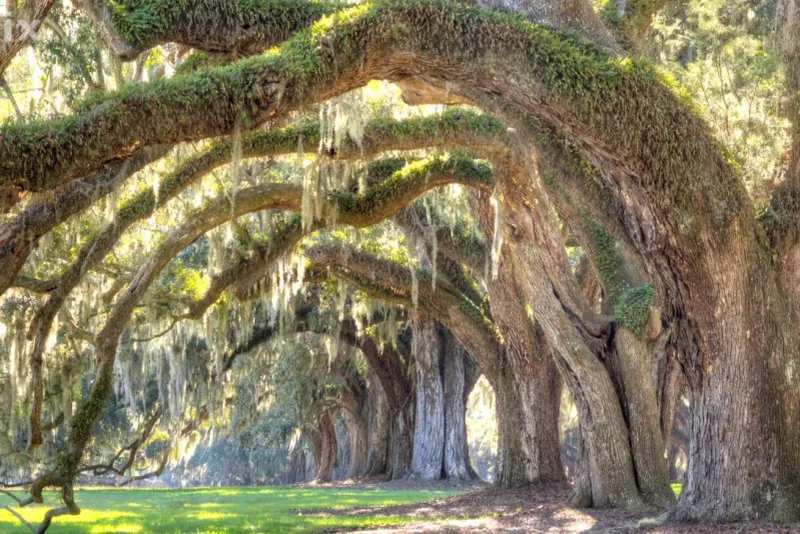
But if you have the space, the live oak, Quercus virginiana, is an enduring, majestic option.
The mild worry about a messy tree fades against the deep rootedness a mature oak brings.
Live oaks are icons of the Southern landscape, famous for resilience and long life.
They can climb to 60 feet with a canopy just as wide or wider, spreading in low horizontal branches.
They are exceptionally wind resistant, a crucial trait during Florida hurricane season, and well suited to our sandy soils, dry winters, and humid summers.
Slow growing, yes, but a young oak placed with intent becomes an unmatched natural screen over time, and that shade can genuinely trim your energy bills.
Space live oaks 20 to 30 feet apart for a long term barrier that feeds an entire backyard ecosystem, dropping acorns for birds and squirrels after about 20 years.
There is leaf and moss cleanup, but the payoff is a slice of old Florida charm you can sit under for a lifetime.
8. Saw Palmetto, The Low Wall That Never Quits
Not every privacy problem needs a 20 foot wall.
Sometimes you want a tough, low mound to block the view of a driveway or hide the base of a fence.
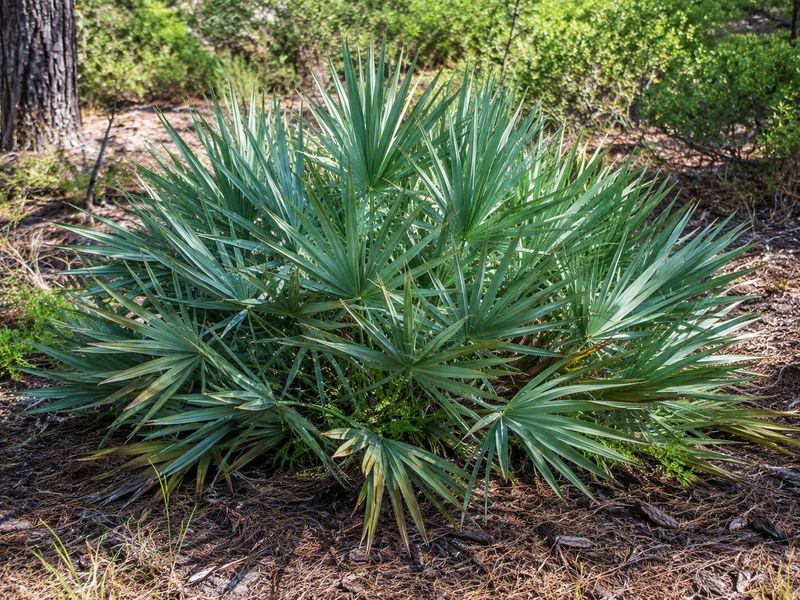
Saw palmetto, Serenoa repens, is the quiet answer, and it is one of the toughest natives Florida has.
This is the plant that survives fire, drought, and salt without blinking.
It grows in low, spreading clumps, usually 3 to 6 feet tall, occasionally taller where it has been growing for many years.
The stiff fan shaped fronds, sometimes a striking silvery blue near the coast, knit into a barrier that discourages both foot traffic and prying eyes at ground level.
Saw palmetto is cold hardy across the state and thrives in the acidic sandy soil found through much of Florida.
It asks for almost no water once established and hardly ever needs pruning.
For a low screen, space plants 3 to 4 feet apart and let them fill in.
UF/IFAS Extension notes it is a keystone plant for wildlife, feeding bees and sheltering countless creatures.
Slow to start, it rewards you with a barrier that shrugs off whatever the weather throws.
9. American Beautyberry, The Screen The Birds Love
Whiteflies and heat can wear down a fussy hedge fast.
American beautyberry, Callicarpa americana, does not play that game.
It leafs out into a loose, arching shrub that softens a boundary line while feeding a crowd of birds.
That is the payoff few people expect from a privacy planting, a wall that hums with life come fall.
Beautyberry grows quickly to 5 to 8 feet tall and wide, with broad soft green leaves that fill in a screen for the warm months.
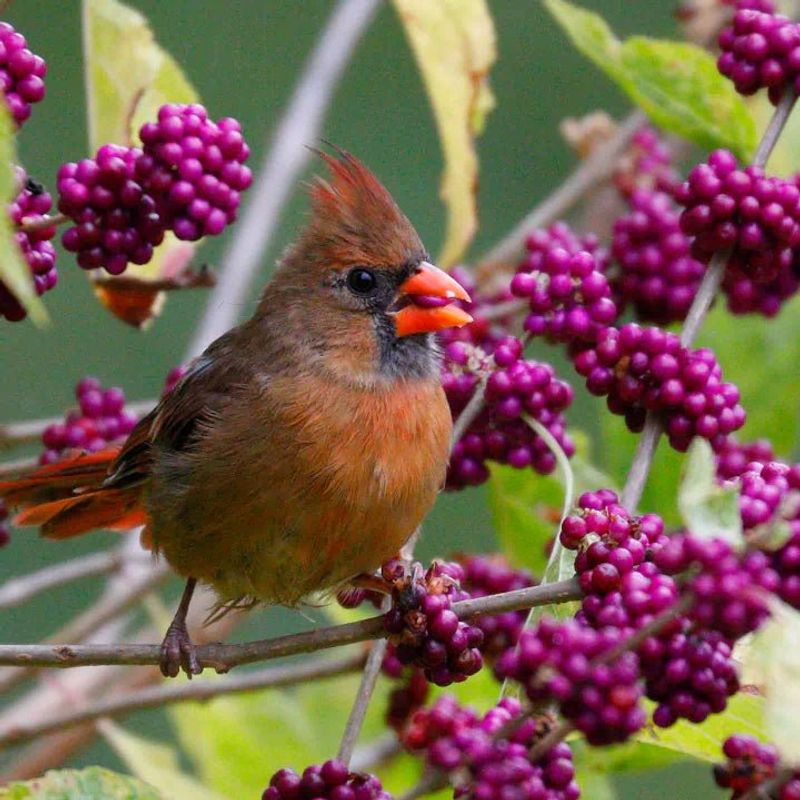
Its real showstopper arrives late summer into fall, when clusters of bright magenta berries wrap around the stems.
Mockingbirds, cardinals, and other Florida birds strip those berries clean.
The plant handles the acidic sandy soils common across North and Central Florida and prefers partial shade, though it takes full sun with enough water.
For a soft screen, space plants 4 to 5 feet apart.
It dies back after a hard freeze in North Florida but bounces back strong in spring, and a hard prune to about 1 foot in late winter keeps it dense.
Folk tradition even used crushed leaves as a mosquito rub, which is a fun bit of Florida backyard history.
10. Yaupon Holly, The Evergreen That Takes A Freeze
North Florida gardeners get a bad deal with tender tropicals.
A hard freeze rolls in and the pretty screen turns brown overnight.
Yaupon holly, Ilex vomitoria, skips that heartbreak.
It is a native evergreen that holds its leaves and its color right through a cold snap, cold hardy down into USDA Zone 7.
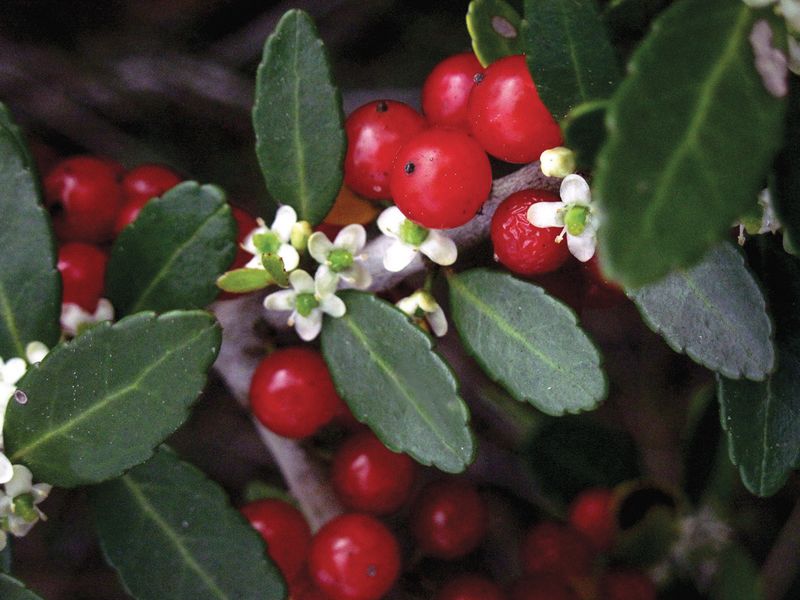
Yaupon grows as a shrub or small tree, reaching 15 to 25 feet, but it takes shearing beautifully into a formal hedge of almost any height.
The small glossy leaves stay dense year round, and female plants carry bright red berries into winter that draw cedar waxwings and mockingbirds.
It tolerates a wide range of Florida conditions, from sandy soil to wet spots, full sun to partial shade, and it handles moderate salt spray along both coasts.
Once established it is highly drought tolerant.
For a tight hedge, space plants 3 to 4 feet apart, and prune once or twice a year to keep it crisp.
Here is a bit of local history, its leaves were brewed by Native peoples into a caffeinated tea, making yaupon the only caffeine bearing plant native to North America.
11. Southern Wax Myrtle’s Cousin, The Dahoon Holly For Wet Spots
That soggy corner of the yard, the one that stays wet after every summer downpour, seems to reject every screen you plant.
Root rot claims one shrub after another.
Dahoon holly, Ilex cassine, actually wants that spot.
It is a native holly built for the poorly drained low pockets that trip up other privacy plants.
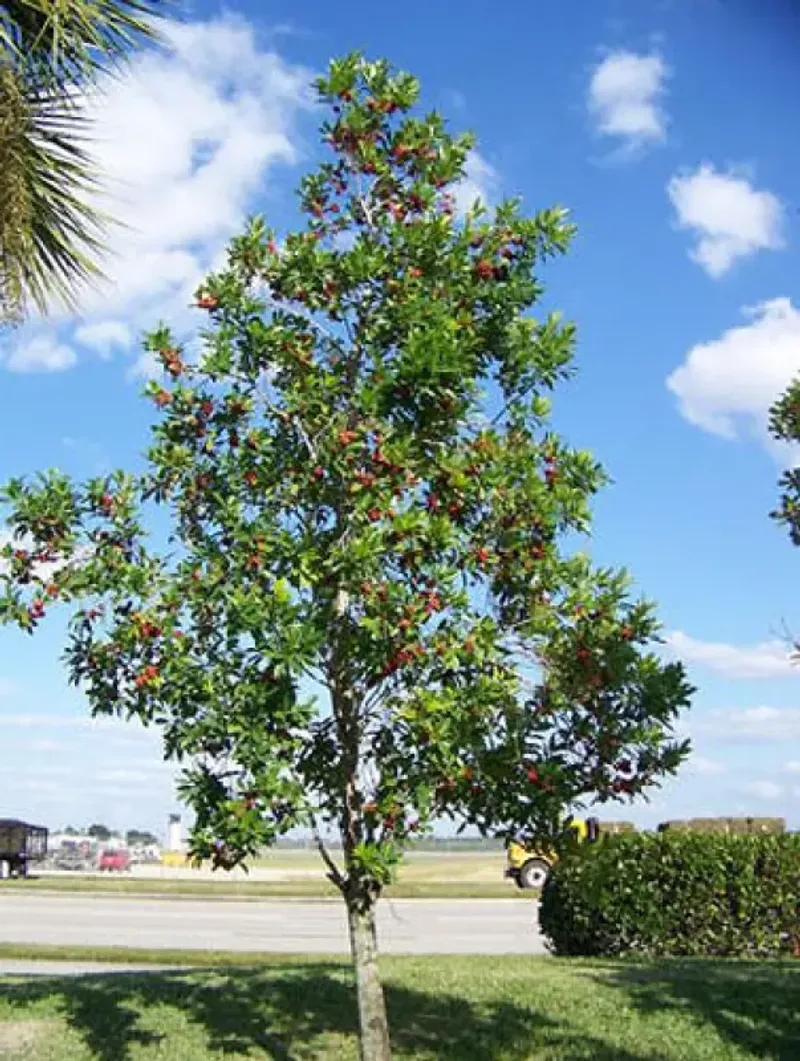
Dahoon grows as a slender evergreen tree, typically 20 to 30 feet tall with a narrower spread, giving you height for screening without eating up ground.
Its narrow glossy leaves stay green year round, and female trees load up with red berries that robins and mockingbirds devour in winter.
Native across much of Florida, it thrives in wet, acidic soils and along pond edges, yet tolerates normal garden conditions too.
It handles full sun to partial shade and some coastal salt wind.
For a screening line, space trees 6 to 10 feet apart, and plant a male nearby so the females set fruit.
Water it deeply while it settles in, then let the rain do the work.
Where standing water defeats everything else, dahoon holly turns a problem corner into a private green wall.
12. Southern Bayberry Rounds Out Your Green Wall
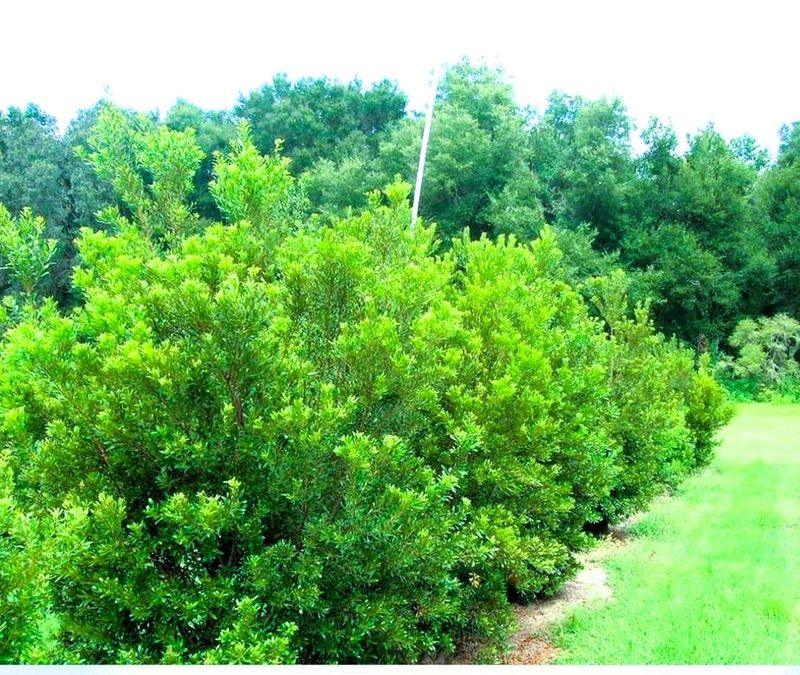
By now you have a full toolbox, fast growers, coastal fighters, freeze proof evergreens, and a champion for wet ground.
The last piece is a plant that quietly stitches it all together.
Southern bayberry, sometimes sold as a compact form of Morella, gives you a rounded, medium evergreen that fills gaps and blends taller screens into a seamless wall.
It is the finisher, not the star, and that is exactly its job.
Expect 6 to 12 feet of dense, fragrant foliage that responds well to shaping.
The pale waxy berries once flavored colonial candles, a small piece of history clinging to your hedge.
It handles the acidic sandy soils common along the Gulf Coast, tolerates salt wind, and manages both dry spells and the occasional soggy stretch after a storm.
Full sun to partial shade both suit it fine.
Space plants 3 to 5 feet apart for a tight, layered screen.
Put these natives to work and you trade the bamboo battle for a living wall that feeds birds, shrugs off weather, and stays where you planted it.
You built that, and your backyard is genuinely yours again.