
North Carolina Native Trees That Beat Crape Myrtle For Front-Yard Color And Structure
Follow us on Google
You pull into your driveway on a July afternoon, and there sits your crape myrtle, chopped into ugly stubs again because someone told you that is how you prune it.
The powdery mildew is back, and so are the aphids.
Here in North Carolina, you have better options that never ask for that mess.
Native trees give you real color, real structure, and a yard that hums with bees and birds instead of just sitting there.
1. Sourwood Trees Offer Summer Snow And Fiery Fall
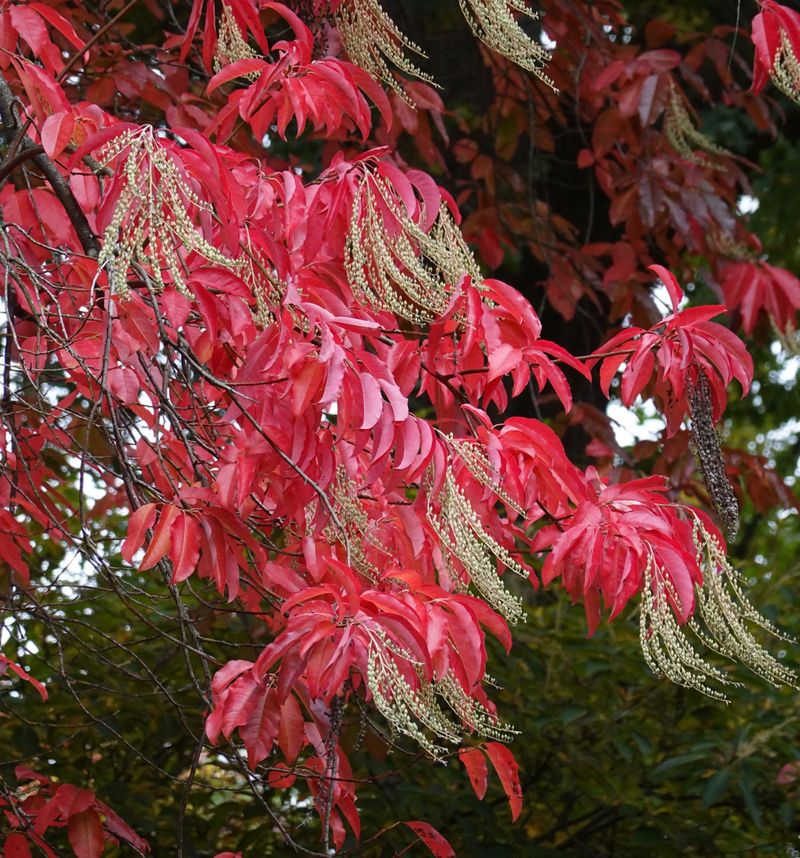
You are on the porch swing with sweet tea when tiny white bells start dripping from a tree across the street in the dead heat of July.
That is a sourwood (Oxydendrum arboreum), nicknamed the lily-of-the-valley tree for those blossoms.
It shows off when almost everything else has quit blooming for the year.
Sourwood grows slowly to moderately, about 1 to 2 feet a year, topping out around 20 to 30 feet tall and 10 to 15 feet wide.
It naturally loves the acidic, well-drained soils of our Piedmont and mountains, so you are not fighting your dirt.
It gives you a graceful, slightly zigzagging crown and almost no pest headaches, unlike crape myrtle and its mildew.
Then fall arrives, and the whole tree catches fire.
Leaves turn brilliant scarlet, orange, and reddish-purple, often outshining a red maple.
Even bare in winter, the craggy grayish-brown bark holds your eye.
Bees adore those summer flowers, and beekeepers turn them into prized sourwood honey.
So you get color, and the pollinators get a late-season meal.
That is a genuinely good trade for less work.
2. Eastern Redbud Brings Early Spring Vibrance
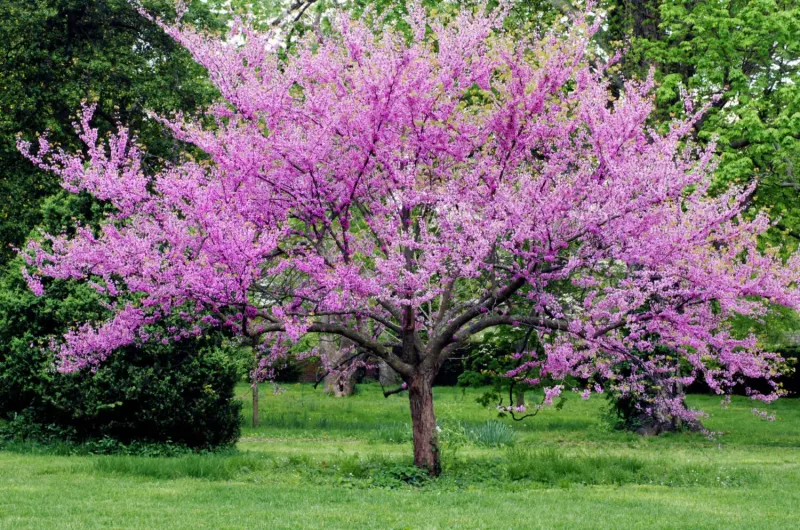
Spring is not truly here in North Carolina until the bare branches of an Eastern redbud (Cercis canadensis) explode in a cloud of pink-purple.
It happens in March or April, weeks before most trees even bother to leaf out.
Your crape myrtle is still asleep while this one is throwing a party.
Redbuds stay manageable, usually 20 to 30 feet tall and wide, often with several trunks and a rounded, flat-topped crown.
They shrug off our stubborn Piedmont clay as long as it drains, and they take full sun to partial shade without complaint.
Here is the neat trick.
The flowers pop straight out of the bark and even the main trunk, something botanists call cauliflory.
Those blooms feed native bees, hummingbirds, and early butterflies, and the tree hosts more than two dozen caterpillar species that songbirds need.
After the show, heart-shaped leaves fill in, then glow buttery yellow in fall.
Brown seed pods dangle through winter, feeding cardinals and quail.
Growth runs a quick 1 to 2 feet a year, so you get impact fast without an overgrown mess.
3. Sweetbay Magnolia Offers Fragrant All-Season Charm
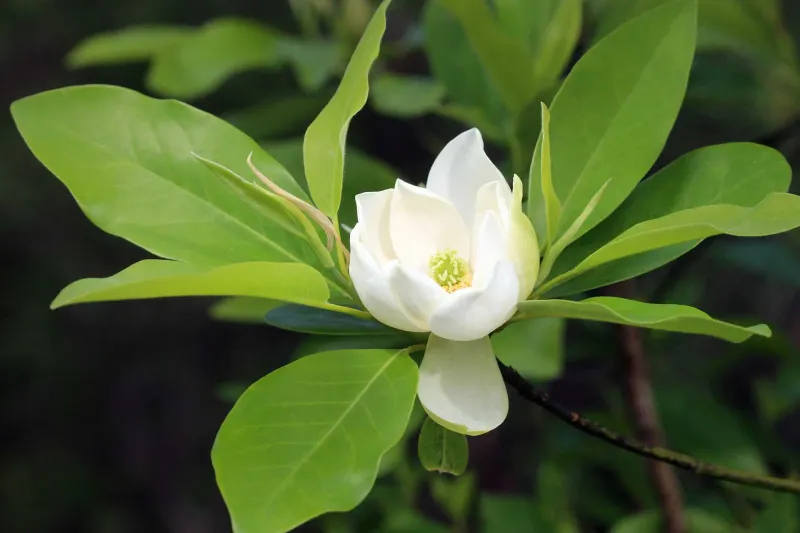
Step onto the porch on a muggy summer evening and catch a sweet, lemony scent riding the air.
That is a sweetbay magnolia (Magnolia virginiana), and it perfumes your yard from spring clear into fall.
A crape myrtle gives you one loud season.
This one gives you months.
Sweetbays grow as small trees or big multi-stemmed shrubs, roughly 10 to 35 feet tall and 10 to 20 feet wide.
Where crape myrtle fights scale and mildew, this native mostly ignores pests and disease.
Better still, it thrives in the soggy, acidic soils that stump other trees.
Got a low spot in a Coastal Plain yard that stays wet, or heavy clay that holds water?
Plant one there and watch it settle right in, full sun or partial shade.
The creamy cup-shaped flowers run 2 to 3 inches across, sometimes blooming until first frost.
The glossy leaves flash silvery undersides in the slightest breeze.
Come fall, red cone-like fruits split open with bright seeds that cardinals, woodpeckers, and finches raid.
Eastern tiger swallowtail caterpillars feed on the leaves too, so your yard stays busy and alive.
4. American Fringetree Delivers Cloud-Like Beauty
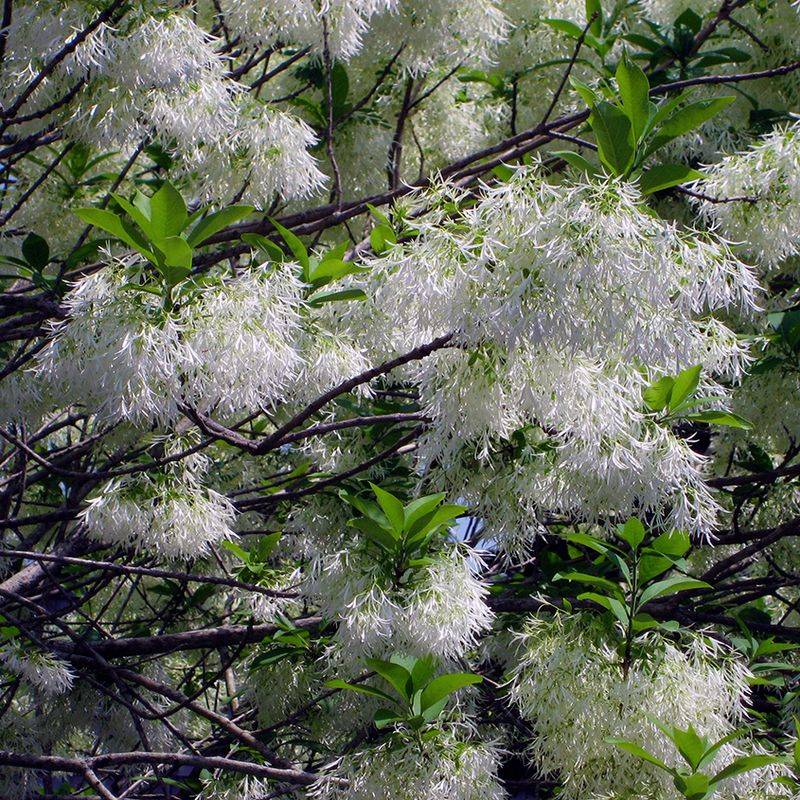
Picture a small tree in late spring wrapped head to toe in delicate, feathery white blooms that look like drifting fog.
That is the American fringetree (Chionanthus virginicus), and no crape myrtle does anything like it.
The flowers are airy, drooping clusters 4 to 6 inches long, faintly lilac-scented.
Fringetree grows as a big shrub or small tree, usually 12 to 20 feet tall and wide, with branches that twist into pleasant, irregular shapes as they age.
It handles a lot of North Carolina, from the Coastal Plain to the mountains, and even puts up with drought, some standing water, and city pollution.
That makes it a solid pick for a developed front yard.
The bloom lands in April or May, right as the dogwoods fade, so your spring color never skips a beat.
Dark green leaves follow and turn yellow in fall.
Female trees carry clusters of dark blue, olive-like fruits in late summer that birds happily strip.
Fringetrees are slow, adding only 6 to 10 inches a year, but that builds dense, tough wood that barely needs pruning.
And deer usually walk right past, which is always a small win.
5. Flowering Dogwood Anchors The Classic NC Yard
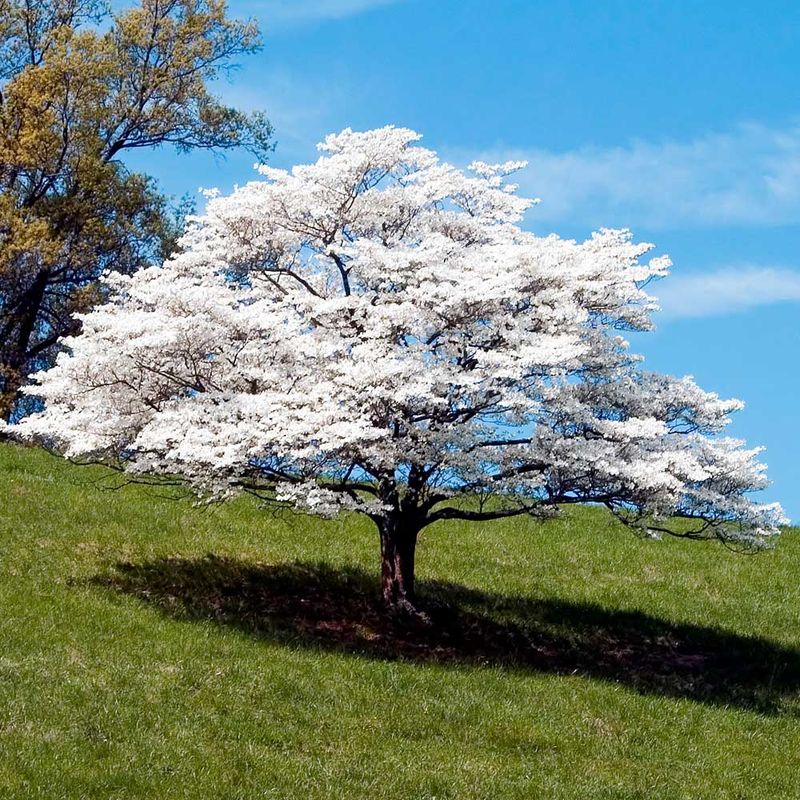
Ask most folks in the Piedmont what tree says home, and they will point at a flowering dogwood (Cornus florida).
It is our state flower for good reason.
In April, the white or pink bracts float in flat layers along horizontal branches, giving your yard a tiered, structured look that a crape myrtle never delivers.
Dogwoods stay small, around 15 to 30 feet tall and wide, with that unmistakable layered branching that reads well even in winter.
They prefer the dappled edge of a treeline, taking morning sun with afternoon shade, and they want the acidic, well-drained soil common across North Carolina.
Here is where it gets tricky.
Full blazing sun and soggy roots stress them, so give them a spot with some afternoon relief and mulch out to the drip line.
The payoff runs all year.
Spring bracts, then summer green, then fall foliage in deep reds and purples.
By autumn, glossy red berries feed more than 30 bird species, and migrating songbirds lean on them hard.
Plant one 15 feet from the house, and you get a living centerpiece that quietly feeds the neighborhood.
6. Serviceberry Kicks Off Spring And Feeds The Birds
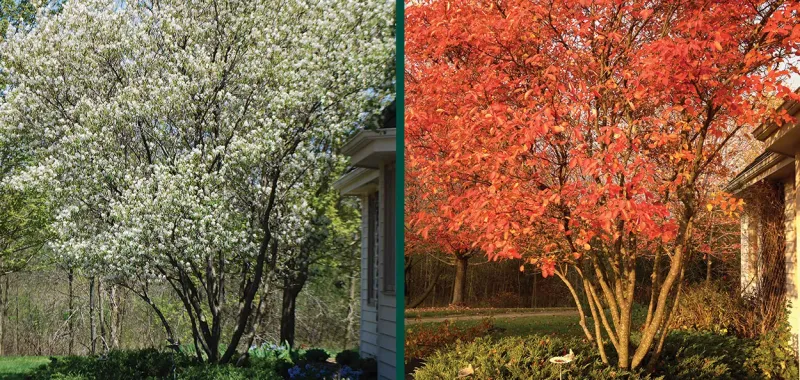
Long before the redbuds and dogwoods wake up, serviceberry (Amelanchier arborea) covers itself in drifts of white star-shaped flowers, sometimes as early as March.
Old-timers called it the tree that bloomed when the mountain roads thawed enough for traveling preachers to hold services.
That is genuinely where the name comes from.
Serviceberry grows as a graceful multi-stemmed small tree, about 15 to 25 feet tall, at home in the mountains and Piedmont alike.
It takes full sun to part shade and average, well-drained soil, and it stays tidy enough for a tight front yard.
Then June arrives with the real bonus.
Small purple berries ripen that taste like sweet blueberries, and you will be lucky to beat the robins, cedar waxwings, and cardinals to them.
Many gardeners just let the birds have the feast and enjoy the show.
Fall brings warm orange and red foliage, and the smooth gray bark looks clean all winter.
So you get four seasons of interest, an early nectar source for bees, and a bird buffet, all from a tree that asks for almost nothing.
7. Red Maple Gives Fast Shade And Blazing Color
Some yards need more than a flowering accent.
They need real shade so the cookout is not a sweatbox by 3 p.m.
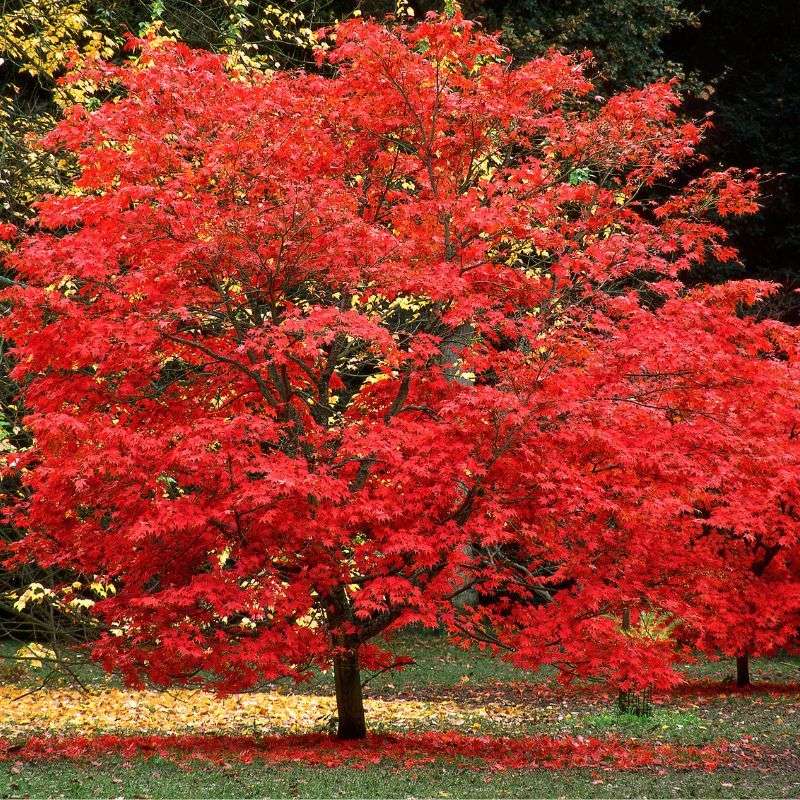
A red maple (Acer rubrum) answers that, and it is one of the most common native trees across all of North Carolina, from the coast to the high country.
Red maple grows fast, often 2 to 3 feet a year, reaching 40 to 60 feet tall over time.
Give it room and set it at least 20 feet from the house and any pavement.
It adapts to almost anything we throw at it, wet spots, dry clay, sun or partial shade.
The color starts early.
Red flowers and reddish twigs glow in late winter before the leaves show, a quiet promise that spring is close.
Come October and November, the crown burns scarlet and crimson across the whole yard.
Because it is a bigger tree, this one is for a front yard with space, not a cramped corner.
Plant it right and you get decades of shade, a lower cooling bill in those brutal August afternoons, and a fall display that stops traffic without a single stub cut.
8. Match The Tree To Your Yard And Skip The Regret
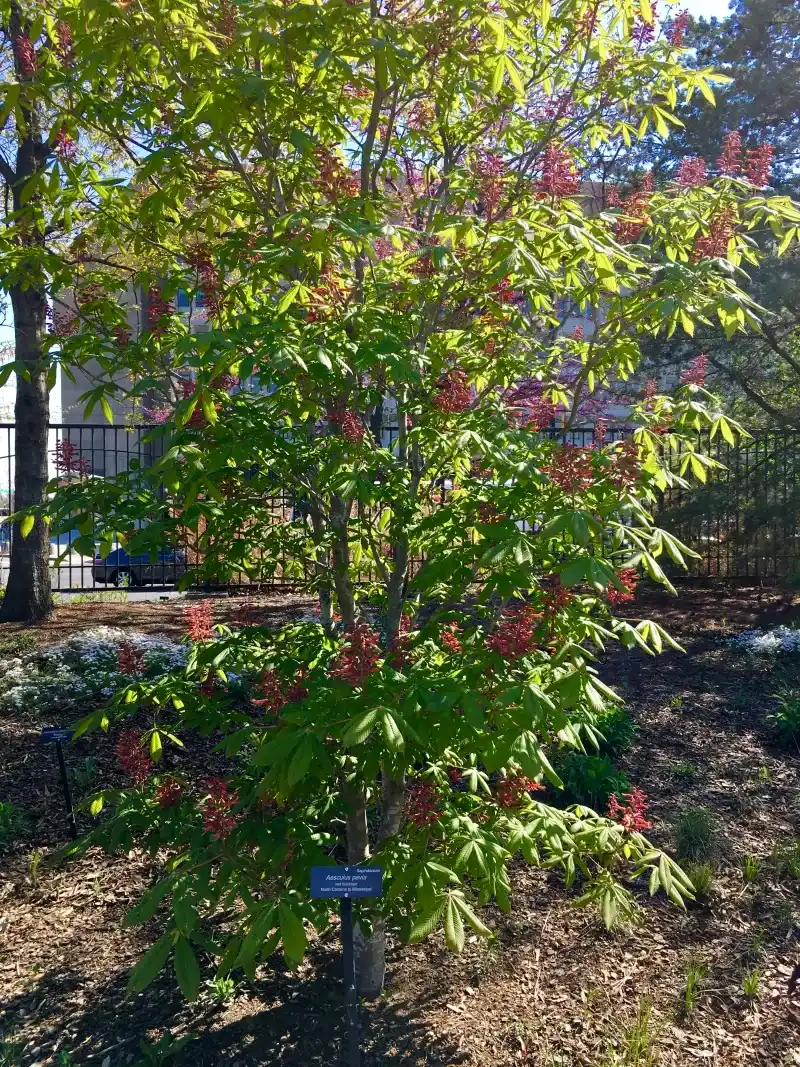
Picking the right native tree comes down to honest math about your own spot.
Walk the front yard and notice where water pools after a summer storm, where the afternoon sun bakes hardest, and how much room the roots and crown really have.
For a soggy low corner, lean sweetbay magnolia.
For tight space near the walk, fringetree or serviceberry fit without crowding.
For real shade, give red maple its 20 feet and let it stretch.
NC State Extension recommends planting most trees in fall, roughly October through November, so roots settle before the next hot spell.
Dig the hole twice as wide as the root ball but no deeper, keep the flare at grade, and mulch a couple of inches out to the drip line, never piled against the trunk.
Water deeply once a week for the first summer, more if we hit a dry stretch.
Skip the yearly chopping that crape myrtles suffer.
These natives want light, thoughtful pruning at most.
Plant one this fall, and next spring you will stand on the porch watching bees work the blooms and birds work the branches, quietly proud that you traded fuss for a yard that finally feels alive.