
The Florida-Style Bat House Setup That Does Your North Carolina Mosquito Work Every Night
Follow us on Google
Bats are genuinely one of the more exciting things you can invite into a North Carolina yard, and yes, they eat mosquitoes.
But before you order a bat house expecting a bug-free porch by July, there is something worth knowing up front: one box cannot promise nightly mosquito control, and the science backs that up.
What a well-built, carefully placed bat house can do is give local colonial bats a safe place to roost, and that is a real win for your yard and your neighborhood.
Pair it with the right habitat and some proven mosquito basics, and you have a layered plan that actually holds up through a Carolina summer.
What a Bat House Can—and Cannot—Do
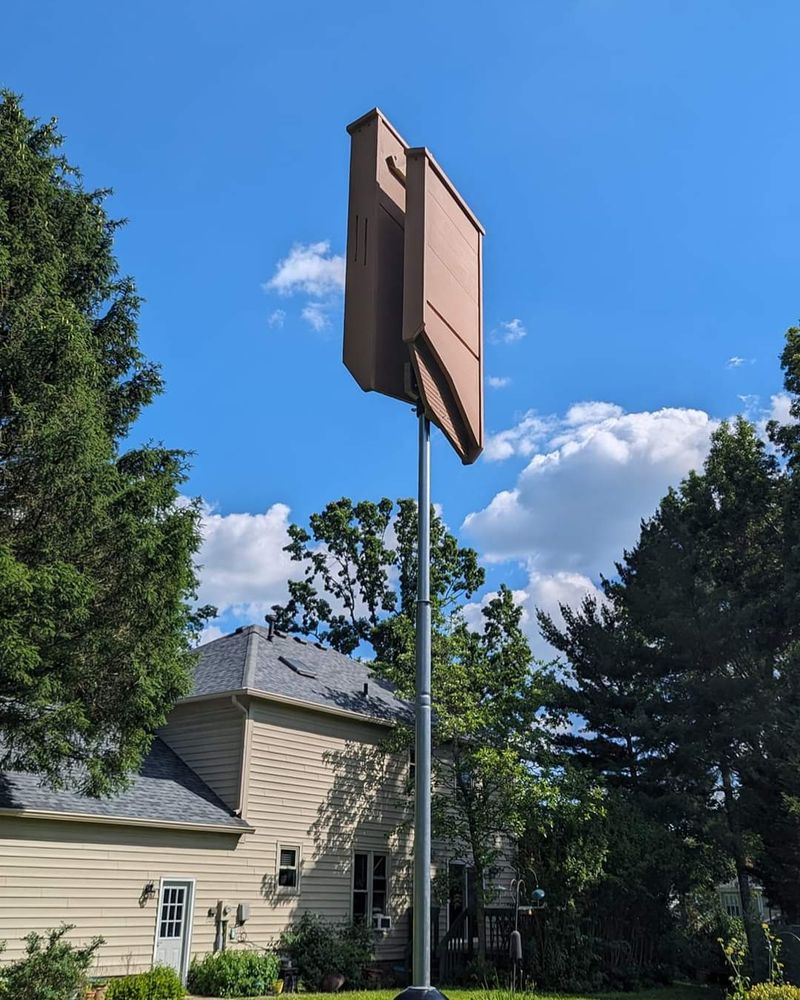
Here is the first thing to straighten out: a bat house is a daytime roost, not a mosquito trap.
Bats sleep inside it during the day, leave at dusk, and forage across a wide stretch of the surrounding landscape.
Where they hunt has everything to do with where insects are flying, where water is nearby, and what the habitat looks like across the whole neighborhood, not just your backyard corner.
North Carolina is home to 17 bat species, and the colonial ones, the little brown bat and the big brown bat among them, are the species most likely to move into an artificial house.
NC State Extension notes that solitary foliage-roosting species such as the hoary bat rarely use bat houses at all, so the realistic candidates are a smaller slice of the state’s bat community than most people picture.
A properly built and placed bat house may support a small colony and contribute one habitat-based layer to a broader mosquito-management plan.
That is genuinely useful.
But Bat Conservation International’s bat house guidelines are clear that the box alone does not translate into a mosquito-free yard or reliable nightly control around a patio.
Think of it this way: the bat house is infrastructure, the way a bluebird box supports bluebirds without guaranteeing they show up.
You are building habitat and hoping the right tenants find it.
The mosquito relief, when it comes, is a welcome side effect of something bigger, which is giving a struggling group of native wildlife somewhere safe to live.
Mosquitoes Are Part of a Much Larger Bat Diet
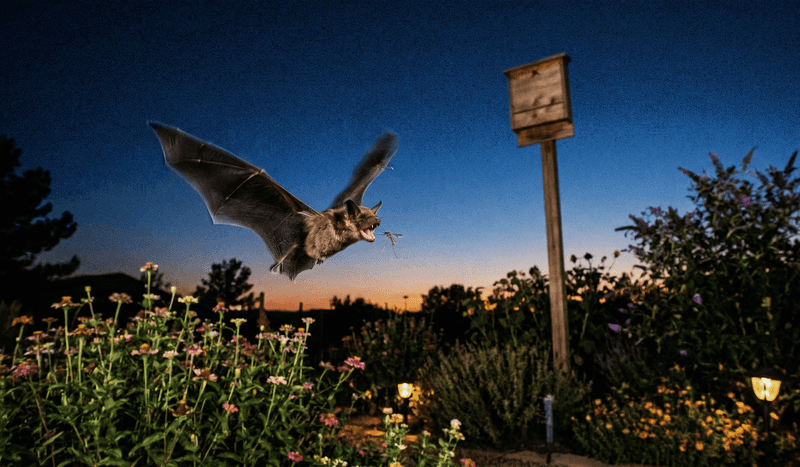
Scroll past any bat enthusiast page and you will probably see the claim that one bat eats 600 to 1,200 mosquitoes per hour.
That number has been repeated so many times it feels like settled science.
It is not.
A research review on mosquito consumption by insectivorous bats found the evidence behind those hourly figures to be weak, often based on artificial feeding conditions that do not reflect how wild bats actually hunt.
Wild bats are opportunistic.
They eat whatever is flying in the right size range at the right time of night, which means moths, beetles, midges, flies, and yes, some mosquitoes.
Mosquitoes are generally a small portion of the diet because larger, more calorie-dense insects are simply a better return on energy.
A bat chasing a fat moth is making a smarter feeding decision than one hunting tiny mosquitoes one at a time.
A 2022 southeastern U.S. dietary study did find real mosquito consumption: three bat species had eaten 17 mosquito species, including six that carry arboviruses.
That is meaningful.
But the researchers were direct that whether bat feeding actually reduces mosquito populations or lowers disease risk remains unresolved and needs more study before any control claims can be made.
University of Florida IFAS guidance, drawn from years of bat house work in a climate close to North Carolina’s Coastal Plain and Piedmont, puts it plainly: most bats consume only small quantities of mosquitoes and are unlikely to control large populations.
So the honest framing is that bats eat some mosquitoes, and that is worth something, but a bat house is not a substitute for the mosquito steps that actually move the needle.
Choose a Multi-Chamber House
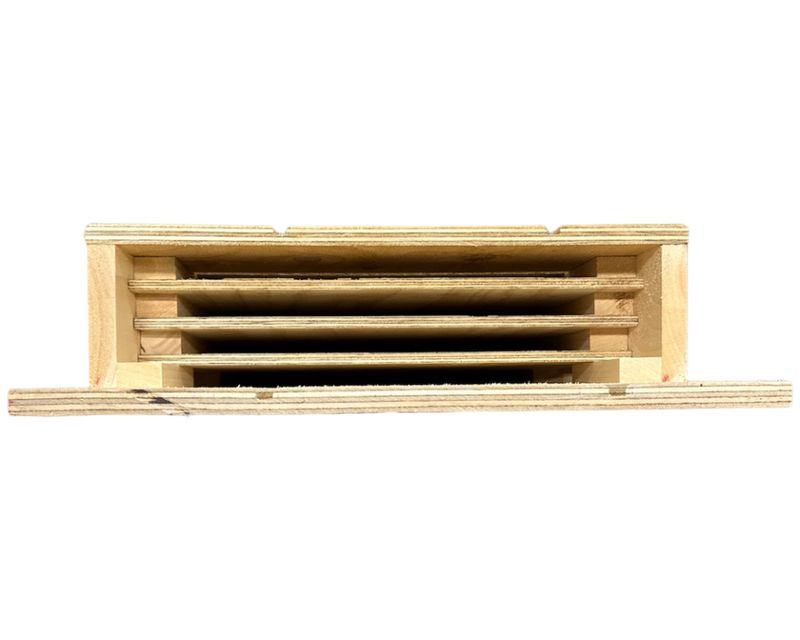
A single-chamber box the size of a shoebox is the bat house most people picture, and it is also the one least likely to work.
Colonial bats need space to spread out, shift position as temperatures change through the day, and cluster in groups large enough to keep the roost warm.
A four-chamber design gives them all of that.
Bat Conservation International now favors four-chamber houses because multiple chambers create several internal microclimates, so bats can move to a warmer or cooler spot without leaving the roost.
Chambers should be at least 14 inches wide and 2 feet tall to give a colony enough surface area to grip and cluster.
Smaller designs are not a guarantee of failure, but they give bats fewer reasons to stay.
Interior surfaces must be rough and untreated.
Do not paint, varnish, or seal the inside.
Bats need to grip the wood with their tiny claws, and a smooth or coated surface makes that harder, especially for young bats learning to climb.
Exterior seams should be sealed tightly against rain and drafts, but the house still needs ventilation slots sized for your specific site, because a roost that turns into an oven in July will drive bats out fast.
Skip any interior mesh or hardware cloth.
UF/IFAS guidance on effective bat houses warns that screening can snag bats, particularly young ones that have not yet developed full coordination.
If you are buying rather than building, look for a house that meets BCI’s current design standards and check that the interior panels are grooved or roughened wood with no coating.
Place the Box for Flight, Water, and North Carolina Heat
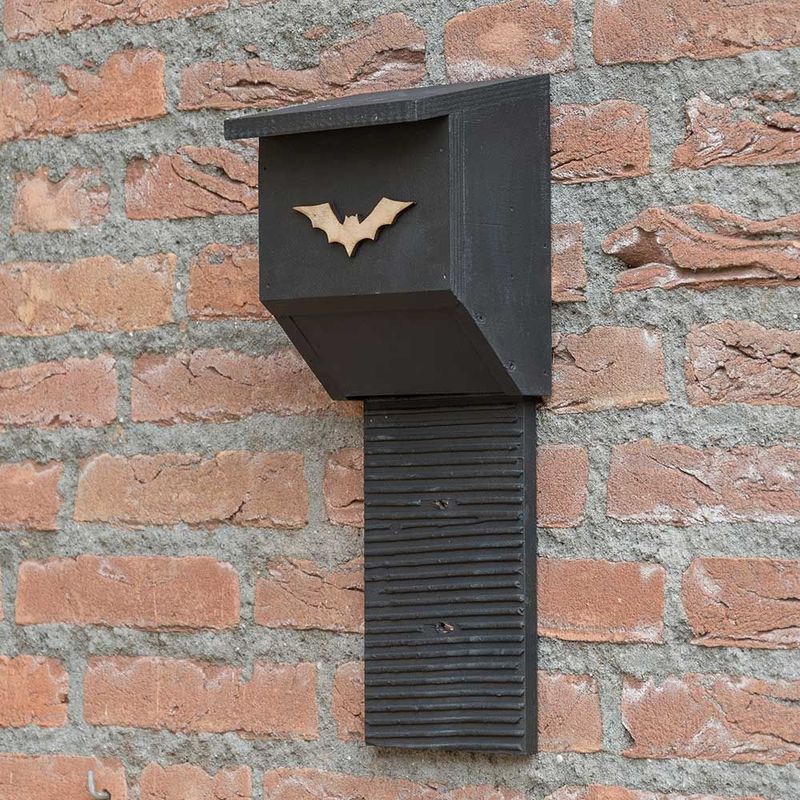
Placement is where most bat house projects quietly fail.
The box goes up on a shady tree branch, faces the wrong direction for the climate, or hangs at 8 feet where a raccoon can reach it on a good night.
Getting this part right matters more than almost any other decision.
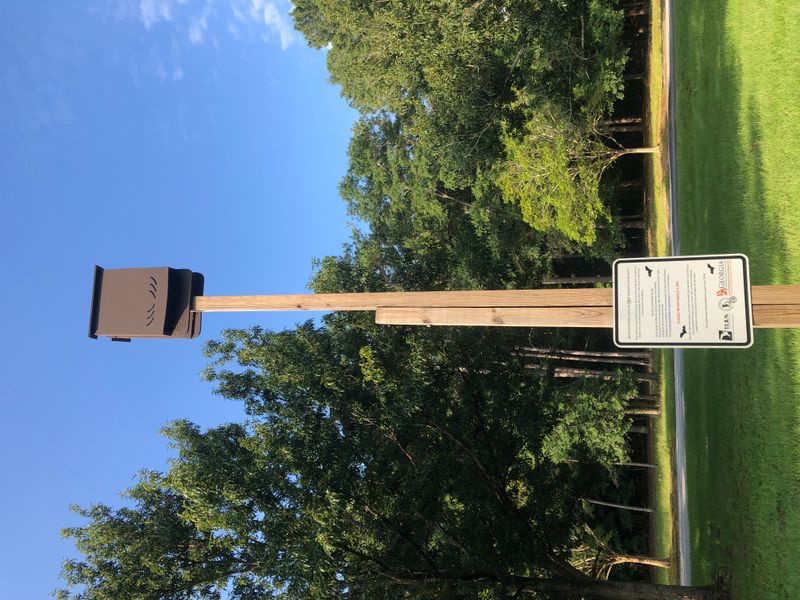
Mount the house on a building or a freestanding pole, not a tree.
Trees shade the box, clutter the flight path, and give predators, snakes, owls, raccoons, a much easier approach.
BCI’s current placement standards call for at least 12 feet of open, unobstructed space below the exits, with higher placement generally performing better.
Mount the house high enough that this 12-foot clearance is met from the ground up.
NC State’s older guidance suggested 10 to 15 feet above ground, but that lower end does not automatically provide the 12 feet of clear flight space BCI now recommends, so use the clearance requirement as your actual target.
Water matters.
Try to locate the house within about one-quarter mile of a permanent water source, a pond, stream, marsh, or river.
Bats need to drink on the wing and hunt near the insect concentrations that water supports.
Across the Piedmont and Coastal Plain, farm ponds and creek corridors are natural anchors.
In the mountains, even a reliable stream nearby can make a site more attractive.
Sun exposure needs careful thought in North Carolina’s climate.
A south-facing wall sounds simple, but in the Sandhills or along the coast where afternoon temperatures push past 95 degrees Fahrenheit, a dark-painted box on a south wall can overheat a roost and kill young bats.
Florida-informed guidance adapted for hot climates suggests lighter exterior paint, added ventilation, shade structures, or an east-facing wall that catches morning sun without the brutal afternoon heat.
Match the exposure and color to your specific region and observe the house in midsummer before bats arrive if you can.
Keep the flight path open in all directions below the house.
No grills, no patio furniture, no play equipment, no doorways directly underneath.
Guano will fall below an occupied house, and you do not want that over a dining area or a child’s sandbox.
Use Four Native Plants to Build Insect Habitat

Plants do not lure bats the way a feeder lures birds.
No scent, no seed, no arrangement of stems will make a bat choose your yard over the next one.
What native plants do is support the moths, beetles, flies, and other insects that make up the bulk of a bat’s diet, and they do it quietly, season after season, without any effort on your part once they are established.
BCI’s bat garden guidance frames native plants as a way to build the insect base that bats need, not as a direct attractant.
Four North Carolina natives are particularly well matched to this role, and each one suits different site conditions across the state.
Purple Joe-Pye weed (Eutrochium purpureum) is a tall, late-summer bloomer that reaches 5 to 7 feet and draws moths, butterflies, and beetles in numbers.
NC State’s plant profile lists it as preferring moist soil, making it a natural fit for low spots in Piedmont yards or rain garden edges.
Buttonbush (Cephalanthus occidentalis) is the one for genuinely wet sites.
NC State’s buttonbush profile notes it can tolerate standing water, which makes it useful near the pond or drainage area where you want bats hunting anyway.
Rough goldenrod (Solidago rugosa) suits moist to wet Piedmont sites and blooms in fall when many pollinators and their predators are still active.
Its NC State profile confirms it as a Piedmont-appropriate species.
Flowering dogwood (Cornus florida) grows statewide and supports caterpillars, fruit-eating birds, and a broad web of insect life through spring and summer, though it can struggle in some dense urban settings with compacted soil.
No plant list, including this one, guarantees bat occupancy or keeps a colony returning.
What these four do is make the surrounding landscape more insect-rich, and a more insect-rich landscape is genuinely more attractive to foraging bats.
NC State’s native plant landscaping guidance recommends choosing regionally appropriate species for food and cover, and matching plants to your actual soil and light conditions rather than following a fixed recipe.
Give Bats Time—and Consider Two Roost Options
Put the house up, then wait.
That is genuinely the hardest part of this project for most people, because a box that sits empty through June, July, and August can feel like a failed experiment.
But occupancy is not guaranteed on any timeline, and the wait is normal.
NC State Extension recommends installing before spring bat activity picks up, with early April as a practical target for most of North Carolina.
Bats that are already scouting for roost sites in April and May are more likely to find a house that has been up and warmed by the sun for a few weeks than one that went up in June.
Even with perfect installation, occupancy may take up to two years, and some well-built houses in good locations are never used.
That is not a failure of the project, it is just the honest reality of working with wild animals.
One box is a reasonable starting point, but two can work better.
BCI recommends placing two houses within about 100 meters, roughly 328 feet, of each other when the site allows it.
The reason is temperature choice: bats move between warmer and cooler roosts depending on the weather, the time of day, and whether a female is nursing young.
Two houses give the colony options, which makes the site stickier over time.
Start with one well-built house if budget or space is limited.
Add a second the following season if the first attracts occupants or if you want to increase the odds.
Do not try to speed up occupancy by placing guano below the box, playing bat call recordings, or moving a wild bat into the house.
None of those methods are supported by evidence, and handling bats is unsafe and may be illegal depending on where you live.
Build the Real Mosquito Plan Around Water
A bat house is one small piece of a mosquito plan, and it is not the load-bearing piece.
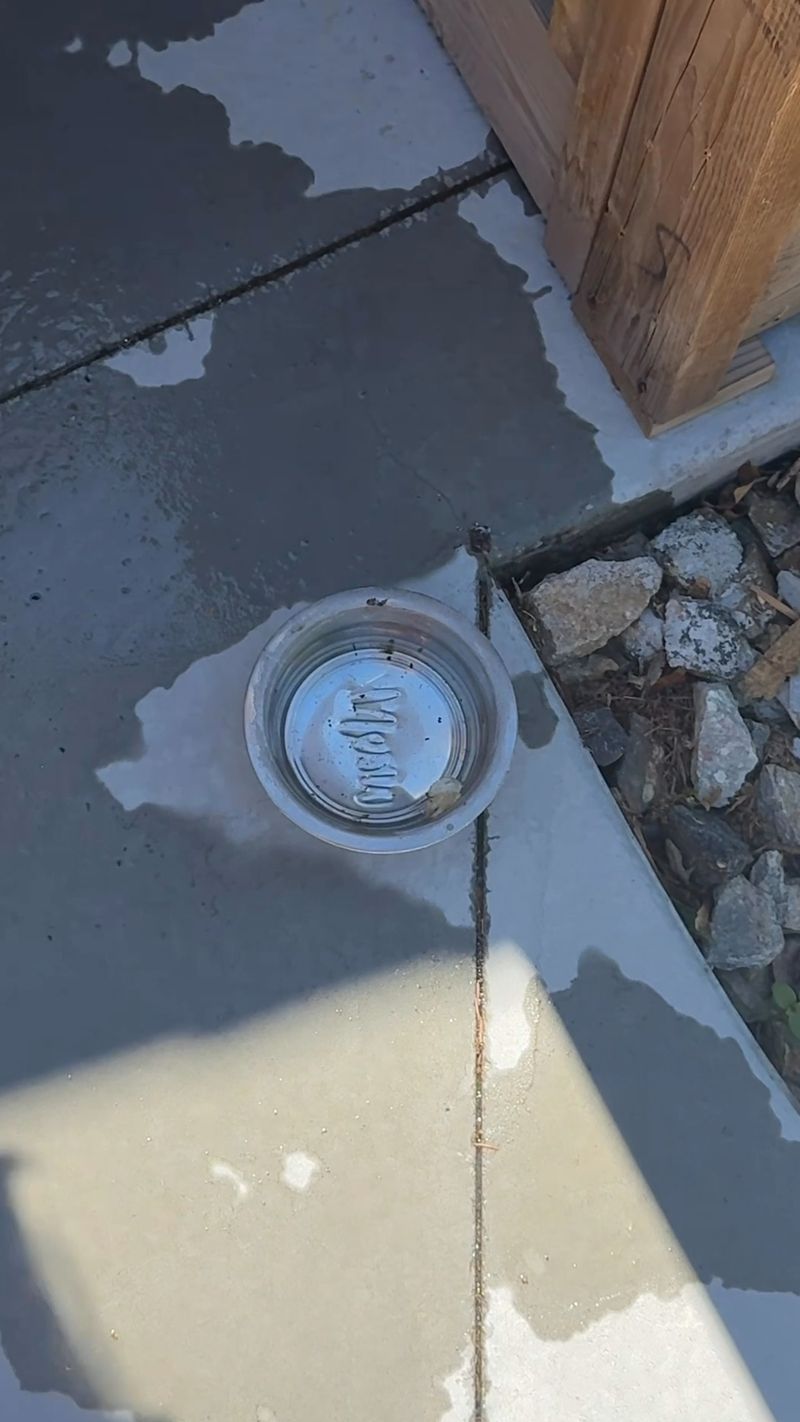
The step that actually moves the needle fastest is also the least exciting one: find every container holding standing water in your yard and deal with it every single week.
Mosquitoes breed in surprisingly small amounts of water.
A flowerpot saucer, an upturned lid, a low spot in a tarp, the groove in a plastic toy, a clogged gutter, a tire, an uncovered rain barrel, a birdbath that has not been refreshed in five days, any of these can produce a new generation of mosquitoes in as little as a week during a warm North Carolina summer.
CDC guidance on mosquito control at home is direct: empty, scrub, turn over, cover, or throw away water-holding containers at least once a week.
Scrubbing matters because mosquito eggs can stick to the sides and survive a simple dump.
Wildlife water features need attention too.
A birdbath or small garden pond can support dragonflies, birds, and other beneficial animals, but stagnant water in any feature can breed mosquitoes.
NC State Extension’s wildlife habitat guidance recommends refreshing or changing water in features frequently to reduce mosquito breeding.
A pond with a small recirculating pump or frequent water changes is a better choice than one that sits undisturbed for weeks.
For water you genuinely cannot dump or cover, a pond too large to drain, a rain barrel you need for irrigation, a drainage ditch, EPA-registered Bti products target mosquito, black fly, and fungus gnat larvae specifically.
Bti has no toxicity to people when used according to the label, but the label controls use, so read it before applying to any water body.
When you are outside during peak mosquito hours, screens on porches and windows cut exposure significantly.
An EPA-registered repellent, DEET, picaridin, or oil of lemon eucalyptus, worn on exposed skin gives you direct personal protection that no bat house, no plant, and no single yard fix can match.
Long sleeves and pants at dawn and dusk are the cheapest layer of all.
Stack these basics and the bat house becomes a meaningful addition rather than a substitute for the things that actually work.
Protect the Bats and the Rest of the Yard
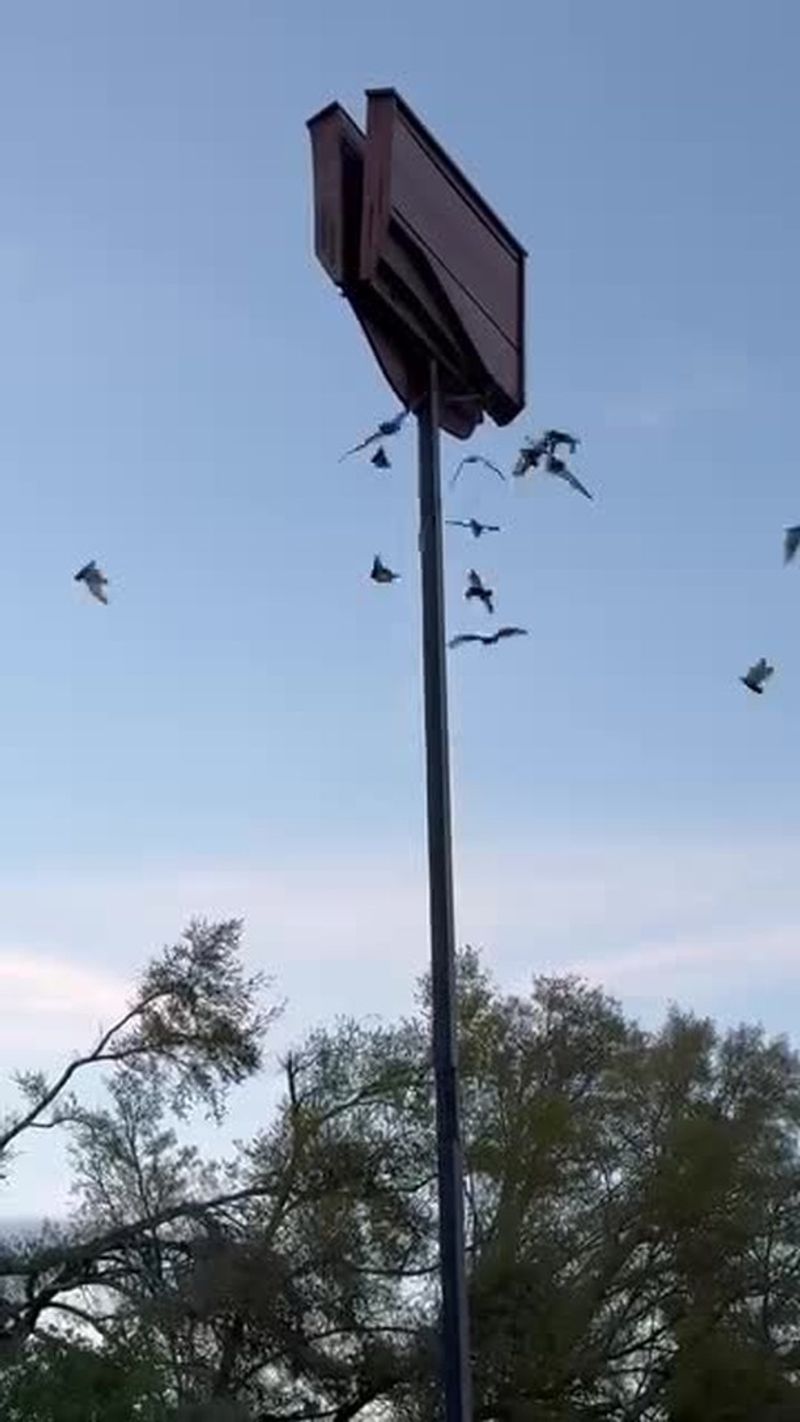
Once bats move in, the temptation is to get closer, check the inside, or shine a light up at the entrance.
Resist all of that.
Disturbing an occupied roost, especially during maternity season in late spring and early summer, can cause females to abandon young pups that cannot yet fly.
Inspect the house visually from the ground before bats arrive and leave it alone once a colony settles.
Do not handle bats.
A bat bite or scratch can be small enough to go unnoticed, and rabies is a concern with any direct contact.
CDC guidance on preventing rabies from bats is clear: if a bat is found in a room with a sleeping person, a young child, or anyone who cannot reliably report whether contact occurred, contact your local public health officials promptly.
Do not wait to see if symptoms develop.
Yard spraying is where the bat house project and the mosquito plan can accidentally work against each other.
EPA’s guidance on residential mosquito misting systems notes that pyrethrins and permethrin used in these systems are toxic to all insects, including beneficial ones, and permethrin is highly toxic to fish.
Routine broad insecticide spraying in a yard where you are trying to support bats removes the moths, beetles, and flies that bats need to survive.
It also harms fireflies, pollinators, and the broader insect community that makes a North Carolina yard feel alive in summer.
If mosquito pressure is genuinely severe, the layered approach still holds: standing water removal first, then screens and repellent, then targeted Bti for water that cannot be managed, then a bat house as habitat support.
Skip the broadcast spraying if bats, fireflies, or other beneficial wildlife are part of what you want in the yard.
A bat house done right is a long-term investment in the neighborhood’s wildlife, not a quick fix for a buggy July evening.
The yard that has bats in summer, fireflies at dusk, and native plants humming with moths is also the yard where the mosquito pressure feels a little more manageable, because every layer is working together.