
These Pennsylvania Clay Soil Plants Treat Heavy Ground Like An Advantage And Never Need Replacing
Follow us on Google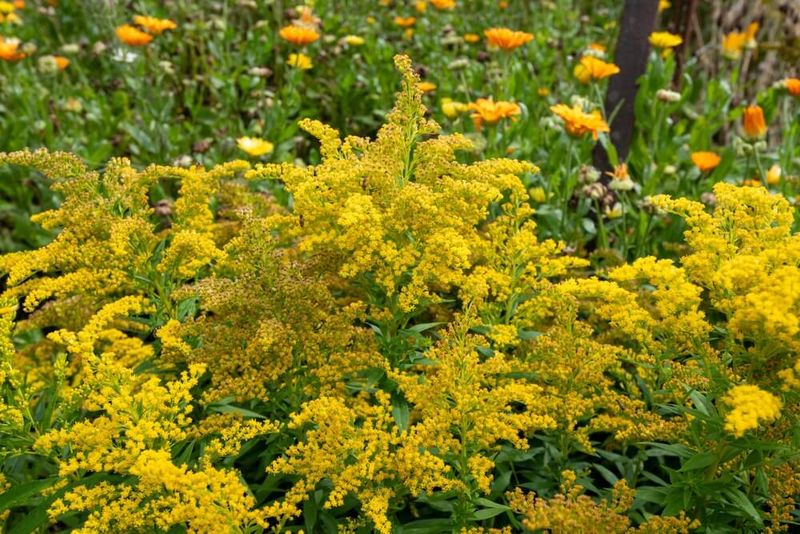
You push a shovel into your backyard on a dry August afternoon and it stops cold, like hitting a sidewalk buried two inches down.
That heavy clay is the reason half the plants you bought last spring turned brown and gave up.
But here in Pennsylvania, some plants actually want that dense ground, and they come back on their own year after year without a dime from you.
Below are ten tough natives and near-natives that treat clay like a home instead of a punishment.
Plant them once and they settle in for good.
1. Eastern Redbud Turns Heavy Ground Into Spring Fireworks
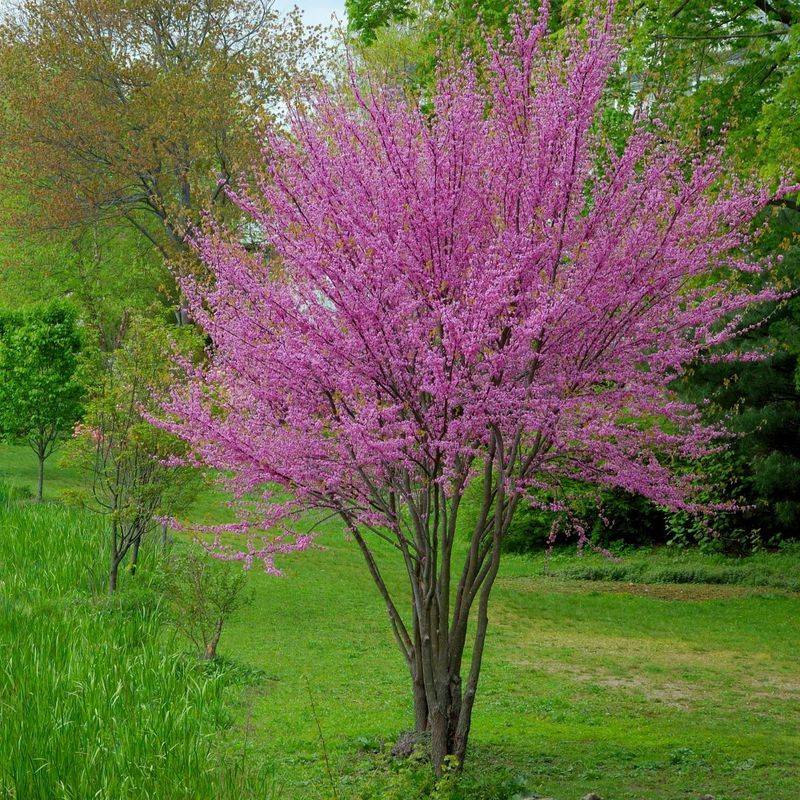
Picture a small tree lighting up rosy-pink before a single leaf shows, back when your yard is still gray from winter.
Eastern redbud (Cercis canadensis) pulls that off every April, and it does it in clay that would stall other trees.
Here is the quiet trick.
Redbud is a nitrogen-fixing legume, which means it feeds itself and slowly enriches the tough soil around it.
It tolerates heavy clay with ease, though it does not want ground that stays soggy all winter.
Plant it in full sun to part shade and give it room, since it reaches 20 to 30 feet tall and spreads 25 to 35 feet.
It grows a medium 2 feet a year in good conditions and is hardy across Pennsylvania in USDA Zones 4 through 9.
Those early flowers feed bees and butterflies when almost nothing else is blooming.
Prune lightly while it is young to build a strong shape, then mostly leave it alone.
The fall payoff is bright yellow leaves.
So you get a tree that works the soil for free while it decorates your spring, and you never replant it.
2. Serviceberry Feeds Birds And Your Family Both
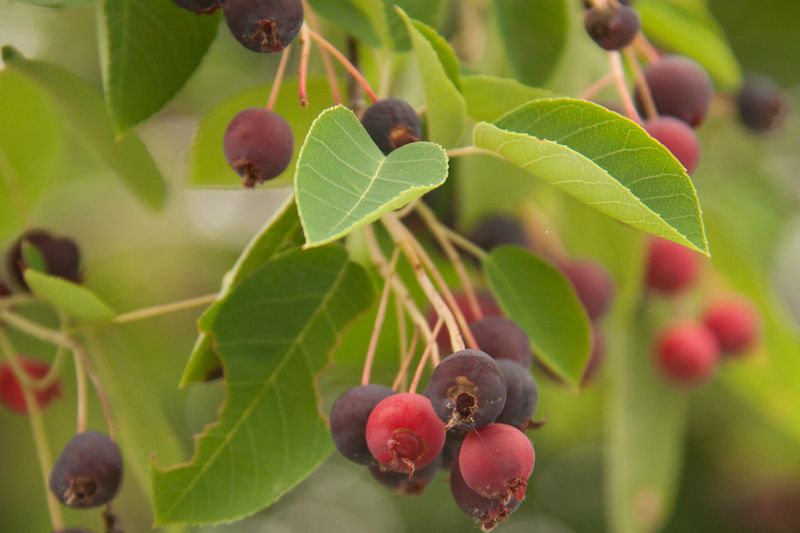
Few small trees give you white spring flowers, edible summer berries, and blazing fall color in one trunk.
Serviceberry (Amelanchier spp.) does all three, and several species grow wild across Pennsylvania.
Downy serviceberry, Allegheny serviceberry, and shadblow serviceberry all handle clay, but heavy wet clay can rot the roots if drainage is poor.
If your ground stays damp, reach for Amelanchier canadensis, which shrugs off soggy clay sites better than the rest.
Work compost into the planting hole and you tilt the odds in your favor.
Most grow 15 to 30 feet tall in full sun to part shade, with full sun giving the best fruit.
Water it through its first year and during dry stretches after that.
The berries ripen from red to blackish-purple in early summer, and the birds show up fast.
Here is where it gets tricky.
Deer browse young plants, so a simple cage or fencing for the first couple years genuinely helps.
Get it past that stage and you have a tree that comes back every year, feeds robins and cedar waxwings, and hands you a bowl of berries too.
3. Spicebush Barely Asks Anything From You
Spotted lanternflies and Japanese beetles have a routine, and part of the joy of spicebush is how little it interests any of them.
Spicebush (Lindera benzoin) is one of the most trouble-free shrubs a Pennsylvania yard can hold, with few serious pests or diseases.
Native to the eastern states including western Pennsylvania, it laughs off a wide range of soils, clay and very acidic ground included.
It grows fast into a broad, rounded shape, 6 to 12 feet high and wide.
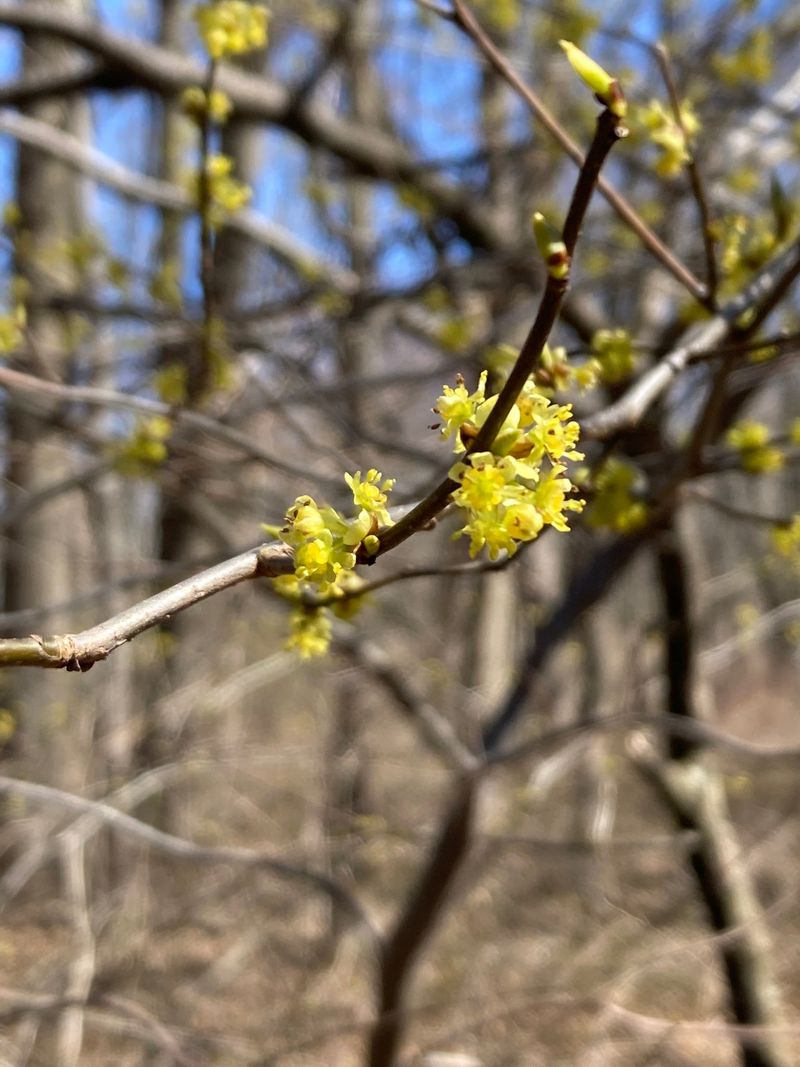
In March, before its leaves open, it lines its branches with fragrant yellow flowers that read like an early sign spring is coming.
Plant it in partial to full shade, though a bit more sun gives you denser growth and more berries.
Keep the soil consistently moist and give it a deep soaking during summer droughts.
Come fall, red drupes feed migrating birds like the wood thrush, and the leaves turn golden.
Deer usually walk right past it.
So you get a native workhorse that treats clay as normal, needs almost nothing from you, and returns fuller every year.
4. Oakleaf Hydrangea Blooms On Southeastern Clay
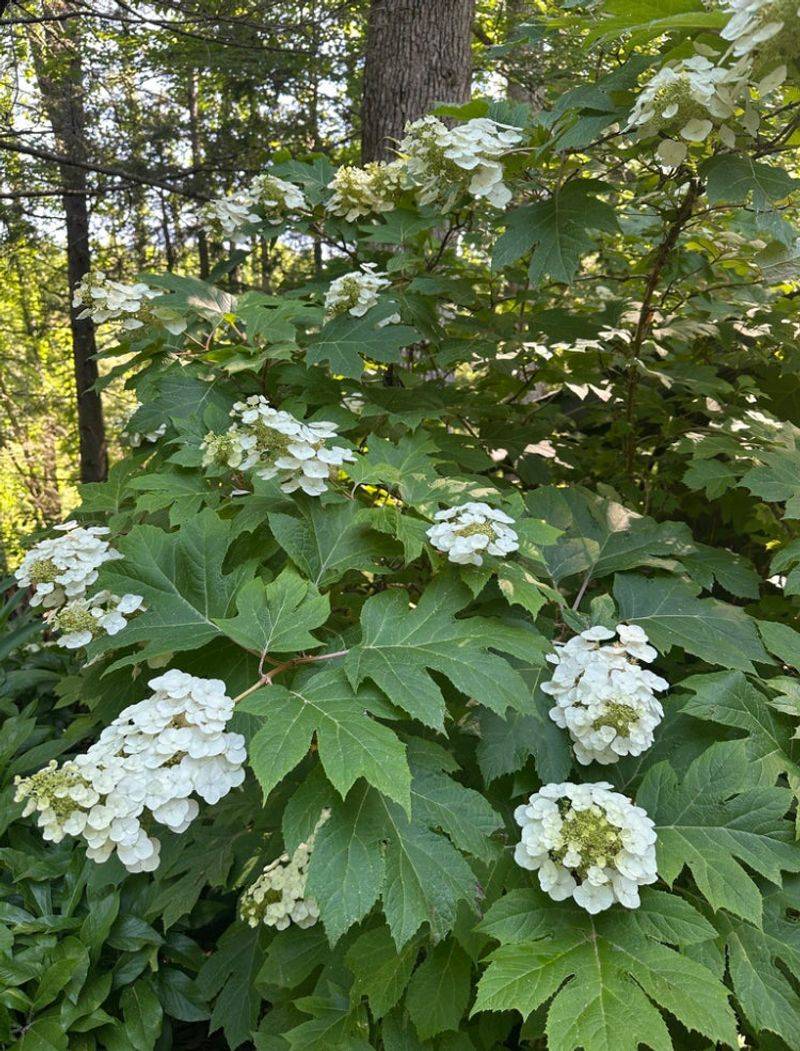
Big cone-shaped flower heads that start white, fade to pink, then hold on as tan through winter.
Oakleaf hydrangea (Hydrangea quercifolia) gives you months of interest, and it is fairly forgiving of clay.
It hails from the American Southeast, but it is hardy to USDA Zone 5, so southeastern Pennsylvania gardens suit it well.
It reaches 4 to 8 feet tall and wide depending on the variety, and it does best in rich, slightly acidic soil around pH 5.0 to 6.5.
Mixing compost into heavy clay before planting makes a real difference.
Give it part to full shade with morning sun and shelter from harsh afternoon rays, which matters in warmer urban pockets around Philadelphia where too much sun scorches the leaves.
Keep the soil moist but never soggy, since standing water invites root rot.
Once settled, it handles dry spells and rarely needs watering.
Prune right after flowering, because it blooms on old wood, which is last year’s growth.
Deer tend to leave it be, and bees and hummingbirds visit the blooms.
It is not a magic shrub, but treat its early years right and it anchors a shady corner for decades.
5. Bee Balm Spreads Itself And Never Stops
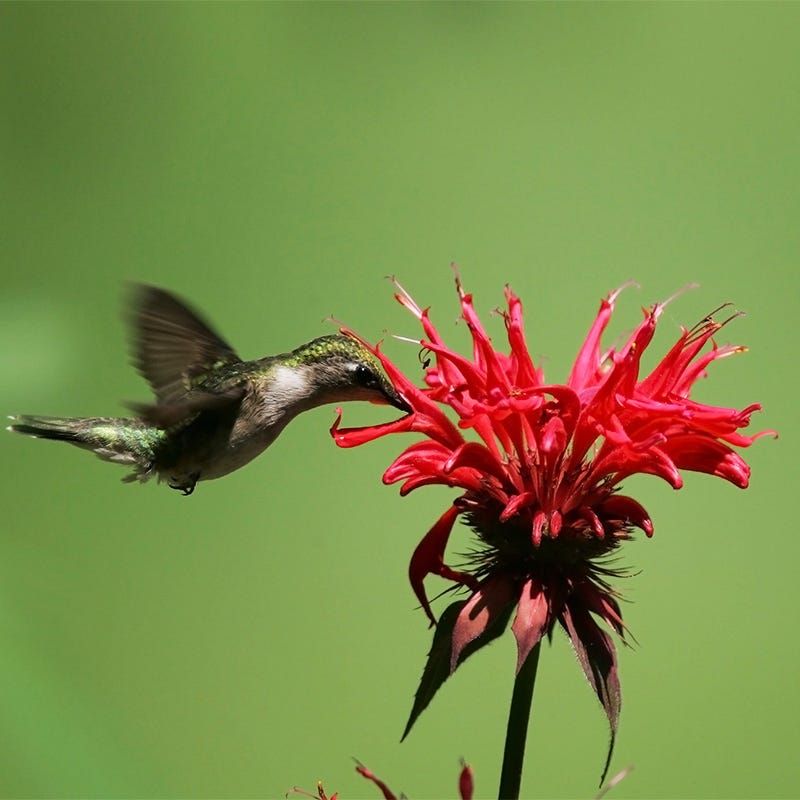
Want a plant that multiplies for free and pulls hummingbirds to your porch all summer.
Bee balm does exactly that, and it treats clay as an ordinary place to grow.
Two natives lead the pack.
Wild bergamot (Monarda fistulosa) handles drier and rockier clay, while scarlet beebalm (Monarda didyma) takes the wetter clay spots.
Both grow 1 to 4 feet tall with a 2 to 3 foot spread and bloom from May into September, a genuinely long run of color.
They thrive in full sun to part shade and prefer soil that stays somewhat moist.
What makes them a set-it-and-forget-it plant is the way they spread, self-seeding and creeping by underground runners, so the colony returns and widens every year without replanting.
Here is the catch.
Crowded plants with poor air flow can get powdery mildew, that dusty white coating on the leaves.
Give them a little breathing room and divide the clumps every few years to keep them healthy.
Deer and rabbits usually pass them by.
So one small patch becomes a pollinator buffet that pays you back season after season.
6. Joe Pye Weed Loves The Mud You Hate
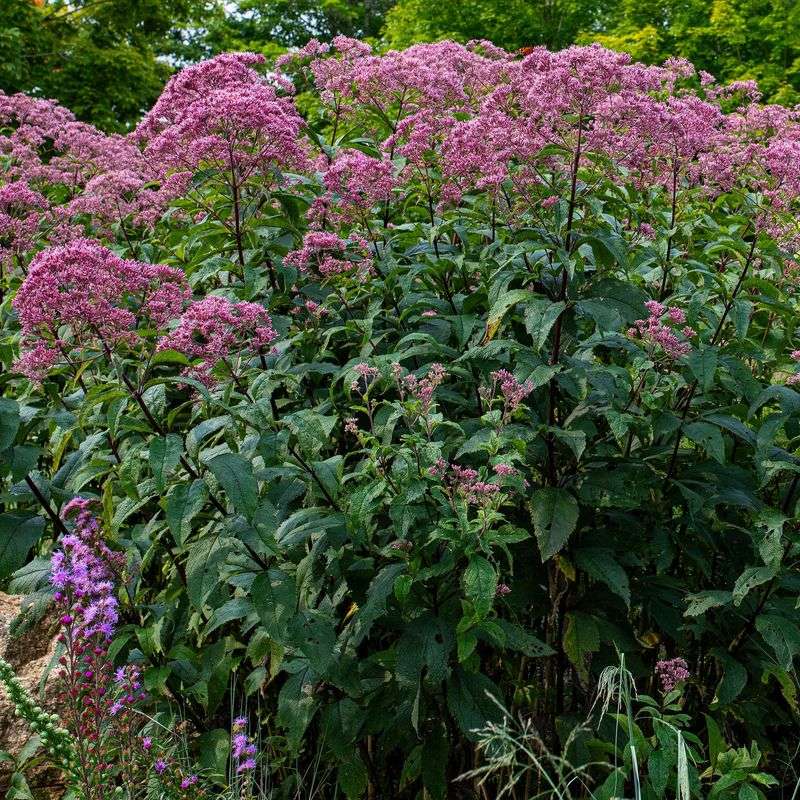
That low, mucky corner of the yard where water pools after every thunderstorm has finally met its match.
Joe Pye weed (Eutrochium spp.) genuinely treats heavy, wet ground like an advantage, and four of its five species grow wild in Pennsylvania.
It thrives in soft mud and moist clay, the exact conditions that drown most perennials.
It shoots up an impressive 4 to 6 feet, with bushier cultivars like Gateway holding a fuller shape.
From mid-summer into early fall, big dome-shaped clusters of pink to purple flowers pull in bumblebees, butterflies, skippers, and moths.
Plant it in full sun to part shade and just do not let it dry out completely, or the leaves may scorch in a hot, dry August.
After bloom, leave the seed heads standing for winter interest and wildlife food.
Deer avoid it, and it even tolerates road salt, which makes it a smart pick near driveways and walkways.
The Pearl Crescent butterfly lays eggs on it too.
So the spot you dreaded becomes the busiest patch in the yard, and it comes back taller every year.
7. Black-Eyed Susan Gets Tougher As It Ages
Blunt truth.
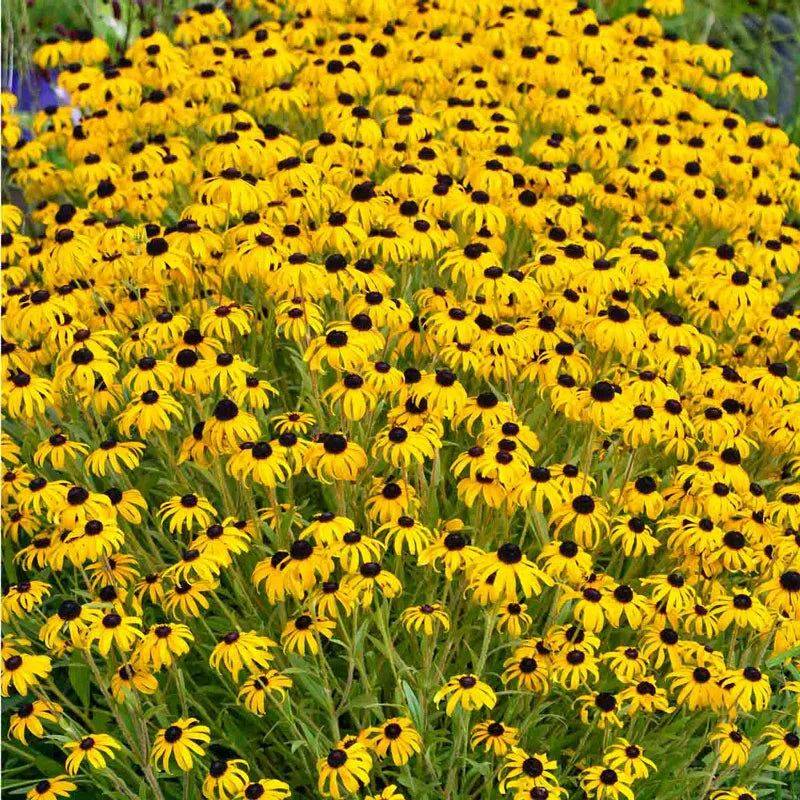
Some plants sulk in clay while black-eyed Susan (Rudbeckia hirta) digs in and gets stronger the longer it lives there.
Those cheerful gold blooms with dark button centers are a fixture in Pennsylvania yards for good reason.
The plant adapts to clay, drinks up full sun, and shrugs off drought once established, which matters in those dry stretches that sneak in between summer downpours.
It flowers for a long stretch and keeps butterflies and pollinators circling.
Here is the part people misjudge.
Some forms are short-lived as individual plants, so folks assume they died.
In truth they reseed themselves readily, dropping new plants nearby so the patch never really goes away.
You get a continuous show without ever buying replacements.
It is hardy in USDA Zones 3 through 9, with many cultivars happiest in Zones 5 to 8, which covers nearly all of Pennsylvania.
Deer generally leave it alone.
Leave the spent seed heads up in fall and goldfinches will pick at them through the cold months.
Plant a few, let them scatter, and you have handed your garden a self-renewing splash of sunshine.
8. Native Asters Save The Late Season Garden
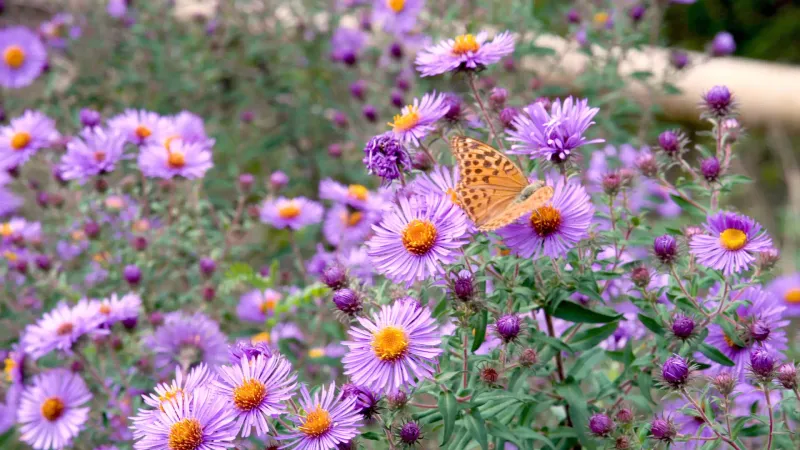
By late September most flowers have quit, and the pollinators are hungry right when fall migration is underway.
Native asters (Symphyotrichum spp.) show up exactly then, and several handle clay without complaint.
There is one for nearly every problem spot.
New England aster (Symphyotrichum novae-angliae) suits clay and delivers striking fall purple.
Aromatic aster (Symphyotrichum oblongifolium) takes clay plus dry, rocky ground and withstands drought.
For a shady corner with baked clay, blue wood aster (Symphyotrichum cordifolium) throws up a blue haze, and swamp aster (Symphyotrichum puniceum) actually prefers sticky clay in damp, sunny spots.
Most grow 1 to 3 feet tall, and a trim by mid-June keeps the taller ones from flopping later.
They are hardy across Zones 3 through 9, so they return reliably year after year, some spreading slowly by runners and some by seed.
Monarchs fueling up for the trip south lean hard on that late nectar.
So while your neighbors’ beds go quiet, your asters keep the yard alive into October, and they cost you nothing after the first planting.
9. Swamp Milkweed Is A Monarch Nursery In Clay
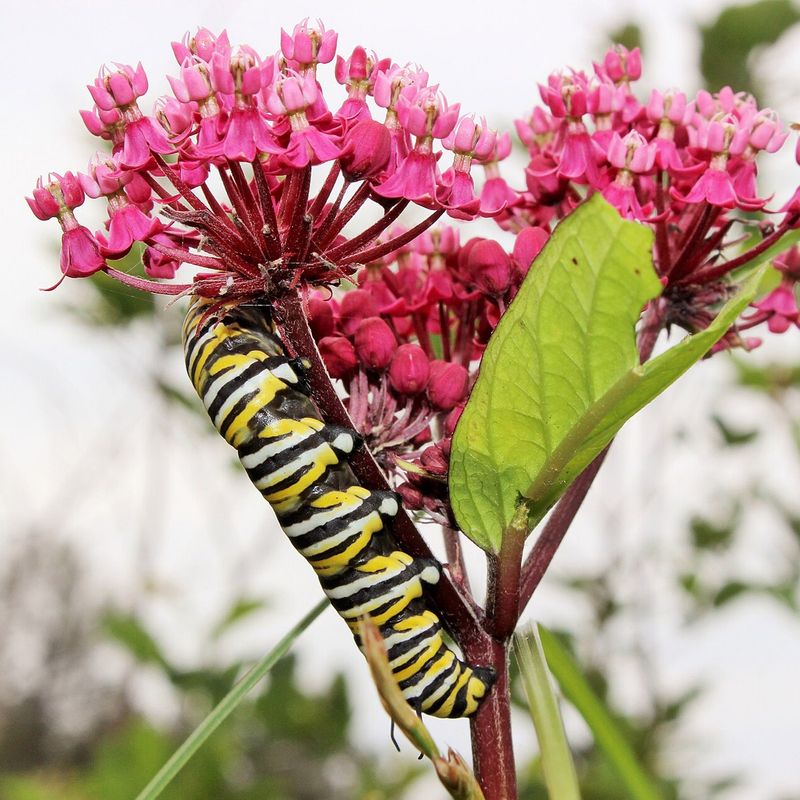
Monarch caterpillars cannot survive without milkweed, and swamp milkweed (Asclepias incarnata) gives them a home in the exact heavy, wet clay other plants refuse.
It truly takes advantage of dense ground, thriving in moist to wet clay while still adapting to average garden soil.
It grows 3 to 5 feet tall and is hardy in USDA Zones 3 through 9, which spans the whole state from the Poconos to the Delaware Valley.
From June to August it opens pink to rose-purple flower clusters that draw hummingbirds, butterflies, and every kind of pollinator.
The real prize is its role as a monarch host plant.
Caterpillars feed on the leaves, and the plant keeps itself going by spreading slowly through rhizomes and by seeds that float off on wind-carried silk.
Aphids sometimes gather on the stems, but they rarely harm a healthy plant, so a blast from the hose is plenty.
Deer keep their distance.
Plant it in that soggy sunny patch and you are not just filling space, you are running a nursery for one of the most watched butterflies in Pennsylvania, and it returns on its own every year.
10. Blue-Stemmed Goldenrod Behaves In A Small Yard
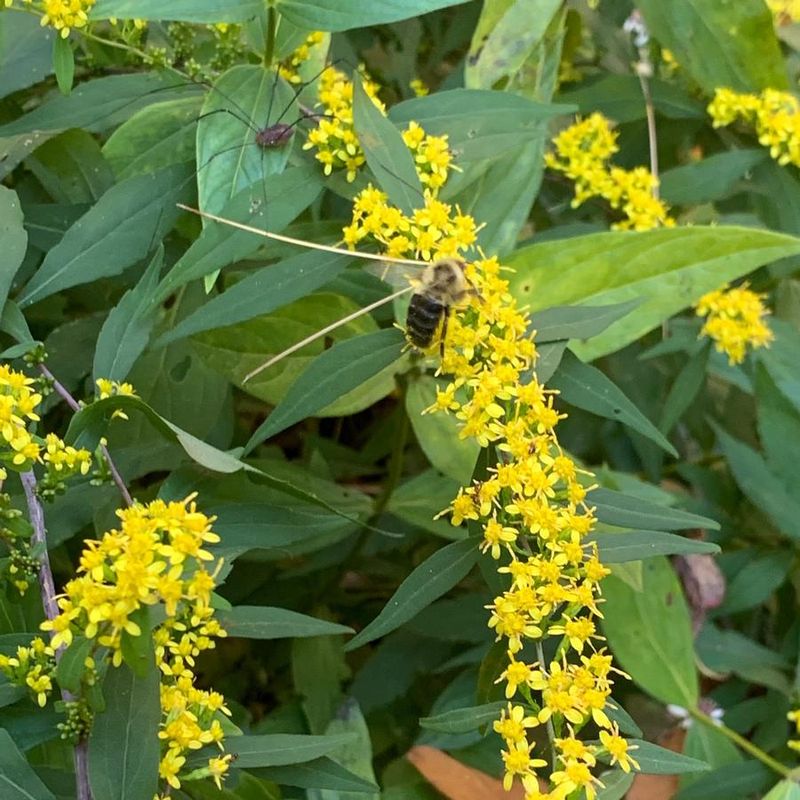
Goldenrod gets blamed every fall for making people sneeze, and it is genuinely innocent.
Ragweed blooms at the same time and is the real troublemaker, while goldenrod’s heavy pollen barely travels on the wind.
With that myth cleared, blue-stemmed goldenrod (Solidago caesia) earns a spot for a different reason.
Unlike the aggressive goldenrods that take over a meadow, this one stays a refined, clump-forming plant that does not swallow your garden.
It tolerates clay and moist soils and slips easily into small, tidy beds.
The name comes from its arching bluish stems, lined with delicate yellow flowers from late summer into early fall.
It prefers dappled to full sun, making it one of the few pollinator plants that shines at a shady woodland edge.
Bees and butterflies flock to it late in the season when food runs thin, and it is long-lived, returning faithfully year after year.
So if you love the look of goldenrod but fear a takeover, this is the polite cousin.
Tuck it into a partly shaded clay corner and it quietly closes out the growing season, feeding the last pollinators before the first hard frost settles in.