
The Praying Mantis Standing Still In Your Pennsylvania Garden Is Telling You Something Good
Follow us on Google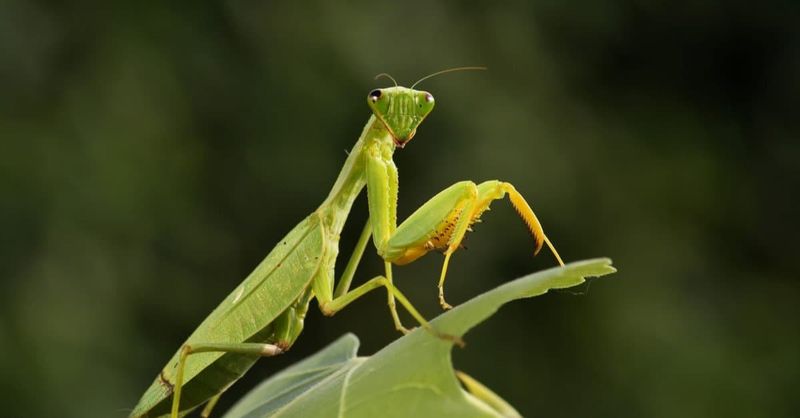
You walk out to your garden on a late-August morning, coffee in hand, and something freezes you mid-step.
A large insect sits motionless on your tomato cage, front legs folded like it owns the place.
That is a praying mantis, and its stillness is not an accident.
What it might be telling you about your Pennsylvania yard is genuinely worth a closer look.
The Still Insect Is A Praying Mantis
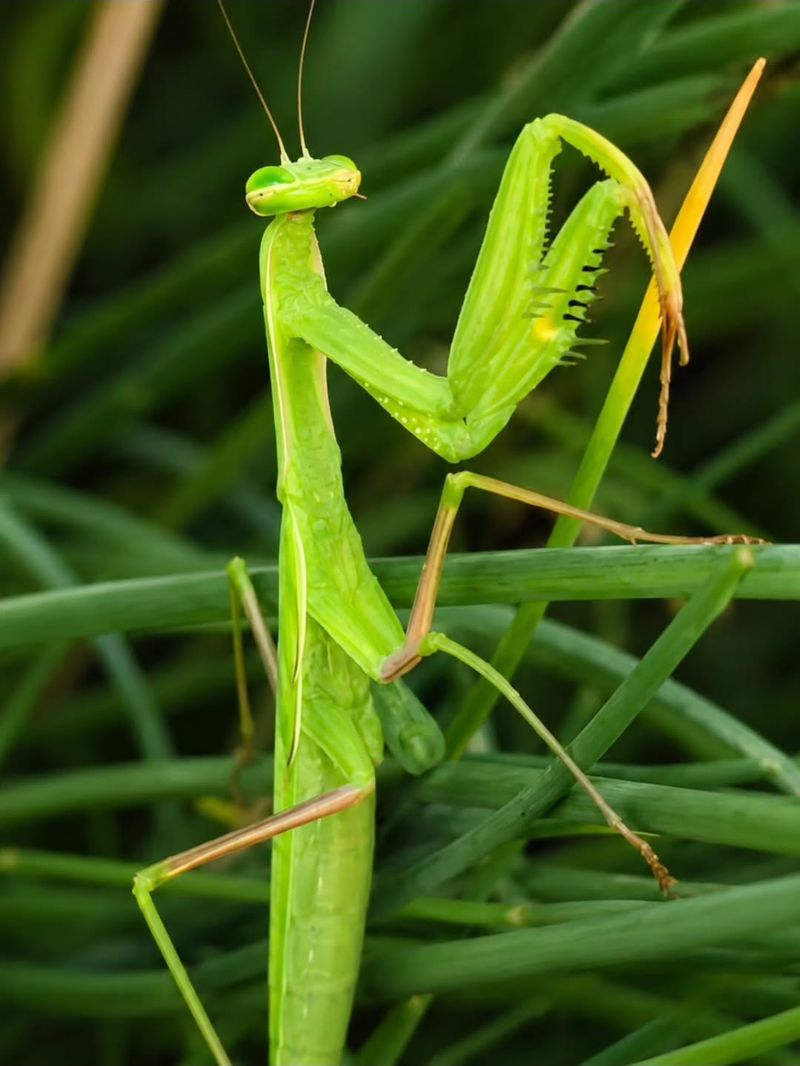
That frozen posture is not distress.
A praying mantis stands completely still on purpose, using its body shape and color to blend into stems, leaves, and flower heads while it waits for an insect to wander close enough to grab.
University of Kentucky Entomology notes that those folded front legs are specialized grasping limbs, not resting arms.
The mantis is coiled, not sleeping.
Pennsylvania has four documented mantis species, and knowing that changes how you read the sighting.
The only native species is the Carolina mantis, Stagmomantis carolina, a smaller insect that tends toward gray or brown.
The three introduced species, the Chinese mantis, Tenodera sinensis, the narrow-winged mantis, Tenodera angustipennis, and the European mantis, Mantis religiosa, are all now established across much of the state.
Penn State Extension confirms that the large green or brown mantis many gardeners encounter is often one of the introduced species, not a native.
Do not assume the visitor in your yard is a native insect just because it looks impressive.
Seasonal timing matters too.
Nymphs, the small immature mantises, tend to emerge in spring and early summer, while adults become more noticeable from late summer into early fall, though exact timing shifts by species and local conditions across a state as varied as Pennsylvania.
Utah State University Extension notes that adults are most visible as females prepare to lay eggs later in the season.
One sighting may be mildly encouraging, but it cannot tell you whether your garden is healthy, pesticide-free, or biodiverse.
It tells you a predator found something worth waiting for, right there, right now.
Stillness Means The Hunt Has Started
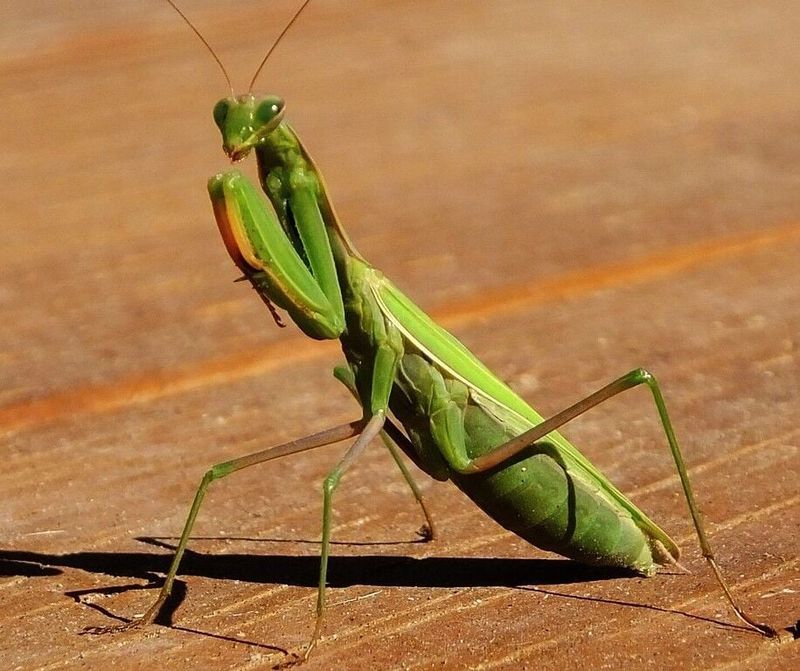
A mantis on your pepper plant is not resting between meals.
Ambush is the entire strategy.
It picks a stem or flower head that matches its color, locks its body into stillness, and waits for another insect to land or crawl within striking range.
University of Maryland Extension explains that both nymphs and adults hunt this way, and their strike is fast enough that prey rarely escapes once the legs unfold.
Here is where it gets tricky.
The mantis does not sort insects by whether you like them.
Its diet is broad, and a single individual may catch aphids, caterpillars, beetles, flies, or even a spotted lanternfly on a good afternoon.
But that same mantis may also catch a honeybee visiting your zucchini, a monarch butterfly passing through, a lacewing that was already eating aphid eggs, or another natural enemy doing quiet work you never noticed.
Utah State University Extension describes mantises as generalist predators, meaning they attack whatever they can capture, not a targeted list of pests.
That distinction matters when you start thinking about pest control.
A specialist predator focuses on a narrow group of prey.
A mantis does not.
University of New Hampshire Extension cautions that mantises are broadly predatory and can harm non-target insects, which is part of why they make unreliable biological-control agents.
One mantis hunting above ground also cannot address pests that live in soil, bore into stems, feed at night, or spread disease through plant tissue.
Appreciate the hunt.
Just do not count on it to solve your pest list.
The Mantis May Have Found Local Cover

Finding a mantis in your yard does carry a small piece of information, just not the sweeping one the headline might promise at first glance.
A mantis needs vegetation to perch on, insect prey to eat, and places where it can hunt without being immediately spotted itself.
Its presence may suggest that some of those conditions exist right where you found it.
Penn State Extension notes that a diverse community of beneficial insects tends to appear in yards that offer varied plant structure and reduced broad-spectrum pesticide pressure.
But the mantis may also have walked or flown in from a neighboring property, a weedy lot, or a stand of shrubs down the street.
One sighting cannot establish that your yard consistently provides quality habitat, that it has been pesticide-free for any length of time, or that your soil, plants, or pest populations are in good shape.
Penn State’s guidance on conserving natural enemies frames mantises as one part of a broader community, not a standalone indicator of garden health.
A more reliable read of your yard comes from looking beyond the mantis.
Are there pollinators visiting your flowers?
Do you see spiders building webs in the shrubs, ground beetles under the mulch, birds picking through the leaf litter, or multiple kinds of flying insects working the blooms at different times of day?
Penn State’s pollinator habitat resources point out that diverse habitat can support more life, but no single visitor, mantis or otherwise, proves the whole yard is thriving.
The mantis is a clue, not a diagnosis.
Leave The Mantis Where It Chose
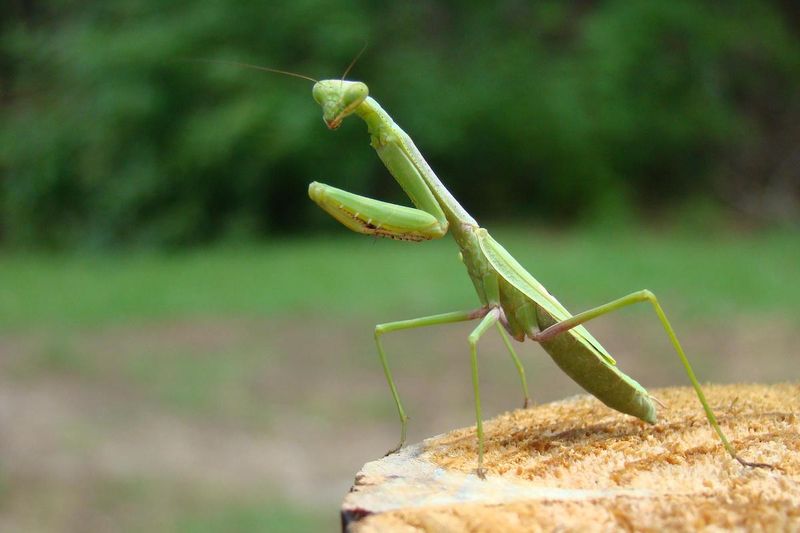
The best thing you can do after spotting a mantis is almost nothing.
Observe it, maybe snap a photo, then walk away.
University of Maryland Extension specifically recommends leaving garden mantises undisturbed and avoiding residual insecticides on nearby plants.
That second part matters as much as the first, because a broad-spectrum spray applied to the foliage around the mantis can kill it along with every other insect in the area, including the ones quietly keeping your pest numbers in check.
Move the mantis only if it has landed somewhere genuinely dangerous, such as a busy walkway, a doorway where it will be stepped on, or a surface that gets foot traffic.
Relocate it once to a nearby plant and leave it there.
Feeding it, capturing it repeatedly, or trying to manage where it hunts does not help the insect or your garden.
Penn State Extension encourages gardeners to let beneficial insects work on their own terms rather than treating them like tools to be repositioned.
That same thinking applies when you spot a pest nearby.
Before reaching for any spray, walk the plant and look for actual feeding damage.
Penn State Extension calls correct identification the first step in integrated pest management, because many insects in a garden are harmless or actually beneficial.
Confirm the pest, confirm the damage, and choose the least disruptive response that fits the specific problem.
Conserving the predators already present in your yard works better over time than any purchased replacement, and it costs you nothing.
Egg Cases Need A Cold Season
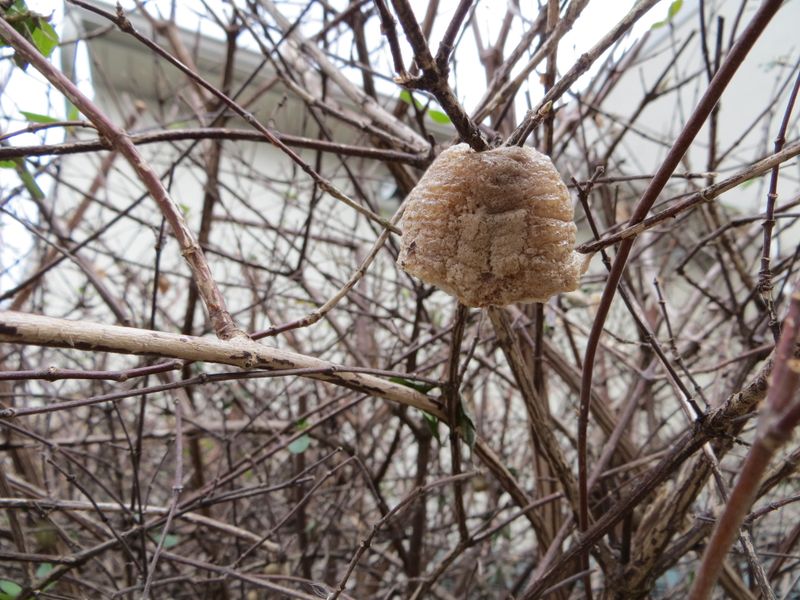
After the mantis disappears from your garden in September or October, it may leave something behind.
Females lay their eggs in a hardened, frothy structure called an ootheca, which dries into a firm tan or brown case attached to a stem, twig, or fence post.
Utah State University Extension notes that a single ootheca can hold roughly 12 to 400 eggs depending on the species, and that case is the overwintering stage for the next generation.
Nymphs emerge in spring and mature later in the season, though timing varies by species and local conditions.
If you find one outdoors, leave it exactly where it is.
Cold winter temperatures are not harming the eggs.
The chill is actually part of the process, keeping development on a schedule that lines up with enough small prey being available when the nymphs hatch.
Penn State Extension warns that bringing an egg case indoors, into a warm house, a heated garage, or a greenhouse, can trigger hatching weeks or months too early.
Dozens or hundreds of tiny nymphs emerging in January inside your living room will find almost no prey and are likely to die.
The same caution applies to Christmas trees.
University of Maryland Extension advises that if you bring a cut tree indoors and notice an egg case attached to a branch, move that branch outside right away rather than leaving it in the warmth.
Clip the small twig it sits on and tuck it into an outdoor shrub or set it in a sheltered spot against the house where it will stay cold through winter.
That one small step gives next spring’s nymphs a real chance.
Do Not Make It Your Lanternfly Plan
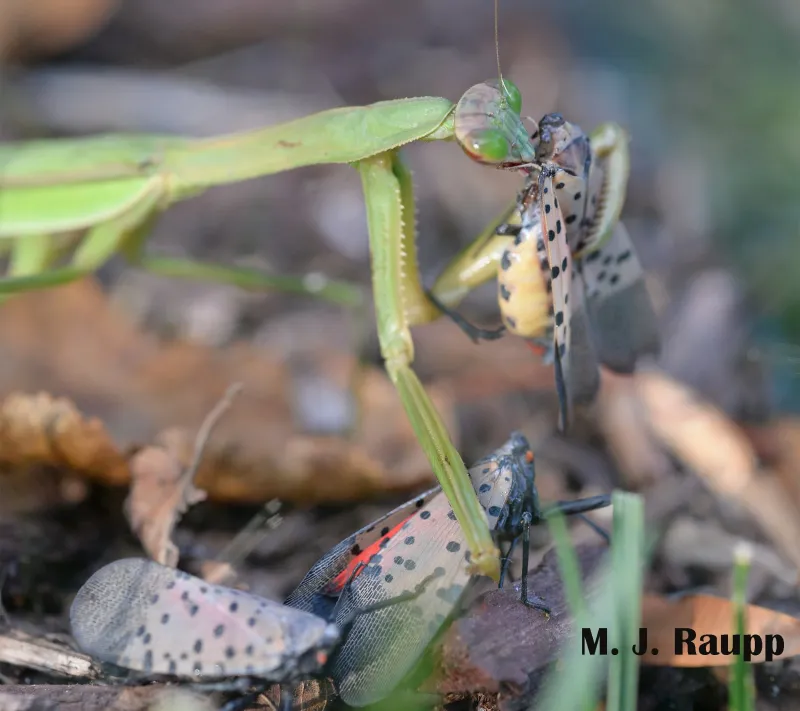
Spotted lanternflies have been crawling up tree trunks and clustering on grape vines across Pennsylvania since they were first confirmed in Berks County in 2014, and many gardeners are understandably looking for any natural help they can find.
A praying mantis will sometimes catch and eat a lanternfly.
That is a real thing that happens.
Penn State Extension acknowledges that generalist predators, including mantises, will attack spotted lanternflies, while also making clear that no known natural enemy is expected to reduce lanternfly populations to manageable levels on its own in the United States.
One mantis in your yard is not a lanternfly solution.
The same logic applies to Japanese beetles, aphids, squash vine borers, ticks, and the other pests that show up in Pennsylvania gardens every season.
A mantis hunts above ground, reacts to what moves in front of it, and covers a limited area.
Pests that feed underground, bore into woody stems, emerge only at night, or arrive in waves from neighboring properties are largely outside its reach.
University of New Hampshire Extension points out that mantises do not stay where you put them and do not focus their hunting on your problem insects.
When a pest is genuinely damaging your plants, start with identification and confirmed damage before doing anything else.
A mantis can coexist with pollinators in your yard without making it dangerous for every bee or butterfly, but it is not a shield for them either.
Appreciate the mantis as one thread in the food web.
The whole web does the actual work.
The Whole Yard Gives Better Clues
A single mantis is a genuinely encouraging thing to notice, and it is worth paying attention to.
But the stronger signal comes from the whole yard read together.
Penn State Extension favors building diverse communities of existing beneficial insects over purchasing predators, because a yard that supports many kinds of life is more resilient than one that depends on any single species to do the heavy lifting.
Building that kind of yard does not require a complete overhaul.
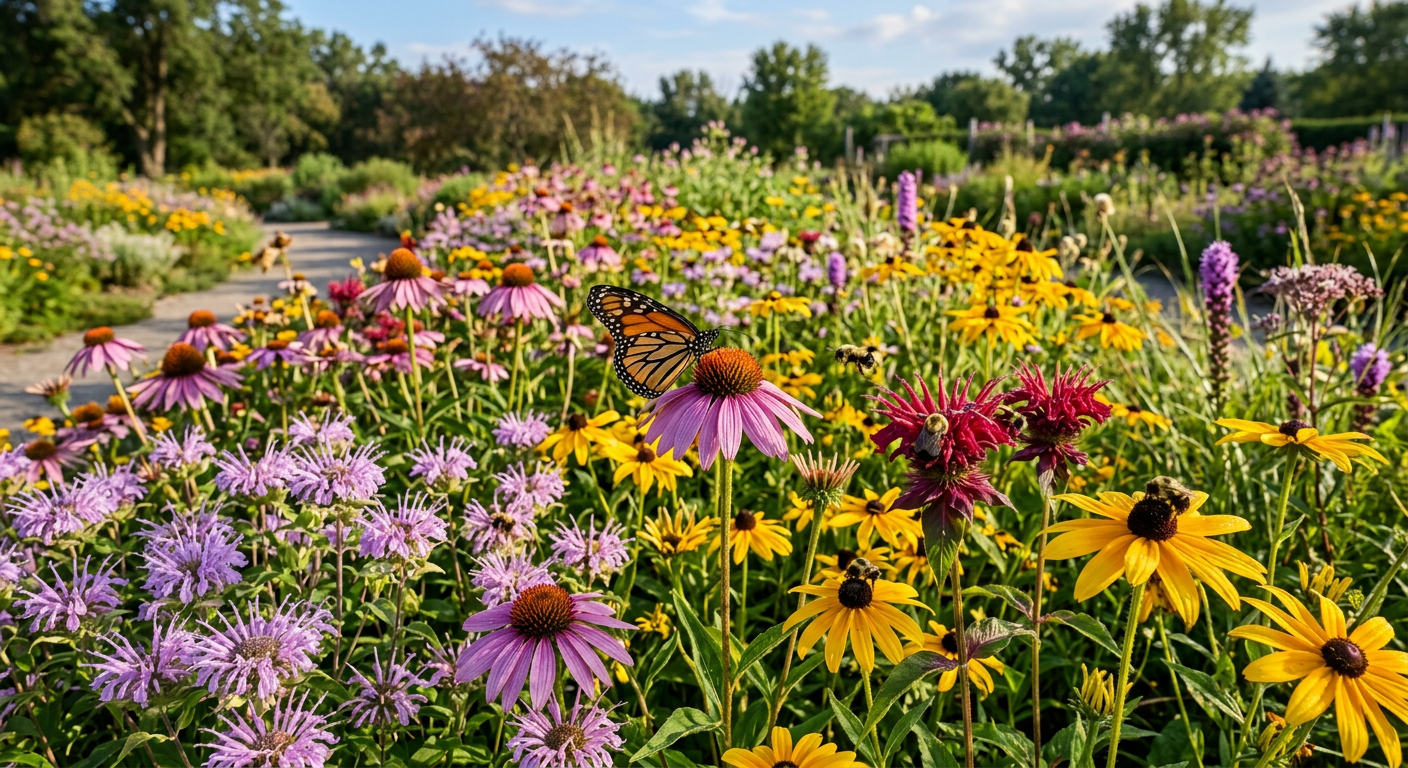
Varied flowering plants that bloom at different times give predators and pollinators more reasons to stay.
Nesting areas, a shallow water source, and habitat that persists through winter, leaf litter, seed heads, bare patches of soil, woody stems left standing, all add up.
Penn State’s pollinator planting guidance and its native shrub resources point to plants like goldenrod, native asters, bee balm, milkweed, Joe Pye weed, eastern redbud (Cercis canadensis), serviceberry (Amelanchier species), and spicebush (Lindera benzoin) as useful additions, provided each one matches your site’s actual light, moisture, soil type, and winter conditions.
No plant works statewide without regard to conditions, and Pennsylvania’s range from zone 5b in the colder northern and higher-elevation areas to zone 7b in parts of the southeast means a plant that thrives in the Susquehanna Valley may struggle on the Allegheny Plateau.
Match your choices to what your specific corner of the state can actually support, and the yard will do more of the work on its own over time.
The mantis is not a promise, but noticing it and protecting the conditions that support many kinds of life is a reasonable place to start.
A yard that keeps surprising you with small visitors is one that is actually working.