
Why Your Pennsylvania Bee Balm Goes Leggy And Stops Blooming By Midsummer
Follow us on Google
You walk out to the garden on a July morning, coffee in hand, and your bee balm looks like it gave up.
The stems are flopped sideways, the flowers are gone, and the leaves have a chalky film you did not notice a month ago.
Before you pull the whole plant out, know this: most of what you are seeing has a straightforward explanation, and several of the fixes take less than an afternoon.
This article walks through the most likely causes, one by one, so you can match the symptom to the right response.
First, Decide Whether Blooming Has Simply Slowed
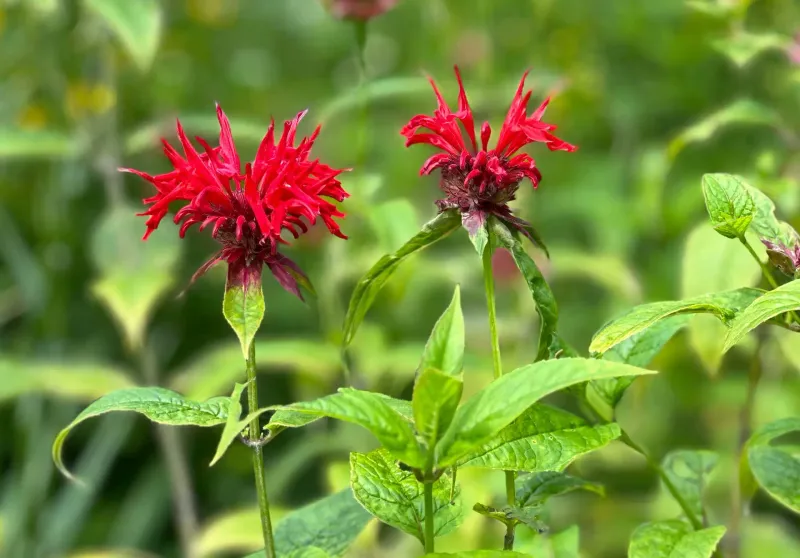
Bee balm, which includes Monarda didyma (scarlet bee balm), Monarda fistulosa (wild bergamot), and the many hybrid cultivars sold at Pennsylvania nurseries, does not bloom for the entire summer on a fixed schedule.
Penn State Extension guidance on herbaceous perennials describes a primary bloom window that can last roughly two to three weeks for many plants in this category, though the exact length depends on the species, the cultivar, local weather, and how the season has gone overall.
If your plant flowered hard in late June and looks spent by mid-July, it may simply have finished its main show.
The first thing to do is look at what you actually have.
Faded flower heads sitting on otherwise firm, upright, green stems tell a different story than stems that are flopping over, yellowing, or covered in white powder.
A plant that has bloomed and finished is resting.
A plant with stretched, weak stems and sparse buds from the start of the season may have been struggling with something else entirely.
Cultivar and species identity matter more than many gardeners expect.
Cuba Center’s three-year Monarda trial evaluated 40 taxa and found wide variation in bloom timing, height, and disease performance across the genus.
Some cultivars bloom earlier and finish by early July.
Others extend into August.
Checking the tag or the cultivar name against a reliable reference can tell you whether your plant is done on schedule or genuinely underperforming.
Missouri Botanical Garden notes that bee balm foliage commonly declines after bloom, especially when powdery mildew is present, and that a plant can still be healthy enough to return the following year even when its late-season appearance is poor.
So before assuming the worst, compare the timing with what you know about the cultivar and give the rest of this article a chance to narrow down the real cause.
Low Light Can Stretch Stems And Reduce Flowers
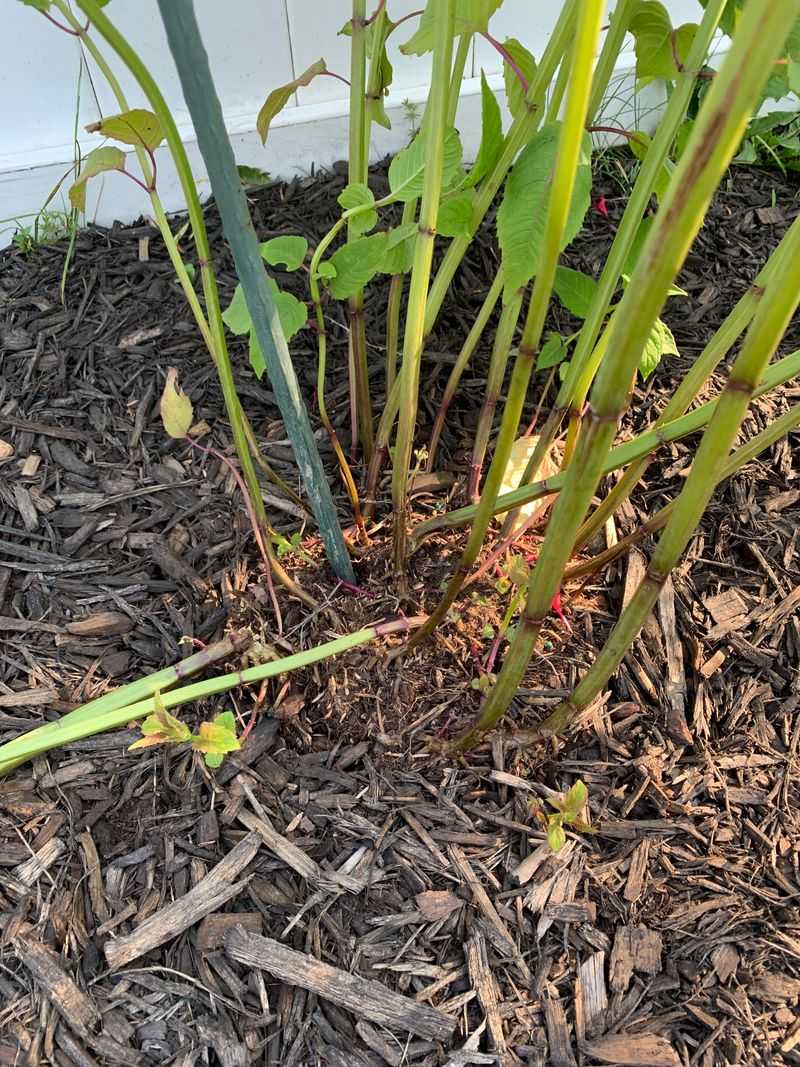
Stretched, floppy stems that reach toward one side of the bed are a classic sign that the plant is not getting enough direct sun.
Bee balm has a way of growing tall and then tipping over when the light it needs is not there, almost as if the stems are searching for something better.
That behavior is not a watering problem or a fertilizer problem, and adding more of either will not fix it.
Iowa State Extension recommends at least six hours of direct sun as a practical target when the goal is sturdy stems and strong flowering.
That figure is a useful benchmark, not an absolute rule for every cultivar or site.
Light afternoon shade can work in a hot location, especially in the warmer parts of southeastern Pennsylvania where summer afternoons push well past 90 degrees, as long as airflow stays good around the plants.
Deep shade is a different situation.
Trees and buildings that have grown or expanded over the years can gradually reduce light in a bed that once performed well.
The Royal Horticultural Society’s Monarda guidance links lower light directly with reduced flowering and floppier growth.
Shaded plants are also more prone to powdery mildew because the foliage stays damp longer and airflow is usually weaker under a canopy.
Spend a few minutes watching the bed at different points during the day, morning, midday, and late afternoon, before drawing conclusions.
Penn State’s rain garden plant profile for bee balm lists full sun as the preferred condition for strong performance.
If the bed is getting fewer than four hours of direct sun, moving the plant to a better spot in fall or early spring is likely to do more good than any other single change you could make.
Check The Soil During A Local Dry Spell
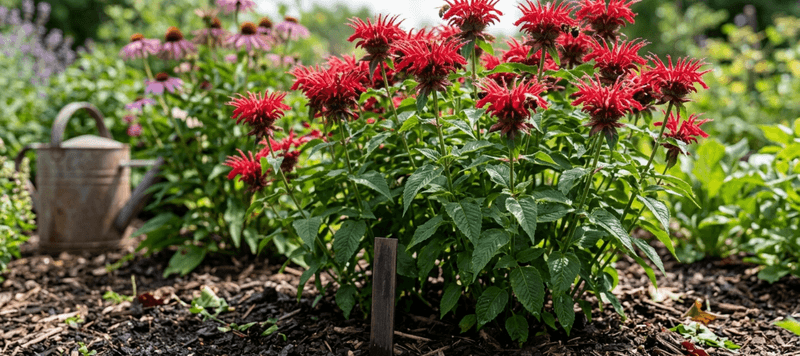
Moisture stress is easy to miss because the surface of the soil can look fine while the ground a few inches down is bone dry.
During a local dry spell, which can hit any part of Pennsylvania between the heavy thunderstorms that roll through in July and August, even plants that seemed fine a week ago can start looking ragged.
Bee balm will tell you it is thirsty by producing dull, slightly curled foliage and fewer buds than you would expect.
Species identity changes the advice here.
University of Illinois Extension describes Monarda didyma as preferring consistently moist, well-drained soil and notes that it is not drought tolerant.
If you are growing scarlet bee balm or one of its hybrids and the soil has been dry for more than a week, water stress is a real possibility.
Illinois Extension’s garden-scoop post on bee balm contrasts that with Monarda fistulosa, wild bergamot, which handles drier conditions in full sun considerably better once it is established.
The practical check is simple: push a finger or a trowel two to three inches into the soil near the plant’s base.
If it comes up dry, water deeply at the soil line rather than overhead.
Wetting the foliage does not help moisture reach the roots and can encourage other leaf diseases to take hold alongside any mildew already present.
Penn State’s rain garden best-practices guidance uses about one inch of water per week as a general establishment benchmark.
That figure is a starting point for new plantings and extended dry periods, not a rigid prescription for every mature plant in every Pennsylvania yard.
In a hot, dry stretch in the Susquehanna Valley or the central counties, a newly planted bee balm may need water every four to five days.
A well-established clump in a moisture-retentive bed may need far less.
Match the watering to what the soil and the plant are actually showing you.
Crowding And Powdery Mildew Create Different Clues
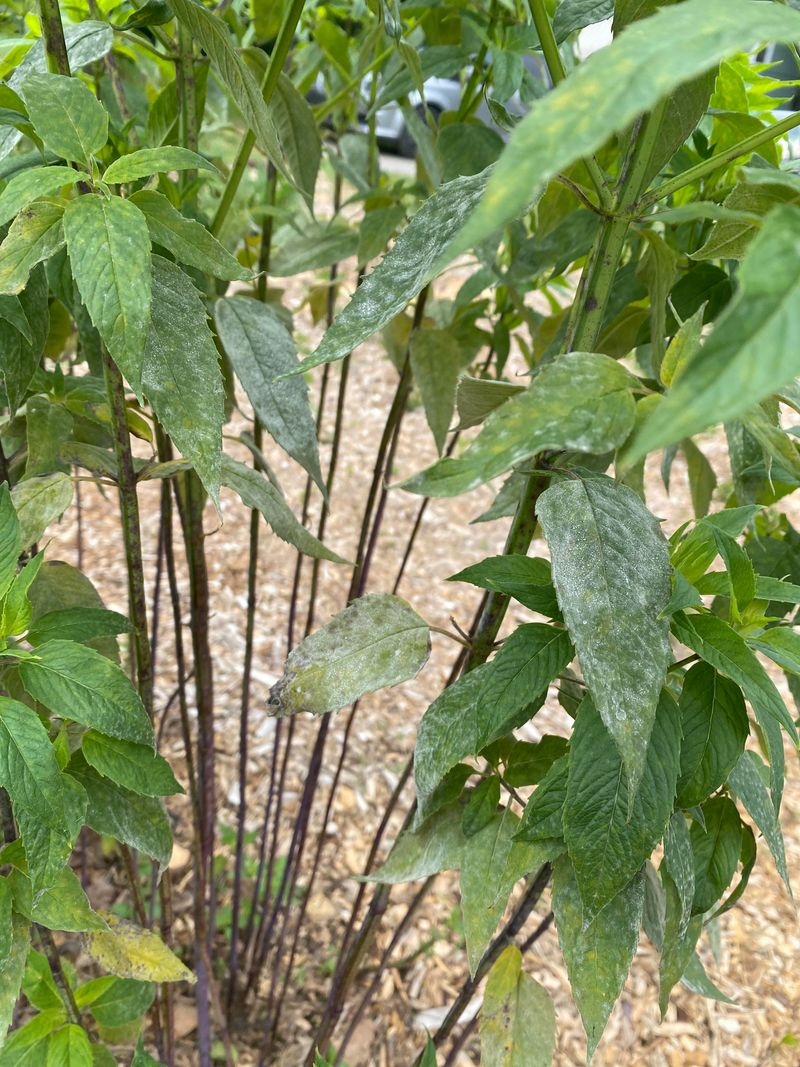
Leggy stems and powdery mildew can show up in the same bed at the same time, but they are not the same problem and they do not have the same fix.
Stretched growth points to light.
The white, talcum-like coating on the leaves points to a fungal disease that thrives when air movement is poor and plants are packed too close together.
University of Minnesota Extension describes powdery mildew in the flower garden as primarily a cosmetic problem on susceptible plants like Monarda, though severe infections can cause yellowing, distorted leaves, and premature leaf drop that leaves the plant looking genuinely rough by August.
The roots are usually fine.
A plant that looks terrible above ground in late July can still come back strong the following spring.
Spacing is one of the most effective tools you have.
Iowa State Extension recommends about two to two-and-a-half feet between bee balm plants to support adequate airflow.
Bee balm spreads by rhizomes and can fill a bed surprisingly fast, so what started at the right spacing three years ago may now be a solid mat of stems with almost no air moving through the center.
Penn State’s garden evaluation guidance recommends thinning crowded perennials in spring to improve air circulation, which is one of the more reliable ways to reduce mildew pressure going forward.
In spring, pull out some of the new shoots from the center of the clump before they reach full height.
That one step opens up airflow without requiring any chemicals.
When mildew is already visible, remove heavily infected leaves and dispose of them in the trash rather than the compost pile.
Penn State’s fall garden tasks guidance recommends removing diseased bee balm material and putting it in the trash because the pathogen can survive winter in plant debris and reinfect next year’s growth.
Penn State’s powdery mildew resource emphasizes cultural practices, including soil-level watering, spacing, and sanitation, as the foundation of management.
None of these steps guarantee a disease-free plant, but together they meaningfully reduce the conditions mildew needs to spread.
Natural Height Can Look Like A Care Problem
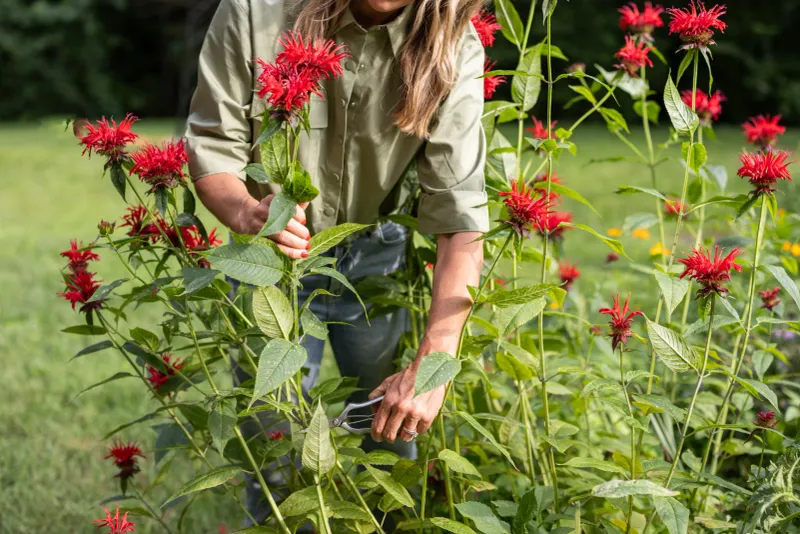
Some bee balm cultivars are simply tall plants.
Monarda cultivars range from compact selections that stay around 12 inches to specimens that push past 4 feet under good conditions, and a plant that flops at that height is not necessarily failing.
It may be doing exactly what its genetics planned.
Mt.
Cuba Center’s Monarda trial documented this variation clearly across 40 taxa, with meaningful differences in mature height among cultivars grown under the same conditions.
If you do not know the cultivar name, a tall, floppy plant in a reasonably sunny spot may be expressing its natural habit rather than responding to a care mistake.
Good light and adequate spacing will help any cultivar perform better, but they cannot make a four-foot plant behave like a two-foot one.
Spring pinching is the most practical tool for managing height before it becomes a problem.
Penn State Extension lists bee balm among the perennials that respond well to pinching, explaining that removing the top few inches of each stem in late spring encourages lateral branching and can produce shorter, more compact plants with more flowering points.
Pinching may reduce flopping, though it cannot compensate for deep shade or a cultivar that is genuinely too tall for the space.
Timing matters.
University of Illinois Extension’s guide to pruning perennials for longer bloom notes that cutting back too late or too severely can delay flowering, reduce the current season’s display, or stress the plant during a hot stretch.
Pinch early, before stems reach about 12 inches, and keep cuts light.
If the plant is already tall and blooming, let it finish and plan for next spring instead.
Deadhead For A Chance At More Flowers
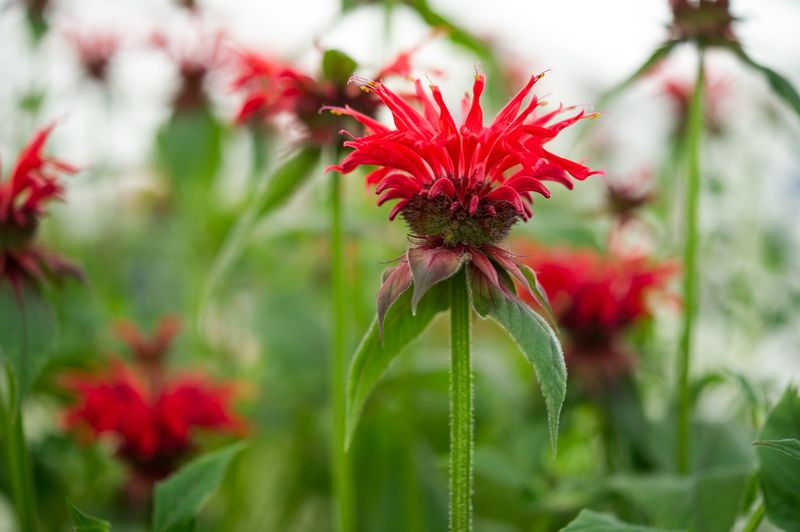
Once the first round of flowers fades, deadheading gives the plant a reason to keep going.
The idea is straightforward: removing the spent flower head before it sets seed redirects the plant’s energy toward producing new buds rather than finishing the reproductive cycle.
Whether that produces a full second flush or just a few extra weeks of scattered blooms depends on the cultivar, the weather, and how much growing energy the plant has left.
Penn State Extension is honest about the limits here, noting that rebloom after deadheading is not guaranteed and that any second flush may produce fewer or smaller flowers than the first.
That is a realistic expectation, not a reason to skip the practice.
Even extending the display by two or three weeks is worth the ten minutes it takes to walk the bed with a pair of hand pruners.
Check the plant every five to seven days after the main bloom peaks.
Clip each spent head just above a set of leaves or a visible side bud.
Illinois Extension’s perennial pruning guide distinguishes this kind of light maintenance from cutting the entire plant back to the ground, which is a different decision with different consequences.
Cutting a bee balm to the soil line in midsummer can improve the plant’s appearance and encourage fresh basal foliage, but it will not reliably trigger rebloom and may stress the plant if the weather is hot and dry.
Missouri Botanical Garden’s Monarda profile notes that foliage commonly declines after bloom and that the plant may look rough through the rest of summer regardless of what you do.
If the stems are still upright and the leaves below the spent flowers are mostly green and healthy, keep the plant and deadhead.
If the whole plant looks exhausted and mildew-covered, focus on fall cleanup and next year’s plan instead.
Divide Congested Clumps At The Right Time
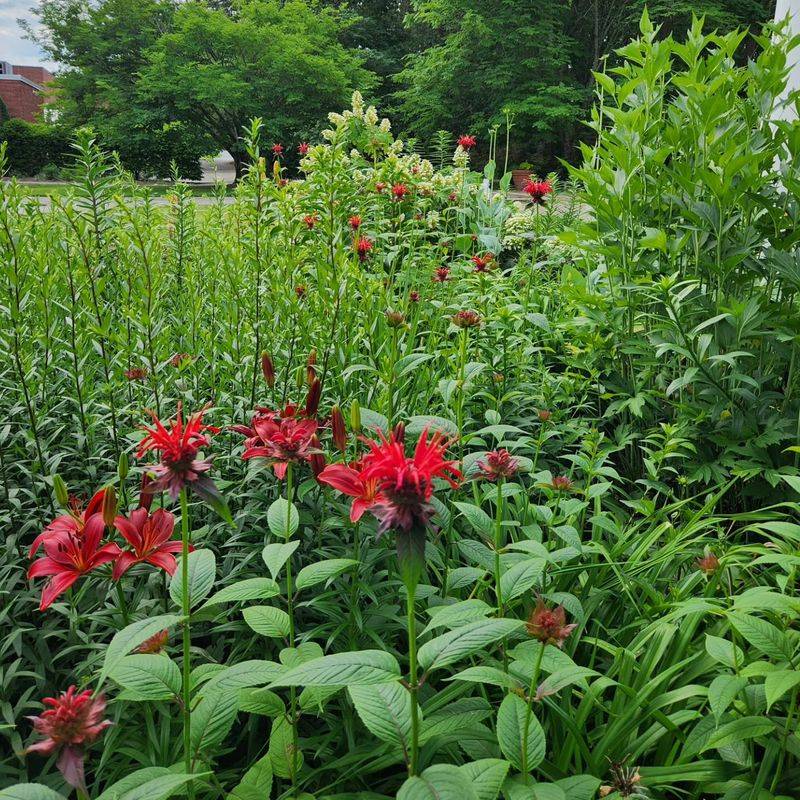
Bee balm spreads by rhizomes and can fill a bed faster than most gardeners expect.
A clump that was well-spaced three or four years ago may now be so crowded at the center that the oldest stems are weak, the middle of the plant looks hollow or dead, and flowering has dropped off noticeably.
That pattern is a strong signal that division will do more good than any amount of extra water or fertilizer.
Penn State Master Gardener plant sale materials support dividing bee balm on a general schedule of every two to four years, adjusted for how vigorously the particular cultivar spreads.
Missouri Botanical Garden similarly recommends division to control rhizomatous spread and restore vigor when the center becomes congested.
Discard the woody center sections and replant the younger, outer growth with adequate spacing.
Timing depends on where in Pennsylvania you garden.
Spring is the most common window, giving divided plants a full growing season to establish before winter.
Fall division works too, but the plant needs enough time to root before the ground freezes.
Penn State’s vegetable and crop resources note that first frost dates across Pennsylvania range from around September 13 in colder northern and higher-elevation areas like Ridgway to late October in the warmer Delaware Valley near Philadelphia.
A gardener in the Poconos or on the Allegheny Plateau needs to finish fall division earlier than someone in Chester County.
Division restores space and can genuinely improve flowering by giving the plant’s root system room to breathe.
But it will not fix a mildew problem caused by poor airflow, correct a light deficit, or change the mature height of a tall cultivar.
Think of it as one useful repair among several, not a universal solution.
Choose A Better-Matched Monarda Next Time
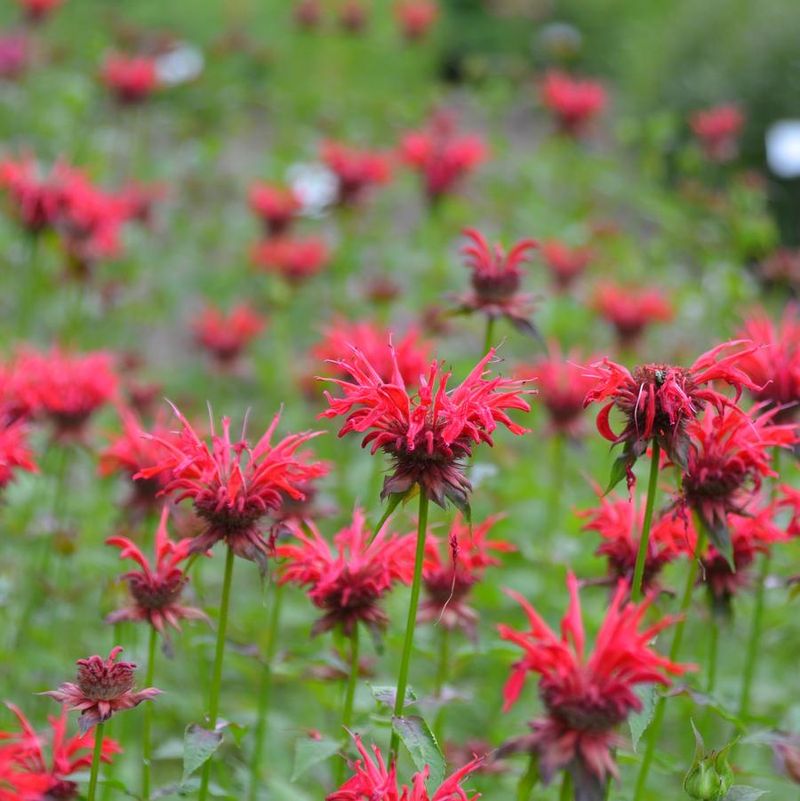
Knowing which Monarda you are actually growing changes every decision that follows.
Monarda didyma, scarlet bee balm, prefers consistently moist soil and can struggle during hot, dry stretches, making it a better fit for beds with reliable moisture retention.
Illinois Extension’s landscape guide for bee balm contrasts that directly with Monarda fistulosa, wild bergamot, which tolerates drier conditions in full sun considerably better once established.
Planting the wrong species in the wrong site and then adding water or moving it to shadier ground will not produce the results you want.
Illinois Extension’s bee balm profile also notes that cultivar height and disease susceptibility vary widely across the genus, which means the tag at the nursery carries real information worth reading before you plant.
A compact cultivar in a tight border will behave very differently from an unnamed tall hybrid dropped into the same space.
When chronic mildew is the main frustration, switching to a cultivar with documented resistance is one of the most practical long-term steps available.
Mt.
Cuba Center’s three-year Monarda trial evaluated 40 taxa at a Delaware site in USDA Zones 6b and 7a, which offers useful comparisons for much of the Mid-Atlantic region.
Strong performers in that trial included ‘Claire Grace’, ‘Dark Ponticum’, ‘Violet Queen’, ‘Grand Marshall’, ‘Raspberry Wine’, ‘Purple Rooster’, ‘On Parade’, and ‘Gardenview Scarlet’.
Cuba trial report provides detailed ratings for each taxon.
Resistance is not immunity, and a cultivar that performed well in Delaware will not necessarily perform identically in every Pennsylvania yard, especially in cooler, wetter northern-tier gardens or in dense clay soils common across parts of southeastern Pennsylvania.
Before applying fertilizer or removing the plant entirely, work through a short checklist.
Confirm the bloom timing against the named cultivar.
Check the light at different times of day.
Test the soil moisture a few inches down.
Look at the spacing and airflow around the stems.
Identify whether you are seeing leggy growth, mildew, or both, because those symptoms point to different fixes.
Penn State Extension offers soil testing that can clarify whether a nutrient issue is genuinely present before you add anything, because Minnesota Extension’s fertilizing guide is clear that excess nitrogen encourages lush, weak growth rather than stronger flowering.
Penn State’s fall garden tasks resource supports cleaning up diseased debris at season’s end as a simple, low-effort step that reduces the pathogen load going into next year.
Most midsummer bee balm problems are fixable, and the plant that looks defeated in August is often the same one that opens strong again the following June.