
What It Really Means When A Fox Trots Across Your Pennsylvania Yard At Dusk
Follow us on Google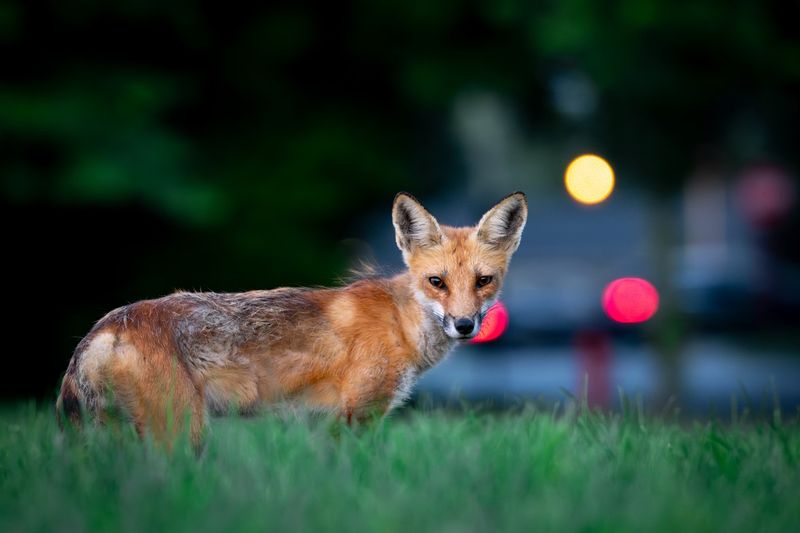
You glance out the back window just as the light goes golden, and there it is: a fox moving quick and quiet across the far edge of your yard before disappearing into the brush.
Most Pennsylvania homeowners freeze at that moment, caught between wonder and worry.
That single sighting raises real questions about disease, pets, and whether the animal is supposed to be there at all.
This article answers those questions plainly, so you can watch with curiosity instead of reaching for your phone in a panic.
A Dusk Crossing Usually Means Normal Fox Behavior
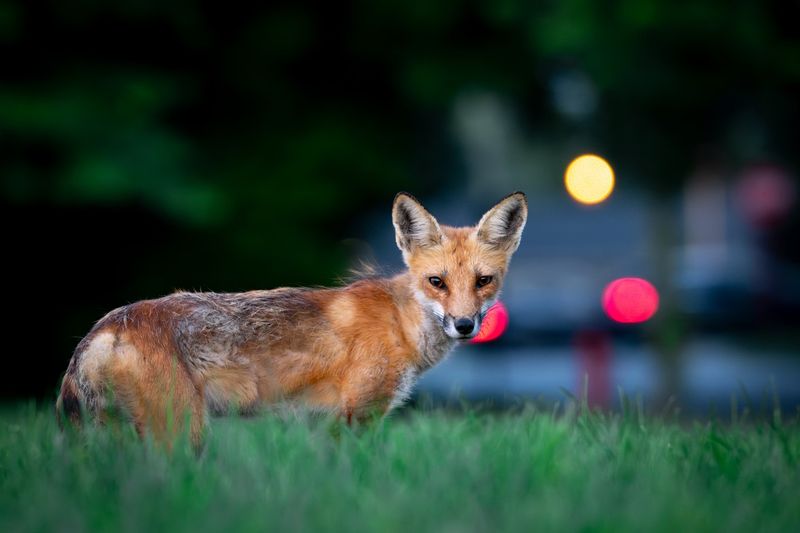
That flash of russet fur at the edge of your yard as the sun drops is not an alarm bell.
Both red foxes (Vulpes vulpes) and gray foxes (Urocyon cinereoargenteus) live throughout Pennsylvania, and both are mainly nocturnal animals that are most active around dawn and dusk.
A twilight yard crossing is ordinary behavior for a wild predator moving between cover and food, and the Pennsylvania Game Commission confirms that foxes are regularly active at these transitional hours.
What that sighting does not tell you is whether the animal is healthy, whether it has a den nearby, or whether it plans to return.
The safest read is simply this: a wild predator passed through.
It is not a tame visitor, and one brief crossing is not enough to diagnose its condition one way or the other.
The key distinction worth holding onto is the difference between normal movement and abnormal behavior.
A fox that trots across your yard, glances around, and slips back into the brush is doing exactly what foxes do.
A fox that lingers near people, acts confused, or approaches without any sign of hesitation is a different situation entirely, and that difference matters more than the time of day.
For now, enjoy the sighting from a distance.
Keep your screen door closed, resist the urge to step outside for a closer look, and let the animal move on.
That calm, observant response is the right one almost every time a Pennsylvania fox appears at dusk.
What The Fox May Be Doing Along Your Yard’s Edge
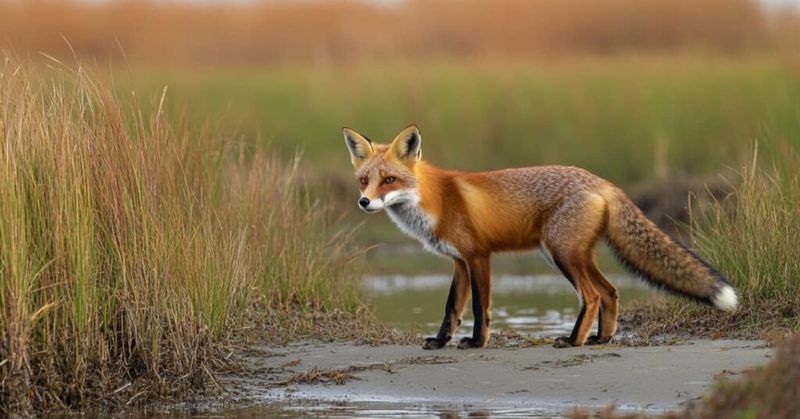
Foxes do not wander randomly.
When one crosses your yard at dusk, it is almost certainly working, moving between patches of cover and food along what wildlife biologists call a habitat edge.
Lawns that border woods, fields, stream banks, brush piles, or dense shrubs are exactly the kind of transitional zones that foxes prefer to hunt.
The most likely explanation on any given evening is that the fox is hunting mice or voles along your lawn’s edge.
The Pennsylvania Game Commission notes that a fox can hear a mouse squeal from roughly 150 feet away, which explains one of the stranger things you might see: the animal stopping cold, tilting its head, and then leaping straight down into apparently empty grass.
It heard something you did not.
Other possibilities are just as plausible.
The fox may be checking a brush pile for rabbits or insects, following a scent trail left by another animal, scavenging something it smelled from a distance, or carrying food back toward a den.
Red fox activity can increase around dawn and dusk in winter and during the period when adults are raising young, so the same yard may see more visits during those stretches without anything unusual happening.
None of these explanations require the fox to be sick, displaced, or habituated to people.
The yard simply sits in the middle of where the animal already needs to go.
That is a geography problem, not a wildlife problem, and it is one you can manage without ever interacting with the fox directly.
A Fox’s Diet Is Not A Pest-Control Plan
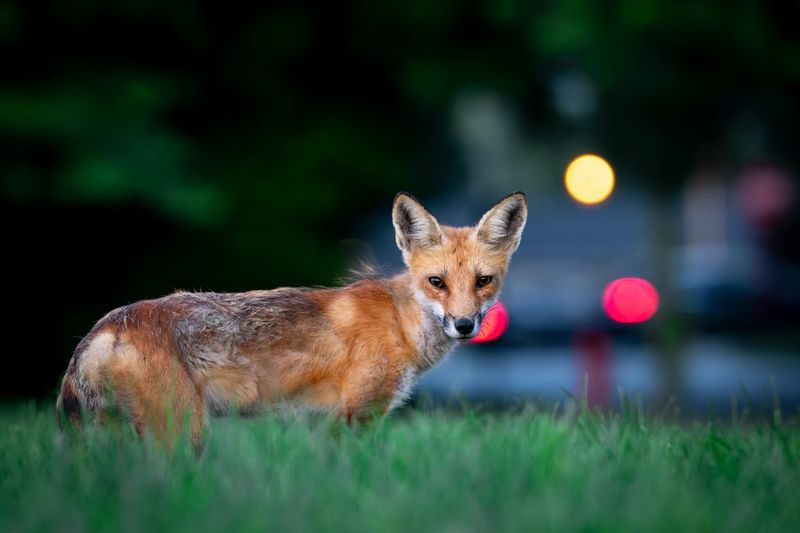
Spotting a fox does feel like nature balancing the books.
The animal genuinely does eat mice, voles, rabbits, woodchucks, squirrels, birds, insects, fruit, grasses, and carrion, according to the Pennsylvania Game Commission’s overview of fox diet.
So yes, a passing fox may take some rodents or insects from your property.
But one visitor moving through on a Tuesday evening cannot be credited with controlling your yard’s mouse population, and treating it as a free pest service sets expectations the animal cannot meet.
The tick question comes up often, and the honest answer is complicated.
Foxes can carry ticks themselves.
Research conducted outside Pennsylvania has found substantial tick burdens on red foxes, as documented in a study on mesocarnivores and tick loads across varied landscapes.
Other researchers have explored whether predators might indirectly affect tick populations by changing rodent numbers, a line of inquiry examined in work on red foxes and tick-borne encephalitis.
Neither body of research was conducted in Pennsylvania, and neither establishes that a fox crossing your yard will lower your household’s Lyme disease risk.
The same logic applies to spotted lanternflies and Japanese beetles.
Foxes do eat insects, including beetles and grasshoppers, but no Pennsylvania source establishes them as a targeted or dependable control for those specific pests.
Do not swap out proven integrated pest management for a wildlife sighting.
For ticks specifically, CDC guidance on preventing tick bites points to reducing leaf litter, clearing tall grass and brush near areas where people spend time, checking for ticks after being outdoors, and showering within 2 hours of coming inside.
Penn State Extension’s resource on common ticks in Pennsylvania backs those same steps.
A fox is one part of the food web, and that is genuinely worth appreciating, but it is not a substitute for any of those practices.
Red Foxes, Gray Foxes, And The Pennsylvania Landscape

Pennsylvania is home to two fox species, and the yard you live in may influence which one you are more likely to see, though a brief crossing does not always make identification easy.
Red foxes tend to favor open or partly open country with wooded cover nearby, including farm edges, stream corridors, marshes, and the wooded suburban lots that make up so much of the state’s residential landscape.
Gray foxes lean toward brushier, rougher terrain, including swampy bottomlands and more rugged, mountainous habitat.
One detail genuinely sets the gray fox apart from every other member of its family in Pennsylvania: it is the only native dog-family animal in the state known to climb trees.
If you ever see a fox moving up into branches, that identification is made for you.
On the ground, the visible clues are more subtle.
The Pennsylvania Game Commission describes the red fox as commonly having black legs and ears with a white-tipped tail, while the gray fox shows a grizzled coat and a dark stripe running along the top of its tail.
Body size is similar enough that it does not settle the question on its own.
Red foxes typically run about 22 to 25 inches long with a 14- to 16-inch tail and weigh roughly 8 to 12 pounds.
Gray foxes are about 21 to 29 inches long, carry an 11- to 16-inch tail, and weigh approximately 7 to 13 pounds.
At dusk, with the animal moving quickly through poor light, you may simply not be able to make a reliable call.
That is fine.
Both species are wild, both belong here, and the practical advice for coexisting with either one is the same.
Make The Yard Less Rewarding And More Secure

The most effective thing you can do after a fox sighting is make your yard less worth visiting.
Foxes follow food, and a yard that offers easy pickings will see more traffic than one that does not.
Start with the basics: bring pet food bowls inside before dark, secure garbage cans with locking lids, keep compost in an enclosed bin, and clean up any spilled poultry feed or birdseed that has fallen to the ground.
The Pennsylvania Game Commission’s guidance on nuisance wildlife is clear that food conditioning, meaning a wild animal learning to associate your yard with easy meals, leads to more frequent visits, bolder behavior, increased conflict, and greater risk to the animal itself.
Do not feed the fox intentionally, do not leave meat scraps outside, and do not attempt to lure it closer for a photograph.
Admiring it from a window is the right call.
Small pets need supervision outdoors, particularly around dawn, dusk, and overnight.
A fox is a capable predator that can take rabbits, poultry, and occasionally domestic cats, so the risk is real even if it is not constant.
Chickens, ducks, rabbits, and other small livestock need a secure covered run with fencing that also prevents digging beneath the barrier, because foxes are persistent diggers.
Pennsylvania Game Commission fox guidance recommends enclosures with a roof or covered top and an apron of fencing extending outward at ground level to stop digging.
None of this requires trapping or relocating the animal.
It requires removing the reasons the fox finds your yard worth stopping in.
That shift in approach actually works, and it does not put you or the fox at risk.
Daylight Alone Does Not Mean Rabies
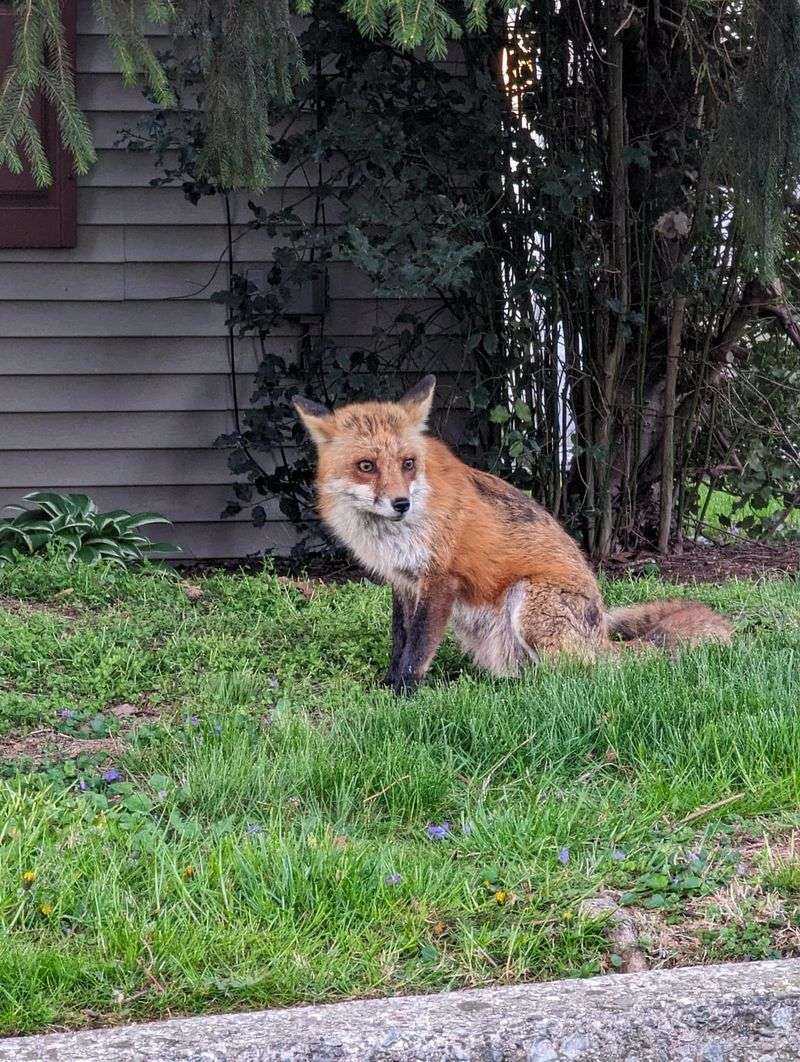
Many Pennsylvania homeowners assume that any fox seen during daylight must be rabid.
That assumption is wrong, and acting on it can lead to unnecessary alarm or, worse, an unsafe response.
A healthy fox can appear during the day, especially in winter, during the period when adults are raising pups, or in areas where the animal has simply grown accustomed to human activity nearby.
One daytime sighting is not a diagnosis.
The signs that actually warrant concern are behavioral, not just about timing.
Pennsylvania Department of Agriculture guidance on rabies points to a combination of warning signs: unusual tameness or loss of fear of people, attraction toward humans rather than away from them, unprovoked aggression, poor coordination, paralysis, difficulty swallowing, excessive drooling, seizures, or repeated wandering in exposed areas during daylight.
Any of those behaviors, especially in combination, shifts the picture from ordinary sighting to something that needs a professional response.
Mange is another condition that can make a fox look alarming without involving rabies at all.
The Pennsylvania Game Commission notes that red foxes appear more susceptible to mange than gray foxes, and a mangy animal may show hair loss, crusted or thickened skin, a thinning body, or a badly damaged tail.
Those signs indicate disease or parasites, but appearance alone does not establish a diagnosis.
If you see a fox that looks severely ill or is behaving abnormally, do not touch it, corner it, attempt to capture it, try to relocate it, or give it any medication.
Pennsylvania Game Commission rabies guidance and nuisance wildlife resources both direct serious wildlife concerns to the Pennsylvania Game Commission, which has the training and authority to respond safely.
Know What To Do After Contact

If a fox bites or scratches you, or if its saliva contacts an open wound or mucous membrane, the first step is immediate and non-negotiable: wash the area thoroughly with soap and water for several minutes, then seek medical advice right away.
Do not wait to see whether the wound looks serious.
Rabies exposure requires prompt evaluation, and the window for post-exposure treatment is time-sensitive.
Pennsylvania’s Department of Agriculture lists 1-877-PA-HEALTH (1-877-724-3258) for urgent rabies-exposure questions, and the Pennsylvania Department of Health’s rabies page provides additional guidance on exposure reporting and next steps.
If a pet is bitten or scratched, contact your veterinarian the same day.
Pennsylvania law requires dogs and cats to be current on rabies vaccination, and that requirement exists for exactly this kind of situation.
Keep records of what happened: the time, the location, what the fox looked like, and how the exposure occurred.
That information helps public health officials assess the risk and respond appropriately.
Do not attempt to capture or kill the fox on your own.
After all of that, step back to the bigger picture.
The fox that crossed your yard was almost certainly doing what foxes do: moving through, hunting, following a scent, living its life in the habitat edge between your lawn and the brush beyond it.
Remove the food rewards, protect your animals, keep your pets vaccinated, and let the animal remain wild.
It does not need your help to survive, and you do not need it to solve your pest problems.
That quiet trotter at dusk is just one thread in a food web that was running long before your yard was there.