
Firebush May Be the Shrub That Helps Fireflies Survive in Your Florida Yard
Follow us on Google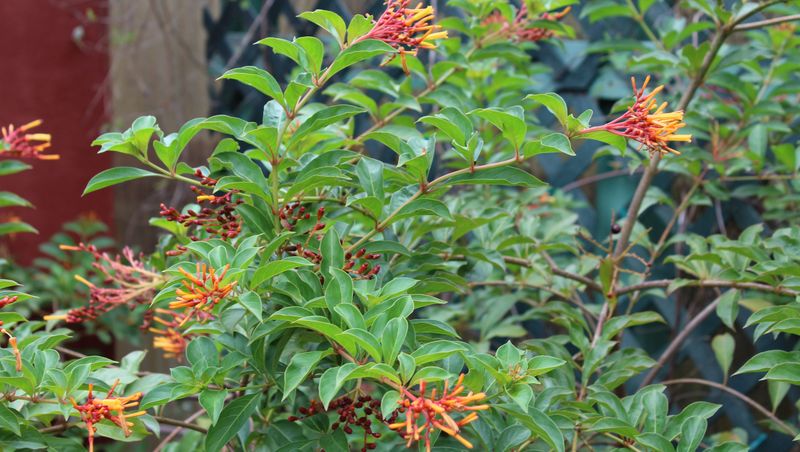
Walk through most Florida nurseries and you will pass a shrubby, orange-flowered plant without giving it a second glance.
That plant is firebush, Hamelia patens, and it turns out it may be doing something quiet and useful for the fireflies you wish you saw more of on summer evenings.
A headline circulating online calls it the one shrub fireflies need to survive, which is a bigger claim than the science actually supports.
What the evidence does support is more interesting and more useful: firebush can be one solid layer in a Florida yard that genuinely welcomes fireflies back.
Firebush Fits the Clue, But Not the Absolute Claim
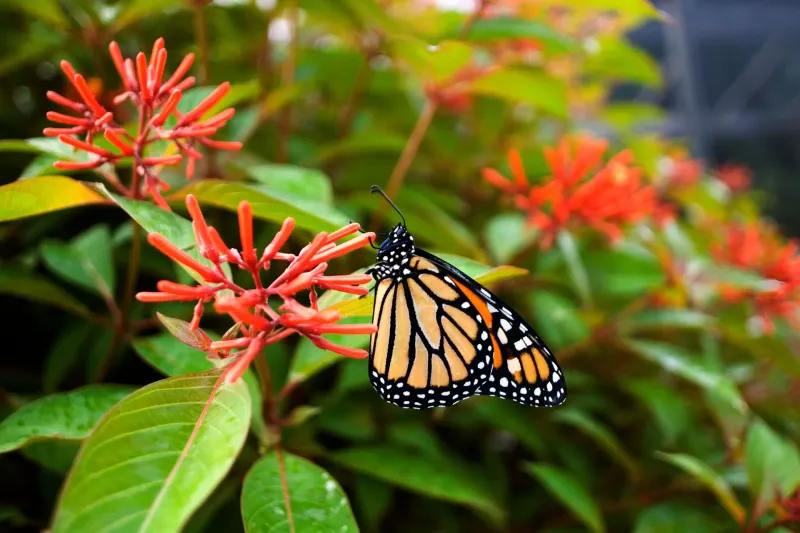
Step up close to a firebush in full bloom and you see why it earns attention.
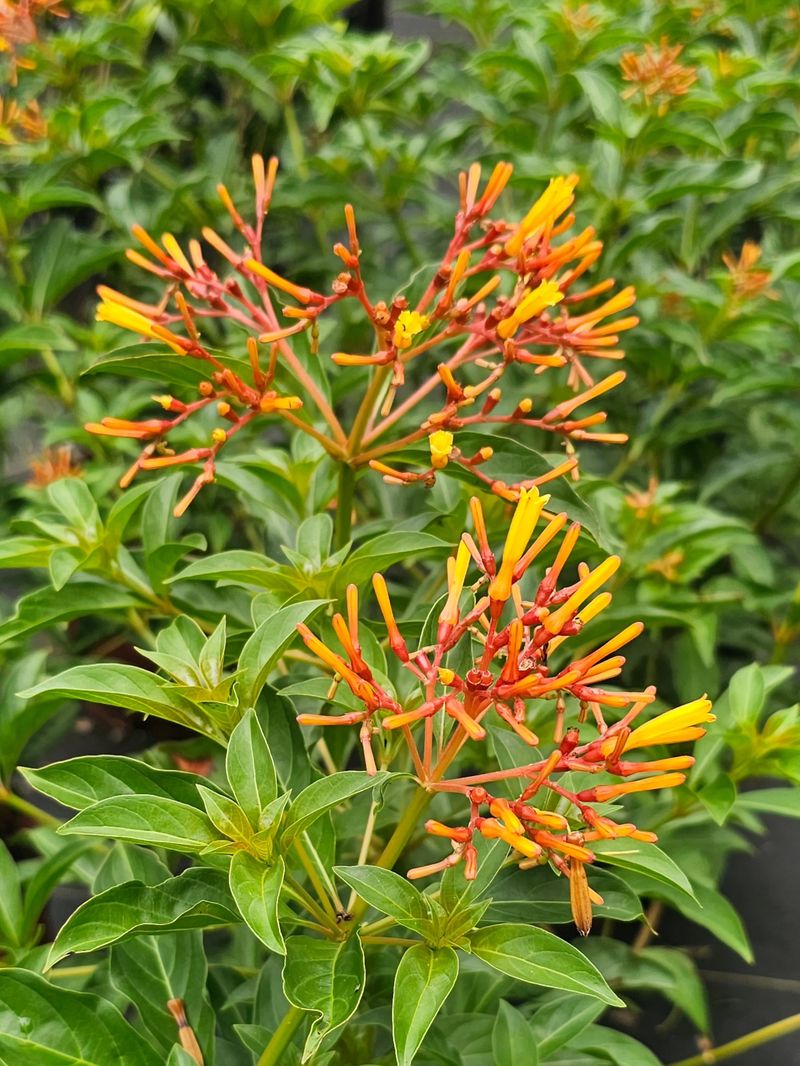
The orange-red tubular flowers appear from late spring and keep going until the first frost nudges them back, drawing in hummingbirds, zebra longwings, gulf fritillaries, bees, and a rotating cast of other pollinators.
Small black berries follow, and birds pick them off steadily through the season.
That combination of long-season flowers and wildlife value is why UF/IFAS Gardening Solutions recommends firebush as a Florida-native landscape shrub worth planting.
The shrub behind the headline is almost certainly Hamelia patens, possibly the compact cultivar sold as “Firefly.” The UF/IFAS recommendation covers its landscape value: dense growth, reliable flowers, bird-attracting fruit, and heat tolerance that suits Florida’s long, punishing summers.
What UF/IFAS does not say is that fireflies require this particular plant to survive.
That part of the headline is a stretch.
The defensible version is narrower and actually more useful.
Firebush can contribute shelter and cooler, moister ground-level conditions to a yard that also includes leaf litter, native grasses, reduced lighting, and pesticide-free soil.
Together, those conditions can support fireflies.
The shrub alone cannot carry all of that weight, and no single plant can.
Think of firebush as a capable supporting character, not the hero of a one-plant story.
The UF/IFAS plant profile for Hamelia patens focuses on landscape performance, and that is the honest footing from which to start.
The Shrub Offers Cover, Not a Firefly Meal
Here is where many gardeners get the story slightly wrong.
Planting firebush will not feed firefly larvae.
Firefly larvae are predators, not plant-eaters.
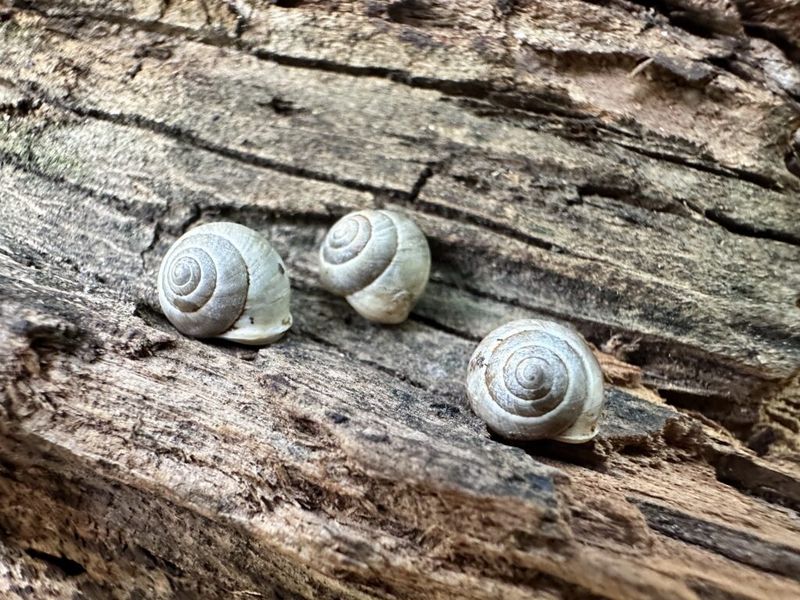
UF/IFAS firefly guidance explains that larvae feed on soft-bodied prey such as snails, slugs, and other insect larvae living in moist soil and leaf litter.
The shrub does not supply that food directly.
What firebush can do is create the kind of shaded, cooler, slightly moister ground-level zone where that prey tends to live.
Dense branching overhead slows evaporation from the soil surface.
Dropped leaves add a thin layer of organic material.
That combination can make the few square feet beneath the plant a bit more hospitable for the small creatures that firefly larvae actually hunt.
Research on firefly larval biology confirms that larvae depend on humid microhabitats with available prey, and that habitat quality often matters more than the specific plant species overhead.
Adult fireflies also use vegetation for daytime resting, and dense shrubs give them places to wait out the heat.
So firebush earns its place in a firefly-friendly yard by improving conditions, not by acting as a required host plant or food source.
The distinction matters because it shifts the goal from “plant this shrub” to “build this habitat.” Broader firefly conservation research consistently points to habitat complexity, not a single species, as the key to supporting firefly populations over time.
A Firebush Cannot Replace Firefly Habitat
Florida is home to 56 firefly species, and their habitat needs spread across a surprisingly wide range of conditions.
Some live in shrubby edges, some in the canopy of mature trees, some in coastal scrub, some in wet meadows, and some in marshes and mangrove margins.
UF/IFAS firefly habitat guidance makes clear that a single shrub cannot recreate the conditions those different species need.
A firebush planted in a dry, brightly lit, heavily mowed yard will not suddenly become a firefly sanctuary.
What firebush can do is add one useful layer when it sits alongside the right companions.
Native grasses or groundcover nearby keep the soil surface from baking.
Leaf litter left in place gives larvae somewhere to hunt.
Appropriate soil moisture, maintained without creating standing water, supports the snails and slugs that larvae eat.
Reduced disturbance from mowing, blowing, and digging lets the microhabitat settle.
UF/IFAS Extension Polk County’s firefly oasis guide frames it exactly this way: the goal is a patch of yard that stays a little shadier, a little damper, and a little less managed than the rest.
Darkness after sunset matters too.
Firefly conservation research identifies light pollution as one of the most consistent pressures on firefly populations.
A firebush in a floodlit backyard is still a floodlit backyard.
The shrub is a first layer, and the other conditions are what make that layer actually work.
Plant Firebush Beside a Living Yard Edge
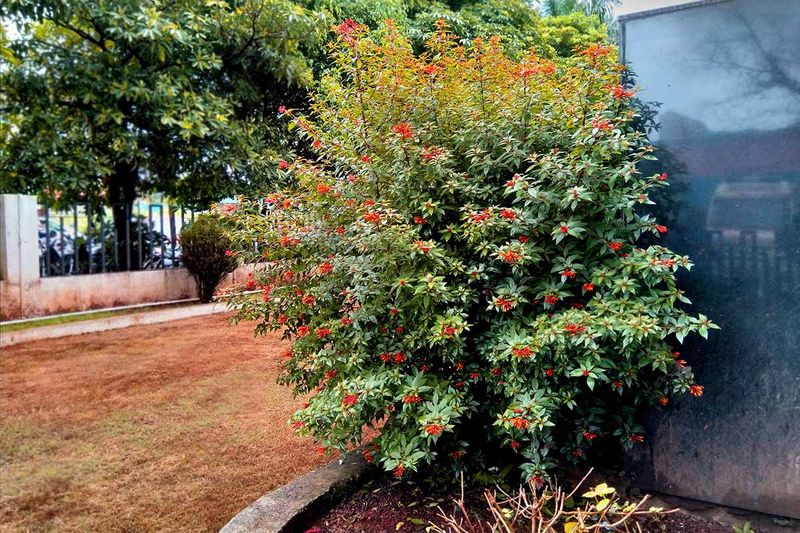
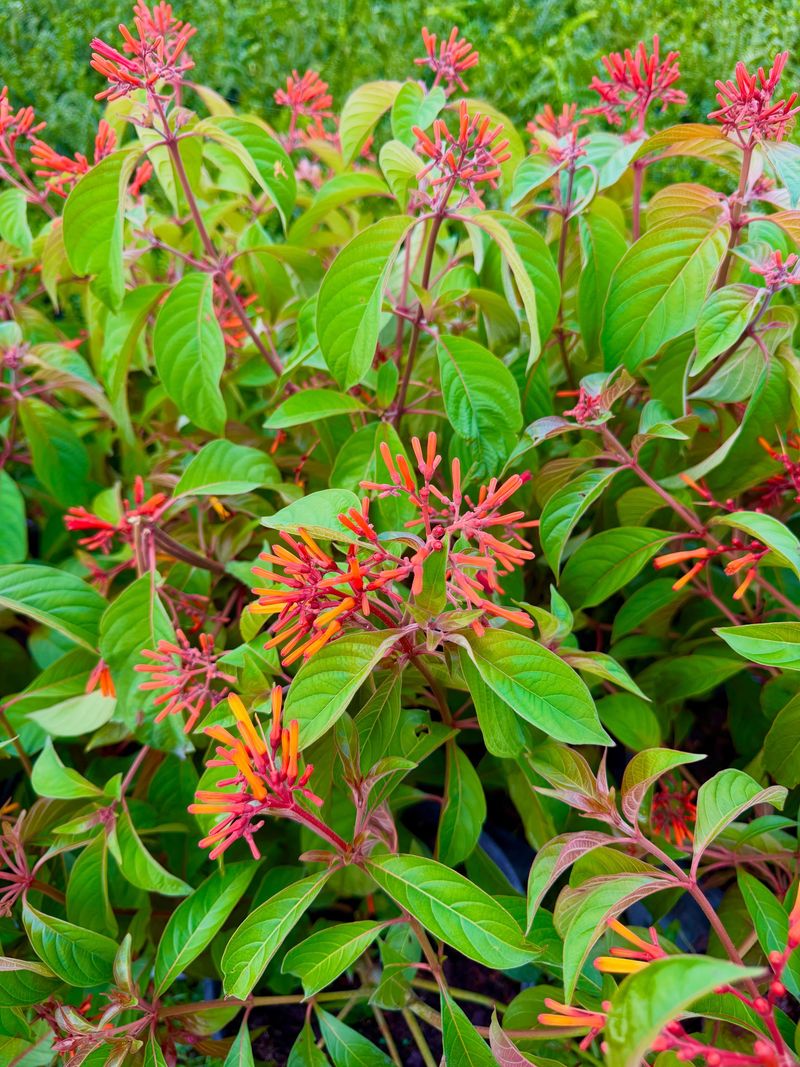
Full sun gives firebush its best flowering.
Partial shade is tolerable, but expect noticeably fewer blooms, which also means fewer pollinators and less wildlife activity around the plant.
Choose a spot at the edge of the yard rather than tucking it into a tightly clipped foundation hedge.
That placement gives the shrub room to grow naturally and keeps it near the less-manicured ground where firefly habitat can actually build.
Use well-drained soil and water the plant regularly during its first growing season, roughly once or twice a week depending on rainfall and temperatures.
Once established, firebush handles Florida’s dry spells without much help, though extended drought during winter or summer can stress the roots.
UF/IFAS Gardening Solutions recommends fertilizing sparingly and avoiding hard or frequent pruning, because cutting back aggressively reduces the flowers that make the shrub worth growing.
The UF/IFAS plant profile gives a recommended spacing of 36 to 60 inches between plants, which gives each one room to fill out without crowding.
Leave some leaf litter on the ground beneath and near the shrub.
Do not blow it away every weekend.
That layer holds moisture and gives firefly larvae a place to hunt.
UF/IFAS firefly guidance specifically recommends shrubby edges and soil-shading vegetation because moisture supports the prey that larvae need.
Keep the soil from drying out completely during extended dry periods, but avoid overwatering in ways that create pooling or drainage problems around the roots.
Protect the Darkness Under and Around It
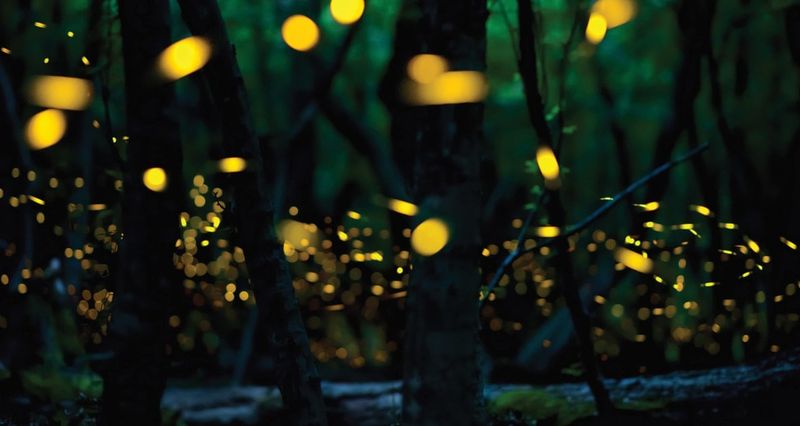
Fireflies flash to find mates, and artificial light can drown out those signals before communication even starts.
UF/IFAS firefly guidance recommends turning off unnecessary porch, pool, landscape, and flood lights near the habitat after dark.
Motion sensors are a practical middle ground, keeping lights off most of the night while still coming on when you actually need them.
The strength of the light-interference effect varies among firefly species and yard settings, so results will differ, but reducing unnecessary light is one of the lowest-effort changes a Florida homeowner can make.
Chemical use near the habitat is a separate and equally important concern.
Firefly larvae live in soil and leaf litter and feed on snails, slugs, and soft-bodied insect larvae.
Routine mosquito spraying, broad-spectrum insecticides, unnecessary herbicides, and heavy fertilizer applications can eliminate that prey or contaminate the soil directly.
UF/IFAS Extension Polk County advises keeping the refuge area as chemical-free as reasonably possible.
Firefly larval biology research supports this, showing that habitat contamination affects larval survival more directly than most gardeners expect.
Firebush itself can occasionally host aphids, scale insects, or mites, according to the UF/IFAS plant profile.
Monitor those pests before reaching for any spray.
Pruning off affected growth, adjusting irrigation, or simply waiting often resolves minor infestations without risking the broader habitat.
Firefly conservation researchers consistently rank pesticide exposure among the top pressures on firefly populations worldwide.
Match the Plant to Your Region and Nursery Tag
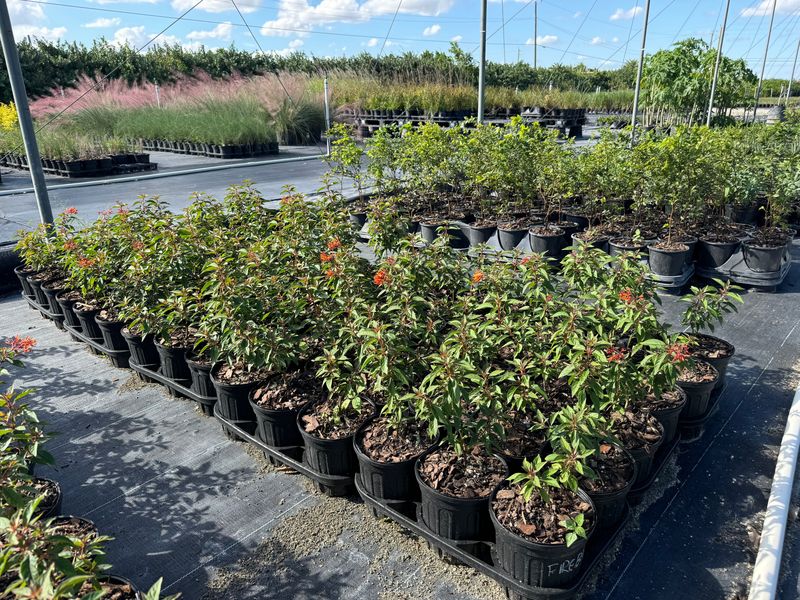
Standard firebush, Hamelia patens, grows roughly 6 to 12 feet tall and 5 to 8 feet wide under typical Florida conditions.
South Florida plants can push toward 15 feet if left unpruned, which matters for anyone planting near a fence or a neighbor’s yard.
The compact ‘Firefly’ cultivar listed by UF/IFAS Baker County Extension tops out around 3 to 5 feet, which suits smaller yards or spots where the full species would crowd out everything nearby.
Both share the same 36-to-60-inch recommended spacing.
Zone guidance differs slightly depending on which UF/IFAS source you check.
The UF/IFAS fact sheet lists Zones 9 through 11, while the Gardening Solutions page discusses planting in Zones 8 through 11 and notes that plants in colder North Florida locations can freeze to the ground.
In the Panhandle and parts of North Florida, firebush may die back to the roots after a hard freeze and return in spring, functioning more like a perennial than a permanent shrub.
Central Florida gardeners can expect occasional cold snaps that damage top growth without killing the roots.
South Florida plants may grow year-round and need more frequent pruning to stay manageable.
Nursery labeling adds another layer of confusion.
UF/IFAS Gardening Solutions distinguishes native Hamelia patens from Hamelia patens var. glabra, which is related but not native to Florida.
The Florida Association of Native Nurseries describes the labeling situation as genuinely messy, with “dwarf firebush” and “Firefly firebush” sometimes applied to different plants at different nurseries.
Check the botanical name on the tag before buying.
Salt tolerance is also inconsistent across sources: firebush may handle some coastal salt spray along the Gulf Coast or Atlantic Coast, but it is not a dependable choice for highly exposed beachfront sites.
Treat Firebush as a First Layer, Not a Guarantee
A realistic firefly habitat checklist for a Florida yard is shorter than most people expect.
Preserve useful leaf litter instead of blowing it away every week.
Allow some less-manicured vegetation at the yard edge.
Keep the soil near the shrub from drying out completely without creating pooling or standing water.
Reduce unnecessary nighttime lighting around the area.
Avoid pesticides, herbicides, and heavy fertilizer in the refuge zone.
UF/IFAS firefly habitat guidance frames all of those steps together as the conditions that actually matter.
Keeping the area naturalized does not mean letting it go entirely unmanaged.
UF/IFAS Extension Polk County advises monitoring for invasive plants and removing them by hand when possible.
The habitat patch should stay compatible with local drainage, storm preparation, fire safety, access, and HOA requirements.
A yard that floods after every rain or fills with Brazilian pepper is not helping anyone, fireflies included.
Nearby lighting, pesticide drift from a neighbor’s yard, regional development, and the specific firefly species already present in your area may influence what you actually see after dark more than any single planting decision.
Firefly conservation researchers are clear that landscape-scale pressures often outweigh individual yard choices.
That is not a reason to give up.
One sensible first step is to plant or preserve a firebush within a diverse, darker, moister yard edge and then spend a few evenings actually watching what your local habitat already supports.
The answer you find there is more reliable than any promise a headline can make.