
The 7 Florida Native Plants That Bring Gulf Fritillaries Back To A Bare Butterfly Garden
Follow us on Google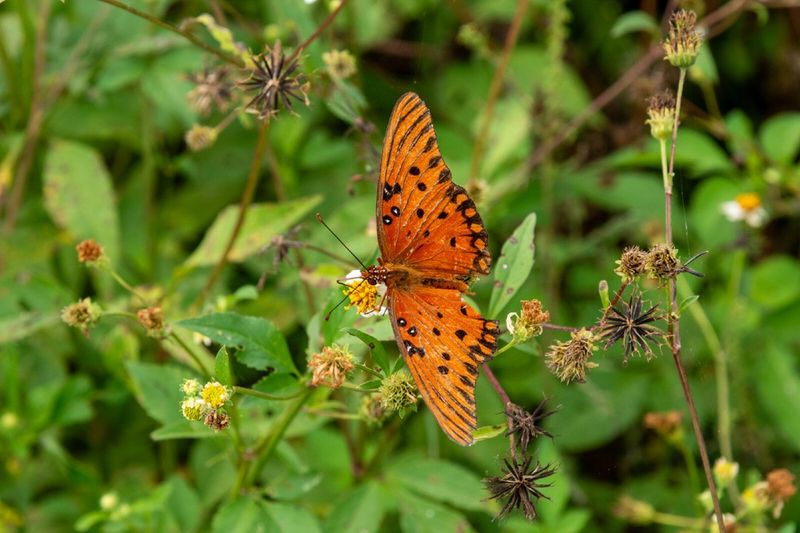
You step onto the patio after breakfast, coffee in hand, and the air already feels heavy with another humid Florida morning.
Your butterfly garden sits there, green but quiet, missing the orange flashes that used to zip around the blooms.
Those Gulf Fritillaries disappeared, and the space feels emptier without them.
The fix is simpler than you think, and it comes down to seven native plants that give these butterflies both a nursery and a buffet.
Add the right ones, and the flutter comes back for good.
1. Welcome The Maypop’s Wild Embrace
Here is the plant that makes or breaks your whole effort.
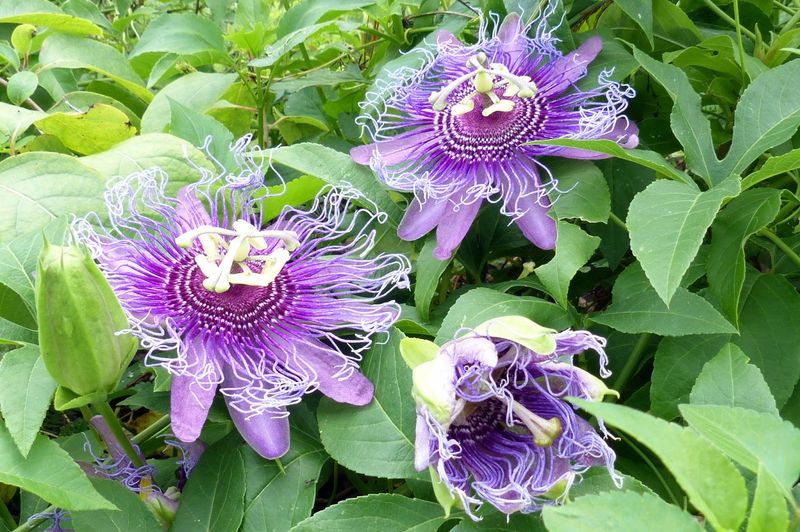
The Maypop (Passiflora incarnata) is the top host plant for Gulf Fritillary caterpillars, and without a passionflower vine, those orange butterflies have no place to raise their young.
The flowers look almost alien, purple fringe stacked over white petals, and each bloom lasts a single day.
Maypop grows across Florida, from the Panhandle down through Central and South Florida, and it genuinely loves full sun.
It climbs fast, reaching up to 8 feet tall with a 3-foot spread, so plant it at the base of a sturdy fence, arbor, or trellis and give it room to run.
Water it regularly the first few weeks, but once established it shrugs off dry spells like a pro.
It spreads by underground runners some gardeners call root suckers, so expect surprise sprouts a few feet away.
A light pruning in early spring keeps it tidy and pushes fresh new growth, which is exactly where females lay their tiny yellow eggs.
The blooms run spring through summer, feeding adults nectar while the leaves feed the caterpillars.
That double duty is why nothing else on this list matters more.
2. Embrace The Corkystem’s Quiet Charm
Do not judge this one by its flowers.
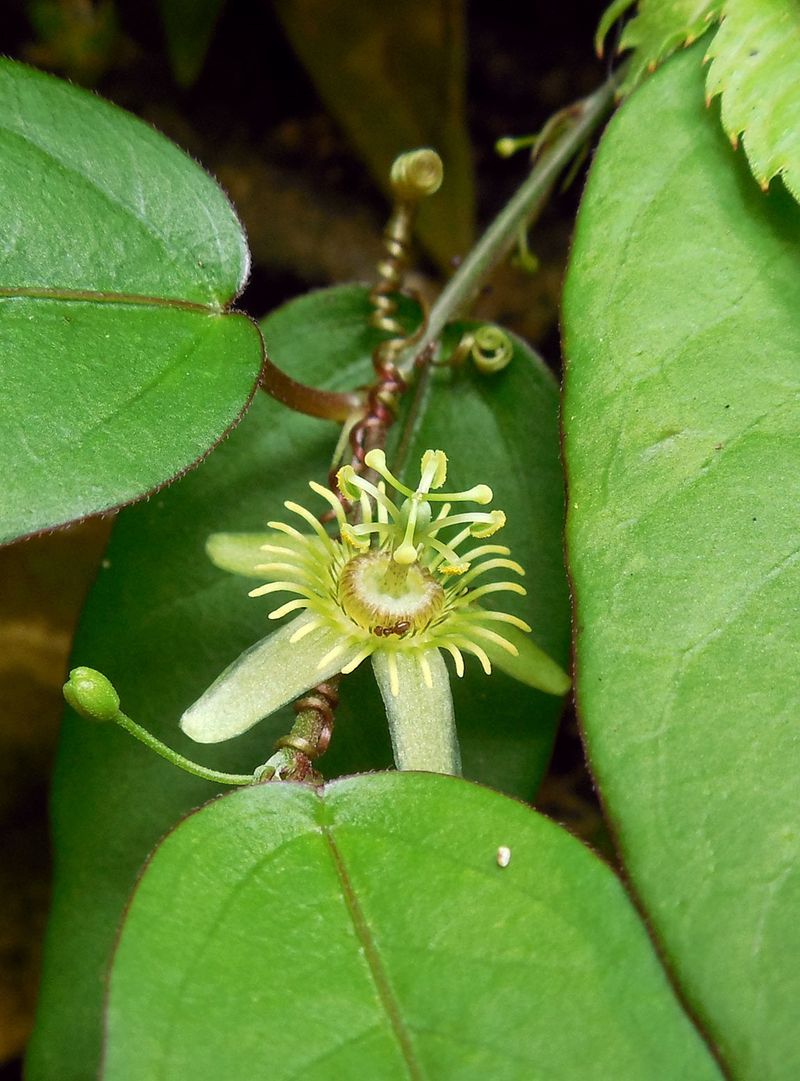
The Corkystem Passionflower (Passiflora suberosa) carries blooms barely a quarter-inch wide, greenish and easy to miss, but Gulf Fritillary caterpillars do not care about looks.
They care about leaves, and this vine delivers plenty.
Corkystem earns its spot because it handles shade that Maypop hates.
Common through Central and South Florida and into the Keys, it thrives in moist forests, pinelands, and coastal uplands.
So if your yard has a shady corner, this is your host plant.
Smaller and better behaved than its showy cousin, it works well in containers or as a loose groundcover, though it can still climb small shrubs up to 15 feet using its tendrils.
Space several about 1 to 2 feet apart for a dense caterpillar patch.
Once rooted, it barely needs you, staying drought-tolerant and low-fuss.
The little deep purple, almost black fruits that follow the flowers feed mockingbirds and cardinals, which then scatter seeds around for you.
Females lay their eggs on the fresh growth, same as always, so a shady spot no longer means a butterfly dead zone.
3. Seek Out The Yellow Passionflower
Cold snaps up north scare off a lot of tender vines, but the Yellow Passionflower (Passiflora lutea) is one of the hardiest passionflowers around.
It grows from Central Florida all the way into Pennsylvania, so it laughs off the occasional hard freeze that hits North Florida gardens in winter.
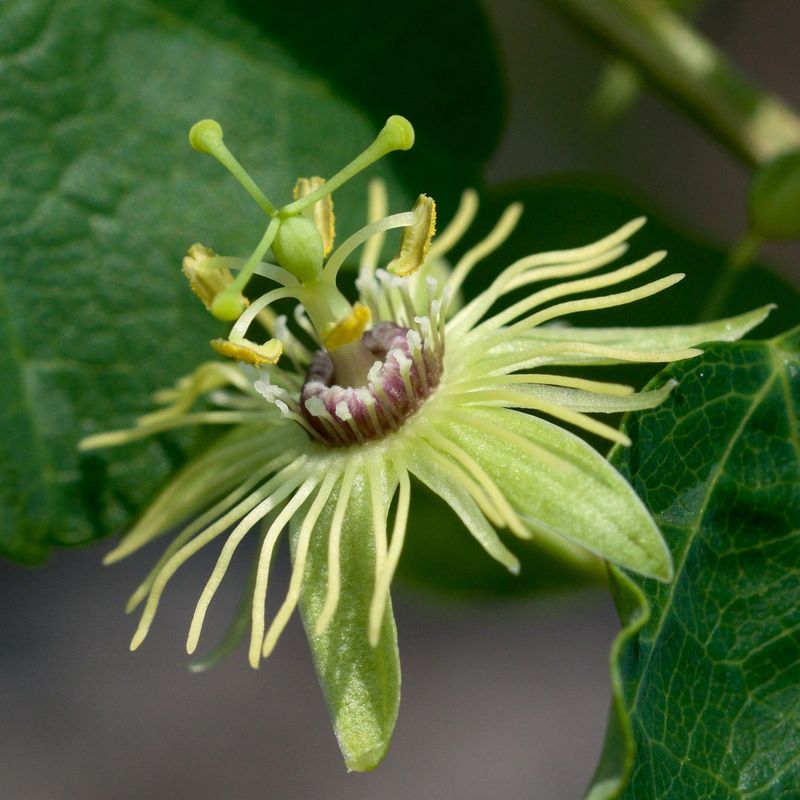
The flowers are small and pale yellow, roughly the size of a quarter, and far less flashy than a Maypop.
Yet it feeds Gulf Fritillary caterpillars just the same, which is the only job that counts here.
Found in woodlands and thickets, it prefers rich, moist, well-drained soil and takes full sun to part shade without complaint.
It climbs by tendrils to around 15 to 20 feet, but stays less aggressive than Maypop, making it a smart pick for tighter spaces.
Run it up a fence or trellis, or let it ramble along the ground.
It blooms spring into fall, and its small green fruits ripen dark purple for the birds.
All three passionflowers share one truth worth repeating.
They are the only plants these caterpillars will eat, so at least one belongs in your yard.
4. Plant Spanish Needles For Sweet Nectar
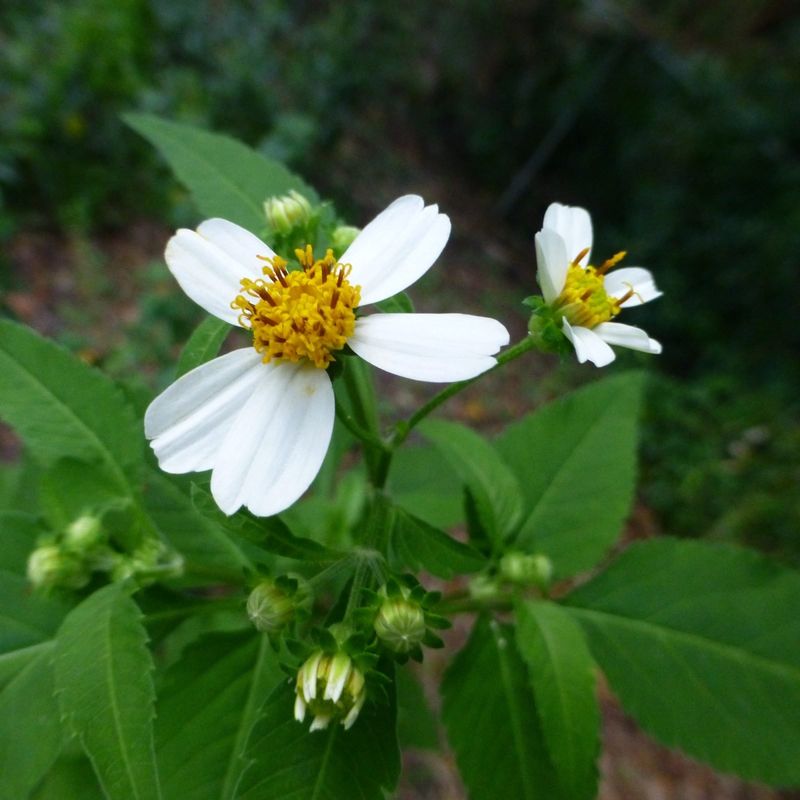
Once your caterpillars grow up and sprout wings, they need fuel, and Spanish Needles (Bidens alba) pours it out.
Plenty of folks yank this one as a weed, which is a genuine mistake, because UF/IFAS ranks it among the top nectar plants for Florida butterflies.
It grows across the entire state and blooms nearly year-round in milder regions, so the buffet almost never closes.
Gulf Fritillaries, zebra longwings, and native bees all crowd the little white-and-yellow flowers.
Toughness is the whole point.
Spanish Needles thrives in full sun, tolerates partial shade, and does not care whether your soil is sandy, poor, or briefly soggy.
It reaches 1 to 3 feet tall and spreads about 3 feet wide, seeding itself with enthusiasm.
Deadhead spent blooms to keep flowers coming, or leave a few to reseed for next season.
Fair warning, the barbed seeds stick to socks and dog fur, which is exactly how it travels.
Space plants 12 to 18 inches apart for a mass planting.
It is not fancy, but few plants pull in this many wings for this little effort.
5. Introduce Scarlet Sage’s Fiery Blooms
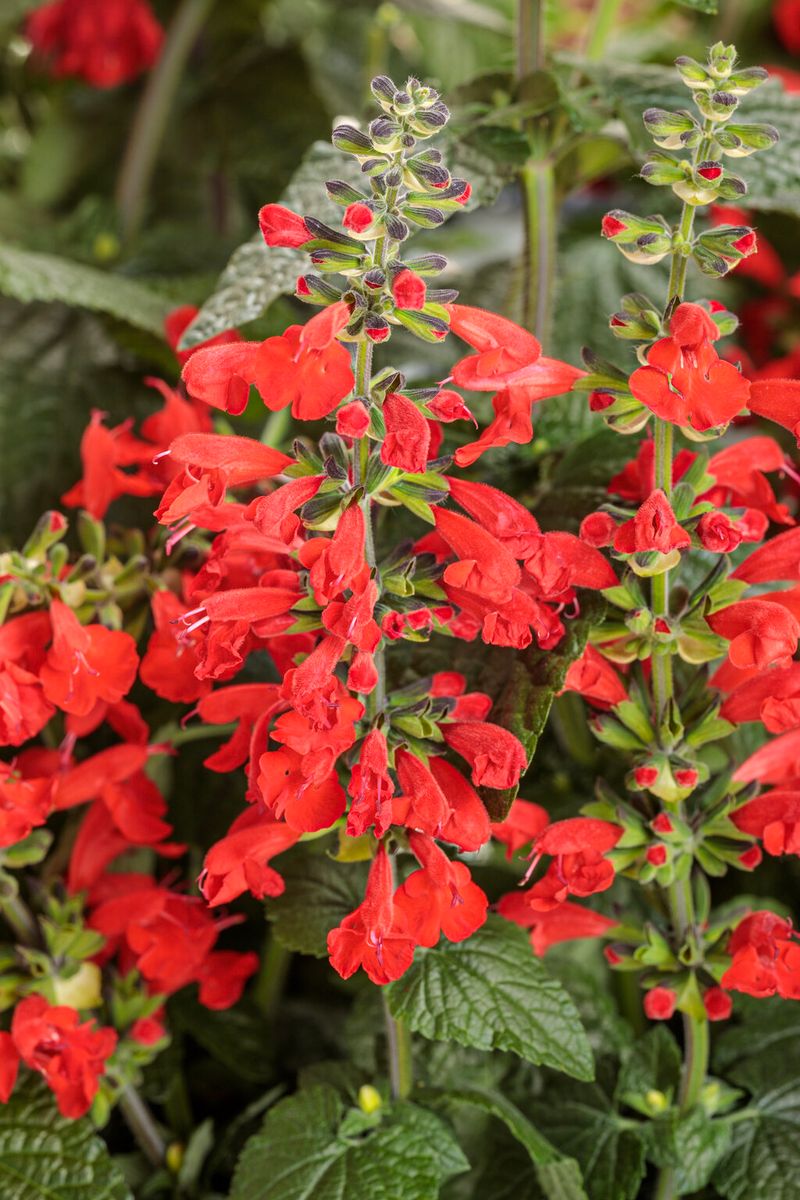
Red tubular flowers on tall spikes, blooming from spring clear through fall.
That is Scarlet Sage (Salvia coccinea), a native perennial that hummingbirds and butterflies treat like a favorite diner.
Gulf Fritillaries stop by often for the steady nectar.
What sets it apart is range and reliability.
Hardy in USDA Zones 8A to 11, it grows statewide and can bloom year-round where frost never touches.
In frost-free South Florida, the show simply does not stop.
Give it full sun to partial shade, though sunnier spots mean more flowers.
It likes well-drained soil and shrugs off dry spells once established, which suits Florida’s swing between downpours and drought.
Expect 2 to 4 feet of height and a 1 to 2 foot spread, perfect for borders, mixed beds, or containers.
Set transplants about 24 to 36 inches apart.
To keep it bushy instead of leggy, cut it back by a third to two-thirds a few times a year.
It is remarkably free of pests and disease, so it delivers color and calories without demanding much back.
A dependable nectar source is worth its weight in orange wings.
6. Embrace Blue Porterweed’s Delicate Spikes
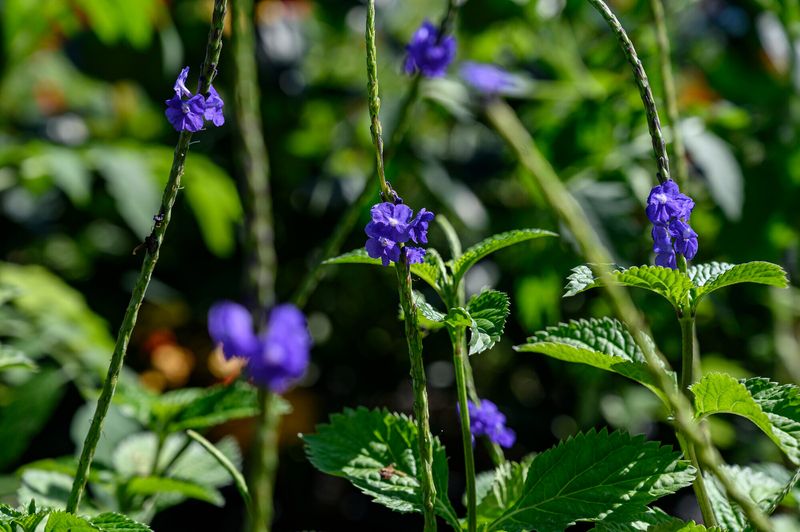
Slender spikes dotted with tiny blue-purple flowers, blooming almost nonstop in the warm south.
Blue Porterweed (Stachytarpheta jamaicensis) is the low-growing workhorse that keeps nectar flowing when other plants take a break.
South and Central Florida gardeners get the most out of it, where it runs as a true perennial.
Up in North Florida it behaves like an annual or tender perennial, sometimes dying back in a cold snap and bouncing back vigorously in spring.
It wants full sun to light shade and turns highly drought-tolerant once settled in.
Average to dry soils suit it fine, sandy or clay, slightly acidic to neutral.
Growing about 1 to 2 feet tall but sprawling wider, it makes a fine groundcover or border, and it doubles as a host plant for the Tropical Buckeye.
Space plants 3 to 5 feet apart to let it spread.
It grows fast and dodges most serious pests and disease.
A light feeding once or twice a year keeps the foliage lush and the spikes coming.
That steady drip of nectar is genuinely what keeps adult Gulf Fritillaries circling back day after day.
7. Discover The Bright Black-Eyed Susan
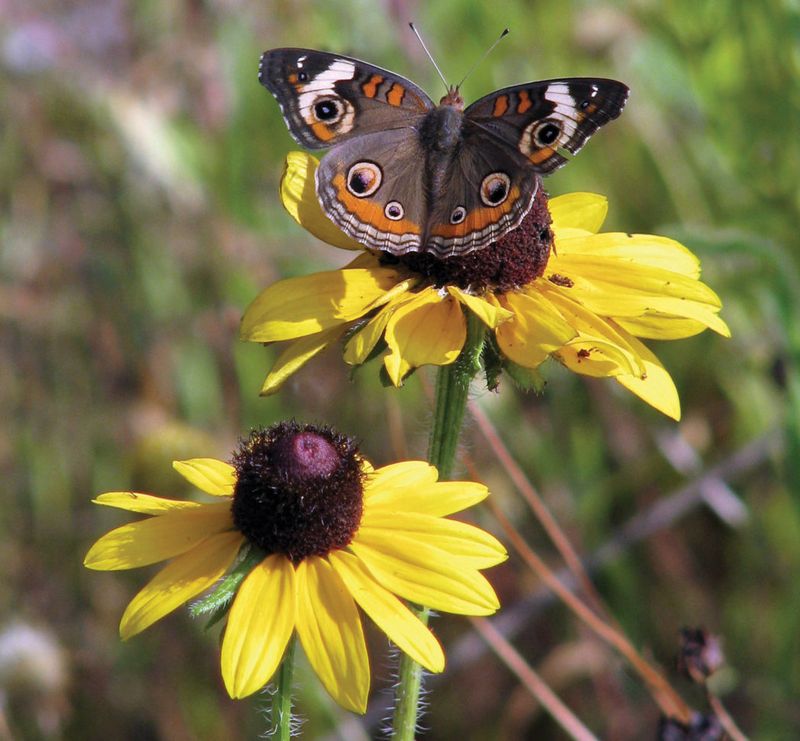
Golden petals ringing a dark chocolate center, cheerful enough to lift a tired corner of any yard.
The Black-eyed Susan (Rudbeckia hirta) is a classic Florida wildflower that feeds Gulf Fritillaries, other butterflies, and bees through a long season.
You will find it across nearly all of Florida, in sandhills, flatwoods, and roadside disturbed ground.
Each plant tends to be short-lived, but it self-seeds so freely that the patch renews itself year after year without you lifting a finger.
Full sun is its happy place, though it takes a little shade.
It adapts to sandy or clay soil as long as drainage is decent, and it holds up on minimal irrigation once established.
Plants reach 1 to 3 feet tall with a similar spread, blooming spring through fall.
Set them 12 to 18 inches apart for a mass of gold.
Deadhead to push more flowers, or leave seed heads standing so finches can feast come fall.
Here is the coastal bonus, it tolerates salt spray, so gardens along the Gulf and Atlantic can plant it near the dunes.
Pair it with a passionflower vine and a couple of nectar plants, and your quiet garden fills with orange again, exactly the way you remembered it.