
Most Texas Homeowners Yank This Purple Weed Out Before They Learn It Feeds Pollinators For Free
Follow us on Google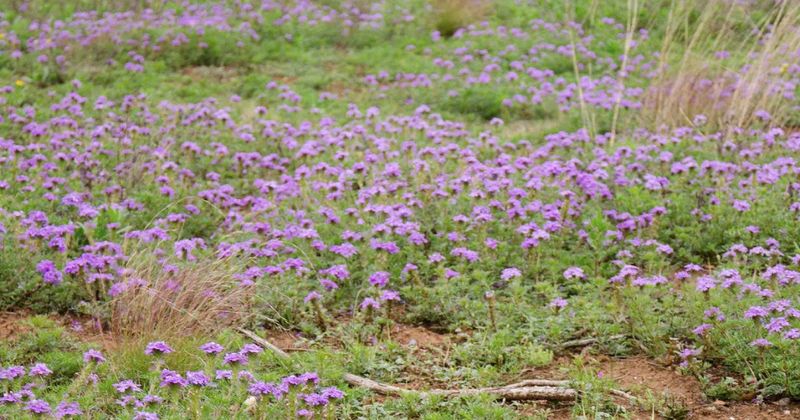
You spot a cluster of small purple flowers coming up through the St. Augustine, and your first instinct is to pull it.
Before you do, take a closer look, because that volunteer may be Texas vervain, a documented native plant that can quietly feed bees and butterflies without costing you a thing to keep.
Purple flowers show up in Texas yards from a dozen different plants, so the color alone does not tell you what you have got.
A few minutes of identification can make the difference between pulling a genuinely useful native and leaving it to do its quiet work all spring.
A Purple Lawn Volunteer May Be Texas Vervain
Spotting an unfamiliar purple flower in your lawn does not automatically tell you what you are looking at.
A purple bloom is one of the most common flower colors in Texas yards, and several unrelated plants share it.
So before you reach for the hoe, pause long enough to check what is actually growing there.
The plant behind the headline is likely Texas vervain, also called Texas verbena or slender verbena, with the accepted scientific name Verbena halei.
The U.S.
Fish and Wildlife Service species page for Texas vervain confirms it as a documented native plant, and the Native Plant Society of Texas lists Verbena halei across several Texas ecoregions, including the Blackland Prairies, Edwards Plateau, Gulf Coast Prairies and Marshes, Cross Timbers, and Southern Texas Plains.
That is a wide swath of the state, which explains why so many Texas homeowners encounter it.
Native status matters here, but it does not mean the plant automatically belongs in every yard.
A plant can be native to one Texas ecoregion and still be out of place or inconvenient in a specific spot on your property.
What native status does mean is that this particular volunteer evolved alongside your local climate, soils, and insects, and it did not arrive from somewhere else to cause problems.
No survey or behavioral data shows what most Texas homeowners actually do when they find this plant.
What is clear is that many people remove unfamiliar volunteers without checking, and that is the step worth slowing down on.
Flower color alone cannot confirm you have Texas vervain.
A quick photograph or a call to your local county Extension office can settle the question in minutes.
Its Flowers Can Offer Nectar And Pollen
Once you have a reasonable identification, the next question is whether the plant is worth keeping.
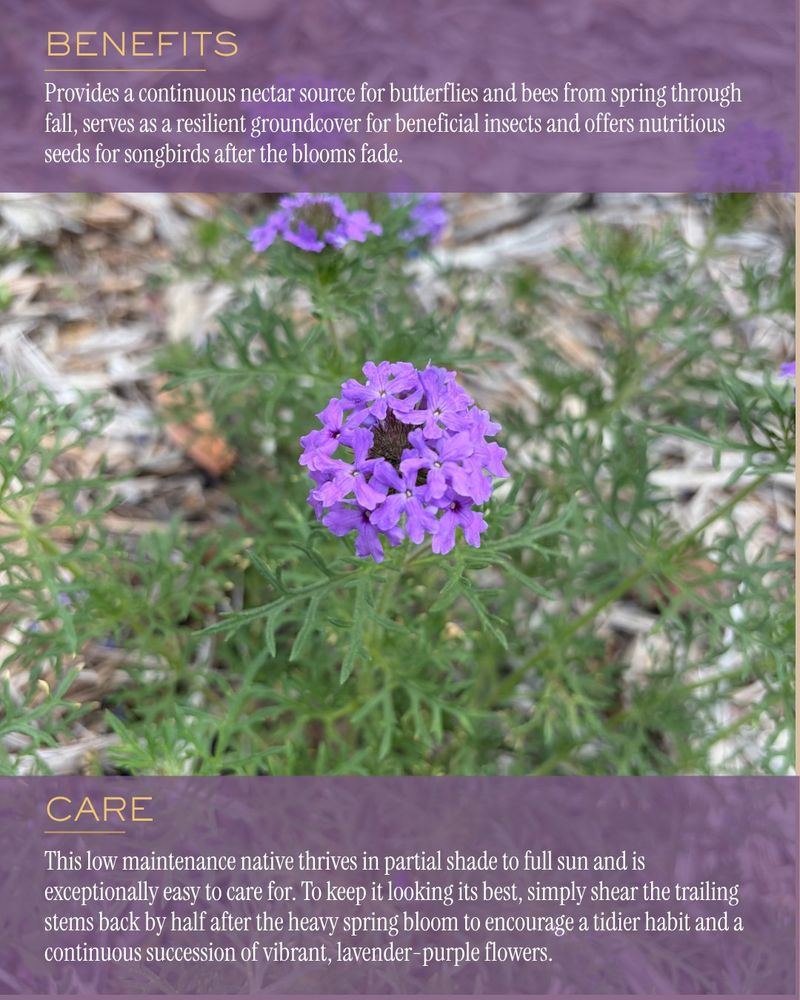
For pollinators, Texas vervain can genuinely earn its spot.
Garden Style San Antonio describes Texas vervain as providing pollen and spring nectar, and Houston Audubon lists pollinators and butterflies among the wildlife that visit the plant.
Those are regional horticultural observations, not a peer-reviewed study counting bee visits per hour, so the honest framing is that the plant can attract pollinators and offer a food source, not that it is one of the most important bee plants in Texas.
What that means practically is that a Texas vervain volunteer growing in a manageable spot can add one layer of spring food to your yard without any purchase, soil amendment, or planting effort on your part.
The cost of keeping it is essentially zero, as long as it is already there and correctly identified.
That is a different thing from claiming that establishing or transplanting one is free, because moving or starting a plant takes labor, water, and sometimes nursery stock.
Bees, butterflies, and other flower visitors tend to work whatever is blooming.
Texas vervain blooming in your yard from spring into early summer gives them one more stop.
But one plant is not a habitat plan.
Texas Parks and Wildlife recommends a succession of native blooms from early spring through fall, along with varied structure and nesting areas, rather than relying on any single species to carry the load.
Texas vervain can be one good piece of that picture, not the whole thing.
Check The Plant’s Shape Before You Decide
Purple flowers narrow it down, but they do not close the case.
A reliable tentative identification of Texas vervain comes from looking at the whole plant, not just the bloom color.
Here is what to check before you make a decision either way.
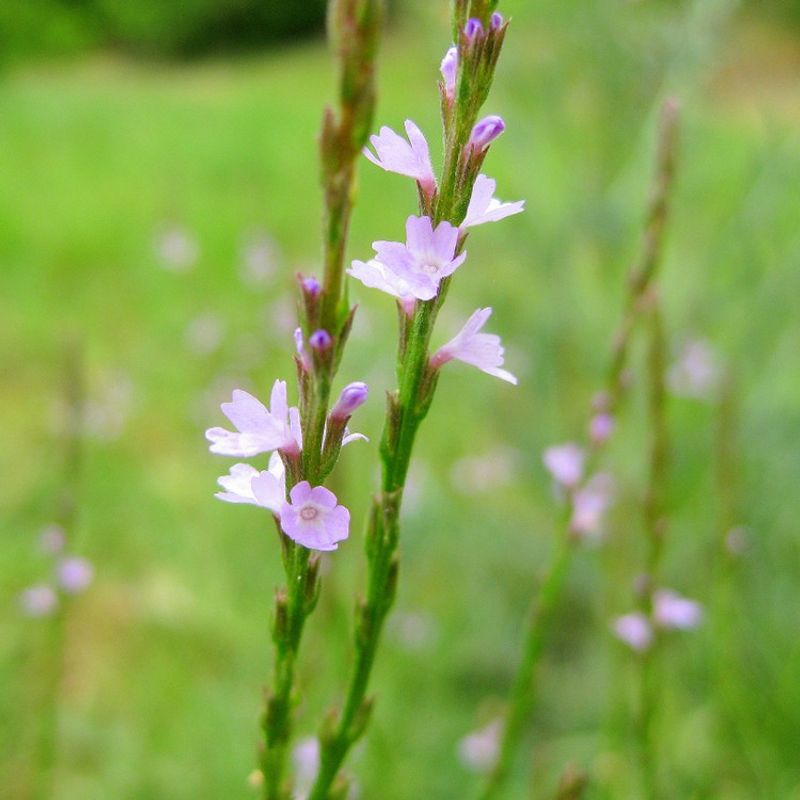
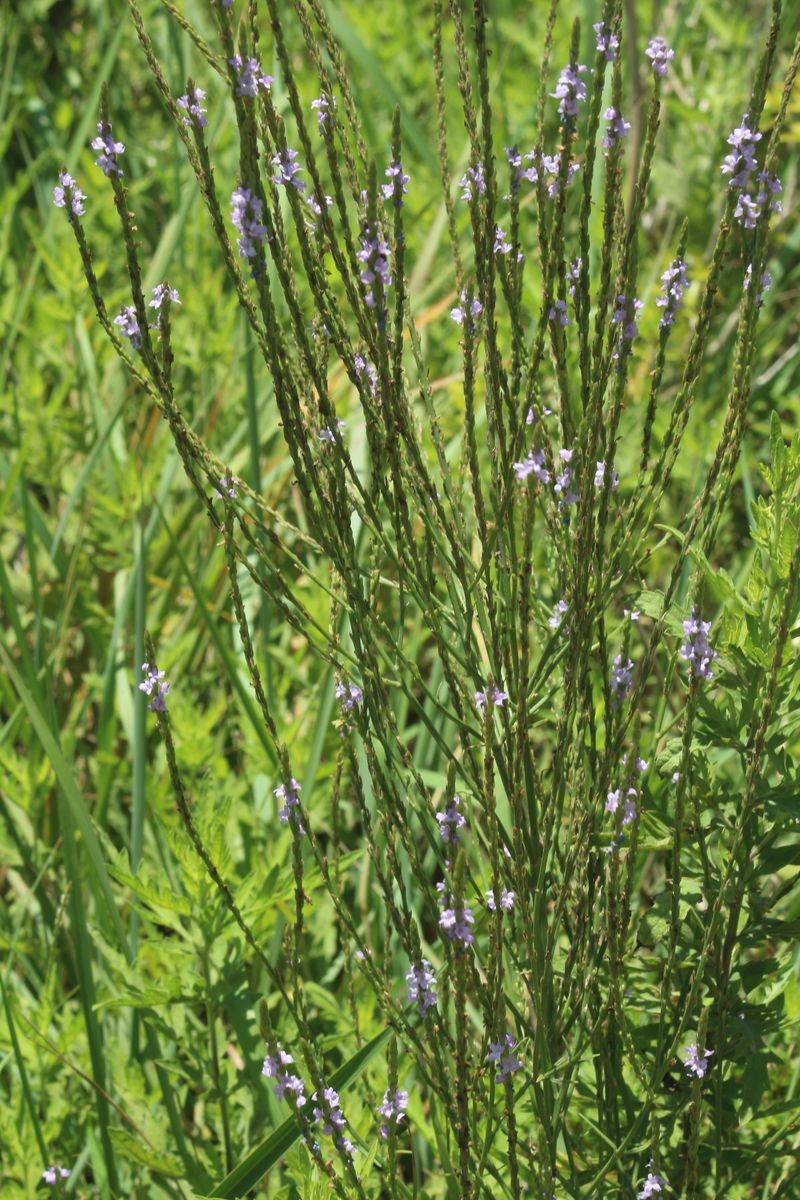
Houston Audubon reports that Texas vervain can reach roughly 30 inches tall, while South Texas Flora describes the plant as growing to about 1 meter, or 39 inches, with toothed, incised, or lobed leaves arranged in opposite pairs along the stem.
The flowers themselves are small, lavender, light blue-violet, or purple, and they appear along narrow spikes rather than in a rounded cluster or flat-topped head.
Those slender flower spikes are one of the more distinctive features.
If what you are looking at has broad flower clusters, rounded leaves, or square stems with leaves that clasp the stem, you are probably looking at something else entirely.
Bloom timing gives you another clue.
Texas vervain commonly flowers from spring into early summer, roughly March through June in many parts of the state, though plants in warmer areas like South Texas or the Gulf Coast may continue flowering longer into the year.
If the purple plant in your yard showed up in late fall and is blooming in February, that is a signal to look more carefully before assuming it is Texas vervain.
When the traits do not clearly match, do not guess.
Take a clear photograph showing the stem, a leaf, and the flower spike together, then share it with your local county Extension office or run it through a plant identification app as a starting point.
The U.S.
Fish and Wildlife Service Texas vervain page can also help you compare what you see.
Getting the identification right first protects you from either removing a useful native or keeping something you did not intend to keep.
Its Regional Fit Depends On The Yard
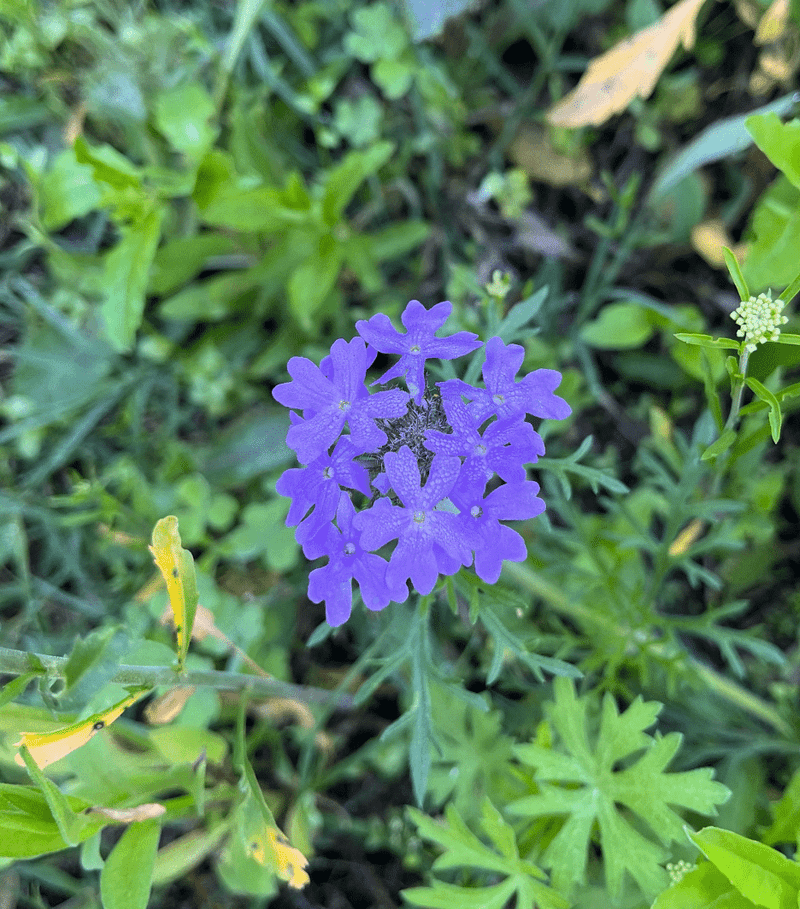
Knowing that Texas vervain is native to Texas does not mean it will thrive in every corner of the state.
Native status is regional, and the conditions in your yard matter as much as the plant’s general reputation.
Houston Audubon reports that Texas vervain grows in loam, clay, or sandy soil and is drought-tolerant, and it tends to show up in full sun settings like fields, prairies, roadsides, and disturbed areas, as well as along woodland borders.
That range covers a lot of Texas terrain, from the blackland clay of North and Central Texas to the sandy soils of the Gulf Coast region.
But the plant does have preferences, and full sun is near the top of the list.
A shaded, poorly drained corner of the yard is not likely to suit it, regardless of what region you live in.
Drought tolerance is worth understanding correctly.
An established Texas vervain plant that has been in the ground for a full season can handle dry stretches reasonably well.
A plant you just relocated from one part of the yard to another, or a seedling you just put in the ground, is not established yet and may need supplemental water for several weeks, especially during a July or August heat stretch when daytime temperatures regularly exceed 100 degrees Fahrenheit in Central and West Texas.
The Native Plant Society of Texas describes Texas vervain as suitable for xeriscape gardens, wildflower meadows, and pocket prairies, which gives you a sense of the settings where it performs well.
The Texas Parks and Wildlife pollinator management guide emphasizes using plants adapted to your specific ecoregion.
If you are in the Hill Country dealing with shallow alkaline soil over caliche, or in East Texas with acidic sandy soil, check with your local Extension office before assuming the plant is a good fit just because it grows somewhere in Texas.
Choose A Lawn Strategy That Fits The Location
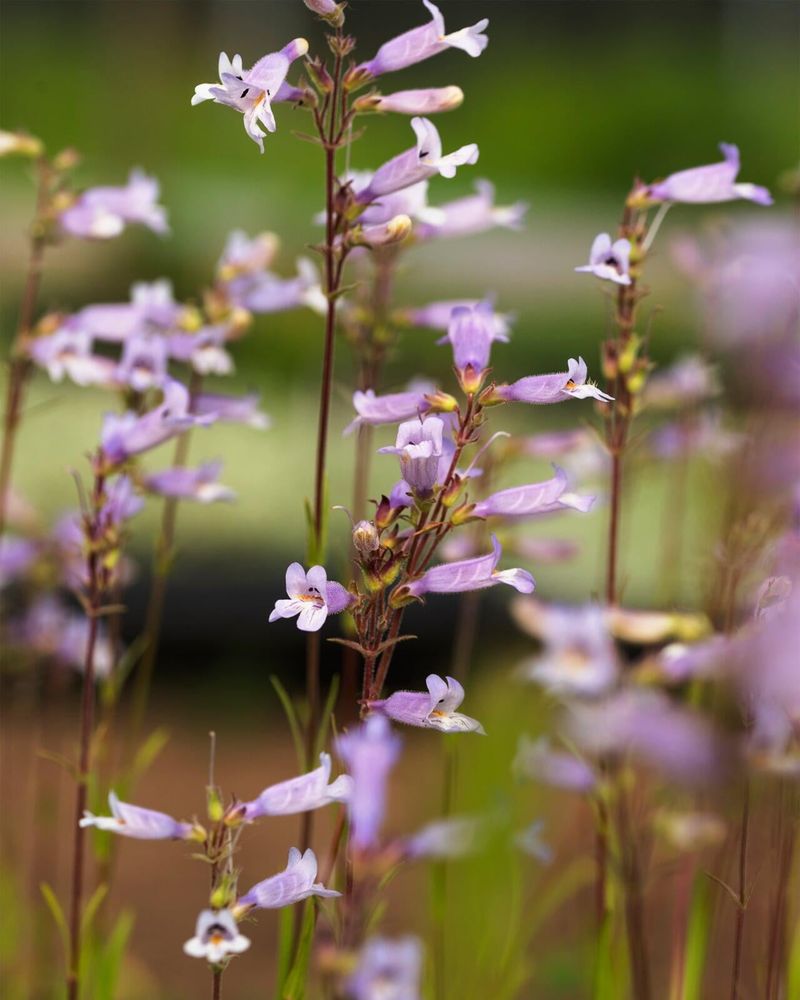
Identifying the plant correctly is the first step.
Deciding what to do with it is the second, and you have more options than just pull it or leave it forever.
If the plant is growing in a low-traffic area and does not interfere with a walkway, garden bed, or formal lawn section, leaving it until flowering finishes costs you nothing and gives any visiting pollinators a few extra weeks of food.
Mowing around a small patch is another practical middle ground, especially if the plant is tucked near a fence line or along a border where the mower already slows down.
Once flowering ends, you can mow it down without worrying about cutting blooms that bees are actively working.
Relocating the plant is possible, but treat it as a project rather than a simple transplant.
Moving a root system disrupts the plant, and it will likely need regular watering for at least 2 to 4 weeks after relocation, particularly if temperatures are already climbing past 90 degrees Fahrenheit.
Soil preparation, a good planting hole, and follow-up moisture are real costs in time and effort, even if the plant itself did not come from a nursery.
The Native Plant Society of Texas notes that cuttings can be a more practical propagation method than seed, since seed viability can be short, but that guidance comes from plant-society experience rather than a controlled university trial, so treat it as a starting point.
Texas A&M AgriLife Extension recommends integrated weed management, which combines healthy turf, correct mowing height, proper fertility, monitoring, and targeted control rather than automatically treating every volunteer.
Keeping one patch of Texas vervain fits inside that approach without requiring you to abandon your lawn care routine.
And if the plant is genuinely in the wrong spot, say blocking a walkway or spreading into a vegetable bed, removing it is a perfectly reasonable call.
The goal is an informed decision, not a rule that says always keep it or always remove it.
Houston Audubon’s Texas vervain profile can help you confirm what you have before you make that final call.
Other Purple Plants May Be Growing There
Here is where it gets tricky.
Several common Texas lawn plants produce purple flowers in spring, and confusing them with Texas vervain is easy if you are only going by color.
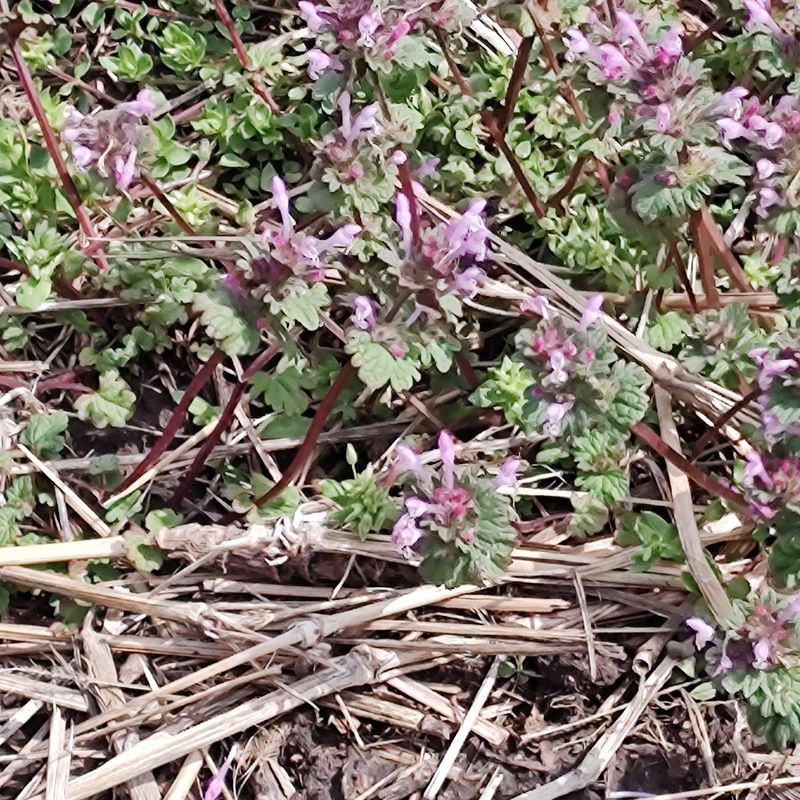
Henbit and purple deadnettle are two of the most frequent lookalikes in spring lawns.
Both are winter annuals that germinate in fall, flower in late winter and spring, and die back as temperatures rise.
Penn State Extension notes that henbit and purple deadnettle can provide early-season food for pollinators, so they are not without value, but they are not native Texas perennials and they are not Texas vervain.
Both have square stems and leaves that are rounded or heart-shaped rather than toothed and incised.
If your purple plant appears in January or February and fades by late April, it is more likely one of these two than Texas vervain.
Prairie verbena, Verbena bipinnatifida, is a separate species that also grows in Texas and produces purple flowers.
Texas Parks and Wildlife lists Texas vervain and prairie verbena separately in its native plant materials.
The two names are sometimes used interchangeably in casual conversation, but they are distinct plants with different leaf shapes and growth habits.
Do not treat the common names as the same species.
Brazilian vervain, also called purpletop vervain, Verbena bonariensis, is yet another plant.
North Carolina Extension describes Verbena bonariensis as a separate species from Texas vervain, with tall wiry stems and flat-topped flower clusters that look quite different from the slender spikes of Verbena halei.
One firm rule applies across all of these: do not eat, brew, collect, or transplant any lawn plant you have not confirmed through a reliable source.
And do not take cuttings or plants from roadsides, parks, or private land without permission, regardless of what species you think you are looking at.
Protect Blooming Plants While You Investigate
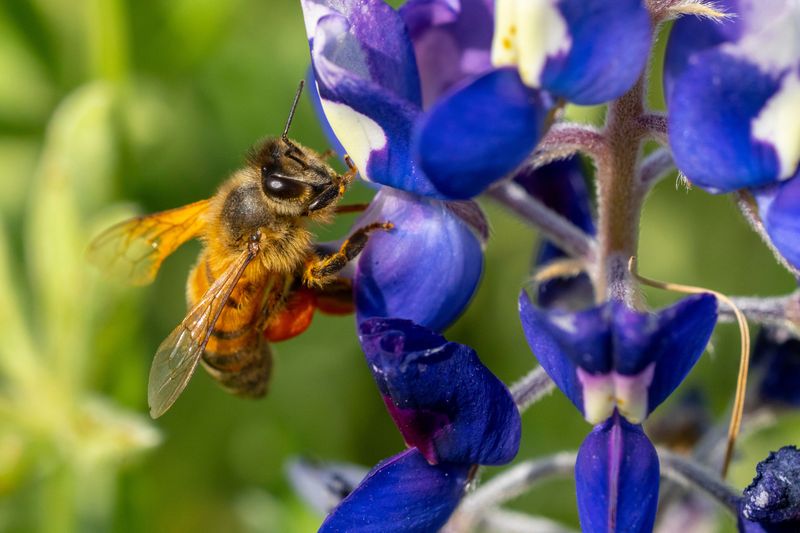
You have spotted the purple plant, you are still working out what it is, and meanwhile you have a lawn care schedule to keep.
That is a real situation, and it calls for a specific kind of caution.
EPA pollinator protection guidance recommends avoiding pesticide applications to blooming plants and following all label restrictions, including limits based on bloom stage, time of day, wind conditions, and visible pollinator activity.
That recommendation applies whether the blooming plant is Texas vervain or any other flowering species in your yard.
The pesticide label is a legal document, and the restrictions on it are not suggestions.
If your product label says do not apply when pollinators are foraging or when plants are in bloom, that instruction stands.
This does not mean you have to stop all lawn management while one patch of purple flowers is open.
It means you apply targeted control to the right plant, at the right time, following what the label actually says.
A genuine turf problem, like a spreading weed that is choking your grass in a high-traffic area, still merits attention.
The practical move is to identify what is blooming, check your product label for bloom and pollinator restrictions, and time any application to early morning or evening when bee activity is lower, if the label permits that approach.
Texas A&M AgriLife’s integrated weed management approach puts chemical control at the end of a decision process, not the beginning.
Healthy turf managed at the correct mowing height, typically 3 to 4 inches for St. Augustine grass, is your first defense against unwanted volunteers taking hold.
Targeted spot treatment, when it is genuinely needed, is a last step after identification, not a reflex response to any unfamiliar plant in the yard.
One Volunteer Works Best As Part Of A Diverse Yard
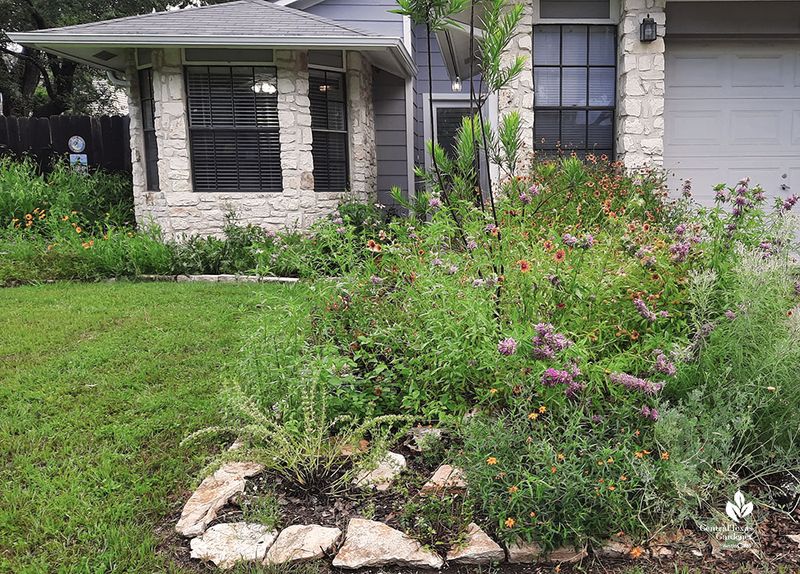
A single patch of Texas vervain in your yard can do something quietly useful.
But one plant, even a correctly identified, well-placed native perennial, cannot carry the full weight of supporting pollinators through a Texas summer that stretches from April heat into October.
Texas Parks and Wildlife recommends a succession of native blooms from early spring through fall, combined with varied plant structure and nesting habitat.
Texas vervain blooming in April and May fills one window in that sequence.
Pairing it with something that blooms in late summer, like Gregg’s mistflower or flame acanthus, and something that carries early fall color, like native asters, builds a yard that actually supports pollinators across the season rather than just for a few weeks.
The Texas Parks and Wildlife pollinator management guide lays out that succession approach in practical terms for different Texas regions.
Keeping a correctly identified Texas vervain volunteer in a manageable spot is a reasonable, low-effort choice that costs nothing in purchase price.
That is a genuine benefit, not an exaggerated one.
What it is not is a substitute for thoughtful lawn care, plant diversity, or knowing what else is growing in your yard.
The Native Plant Society of Texas places Verbena halei in xeriscape gardens and pocket prairies for good reason: it fits best where it has room and sun, not wedged into a shaded formal lawn border.
The decision rule is simple.
Identify the plant first, then choose based on where it is growing: preserve it, mow around it, relocate it, or remove it.
A yard that makes room for one well-placed native volunteer and pairs it with a few more is a yard that works a little harder for the bees, the butterflies, and honestly, for you too.