
17 Perennials That Fill A Bare Bed So Fast You Will Not Buy More Plants Next Spring
Follow us on Google
You peer over the fence on a June morning and your neighbor’s bed is a wall of color, humming with bees, while yours still shows dirt between sad little clumps.
That gap is where weeds move in and the summer sun bakes the soil hard.
The fix is not more shopping trips.
The fix is choosing perennials that spread on their own, fast, filling space so you skip next spring’s plant haul entirely.
Here are 17 that pull their weight.
1. Catmint Spreads Into Silvery Drifts Fast
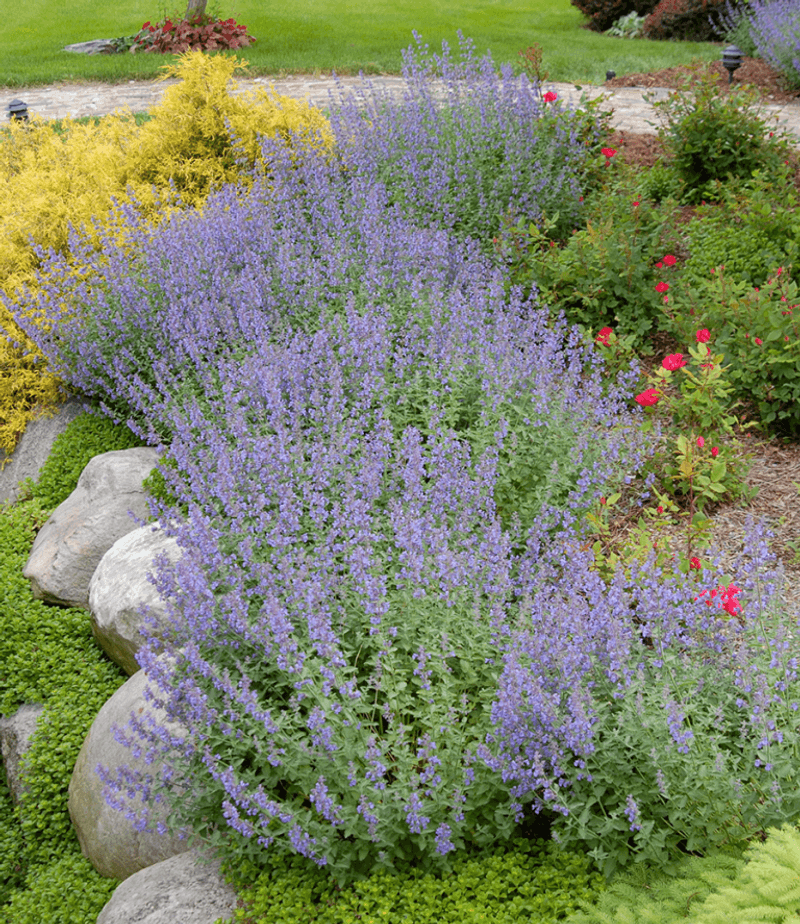
Brush past a mature catmint on a warm afternoon and the whole plant releases a soft minty scent while bees stumble drunkenly through the blooms.
That fullness happens fast, often in one season.
Catmint (Nepeta spp.) is hardy in USDA Zones 3 through 9.
It forms silvery-green mounds up to 3 feet tall and 2 to 3 feet wide, thriving in full sun with at least six hours of direct light.
Give it well-drained soil, even rocky or clay ground, and it does not sulk.
Space plants 12 to 18 inches apart, or up to 30 inches for big varieties, and they merge into one continuous lavender-blue drift.
The one catch is flop.
After the first flush fades, shear the whole plant back by about a third.
It rebounds within a couple weeks and blooms again, so your border never looks tired heading into a cookout.
2. Bee Balm Colonizes A Bed With Rhizomes
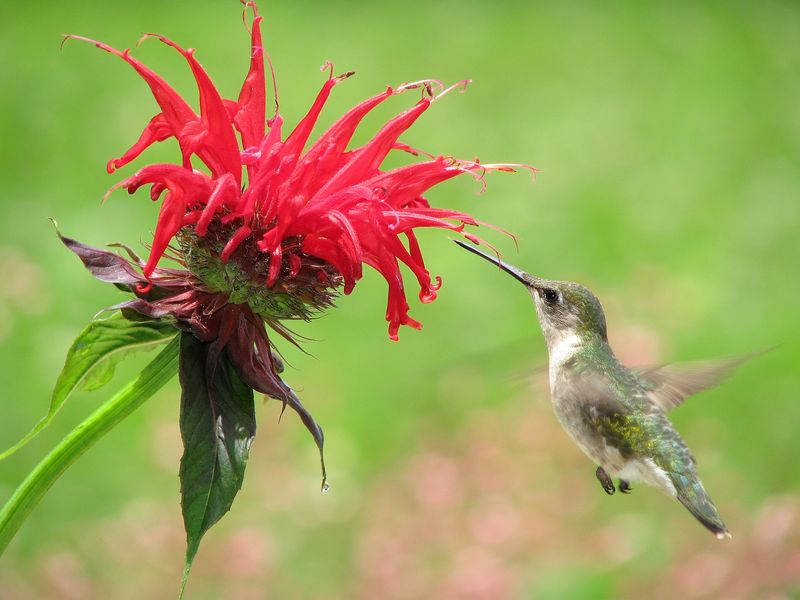
A hummingbird zips up to a stand of scarlet bee balm and hovers, and you realize the plant tripled its footprint since last year without any help from you.
Bee Balm (Monarda didyma) is hardy in Zones 3 through 9, reaching up to 4 feet tall and spreading 2 to 4 feet wide.
It travels by underground rhizomes, which are creeping root-like stems, so it colonizes mid-to-back bed space quickly.
Plant it in full sun for the best show.
Give each plant 18 to 24 inches of room so air moves through, which helps hold off powdery mildew, that dusty gray coating summer humidity brings.
You get red, pink, or purple blooms all summer, plus butterflies and hummingbirds working the bed.
Divide clumps every two to three years in spring, especially if centers start dying out.
That keeps growth vigorous and the bed genuinely full.
3. Lamb’s Ear Lays Down A Fuzzy Weed-Smothering Mat
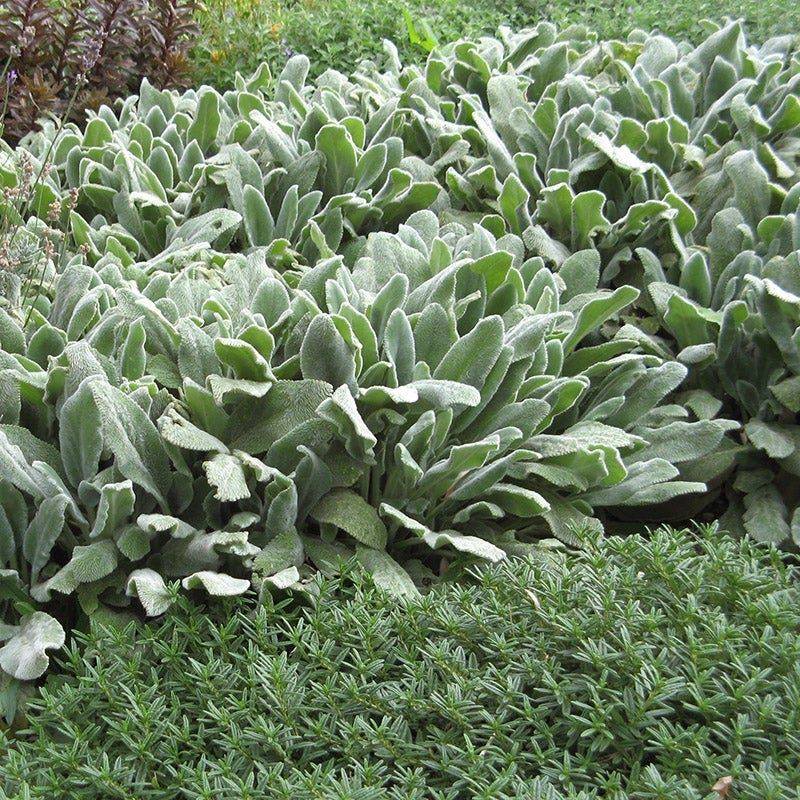
Kids cannot resist petting lamb’s ear, and honestly neither can you.
Those velvety silver leaves feel like a rabbit, and they multiply into a thick carpet before you notice.
Lamb’s Ear (Stachys byzantina) flourishes in USDA Zones 4 through 9.
It prefers full sun and well-drained soil, and it actually performs better in lean, less fertile ground where fussier plants struggle.
It spreads by creeping stems, reaching mature size in one to two growing seasons.
Space plants 12 to 18 inches apart and they knit into a continuous fuzzy mat that shades out weed seedlings before they get going.
Once established, it shrugs off drought, so your water bill breathes easier.
Many Texas gardeners lean on the variety Helen Von Stein because it handles brutal heat and rarely bothers with the floppy flower stalks.
Snip any bloom spikes you dislike to keep the focus on that soft foliage.
4. Yarrow Unifies A Dry Bed With Flat Flower Clusters
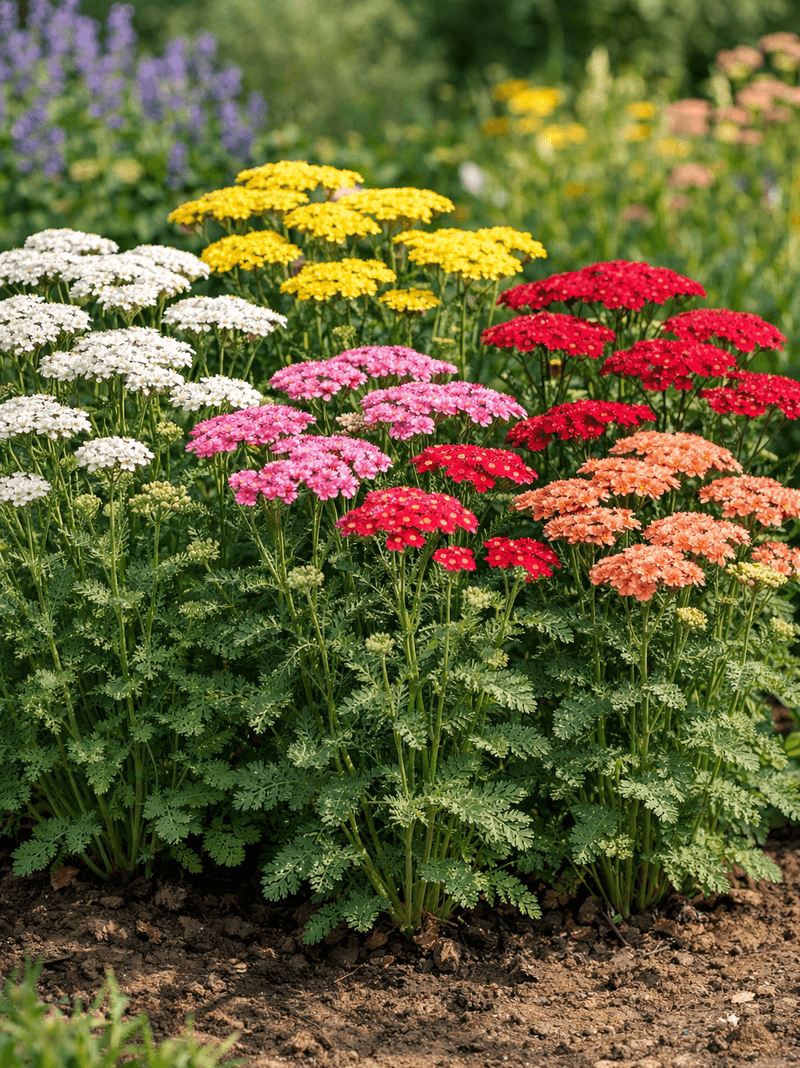
Skip watering for a week during a heat wave and yarrow does not flinch.
Its fern-like leaves stay crisp while the flat flower heads hold steady, covered in tiny beneficial wasps and hoverflies.
Yarrow (Achillea millefolium) is hardy in Zones 3 through 9 and genuinely drought tolerant once settled.
It wants full sun for at least six hours daily and well-drained soil, even sandy or lean ground, and prefers low to moderate fertility.
Growth runs slow to moderate, but its clumping habit ties a planting scheme together, reaching up to 3 feet tall.
Space plants 12 to 18 inches apart so air moves freely, which keeps foliage healthy.
It pulls in a parade of good bugs that hunt aphids on your other plants, so it works like quiet pest control.
Deadhead spent blooms through summer to push more flowers and stop unwanted self-seeding.
That keeps it tidy and blooming into fall.
5. Creeping Phlox Carpets Slopes In A Single Season
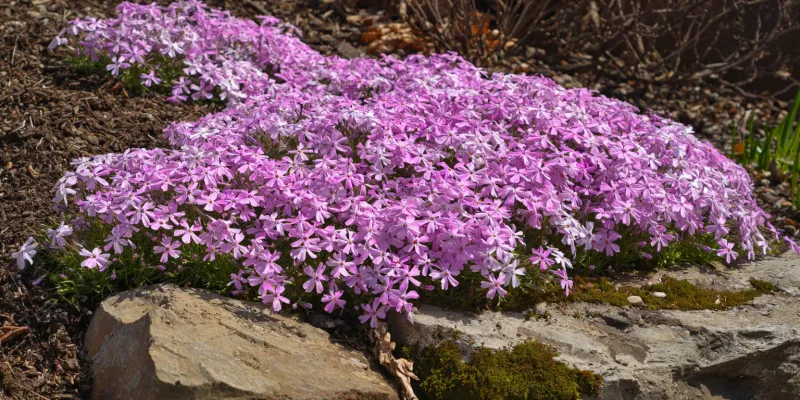
Early spring, a bare slope, then almost overnight a sheet of pink and purple pours down it like spilled paint.
Creeping phlox does that, and it happens fast.
Creeping Phlox (Phlox subulata) thrives in USDA Zones 3 through 9, spreading up to 2 feet wide while staying just 4 to 6 inches tall.
It gains roughly 1 to 2 inches per month during active growth, so one plant can cover one to two square feet within 12 to 18 months.
Plant it in full sun, or light shade where hot, humid summers call for some afternoon relief.
Space plants 9 to 18 inches apart for the quickest fill, especially along borders and banks.
You will see real expansion within weeks of planting, which turns a dull edge into a living carpet.
After the spring bloom fades, shear it lightly to keep the mat dense rather than leggy.
6. Ajuga Covers Shady Ground In One Growing Season
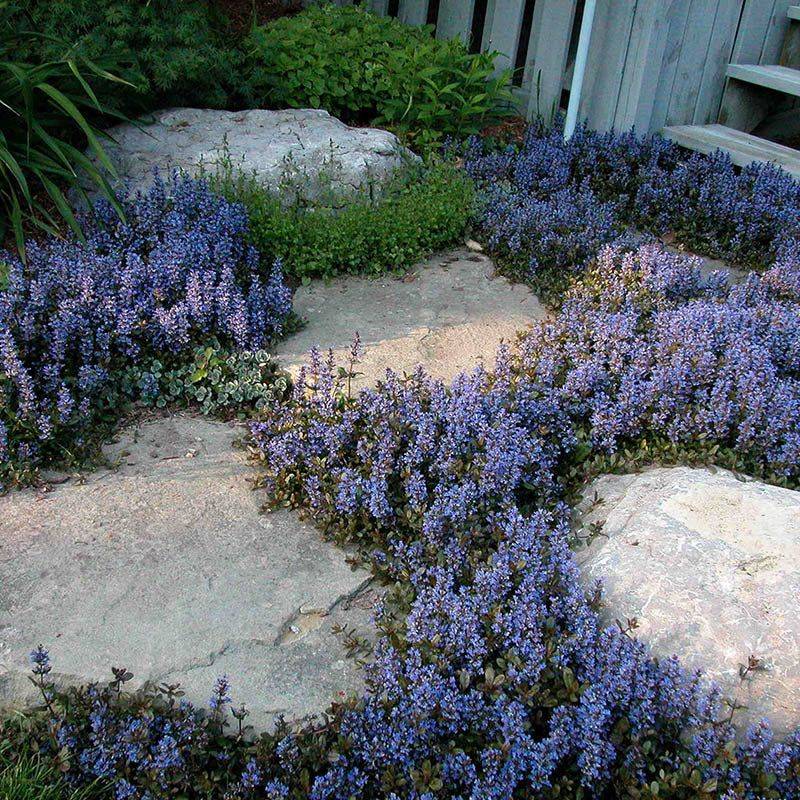
That dead zone under the maple where grass gives up?
Ajuga treats it like prime real estate, sending runners across the soil until dark glossy leaves cover every inch.
Ajuga (Ajuga reptans), or carpet bugle, is hardy in Zones 3 through 10.
It spreads rapidly by runners into a dense mat of green, bronze, or purple foliage, topped by short blue flower spikes in spring.
It tolerates full sun but grows faster and colors up better in partial shade.
Plant in spring or early fall, spacing plants 6 to 12 inches apart, and a bed can fill in a single season given moist, well-drained soil.
The dense cover stabilizes soil under trees and shuts out weeds where little else survives.
It spreads eagerly, so watch the edges.
Thin or redirect runners now and then to keep it out of your lawn and neighboring plants.
7. Daylilies Anchor A Bed With Ever-Widening Clumps

Each daylily flower lasts a single day, then another opens the next morning, and the next, for weeks.
Meanwhile the clump keeps fattening until it holds down a whole corner of the bed.
Daylily (Hemerocallis spp.) is hardy in USDA Zones 3 through 9 and famously adaptable, thriving in most well-drained soils.
It wants at least six hours of sun for peak flowering, though afternoon shade in hot climates keeps blooms from bleaching out.
The plants multiply into ever-larger clumps that swallow bare space, so they fill fast.
Space them 18 to 30 inches apart to allow for mature size and airflow.
Once established they ask almost nothing, which suits a busy schedule.
Their arching, grass-like foliage anchors a bed even between bloom flushes.
Divide clumps every few years when they crowd or flowering drops off, and each division becomes free plants for the next bare spot.
8. Hosta Fills Deep Shade Where Others Wilt
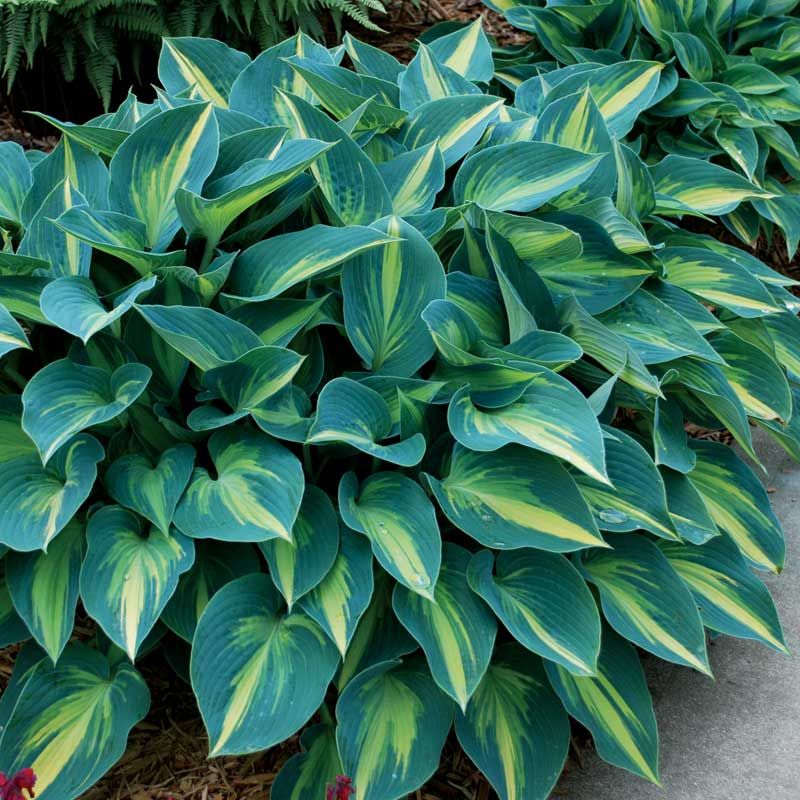
Stand in the cool shade behind the house at dusk and the hostas glow, their broad leaves layered so thickly you cannot see the soil beneath them.
Hosta (Hosta spp.) hardiness varies by cultivar, but most are reliable across many US regions, thriving in partial to full shade.
They fill by steadily widening their clumps, with mature spreads from 1 to 4 feet or more depending on variety.
Colors run from deep green to blue-green, variegated, or gold, giving shade a range of texture.
They want consistently moist, well-drained soil rich in organic matter, so mix in compost at planting.
Plant in spring, spacing small varieties about 18 inches apart and large ones up to 3 feet.
Once knit together, they form a dense cover that smothers weeds in spots where grass and flowers give up.
Slugs are the main threat, so watch for chewed holes and clear damp debris nearby.
9. Black-Eyed Susan Self-Seeds Into New Bare Spots
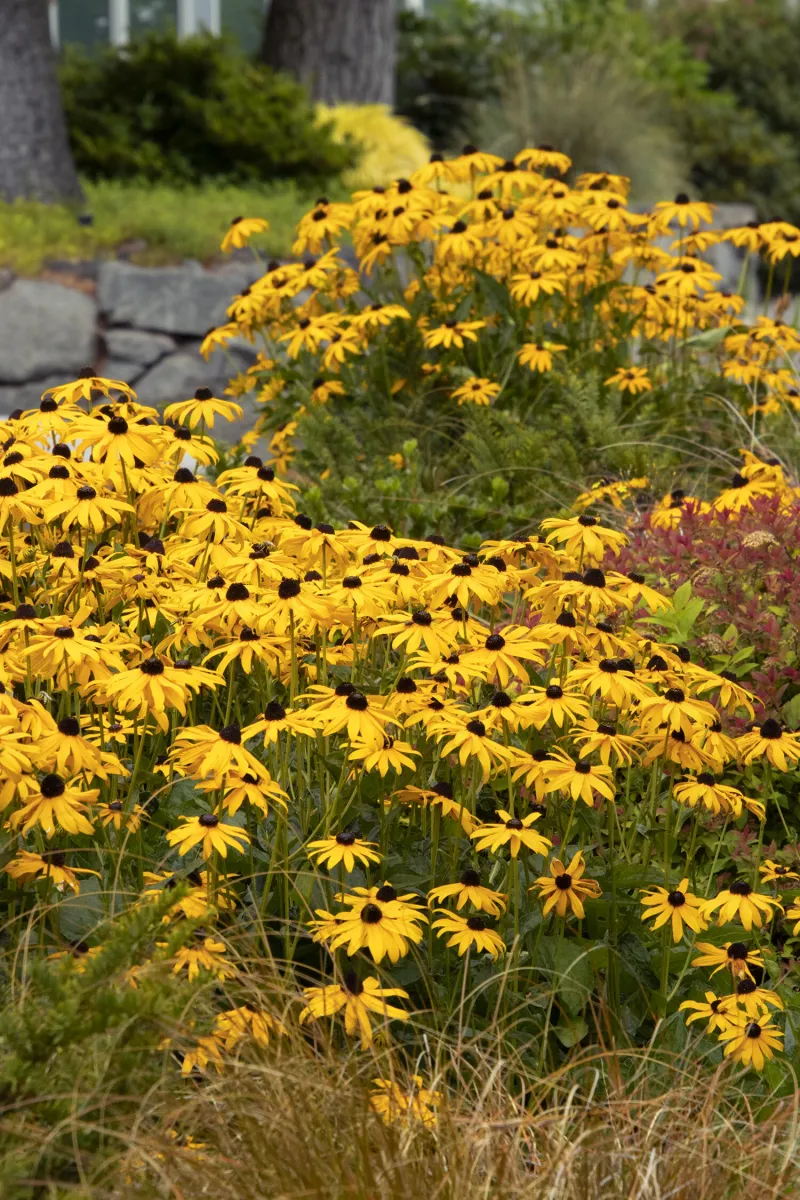
Late summer, gold everywhere, and a few surprise plants popped up three feet from where you planted last year.
Black-eyed Susan does your reseeding for you.
Black-Eyed Susan (Rudbeckia fulgida) is hardy in USDA Zones 3 through 9.
It loves full sun and well-drained soil, forming sturdy clumps that self-seed gently, so it drifts into nearby bare patches on its own.
Plants reach 2 to 3 feet tall and spread up to 2 feet wide, throwing out yellow daisy-like flowers with dark centers from midsummer into fall.
That long run means color when spring bloomers have quit.
Pollinators work it hard, and finches raid the seed heads in fall if you leave them standing.
Want it fuller and tidier?
Deadhead through summer.
Want free volunteers next year?
Let a few heads ripen.
Either choice keeps the bed working without a trip to the garden center.
10. Purple Coneflower Naturalizes Into A Pollinator Haven
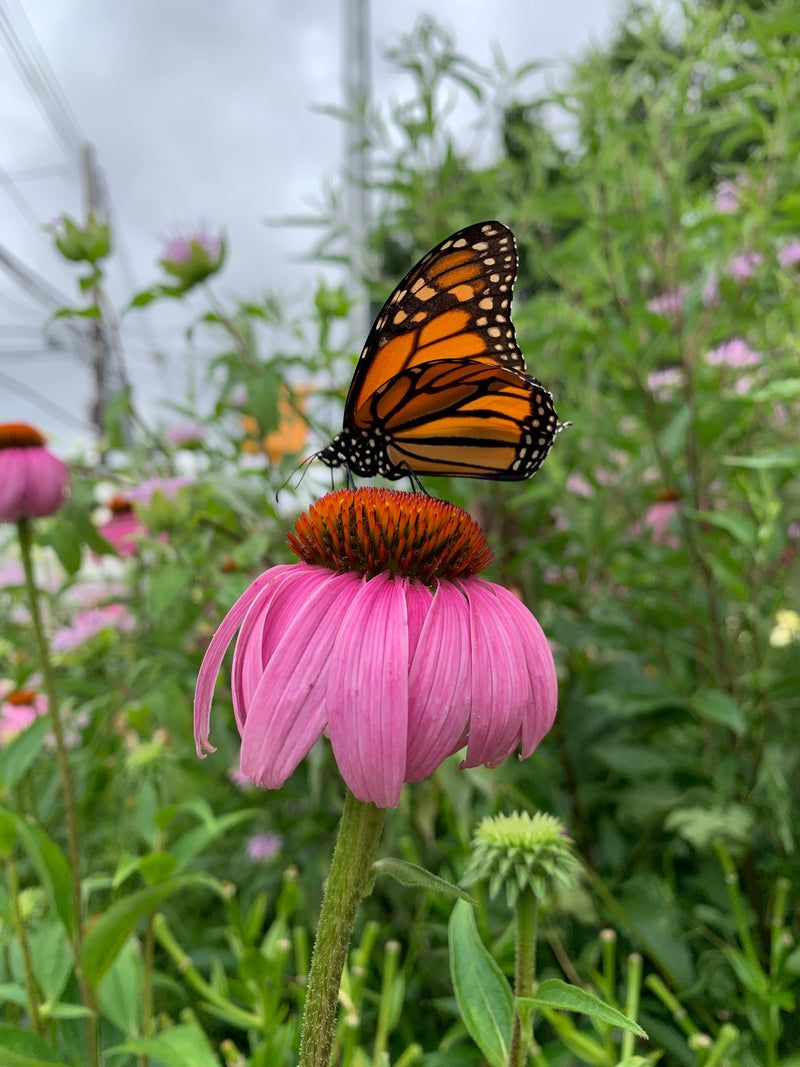
A monarch settles on a coneflower’s spiky orange center while a goldfinch waits its turn nearby.
Give this plant a couple seasons and it quietly multiplies into a whole colony.
Purple Coneflower (Echinacea purpurea) is native to central and eastern North America and hardy in Zones 3 through 9.
It handles full sun to partial shade and most well-drained soils without complaint.
The purple-pink daisy blooms last a long season and reseed gently, filling in for a naturalized look over time.
Space plants 18 to 24 inches apart and they knit into a dense stand 2 to 4 feet tall.
Bees and butterflies swarm it, and standing seed heads feed birds through winter.
Deadhead through the season for more blooms, or leave the last flush for the finches.
Either way you are building a self-sustaining bed, not a shopping list.
11. Stonecrop Thrives On The Neglect That Kills Others
That baked strip along the driveway where the soil is basically gravel?
Stonecrop moves in and looks pleased about it, its fat leaves storing water like tiny canteens.
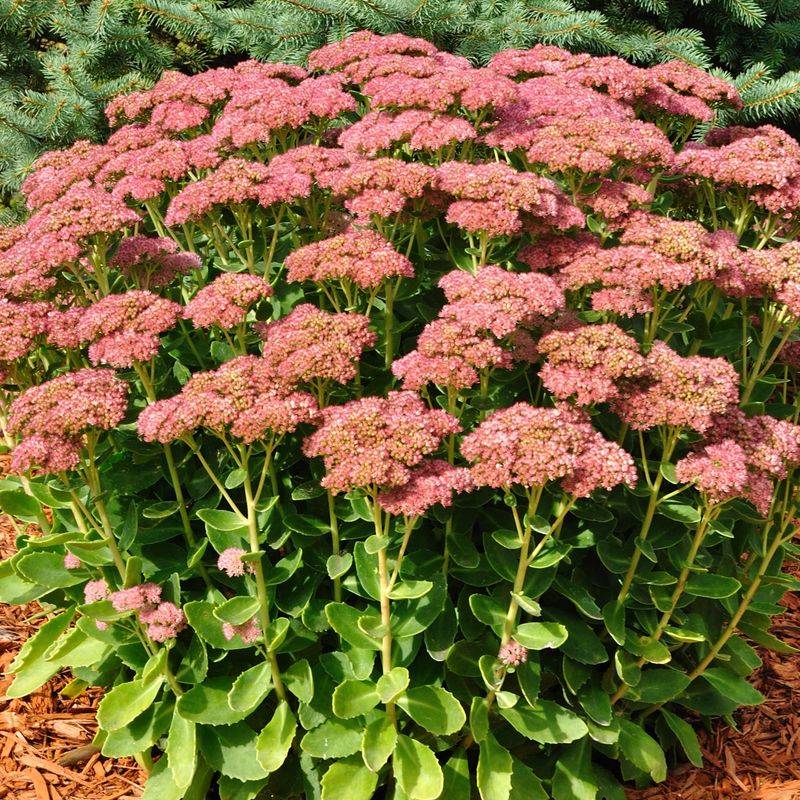
Stonecrop (Sedum spectabile, now often Hylotelephium spectabile) is hardy in USDA Zones 3 through 10 and a champion of drought.
It wants full sun and well-drained, lean-to-moderate soil.
Too much shade or rich ground makes the stems flop.
It forms sturdy clumps 1 to 2 feet wide and 18 to 24 inches tall.
Space plants 12 to 24 inches apart, and once set they need almost no extra water.
The thick succulent foliage looks good all season, then late blooms in pink, red, or rust carry the bed through fall while everything else fades.
Bees mob those flat flower heads on warm October afternoons.
Leave the dried heads for winter structure, then cut back in spring.
12. Goldenrod Feeds Late Pollinators And Fills Vertical Space
People blame goldenrod for their fall sneezing, but it is innocent.
Ragweed blooming at the same time is the real culprit.
Goldenrod is too busy being a nectar factory to bother your sinuses.
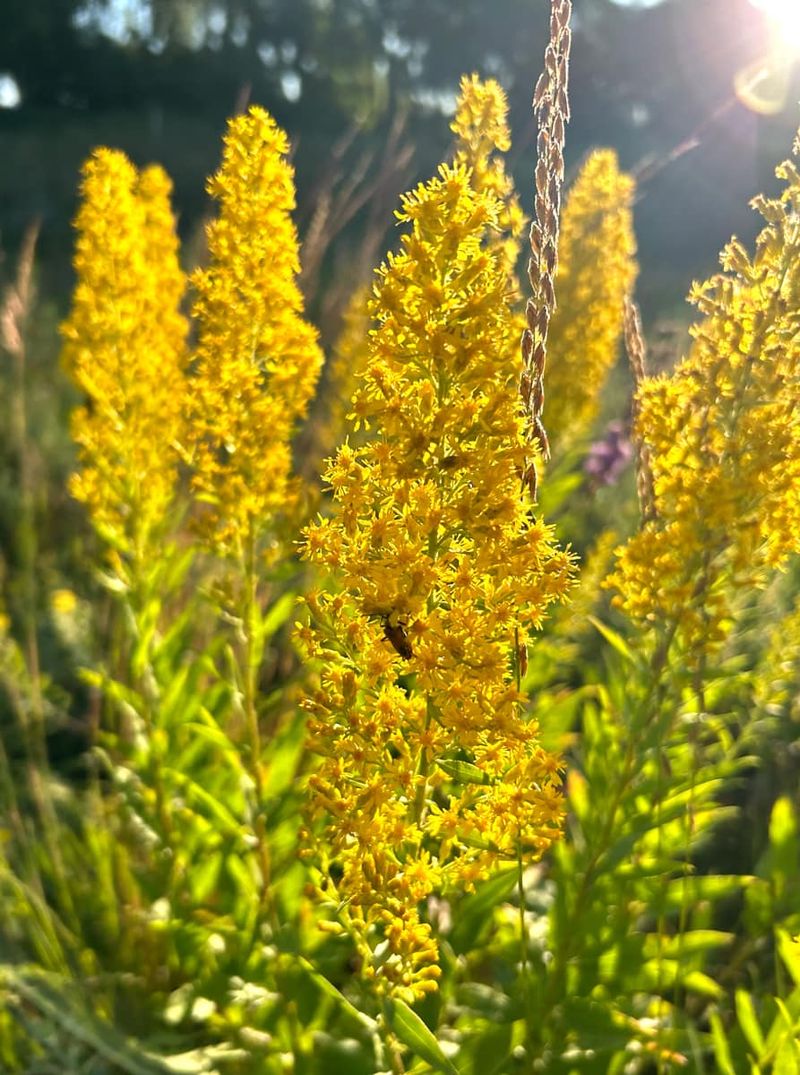
Goldenrod (Solidago spp.) is native across much of North America, with hardiness varying by species.
It revels in sun and grows fast into tall, plume-like yellow sprays.
Many species reach 3 to 6 feet tall and form substantial clumps that fill a large chunk of a bed while adding height.
That vertical mass gives a bed a full, meadow-like feel in a hurry.
It is one of the last big nectar sources before winter, so bees and migrating butterflies depend on it.
Many Midwest gardeners consider it essential for that reason.
It spreads eagerly, so divide clumps every few years in early spring to keep it from bullying smaller neighbors.
13. Hardy Geranium Weaves Between Your Other Plants
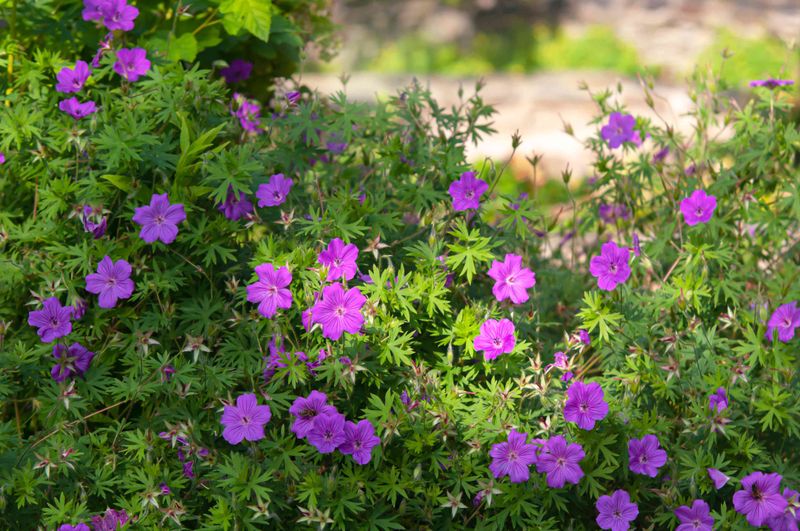
Forget the red potted geraniums on the porch.
This one is a different creature entirely, a low weaver that stitches your whole border together like a green quilt.
Hardy Geranium (Geranium spp.), often called cranesbill, is hardy in USDA Zones 3 through 8.
It threads through and around larger plants, laying down finely cut foliage that shades out weeds in the gaps.
Depending on the species, it takes full sun to partial shade and prefers well-drained soil.
Many varieties spread 1 to 2 feet wide in mounds 12 to 24 inches tall.
Cup-shaped flowers in pink, purple, or white open over a long stretch, giving a soft, natural look.
It is the plant that makes a young bed look finished, filling the awkward spaces beneath shrubs and taller perennials.
If it gets ragged midsummer, shear it back and it flushes out fresh.
14. Coreopsis Runs Into A Flowing Thread-Leaf Mass

Poor soil, brutal humidity, a spot you have given up on.
Threadleaf coreopsis looks at all that and just keeps flowering from June until frost.
Coreopsis (Coreopsis verticillata), especially the variety Moonbeam, is hardy in Zones 4 through 9 and nearly indestructible once rooted.
It wants full sun and shrugs off heat, humidity, and lean ground.
It spreads by underground stems into a wide, flowing mass of thread-like foliage, so it fills space fast and soft.
Expect about 18 to 24 inches tall and a similar spread.
The buttery-yellow flowers cover the plant from early summer into fall, months of steady color and coverage in one plant.
Bees and small butterflies work it constantly.
Deadhead or give it a light overall shear when bloom slows, and it pushes out a fresh wave within weeks.
15. Shasta Daisy Bulks Up Bigger Every Single Year
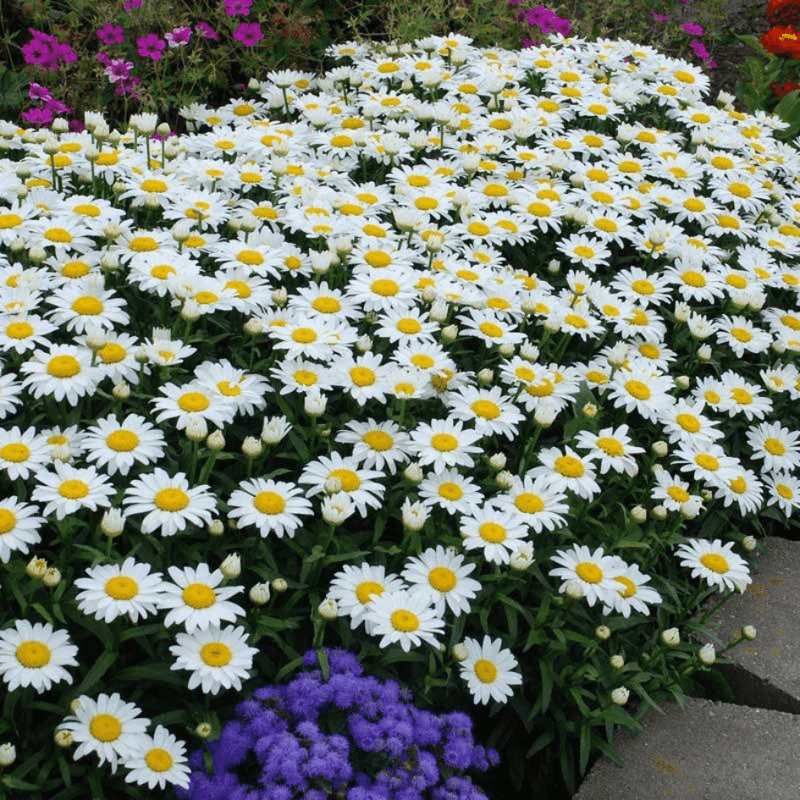
Nothing says summer porch evening like a sweep of white daisies catching the last light.
Shasta daisies deliver that classic look and they get noticeably bigger each year.
Shasta Daisy (Leucanthemum superbum) is hardy in Zones 5 through 9, wanting full sun and well-drained soil.
It forms robust clumps 2 to 3 feet tall and 1 to 2 feet wide, ideal for the front or middle of a bed.
Though it clumps rather than runs, its vigorous growth means each clump expands fast, quickly building real presence.
Space plants 18 to 24 inches apart and they merge into a sea of white and gold.
Cut flowers freely for the kitchen table.
It only blooms harder.
Deadhead spent stems to stretch the show, and divide crowded clumps every few years in spring to keep them fresh and give yourself free starts.
16. Russian Sage Throws A Haze Of Blue Over Dry Ground
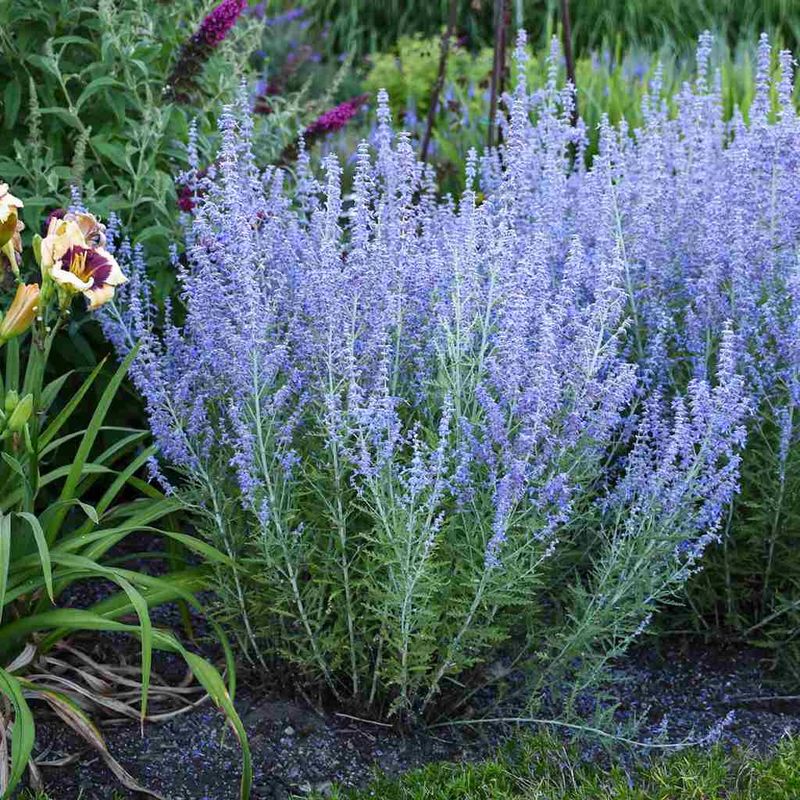
Walk past Russian sage in August and a cloud of lavender-blue seems to hover a foot off the ground, buzzing with bees, while the soil beneath it is bone dry.
Russian Sage (Perovskia atriplicifolia) is hardy in USDA Zones 4 through 9 and built for hot, dry, sunny spots.
It reaches 3 to 4 feet tall and spreads 2 to 3 feet wide, filling airy space fast with silvery stems and aromatic foliage.
It wants full sun and sharply drained soil, and it despises wet feet.
In lean ground it stays upright, so resist the urge to fertilize.
The long bloom season, roughly midsummer into fall, gives months of soft blue and steady pollinator traffic.
Space plants about 2 to 3 feet apart.
Cut stems back to about 6 inches in early spring and it rebounds taller and fuller, no water bill required.
17. Lady’s Mantle Softens Edges And Catches The Rain

After a morning rain, lady’s mantle holds silver beads of water in its pleated leaves like a tray of tiny mirrors.
The kids will crouch to poke at them, and the plant just keeps filling in.
Lady’s Mantle (Alchemilla mollis) is hardy in Zones 3 through 8 and happiest in cooler regions with partial shade, though it takes full sun where summers stay mild.
It wants moist, well-drained soil.
Its scalloped, fuzzy leaves mound 12 to 18 inches tall and spread 18 to 24 inches, forming a soft ruffle that hides bed edges and lawn seams.
Airy chartreuse flower sprays float above in early summer.
It fills gaps along paths and softens hard borders where nothing else quite fits.
Space plants about 18 inches apart.
In hot climates it can scorch, so shear it back after flowering and it flushes fresh green foliage to close out the season.