
What North Carolina Homeowners Should Know About A Neighbor’s Tree Before It Becomes A Real Problem
Follow us on Google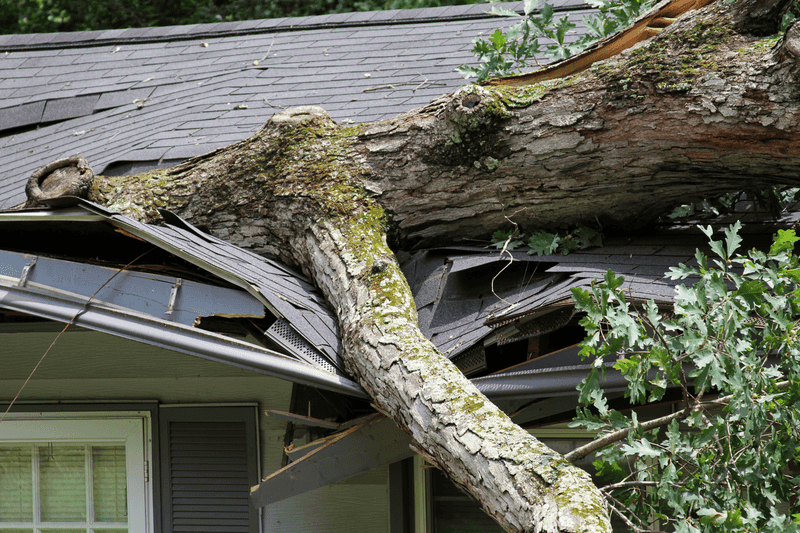
You drag your patio chair into the shade of that big oak straddling your fence line, and everything feels fine until a branch drops onto your roof during a summer storm.
Suddenly, a tree you never thought twice about becomes the center of a very uncomfortable conversation with the neighbor next door.
North Carolina has real rules about who owns that tree, who pays when it falls, and what you can legally do before it becomes a problem.
Getting clear on those rules now, while the weather is calm and the neighbor is still waving hello, is the smartest move you can make.
The Trunk, Not The Branches, Sets The Starting Point
Most people watch the canopy when they worry about a neighbor’s tree.
Branches hang over the fence, roots push up through the lawn, and the whole thing feels like it belongs to whoever is dealing with the mess.
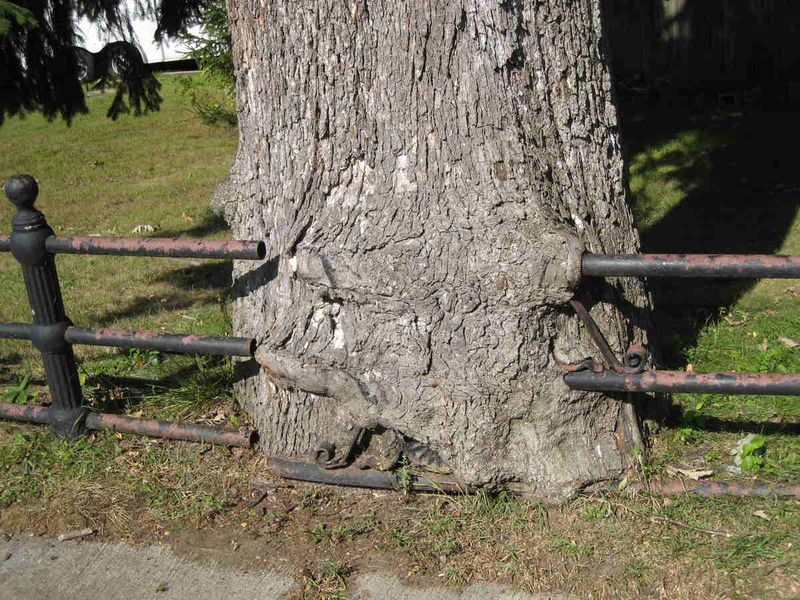
But North Carolina law looks at the trunk first, and where that trunk is rooted generally decides who owns the tree.
A tree rooted entirely on one parcel is treated as that landowner’s tree, even when its limbs stretch over the fence and its roots wander into the yard next door.
NC State Extension’s guidance on tree fall liability makes clear that ownership and responsibility generally follow the rooting location, not the spread of the canopy or root system.
The branches shading your patio do not make that tree yours to control.
The harder situation is a trunk that actually straddles the boundary line.
When the line runs through the trunk itself, ownership becomes a genuinely complicated question, and the answer is not as simple as measuring which side holds more wood.
North Carolina-specific authority on boundary-tree ownership is limited enough that guessing at the answer based on a visual inspection is a real risk.
Before you plan any significant work involving a trunk that appears to sit close to the line, confirm where the line actually falls.
Do not rely on where the trunk looks like it sits from your yard, and do not rely on a fence or a mowing edge to tell you.
The practical starting point is always the documented location of the trunk relative to the verified boundary, not the direction the branches happen to grow.
A Survey Helps Establish The Line
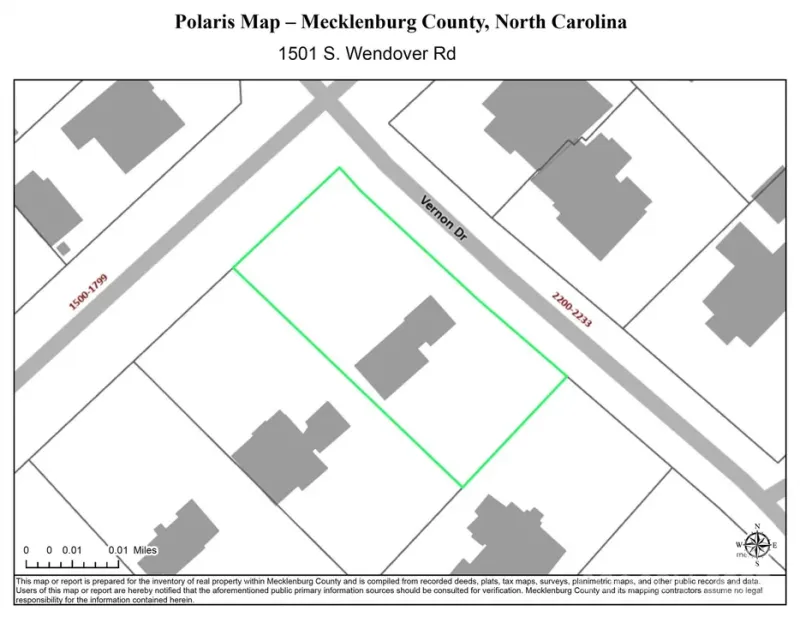
Fences feel permanent, but they are not legal documents.
Many North Carolina fences were built without a survey, placed by agreement or convenience, or simply put in the wrong spot years ago.
A mowing edge, a row of landscaping, an old concrete marker, or a chalk mark on the sidewalk carries the same problem: none of them reliably establish where your property ends and your neighbor’s begins.
NC State Extension’s guidance on maintaining forest property boundaries recommends using deed and plat information as an approximate starting point, but is direct about the limit: a professional survey is the only dependable choice when the boundary is uncertain.
That same guidance warns that a landowner who incorrectly reestablishes a boundary on their own can become responsible for damage that results from the mistake.
Moving or destroying an existing survey marker is a separate problem you do not want.
A licensed surveyor will locate the corners and run the line using recorded instruments, deeds, and plat maps.
The result gives you a documented, defensible starting point for any conversation about a tree, a fence, or an encroachment.
It is not a guarantee that every dispute disappears, because conflicting records or competing legal claims can still exist, and those situations may require a North Carolina real-estate attorney or other formal resolution.
Think of the survey as the foundation.
If the trunk of that leaning pine is clearly 4 feet inside the neighbor’s lot on a fresh survey, you know what you are working with.
If the survey shows the trunk sitting right on the line, you know to get legal advice before taking any action at all.
Either way, you are making decisions based on real information instead of a guess.
What Overhanging Limbs And Roots Actually Change
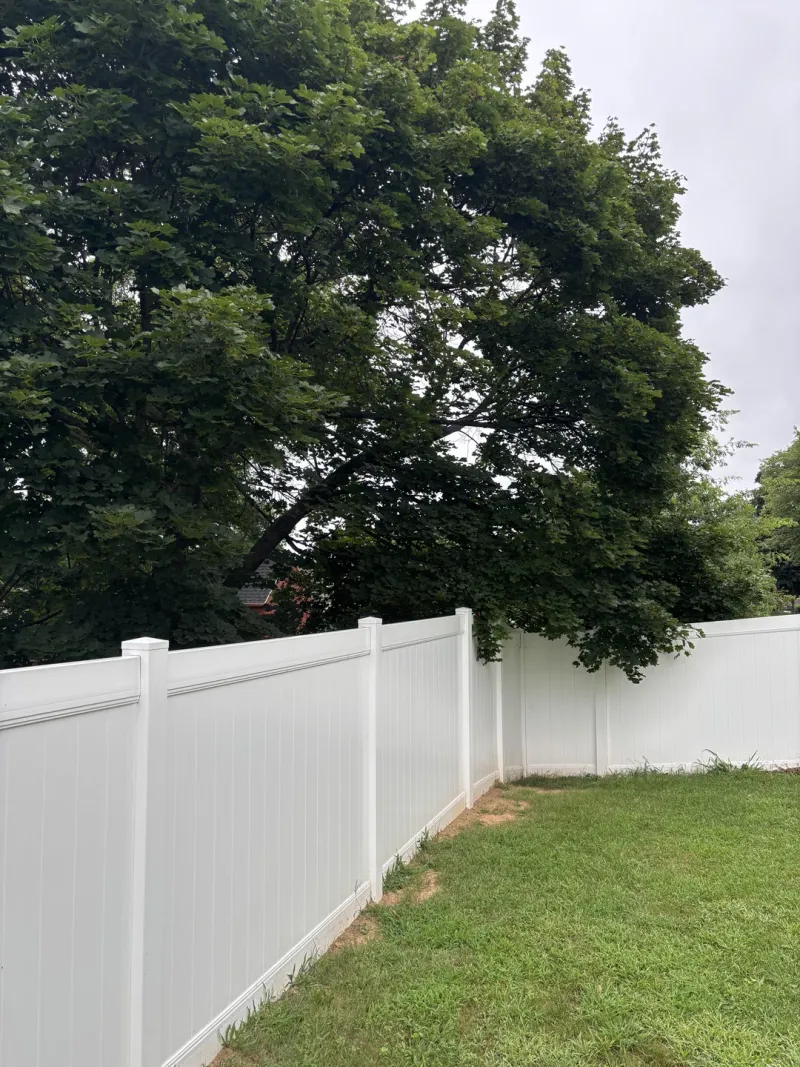
Branches crossing the fence line and roots lifting the sidewalk are genuinely annoying.
They can also lead a homeowner to assume that because the tree is causing trouble on their side, they have broad rights to deal with it however they see fit.
That assumption is where things go sideways.
Encroachment by branches or roots does not transfer ownership of the tree.
The North Carolina Court of Appeals in Rowe v.
McGee (1969) recognized that encroaching branches or roots can support a nuisance claim when they cause actual, measurable damage.
The key word is actual.
Shade falling on your garden, leaves landing in your gutters, or roots spreading through your lawn in a way that has not caused real harm are ordinary parts of living near trees.
They do not automatically create a lawsuit or give you permission to remove the tree.
The temptation to trim everything back to the property line is understandable, and there is a general idea that homeowners may cut encroaching growth to the boundary.
But that is not an absolute North Carolina rule, and it comes with real limits.
Any pruning must stay on your side of the line, must not involve trespassing onto the neighbor’s property, and must not seriously injure the tree or kill it.
Cutting major anchoring roots is particularly risky, both physically and legally, because it can destabilize the tree and may itself create liability if the tree later falls.
For small, clearly accessible branches on your side, careful trimming may be reasonable.
For large limbs, significant root systems, or any situation involving a boundary tree, get professional arborist advice and, if the situation is contentious, legal guidance before you pick up a saw.
A Leaning Tree Needs Evidence, Not Panic
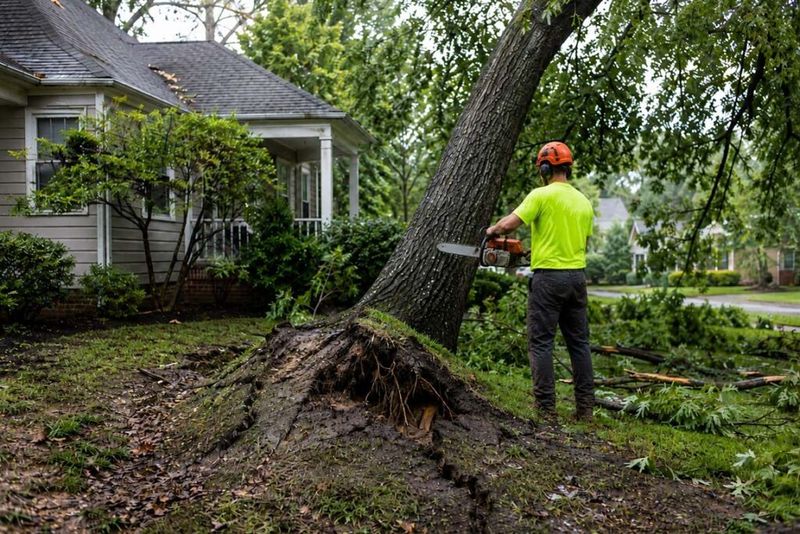
Plenty of healthy trees grow with a noticeable lean.
A long-term lean that developed as the tree reached for light is different from a sudden shift caused by root failure or storm damage.
Seeing a lean does not mean the tree is about to fall, and sending an alarmed letter to your neighbor based on a lean alone is not likely to help the relationship or the situation.
What actually deserves prompt attention is a combination of warning signs coming together at once.
NC State Extension’s tree fall liability guidance identifies these factors as evidence relevant to foreseeability: decay inside the trunk, dead or hanging limbs, cavities, fungal growth at the base, lifted or heaving soil around the roots, exposed or visibly damaged roots, cracks in the trunk, and recent storm damage.
Add a target, meaning a house, driveway, play area, or utility line in the direction of the lean, and the concern level rises considerably.
When you see that combination, document it with dated photographs.
Walk your property line and photograph cavities, dead wood, any fungal growth that looks like shelf mushrooms at the base, soil that appears pushed up, and the direction and degree of the lean.
Note the date on each photo or let your phone’s metadata do it for you.
Then send a calm, written notice to the tree owner describing what you observed.
Stick to the visible facts: the lean, the dead limbs, the lifted soil, whatever you can actually see.
Do not declare the neighbor legally responsible for everything that might happen.
The goal of the letter is to create a record showing the owner was informed of the condition, because NC negligence analysis focuses on what the owner knew or reasonably should have known before a tree came down.
Crossing The Line Can Create Your Own Liability
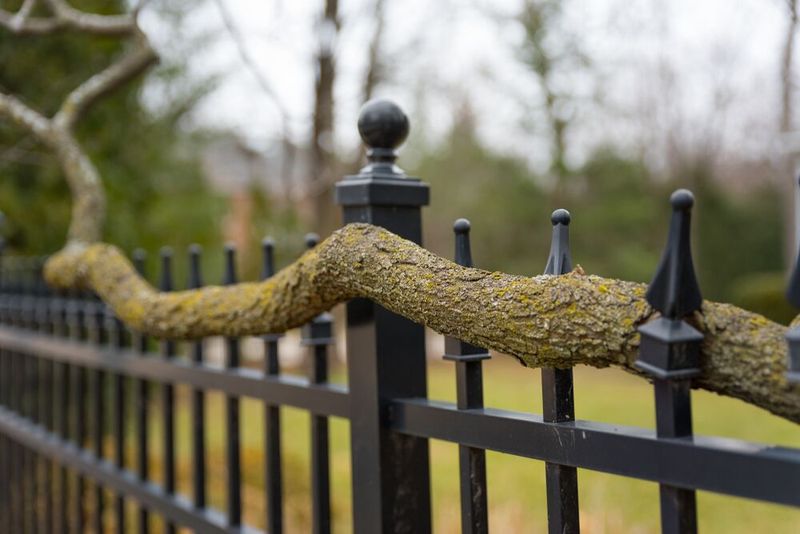
Here is where it gets genuinely serious.
Walking onto the neighbor’s property to prune their tree, dig around their roots, or take down a limb without permission is not a gray area in North Carolina.
It is a legal problem, and the fact that branches or roots crossed into your yard does not create an exception.
North Carolina General Statute 14-128 makes willful injury, cutting, or removal of another person’s tree without consent a Class 1 misdemeanor.
That is a criminal charge, not just a civil dispute.
Beyond the criminal side, General Statute 1-539.1 can make a person liable for triple the value of valuable timber, shrubs, or trees that are unlawfully injured or removed.
A mature shade tree can carry real appraised value, and triple damages on that number adds up fast.
The statutes apply even when you believe the tree is dangerous, even when branches have been dropping on your car, and even when roots have cracked your driveway.
Your frustration is understandable, but it does not authorize crossing the line without consent.
The same caution applies to cutting roots on your own side of the line.
As mentioned earlier, severing major anchoring roots can destabilize the tree and may make you partly responsible if it falls afterward.
The practical rule is this: stay on your side, document the problem, communicate with the neighbor in writing, and bring in a qualified arborist or attorney before taking any action that could seriously affect the tree.
Storm Damage Usually Starts With Your Insurer
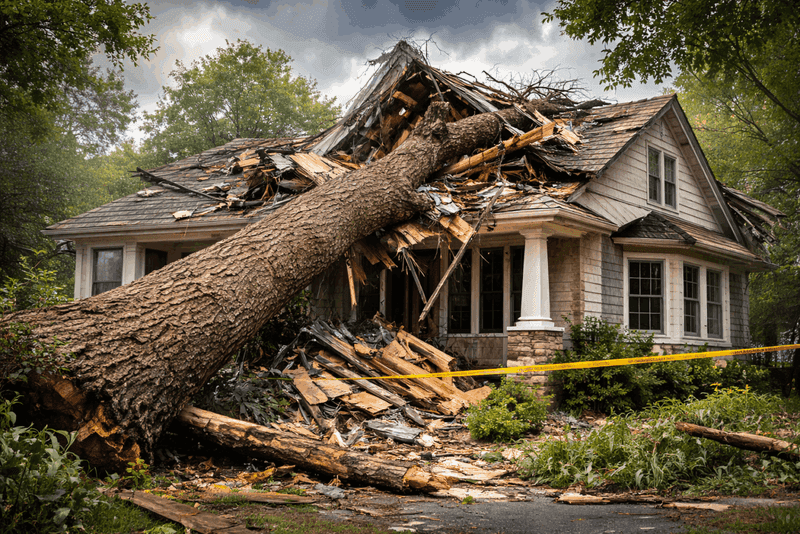
After a big storm rolls through the Piedmont or the coast and a neighbor’s tree lands on your roof, the instinct is to call the neighbor and tell them to handle it.
That instinct skips a step that most North Carolina homeowners do not know about.
The damaged homeowner generally starts with their own homeowners insurance policy for covered structural damage, regardless of which property the tree was rooted on.
NC State Extension’s tree fall liability guidance specifically notes that insurance commonly handles covered structural damage first, and that an insurer may later pursue the neighbor if the situation appears to support a negligence claim.
You are not abandoned; you are just working in the right order.
Tree removal coverage adds another layer of complexity.
The North Carolina Department of Insurance’s homeowners insurance FAQ notes that removal coverage commonly applies when a tree has damaged a covered structure or blocked a driveway, and gives a $500 reasonable-removal example as a reference point.
But your actual policy language, your deductible, and the specific circumstances control what you actually receive.
A tree lying in an open yard with no structural damage may not qualify for removal coverage at all.
A parked vehicle that gets crushed by a fallen tree is a separate matter.
Homeowners insurance generally does not cover the vehicle.
Comprehensive automobile coverage may, so check that policy too.
Coastal North Carolina homeowners face one more variable.
Windstorm and hail coverage can be excluded from some coastal policies or written as a separate policy with its own deductible.
Before hurricane season arrives, pull out your declarations page and read those terms carefully so you know exactly what you have.
Large Trees And Power Lines Need Professionals
Some tree work is genuinely within reach of a careful homeowner with the right tools.
A large tree near your house, a tree with a serious lean toward a play area, a tree showing significant decay, or anything within reach of a utility line is not that work.
For any of those situations, hire a qualified arborist.
A certified arborist can assess whether a tree is actually hazardous, recommend the right course of action, and perform or supervise work safely.
Their written assessment also creates documentation of the tree’s condition, which matters if a dispute or insurance claim comes later.
NC State Extension’s guidance on tree fall liability reinforces that documented professional assessment is a key part of building a record around foreseeability.
Power lines deserve their own clear rule.
OSHA’s tree trimming safety guidance says to treat all power lines as energized at all times, and states that work within 10 feet of an electric power line must be performed by trained, experienced line-clearance tree trimmers.
That is not a suggestion.
A homeowner with a pole saw standing 8 feet from a line is in a genuinely dangerous position.
OSHA’s hurricane debris guidance adds that downed lines can energize trees, fences, bushes, and other objects nearby.
After a storm, a tree that looks harmless may be in contact with a live wire somewhere out of sight.
Contact your utility company and wait for clearance before anyone approaches a tree that is anywhere near a line that came down.
The decision point is simple: if the tree is large, leaning toward something valuable, visibly decayed, or anywhere near utilities, call a professional before you call anyone else.
Written Agreements Prevent Storm-Day Confusion
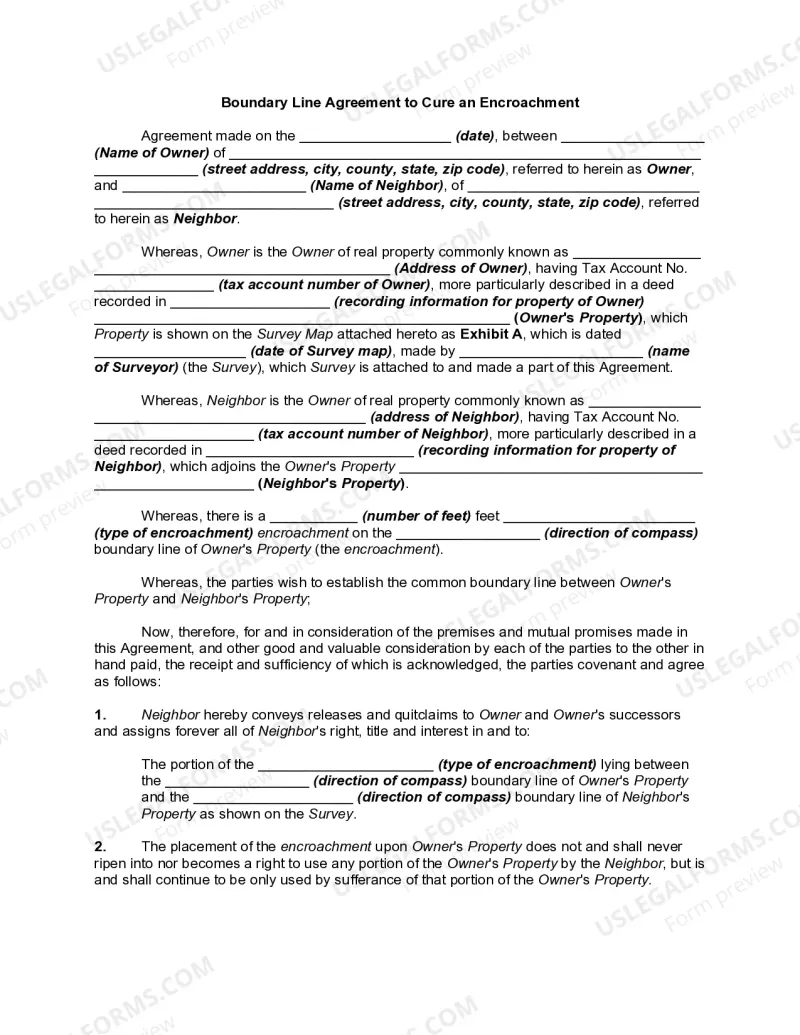
The clearest path through a tree dispute is a short, calm conversation and a written record made before anyone is standing in the rain looking at a fallen trunk.
Putting together a simple preparation plan now costs almost nothing and can prevent a genuinely expensive argument later.
Start by confirming where the line actually falls, using deed and plat records as a starting point and a professional survey when the boundary is uncertain.
Photograph the tree from multiple angles, date the images, and note any visible warning signs.
If you see something concerning, send the neighbor a written note describing what you observed, keep a copy, and give them a reasonable chance to respond.
For any substantial work involving a large tree, a boundary tree, or a tree close to structures, get an arborist’s assessment in writing before work begins.
If the trunk sits near the line and removal is being discussed, a North Carolina real-estate attorney can help both parties reach a written agreement that protects everyone.
NC State Extension’s liability guidance consistently points toward documented communication and professional assessment as the practical foundation of any tree dispute.
Also check local tree ordinances, historic-district rules, utility easements, and HOA covenants before any work begins, because state property law is not the only set of rules that may apply in your neighborhood.
Then review your homeowners insurance declarations page before hurricane season so you know exactly what is covered and what is not.
A calm agreement made with a neighbor while the yard is dry and the sky is clear is almost always safer, cheaper, and kinder than an argument made across a pile of wet lumber.