
Skip The Tired Loropetalum And Plant These North Carolina Natives Where The Foundation Bed Needs Structure
Follow us on Google
You drag your patio chair into the shade one muggy August afternoon, glance at the shrubs hugging your foundation, and something feels off. That Loropetalum everyone planted a few years back looks faded, bronzed, a little sad against the brick.
It is not just you, and it is not bad luck. Here is the good news, neighbor.
North Carolina gives us native shrubs that hold their shape, feed the birds and bees, and stop fighting your red clay every single season.
1. The Truth About That Tired Loropetalum
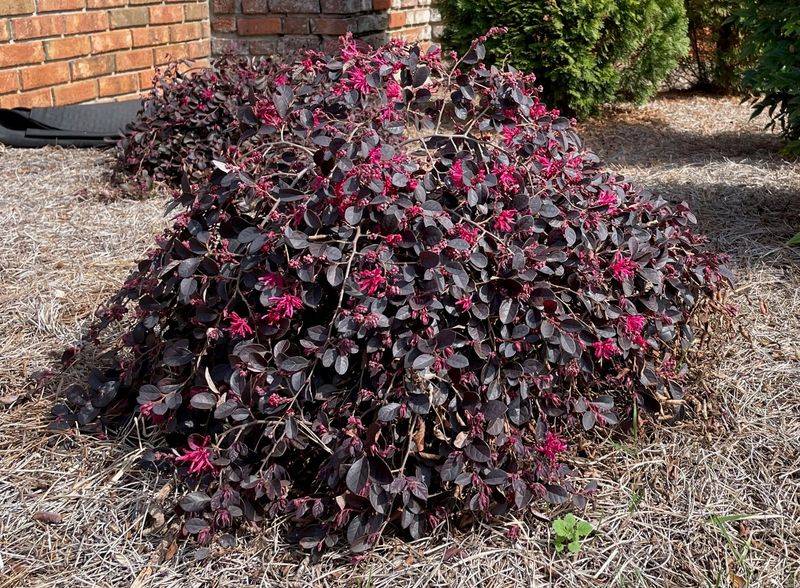
Loropetalum arrived like the popular new kid, all ribbon flowers and moody purple leaves. Half the neighborhood planted it.
And for a season or two, it genuinely looked sharp against the brick.
But Loropetalum chinense comes from China, Southeast Asia, and Japan. It did not grow up alongside our songbirds or our native bees, so it offers them almost nothing.
It is pretty on the outside and empty at the dinner table.
Here is where it gets tricky. This shrub wants rich, moist, acidic, well-drained soil.
Much of the Piedmont hands it heavy red clay that drains poorly and leans a bit alkaline. The result shows up as yellowing leaves, what gardeners call chlorosis, or worse, root rot down where you cannot see it.
Our summers pile on. Intense heat above 90 degrees dulls that famous purple into a drab bronze-green on older varieties.
Up in the mountains around zone 7a, a surprise cold snap can bite a plant set out too late in fall.
It also catches trouble easily, bacterial gall, powdery mildew, anthracnose, all of which cause branch dieback. You want a shrub that works with your yard, not one you keep nursing back from the edge.
2. Inkberry Holly Offers Elegant Evergreen Structure
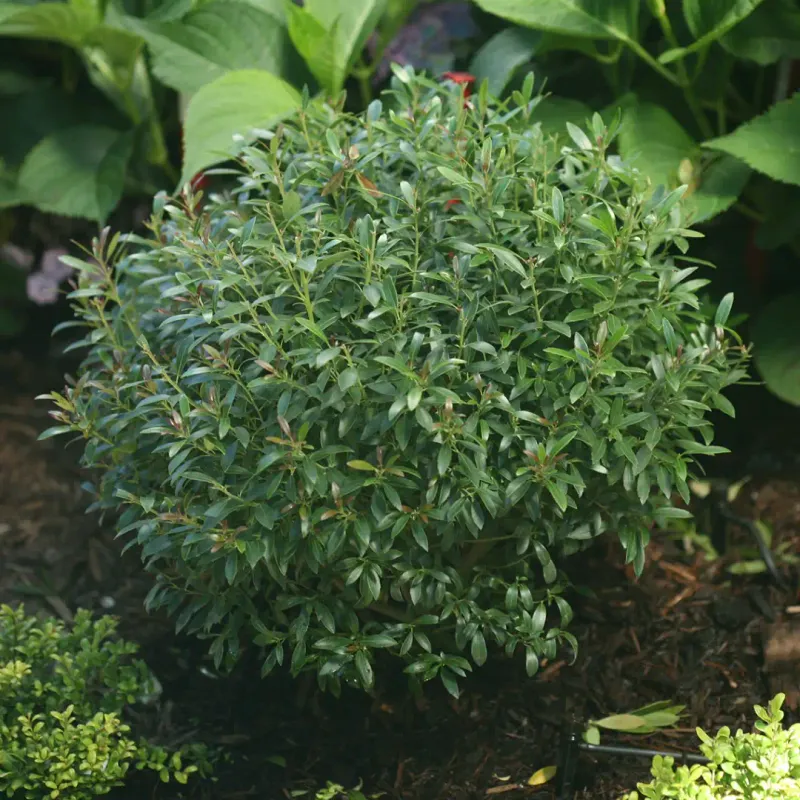
If you love that clean evergreen backbone but hate getting poked, Inkberry Holly deserves a long look. Ilex glabra keeps smooth, dark green, spineless leaves, so no prickly surprises when you weed around it.
The straight species can stretch 4 to 10 feet tall and 5 to 8 feet wide, which is a lot of shrub. For a foundation bed, reach for compact cultivars instead.
Shamrock settles in around 3 to 5 feet, and Gem Box stays a tidy 2 to 3 feet tall.
What makes this one genuinely easy is how little it complains. It takes full sun to partial shade, prefers moist acidic ground, but tolerates the heavy wet clay of the Piedmont and the sandy, peaty soils of the Coastal Plain.
And it earns its keep for wildlife. Small spring flowers pull in native bees, and female plants with a male nearby set black berries that carry songbirds through winter.
Its shallow, non-aggressive roots mean you can plant close to the house without worry.
One honest note. Older plants can go leggy at the bottom.
A good hard shearing in late winter brings the lush look right back.
3. Dwarf Yaupon Holly Provides Tough, Adaptable Form
Some shrubs sulk the first time a drought or a downpour tests them. Dwarf Yaupon Holly is not one of them.
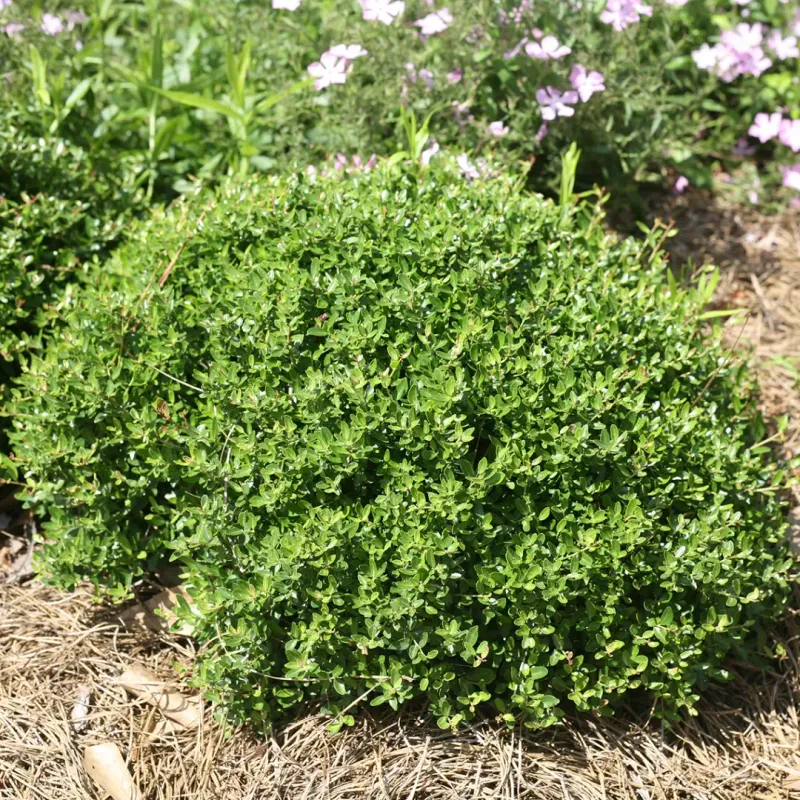
Ilex vomitoria ‘Nana’ comes from a species that thrives across our Coastal Plain, from Outer Banks dunes to soggy swamps.
The dwarf form gives you a rounded evergreen mound, usually 3 to 5 feet tall and 3 to 6 feet wide. It shrugs off soil type, growing happily in clay or sand, acidic or alkaline ground, in full sun or part shade.
Toughness is the whole story here. Once established, it handles long summer dry spells and then turns around and tolerates the standing water left by an afternoon thunderstorm.
That range makes it a low-fuss anchor whether you garden near Nags Head or in the Triad.
The dwarf rarely sets many berries, but its flowers still feed native bees, and it serves as a larval host for the Henry’s elfin butterfly. Shear it into a formal hedge or let it mound naturally, your call.
One caution worth knowing. Berries on the larger Yaupon are considered poisonous to people, though the dwarf forms seldom fruit at all.
4. Dwarf Fothergilla Adds Four Seasons Of Charm
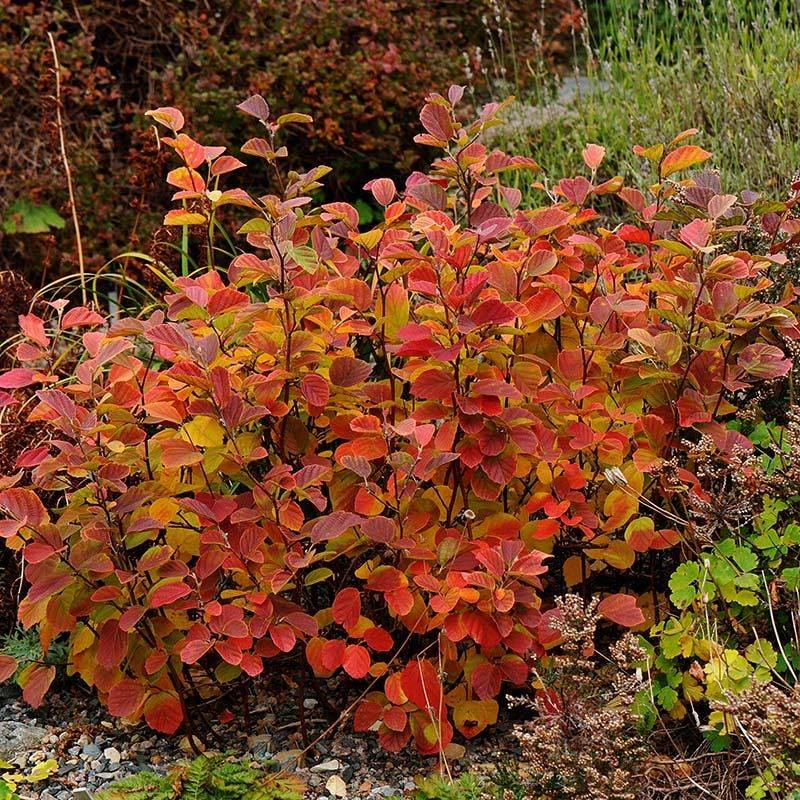
Willing to try a deciduous shrub that still holds a bed together? Dwarf Fothergilla pays you back three seasons running.
Fothergilla gardenii hails from the coastal plains of North Carolina and its Southeastern neighbors.
It grows slowly into a neat rounded mound, roughly 3 to 6 feet tall and 2 to 6 feet wide. That patient pace keeps it in scale near the house instead of swallowing the windows in a few years.
The show starts early. Before the leaves unfurl in spring, fragrant white bottlebrush blooms pop out and draw the first bees of the season.
Summer brings soft blue-green foliage with a clean texture.
Then fall steals the scene. The leaves ignite in yellows, oranges, and fiery reds, often all on one plant at once, and the color can hold for weeks while everything else fades.
It likes moist, slightly acidic, well-drained soil, yet it takes wet spells, drought once established, and even compacted ground. Give it a little afternoon shade to ease our brutal summer heat.
Deer tend to leave it alone, which is a quiet gift around here.
5. Virginia Sweetspire Delivers Fragrant Blooms And Brilliant Fall Color
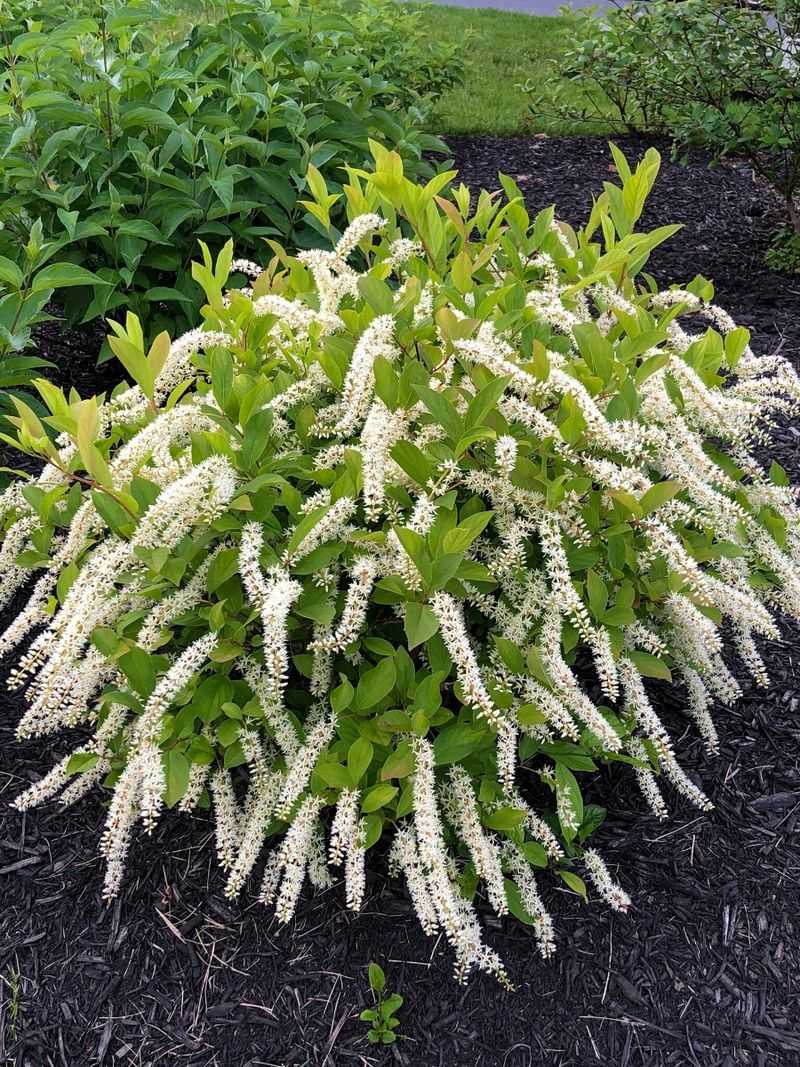
Picture a warm June evening on the porch, and a sweet scent drifts over from the foundation bed. That is Virginia Sweetspire earning its place.
Itea virginica grows wild across the whole state, from mountain woodlands to Coastal Plain stream banks.
It is deciduous to semi-evergreen, so in mild coastal zones 8a and 8b it may hang onto some leaves all winter. The species runs 3 to 5 feet tall and can spread up to 10 feet wide, but compact cultivars keep it in check.
Little Henry stays modest, and Fizzy Mizzy holds around 2 to 3 feet tall and wide.
Late spring into early summer, it unspools arching white flower spikes 3 to 6 inches long, absolutely humming with pollinators. That perfume is what pulls you outside after dinner.
Come autumn, the green turns to yellow, orange, crimson, and purple, often holding color into December. It takes full sun to part shade, prefers moist fertile ground, but tolerates a wide range of soils and moisture.
Deer pass it by, too. It is a dependable, giving shrub that genuinely makes the yard feel more alive.
6. Match The Shrub To Your Soil And Region
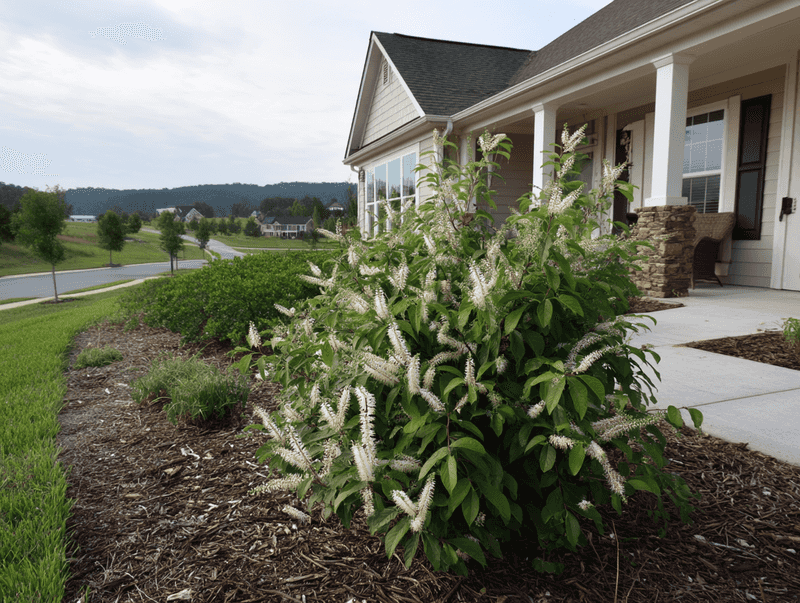
Buying the right plant is only half the win. Putting it where it actually wants to live is the other half, and it saves you years of babysitting.
Start by reading your ground. Piedmont red clay holds water and compacts hard, so lean on Dwarf Yaupon and Inkberry, which shrug that off.
Sandy Coastal Plain soil drains fast, which suits Yaupon and Fothergilla just fine.
Know your zone too. The mountains sit around 6a to 7a, the Piedmont at 7b to 8a, and the coast at 8a to 8b.
All four of these natives handle that spread, but a fall planting in the mountains needs to go in the ground by early October so roots settle before a cold snap.
Spacing matters more than people think. Set compact cultivars about 3 feet apart for a full look, and keep any shrub at least 2 to 3 feet off the foundation so air moves and the wall stays dry.
NC State Extension recommends a soil test before planting, and your county office runs them cheaply. That one step tells you whether your bed leans acidic or alkaline, so you plant with facts instead of hope.
7. Give New Natives A Steady First Year
Even a tough native needs a hand its first summer. Roots have not stretched out yet, and our July heat does not wait around for them to catch up.
Water deeply right after planting, then give roughly 1 inch a week through the first growing season, more during a dry stretch. Deep soaks beat quick daily sprinkles, because they coax roots to grow down instead of sitting shallow.
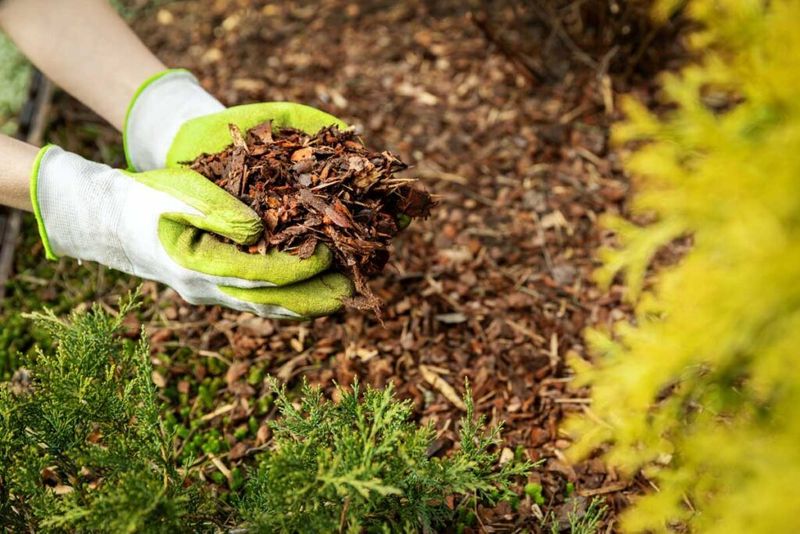
Lay 2 to 3 inches of mulch over the bed, but pull it back a couple inches from the stems. Mulch piled against the trunk traps moisture and invites rot, the opposite of what you want.
Hold off on heavy pruning the first year. Let the plant spend its energy building roots, then shape it the following late winter once it has proven it is settled.
By the second summer, these shrubs mostly fend for themselves. You get the clean structure Loropetalum promised, plus bees at the spring flowers, songbirds at the winter berries, and a foundation bed that finally looks like it belongs to the house.
That is the quiet payoff, and it feels good to walk past.