
This Overlooked Pennsylvania Wildflower Keeps Deer Away From Your Garden Borders All Season
Follow us on Google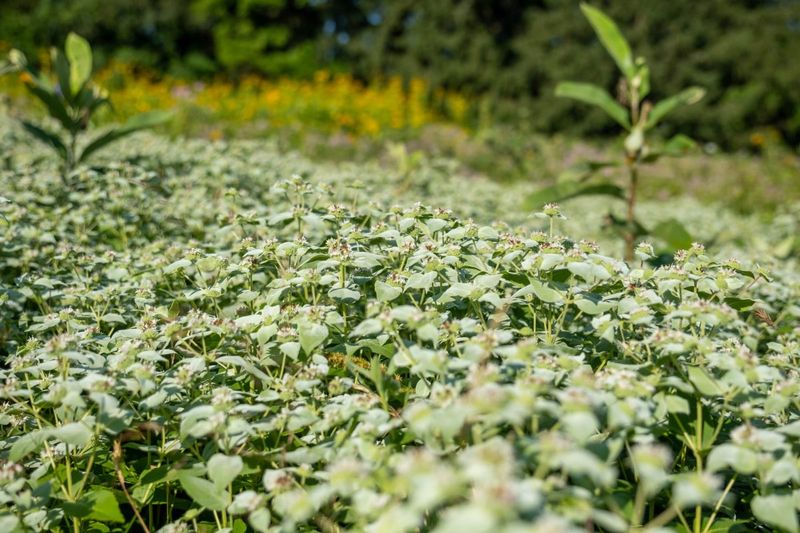
Most Pennsylvania gardeners spend good money on sprays and fences trying to keep deer out of their borders, and the deer still win.
There is a native wildflower that deer rarely touch, and it has been growing quietly in Pennsylvania meadows and roadsides for centuries.
Clustered mountain mint, Pycnanthemum muticum, is not a magic barrier, but it is genuinely one of the most deer-resistant plants you can put at a garden edge.
Give it the right spot and it will reward you with months of silvery blooms, a cloud of pollinators, and a border deer tend to walk right past.
Meet Pennsylvania’s Clustered Mountain Mint
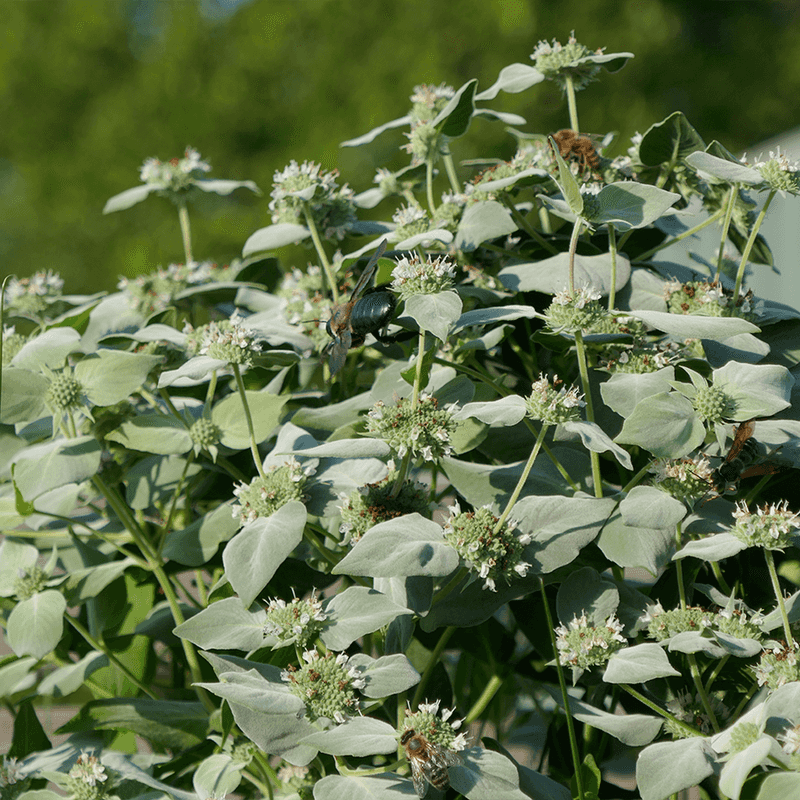
Walk through a sunny Pennsylvania meadow in July and you might catch a sharp, clean mint scent before you ever spot the plant.
That smell belongs to clustered mountain mint, also called short-toothed mountain mint, botanical name Pycnanthemum muticum.
It is a Pennsylvania-native perennial wildflower, and it is the specific plant worth seeking when you want a deer-resistant border edge.
The plant grows roughly 24 to 36 inches tall and spreads to about 2 to 3 feet wide.
Its stems are square, a reliable field marker for the mint family, and its toothed leaves release a strong minty fragrance when you brush against them.
Small white to pale-pink flowers sit above distinctive silvery-green bracts that make the whole top of the plant look frosted from midsummer onward.
Penn State Extension describes clustered mountain mint as a vigorous native that fits rain gardens, borders, and naturalized edges across the state.
One thing to sort out before you shop: “mountain mint” is a label applied to several related but different plants.
Pennsylvania is home to roughly 8 native Pycnanthemum species, and they vary in height, spread, moisture needs, and growth habit.
Narrowleaf mountain mint, Virginia mountain mint, and hoary mountain mint are all sold under similar names.
Ask for Pycnanthemum muticum specifically, or check the NC Extension plant profile for short-toothed mountain mint so you know exactly what the mature plant looks like before it ends up in your cart.
And here is the honest version of the headline: clustered mountain mint offers genuine deer resistance, meaning deer rarely browse it.
It does not create a deer-proof line they will not cross.
That distinction matters, and the rest of this article builds on it.
Deer Usually Skip Its Aromatic Foliage
Here is where it gets interesting.
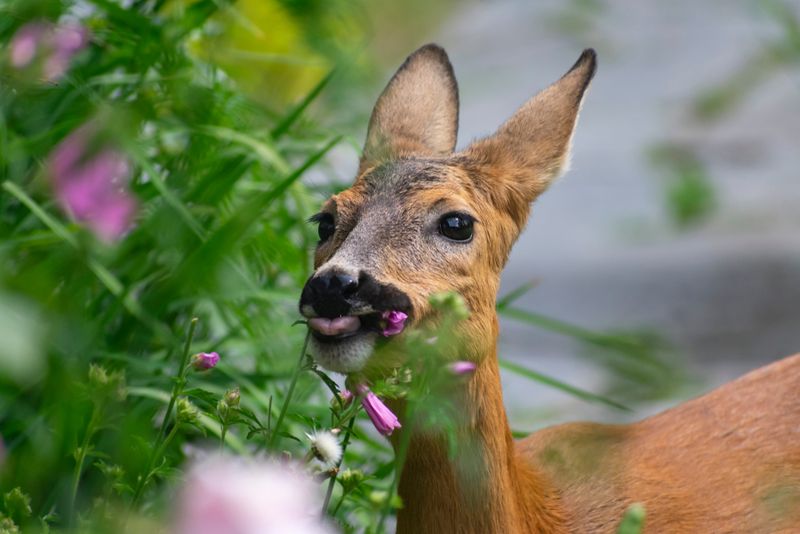
Penn State Extension specifically reports that deer and rabbits rarely browse clustered mountain mint because of its strong aroma.
That is a meaningful advantage in a state where white-tailed deer populations put real pressure on home gardens every growing season.
The likely reason deer skip it is straightforward.
The plant’s intense mint fragrance and sharp flavor make it far less appealing than the hostas, daylilies, and arborvitae growing nearby.
When a deer has easier, tastier options within reach, it tends to pass over the pungent stuff.
That browsing preference is what makes clustered mountain mint a useful border plant, not some chemical force field around your flower bed.
What the evidence does not show is that the scent alone drives deer away from a distance or stops them from walking through the area.
Rutgers Cooperative Extension, which rates landscape plants by deer resistance across a large region, consistently notes that no plant is deer-proof under every condition.
A deer that is well-fed and calm will usually skip mountain mint.
A deer that is hungry, stressed, or competing for limited winter forage may sample plants it normally ignores.
So the practical takeaway is this: clustered mountain mint is one of the better bets for reduced browsing along a border, and it is genuinely worth planting for that reason.
But it is a preference, not a promise.
Think of it as a plant deer tend to leave alone rather than one that keeps them out.
Use the Border as a Design Layer, Not a Shield

Placing clustered mountain mint at your garden edge is a smart design move, but picture it as one layer in a broader plan rather than a fence you can rely on.
The available evidence tells us deer tend to avoid browsing the plant itself.
It does not tell us that surrounding your roses or vegetable beds with a ring of mountain mint will protect what is growing inside.
Those are two different claims, and only the first one holds up.
Think about placement before you dig.
At 24 to 36 inches tall and 2 to 3 feet wide, clustered mountain mint is not a small edging plant.
Penn State Extension notes the plant’s vigorous mature size, which means it can easily crowd a narrow walkway or hide shorter plants if it ends up right at the front of the bed.
The outer or middle portion of a border usually works better than the very front edge.
Many gardeners in the central valleys and Susquehanna Valley pair it with other deer-resistant natives like black-eyed Susan, native asters, and Joe Pye weed to build a border that is broadly unappealing to browsers.
That is a reasonable approach, and it adds seasonal interest beyond what any single plant can provide.
Still, certain conditions can override even a well-designed deer-resistant border.
University of Minnesota Extension notes that deer may browse nearly any plant during periods of high nutritional stress, including drought, deep snow, and scarce natural forage.
High deer density, a hard freeze that wipes out other food sources, or a dry August in the Poconos can push deer to sample things they normally skip.
Mountain mint is one layer, and a useful one, but it works best alongside monitoring and, when pressure is serious, physical protection.
Give Its Rhizomes Space and Boundaries
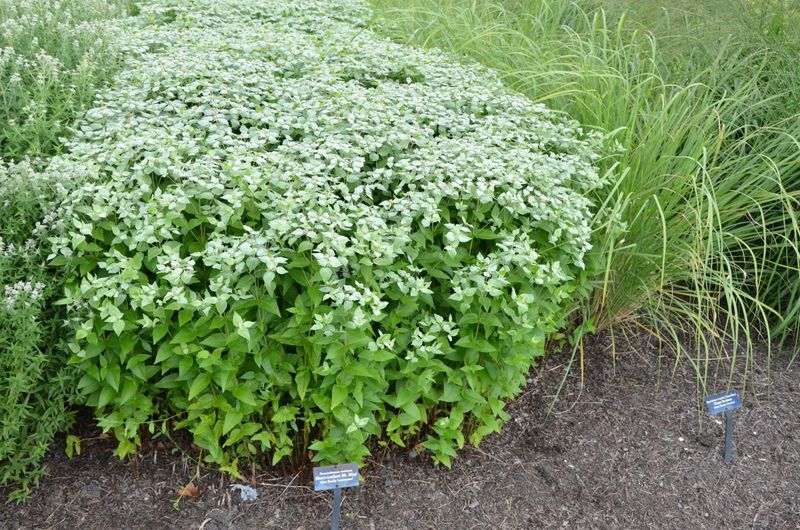
Clustered mountain mint spreads by shallow rhizomes, and it is genuinely good at it.
Give it a sunny spot with decent soil and it will expand into a full, rounded clump over a few seasons.
That vigor is part of what makes it useful as a border plant, but it also means you should pick your spot with some thought.
Penn State Extension describes mountain mints as vigorous spreaders that move through the garden by rhizome, while also noting they are not invasive in the same regulated sense as plants like Japanese knotweed or garlic mustard.
The practical concern is garden spread into areas where you do not want it, which is easy enough to manage.
A good planning range is approximately 2 to 3 feet between plants, based on the mature spread documented for the species.
The NC Extension plant profile for short-toothed mountain mint confirms that 2- to 3-foot spacing fits the plant’s documented width, though exact needs can vary by soil richness and sun exposure.
Treat that range as a starting point rather than a rule carved in stone.
If the clump creeps beyond its welcome, a spade pushed straight down around the perimeter in early spring cuts the rhizomes cleanly.
Do that once a year and the plant stays where you put it.
Alternatively, site it where naturalizing into a wider patch is fine, like a sunny slope, a meadow edge, or a strip between a fence and a mowed lawn.
You can confirm you have the right plant by crushing a leaf.
A sharp, clean mint scent means you are holding Pycnanthemum muticum.
The silvery bracts around the flower clusters are another giveaway, turning the top of the plant nearly white by midsummer in a way that most other native perennials do not.
Match the Plant to Light, Soil, and Local Conditions
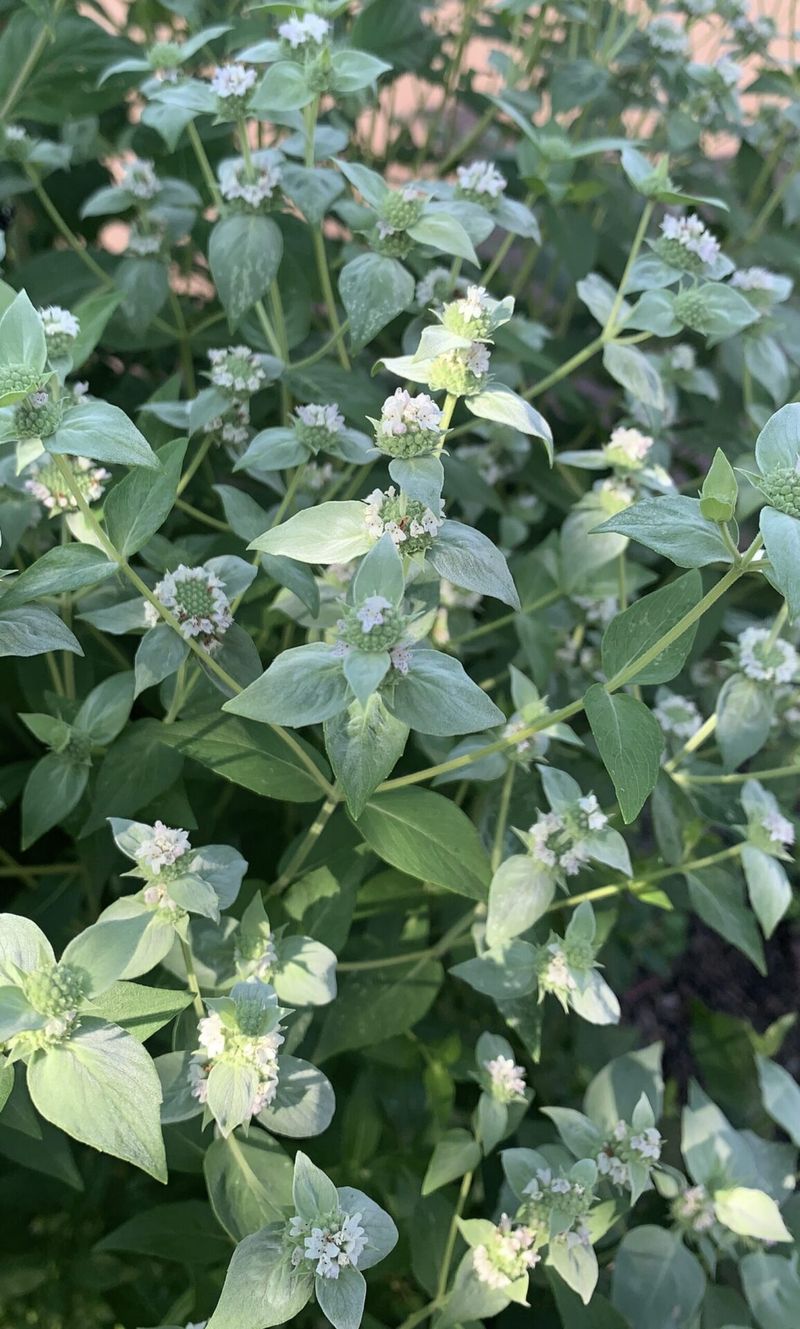
Full sun is where clustered mountain mint performs best.
Aim for at least 6 hours of direct sunlight per day, and the plant will reward you with the densest flowering and the most robust clump.
Partial shade can work, especially in warmer areas like southeastern Pennsylvania and the Delaware Valley, but expect fewer flowers and a slightly looser habit in lower light.
For soil, the NC Extension plant toolbox for Pycnanthemum describes a preference for well-drained soil that stays moderately moist.
Once established, the plant tolerates occasional dryness and can handle shallow soils reasonably well.
The real risk is poor drainage.
A spot that stays waterlogged after Pennsylvania’s heavy summer thunderstorms, or a heavy clay area in the southeastern part of the state that drains slowly all season, can stress or kill the plant over time.
New plantings need attention during their first growing season.
Water them during hot or dry spells, particularly in late July and August when the state can go weeks between meaningful rain even in wet years.
The NC Extension profile for short-toothed mountain mint supports drought tolerance after establishment, but that tolerance builds over time, not immediately after planting.
Pennsylvania’s growing conditions vary more than most gardeners expect.
The Allegheny Plateau and the northern tier can have shorter growing seasons and heavier late-season snowfall.
The Laurel Highlands and Poconos may see late spring frosts well into May, while the Lake Erie region deals with lake-effect snow that can arrive in November.
Meanwhile, the urban heat island around Philadelphia pushes conditions into USDA zone 7 territory in some neighborhoods.
Penn State Extension lists clustered mountain mint as broadly adaptable across the state, but match the plant to your actual site rather than assuming one set of conditions covers all of Pennsylvania.
Local elevation, slope aspect, and soil type all shift the picture in ways a general planting guide cannot capture.
Its Summer Bloom Feeds More Than the Border
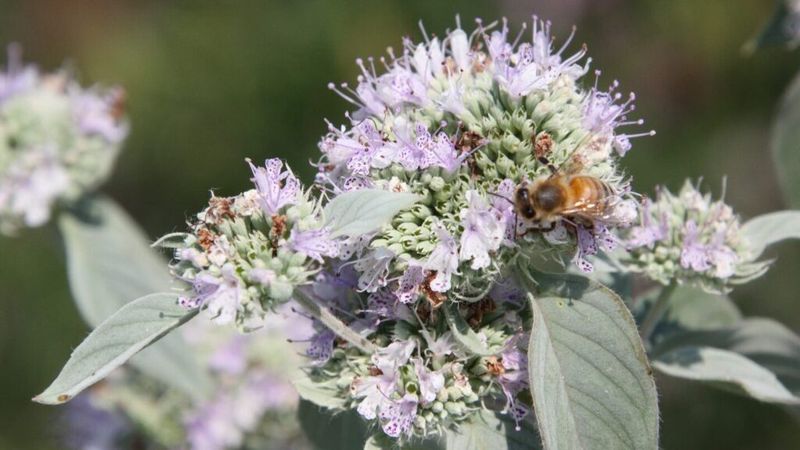
From about June through August, and sometimes into September in warmer parts of Pennsylvania, clustered mountain mint holds its pale flowers above those distinctive silvery bracts and becomes one of the busiest plants in any garden.
The bloom period is not year-round, and the plant does not offer a winter deterrent of any kind.
What it does offer during those 8 to 10 weeks is genuinely remarkable pollinator activity.
Penn State’s Bees, Bugs, and Blooms trial ran for three years and monitored 86 native species and cultivars.
Clustered mountain mint ranked first in total pollinator visits across the 2012, 2013, and 2014 seasons, with 4,286 recorded visits from bees, wasps, syrphid flies, and tachinid flies.
No other plant in the trial came close.
That figure speaks to pollinator value only, not deer deterrence, but it is a meaningful reason to include the plant even if deer were never part of your thinking.
The flowers also keep the border looking alive during a stretch of the summer when many perennials have already peaked and faded.
For gardeners in the central valleys or the Susquehanna Valley who want a mid-border plant with real seasonal staying power, that extended bloom window matters.
Penn State Extension notes the strong insect visitation that clustered mountain mint attracts throughout its bloom period.
If your household includes someone with a known sensitivity to bee or wasp stings, it is worth thinking about placement.
Siting a dense planting away from a narrow path, a children’s play area, or a regular outdoor dining spot is a reasonable personal preference, not a safety requirement the plant creates on its own.
Pair Mountain Mint With Reliable Deer Protection
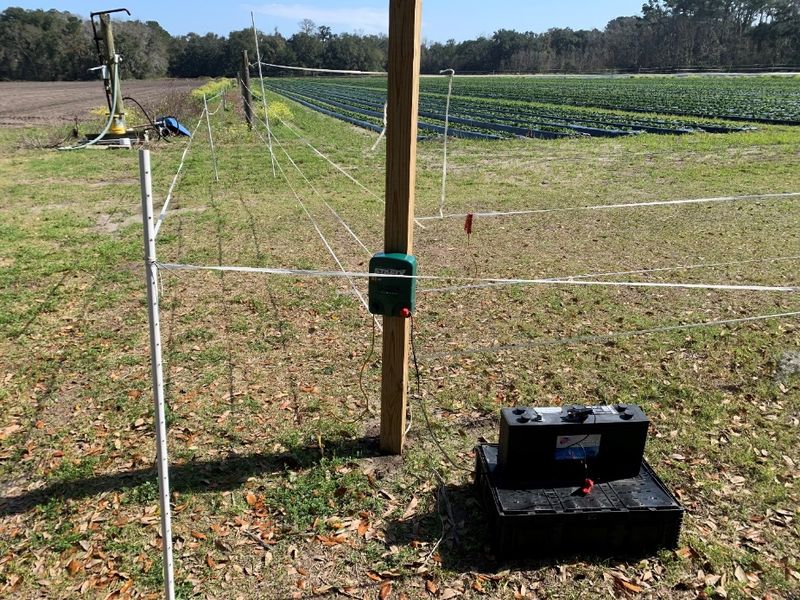
Winter is when deer resistance gets tested hardest.
When snow covers the ground in the Laurel Highlands or across the northern tier and natural forage runs short, deer push into yards they might ignore in October.
University of Minnesota Extension notes that deer may browse nearly any plant under high nutritional stress, and that stress peaks in winter.
Clustered mountain mint is dormant by then, but new plantings and adjacent perennials are more vulnerable than an established summer border suggests.
The practical answer is to monitor rather than assume.
Check new plantings after the first hard freezes of November and after any significant snowfall.
If you see browse damage on plants you expected deer to skip, that is a signal to add another layer of protection, not a reason to pull the mountain mint.
Repellents, motion-activated deterrents, and a deer-resistant planting palette all have a place in an integrated approach, but none of them replace a physical barrier when damage is repeated or severe.
Mountain mint is a useful part of that palette, not a substitute for the fence.
What clustered mountain mint actually offers is this: a durable, low-maintenance native clump that deer tend to leave alone through the growing season, that pollinators use heavily from June into early fall, and that earns its space in a Pennsylvania border without much fuss once it is established.
It is not a guaranteed barrier, and it will not solve a serious deer problem on its own.
But as one piece of a thoughtful yard, it is a plant that quietly does its job season after season, and that is a genuinely good reason to grow it.