
The Single Most Useful Native Perennial You Can Grow In A Pennsylvania Yard
Follow us on Google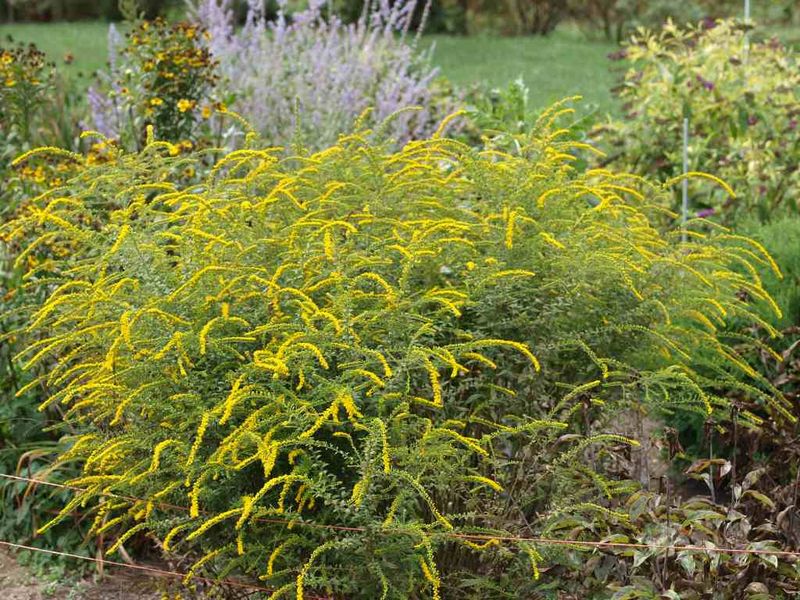
Walk outside on a September afternoon in Pennsylvania and something quiet is happening at the back of the garden.
While most of the yard has gone brown and still, one plant is covered in arching sprays of yellow flowers, and the bees have found it.
That plant is goldenrod, and the right variety can be one of the most genuinely useful native perennials you can add to a typical home yard.
This is not a miracle plant, but for late-season wildlife support and easy care, it earns its spot.
A Strong Pennsylvania Choice, Not A Universal Winner
No single native perennial wins every category for every Pennsylvania yard.
Soil, shade, moisture, and the insects you most want to support all shape what works best in your specific spot.
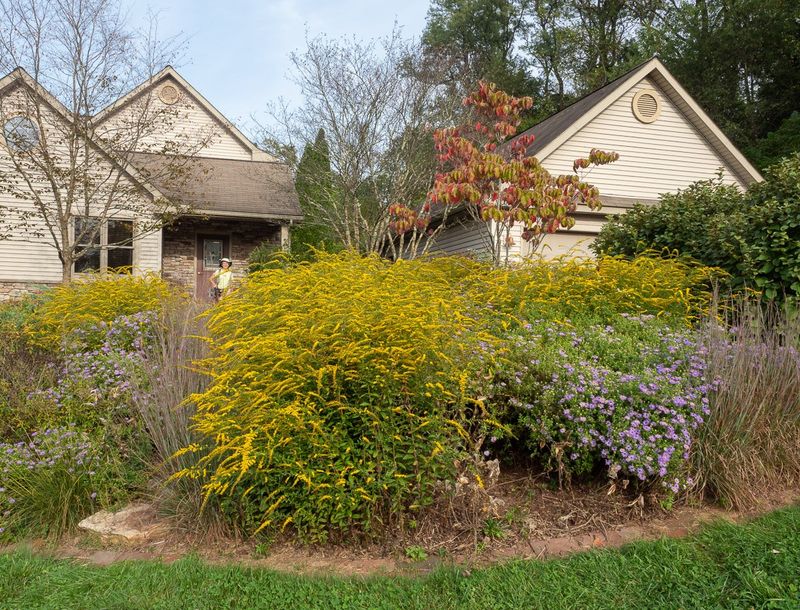
That said, for a typical home garden with decent sun and average soil, Solidago rugosa ‘Fireworks’, commonly called Fireworks goldenrod or rough goldenrod, is a strong editorial pick as a highly useful late-season native perennial.
It is native to the eastern United States, which means it has real relationships with the insects and birds that evolved alongside it.
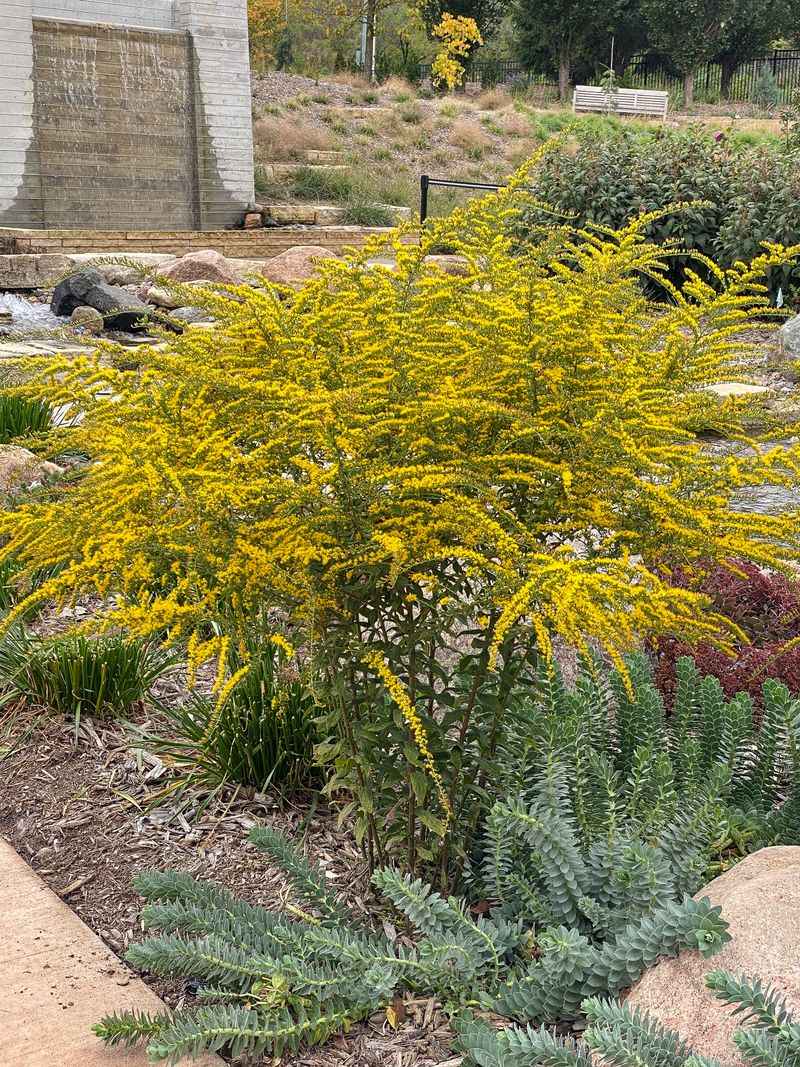
It blooms in late summer and into fall, throwing out arching stems lined with small yellow flowers that genuinely look like the name suggests.
When the rest of the neighborhood yard has gone quiet, this plant is still working.
Size-wise, expect roughly 2 to 3.5 feet tall and wide at maturity.
North Carolina State Extension places it closer to 2 to 3 feet, while the Missouri Botanical Garden lists 3 to 3.5 feet tall with a spread of 2.5 to 3 feet.
Growing conditions and local climate account for the difference, so plan for somewhere in that range.
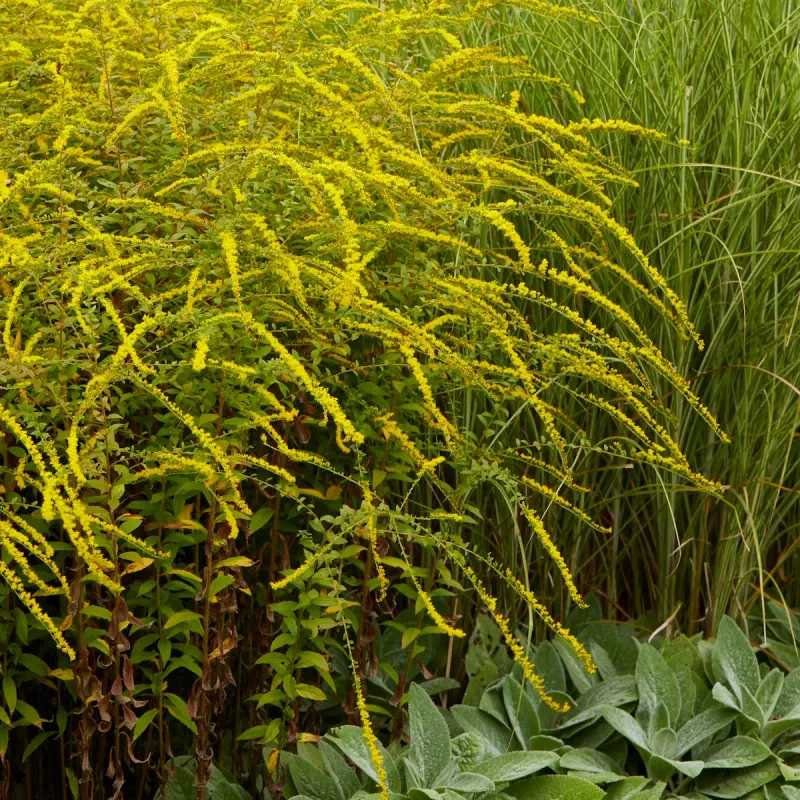
The cultivar ‘Fireworks’ was selected for its clumping, ornamental form.
Unlike some wild goldenrods that spread assertively through underground stems, this one stays in a manageable patch.
Penn State Extension recognizes goldenrods as valuable late-season plants for pollinators, and ‘Fireworks’ brings that wildlife value in a size that fits a real suburban bed.
The recommendation here is based on site fit, seasonal timing, and garden manageability, not a claim that it outranks every other Pennsylvania native perennial.
Its Late Flowers Matter When Other Yards Go Quiet
Here is where goldenrod earns its reputation.
By the time September arrives in most of Pennsylvania, the black-eyed Susans have finished, the coneflowers are mostly seed heads, and the garden has largely clocked out.
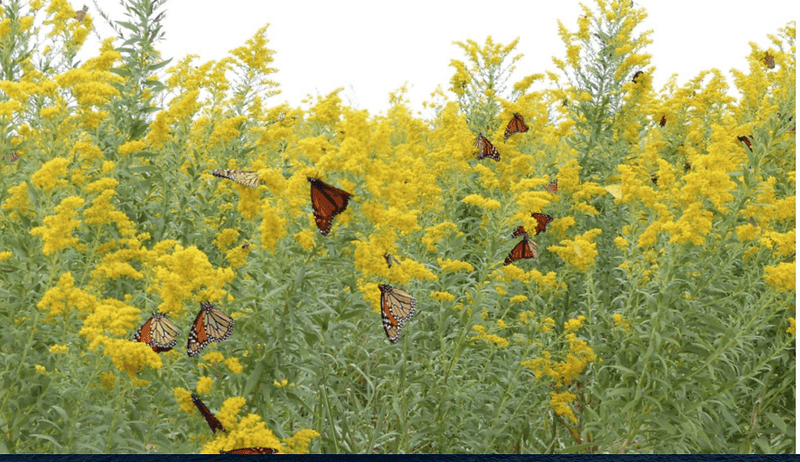
Bees, butterflies, and other insects are still flying, still feeding, still preparing for winter or migration, and they need nectar and pollen to do it.
Penn State Extension’s guide to native perennials for fall lists several Pennsylvania-compatible goldenrod species with bloom windows running from July through October, depending on the species.
Showy goldenrod, Solidago speciosa, can flower from August through November according to USDA NRCS data. ‘Fireworks’ itself blooms from September into October in most Pennsylvania locations.
That window is genuinely valuable because so few herbaceous perennials are still open for business at that point in the season.
The flowers supply nectar and pollen to visiting insects.
But goldenrod does more than feed adult pollinators.
Bucknell University’s goldenrod biology research documents that goldenrod foliage supports a wide range of insect herbivores, and the stems can provide overwintering and nesting structure.
The plant is genuinely woven into the insect food web, not just a nectar stop.
A 2020 study in Nature Communications on keystone plant genera found that a relatively small number of native plant groups support disproportionately large numbers of butterfly and moth species.
Goldenrod belongs to that kind of ecologically connected group.
That does not mean one goldenrod plant outperforms a diverse native garden, and it does not mean goldenrod is the single best plant for every insect.
It means the genus carries real ecological weight, especially late in the season when the competition for that role is thin.
Choose The Goldenrod That Fits Your Space
Goldenrod is not one plant.
Pennsylvania has many native Solidago species, and they behave very differently from one another.
Buying the wrong one for a small bed is the most common mistake, and it leads to frustrated gardeners who spend years fighting a plant that was simply doing what it was bred to do.
Penn State Extension’s native plant spotlight guidance notes that some goldenrods spread more aggressively and are better suited to meadows or larger pollinator gardens.
Canada goldenrod, Solidago canadensis, is a good example.
It is native to Pennsylvania and genuinely valuable for wildlife, but the USDA NRCS Canada goldenrod plant guide describes its growth as aggressive, spreading through rhizomes in ways that can be difficult to control on disturbed sites.
A 4-foot-wide suburban bed is not the right home for it.
Other species offer more flexibility.
Zigzag goldenrod, Solidago flexicaulis, handles dry to moist soil and tolerates more shade than most, which makes it useful under a light tree canopy.
Penn State’s sun-to-part-sun plant guide lists showy goldenrod, Solidago speciosa, as a good fit for sun to partial sun with moist to dry soil.
Both are solid choices when they match the space.
For most small to medium suburban yards, ‘Fireworks’ is the safer starting point.
North Carolina State Extension’s profile for ‘Fireworks’ describes its clumping form as distinctly more garden-friendly than spreading wild types.
Space plants 24 to 36 inches apart on center, based on the expected mature width.
The USDA NRCS Pollinator Garden Design Guide uses a tighter 12 to 18 inch spacing for showy goldenrod in dense pollinator habitat designs, but that approach is aimed at filling a larger managed planting quickly, not a typical home bed.
Read the botanical name and cultivar on the nursery tag before you buy, match the mature size to your available space, and you will avoid most of the common goldenrod regrets.
Match The Plant To Pennsylvania’s Local Conditions

Pennsylvania is not one climate.
A yard in Ridgway, up in Elk County near the Allegheny Plateau, can see its first fall frost as early as September 13.
A yard in Philadelphia might not hit frost until October 28, according to Penn State Extension’s frost date guidance.
The Poconos, the northern tier, and the higher elevations of the Laurel Highlands run colder and shorter than the Delaware Valley or the areas around Pittsburgh.
These are not abstract facts.
They affect when you plant, how long your goldenrod has to establish before winter, and how hard your soil freezes.
North Carolina State Extension and the Missouri Botanical Garden both confirm that ‘Fireworks’ needs at least 6 hours of direct sunlight.
It prefers moist, well-drained soil but tolerates clay, handles occasional dryness, and can manage brief wet periods.
The one condition it does not tolerate well is prolonged standing water, so avoid low spots where drainage is poor and water sits for days after rain.
Soil varies widely across the state.
Northern Pennsylvania often has rocky, glacial soils.
Many central and western areas sit on shale-based or clay-heavy ground.
Some valley soils are fertile limestone-based, while parts of southeastern Pennsylvania carry heavy clay.
The Penn State Climate Office documents how much Pennsylvania’s temperature and moisture patterns shift by region.
Rather than relying on a general label for your area, check your own planting site.
Dig down 8 to 10 inches and look at the texture.
Does water drain within a few hours of rain, or does it linger?
That answer matters more than any regional generalization.
Match ‘Fireworks’ to a spot with adequate sun and reasonable drainage, and it will handle the rest of Pennsylvania’s seasonal variation without much complaint.
The Penn State season extension guidance reinforces that local microclimates within Pennsylvania can differ significantly even within the same county, so trust your own site observations over broad statewide rules.
Give New Plants A Thorough Start
Spring, early summer, and fall can all work for planting ‘Fireworks’ in Pennsylvania.
Penn State Extension’s guide to incorporating native perennials identifies all three windows as suitable establishment periods.
Fall planting has a practical edge in many parts of the state: the roots have several months to settle and spread before the plant needs to push up new growth the following spring.
In northern Pennsylvania or at higher elevations where fall comes early and hard, aim to get the plant in the ground at least 6 weeks before your expected first frost so the roots have time to anchor.
When you plant, set the root ball so the top of it sits level with the surrounding soil, not buried and not mounded above grade.
Space ‘Fireworks’ 24 to 36 inches from neighboring plants, giving it room to fill out over 2 to 3 seasons without immediately crowding its neighbors.
North Carolina State Extension confirms this mature spread, and the Missouri Botanical Garden notes similar sizing under good conditions.
Water thoroughly right after planting.
Then check the soil every few days during the first several weeks.
If the top 2 to 3 inches feel dry, water deeply rather than sprinkling lightly.
A slow, deep soak encourages roots to reach down rather than staying near the surface.
There is no single universal watering schedule that fits every Pennsylvania yard, because summer rainfall here is genuinely uneven.
A week with two heavy thunderstorms in the Susquehanna Valley is different from a dry stretch in the central highlands.
Check the actual soil at your planting site and water when it needs it, not on a fixed calendar.
Once ‘Fireworks’ is established after its first full growing season, it handles typical Pennsylvania dry spells with much less help from you.
Leave Winter Stems, Then Reset In Spring
After the flowers fade and the first hard frosts arrive, resist the urge to cut everything to the ground.
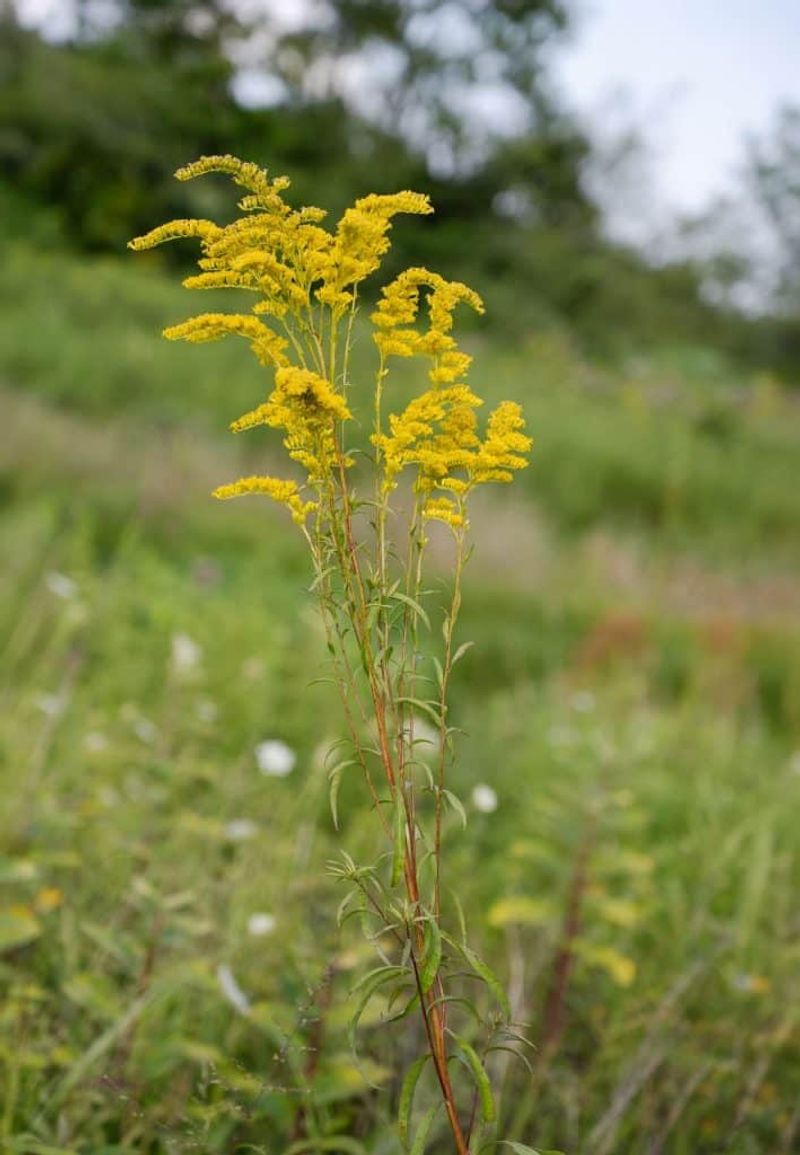
Leaving the dead stems of ‘Fireworks’ standing through winter is actually one of the more useful things you can do for native insects.
North Carolina State Extension recommends cutting dead stems back to 12 to 24 inches rather than removing them entirely, because hollow stems can provide nesting sites for stem-nesting bees that overwinter in place.
Those bees are the same ones that will be visiting your garden next spring and summer.
The standing stems also add structure to the winter yard.
Many gardeners in the Delaware Valley and around the Susquehanna Valley have found that a few clumps of upright native stems, even bare ones, look more intentional than a flat-cut bed through January and February.
The plant is doing quiet work even when it looks like it has quit.
When early spring arrives, before new growth pushes up from the base, cut the remaining stems down near the ground.
That reset clears the way for fresh growth and keeps the clump tidy.
The Missouri Botanical Garden notes that ‘Fireworks’ is low maintenance, but low maintenance does not mean no maintenance.
Plan to divide the clump every 3 to 4 years to keep it vigorous and prevent the center from dying out, which is a common pattern in clump-forming perennials.
Also keep an eye on spread.
Even ‘Fireworks’, which is more restrained than wild goldenrods, can gradually expand.
Penn State Extension cautions that some goldenrods can crowd out other native plants if left unchecked.
A dense single-species stand reduces the bloom-season diversity that makes a native garden genuinely useful.
Divide, manage, and keep space for the asters and other natives that share the season.
Build A More Complete Habitat Around It
One clump of goldenrod is a good start.
A yard with goldenrod, native asters, and milkweed is a genuinely different kind of place, one that supports insects through a longer stretch of the season and across more of their life stages.
Penn State Extension specifically recommends pairing goldenrod with fall asters to extend late-season floral resources and add contrasting color.
New England aster, Symphyotrichum novae-angliae, blooms in purple and pink alongside the yellow of goldenrod.
Aromatic aster, Symphyotrichum oblongifolium, is smaller and tougher, a good fit for drier spots.
Blue wood aster, Symphyotrichum cordifolium, handles more shade than most fall bloomers.
The Penn State Master Gardener demonstration gardens in Bucks County use combinations like these to show how native plants work together in a real residential setting.
Monarchs are worth a specific note.
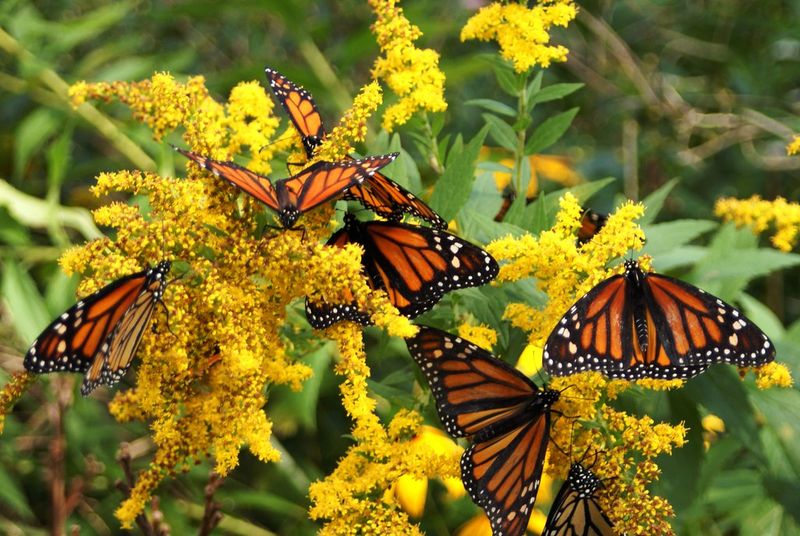
Goldenrod supplies adult nectar during fall migration, and many Pennsylvania gardeners see monarchs working the flowers in September.
But as the Monarch Joint Venture explains, milkweeds are the only plants monarch caterpillars can eat.
Goldenrod feeds the adult butterfly.
It does not replace milkweed for reproduction.
If supporting monarch populations is a goal, plant appropriate native milkweed species alongside the goldenrod, not instead of it.
A broader habitat plan also means thinking about bloom succession from spring through fall, nesting structure beyond the goldenrod stems, and pesticide restraint.
The 2020 Nature Communications keystone plant study makes clear that plant diversity, not any single species, drives the strongest insect communities.
Goldenrod earns its place in that picture, but it works best as part of a considered planting rather than a solo act.
Keep plantings appropriately sized.
A yard full of one spreading goldenrod is not a habitat, it is a monoculture with yellow flowers.
Add bee balm, Monarda fistulosa, for midsummer.
Add Joe Pye weed, Eutrochium purpureum, for late summer height.
Let goldenrod anchor the fall, and let the other plants carry the rest of the season.
One well-chosen clump of ‘Fireworks’ can genuinely strengthen a late-season yard, and the plants around it make the whole garden more worth visiting.