
This Underrated Pennsylvania Native Lights Up The Garden With August Color Almost Nobody Grows
Follow us on Google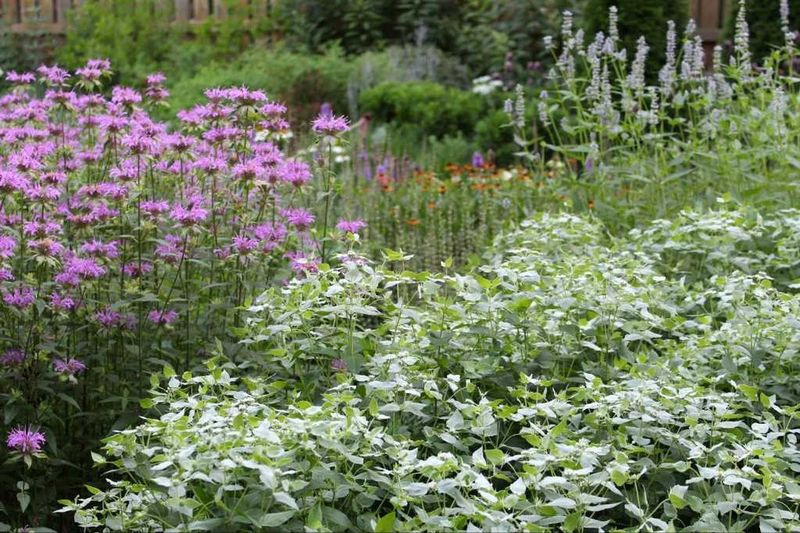
Most Pennsylvania gardens hit a wall in late July.
The spring bloomers are long gone, the coneflowers are fading, and suddenly the back border looks tired before summer is even over.
Clustered mountain mint, also called short-toothed mountain mint (Pycnanthemum muticum), is a native perennial that quietly keeps things interesting straight through August and into September, drawing in more pollinators than almost anything else you can plant.
It’s genuinely underused in home gardens, and once you understand why it works so well, it’s hard to leave it off your list.
The Plant Behind the Corrected Claim
Let’s set the record straight before anything else.
Clustered mountain mint, botanically known as Pycnanthemum muticum, is genuinely overlooked in home landscapes, but the idea that almost nobody grows it overstates the case.
Nurseries that specialize in native plants carry it regularly, and gardeners who have found it tend to keep it.
Calling it underused is accurate and fair, calling it nearly extinct from gardens is not.
What makes it worth talking about is the combination it brings to a late-summer bed.
The plant offers months of visual interest, strongly aromatic foliage, and a track record with pollinators that very few natives can match.
Penn State Extension highlights it specifically as a pollinator powerhouse among Pennsylvania natives, which is not a label the university hands out casually.
One thing that trips people up is the name.
Mountain mint sounds like it belongs in the herb garden next to your spearmint or peppermint, but Pycnanthemum muticum is a different plant entirely.
Culinary and common garden mints belong to the genus Mentha, and several Mentha species or cultivars are well known for spreading aggressively through beds.
Clustered mountain mint is in its own genus and behaves differently, though it does have its own spreading habits worth knowing about.
In terms of size, Missouri Botanical Garden describes it as a clump-forming herbaceous perennial that typically reaches about 1 to 3 feet tall and about as wide.
That is a comfortable mid-border scale, sturdy enough to hold its own but not so large it takes over a small yard on its own terms.
Silver Bracts Supply the August Color
Walk up to a blooming clump of clustered mountain mint in August and the first thing you notice is not the flowers.
It is the silver.
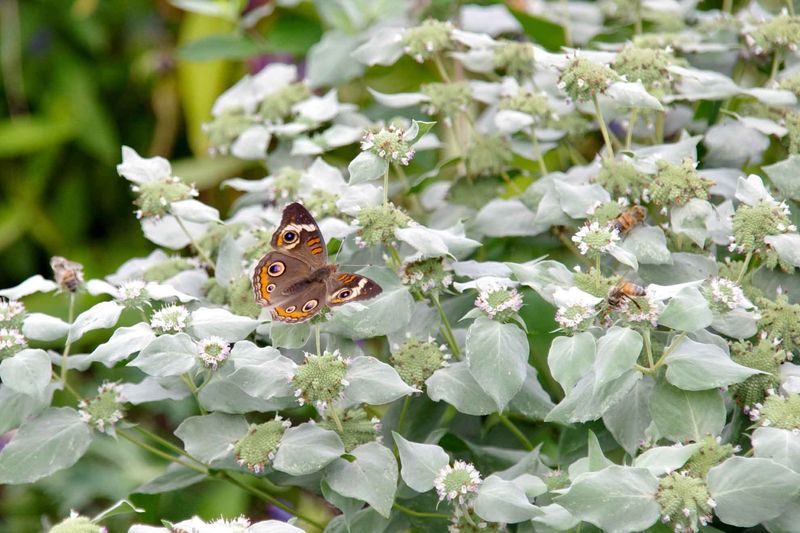
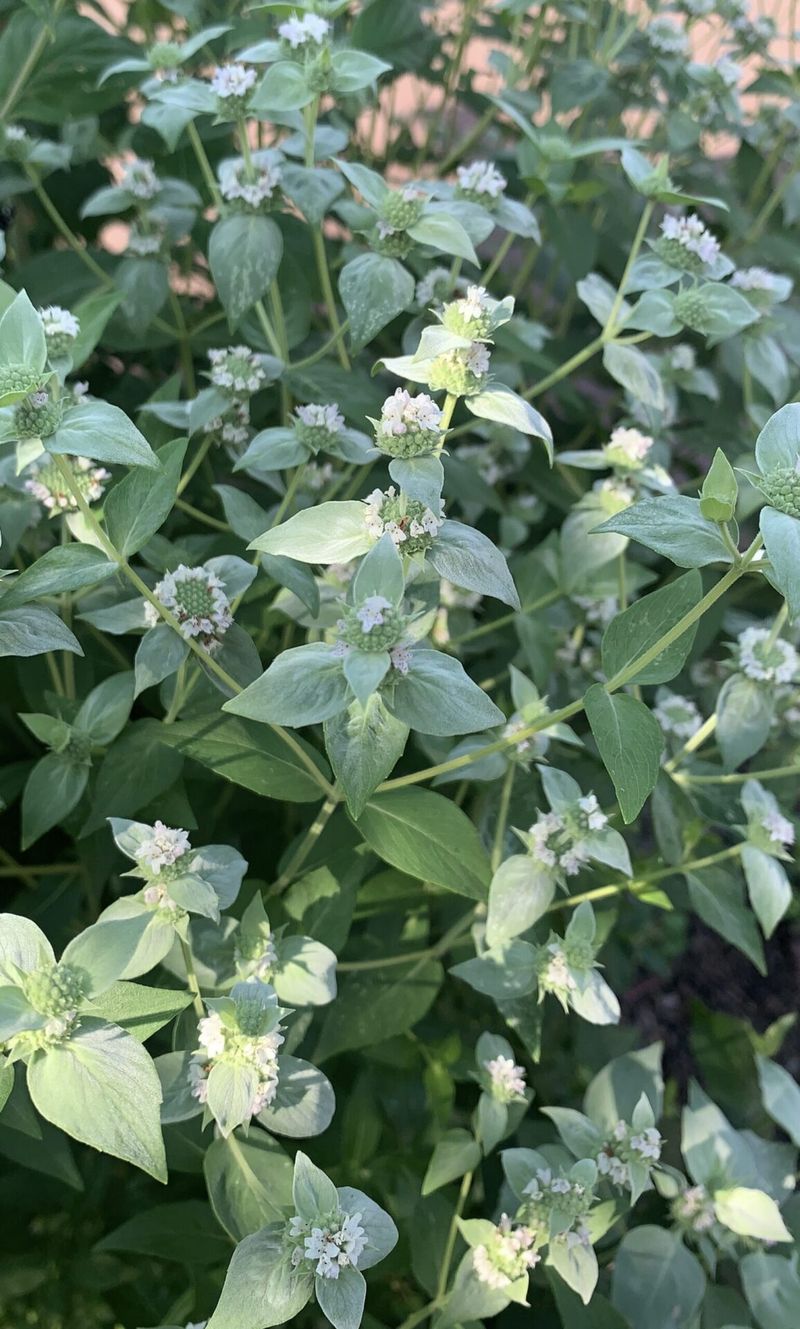
The upper leaves and bracts surrounding each flower cluster turn a striking silvery white as the plant matures, and that reflected light is what actually carries the display from across a garden bed.
The individual flowers are small, roughly half an inch, and white to pinkish or pale lavender.
They are not the bold petals of a coneflower or a hardy hibiscus, and comparing the two would set the wrong expectation.
What the plant does instead is create a soft, luminous effect through sheer density.
Each stem tip holds a tight cluster of those small flowers surrounded by those silvery bracts, and a mature clump produces dozens of stems at once.
The overall impression is of a plant that glows a little, especially in morning or late-afternoon light.
Timing follows a typical arc of July through September, with August often falling squarely in the middle of the display.
Penn State’s pollinator trial bloom chart shows the plant at or near peak bloom during July and carrying well through August.
The Penn State Arboretum reports flowering continuing into September under favorable conditions.
That said, exact timing is not uniform across Pennsylvania.
A plant in the Delaware Valley may peak earlier than the same species growing at 2,000 feet in the Laurel Highlands.
Elevation, soil moisture, summer heat, and local weather all shift the schedule.
Use July through September as a reliable general window, not a statewide guarantee, and plan your planting combinations with that range in mind.
Penn State Found Exceptional Pollinator Activity
Here is where the plant’s reputation really earns its weight.
Penn State researchers spent four growing seasons, from 2012 through 2015, comparing 86 native plant species and cultivars specifically for their ability to attract pollinators.
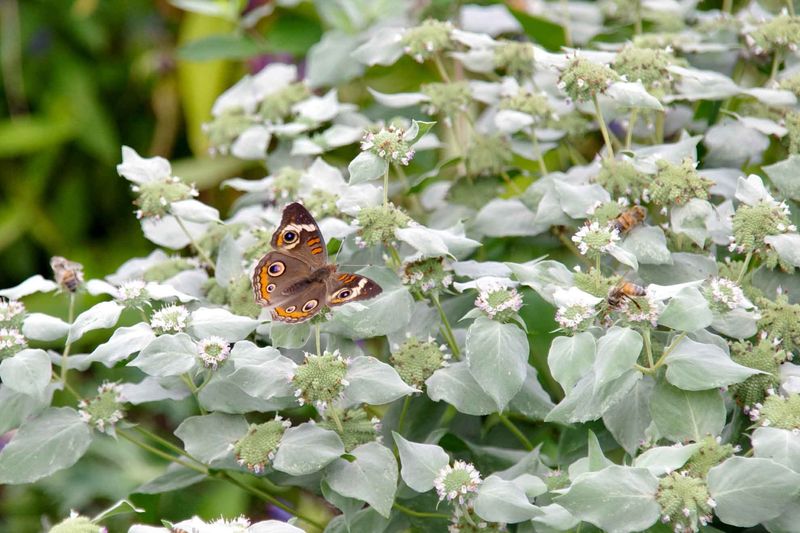
Out of all 86, clustered mountain mint received the most pollinator visits and attracted the greatest diversity of pollinator species in that trial.
That is not a minor distinction in a field that crowded.
The visitors documented in the study included bees, butterflies, wasps, syrphid flies, and tachinid flies.
That last group is worth a mention: tachinid flies are parasitic insects that prey on caterpillars of pest species, so having them visit your yard carries a quiet secondary benefit for the garden as a whole.
Penn State Extension’s summary of the trial makes the pollinator case clearly, and the downloadable Penn State fact sheet provides additional detail on the study’s methodology and results.
A strong result under controlled trial conditions does not automatically translate to identical activity in every Pennsylvania backyard.
Local habitat matters.
If the surrounding landscape has been heavily treated with pesticides, if there are few other flowering plants nearby, or if the local pollinator population is already stressed, a single planting will not reverse those pressures on its own.
Weather, observation effort, and the mix of other plants in a given yard all play a role in what actually shows up.
What the trial does tell you, practically, is that this plant has a genuinely documented track record of pulling in a wide range of beneficial insects during the late-summer window when many other flowers have already closed up.
That makes a late-summer bed active as well as attractive, which is a combination worth planning for.
Choose Sun and Well-Drained Soil
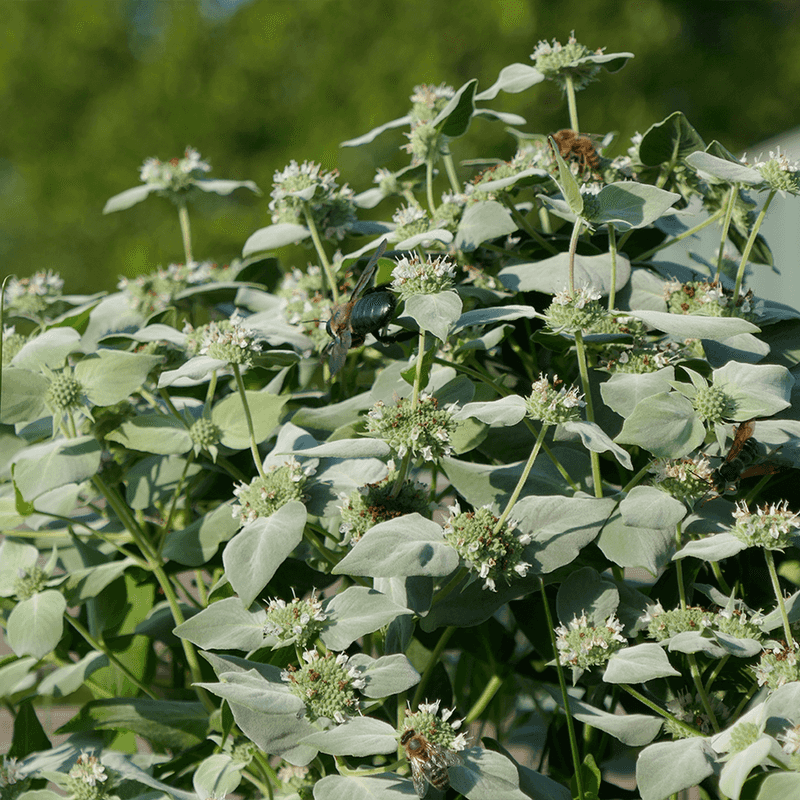
Placement is where a lot of gardeners either set this plant up for success or quietly doom it.
Full sun produces the strongest flowering and the most vivid silvery bracts.
The plant tolerates part shade, but in lower light the stems tend to stretch a bit and the silver effect becomes less pronounced.
If you have a choice between a spot that gets 6 or more hours of direct sun and one that gets 4, go with the sunnier location.
Soil should be fertile and moist to medium-moisture, but well-drained.
Missouri Botanical Garden notes that clustered mountain mint is less drought-tolerant than some of its Pycnanthemum relatives, so ground that dries out completely and stays that way through Pennsylvania’s midsummer dry stretches can stress the plant.
At the same time, persistently saturated soil is a problem.
A rain garden margin, where water drains through after a storm rather than pooling for days, can work well.
The bottom of a wet basin does not.
Good placement options for Pennsylvania yards include a sunny border with some room to expand, a meadow edge, a south or east-facing slope, a cottage-style pollinator bed, or any open spot where a plant reaching 1 to 3 feet in height and spread can settle in without immediately crowding smaller neighbors.
Penn State Extension specifically suggests placing mountain mints where they can naturalize into a mass or drift, which tells you something useful about how much space to give them from the start.
USDA hardiness Zones 4 through 8 cover this plant’s documented range, which includes all of Pennsylvania.
But zone ratings describe cold hardiness, not soil type, summer heat, or rainfall patterns.
A plant in Zone 5b in the northern tier and one in Zone 7a near Philadelphia are both technically within range, yet they will experience very different growing seasons.
Plan for Rhizomes Before They Travel
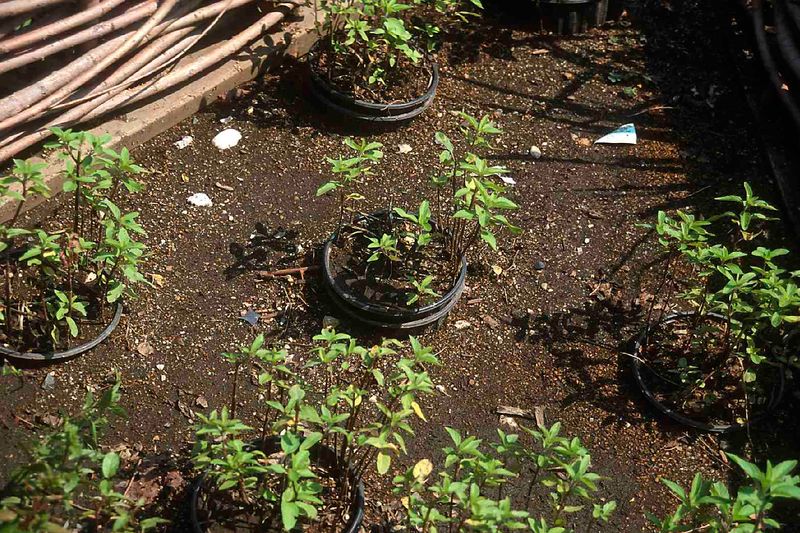
The most common surprise for first-time mountain mint growers is not the flowers or the pollinators.
It is the spread.
Clustered mountain mint moves by rhizomes, and under good conditions, a single plant can gradually push outward into a wider and wider clump over several seasons.
That behavior is actually an asset in the right setting and a genuine management task in the wrong one.
Penn State Extension advises placing mountain mints where they can naturalize into a mass or drift, and flags that some gardeners consider them weedy when sited in tight spaces.
Missouri Botanical Garden describes it as a vigorous grower that may spread in optimum conditions and recommends using a spade to prune the roots back in spring if you want to keep the clump contained.
The University of Maryland Extension goes further, calling it very aggressive on sunny slopes, which suggests that a hot, open, south-facing hillside in southeastern Pennsylvania could produce faster spread than a shadier, more constrained spot.
The practical takeaway is to think about the neighbors before you plant.
A spacious pollinator bed, a meadow-style planting, or an open area where a spreading native colony is welcome makes an ideal home.
A narrow foundation strip between a wall and a walkway, or a small raised bed already packed with compact perennials, is a harder situation to manage without regular intervention.
Calling this plant maintenance-free would not be accurate.
Calling it manageable is fair.
Check the edges each spring, run a flat spade around the perimeter of any clump that is moving toward plants you want to protect, and the situation stays well within a normal gardener’s control.
Match the Native Plant to the Region
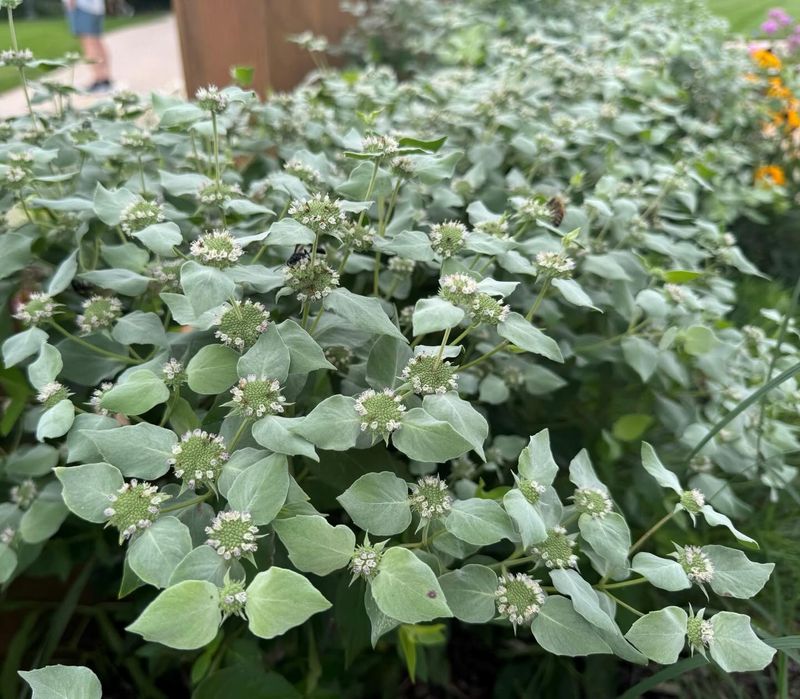
Pennsylvania falls within the natural range of Pycnanthemum muticum, and Plants of the World Online at Kew confirms the species’ presence in the state.
But native to Pennsylvania and equally at home in every Pennsylvania county are two different things.
The Mid-Atlantic Tried and True plant profile notes that clustered mountain mint is scattered in southeastern Pennsylvania and actually more common in neighboring Maryland and Virginia.
That detail matters when you are deciding whether to source it locally or order from a distant nursery.
For gardeners in the Delaware Valley or the lower Susquehanna Valley, finding this plant at a regional native-plant nursery is a reasonable expectation.
Pennsylvania’s native flora records list it among eight mountain-mint species native to the state, so it is part of the regional flora, just not uniformly distributed.
Gardeners in western Pennsylvania, on the Allegheny Plateau, in the northern tier, or at higher elevations in the Poconos or Laurel Highlands should take an extra step before planting.
Check local native-plant lists from a nearby botanical garden, native plant society chapter, or Penn State Extension office to confirm that this species is a reasonable fit for your specific site.
When you do buy it, look for plants grown from Pennsylvania or regional seed sources rather than stock from a southern or midwestern growing operation.
A plant adapted to a longer, warmer growing season may not time its bloom the same way in a site near Erie or at 2,400 feet in Centre County.
Bloom timing also shifts with region.
The July-through-September window is a reasonable general estimate, but a plant in a warm, sheltered Philadelphia-area garden may reach peak silver earlier than one in a cooler, higher-elevation location where the growing season starts later and ends sooner.
Build those regional variables into your expectations from the beginning.
Keep Established Plants on a Light-Care Routine
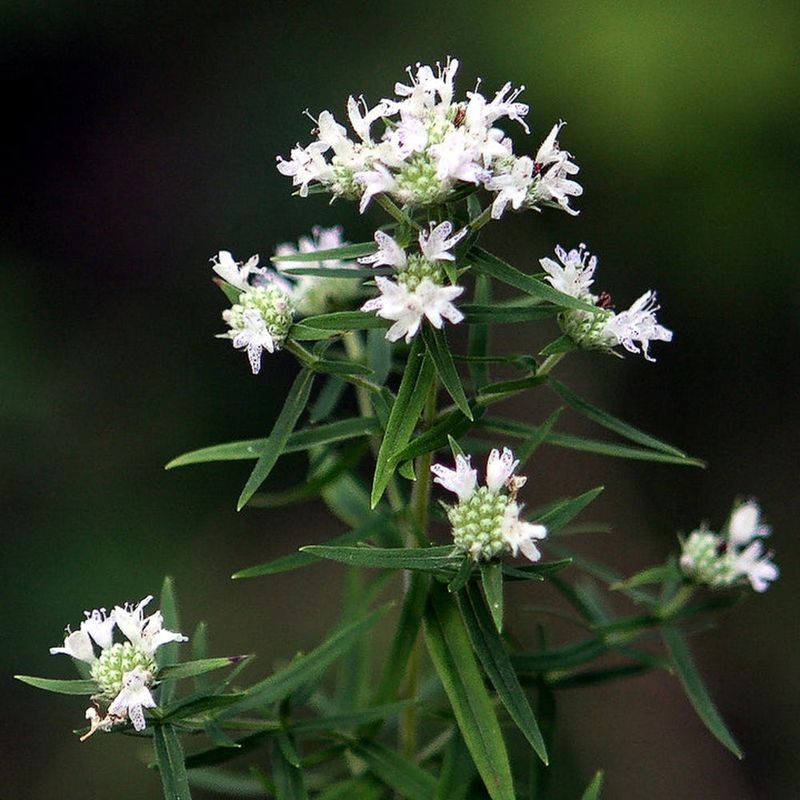
New plantings need attention while roots are getting established, and that is true of almost any perennial you put in the ground.
Water regularly during the first growing season, especially during Pennsylvania’s midsummer dry stretches when several weeks can pass between meaningful rainfall.
How often depends on your soil, your drainage, and whether you mulched around the base, so there is no single schedule that applies across the state.
The goal is to keep the soil consistently moist but not waterlogged until the plant shows signs of strong new growth.
Once clustered mountain mint is established, the care demands drop considerably.
Penn State Extension describes it as requiring little fuss after it settles in.
It tolerates some drought, though Missouri Botanical Garden notes it handles dry conditions less easily than some other Pycnanthemum species, so a site that gets bone-dry and stays that way for weeks at a time is a harder ask than a typical garden border with reasonable moisture retention.
On the pest and disease front, Missouri Botanical Garden lists no serious insect or disease problems for this plant, though rust may occasionally appear on the foliage.
That is a more honest assessment than promising complete immunity, and most gardeners will find the plant largely trouble-free in a well-sited location.
When fall arrives, resist the urge to cut everything down immediately.
Penn State recommends leaving the spent seed heads standing through winter.
They provide visual structure in the dormant garden and offer potential food for birds working the bed during cold months.
Cut the stems back in early spring, around the same time you would divide or root-prune a spreading clump, and the plant will push fresh growth without any further encouragement from you.
Build a Late-Summer Relay Around It
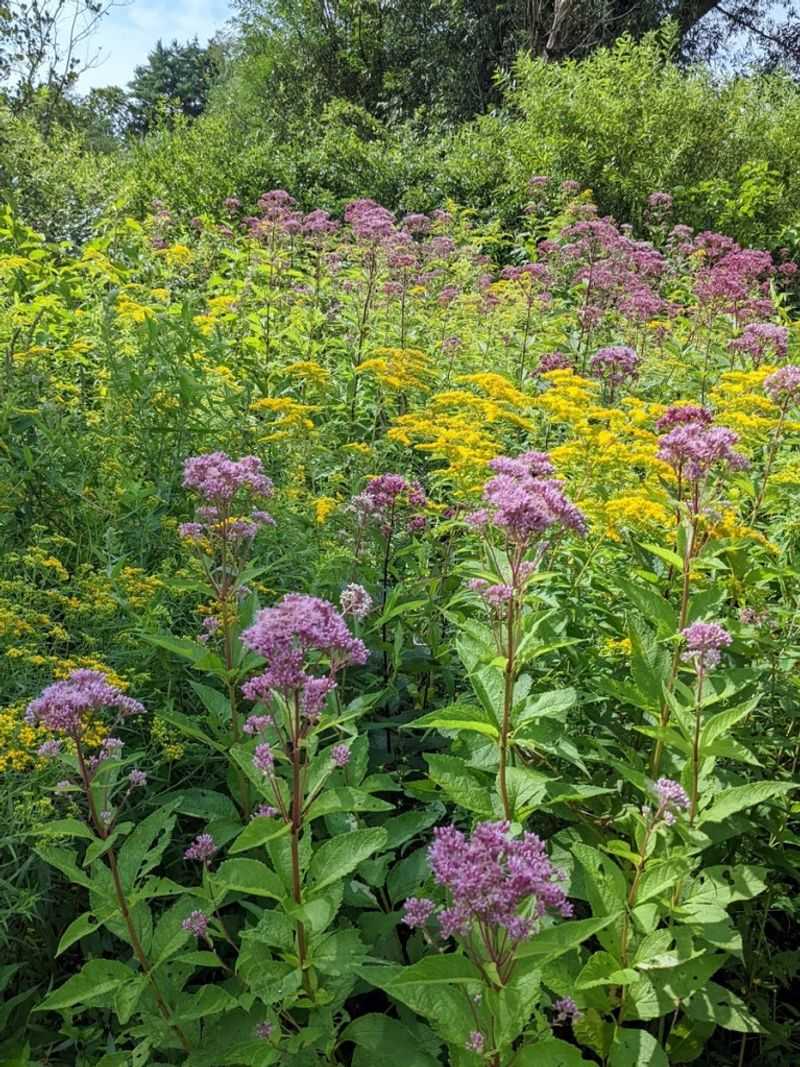
Clustered mountain mint earns its place in a late-summer bed, but the best version of that bed does not rely on one plant to carry the whole show.
Penn State Extension’s guide to Pennsylvania native perennials lists a wide range of species that contribute color and structure from July through October, and building a relay of overlapping bloom periods is what keeps a garden genuinely active through the end of the season.
Joe-Pye weed brings tall, dusty-rose flower heads in late summer and towers over most companions at 5 to 7 feet.
Blazing star (Liatris spicata) sends up purple spikes in July and August that bees treat like a destination.
Goldenrod, often blamed for hay fever it does not actually cause, lights up the fall border in yellow and feeds migrating monarchs.
New England aster carries purple blooms into October.
Great blue lobelia, turtlehead, bee balm, and New York ironweed each fill a slightly different niche in terms of height, moisture preference, and bloom timing.
Mountain mint works well in the middle of this kind of planting, roughly 1 to 3 feet tall, holding the center of the bed while taller plants anchor the back and lower-growing species fill the front edge.
Penn State’s pollinator work suggests pairing it with other proven native performers to extend the active season for beneficial insects from spring through fall.
Give it a drift of 3 or more plants rather than a single specimen, both to create visual mass and to give the rhizomes room to naturalize without immediately bumping into plants you want to protect.
Manage the edges each spring and the colony stays exactly where you want it.
The corrected takeaway from all of this is straightforward: mountain mint is an underused plant that can genuinely carry a Pennsylvania garden through the August lull, and it does its best work as part of a thoughtful late-summer team.