
You Do Not Need A Big Yard Or A Big Budget To Grow Real Food This Season
Follow us on Google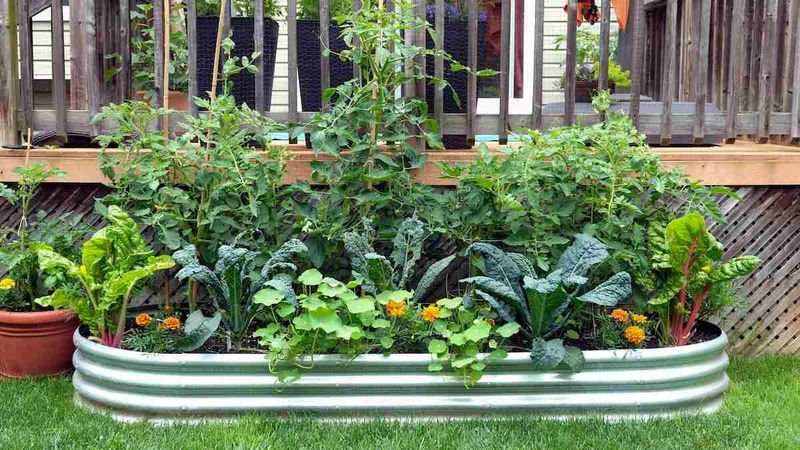
A patch of soil the size of a parking space, a few containers on a sunny stoop, or even a single raised bed can put real food on your table this season.
Grocery prices have most of us looking for any edge we can find, and a small food garden is one of the few moves that can actually shrink the produce aisle’s hold on your wallet.
The catch is that a garden pays back best when you grow what your household already eats, keep startup costs honest, and count only the food you genuinely use.
This article walks through exactly how to do that, from choosing the right crops to keeping the harvest safe.
The Savings Depend on What You Grow
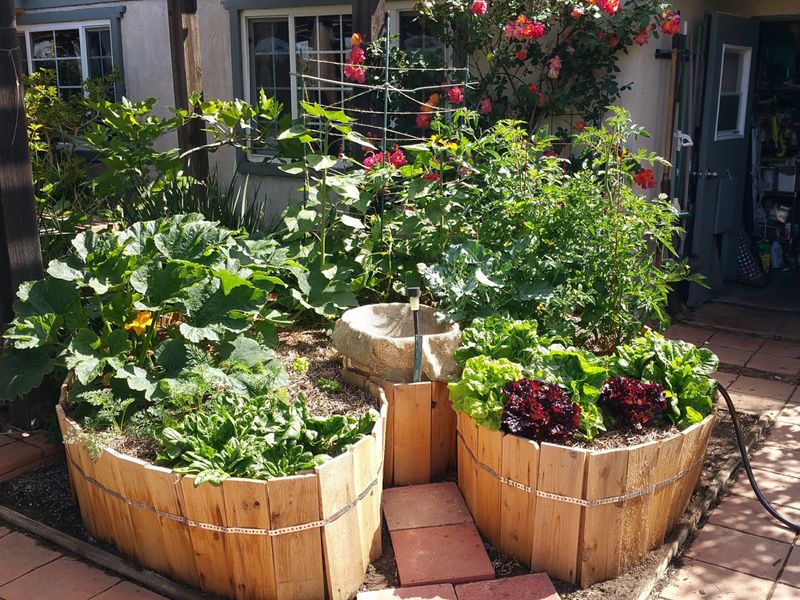
Grocery savings from a home garden are real, but they are not automatic.
A review of published studies found that home gardens produced an average market value of $677 in fruits and vegetables against $238 in materials and supplies, according to this analysis in the Journal of Extension.
The author was careful to note that the calculation excluded the value of labor, and that crop choice, local conditions, and gardening practices all affect the result.
A small pilot study of low-income gardeners in San Jose found average savings of $339 per household, with the biggest gains coming from high-value crops like tomatoes and cucumbers.
That study involved only 50 families, with crop weight data collected from just eight gardeners, so it is a useful data point rather than a nationwide promise.
A low-cost garden is not one that requires zero spending.
Seeds, potting mix, a soil amendment, or a simple trellis may still be necessary.
The goal is to avoid unnecessary purchases and to grow food the household will actually eat before it spoils.
A bed full of zucchini no one wants is not a savings, it is just a chore.
Start with the five or six vegetables and herbs your family buys most often at the grocery store, and build the garden around those first.
Choose Crops That Keep Paying Back
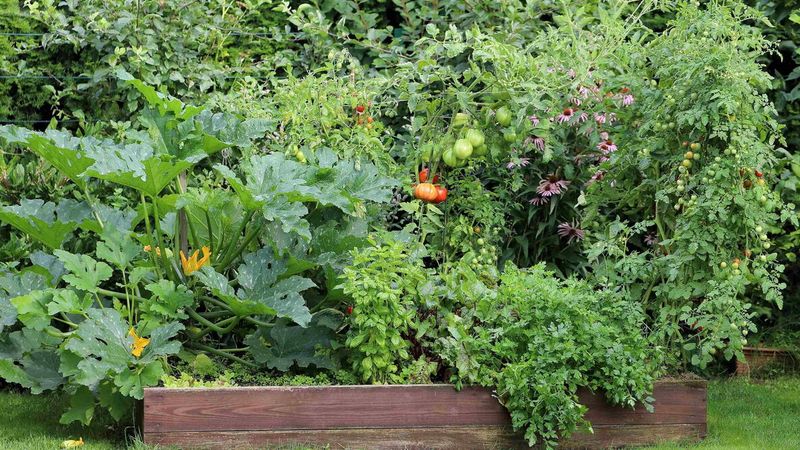
Some crops earn their square footage many times over because you harvest them repeatedly across weeks or months.
Leaf lettuce, spinach, kale, herbs like basil and parsley, pole beans, cucumbers, and cherry tomatoes all fall into this category.
You cut or pick what you need, and the plant keeps producing.
A butternut squash vine, by contrast, sprawls across several feet of space and delivers a handful of fruits at the end of the season.
The San Jose pilot study highlighted tomatoes and cucumbers as the crops driving the most household savings, though that finding came from a limited, region-specific sample and cannot be treated as a universal ranking.
What it does suggest is that vertical, high-value crops used regularly in the kitchen are a reasonable place to start.
An herb garden alone, planted in a window box or a few small pots, can replace $3 to $6 bunches of fresh herbs every week through the growing season.
The economic review in the Journal of Extension reinforced the same idea from a different angle: gardening practices and crop selection matter as much as garden size.
A bed planted with crops the household does not cook, or crops that bolt and go bitter before anyone harvests them, provides very little real value.
Match the plant list to the shopping list, keep the harvest manageable, and the small footprint starts to feel genuinely useful rather than just satisfying in theory.
Start Plants Without a Nursery Bill
Nursery transplants are convenient, but a six-pack of tomato starts can cost $6 to $12, and a full cart adds up fast.
Seeds are almost always cheaper, with many packets running $2 to $4 and containing enough seed for multiple seasons.
The savings are real, but starting every crop from seed indoors is not the right move for every plant or every region.
Crops like beans, cucumbers, squash, and root vegetables generally do better when sown directly into the ground or a container at the right time.
Others, like tomatoes, peppers, and eggplant, need a head start indoors because their growing season is longer than most US climates allow from a direct outdoor sowing.
Oregon State University Extension’s seed-starting guidance makes clear that timing should be anchored to your local average frost-free date, not a calendar month that may not apply where you live.
Check your local Cooperative Extension office for that date.
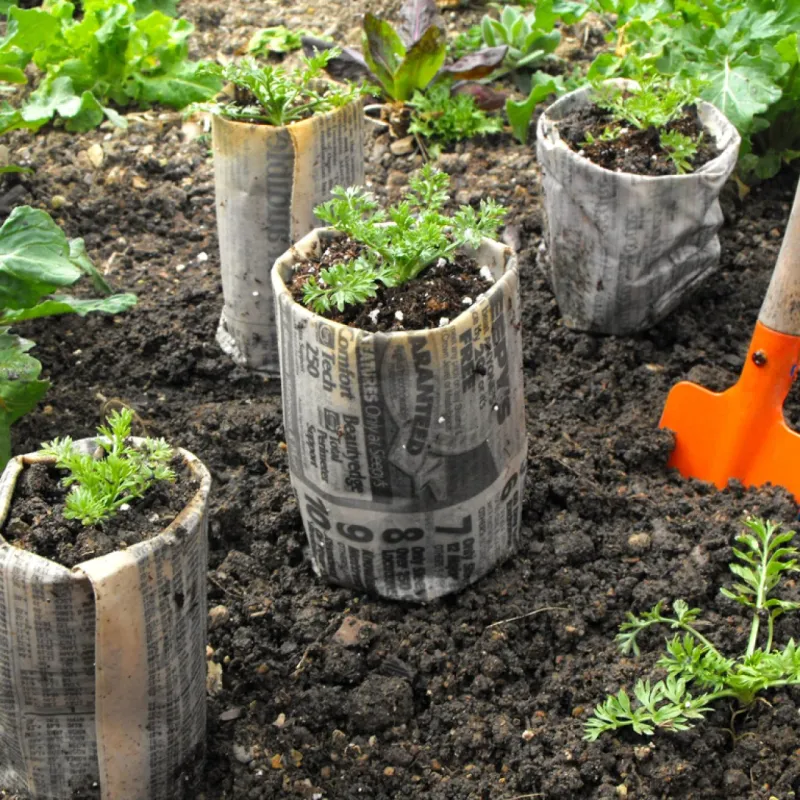
For containers, egg cartons, newspaper cylinders, and clean reused plastic cups with drainage holes punched in the bottom all work as seed-starting vessels.
OSU Extension’s frugal gardening guide also points to plant swaps, secondhand pots, and propagation from cuttings as ways to stock a garden without a nursery visit.
Whatever containers you reuse, make sure they are clean and that water can drain freely.
The savings come from choosing the right method for each crop, not from forcing everything into the same homemade setup.
Make a Small Footprint Produce More
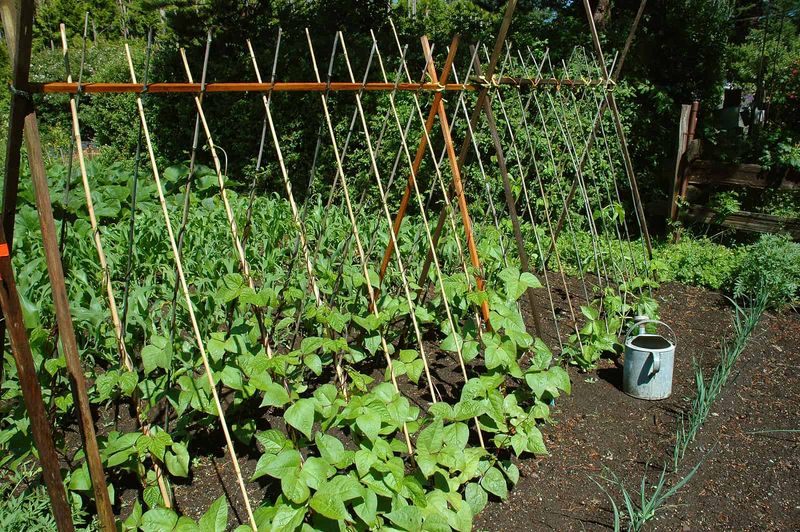
A 4-by-8-foot bed is not a limitation if you use all three dimensions.
Growing vertically means a cucumber vine climbing a trellis takes up about one square foot of ground space while producing fruit across several feet of height.
Illinois Extension recommends training pole beans, peas, cucumbers, squash, and gourds on supports as a practical way to multiply what a small bed can carry.
A simple A-frame trellis made from bamboo stakes and twine costs almost nothing.
Succession planting stretches that same bed across more of the calendar.
Instead of sowing all your lettuce at once and watching half of it bolt before you finish eating it, plant a short row every 7 to 14 days.
Illinois Extension’s strategic planting guide describes this interval as a practical way to keep harvests coming without overwhelming the kitchen at any one time.
Intercropping adds another layer.
Fast-maturing radishes or spinach can share space with slower tomatoes or peppers during the first weeks of the season, filling ground that would otherwise sit empty.
When the warm-season crops take over in early summer, the cool-season plants are already finished and out of the way.
Later in the season, the process reverses, and a fall planting of kale or arugula moves into beds the tomatoes have vacated.
Planning the sequence on paper before buying seeds is free, and it can double the practical output of a small growing area without adding a single new bed or pot.
Let Sun and Containers Set the Limits
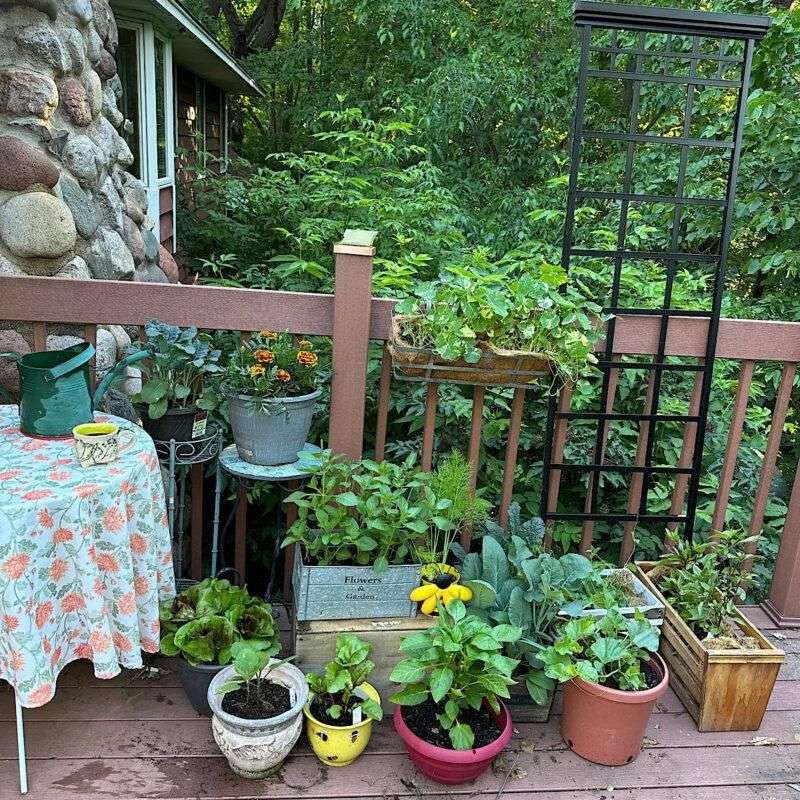
Before buying a single seed or pot, spend a few days watching where the sun actually falls on your available space.
Warm-season crops like tomatoes, peppers, and cucumbers need roughly 6 to 8 hours of direct sun each day, while cool-season greens like lettuce, spinach, and Asian greens can manage on about 3 to 5 hours, according to University of Maryland Extension’s container vegetable guide.
A shaded patio that gets afternoon light may grow a fine salad bed but will struggle with tomatoes.
Containers are a genuine solution when you have no ground to dig or when the existing soil is a concern.
They are not automatically cheaper than in-ground growing.
Potting mix, fertilizer to replace nutrients that flush out with each watering, a trellis for climbing crops, and replacement containers can push costs higher than a well-prepared in-ground bed.
A 20-inch container filled with wet growing media can weigh close to 100 pounds, so placing it on a deck or balcony requires knowing the weight limits of that surface before filling it.
Older urban lots and some residential properties carry a different concern.
EPA guidance on lead in soil recommends testing before gardening in soil near older painted structures or high-traffic areas.
Where lead is a concern, containers or raised beds filled with clean purchased or tested soil are the practical path forward, not a luxury upgrade.
Choosing the cheapest safe location is always the right starting point.
Spend First on Soil, Not Products
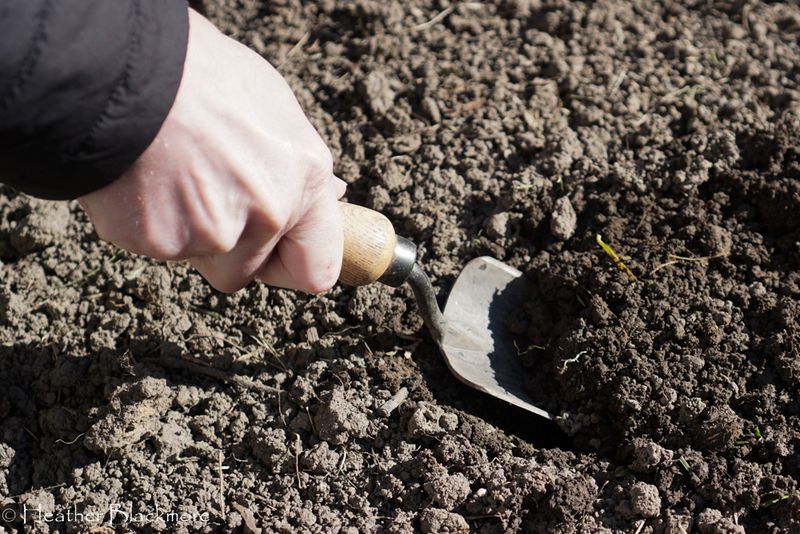
Walk into any garden center and you will find shelves of fertilizers, soil conditioners, and compost products, each promising better harvests.
Most gardeners buy several before they know what their soil actually needs.
A basic soil test, available through most state Cooperative Extension offices for $15 to $25, measures pH and key nutrients and tells you exactly what to add and what to skip.
Penn State Extension’s soil management guidance frames testing as the first smart investment before any amendment purchase.
Penn State’s soil testing program can help you locate a lab and interpret the results.
Once you have the report, you can buy only what the test recommends rather than guessing with a cart full of products.
Compost improves soil structure and adds organic matter, but it does not fix every problem, and more is not always better.
Penn State Extension’s compost application guidance recommends applying no more than about a 1/4-inch layer of untested compost, and only every few years, because excess nitrogen and phosphorus can leach into waterways.
Raw or improperly composted manure deserves a separate caution.
Penn State Extension’s manure guidance warns against using dog, cat, pig, or human waste in vegetable gardens, and advises against applying fresh manure directly to growing crops.
The safest practical move for a budget garden is to use finished compost from a reputable source and follow your local Extension office’s advice on timing and amounts.
Spending $20 on a soil test before spending $80 on amendments is the kind of math that actually helps your budget.
Keep Water and Harvests from Becoming Waste
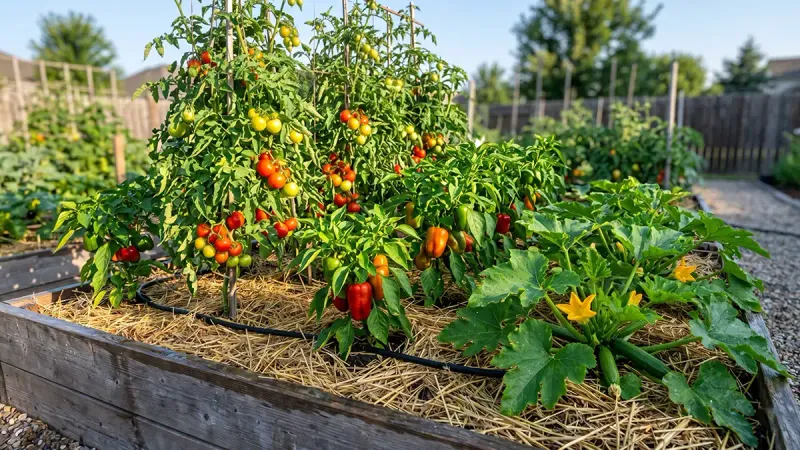
A garden that produces food you never quite get around to harvesting, or a container that dries out and drops its blooms during a heat wave, can quietly erase the savings you were counting on.
Containers dry out faster than in-ground beds, and during hot, dry stretches some may need water every day.
The fix is not a rigid schedule but a quick daily check: push a finger 2 to 4 inches into the soil, and if it comes out dry, water thoroughly.
Colorado State University Extension’s vegetable irrigation guidance gives a rule of thumb of roughly 1/4 inch of water per day during typical summer weather, with higher demand during hot or windy conditions.
Mulch laid 2 to 3 inches deep over a bed slows evaporation and keeps roots cooler.
Pairing mulch with a soaker hose or drip line placed beneath it can reduce water use by roughly 50 percent compared to overhead watering, according to CSU Extension’s drip irrigation guide.
That said, any irrigation system wastes water if it runs on a fixed timer regardless of recent rain or soil conditions.
Check the soil, adjust for the weather, and let the plants tell you what they need.
The same source notes that efficient watering depends on matching the schedule to actual conditions rather than a preset program.
On the harvest side, plant only as much as the household can eat or preserve without adding a preservation project that costs more in supplies and time than the food is worth.
The economic review noted that local conditions and practices affect outcomes, and a crop that overwhelms your kitchen belongs in that same category of uncounted cost.
Pick regularly, eat what you grow, and the math stays honest.
Protect the Food Before Counting Savings
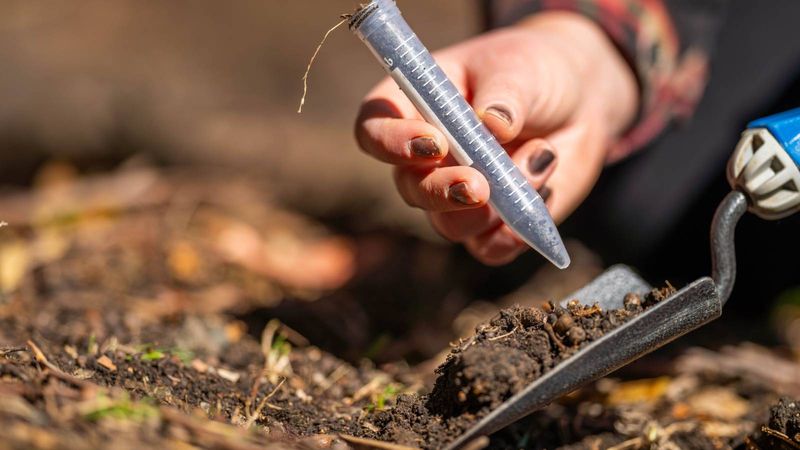
A harvest that looks fine but grew in contaminated soil, or one that sat where a neighborhood cat walked through, is not a safe savings.
Older urban properties and homes built before 1978 often have elevated lead levels in the soil near foundations, fences, and driveways.
EPA guidance on lead in residential soil recommends testing before planting, with particular caution around root crops and leafy greens, which can take up more soil contamination than fruiting crops like tomatoes or cucumbers.
If testing reveals a concern, EPA’s urban gardening fact sheet recommends using raised beds or containers filled with clean soil, and covering any exposed contaminated ground nearby with mulch, groundcover, or grass to reduce dust and splashback.
A separate EPA urban gardening resource notes that a raised bed is not automatically safe if contaminated soil remains bare and exposed around it.
Basic harvest hygiene matters just as much.
Penn State Extension’s produce safety guidance recommends washing hands for at least 20 seconds before and after handling produce, keeping animals out of the growing area, using clean harvest containers, and rejecting any produce that may have contacted animal feces.
Homegrown food is not automatically safer than store-bought food, it just has a different set of risks to manage.
Seed saving can reduce future seed costs, but it works best with open-pollinated varieties.
Utah State University Extension explains that hybrid seeds often do not grow true to type, and that corn and cucurbits cross-pollinate readily, making reliable saving difficult.
Stick to open-pollinated tomatoes, beans, and lettuce as the most dependable starting point.
Count only the food that is safe and actually eaten as real savings.
Let This Season Prove the Plan
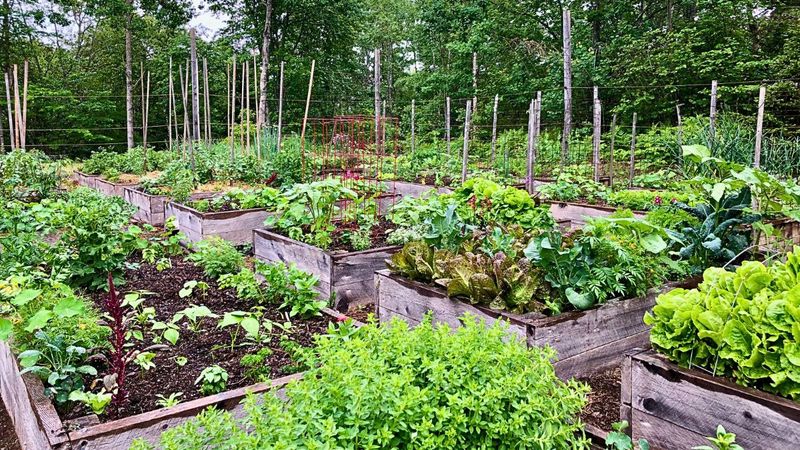
Pick three to five vegetables or herbs your household buys every week.
Match them to the sun your space actually gets and check your local Cooperative Extension office for the average frost-free date in your area.
Use that date to time your planting, not a generic month from a national article.
Start only the crops that benefit from an indoor head start indoors, and direct-sow the rest at the right time outside.
Reuse clean containers with drainage, build a simple trellis from bamboo and twine, and spend the first real money on a soil test if you are planting in the ground.
Keep a short running list of what you spend on seeds, supplies, and water.
Then keep an equally short list of what you harvest and eat.
That comparison, supplies spent against food consumed, is the only honest way to know whether your garden is providing value or just providing a hobby.
Factor in the time you spend honestly.
A garden that takes two hours a week and saves $15 in produce may be worth it to you, or it may not, and both answers are reasonable.
The published research suggests that a carefully chosen small garden can produce more food value than its supply costs under favorable conditions, according to the Journal of Extension review.
But favorable conditions include choosing crops you eat, keeping the harvest manageable, and avoiding startup costs that take years to recover.
A small, well-planned garden will not replace a grocery store.
It can genuinely reduce your dependence on one for the foods you grow best, and some seasons, that turns out to be more than enough.