
Can You Spot Which Lemon Tree Actually Fruits Before You Waste A Whole Season Waiting
Follow us on Google
Most lemon trees sold at nurseries carry a hidden clue that tells you exactly which part of the tree will produce the lemons you’re expecting.
That clue is a small scar near the base of the trunk, and knowing where to look can save you a full growing season of frustration.
The inspection won’t promise you a harvest, but it will tell you whether the growth you’re watching belongs to the named lemon variety or to something else entirely.
That’s a better starting point than guessing.
The Graft Union Identifies The Desired Lemon
Flip the title’s promise upside down right away: the inspection you’re about to learn does not reveal which tree will definitely fruit.
What it does reveal is which part of the tree is the named lemon variety you paid for, and that distinction matters a lot before you spend months encouraging the wrong growth.
A grafted lemon is actually two plants fused into one.
The lower portion, called the rootstock, provides the root system and was chosen for vigor, disease resistance, or cold tolerance.
The upper portion, called the scion, is the named fruiting lemon variety.
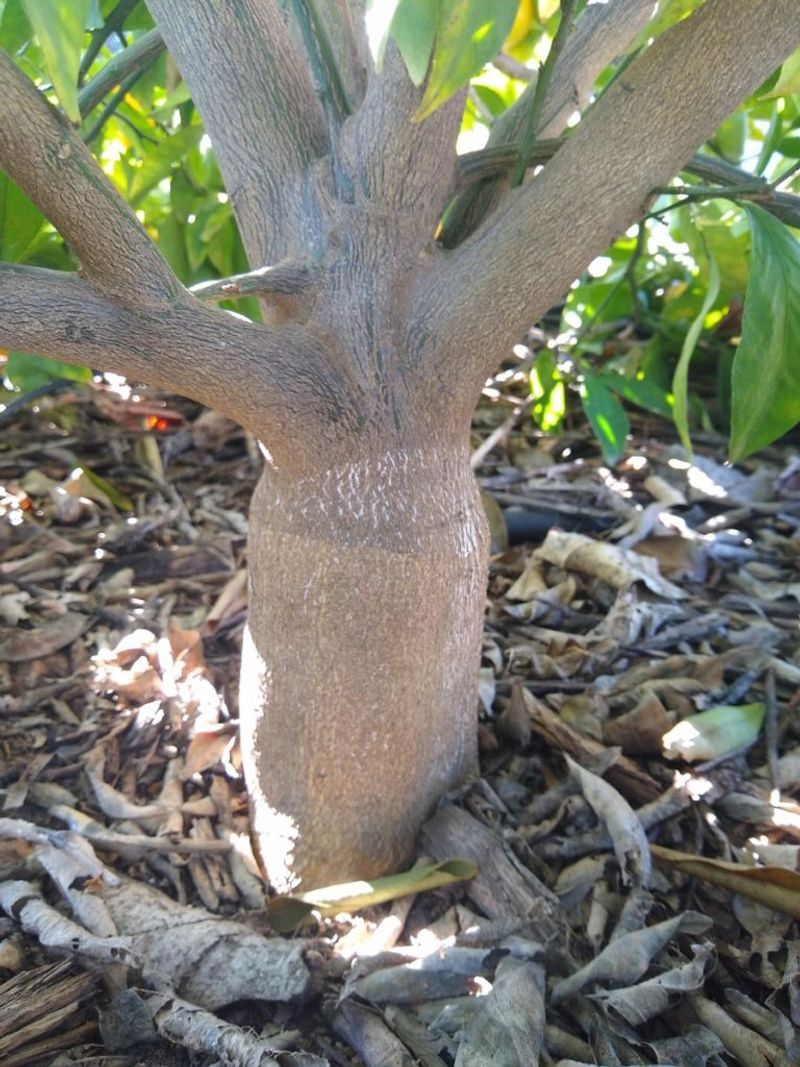
UF/IFAS lemon production guidance describes how the rootstock and scion are joined at the graft union, a point you can find by examining the lower trunk.
Crouch down and look at the base of the trunk.
The union commonly appears about 6 to 12 inches above the soil, though its exact height varies by tree and nursery.
You’re looking for a diagonal scar, a slight change in bark texture, or a subtle shift in trunk thickness.
Think of it as a seam where two different woods were stitched together and healed over.
Growth above that seam belongs to the scion, which is the lemon you want.
Growth below it belongs to the rootstock.
UC ANR citrus guidance confirms that keeping the union clearly above the soil line helps you make this distinction accurately and reduces trunk disease problems at the same time.
A healthy, labeled grafted tree with the scion actively growing above the union gives you a more predictable variety and a shorter wait than a seedling.
That is the real promise here, not a guaranteed lemon on the counter by fall.
Rootstock Shoots Can Hijack The Canopy
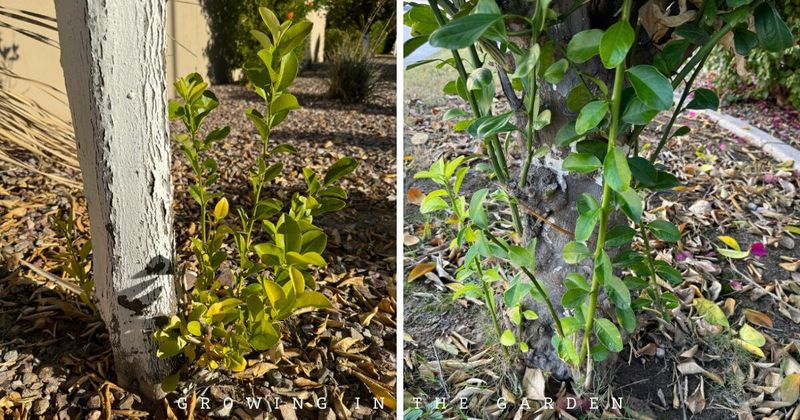
Picture a quiet thief growing in plain sight.
A rootstock sucker pushes up from below the graft union or from the root flare, and because it is often faster and more upright than the lemon canopy above it, many gardeners assume it is healthy new growth worth keeping.
It is not the lemon you want.
That shoot belongs to the rootstock variety, not the named lemon on the plant tag.
UC ANR advice on citrus suckers explains that rootstock growth can outpace the scion and eventually take over the canopy if left unchecked.
The sucker is not always completely fruitless, but any fruit it produces belongs to the rootstock variety and may be sour, seedy, bitter, or thick-skinned rather than the lemon you expected.
The practical problem is twofold.
The shoot diverts water, nutrients, and energy away from the scion.
And because it grows vigorously, it can shade out the desirable canopy within a season or two.
Remove confirmed suckers as soon as you spot them.
Cut each one as close to its point of origin as possible without gouging the trunk or disturbing the root flare.
University of Arizona Extension pruning guidance warns against simply tipping or shortening the shoot, because the remaining buds will push again and you will be back to the same problem within weeks.
If the graft union looks buried under soil or mulch, carefully pull the material back to expose it.
Keeping the union visible above the soil line makes future inspections faster and reduces the chance of trunk rot developing right at that vulnerable junction.
Thorns And Leaves Provide Supporting Clues
Thorns make gardeners nervous, and understandably so.
A sharply thorned shoot rising from the base of a lemon tree looks suspicious, and a lot of online advice says to cut every thorny branch immediately.
That advice can cost you desirable growth.
Young lemon shoots and vigorously growing scion branches can carry thorns too.
Thorniness alone is not enough to condemn a branch as rootstock.
The right move is to locate the graft union first, then compare what is growing above it against what is growing below it.
Once you know where the union sits, secondary clues become genuinely useful.
Rootstock shoots are often more upright and faster-growing than the scion canopy.
Their leaves may look slightly different in shape, size, or color.
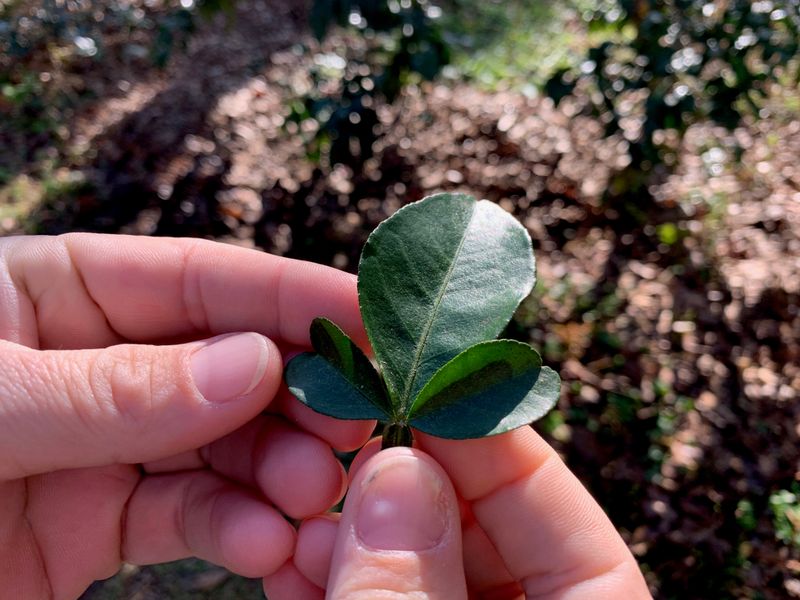
Some rootstocks produce trifoliate leaves, meaning each leaf stem carries three leaflets instead of one, and that is a particularly strong visual signal according to UC ANR citrus identification resources.
Not every rootstock shows trifoliate leaves, though, so their absence does not clear a suspicious shoot.
Think of the clues as a short checklist rather than a single test.
A shoot growing below the union, more vigorous than the canopy, with different-looking leaves, and carrying heavy thorns?
That combination builds a strong case for rootstock growth.
A thorny branch growing well above the union from the established canopy?
That is almost certainly scion growth, possibly a water sprout, but not a rootstock sucker.
University of Arizona Extension pruning guidance recommends using several clues together rather than acting on any one visual feature.
Locate the union, compare the growth on each side, and remove only what the combined evidence identifies as rootstock.
Seedlings Bring A Longer, Less Predictable Wait
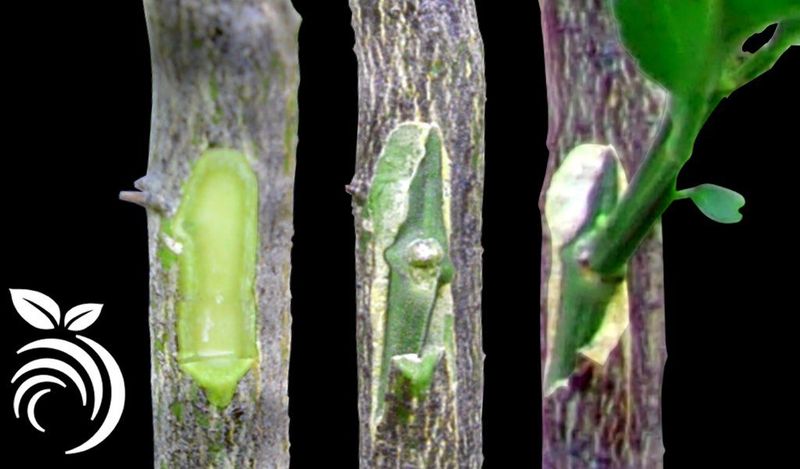
A lemon seed dropped into potting mix is an experiment, not a shortcut.
The tree that grows from it may eventually flower and fruit, but it enters what botanists call a juvenile phase, a period when the plant simply is not ready to reproduce no matter how well you care for it.
The range for citrus in general runs from about 3 to 20 years before a seedling flowers, according to published research on citrus juvenility.
Lemons tend toward the shorter end of that range compared to some other citrus, but a homeowner hoping for fruit within a few seasons faces real uncertainty with a seedling.
The second problem is genetic.
Most fruit trees, including lemons, do not reliably reproduce the parent variety from seed.
UF/IFAS guidance on citrus propagation notes that seedlings may differ from the parent in flavor, acidity, seediness, fruit size, or appearance.
Some citrus seeds do produce nucellar seedlings that are close genetic copies, but you cannot safely assume your backyard seed will follow that pattern.
A grafted nursery tree sidesteps both problems.
It uses mature budwood taken from a tree that has already passed through juvenility, so the scion carries that maturity with it.
Clemson Extension in-ground citrus guidance describes a roughly 1 to 3 year period after planting before a nursery lemon begins production, which is a much shorter window than most seedlings.
If a seedling sounds appealing as a long-term project, treat it as exactly that.
Buy a grafted tree for the harvest you are planning and grow the seedling alongside it for curiosity.
UGA Extension home landscape citrus notes reinforce that the two paths serve very different goals.
The Right Scion Still Needs Time And Care
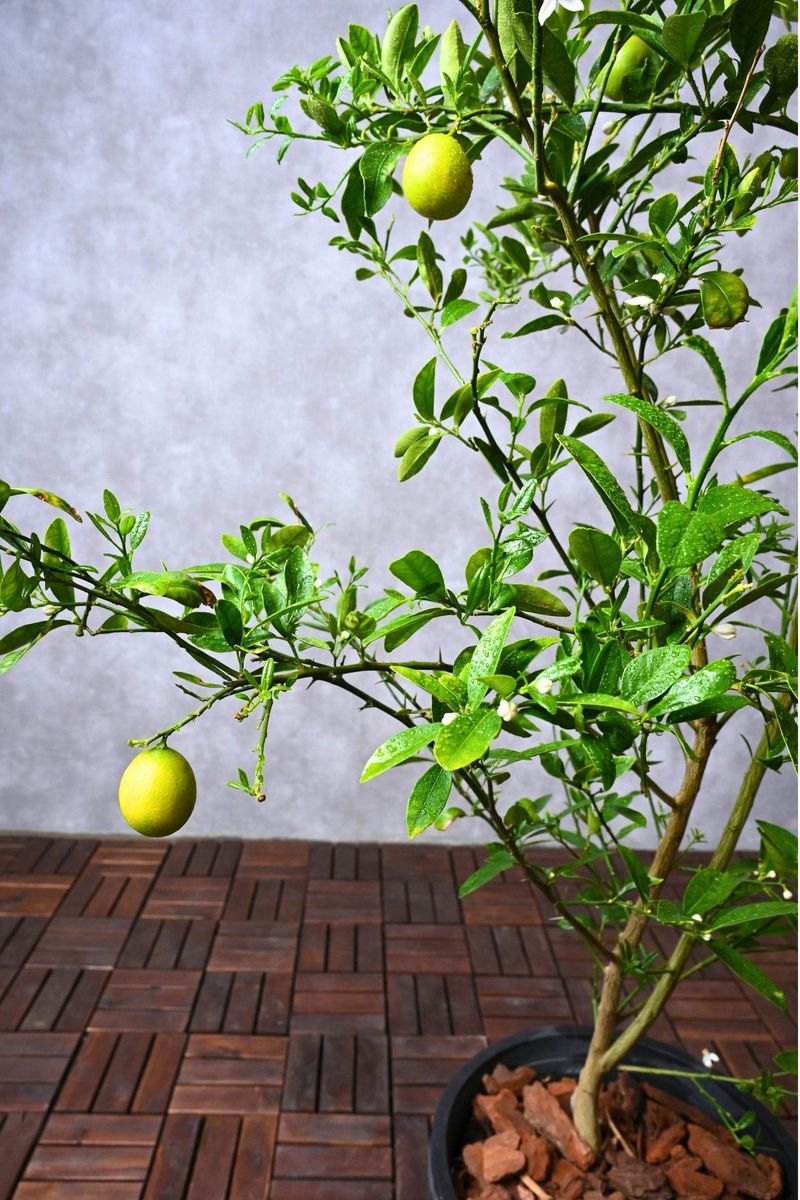
Finding the graft union and confirming that the scion is healthy is a good checkpoint, not a finish line.
The named lemon variety still needs the right conditions to flower, set fruit, and hold that fruit through to harvest.
Realistic timing helps manage expectations.
UF/IFAS lemon production guidance notes that young nursery trees may begin production around the third year, while Clemson Extension describes a roughly 1 to 3 year juvenile period after planting for grafted trees.
Tree size, cultivar, transplant stress, climate, and care all shift that window.
One myth worth setting aside: lemons do not need a second tree to produce fruit.
Lemon flowers (Citrus limon) are generally self-pollinating, so there is no useful male-versus-female distinction for backyard lemon production.
UF/IFAS citrus pollination guidance confirms that insect visits can help flower set, but the absence of a second lemon tree is rarely the reason a healthy tree fails to fruit.
Full sun is the single most important site factor.
Aim for at least 8 hours of direct light daily.
Good air movement around the canopy reduces fungal problems and supports pollinator access.
Water young trees consistently during establishment, but avoid frequent overhead watering that wets foliage and flowers.
Pull back on nitrogen fertilizer when the tree is of flowering age.
Excess nitrogen pushes leafy growth at the expense of flowers, which is the opposite of what you want when you are waiting for lemons.
Cold And Crowding Can Defeat A Good Graft

A correctly identified scion growing vigorously above a healthy graft union can still fail to produce lemons if the site works against it.
Cold and crowding are two of the most common site problems, and both are fixable before you plant.
Spacing matters more than most homeowners expect.
UF/IFAS recommendations for in-ground landscape lemons suggest planting roughly 15 to 25 feet from buildings and other trees.
That distance protects air circulation, reduces shade from walls and canopies, and cuts down on the pruning battles that come with crowded citrus.
Cold is the bigger threat across much of the United States.
Lemon foliage can be defoliated at roughly 22 to 24 degrees Fahrenheit.
Severe wood damage can occur near 20 degrees.
Flowers and young fruit can be lost near 29 degrees, and even mature fruit can be damaged anywhere from about 28 to 31 degrees.
Those are approximate thresholds, not guarantees, because exposure duration, wind, tree health, and how gradually cold arrives all change the outcome.
In warm-climate states like Florida, California, and parts of the Gulf Coast, in-ground planting with a protected south or southeast-facing exposure is the standard approach.
Gardeners in colder states face a different calculation entirely.
Penn State Extension guidance on growing lemons and University of Maryland Extension advice on dwarf citrus both describe container culture and seasonal indoor care as the realistic path for northern gardeners.
USDA hardiness zones tell you about winter cold, but they do not capture summer heat, humidity, indoor light quality, or rainfall patterns.
A lemon in a Chicago apartment window faces very different challenges than the same variety in a Phoenix backyard, even if both trees have a perfect graft union.
Persistent Failure Calls For Diagnosis
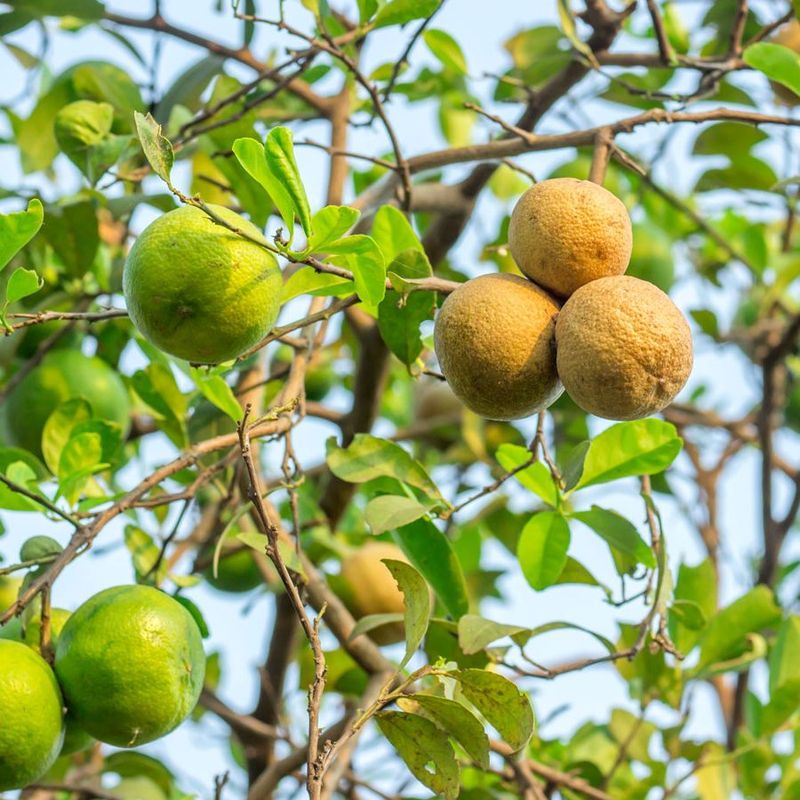
Every new lemon tree goes through an adjustment period.
Some drop flowers or small fruit during the first season or two, and that can look alarming when you have been watching the tree closely.
A normal establishment lag and a genuinely sick tree are not the same thing, and telling them apart is worth the effort.
Drought stress, excess water, nutrient imbalance, shade, transplant shock, and cold injury can all prevent fruit set or cause fruit drop even when the scion is correct and the rootstock suckers have been removed.
Most of those problems have straightforward fixes once you identify them.
Check soil moisture before watering rather than watering on a schedule.
Make sure the tree has full sun, not dappled light.
Review your fertilizer program and consider whether nitrogen has been applied too heavily or too close to flowering time.
UF/IFAS lemon production guidance notes that flower-to-harvest time can range from about 4 to 12 months depending on cultivar, temperature, and cultural conditions, so some patience is reasonable after flowers appear.
But patience has limits.
A tree that shows persistent decline over multiple seasons, mottled or asymmetrically yellowing leaves, distorted new growth, unusual-looking fruit, or dieback that keeps returning is sending a different signal.
UF/IFAS guidance on citrus decline and disease points out that diseases like citrus greening can reduce production and eventually kill trees, while other pathogens cause flower and fruit drop that looks like ordinary stress.
Do not try to diagnose a serious disease from a description or a photo.
Contact your local Cooperative Extension office or a certified plant-health authority, bring a sample if possible, and let them run the right tests.
Waiting and hoping is not a plan when the signals are that persistent.
Use The Inspection To Choose Your Next Move
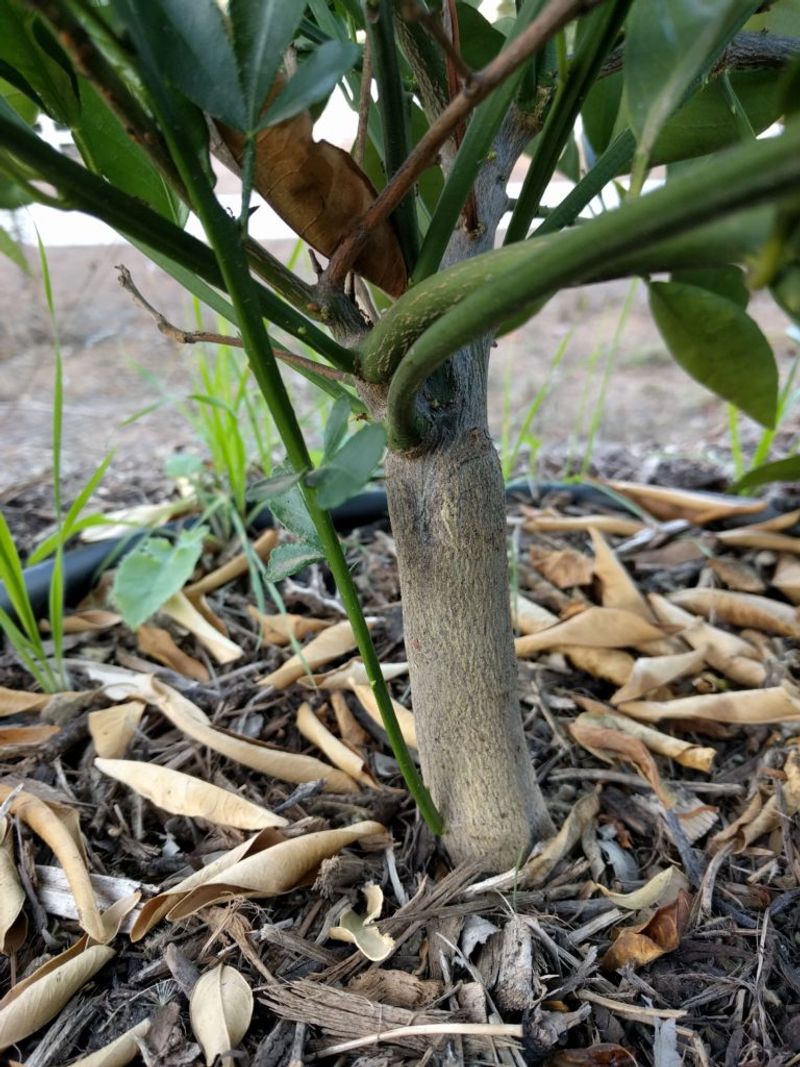
Before you buy a lemon tree, crouch down at the nursery and find the graft union.
It is usually a slight scar or texture change on the lower trunk, somewhere between 6 and 12 inches above the soil line.
If the union is visible and the canopy is growing clearly above it, you have found the named lemon variety’s scion.
That is a better starting point than any other visual check you can do in five minutes.
Once the tree is home, run the same inspection twice a year.
Look for shoots emerging below the union or from the root flare, compare their leaves and vigor against the canopy above, and remove confirmed rootstock suckers at their point of origin.
University of Arizona Extension pruning guidance recommends cutting suckers flush rather than tipping them, so no regrowth buds remain.
Give the scion what it needs to flower and hold fruit: full sun, consistent establishment watering without overhead wetting, restrained nitrogen once the tree matures, and protection from cold.
UF/IFAS lemon production guidance puts the flower-to-harvest window at roughly 4 to 12 months, so budget time after the first blooms appear before expecting lemons in the kitchen.
For northern gardeners, container culture with seasonal indoor protection is the realistic plan, not permanent outdoor planting.
Clemson Extension in-ground citrus guidance confirms that climate, not just graft status, sets the ceiling on what any lemon tree can do.
Here is the quick checklist: find the union before buying, keep scion growth above it, remove suckers below it at the source, provide full sun and careful watering, protect from frost, and allow realistic time.
The graft union tells you which growth is the lemon you wanted.
Everything after that is good stewardship.