
The Texas Plants That Keep Roaches From Ever Reaching The Back Door
Follow us on Google
You step outside before breakfast and the patio already feels warm, coffee steam curling into thick Texas air.
A quick shadow darts across the concrete, then another, and your quiet morning goes tense.
Roaches never seem to quit here, always hunting a crack near the back door.
But some hardy plants genuinely make your home smell like a place they want to avoid, and building that living barrier is easier than you think.
1. Rosemary Stands Guard With Aromatic Might
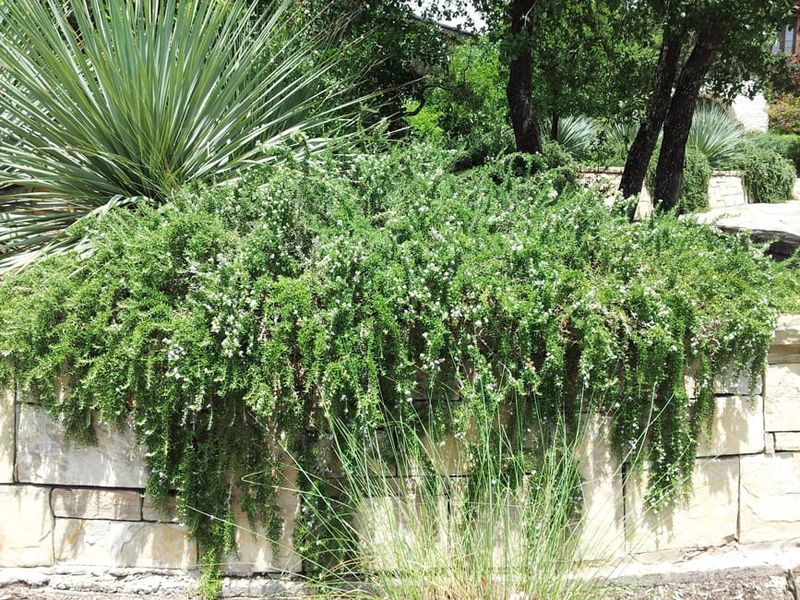
A roach reads the world through its antennae, and rosemary jams that signal like static on a radio.
Rosemary, or Rosmarinus officinalis, throws off a pine-sharp oil that scrambles a cockroach’s sense of direction, so it turns and looks elsewhere for a door.
This woody perennial thrives across much of Texas, reliably in USDA Zones 7 through 10, from Gulf Coast humidity to drier Central Texas.
Give it six to eight hours of direct sun and light, well-drained soil.
If you garden in the sticky blackland clay common across North and Central Texas, work in compost or sand first, because wet feet in winter genuinely kill rosemary faster than any freeze.
Set plants two to three feet apart for airflow, and water only when the top inch of soil feels dry.
Once established, a mature shrub reaches four to six feet tall and forms an evergreen wall right where you need it.
Tuck a few near the back steps and brush past them on your way in.
Your fingers carry that clean scent inside, and the roaches stay outside where they belong.
2. Catnip Confuses Invaders With A Potent Punch
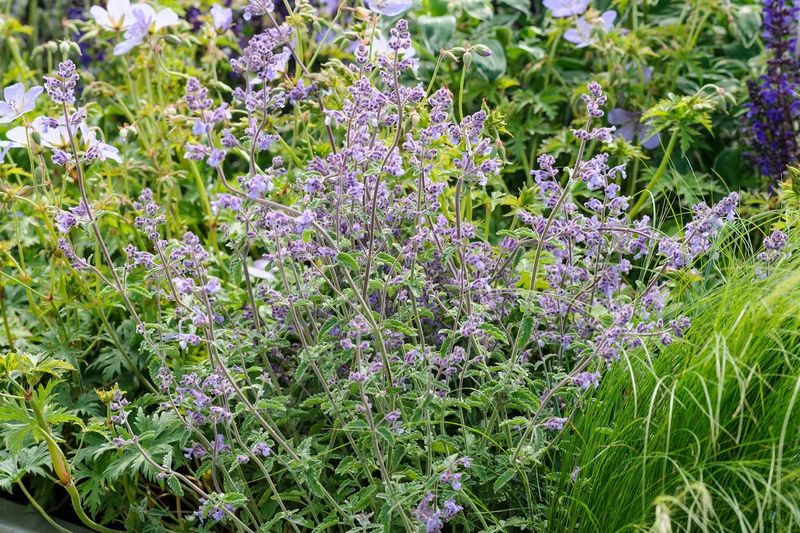
Your cat may lose its mind over catnip, but a roach treats it like a wall of skunk.
Nepeta cataria carries a compound called nepetalactone, and lab work has flagged it as far stronger than many synthetic repellents at driving roaches back.
It does not poison them.
It simply makes the path near your door smell so wrong that they reroute, which is exactly what you want on a summer porch evening.
Catnip grows as a tough perennial across USDA Zones 3 through 9b, so it handles most of the state.
It likes rich, well-draining loam, and its scent actually sharpens in the sandy soil common through East Texas.
Give it full sun, though a little afternoon shade in South Texas keeps it from wilting when the mercury pushes past 100 degrees.
Space plants 15 to 18 inches apart and let the soil dry slightly between waterings.
Catnip self-sows with abandon, so snip the spent flower heads before they scatter, unless you want a green army marching across the bed.
Plant it, and your porch gains a quiet bouncer that never clocks out.
3. Lemongrass Builds A Zesty Scent Barrier
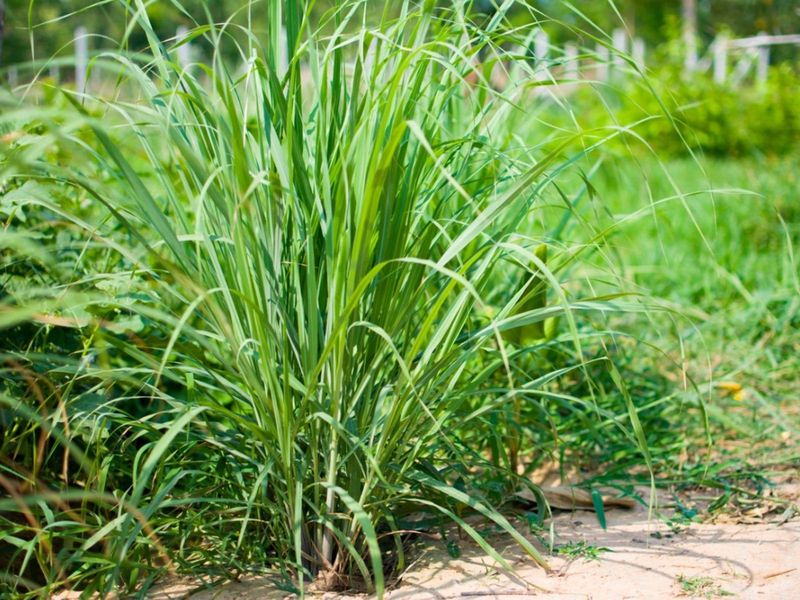
That citrusy tang you love in a Thai soup is the same weapon that sends roaches packing.
Lemongrass, or Cymbopogon citratus, produces citronella oil, the exact stuff burning in your patio candles, and it overwhelms a cockroach’s delicate sensors within a couple of feet.
Here is where it gets tricky.
Lemongrass runs tender in a hard freeze, so treatment depends on your region.
Along the Gulf Coast and down in the Lower Rio Grande Valley, roughly USDA Zones 9 through 11, it lives as a fat perennial clump year after year.
Up in North Texas or the Panhandle, where winter can drop into the teens, grow it in a large pot and haul it inside when temperatures fall below 40 degrees.
It demands full sun, six to eight hours minimum, plus steady water and rich soil to hit its full six feet tall and four feet wide.
Space stalks about 24 inches apart so they form dense, aromatic walls.
Run a row of it along the fence line near the back door.
On a still evening, the whole corner smells like lemon, and the roaches read that as a locked gate.
4. Bay Laurel Creates An Unpleasant Boundary
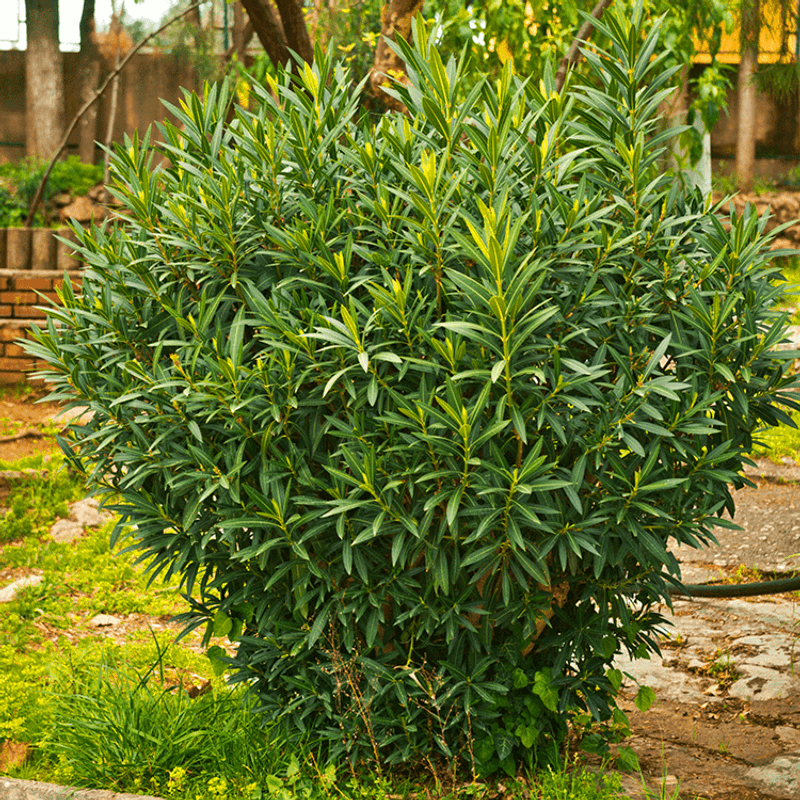
Most folks know bay laurel from a leaf dropped into Sunday stew, then fished back out.
But Laurus nobilis carries a compound called 1,8-cineole, and studies have shown it actively pushes German cockroaches away from treated ground.
The aroma reads warm and bitter to us, harsh and alarming to a roach.
So a shrub by the door doubles as pantry and picket line.
Bay laurel is hardy across USDA Zones 8 through 11, which lets it grow outdoors as a small tree or large shrub through Central Texas, South Texas, and the Gulf Coast.
In colder pockets up north, keep it in a container and move it inside before the first hard freeze near 25 degrees.
Set it in well-drained soil with full sun to partial shade, and water consistently while it is young.
Once established it shrugs off long dry stretches, though it hates soggy roots.
In the ground it can climb 10 to 30 feet, but regular pruning keeps it a tidy four to six feet right where you want the guard posted.
Snap a leaf for tonight’s dinner and let the plant keep working the door.
5. Chrysanthemums Bring A Natural Insecticide
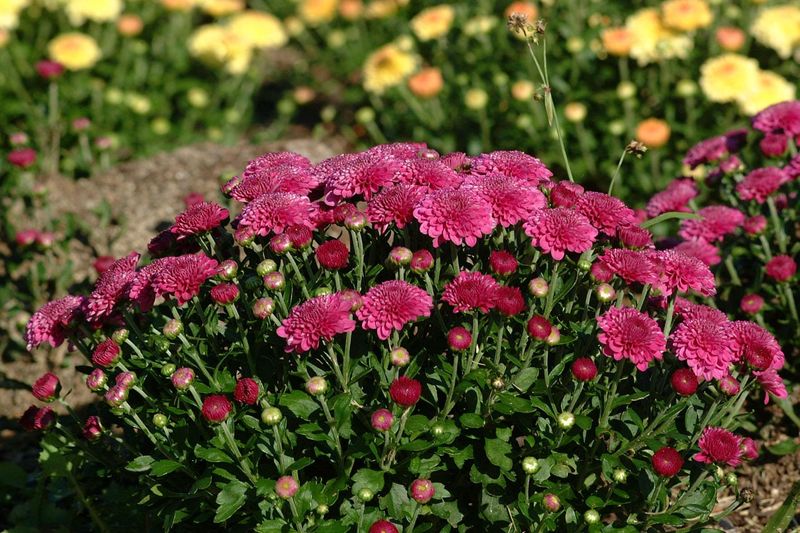
Mums look like innocent fall color stacked at every Texas grocery store, and that is the whole disguise.
The flower heads of Chrysanthemum cinerariifolium hold pyrethrin, the same natural compound bottled into countless commercial bug sprays.
Pyrethrin scrambles an insect’s nervous system, which is why a roach that wanders through a mum bed genuinely wants no part of it.
You get built-in defense that happens to look cheerful on the steps.
Mums grow well across USDA Zones 5 through 9.
In the hottest corners, like the Valley at Zone 10b, treat them as cool-season annuals or give them afternoon shade so the heat does not cook them.
They want full sun, five to six hours at least, in rich, well-drained soil.
Heavy blackland clay needs compost or expanded shale first.
Space plants 18 to 36 inches apart, water to keep the soil evenly moist, and pinch the stems back until mid-July for a bushier, bloom-heavy plant.
For winter, leave the spent stems standing and lay a two to three inch blanket of mulch over the roots.
Come spring you have color and a quiet chemical fence, all in one pot.
6. Texas Sage Turns Heat Into A Defense
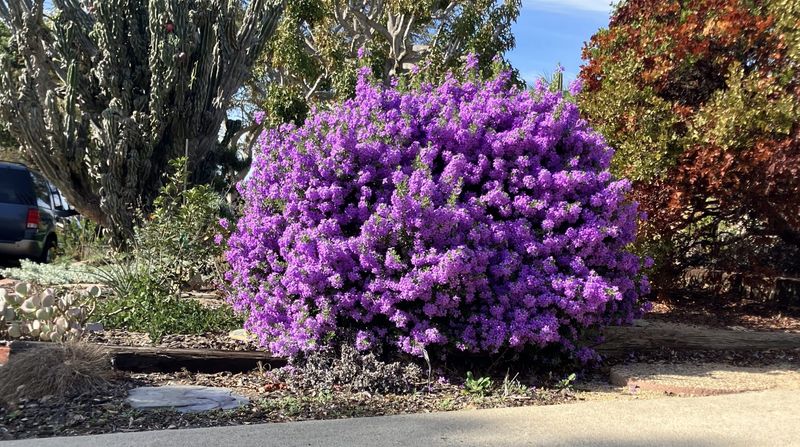
Some plants sulk when summer bites, but Texas sage, Leucophyllum frutescens, only gets tougher.
Its silvery leaves carry oils that many Central Texas gardeners swear muddle the scent trails roaches follow toward a foundation.
It earns a spot here for a different reason than the herbs.
Where rosemary or lemongrass may wilt in caliche, this native shrub was built for the worst the state can throw at it.
Hardy through USDA Zones 8 through 11, it laughs at 105 degree afternoons and shrugs off the shallow, alkaline soils of the Hill Country and West Texas.
It wants full sun and sharp drainage, and it genuinely rots in rich, wet ground, so plant it lean and mean.
Space shrubs three to five feet apart and water deeply only every couple of weeks once established.
It blooms purple after a summer downpour, which is why old-timers call it a barometer bush.
Ring the back patio with it and you get a drought-proof hedge that holds the line while your water bill stays calm.
That is the kind of trade a Texas summer rewards.
7. Mint Spreads Fast And Fights Hard
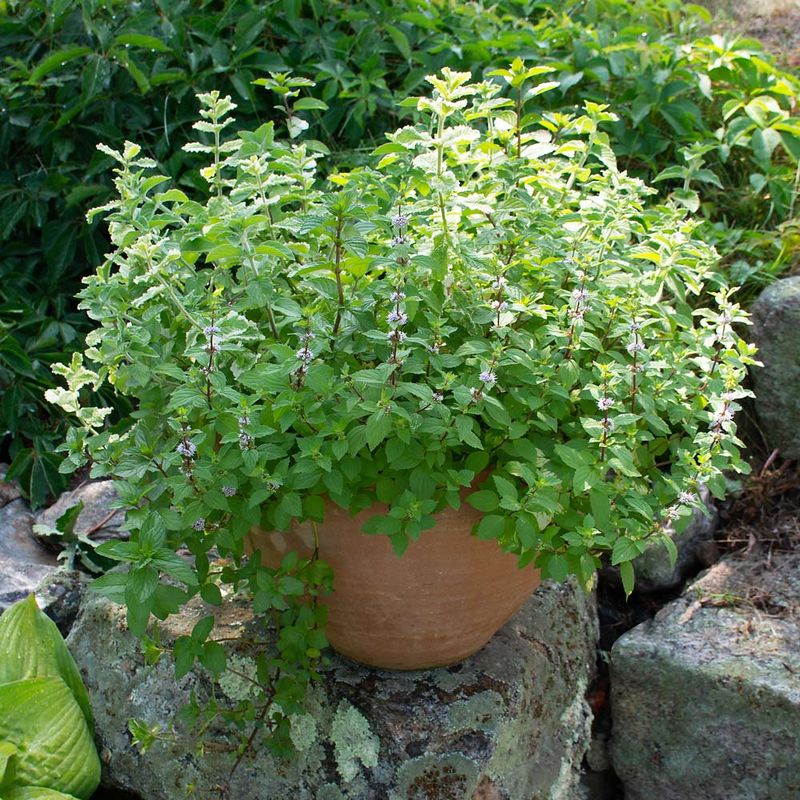
Mint has a reputation as the guest who never leaves, and against roaches that stubbornness pays off.
Mentha species pump out menthol, a scent so strong it overloads a cockroach’s chemical sensors and sends it back the way it came.
The same vigor that annoys gardeners becomes an asset along a back wall, because mint fills gaps faster than roaches can find them.
It runs well across most of Texas in USDA Zones 5 through 9, handling both the humid Gulf Coast and North Texas cold snaps.
Give it partial shade and steady moisture, since full afternoon sun in South Texas can crisp the leaves past 95 degrees.
But here is the catch.
Mint spreads by underground runners and will swallow a bed whole, so plant it in a buried 12 inch pot or a contained strip 18 inches from anything precious.
Water it often, keep the soil damp, and shear it back hard when it flowers.
Crush a handful by the door and the whole threshold smells like a candy cane, sharp enough to make a roach reconsider its whole evening.
8. Marigolds Post A Bright Warning Sign

Bright and cheerful up top, marigolds are quietly ruthless down below.
The strong, musky scent of Tagetes species reads as pure alarm to roaches and plenty of other crawlers, so a border of them acts like a fragrant fence.
They earn their place because they defend at ground level, right where roaches scout for a way under the threshold, and they do it while looking like a welcome mat of gold.
Marigolds grow all over Texas as warm-season annuals, thriving once soil warms past 60 degrees in spring.
Plant them in full sun, six hours or more, in almost any decent soil, from East Texas sand to amended Central Texas clay.
Space them 8 to 12 inches apart for a solid ribbon of color and scent.
Water at the base to keep the leaves dry, roughly an inch a week, and pinch off spent blooms to keep new ones coming through the long growing season.
Line the walkway to the back door with them and you get a low, glowing barrier that greets your guests and turns the roaches around before they ever reach the mat.
9. Lavender Sweetens The Air And Sours The Welcome
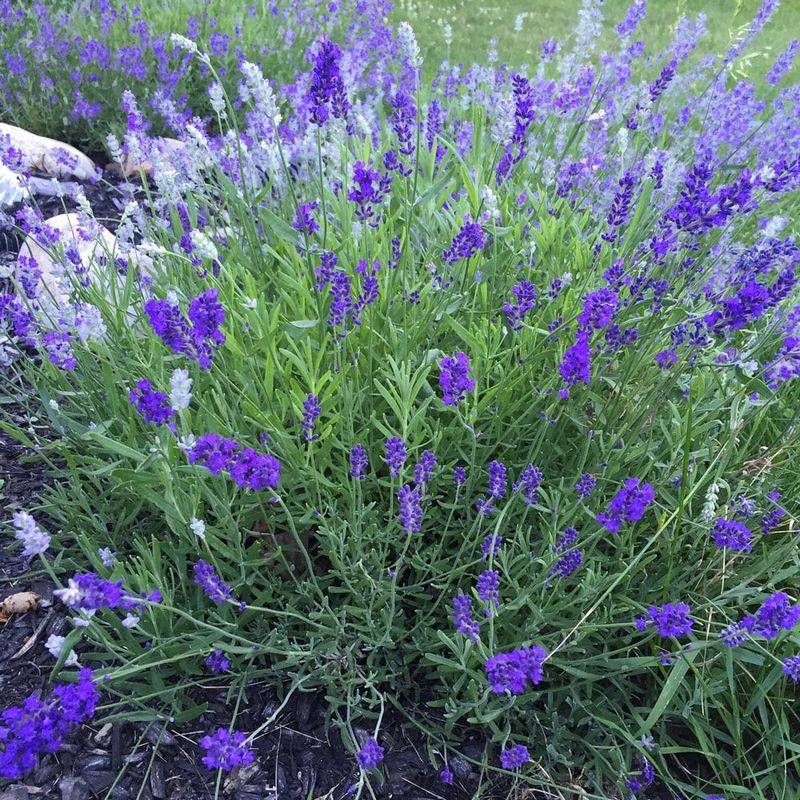
You breathe in lavender and relax.
A roach breathes it in and bolts.
The essential oils that make Lavandula so soothing to people read as a chemical warning to cockroaches, which is a rare plant that pulls double duty on a porch.
That contrast is the whole reason it belongs here, calming for the reader on a porch evening while quietly hostile to anything with antennae.
Lavender likes it dry and bright, so it fits the Hill Country and West Texas better than the humid Gulf Coast.
Spanish and hybrid types handle Texas heat best across USDA Zones 7 through 9.
It demands full sun and fast-draining, alkaline soil, which means blackland clay needs gravel or shale worked in deep, or the roots stay soggy and fail.
Space plants two to three feet apart, water sparingly once established, maybe every 10 days, and never crowd the crowns.
Poor airflow in Texas humidity invites rot faster than any pest.
Set a few pots by the back door and each brush of the sleeve releases that scent.
You get a moment of calm, and the roaches get a firm no.
10. What Else Actually Helps Keep Roaches Away

Plants pull real weight at the door, but they are one layer, not a magic solution.
A hungry roach will still test any yard that offers a free meal.
The German cockroach, Blattella germanica, sets up shop indoors, while the American and smokybrown kinds, Periplaneta americana and Periplaneta fuliginosa, wander in from outside.
All of them are hunting the same three things, food, water, and a warm crack to hide in.
Texas A and M AgriLife Extension is blunt about the fix.
Sanitation and sealing matter more than anything else.
Wipe counters and floors nightly, fix that dripping faucet under the sink, and haul the trash before it sits.
Then walk your foundation with a tube of caulk.
Seal gaps around pipes, close cracks wider than an eighth of an inch, and add sweeps to doors that show daylight underneath.
Even a quarter inch gap is an open invitation.
Now place your scented plants where they reinforce that work, tight against doors, windows, and the perimeter.
The caulk closes the gate, and the rosemary, mint, and lavender make the whole approach smell wrong.
Do that, and the next warm morning on the patio stays yours.
Just you, the coffee, and no darting shadows at all.