
This Easy North Carolina Lawn Swap Feels Better Faster Than Most People Expect
Follow us on Google
Somewhere between the water bill and the Saturday mowing routine, a lot of North Carolina homeowners start wondering if there is a better way.
White clover has been quietly showing up in yards across the Piedmont and beyond, and people are genuinely curious about what it can and cannot do.
The swap is real, the benefits are real, but the full picture is a little more nuanced than the boldest headlines suggest.
White Clover Is the Likely Lawn Swap
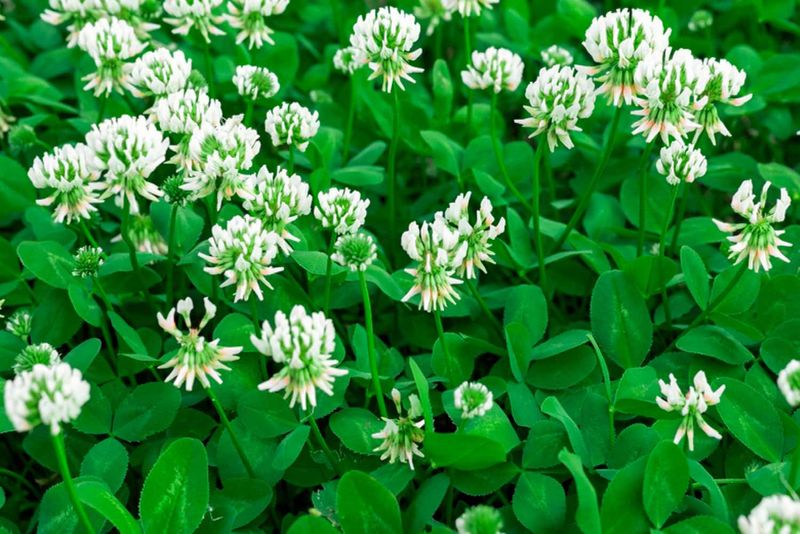
Meet Trifolium repens, better known as white clover, the plant most likely behind every low-maintenance lawn story you have been seeing lately.
It grows in a low, spreading mat, typically reaching about 4 to 6 inches tall, with creeping stems that root at the nodes as they travel outward.
The NC Extension Gardener Plant Toolbox notes that those stems can spread 12 inches or more, which is a big part of why clover fills gaps without much help from you.
What draws North Carolina homeowners to it is the combination of a softer look underfoot and the sense that the lawn is doing more on its own.
Some people describe the feel as pleasant compared with coarse turf grasses.
Whether you find it noticeably softer or greener is honestly a personal call, not a measured outcome, and your experience will depend on your soil, your existing grass, and how much sun hits the yard.
The more realistic picture, according to NC State Extension, is a mixed lawn where clover and grass share the space rather than a flawless all-clover carpet.
North Carolina’s growing conditions are generous to a wide range of plants, which means volunteers will show up.
That is not failure.
Treating clover as a practical component of your yard, especially in suitable low-traffic areas, gives you the most honest starting point for this swap.
The Practical Payoff Comes From Fewer Inputs
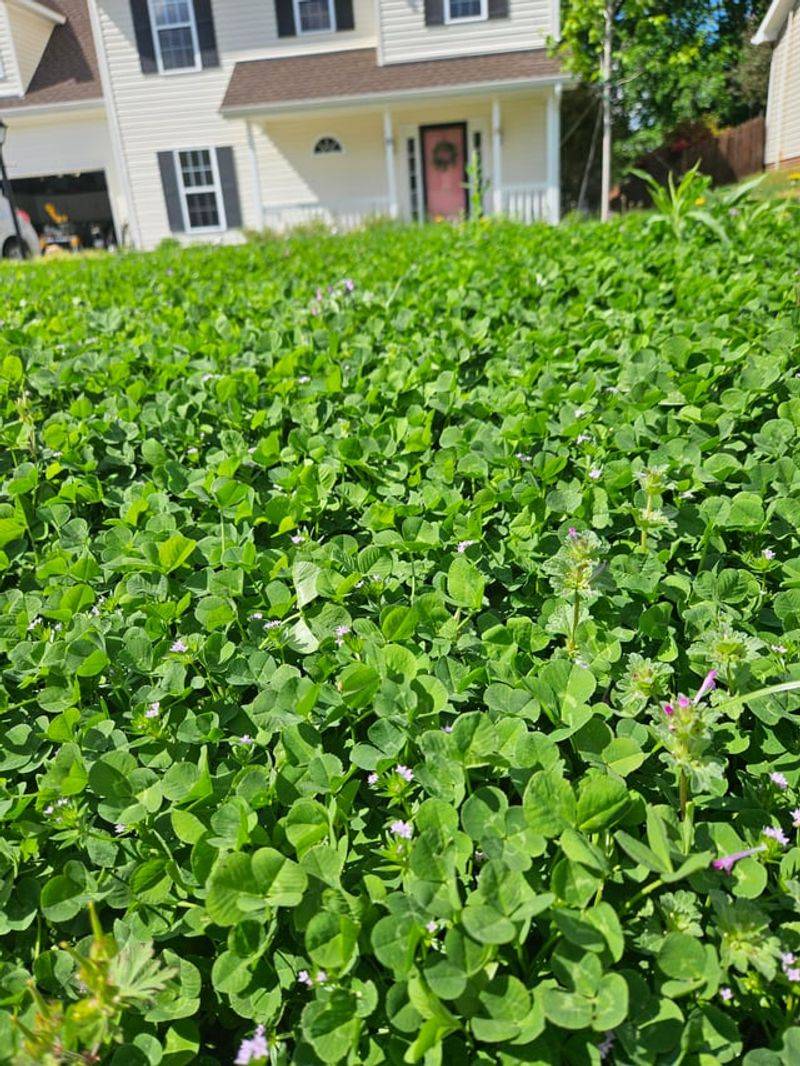
The appeal of white clover is not really about one dramatic transformation.
It is about the small accumulations of not having to do things.
NC State Extension reports that clover generally requires much less mowing and water than traditional grass, thrives in sun to partial shade, adapts well to the acidic soils common across much of North Carolina, and does not need routine nitrogen fertilizer to stay green.
After mowing, white clover responds with vigorous regrowth and continued low spreading rather than retreating.
That spreading habit is part of why the lawn can look reasonably full without you doing much, though calling it greener or faster-filling than you expected is a subjective impression, not a guarantee.
Your results will depend on soil moisture, competition from existing turf, and how much heat the spot absorbs during a typical Piedmont summer.
On the water side, NC Cooperative Extension’s Burke County office notes that clover prefers moist soil, which means it can struggle during prolonged heat or drought.
The honest comparison is that it may reduce your irrigation needs after it establishes, not eliminate them.
On the fertilizer side, clover fixes atmospheric nitrogen through a relationship with root bacteria, which can reduce added nitrogen in some mixed stands, but soil testing still drives smarter nutrient decisions than any blanket rule.
The lower-input life is genuinely possible here, just not in the zero-effort form the most enthusiastic posts sometimes imply.
A Mixed Lawn Usually Fits North Carolina Better
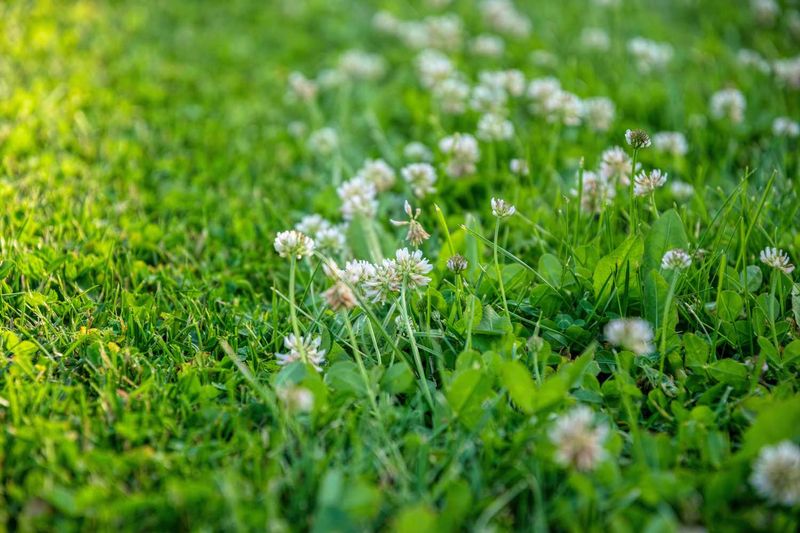
Here is where expectations most often trip people up.
Many homeowners picture a uniform clover carpet, every inch covered, perfectly consistent, no grass in sight.
NC Cooperative Extension’s Lee County office is candid about this: a pure clover monoculture is often unrealistic in North Carolina, and a realistic clover lawn will usually include grasses and other ground covers sharing the space.
The state’s climate is simply too hospitable to too many plants.
Bermuda, fescue, and assorted volunteers will find their way in, especially in the Piedmont’s red clay soils or the Coastal Plain’s sandier ground.
That mix is not a sign that something went wrong.
An informal, somewhat varied stand is actually easier to maintain than a monoculture that requires constant weeding to stay pure.
Overseeding clover into an existing lawn is a different project than starting a mostly clover planting from scratch.
Overseeding works with what is already there, letting clover fill thin spots and low-input areas while grass holds the heavier-use zones.
NC State Extension specifically recommends retaining turf in areas with heavier traffic, which is practical advice for any family yard.
Grass in the stand means you have a built-in buffer for the spots that take more wear, and clover fills in the rest with considerably less effort on your part.
Prepare the Soil Before You Broadcast Seed
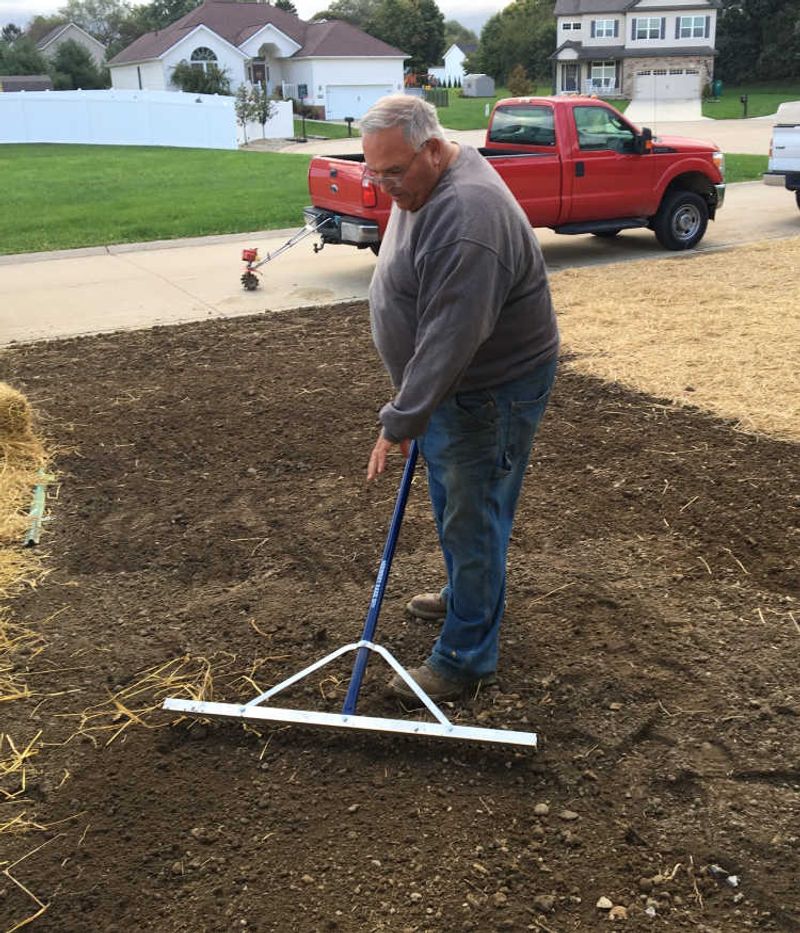
Good seed-to-soil contact is the single biggest factor between clover that sprouts and clover that just sits on the surface going nowhere.
The preparation step is not glamorous, but skipping it is where most early disappointments start.
For an established lawn, NC State’s organic lawn renovation guidance recommends mowing the grass low, raking out thatch, and then coring or raking the surface to expose soil without fully removing the existing turf.
That exposed soil gives the tiny clover seed somewhere to actually land and germinate.
For bare areas, the sequence shifts slightly.
Loosen the top 4 to 6 inches of soil, smooth the surface, and focus on creating firm, even contact between seed and ground.
NC State’s guidance on establishing a new lawn emphasizes that surface preparation directly affects germination success, so taking the extra time here pays off.
Before you reach for lime or fertilizer, run a soil test.
NC State’s soil testing guide explains how to collect and submit a sample, and the results will tell you what your specific yard actually needs rather than guessing.
White clover seed is small enough that mixing it with compost or another light organic material makes broadcasting it evenly much easier.
For the correct seed rate, check the product label on whatever cultivar you purchase, or call your local Extension office, because the right amount depends on the cultivar, your planting method, and whether you are overseeding or starting bare soil.
NC Cooperative Extension points toward the seed label as the reliable source for that number.
Choose Timing From Local Conditions
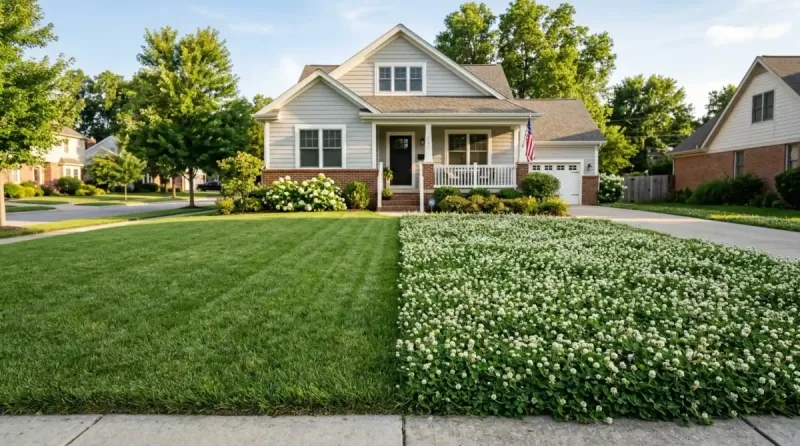
Planting timing for white clover is one of the more genuinely confusing parts of this project, because the advice you find depends on which part of North Carolina you are in and which source you read.
The NC State Extension lawn handbook gives a spring window, recommending you sow after nighttime temperatures remain consistently above 40 degrees Fahrenheit and keep the soil moist until germination.
That is solid general guidance for cooler parts of the state.
The Piedmont tells a slightly different story.
NC Cooperative Extension’s Lee County office favors late summer to early fall for establishment, with a window of roughly September 15 through October 15 for white clover in the Piedmont.
Cooler temperatures and fall moisture patterns give new seedlings a better start than the heat of a North Carolina summer, which can dry out a seedbed fast.
Neither window is universally correct for every region.
Mountain yards in zones 6a and 6b face different frost timing than coastal areas running 8a and 8b, and the Sandhills and Coastal Plain have their own rhythms.
Your local Extension office is the most reliable place to get a timing recommendation matched to your specific county and conditions.
One rule that holds everywhere: keep the seedbed consistently moist until germination.
Clover seed is small and dries out quickly.
There is no universal fill-in timeline to promise, because weather, soil, competition, and seed quality all shape how the first few weeks go.
Patience and moisture are the two things every region has in common.
Map Traffic and Flowering Before You Plant
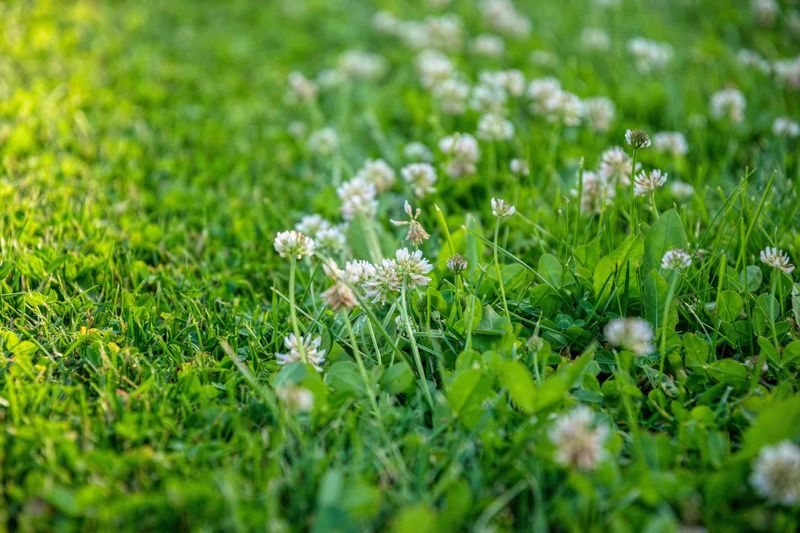
Before you scatter a single seed, walk your yard and mentally mark where the action actually happens.
The back corner where the kids run sprints to the fence is not the same as the shady strip along the side of the house.
White clover handles light to moderate foot traffic better than moss, but NC State Extension is direct that it does not tolerate heavy running and playing well.
Soccer zones, dog fetch paths, and the patch where everyone crowds around the grill need retained turf, stepping stones, or a defined path, not clover.
Flowering is the other factor most people do not think about until barefoot season arrives.
White clover blooms attract honeybees and other pollinators, which is genuinely good news for the yard’s broader health, but a flowering patch right next to where kids run barefoot or where you set out chairs for a cookout is a placement problem worth solving in advance.
Separating flowering areas from concentrated human traffic is the practical fix, or you can mow the clover before heavy use to reduce active blooms temporarily.
Pesticide use around flowering clover requires extra care.
University of Georgia Cooperative Extension’s turf pest management guidance warns against spraying when bees are actively foraging on clover or other flowers.
Always read the product label and follow its directions for protecting pollinators.
A little mapping before planting saves you from redesigning the whole yard after the fact.
Lower Maintenance Still Requires Ongoing Care
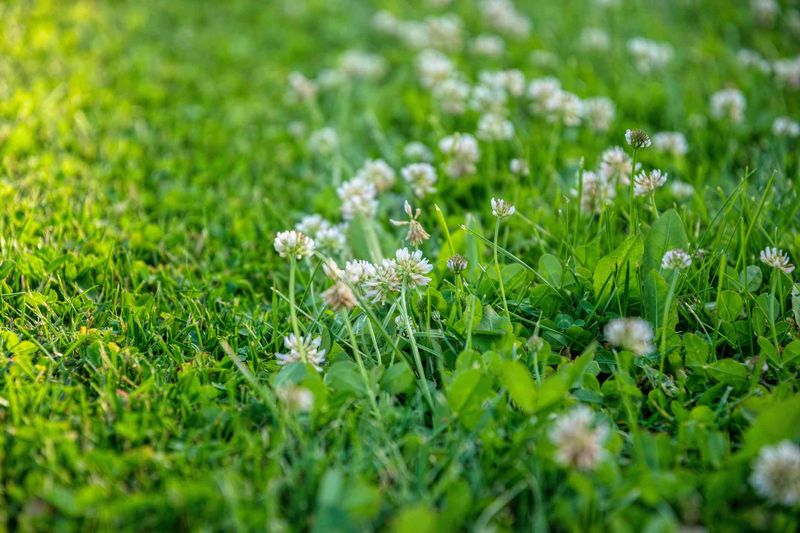
Some sources mention that a clover lawn might need mowing only a couple of times per year, and that can be true in specific situations.
But mowing frequency depends on the cultivar you planted, how much rain your area gets, how tall you want the stand, whether you are managing flowering, how many weeds are competing, and how much grass remains in the mix.
NC Cooperative Extension frames it as a possibility, not a promise, and that distinction matters when you are setting expectations for your own yard.
Watering does not stop at germination.
Once clover establishes, it generally needs less irrigation than traditional turf in comparable conditions, but North Carolina summers can push heat and drought beyond what any low-input plant handles without some help.
During prolonged dry stretches, especially in the Sandhills or the Coastal Plain where sandy soils drain fast, occasional watering protects the stand.
NC State Extension describes clover as preferring moist soil, so watching for stress during summer heat is part of the job.
On nutrients, clover does fix atmospheric nitrogen through root bacteria, and that can reduce how much added nitrogen a mixed lawn needs.
But do not automatically cancel every fertilizer application or skip soil testing.
A soil test from NC State tells you what your specific yard needs, and a mixed stand with significant grass may still require phosphorus or potassium adjustments that clover cannot provide.
Edge control and monitoring for bare or heavily worn patches also stay on the list.
Lower maintenance is genuinely achievable here, just not zero maintenance.
Use Clover as One Layer of a Safer, Wilder Yard
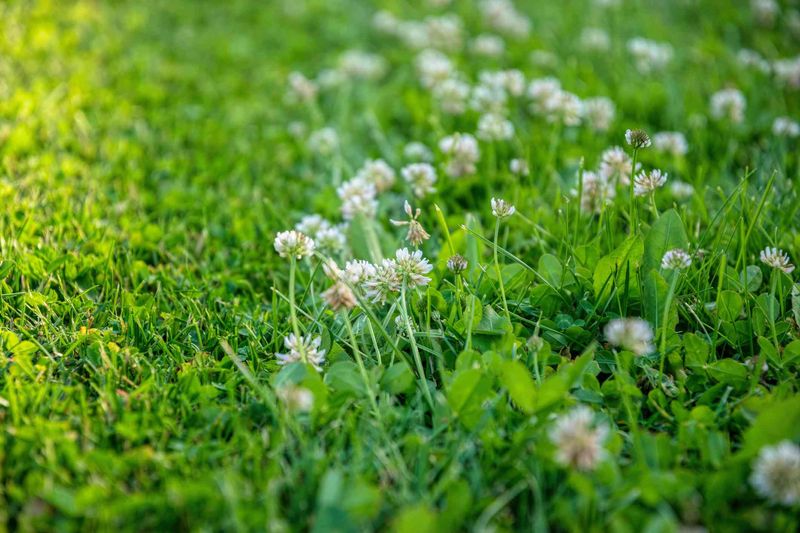
White clover originated in Europe and has naturalized across North America over centuries.
The NC Extension Gardener Plant Toolbox confirms that origin clearly, which means calling it a native North Carolina plant would not be accurate.
Its flowers genuinely provide nectar for honeybees and a range of other pollinators, and that benefit is real, but a single low plant layer does not supply the nesting sites, host plants, shelter, seeds, or seasonal variety that diverse native plantings offer.
The stronger move is to treat clover as one component of a yard that also includes native beds, shrubs, trees, or unmowed margins where practical.
NC State Extension specifically recommends native ground covers and directs homeowners to the Extension Gardener Plant Toolbox for site-matched choices.
Plants like goldenrod, Joe Pye weed, and native asters can add the deeper habitat layers that clover alone cannot.
Lee County Extension’s realistic clover assessment frames it the same way: clover works best as part of a broader yard strategy, not as a complete answer.
On ticks, the clover swap does not change your prevention approach at all.
CDC guidance on preventing tick bites calls for mowing where appropriate, removing leaf litter, clearing tall grass and brush near the house, and placing a 3-foot-wide wood-chip or gravel barrier between lawn and wooded areas.
CDC Lyme disease prevention guidance adds regular tick checks and pet prevention as separate layers of protection that yard design alone cannot replace.
A clover lawn can make your yard feel softer and a little more alive, and that is a genuinely good thing.
The yards that work best are the ones where clover earns its spot alongside native plants, retained turf, and the unglamorous but necessary habits that actually keep your family safer outside.