
The Watering Habit That Leaves Hydrangeas Wilted Usually Starts With Good Intentions
Follow us on Google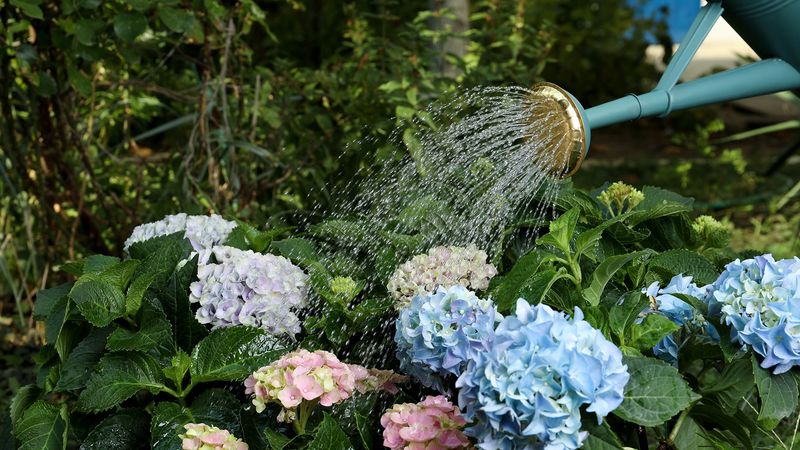
You walk outside on a hot afternoon, spot your hydrangea drooping like it gave up, and grab the hose.
That response makes complete sense, but it can quietly make things worse over time.
Repeated quick splashes at the surface may not be reaching the roots that actually need water, and in some cases the soil is already wet enough.
Knowing what the leaves are really telling you changes everything about how you care for this plant.
The Quick-Watering Response Can Backfire
Spotting a droopy hydrangea and reaching for the hose is a completely understandable reaction.
The leaves look defeated, the day is hot, and water feels like the obvious answer.
But a quick surface splash repeated several times a day can create a different set of problems than the one you were trying to solve.
When water only wets the top inch or two of soil, roots have little reason to grow deeper.
Over time, University of Minnesota Extension guidance on watering established trees and shrubs warns that light, frequent watering encourages shallow root systems that are far more vulnerable to summer heat and dry spells.
The plant becomes dependent on you showing up with the hose every few hours, and it still looks stressed.
There is a second risk that catches many gardeners off guard.
If the surface looks dry but the soil a few inches down is still wet from the last watering, adding more water can push the root zone toward saturation.
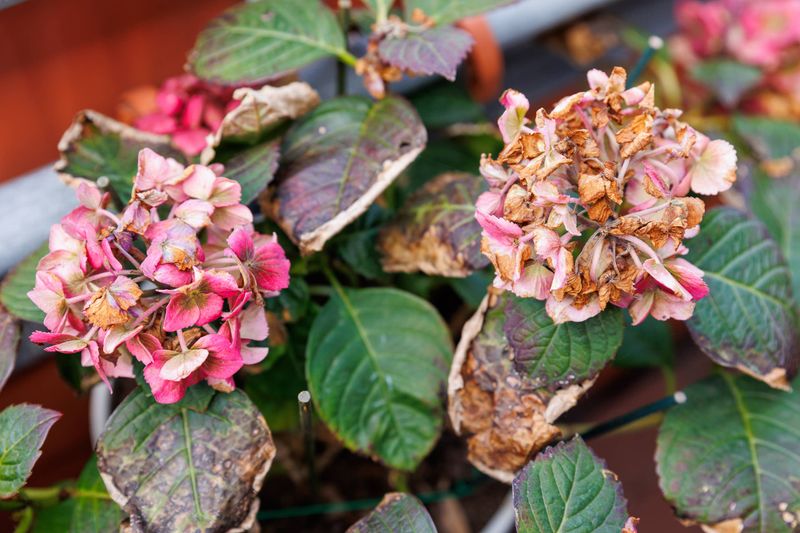
Roots sitting in waterlogged soil lose access to oxygen, and UGA Extension’s heat-wave watering guidance notes that this can produce the same wilted appearance as dry soil, making the problem look identical to the one you were trying to fix.
The answer is not simply to water less.
Some hydrangeas genuinely need more water than they are getting.
The correction is to check the soil and drainage first, then decide what the root zone actually needs before picking up the hose.
That one extra step changes a reactive habit into a reliable routine.
Afternoon Wilt Does Not Prove Dry Soil
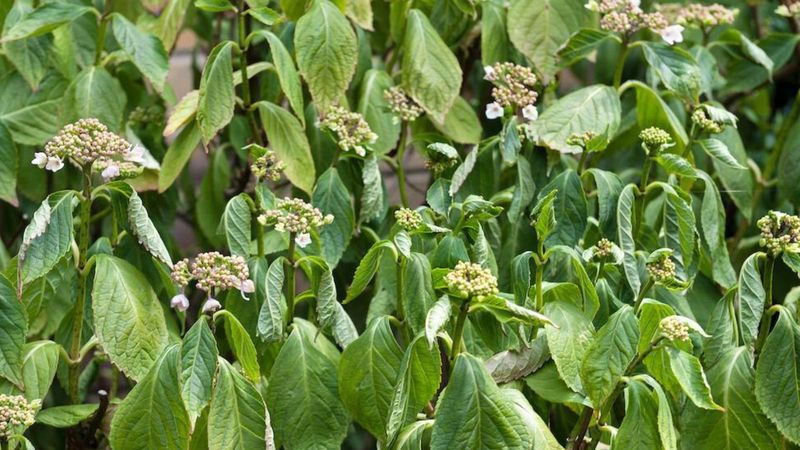
Bigleaf hydrangea, Hydrangea macrophylla, has some of the largest leaves of any common garden shrub, and that size comes with a trade-off.
On a hot, dry, or windy afternoon, those broad leaves lose water to the air faster than the roots can pull it up from the soil.
The result looks like drought stress even when the ground is perfectly moist.
University of Illinois Extension’s explanation of heat stress in plants describes this as a temporary imbalance between water moving out through the leaves and water moving in through the roots.
The plant is not broken.
It is just losing the afternoon battle against evaporation, and it may recover completely once temperatures drop in the evening.
That recovery pattern is a useful clue.
If your hydrangea droops by two or three in the afternoon but looks normal again by the next morning, heat stress is a likely contributor.
Think of it the way a dog pants on a hot day, not a sign of illness, just a response to conditions.
Overnight recovery does not guarantee everything is fine, and it does not rule out other issues.
But it does suggest that pouring more water onto soil that may already be moist is not the right first move.
Alabama Cooperative Extension’s hydrangea care guidance notes that exposed afternoon sun is a common stress factor for bigleaf types in particular.
Wilt that persists into the morning, especially on a cool day, points toward something that deserves a closer look at the soil, roots, and drainage before you water again.
Check Soil Moisture Before Reaching for the Hose
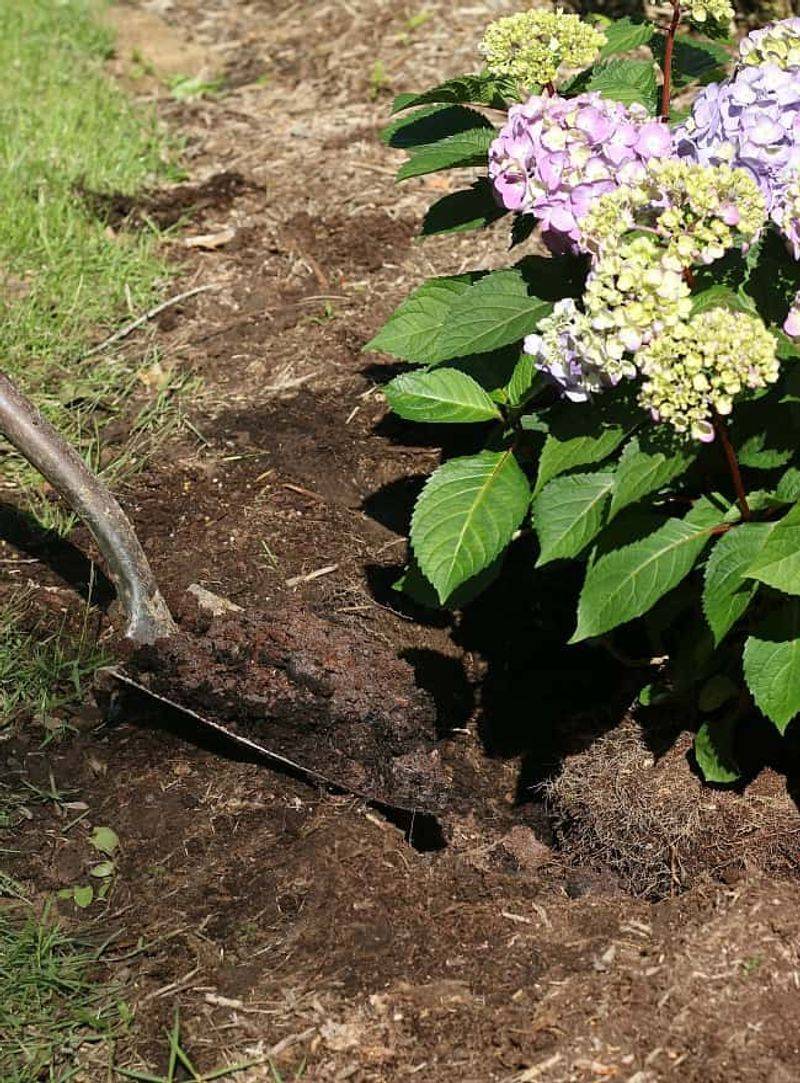
Before the hose comes out, spend thirty seconds checking what is actually happening below the surface.
Push a finger two or three inches into the soil under the outer edge of the plant’s canopy, where the feeder roots tend to concentrate.
If the soil feels cool and damp at that depth, the plant likely has enough moisture for now.
For established woody shrubs, University of Minnesota Extension recommends checking whether the upper 6 to 9 inches of the root zone are dry before watering.
A trowel or narrow spade makes that depth easy to reach.
This is a general guideline for established plants in garden beds, not a fixed rule for every situation.
Containers dry out faster and need more frequent checks.
New plantings have smaller root balls and may need attention every day or two during hot weather.
University of Connecticut’s hydrangea fact sheet describes the ideal soil condition as consistently moist but well-drained, which means you are aiming for a middle zone.
Soil that crumbles and feels dry at 3 to 4 inches is ready for water.
Soil that feels damp and holds together without squeezing out water is fine.
Soil that feels wet, heavy, and cold, or that holds standing water, signals a drainage issue rather than a watering deficit.
Containers deserve their own check.
University of Illinois Extension’s container watering guidance points out that pot size, material, and sun exposure all change how fast a container dries.
A small pot in full sun on a concrete patio may need daily attention during a heat wave, while a large pot in shade may hold moisture for several days.
Let the soil at the root zone, not the surface and not the leaves, be the signal.
Give Dry Soil a Slow, Thorough Soak
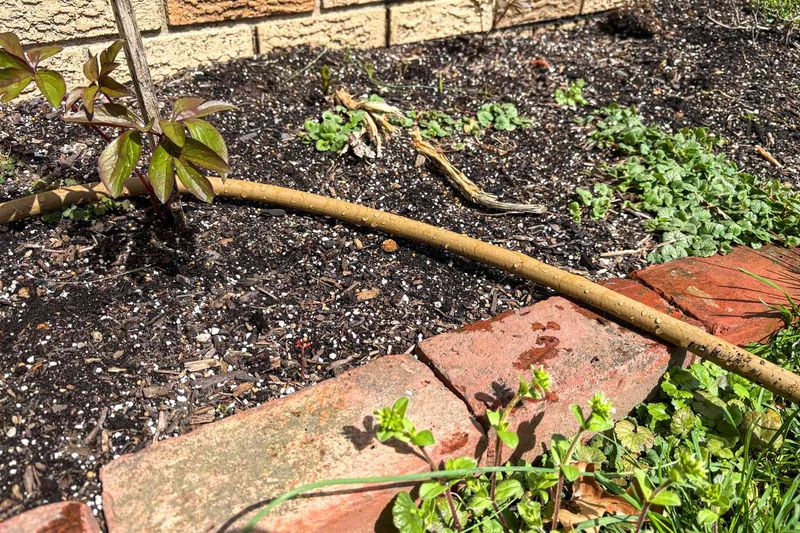
When the soil check tells you the root zone is beginning to dry out or is already dry at the relevant depth, that is the time to water, and the way you do it matters as much as the timing.
A soaker hose or drip hose laid across the root area is the most efficient option.
It delivers water directly to the soil, cuts down on evaporation, and keeps the leaves dry.
University of Wisconsin-Madison Extension explains why keeping water off hydrangea foliage matters: prolonged leaf wetness in warm, humid conditions can encourage some fungal leaf diseases.
Rain cannot be controlled, but irrigation can be directed.
Aim the water at the soil, not the flower heads or leaves.
The goal is to thoroughly moisten the root zone, not to run the hose for any specific number of minutes.
Flow rate, soil type, and plant size all change how long that takes.
University of Connecticut’s hydrangea care guidance offers a useful starting point: roughly 1 inch of water per week under normal conditions, and closer to 2 inches during hot, dry stretches.
But rainfall, sandy versus clay soil, shade coverage, and plant age all shift those numbers.
If water starts running off before the soil is adequately moist, do not stop entirely.
Reduce the flow, pause for a few minutes, or redirect the water to a different part of the root zone, then continue.
Persistent runoff may point to compacted soil, heavy clay, or a slope that needs attention beyond watering technique.
Minnesota Extension’s woody-plant watering guidance reinforces the core principle: deep, thorough soaking followed by a period of appropriate drying builds stronger, deeper roots than frequent shallow sips ever will.
Wet Soil Can Make a Hydrangea Look Thirsty
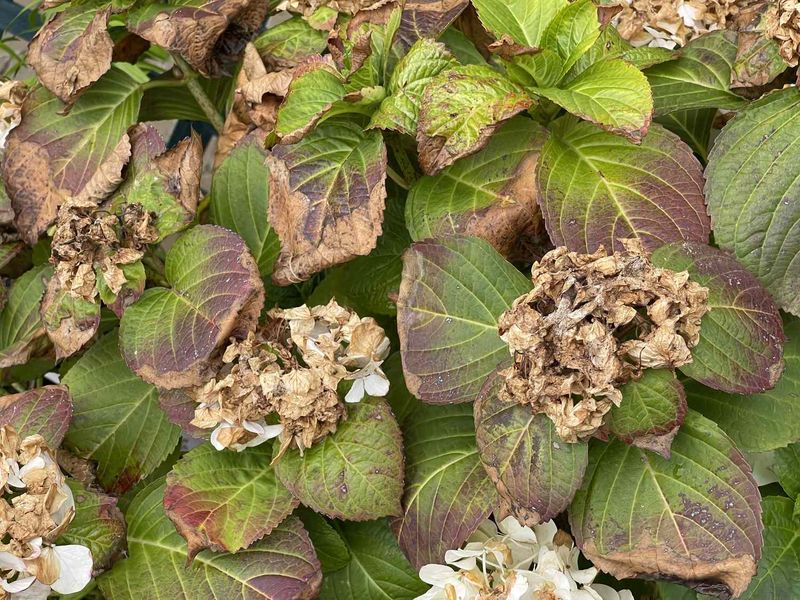
Here is the part that surprises most gardeners.
A hydrangea sitting in soggy soil can wilt just as dramatically as one that has gone too long without water.
The leaves droop, the plant looks desperate, and every instinct says to add more water.
But adding water to an already saturated root zone makes the problem worse, not better.
Roots need oxygen as much as they need moisture.
Colorado State University Extension’s overview of water’s role in plant growth explains that waterlogged soil pushes air out of the pore spaces around roots, which disrupts normal root function.
When roots cannot work properly, the plant cannot move water up through the stems and leaves, and drought-like wilting follows even though the soil is soaking wet.
Penn State Extension’s soil management guidance for ornamentals points to heavy clay, compacted soil, and low-lying planting spots as common contributors to this problem.
Downspouts that empty near a shrub bed, beds that collect runoff from a driveway or slope, and areas that stay wet for days after rain can all create conditions where the soil never drains well enough for roots to breathe.
Walk the bed after a heavy rain and check whether water is pooling or draining away within a few hours.
UGA Extension’s guidance on avoiding overwatering recommends pausing irrigation entirely when the soil remains saturated, and addressing drainage before resuming a regular watering schedule.
NC State Extension’s profile of Hydrangea macrophylla confirms that well-drained soil is a core requirement, and consistently soggy conditions are a stress factor rather than a benefit.
Adjust Mulch, Light, and Monitoring to the Site
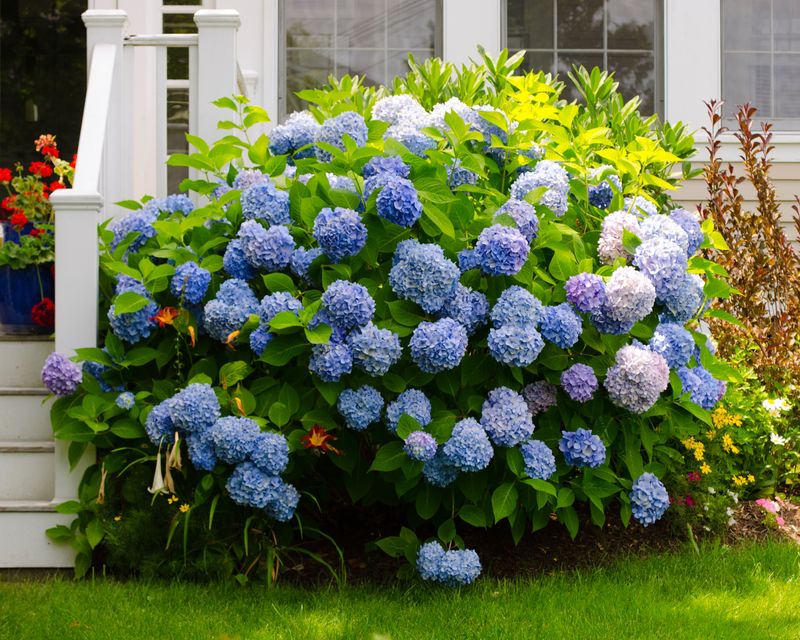
Watering technique only solves part of the problem when the site itself is working against the plant.
Two practical adjustments, mulch and light placement, can reduce how often your hydrangea runs into stress without requiring you to change your whole watering schedule.
A 2-to-4-inch layer of organic mulch, shredded bark or wood chips work well, slows evaporation from the soil surface and keeps the root zone cooler during hot afternoons.
University of Illinois Extension’s drought stress guidance supports this range for moisture conservation in garden beds.
University of Georgia Extension’s regional hydrangea publication suggests a wider 3-to-5-inch range for bigleaf hydrangea in warmer climates.
Either approach helps, as long as you keep the mulch a few inches away from the base of the stems to allow airflow.
Light exposure matters differently depending on which hydrangea you are growing.
NC State Extension’s Hydrangea macrophylla profile notes that bigleaf hydrangea generally performs best with dappled light or some protection from hot afternoon sun.
University of Illinois Extension’s shrub selector and University of Minnesota Extension’s shade gardening guidance both distinguish smooth hydrangea, Hydrangea arborescens, and panicle hydrangea, Hydrangea paniculata, as generally more tolerant of sun when soil moisture is consistently adequate.
A blanket rule about shade or sun does not apply across all three types.
Newly planted shrubs, containers, and plants under roof eaves need closer attention than an established in-ground shrub.
Penn State Extension’s ornamental planting guide explains that a new shrub’s root system may not yet extend beyond the original root ball, which means it can dry out quickly even when surrounding soil feels moist.
University of Illinois Extension’s container watering guidance reinforces that pots, especially smaller ones in full sun, may need daily checks during a heat wave rather than a fixed every-other-day schedule.
Know When Wilt Signals a Bigger Problem

Most afternoon wilt on a hot day is temporary and manageable with the steps above.
But some wilt is telling you something that a watering adjustment will not fix.
Learning to read the difference can save a plant, or at least help you ask the right questions before the situation gets worse.
Start by comparing how the plant looks at two different times of day.
University of Illinois Extension’s heat stress overview and Colorado State University Extension’s plant water physiology resource both point to overnight recovery as a sign that heat stress is involved.
A hydrangea that droops at 3 p.m. but looks normal at 8 a.m. is responding to conditions, not necessarily declining.
Persistent wilt in the morning is a different story.
If the leaves are still hanging down before the heat of the day builds, check the soil and drainage carefully.
UGA Extension’s overwatering guidance notes that continued morning wilt, combined with yellowing leaves, stunted new growth, or a general look of decline, warrants a broader investigation beyond watering frequency.
Soft or darkened roots, stem dieback, leaf spots, or wilting that spreads from one branch outward rather than affecting the whole plant evenly are all signs that disease, root damage, or a structural problem may be involved.
University of Minnesota Extension’s established-shrub watering guide reinforces the broader principle: look below the leaves first, then give the roots and site the help the evidence actually supports.
A hydrangea that keeps struggling after you have corrected the watering and improved the drainage deserves a call to your local cooperative extension office.
The leaves droop for many reasons, and the soil usually knows which one it is.