
The Only Roses North Carolina Gardeners End Up Trusting After A Brutal Summer
Follow us on Google
You walk out to the rose bed in late July, coffee in hand, and the leaves are already speckled black and dropping fast.
The humidity sat like a wet towel all week, an afternoon storm rolled through, and your fancy hybrid tea looks like it gave up on you.
That is the story for a lot of North Carolina yards, where muggy heat and surprise cold snaps punish the wrong rose fast.
So here are the roses that actually hold the line here, the ones neighbors keep planting after the pretty ones let them down.
1. Knock Out Roses Earn Their Reputation Honestly
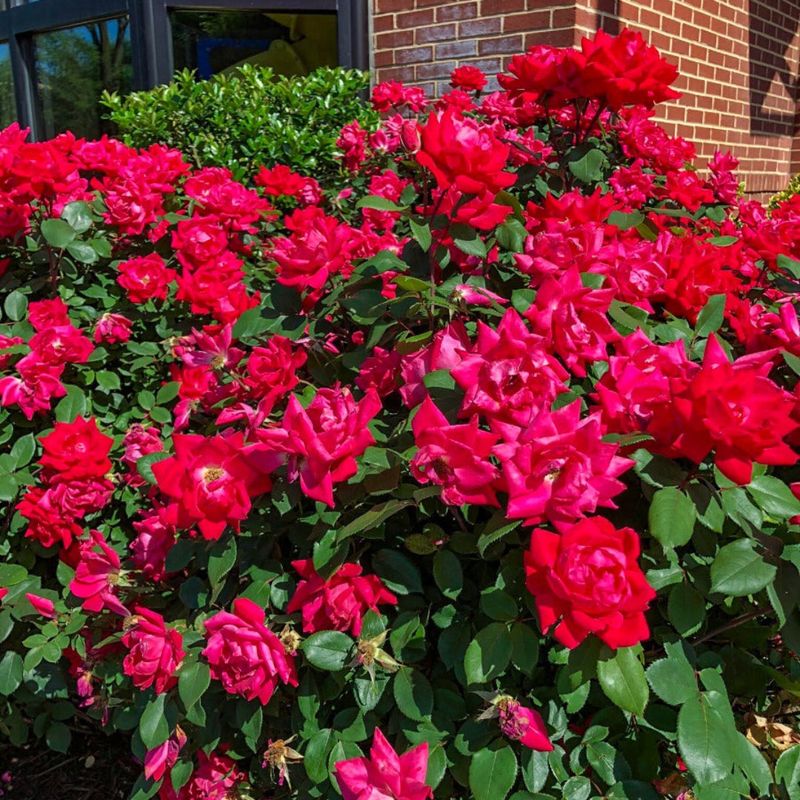
Drive through almost any Piedmont subdivision and you will spot them, blooming their heads off in a bed nobody seems to fuss over.
Knock Out roses, botanically Rosa ‘Radrazz’ and its many cousins, became the default trusted rose for a reason.
They shrug off black spot and powdery mildew, the two fungal troublemakers our humidity feeds all summer.
Here is the plain reason they work.
Most old hybrid teas need spraying every week to stay clean, but these were bred to resist the fungus that thrives in warm, wet Carolina air.
They bloom steady from April through the first hard frost, often into November down in the Sandhills.
Give them at least six hours of sun, morning sun especially so the dew dries fast off the leaves.
Space them about 3 feet apart, since they fill out to roughly 3 to 4 feet tall and wide.
Prune once in late winter, cutting them back by about a third, and that is genuinely most of the work.
One honest catch.
In our steamiest stretches a little mildew can still show up, and planting them in big solid blocks raises the risk of rose rosette disease.
Space them out, mix in other plants, and you sidestep most of that.
The payoff is a shrub that keeps showing up for you when the weather does not.
2. Drift Roses Solve The Small Space Problem
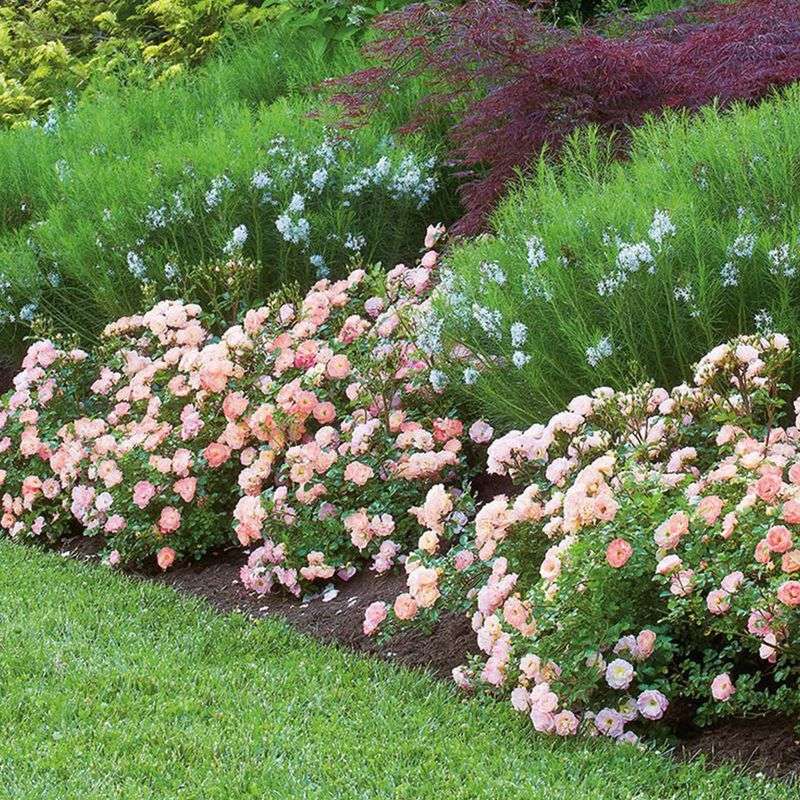
Picture the strip of dirt along your front walk, too tight for a big shrub but begging for color.
Drift roses were practically made for that spot.
Bred as a cross between full-size groundcover roses and miniatures, they stay low and wide, usually 1 to 2 feet tall and 2 to 3 feet across.
What surprises people is how tough that compact frame really is.
These inherit strong resistance to black spot, powdery mildew, and rust, plus enough winter hardiness to handle a random February cold snap in the mountains.
They keep blooming from mid-spring clear into mid-fall, and they handle a soggy week without sulking.
Tuck them along borders, in containers on the porch, or in a mass planting where you want a river of color.
Coral Drift, Peach Drift, and Red Drift are the ones NC gardeners reach for most, and a few, like Sweet Drift and Apricot Drift, throw off a gentle scent too.
Plant them about 2 feet apart for that filled-in look, water deeply during dry spells, and mulch a couple inches to keep the roots cool.
They are not a magic fix for a shady bed, they still want their six hours of sun.
But for the fussy little spaces most of us have, they quietly earn their keep.
3. Oso Easy Roses Live Up To The Name
Some plants overpromise.
Oso Easy roses mostly deliver, which is why they keep landing in trusted-rose conversations across the Carolinas.
The whole line was selected for disease resistance and steady performance in the kind of steamy conditions that wreck lesser roses by August.
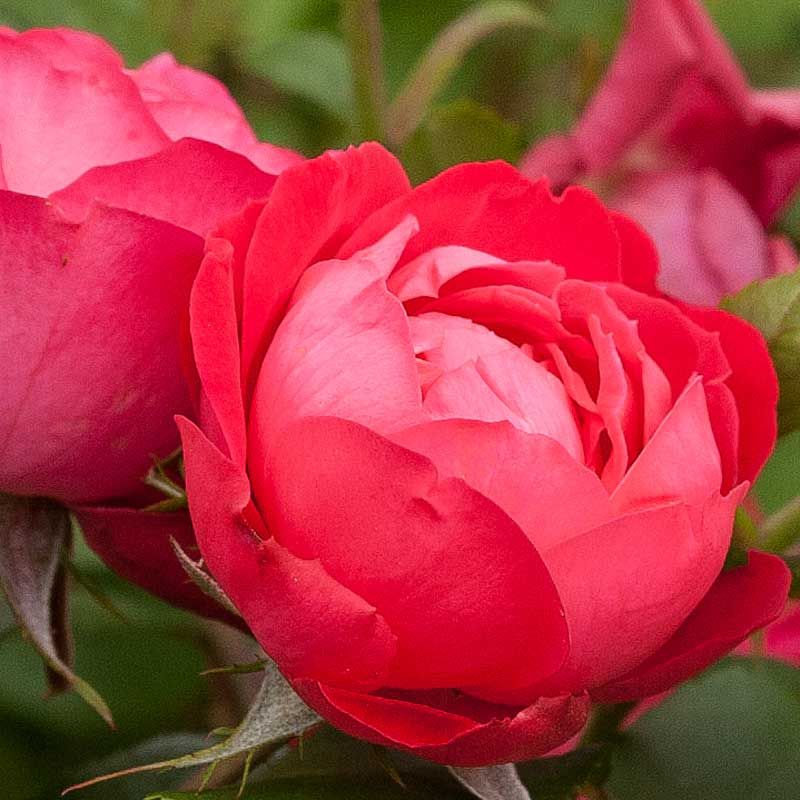
The standout for many folks is Oso Easy Double Red, a shrub covered in deep red double blooms that keeps going with barely any babying.
Insect trouble tends to stay light, and you are not out there spraying fungicide every weekend just to keep the leaves on it.
Set them in full sun with good airflow, since crowding is what invites fungus in our humid air.
Most Oso Easy types land in the 1.5 to 3 foot range, so give each one roughly 2 to 3 feet of elbow room.
Feed once in spring, mulch, and water during the dry July and August stretches.
Late winter is your pruning window, a light shaping to keep them tidy.
Think of them as the rose for the gardener who wants blooms without a maintenance calendar.
Not zero effort, but genuinely close to it, and that honesty is the whole appeal.
4. Old Tea Roses Were Built For Southern Heat
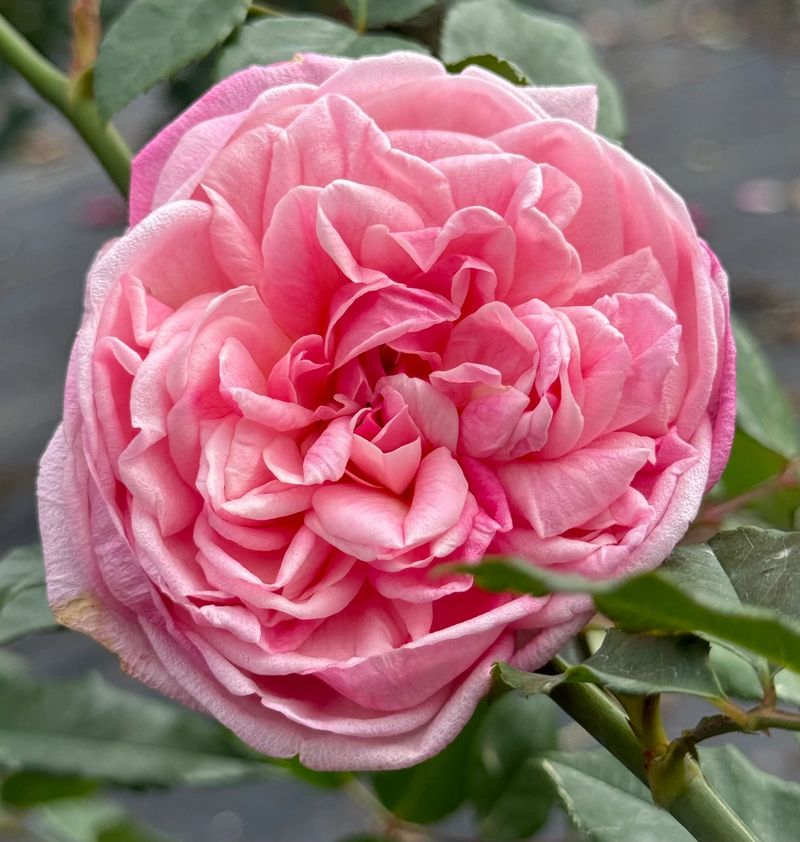
Long before anyone bred a modern landscape rose, Southern gardeners leaned on Tea roses to survive the swelter.
These are old garden roses, the heirloom kind your great-grandmother might have grown, and they were practically designed for humid heat like ours.
Names like ‘Souvenir d’un Ami’, ‘Monsieur Tillier’, and ‘William Allen Smith’ come up again and again in Southeast rose circles.
They grow vigorously, resist disease well, and reward you with that soft, nodding, old-fashioned bloom shape that newer roses cannot quite copy.
Many carry a real fragrance too, the kind that stops you on the porch steps.
Here is where it gets tricky.
Teas want space and time to settle in, so give an established plant several feet of room and do not expect a full show the first year.
Full sun, well-drained soil, and patience are the deal.
Plant them in organically rich ground, and if you are fighting Piedmont red clay, work in a few inches of compost first.
Keep pruning light, mostly removing dead or crossing canes in late winter.
Grow one of these and you are keeping a piece of Southern garden history alive, sturdy roots and all.
5. Noisette Climbers Come From Right Down The Road
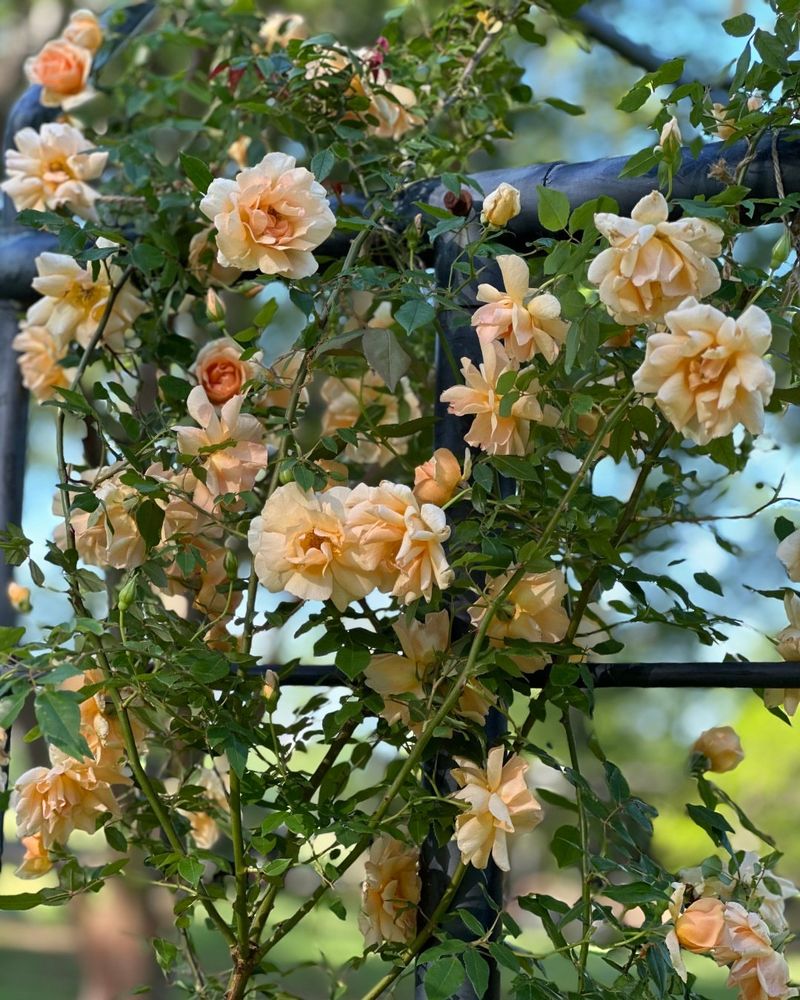
A rose class was born just a couple hours south of the NC line, in Charleston, and it thrives here like it never left home.
Noisettes are climbing old garden roses, and they are considered the only true class of roses developed in America.
That local origin shows in how easily they handle Southern summers.
Gardeners in the Coastal Plain and Piedmont trust varieties like ‘Champney’s Pink Cluster’, ‘Madame Alfred Carriere’, and ‘Reve d’Or’.
They send up long canes loaded with clusters of soft, fragrant blooms, perfect for an arbor, a fence, or the side of a porch where you want scent at eye level.
Give a climber something sturdy to lean on and full sun to power all that growth.
Train the main canes sideways along a support, which coaxes more blooms along the length rather than just at the tips.
Water while young plants establish, then most Noisettes settle into an easygoing rhythm.
Prune lightly after the big flush, removing weak or tangled wood.
For anyone who wants a rose with actual regional roots, this is about as close to hometown as a rose gets.
6. Carolina Rose Is The Native That Feeds Wildlife
Walk a sunny field edge in June and you may already know this one without knowing its name.
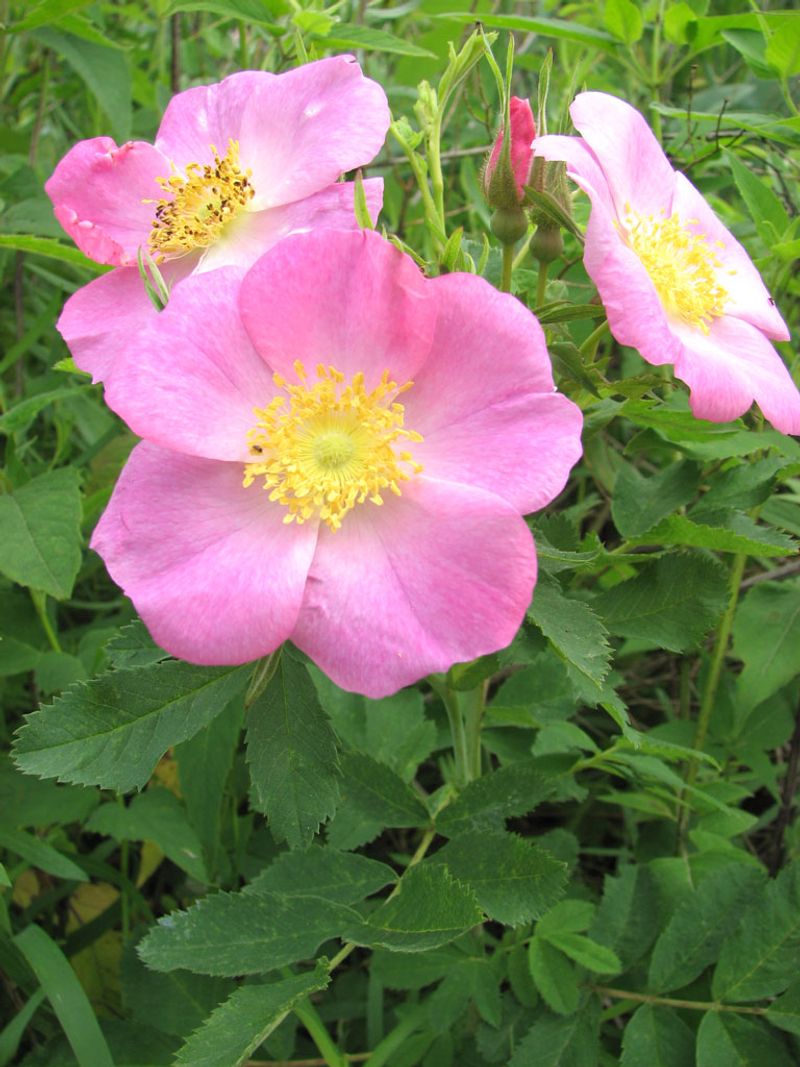
Carolina rose, Rosa carolina, is a true North Carolina native, and it belongs in this list precisely because it asks so little and gives so much.
The plant is flexible on size, anywhere from 6 inches to about 5 feet tall and 1 to 5 feet wide, with simple single pink blooms.
Plant it in full sun and it shrugs off heat, tolerates the occasional dry spell, and stays notably disease resistant.
It is not a showy hybrid, and that is the point.
Here is the part that wins people over.
Those blooms feed pollinators, then ripen into rose hips that songbirds and other wildlife eat through fall and winter.
The hollow stems even give native bees a place to nest.
So you get a rose that helps the yard feel more alive while barely touching your watering can.
Give it sun, decent drainage, and room to sucker into a loose thicket if you let it.
For a family yard that wants both beauty and a little more birdsong, this native quietly does double duty.
7. Swamp Rose Thrives Where Others Drown
Got a low, soggy corner of the yard where nothing seems happy?
There is a native rose that actually wants that spot.
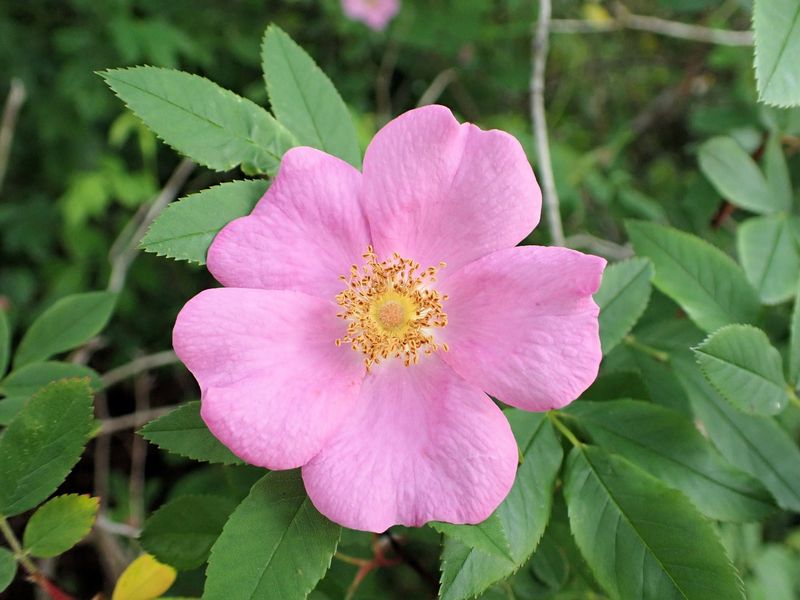
Swamp rose, Rosa palustris, is built for the wet, acidic ground that would rot most garden roses at the crown.
Along creek edges and pond banks across the Coastal Plain, this one grows tall and arching, covered in fragrant pink single blooms in early summer.
It prefers full sun, and like its cousin the Carolina rose, it shows the best disease resistance when it gets plenty of light and air.
The trick is matching the plant to the site instead of fighting your soil.
If you have a rain garden, a drainage swale, or that boggy back corner, this rose turns a problem area into a pollinator stop.
Its hips carry wildlife through the colder months, and its thicket-forming habit gives cover to small birds.
Plant it in that damp acidic ground it loves, keep it in full sun, and step back.
For gardeners tired of babying roses that hate their conditions, letting a native match the land is genuinely freeing.
8. Morning Sun Is The Fix You Are Overlooking
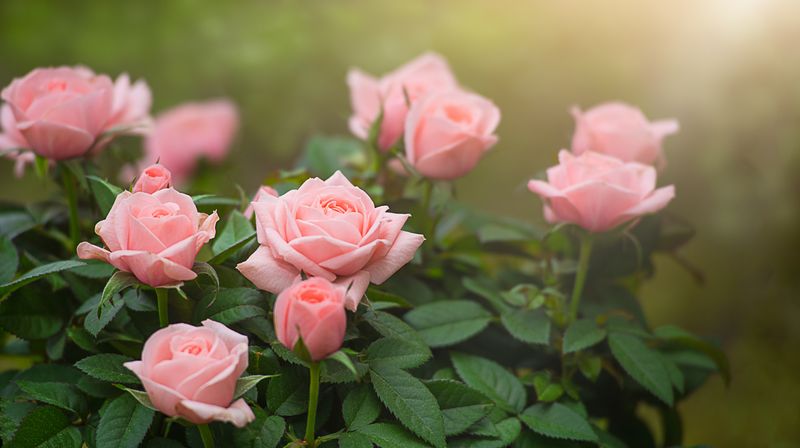
Plenty of roses fail here not because they are weak, but because of where they got planted.
Black spot is the number one rose headache in North Carolina, and it spreads fastest on leaves that stay wet.
So the single best trick has nothing to do with which variety you buy.
Give your roses morning sun.
Leaves that dry out early in the day give fungus far less time to take hold, and that alone cuts your black spot pressure without a drop of spray.
NC State Extension points to at least six hours of full sun daily, with morning light being the most valuable stretch.
Take a walk around your yard at 9 a.m. and again at noon and note where the light lands first.
A bed on the east side of the house often beats a hotter west-facing spot for exactly this reason.
Space plants generously too, giving air room to move between them so leaves dry faster after our afternoon storms.
It is not a magic solution on its own.
But paired with a resistant variety, right placement does more heavy lifting than most gardeners expect.
9. Fixing Red Clay Soil Changes Everything

Dig a hole in the Piedmont and you hit that sticky orange clay that holds water like a bucket.
Roses hate wet feet, and clay is why a lot of otherwise tough varieties sulk or rot at the base.
The fix is not exotic, it just takes a little sweat up front.
Roses want organically rich, well-drained soil with a pH of at least 5.5.
Before planting, work several inches of compost or aged manure into the bed, not just the planting hole, so roots can spread into loosened, feeding ground.
That amended soil drains faster after a storm and holds nutrients longer through a dry August.
Down in the sandy Coastal Plain the problem flips, the soil drains too fast, and there compost helps hold moisture instead.
Once planted, spread 2 to 3 inches of mulch to keep roots cool and steady moisture, pulling it back an inch or two from the main stem.
A quick soil test from your county Extension office tells you your real pH so you are not guessing.
Get the ground right, and even a trusted rose you already own suddenly looks like it upgraded itself.
10. Smart Watering Beats The Summer Water Bill
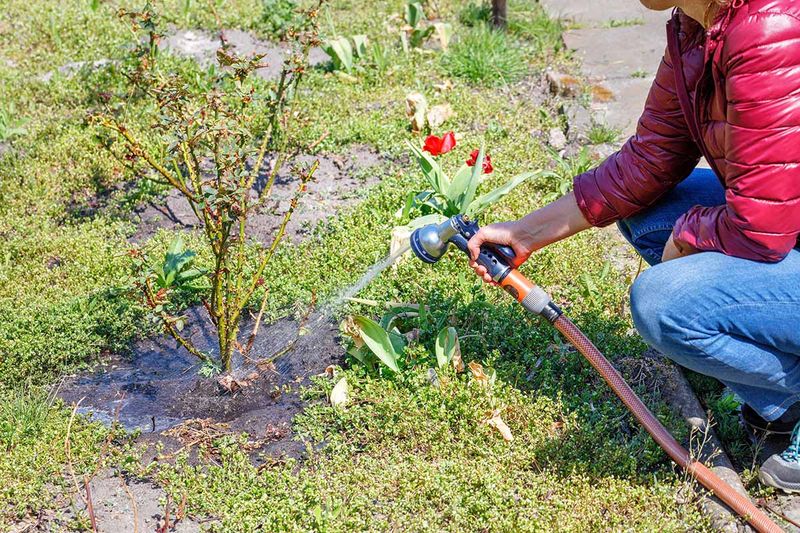
The instinct in a July heat wave is to sprinkle the roses every evening, and that habit backfires on two fronts.
Overhead evening watering leaves foliage damp all night, which is a welcome mat for the very fungus you are trying to dodge.
Roses do better with deep, infrequent soaks than daily light sips.
Water at the base, early in the day, giving the equivalent of about an inch a week including rainfall.
Deep watering pushes roots down where the soil stays cooler and moister, which builds a plant that rides out dry spells better.
A soaker hose or a slow trickle from the garden hose puts water where it belongs, at the roots, not on the leaves.
That switch alone can trim your summer water use while keeping plants healthier.
During a stretch of afternoon storms, back off and let nature handle it, since soggy soil rots roots just as surely as drought stresses them.
Check with a finger a couple inches down before you reach for the hose.
Watering with intention, instead of on autopilot, saves the plant and the bill at the same time.
11. Late Winter Pruning Sets Up A Strong Year
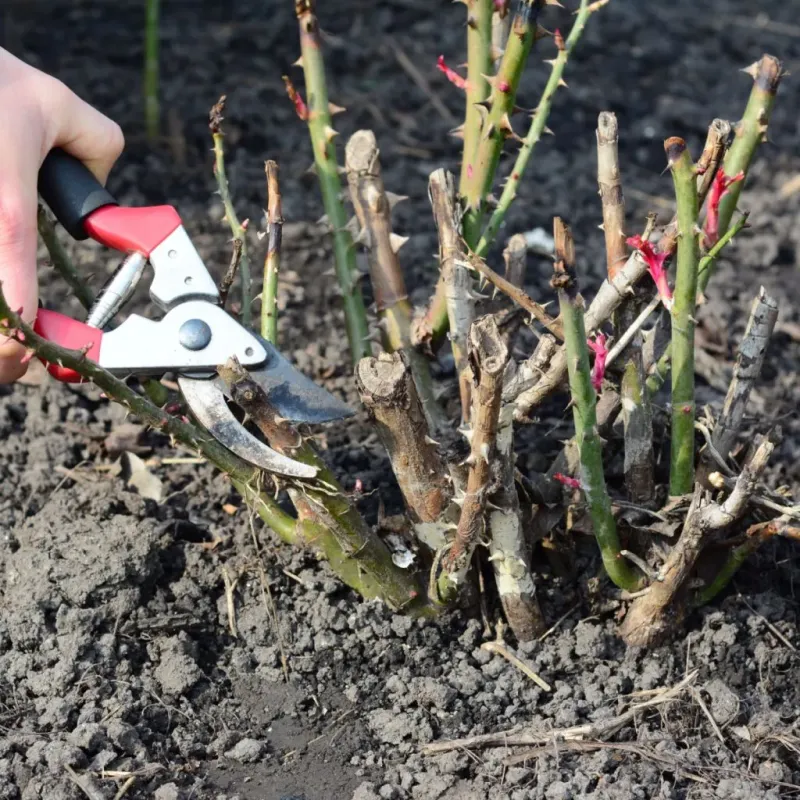
Reach for the pruners in fall and you may spark tender new growth right before a cold snap flattens it.
Timing is the quiet difference between a rose that limps through spring and one that explodes with blooms.
Late winter, roughly February in most of North Carolina, is the sweet spot.
The worst cold is usually behind you, and cutting now wakes the plant up strong just as it wants to grow.
For shrub roses like Knock Out and Oso Easy, cutting back by about a third keeps them full and tidy without shocking them.
Focus on removing anything dead, diseased, or crossing, since canes that rub open wounds where disease sneaks in.
Open up the center a bit so air moves through, another small move against our humid-air fungus.
Old garden roses and Noisette climbers get a lighter hand, mostly a cleanup after their main flush rather than a hard chop.
Clean your blades between plants so you are not carrying trouble around the bed.
Do this one late-winter task well and you have set the table for a season of blooms, which is a genuinely satisfying way to close out winter.