
That Purple Weed Taking Over Your Pennsylvania Lawn Is Feeding Bees For Free
Follow us on Google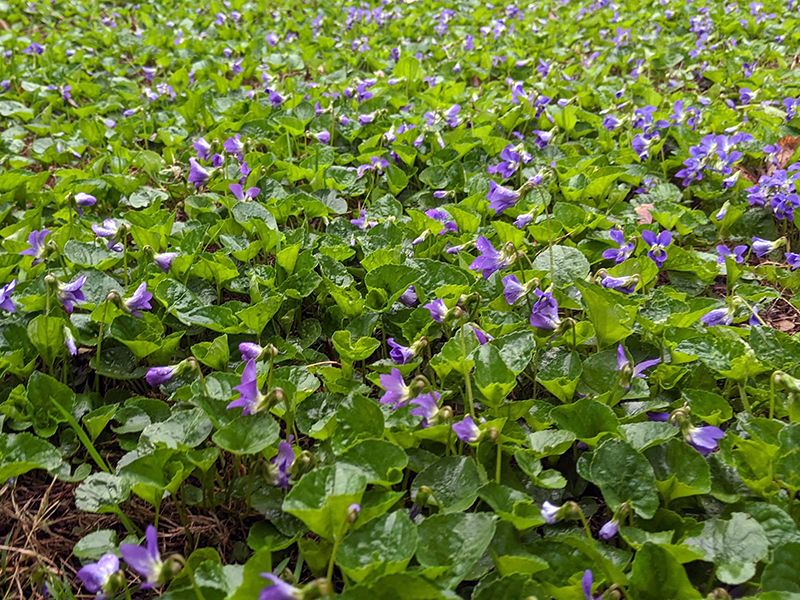
You step outside on an April morning, coffee in hand, and notice your lawn is dotted with small purple flowers you never planted.
Before you grab the trowel and start yanking, it’s worth knowing what you’re actually pulling out.
That low-growing purple plant may be common blue violet, Viola sororia, a Pennsylvania native that quietly feeds specialist bees and hosts butterfly caterpillars every spring at zero cost to you.
But color alone won’t tell you what you’ve got, and knowing the difference matters before you decide to keep it or kick it out.
Before You Pull That Purple Flower, Identify It
Purple flowers in a lawn could be half a dozen different plants, and the name matters before any ecological claim does.
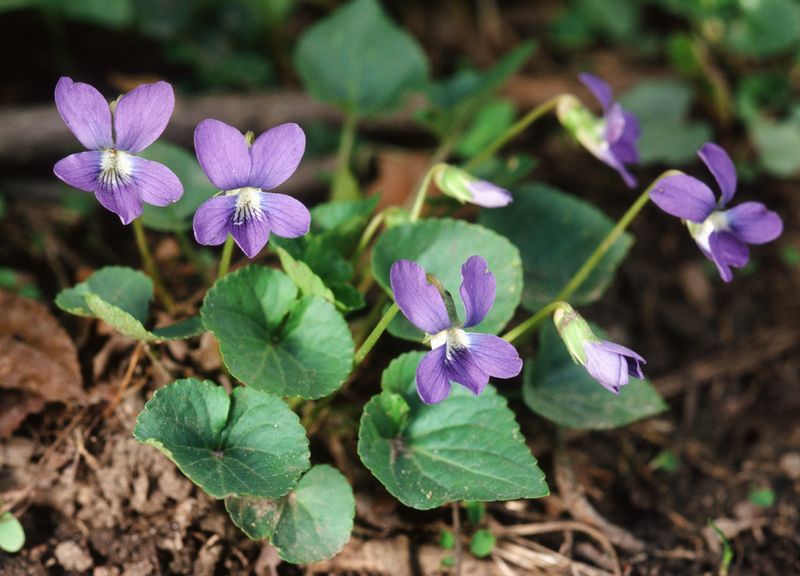
Common blue violet, Viola sororia, has a specific look that separates it from other spring weeds, and according to Penn State Extension’s wild violet profile, the key features are basal heart-shaped leaves with toothed edges, five-petaled flowers roughly one-half to three-quarters of an inch across, and individual flower stalks that rise directly from the plant’s base rather than from an upright leafy stem.
The two side petals often have small white hairs near their centers.
If you are seeing an upright stem with leaves attached and clusters of flowers at the top, you are probably looking at something else entirely.
Purple deadnettle and henbit are two of the most common look-alikes in Pennsylvania lawns.
Both have purple flowers and appear in spring, but they grow on upright leafy stems, and they are cool-season annuals that tend to fade before summer.
Ground ivy creeps along the ground with rounded, scalloped leaves and small tubular flowers.
None of these share the basal leaf arrangement of common blue violet.
Flora of Pennsylvania documents Viola sororia as native throughout the state, turning up in lawns, forest edges, moist meadows, and partly shaded sites from the Lake Erie region to the Delaware Valley.
One edge case deserves a firm warning.
A tall plant with dense spikes of purple flowers growing near a pond, stream, ditch, or any wet area in your yard is not a violet and should not be preserved out of goodwill toward pollinators.
Purple loosestrife is a Pennsylvania noxious invasive weed that can dominate wetlands and crowd out native plants.
Check the leaves and the stem first, every time, because identification is the gateway to every decision that follows.
A Confirmed Violet Can Help Spring Pollinators
Once you have confirmed those heart-shaped leaves and basal flower stalks, the ecological story genuinely gets interesting.
Common blue violet blooms mainly from April through June in Pennsylvania, which is a window when many lawns offer almost nothing else for foraging bees.
Penn State Extension’s native violets page identifies Viola sororia as an excellent pollinator plant and notes that it hosts at least 30 species of fritillary butterfly larvae, which rely on violet foliage as their primary food source.
That is a meaningful contribution from a plant you never paid for.
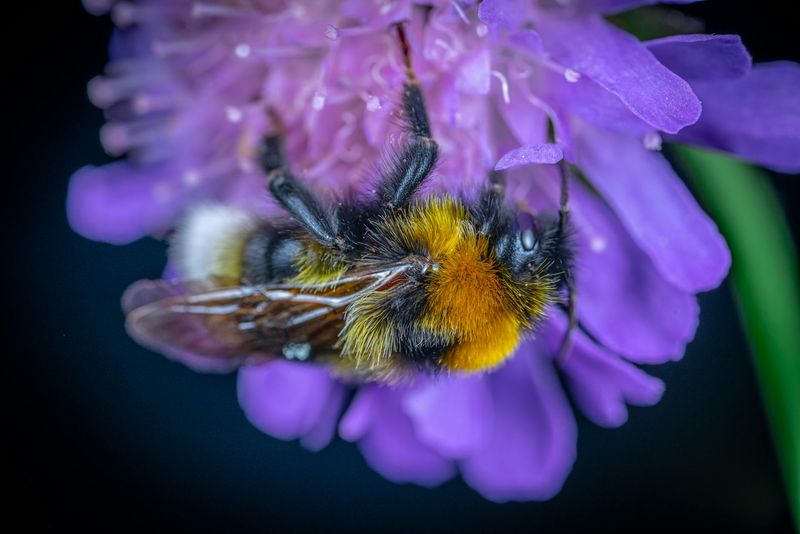
The most direct bee relationship belongs to the violet miner bee, Andrena violae, a specialist that collects pollen almost exclusively from violet flowers.
According to the Xerces Society’s pollinator violet guide, this small native mining bee times its emergence to match the violet bloom period, making your lawn patch genuinely useful to a bee that cannot easily substitute another plant.
Sweat bees and mason bees may also visit the flowers for nectar and pollen, though they are less specialized.
The honest limit here is worth stating plainly.
Violets support some native bees during part of the spring season, not every pollinator all summer long.
Penn State’s flowering lawn guide frames common violet as one useful component of a broader approach, not a complete pollinator habitat on its own.
Later-season plants like bee balm, goldenrod, native asters, and mountain mint are needed to carry pollinators through summer and fall.
Think of a confirmed violet patch as a solid opening act, not the whole show.
Its Free Return Comes With A Catch
Here is where it gets tricky.
Common blue violet does not simply drop a few seeds and wait politely for next year.
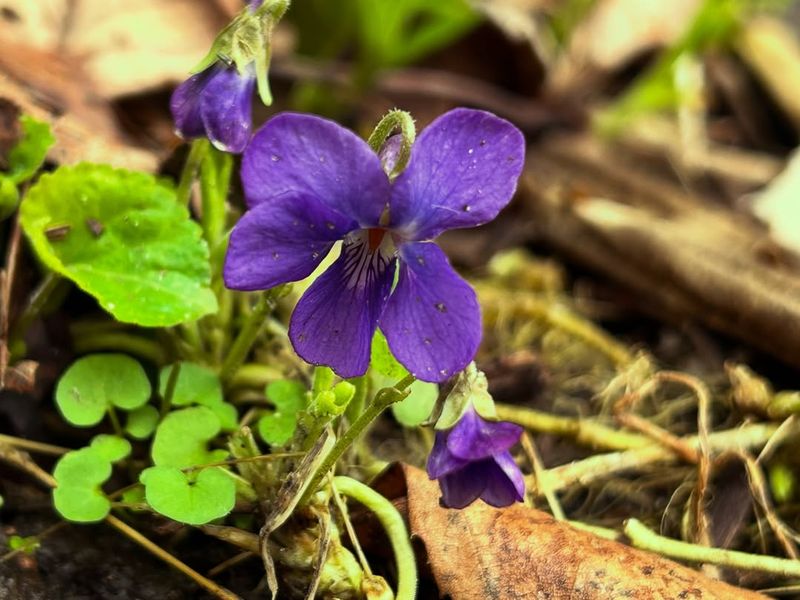
Penn State’s turfgrass weed profile explains that the plant spreads through thick underground rhizomes as well as through seed, including self-pollinating flowers that never open and quietly set seed at the soil surface.
That combination makes it more persistent than a typical annual weed, and more difficult to eradicate once it has settled into a lawn.
The benefit side of that persistence is real.
A patch of common blue violet can fill in a low-growing area without purchased plants, without irrigation, and without reseeding by hand.
In spots where turf already struggles, the violet simply takes over the job.
Many homeowners in the shaded yards of the northern tier or along wooded edges in the Poconos find that the plant holds ground where grass never did well anyway.
The drawback side is equally real.
In moist, fertile soil, which describes a lot of well-maintained Pennsylvania lawns, common blue violet can spread aggressively and push into vegetable beds, ornamental borders, and areas where you genuinely need clear turf.
Calling it maintenance-free misses the point.
Penn State’s native violets resource frames the plant’s self-sufficient establishment as a feature in the right location and a management challenge in the wrong one.
Free to arrive does not mean free to ignore, and treating it that way is how a welcome guest becomes a difficult problem.
Keep A Defined Patch Where Turf Struggles
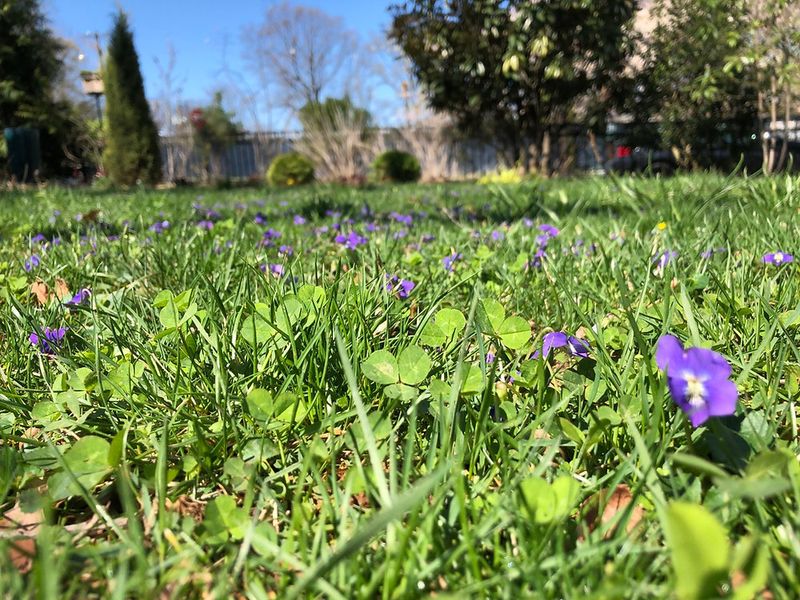
The practical move is not to surrender your whole lawn or to pull every last violet.
Penn State’s flowering lawn guide describes common blue violet as well-suited to a selective-tolerance approach, where the homeowner marks a defined area for the plant and maintains the rest of the lawn normally.
A shaded ring around a large oak, a strip along a north-facing fence line, or a low-traffic corner beside a woodland edge are all reasonable candidates.
These are spots where turfgrass already puts up a fight, and the violet is genuinely better suited to the conditions.
Viola sororia tolerates both sun and partial shade, though it tends to perform especially well in shadier sites where cool, moist soil persists longer into spring.
In warmer southeastern Pennsylvania, where clay soils hold moisture and shade is common under mature trees, a managed violet patch can stay attractive well into May.
In the Laurel Highlands or along the Allegheny Plateau, where the growing season runs shorter and soils are often rockier, the same plant may naturalize more slowly but still fill in a shaded edge without any help from you.
Mow the rest of the lawn according to its own needs, and remove violets from any vegetable bed, narrow walkway, or crowded planting border where they compete with plants you actually chose.
Penn State and Pennsylvania DCNR’s native plants guidance both encourage converting only portions of a lawn when that suits the household better than a full overhaul.
A 10-foot patch under a tree feeds pollinators, hosts fritillary caterpillars, and costs you nothing.
You do not have to give up the backyard cookout space to make it work.
Pull Them Where You Need Clear Space
Removing common blue violet is not an ecological failure, and the idea that pulling them is always the wrong call does not hold up.
Formal grass areas where children play, vegetable beds, gravel paths, and crowded ornamental borders are all reasonable places to control this plant, and Penn State actually describes wild violet as an aggressive, difficult-to-control perennial weed in turf settings.
That framing matters, because it means removal in the right spots is a legitimate yard-management decision, not something to feel guilty about.
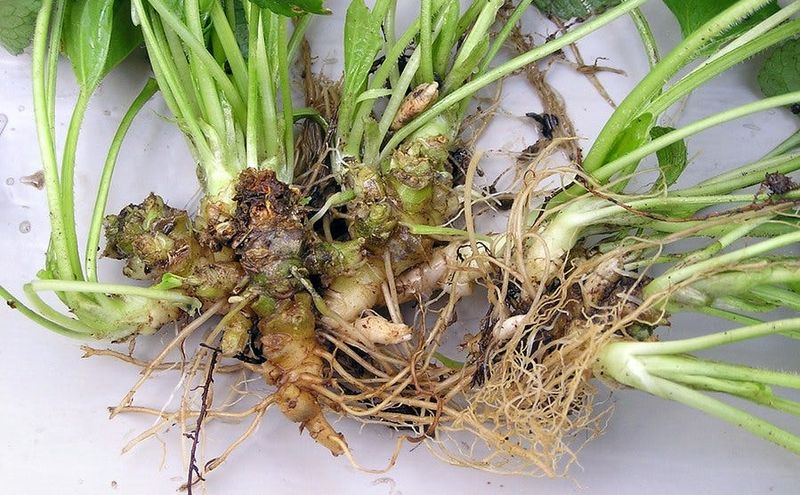
Hand-pulling often disappoints because the rhizomes stay in the ground even when the leaves come off cleanly.
Unless you excavate the root system, the plant regrows from what is left behind, sometimes within the same season.
Penn State’s wild violet management page notes that hand removal is largely ineffective without getting the rhizomes out, which takes a trowel and some patience rather than a quick pull.
In a managed meadow or naturalized border, removing seed heads before they mature can slow the spread without eliminating the plant entirely, a useful middle ground noted in Penn State’s meadow and prairie guide.
Improving turf density with a well-adapted grass variety, mowing at the correct height for your specific grass type, and applying appropriate fertilization may slow violet encroachment over time, though Penn State is direct that these steps may not suppress an already-established population.
Penn State’s turf weed management resource outlines a combined approach as more reliable than any single action.
There is no universal timing or single treatment that works across every Pennsylvania yard, so match your response to what the site actually needs.
Treat Herbicide As A Separate Risk Decision
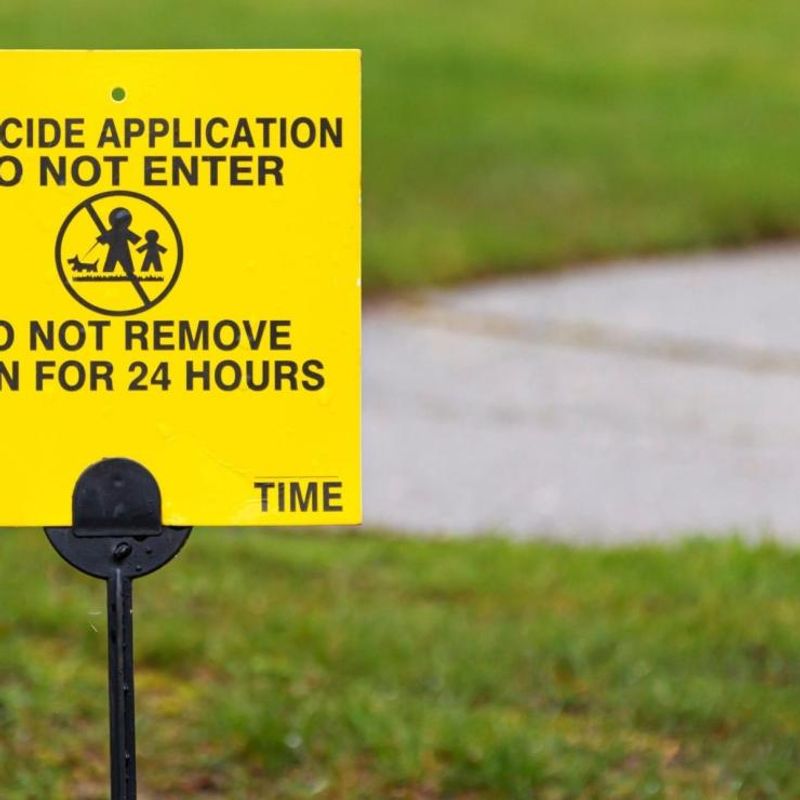
Chemical control of established wild violet is not a simple one-and-done fix.
Penn State’s wild violet profile states that herbicide applications may need to be repeated over one growing season or across multiple years to achieve meaningful suppression, particularly in lawns where rhizomes are deeply established.
That timeline is worth knowing before you choose this route over selective tolerance in a spot where violets are actually doing useful work.
The pollinator risk during bloom time is real and specific.
Spraying any herbicide or insecticide over violets while bees are actively foraging puts those bees at direct risk.
EPA pollinator protection guidance describes a range of label-required precautions that may include bloom-time application restrictions, applying only when pollinators are not active such as early morning or evening, reduced application rates, and buffer distances from flowering plants.
The current product label is the legally binding document, and it controls what you are and are not allowed to do with that specific product.
No product should be described as bee-safe without naming the active ingredient, the formulation, the application timing, and the current label requirements.
Those details change the picture entirely, and a product that carries lower risk under one set of conditions may carry much higher risk under another.
Where violets are acceptable to you and to the site, selective tolerance is the lower-risk path by a considerable margin.
Reserve herbicide as a tool for areas where violets genuinely cannot stay, follow the label exactly, and time any application to avoid open flowers and active bee foraging periods.
Build A Yard That Offers More Than One Spring Flower
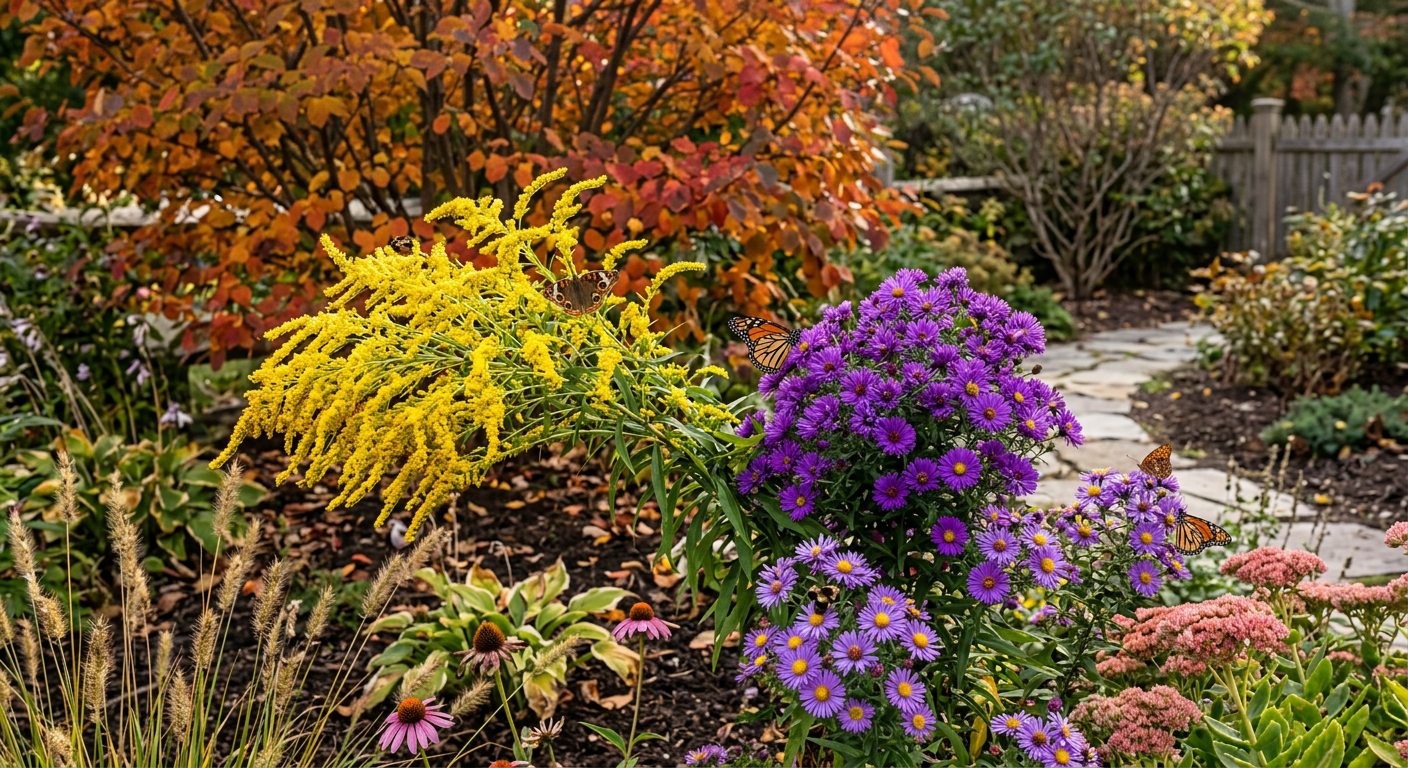
A patch of common blue violet is a genuinely useful starting point, but it is only April through June in a yard that needs support from spring through October.
Pennsylvania DCNR’s native plants guidance recommends building a succession of native flowering plants so that something is always blooming when pollinators need it.
Bee balm carries bees and hummingbirds through July.
Mountain mint draws an impressive range of native bees in midsummer.
Native asters and goldenrod carry the season into October, and native milkweeds support monarchs during their fall migration through the state.
Penn State’s flowering lawn guide frames this kind of layered planting as far more effective than relying on any single plant, even a native one.
Keeping violets does not reduce tick risk on its own, and that point deserves plain language.
Tick management in a Pennsylvania yard requires separate, active steps.
CDC tick prevention guidance recommends mowing frequently, removing leaf litter, clearing tall grass and brush within 3 feet of the house, and maintaining a wood-chip or gravel barrier at least 3 feet wide between any lawn area and wooded edges.
Those steps address tick habitat directly, which a violet patch does not.
The decision rule for your yard is actually straightforward.
Identify the plant first using leaves, stem, and flower structure, not color alone.
Keep a defined patch where the site suits it and the violet is confirmed as Viola sororia.
Control it where you need clear, durable turf, safe play space, or tidy beds.
Common blue violet is one modest, seasonal resource in a yard that can offer much more.
The bees that find it in April will thank you, and you will still have a yard worth using in July.